Article
What should buyers know first?
Short answer: A B2B guide for brands developing organic cotton private-label clothing, covering material documentation, fabric specification, sample review, fibre and care labels, packing files, and repeat-order records before bulk production.
Organic cotton private label clothing should be approved as a documented product route, not as an unqualified material promise. Before bulk fabric is booked, a brand needs to link the intended fibre content and claim to one material reference, its available order documents, a garment sample, labels, packing files, and the destination market. The aim is a finished style whose wording, construction, and production record tell the same story.
Organic cotton can be a suitable direction for selected fashion programs when the material, documentation, and product requirements line up. It does not automatically make every finished garment or every marketing statement verified. Fabric weight, knit or woven construction, dye route, shrinkage, pilling, neckline recovery, trims, care instructions, destination market, and order plan still need review on the approved sample.
This guide is for private-label brands, product developers, and buyers working with a clothing manufacturer in China. It explains how to turn an organic-cotton preference into a practical sampling and production route, without making broad claims that the final order cannot support.
What should buyers check about approve organic cotton private label clothing around the product and claim?
The first decision is not simply whether the fabric should be organic cotton. Define the garment’s job. A premium T-shirt may need a compact, opaque jersey and stable neck rib. A sleep shirt may prioritise a lighter, softer surface and low seam bulk. A lounge jogger may need recovery at the waistband and knees. A woven shirt may need enough body for a collar and placket, while a soft dress may need drape and predictable wash behaviour.
Then define the claim requirement in plain language. Is the buyer asking for an organic-cotton sourcing discussion? Does a retailer require a specific document route? Does the brand need a particular fibre composition on the care label? Is a certification or transaction document required for the actual order, or is the preferred fibre route still open for sourcing advice? These are different requests, and they should not be merged into one vague instruction such as “make it certified.”
If the buyer needs an organic-content verification route, state that requirement before material is booked. The Organic Content Standard (OCS) is a voluntary standard for third-party certification of organic material and chain of custody. It does not, by itself, prove every possible environmental, chemical, social, quality, or packaging claim for the finished garment. The final wording must match the actual material, supplier documentation, and order scope.
Write the fixed and flexible points in the brief. A brand might be fixed on an organic-cotton route and a natural-white colour, but open to the exact jersey construction. Another might be fixed on a heavy, dry handfeel and stable collar, but open to a blend or sourcing route if it makes the sample more reliable. This gives the sourcing and development team a useful way to compare real options.
How should buyers build a material file before the first sample is approved?
For organic cotton private-label clothing, the material file should travel with the style from sampling into bulk production. It prevents a correct fabric discussion from becoming an unclear label or repeat-order problem later.
Start with the fabric identification record. Keep the supplier or mill reference, fibre composition, knit or weave construction, weight where relevant, width, colour reference, surface description, intended garment use, and the actual fabric header. Attach the header to the sample record rather than relying on a name such as “cream organic jersey.” Similar fabrics can feel, cover, and wash very differently.
Next, keep the documentation record required for the order. This may include supplier information, the applicable organic-content or chain-of-custody documents, transaction documentation where required, and the approved claim wording. The buyer should identify who checks the documentation, who approves the market claim, and whether the material requirement applies to the whole garment or only a stated component. A factory can coordinate the production files; it should not be asked to infer the buyer’s retail or legal requirement.
The third part is the sample record. Save the approved header, colour or lab-dip route, sample size, pattern version, measurements, construction notes, trim codes, care review, wash observations, and any points that need a revised sample. Organic cotton is still a textile material that must work in the garment. Its source story does not answer whether a light colour is opaque enough, whether a rib returns at the neckline, or whether the body length changes after the intended care route.
Finally, create a label and packing record. Fibre composition, care instructions, size label, neck label, hangtag, barcode placement, individual bag, folding method, carton mark, and destination-market instructions should agree with the approved material and style. These files are easier to correct before bulk packing begins than after a label artwork has been printed.
What should buyers check about assign document ownership before material booking?
A material file only helps when each decision has a named owner. The brand normally owns the consumer-facing claim, target-market review, final copy, and product approval. The material supplier or mill normally provides the material reference and the documents it is able to share for that supply route. The clothing manufacturer can connect the approved fabric, sample, trims, labels, packing, and production records to the style. A retailer, importer, or compliance adviser may add its own required review. Those roles can overlap, but the buyer should not leave them implicit.
Create a short decision log for the first sample. List the style code, material reference, component covered by the intended claim, document requested, document received, sample status, label-copy status, market, and next approver. If the claim is not yet approved, label it as open in the internal file. That distinction prevents an early sourcing preference from appearing later as approved hangtag or web copy.
The legal detail changes by market. For example, FTC apparel guidance describes U.S. fibre, origin, and responsible-business labelling topics, while EU textile-label guidance covers fibre-composition labelling for products marketed in the EU. These references do not substitute for a brand's own legal or retailer review. They are a reason to identify the target market and approval owner before labels are printed.
For a private-label development programme, attach the decision log to the same style folder as the tech pack, artwork, material header, and sample comments. It gives the factory team a clear brief without asking it to decide whether a marketing statement is permitted. It also makes a handover less dependent on email searches when a new colour or related style is developed later.
How should buyers review cotton behaviour in the finished style, not only as a swatch?
Cotton can be soft, dry, brushed, compact, airy, textured, crisp, or fluid depending on the yarn, construction, weight, finishing, and blend. A hand-sized swatch is useful for initial selection, but it cannot show the whole garment result.
Review the first sample in the intended colour and fit. Check coverage in pale shades, especially around body panels and pockets. Check shoulder shape and neckline recovery in jersey styles. Check whether a waistband, cuff, or rib has the required return after wear. For wovens, check collar support, placket appearance, seam puckering, button stability, and the way the fabric falls at the hem. For sleepwear and loungewear, assess skin comfort, low-bulk seams, warmth, and the surface after the intended wash route.
Shrinkage and surface change should be part of the sample conversation, not an afterthought for the care label. If the product is planned to be washed, printed, embroidered, garment-dyed, or treated in another way, review the relevant process with the approved material and sample. The exact test or approval plan depends on the product, buyer requirement, and market. It should be agreed before bulk material is cut, rather than assumed from the words “organic cotton.”
Make sample comments specific enough to act on. Instead of “the fabric is too thin,” record what needs to change: increase coverage in the off-white body; compare a more compact jersey; revise the neck rib for better recovery; reduce shrinkage risk before final measurement approval; soften the inside surface; or check the print handfeel after care. Clear comments protect the garment and create a more useful repeat-order file.
How should buyers use a sample decision gate before bulk fabric is booked?
Do not use a single “sample approved” note for every decision. A useful gate separates the garment result, the material evidence, and the commercial release. First, check whether the actual sample meets the intended fit, coverage, handfeel, construction, decoration, and care outcome. Second, verify that the material reference and available records match the component and claim language under review. Third, confirm whether all remaining choices—colour, labels, packing, quantity, and market files—are defined well enough to book fabric or require another round.
That gate is especially useful when the garment has an interaction point. A heavy print can change the handfeel of a lightweight jersey. A rib can recover differently from the body. A contrast panel, lining, pocket bag, or trim may not sit inside the same material statement as the main shell. Rather than generalising, record the material and component for each relevant part of the approved style. The same approach supports a later fabric sourcing before sampling conversation when the team must compare available headers with a custom development route.
Take the comments through a repeatable review: compare the sample against the approved fabric header; review the intended colour rather than only a neutral swatch; check measurements after the agreed care route; inspect seams and attachment points; then read the label, hangtag, and packing copy beside the garment. A loungewear fabric guide can help teams frame comfort, drape, breathability, and care questions for soft styles, but the final approval still belongs to the specific garment and program.
If a point remains open, say what prevents release. Examples include an unapproved label statement, a pending supplier document, an unreviewed colour, or a missing wash observation. This is more useful than silently treating an incomplete sample as a bulk instruction. Once the gate is complete, the production file should show which sample version, material reference, and artwork version were released.
How should buyers plan labels after the material route is verified?
Private-label details need to follow the approved product facts. Fibre-content wording, care instructions, size, country-of-origin information where required, responsible-party details, hangtag copy, and retail packaging are not decorative extras. They are product information that must be checked against the actual order and target market.
Avoid phrases such as “100% sustainable,” “chemical-free,” or “eco-friendly cotton” unless the buyer has a precise, defensible basis for the complete statement. If an organic-content claim will appear on a label, hangtag, website, or retailer file, it should follow the documentation route and the buyer’s market requirements. The brand should obtain its own compliance or legal review where necessary. For U.S. and EU sales, fibre naming, composition, care, and language requirements need to be considered for the final market.
The factory’s useful role is practical: keep the approved fabric reference with the style, coordinate label artwork and packing instructions, confirm the production files, and flag a mismatch before printing or packing begins. That support is most effective when the buyer supplies final brand copy, target-market requirements, and clear approval ownership.
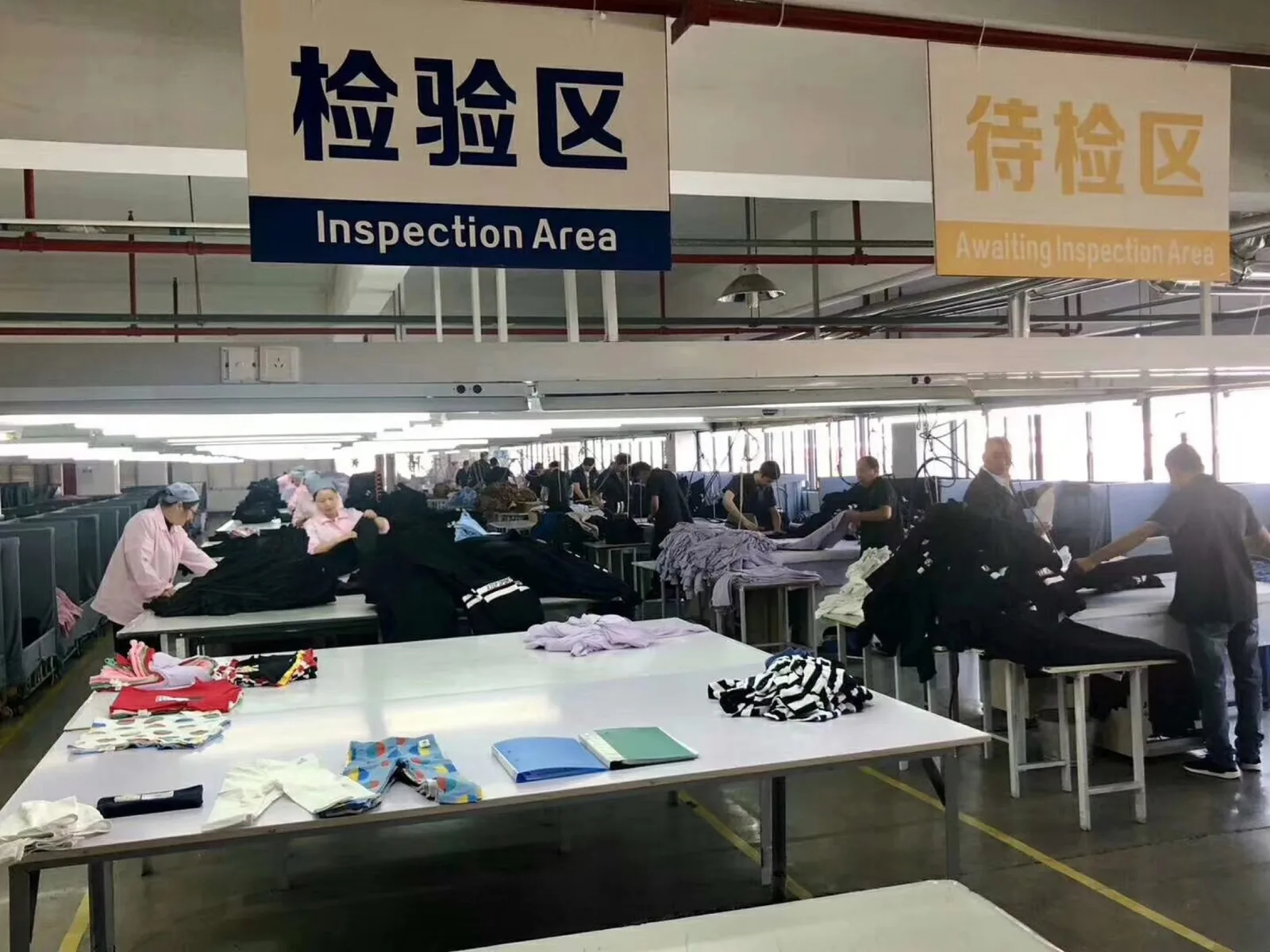
What should buyers check about release labels and packing with the bulk file, not afterwards?
Labels and packing should become a controlled release package before bulk cutting, printing, or packing begins. Keep the approved neck label, size label, care label, hangtag, barcode placement, polybag or individual protection, fold method, carton mark, and destination-market instructions together with their version dates. The correct version is the one that corresponds to the approved material and sample, not merely the most recent design file in an email thread.
Use a simple line-by-line check before release. Compare fibre wording with the confirmed composition; compare care copy with the reviewed garment route; compare claim copy with the documentation scope; compare barcode and size information with the assortment plan; and compare packing instructions with the warehouse or retailer requirement. The brand should approve the consumer-facing copy, while the production team can flag inconsistencies and apply the approved files. A dedicated apparel packing requirements guide is useful when carton marks, size stickers, barcodes, folding, and store-ready handover need their own review.
The same file should carry forward to quality control before warehouse delivery. That does not mean a general article replaces a buyer's inspection plan. It means the inspection team can identify the approved sample, labels, packing, and priority checks instead of judging a finished garment against an incomplete brief. If a component changes after approval, record the change, who approved it, and whether another sample or label review is required.
Use annotated sample photographs only as a companion to the physical approval record. A photo can show placement, fold direction, an exterior label, or a carton mark, but it cannot establish fibre composition, washing behaviour, or the full quality of a fabric. File the approved photo with the sample version, date, material reference, and comments so the production team can identify what it illustrates. Do not let an older showroom image replace the current released sample when the colour, trim, label, or packing method has changed.
Before the order moves forward, run a final cross-check between the commercial quantity sheet and the production release. Confirm style codes, colours, size ratios, labels, barcodes, packing quantities, destination, and delivery instructions. If the buyer separates products by channel or market, record the relevant label and packing variant against each line. This helps the team spot a correct garment paired with the wrong retail information before the order reaches the warehouse.
For repeat orders, preserve the released file alongside the next-order change list. The buyer can then say exactly what stays unchanged and what must be rechecked: material availability, colour, fit update, new print, revised label, new barcode, different market, or packing adjustment. This creates a stronger base for wholesale fashion reorder planning than a broad request to reproduce the previous cotton style.
How should buyers keep colour, decoration, and trims in the same approval route?
Organic cotton does not remove the normal fashion-development decisions around colour, print, embroidery, labels, and trims. A warm natural white, a washed dark colour, a pigment-style effect, and a bright seasonal shade can each change the surface, handfeel, appearance, and care conversation. Approve significant colours on the actual fabric base through the route agreed for the program, rather than deciding from a digital colour value alone.
The same applies to decoration. Screen print, embroidery, appliqué, woven patch, heat transfer, garment wash, and enzyme or softener finishes can alter the way a cotton garment feels, stretches, recovers, or performs after care. A print that appears clean on a flat header may feel too heavy on a lightweight T-shirt; a dense embroidery may need stabilisation or affect drape; a wash process may change dimensions and colour. The garment sample needs to show the chosen material, construction, decoration, care route, and label package together.
Private-label trims should be reviewed as part of that same sample. Check neck labels for comfort and placement, care labels for seam bulk and legibility, hangtags for approved claim language, and packing for rubbing, moisture protection, folding, and retail presentation. An individual component may look acceptable alone while creating a poor customer experience when combined with the final fabric and garment shape.
What to do when an organic-content document is not ready?
Do not fill the gap with a broader environmental statement. If the material, supplier, or order documentation is still being confirmed, write the internal brief and supplier communication in conditional language: an organic-cotton material route is requested; the available document route needs review; final claim wording is subject to supplier documentation, the approved sample, and the order scope. This protects the development conversation without pretending the evidence already exists.
The buyer can still move useful work forward. Confirm the style, fabric behaviour, colour plan, sample size, construction, labels, packing, quantity, market, and timing. Ask the sourcing team which available cotton headers can be sampled, what documentation can be reviewed for each option, and which decision must be made before bulk fabric booking. Once the material and records are confirmed, the buyer can complete the final label, hangtag, product-page, and retailer-file review with facts rather than assumptions.
What should buyers check about make the first order workable for private label?
An organic-cotton first order becomes harder when every style needs a different fabric, colour, trim, label format, and document route. That does not mean a collection should become generic. It means the buyer should decide where variation matters most.
For a focused casual or loungewear capsule, several styles may share a jersey family, rib, colour palette, care-label format, hangtag size, or packing route. This can make fabric review, MOQ discussion, lab-dip approval, production planning, and repeat orders more manageable. Quantities, price direction, timing, and material availability remain subject to the approved sample, supplier documentation, colour count, trims, packing, and order plan.
The commercial brief should include quantity by style and colour, target price direction, destination market, expected launch date, retail packaging requirements, and whether the buyer expects a repeat order or new colourway. A supplier can then compare a practical route: available material versus custom development, shared colours versus more variation, or a focused first order versus a wider material programme. The best choice is the one that keeps product quality and the required evidence clear.
How should buyers keep records that make a reorder possible?
When a style moves to bulk, store the approved material header, supplier reference, fibre composition, document route, colour standard, sample photos, measurement approval, trim list, label files, packing instruction, QC comments, and buyer approvals together. A repeat order still needs current availability, colour, quality, and documentation confirmation. It should not have to begin with a search for “the natural cotton fabric we used last season.”
These records are equally useful when a brand wants to add a new colour, change a neck label, adjust a fit, or develop a related style. They allow the buyer and factory to see which part of the first order is fixed and which part needs another sample review. That is a more credible basis for a long-term private-label program than a broad material claim alone.
What to send for an organic cotton private-label discussion?
Send a reference style, tech pack or clear images, target product category, intended fit, preferred handfeel and weight, colour direction, expected care, quantity by style and colour, target price direction, market, launch timing, labels and packing direction, and any material-documentation requirement. If the organic-content route is mandatory, say which documents or retail requirement are involved. If it is a preferred material direction, identify what can remain open for factory advice.
Yinshan Fashion can connect that brief with fabric sourcing, sample development, private labels, trims, packing, quality control, and export coordination. The productive starting point is a specific garment and a clear documentation question. Material availability, claims, sampling, and final production details remain subject to supplier documentation, the approved sample, and the order plan.
Organic cotton private label review
The four records that make an organic-cotton brief usable
A credible organic-cotton private-label route connects one real fabric reference with the required documents, the approved garment sample, final labels, packing files, and a repeat-order record. It does not begin with a broad claim on a hangtag.
Define the product claim
State the garment, fibre-composition target, component covered by the claim, document requirement, destination market, and which points are fixed or open for sourcing advice.
Keep one material record
Link the supplier reference, composition, construction, colour, material header, available document route, sample notes, trims, labels, and packing direction to the exact style.
Approve the garment result
Check coverage, shrinkage, surface change, neck or cuff recovery, seams, care, decoration, measurements, labels, and packing in the actual sample before bulk is booked.
Organic cotton private-label handover checklist
Use this checklist to turn an organic-cotton preference into a specific development route. It does not replace the buyer’s own certification, legal, or market-compliance review for the final product claim.
| Decision area | What the buyer should prepare | What to ask the factory |
|---|---|---|
| Style and material outcome | Share the reference style, intended wearer, fit, category, desired handfeel, weight, coverage, colour, care, logo method, and target market. | Which cotton construction or available material route can produce this garment result reliably? |
| Organic-content requirement | State whether organic cotton is preferred or mandatory; name any document, transaction, retailer, or claim-language requirement and the component it covers. | Which material reference and supplier documentation route can be reviewed for this specific order? |
| Sample and care approval | Confirm target colour, sample size, construction, trim route, care process, key measurements, and any buyer quality or performance checks. | What needs review for coverage, shrinkage, surface change, recovery, seams, decoration, and trim compatibility before bulk cutting? |
| Labels and packing | Provide approved fibre and care copy, neck and size-label files, hangtags, barcodes, individual packing, carton marks, and target-market instructions. | Which file must match the approved fabric, final market wording, sample, and packing route before production begins? |
| First order and repeat plan | Share quantity by style and colour, price direction, timing, expected restock or new-colour plan, and opportunities to share fabrics, colours, or trims. | How can the first order stay practical while retaining the material and product records needed for a controlled repeat? |
Continue the production conversation
Organic cotton private-label approval matrix
| Decision area | What the buyer should provide or request | What must be confirmed before bulk |
|---|---|---|
| Material route and claim | Fabric reference, composition target, product component covered by the claim, supplier information, documentation requirement, and destination-market context. | The approved material and available order records support the specific wording the brand intends to use. |
| Sample and garment behaviour | Target handfeel, weight, colour, fit, care route, print or embroidery direction, construction priorities, and buyer test requirements where applicable. | Coverage, shrinkage, surface change, collar or cuff recovery, seams, trims, measurements, and appearance work in the actual style. |
| Labels and packing | Fibre and care copy, size label, neck label, hangtag, barcode, individual packing, carton marks, and target-market instructions. | Product information agrees with the approved material, artwork, buyer approvals, and market requirements before printing and packing. |
| First order and repeat file | Quantity by style and colour, target price direction, timing, required documents, shared material or trim options, and expected repeat plan. | The bulk route is practical, and the approved material, colour, trims, labels, packing, and QC notes can be traced for a future reorder. |
Buyer FAQs
What documents should a brand request for organic cotton private-label clothing?
Request the material reference, fibre composition, supplier information, and the applicable organic-content or chain-of-custody documents required for the actual order. Confirm who approves the final market claim and whether any transaction documentation, label review, or retailer requirement applies.
Does an organic cotton fabric automatically make the finished garment certified?
No. A fabric discussion and a completed-garment claim are different. The final order needs the appropriate material route, documentation scope, product configuration, and approved wording before a brand makes a certification or organic-content statement.
What should be tested on an organic cotton clothing sample?
Review the actual style for weight, handfeel, coverage, shrinkage, surface change, neckline or cuff recovery where relevant, seams, trims, colour, print or embroidery performance, care behaviour, measurements, labels, and packing. The right checks depend on the garment and buyer requirements.
Can organic cotton work for small private-label orders?
It can be discussed, but practicality depends on available fabric, colour count, material and trim minimums, documentation needs, sample route, packing, and timing. Shared material families and a focused colour plan can make a first order more manageable.