Article
What should buyers know first?
Short answer: Compare acetate fabric for dresses through drape, opacity, seam performance, lining, care requirements and evidence behind material claims.
Acetate fabric for dresses should be selected as a complete fabric and garment combination. Start with the silhouette, coverage, drape and care requirements, then compare identified materials in samples. A named yarn, a satin surface or an attractive swatch cannot establish whether a finished slip dress, camisole or occasion style will meet the buyer's expectations.
Yinshan Fashion supports custom and private-label bulk development rather than unrestricted ready-stock wholesale. For small brands building elegant evening and going-out collections, the useful first step is a clear sample brief. This guide explains what that brief should ask, where lightweight materials require closer review and how to keep material statements within their evidence.
Choose Acetate Fabric for Dresses by Construction and Use
A fabric name is only the beginning of the specification. Ask the supplier to identify the complete fibre composition, fabric construction, weight, usable width, finish and colour reference. If acetate is one part of a blend, record the other components as well. The buyer needs to know what is being proposed before comparing appearance or making a material statement.
Separate fibre identity from surface terminology. Satin describes a fabric construction or the resulting surface language used in a product discussion, while acetate identifies a fibre type. A satin-looking sample does not prove that it contains acetate. The existing silk and satin buyer guide helps frame that distinction when a mood board uses these terms interchangeably.
Describe the garment's intended behaviour in ordinary words. A slip dress might need to skim the body without catching on its lining. A small occasion dress might need a controlled neckline and an opaque skirt. A loose camisole might prioritise fluid movement, while a fitted bodice requires closer attention to stress around seams and closures. These are different material assignments.
Use the dress collection to identify the silhouette family, then attach the actual sketch and measurements for the proposed style. A collection image is a design reference. It does not confirm a fabric's composition or establish that a pictured garment is available in a named material.
Decide which requirements are fixed before seeking alternatives. If the buyer insists on a particular neckline, pale colour and minimal lining, the material comparison needs to address all three. If the silhouette can change, a developer may have more options. Clear priorities make a sourcing enquiry more useful than a request for the lightest or most luxurious acetate available.
Also identify the commercial use. A dress sold for occasional evening wear and a top intended for frequent washing may require different approval plans. The material should be assessed against the expectation the brand will actually communicate.
Read the Naia Lyte Example at the Correct Level
Eastman describes Naia Lyte as a cellulosic filament yarn developed for lightweight fabrics, with increased tenacity and a soft, lustrous drape. This is a manufacturer's description of a named yarn. It can guide questions for a mill, but it is not a test report for an unidentified finished dress. Eastman's Naia Lyte page is the primary source.
If a supplier offers a fabric using that yarn, ask how the offer is identified and documented. Confirm the fabric code, full composition, construction and finish. Request the appropriate evidence for any use of the branded name. Do not apply a brand label to a generic lightweight acetate sample merely because its appearance resembles a promotional image.
Keep Lyte and Renew distinct. Eastman's Naia Renew information describes a separate product with recycled content allocated through a mass-balance process. That wording should not be transferred to Lyte or to an unrelated acetate fabric. The Naia Renew product page provides the relevant scope for that separate example.
The sample programme still needs to address the garment. A yarn characteristic may inform material selection, but the finished fabric also includes a particular construction, finish and colour. The garment adds seams, linings, closures and care requirements. Ask for evidence at the stage where the buyer needs to make a decision.
For example, a developer might shortlist two fabric constructions using the same named yarn. One could be proposed for a loose blouse and the other for a slip dress. Treat them as two material candidates with separate sample records. The shared yarn name does not make their drape, opacity or construction behaviour interchangeable.
Yinshan Fashion's role in the discussion must also remain accurate. Mentioning a commercial material as a research example does not establish a supply agreement, stock position or confirmed production capability for that material. Availability, documentation and development conditions should be confirmed before the brand commits to it.
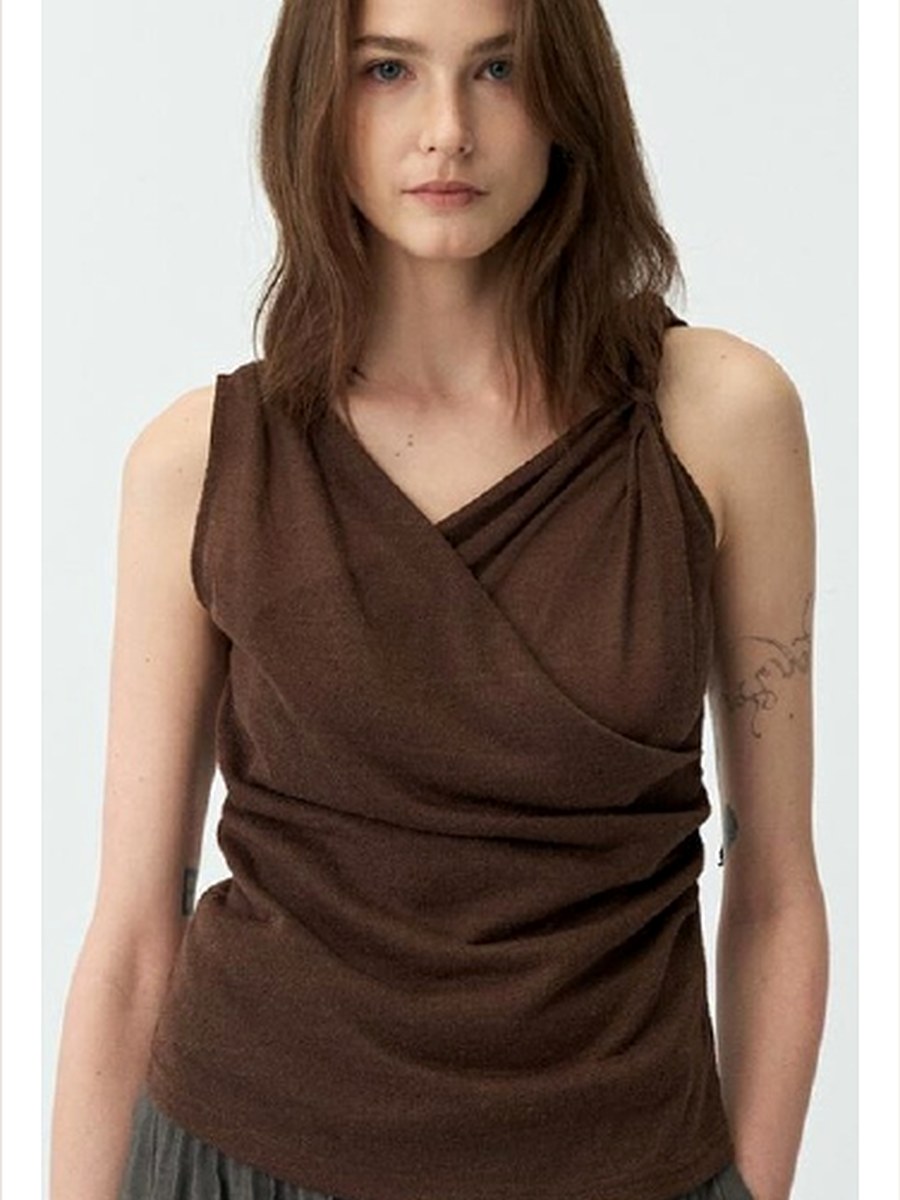
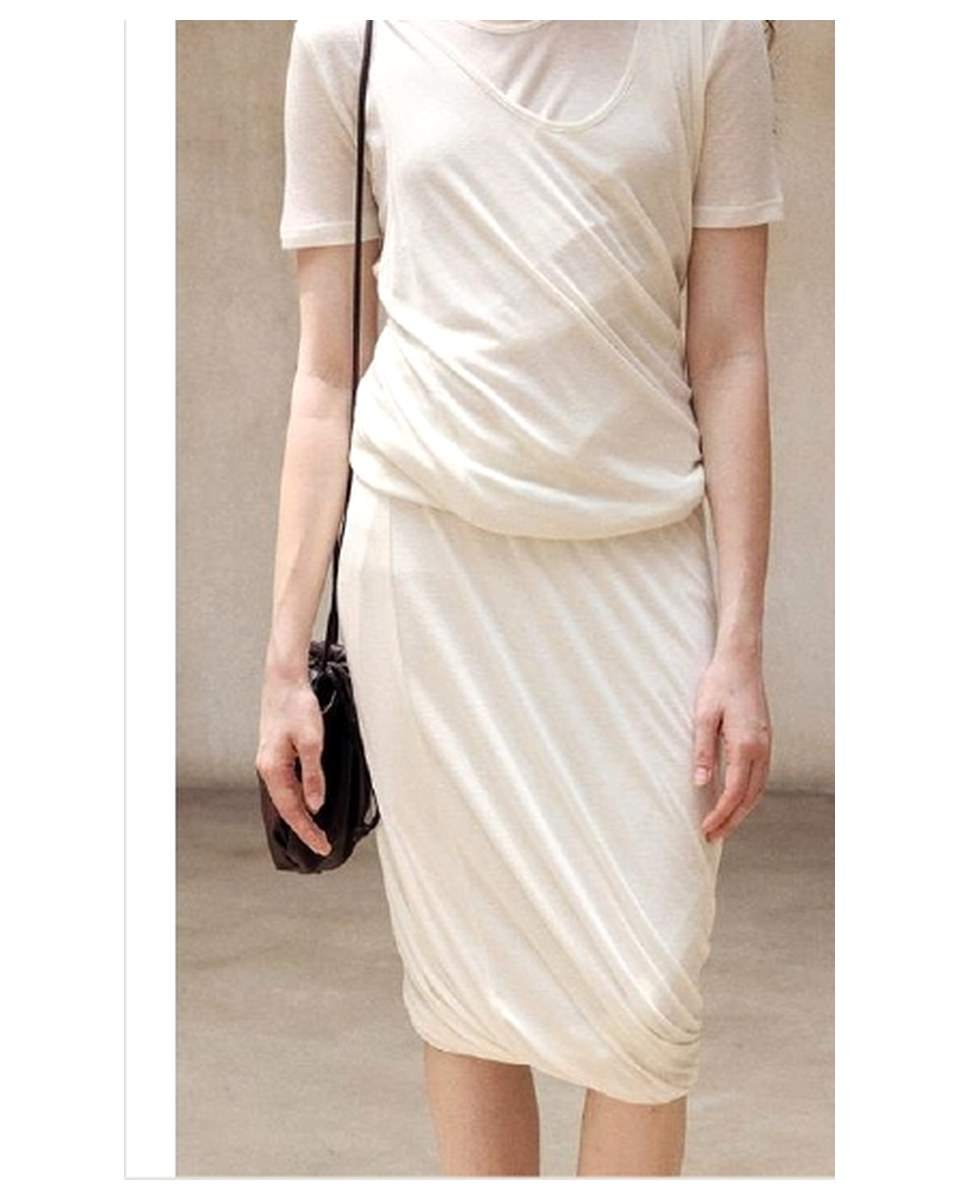
Garment references: the pale dress and draped-front top show visible folds and construction contexts. Neither photograph identifies acetate, Naia Lyte or another fibre, and neither is a controlled drape, durability or coverage test.
Compare Drape, Weight and Opacity Together
A lightweight sample can feel appealing in the hand while behaving differently in a full skirt or across a fitted area. Review enough material to see how it falls, folds and moves. Identify whether the buyer wants fluid folds, a clean vertical line or a slightly more supported shape. Those descriptions help the developer compare actual options.
Weight is useful as a specification, but it should not become the sole selection criterion. Two fabrics with similar stated weight can differ in construction, finish and appearance. A lower number does not by itself establish better comfort, stronger drape or a more suitable garment. Compare the material against the intended shape rather than a preferred number on a supplier card.
Opacity needs a defined context. Review the intended colour, the proposed lining and relevant underlayers under agreed lighting. Examine the garment while standing, sitting and moving where appropriate. A dark sample or a flat photograph may conceal a coverage problem that becomes obvious in a pale colour or where the fabric is pulled across the body.
For an illustrative champagne camisole, the buyer might compare a single-layer construction with a lined version. The review should consider neckline appearance, coverage, movement and the interaction between the layers. If the lining changes the drape, that is part of the decision. Do not approve the shell and assume the final lined garment will look the same.
Photographs can help compare samples when they are taken consistently. Use the same lighting, distance and garment position, and label each image with the material reference. Keep a physical sample for decisions that photographs cannot support, such as handle or how the layers move against each other.
The existing dress-fabric drape guide provides a related review framework. The outcome should be a recorded material-and-construction choice, not a general statement that acetate always gives one particular kind of drape.
Compare a fluid dress with an airy blouse before selecting the cloth
An acetate fabric for dresses brief becomes more useful when it names the shape the buyer wants to see. Consider an illustrative long dress with uninterrupted folds and a loose blouse with a gathered neckline. Both may call for fluidity, but the dress places more emphasis on the full-length fall and lining relationship, while the blouse asks how the cloth behaves around gathers, sleeves and openings. Approving one small swatch for both uses leaves those differences unresolved.
Use the dress collection to identify neckline, waist and skirt-volume references. Compare each candidate on a panel large enough to represent the intended fold, then on the proposed construction where the decision depends on fit. Record whether the dress should skim, hang away from the body or hold a defined shape. Changing that requirement after material approval can reopen the lining, pattern and cost discussion.
For the blouse collection, select a reference for the collar or neckline, sleeve width and hem proportion. These are silhouette references, not evidence that the displayed garment uses acetate or Naia Lyte. A branded yarn proposal needs its own identified fabric record. A buyer can borrow a neckline idea from an existing style while commissioning an entirely different material combination.
Compare lustre, drape and opacity as three separate observations. A candidate can have the desired soft reflection but need a different layer arrangement for coverage. Another may give attractive folds while making a tie look too narrow or a gathered seam too prominent. Photograph the samples under consistent conditions and write the design consequence beside each observation. “Good fabric” should become a usable decision about a specific garment feature.
Revisit gathers, ties and lining when moving to a lighter fabric
Do not reduce fabric weight while assuming every construction detail can remain unchanged. Make a small development map: neckline gathers, tie ends, seam allowances, closure supports and the point where the lining stops. Identify which parts must retain their visual size and which may be adjusted after sampling. This gives the pattern and sample team a clear purpose for comparing the candidates.
A tie that looks substantial in one fabric may need a different width, layer arrangement or construction in another. Closely spaced gathers may produce a different visual density. A lining edge may become more noticeable through a pale shell. These are questions to examine on the sample, not predetermined faults of acetate or reasons to reject lightweight materials. Review the complete combination before settling the final specification.
Use the same comment categories for the dress and blouse, but allow different approvals. The dress may need a lined body while the blouse uses a local facing or another material candidate. Keep any change in scope visible in the revised quotation. A shared colour story can still work when the two garments use different constructions, provided the buyer has approved their appearance together.
How Yinshan Fashion connects the material choice to the sample
Buyers often need help translating a swatch preference into a garment decision. Yinshan Fashion's fabrics and trims service provides a route for discussing material and component options; the sampling workflow connects the brief with silhouette and fit review. For this project, the useful outcome is a defined comparison between candidate cloths in the intended dress or blouse, with the lining and important details included.
The buyer should leave the discussion knowing what the next sample is meant to resolve. It may compare two neckline treatments, clarify coverage in the intended colour or test a proposed balance between fluidity and support. Ask the team to identify any substitute material before sampling so that a successful shape review is not mistaken for approval of a different final cloth. Named-yarn availability and documentation still require confirmation for the actual enquiry.
Send a material-and-style brief with the reference silhouette, desired shine and drape, colours, quantity range, care expectations and any fixed fibre or branded-material requirement. Add photographs of the folds, gathers or ties that matter most. Yinshan Fashion can then discuss material options alongside the garment rather than treating a yarn name as a complete design instruction.
Examine Seams, Straps and Closures in the Sample
Lightweight dress development should include the areas where the garment transfers force. Identify narrow straps, bust seams, zipper ends, side seams and any point where a trim is attached. Ask the sampling team to show those details clearly so the buyer can review how the proposed material works with the construction.
A strap carries more than visual importance. Confirm its width, attachment method, adjustability where applicable and relationship to the neckline. If a fitting changes strap length or placement, revisit the resulting tension. A neckline that looks correct on a hanger may move differently on the intended fit sample.
Use construction samples to investigate a concern before remaking the whole garment. A seam, hem or zipper panel can help the developer compare methods and identify a workable direction. The buyer should still review the selected construction in the final sample because placement and garment tension can change the result.
Describe visible problems precisely. Instead of saying the sample looks cheap, identify puckering, an uneven edge, a visible needle mark, an unstable opening or an attachment that distorts the fabric. Include the sample identity and the conditions in which the issue appeared. This gives the factory a specific point to investigate.
Formal strength or durability testing should use an agreed method and acceptance requirement appropriate to the product. This guide does not set a universal pass value. The buyer and relevant technical parties need to decide what evidence is required for the intended market and use, and whether a supplier's existing report applies to the actual material and construction.
After a construction revision, compare both appearance and function. A support that resolves a seam concern may become visible through a pale shell or alter how the neckline falls. The approval should cover the revised combination, including any changed material, thread, support or attachment, rather than treating the improvement as isolated from the rest of the dress.
Allow for Grain Direction and Pattern Behaviour
The pattern and cutting direction are part of the material decision. A fabric viewed flat in its standard orientation may behave differently when used on the bias or in a panel with changing grain direction. Mark the intended grainlines on the development pattern and ask the sampling team to follow the same version throughout the comparison.
For a bias-cut slip dress, review the full garment after the agreed preparation and hanging conditions. Record the hem, side seams and the relationship between the shell and lining. If the sample changes shape during the review process, identify when it happened. That information helps distinguish pattern, handling and material questions without assigning a cause prematurely.
Use matching sample conditions. Comparing a freshly pressed prototype with another that has been transported folded for several days can create misleading comments. Note the preparation of each garment and, where appropriate, bring them to a consistent condition before judging the difference.
A fitting should also consider movement. Ask the fit reviewer to examine the neckline, armhole, side seams and hem while the wearer performs movements relevant to the intended use. Record where the fabric pulls, twists or fails to return to the intended position. Those observations can guide a pattern revision or a different material choice.
If the buyer changes the pattern after selecting the fabric, reopen the affected review. A deeper neckline, a closer hip fit or a narrower strap can change the demands on the material. The previous sample remains a useful reference, but it does not automatically approve the new silhouette.
Keep production repeatability in view. The final approval needs a clear pattern version, cutting direction and construction specification so the factory can reproduce the selected result. A successful sample made through undocumented adjustments is harder to transfer to a bulk order than one whose important decisions are captured.
Decide Where Lining and Support Are Needed
Lining is a design decision with several consequences. It can affect coverage, handle, movement, appearance and care. Decide what job it needs to perform in each area of the garment before selecting the lining material or assuming that a full lining is the only option.
A camisole may need different treatment at the neckline from a fitted dress at the bodice. A skirt might require coverage while a sleeve is intended to remain light. Draw the proposed arrangement and specify where the layers are attached. The sampling team should be able to distinguish a design requirement from an unresolved construction question.
Review the shell and lining as a pair. Check whether one layer catches, pulls or becomes visible through the other. Examine their relationship after the proposed care review as well as before it. An acceptable shell sample does not establish that every available lining will preserve its drape and appearance.
The blouse collection is useful when the same material direction is being considered for tops. A blouse with a collar or cuff may need local support that a loose camisole does not. Keep those construction differences visible instead of applying a single dress solution to every style in the capsule.
Ask what a proposed support changes elsewhere. A firmer facing may stabilise an opening but create a visible edge. A different lining may alter the perceived colour. An additional layer may change packing volume or the care discussion. These are practical consequences to review, not reasons to reject support automatically.
For a small-batch programme, select the simplest arrangement that meets the approved product brief and can be reproduced consistently. That may be a lined garment, a local support or a revised fabric choice. The right outcome comes from the sample comparison and the buyer's priorities, not a blanket promise that lightweight acetate dresses can always be made without lining.
Establish Care and Appearance Requirements Before Labelling
The intended care route belongs in the first development brief. Ask how the buyer expects the customer to clean and maintain the garment, then review whether the complete construction can support that expectation. Do not decide the care label solely from a fibre name or a general supplier webpage.
Identify the whole assembly that will be evaluated. The shell, lining, thread, support, zipper and decorative components may all influence the result. If the sample uses a substitute trim, record it and identify what must be rechecked when the intended component arrives. A test or review is only useful when the tested sample is known.
Measure and photograph the agreed points before and after the proposed care evaluation. Depending on the garment, those points may include overall length, hem alignment, neckline shape, seam appearance and the relationship between layers. The exact method and acceptance criteria should be agreed for the programme.
Separate dimensional change from visual change in the comments. A garment might retain its key measurements but show an unacceptable surface or seam appearance. Another might look similar while moving outside the approved fit. The buyer should be able to see which requirement has been met and which still needs work.
Use the fabric shrinkage guide as a related planning reference. It should help organise the review rather than replace the actual sample and technical assessment. If a formal report is supplied, check the fabric identity, sample preparation and conditions covered.
After a material or construction substitution, revisit care approval where relevant. The final label and customer instructions should reflect the approved garment. Keeping that connection clear reduces the risk of carrying a convenient instruction from an early prototype into a different finished product.
Check Material-Origin and Breakdown Statements Separately
A material's feedstock, recycled share, biobased content and biodegradability are separate subjects. Buyers should request evidence for the statement they intend to make rather than treat all positive material descriptions as interchangeable. A wood-derived component does not answer every question about the completed garment.
Start with the exact object covered by the evidence. It may be a yarn, fibre, fabric or particular product configuration. Identify whether the information applies to the proposed colour, finish and blend. If the garment adds a lining and trims, those parts should not disappear from the discussion when the marketing wording is drafted.
For a breakdown-related statement, ask what conditions are described and what material was assessed. Do not turn a conditional material statement into an instruction to discard a garment in nature. If the brand wants to make a public claim, its responsible reviewers should assess the proposed wording and the available evidence for the actual product and market.
For recycled content, confirm the material reference and accounting basis. A supplier may use a particular allocation method, and that explanation needs to remain attached to the statement. The buyer should not replace it with a simpler physical-content story that the documents do not support.
Keep the commercial name separate from a general fibre label. Ask what naming and branding permissions are required, and retain the applicable information in the product file. A material discussion with a developer does not automatically authorise a hangtag featuring a third-party trademark or a broader certification claim.
The practical outcome can be a narrower, factual description. The brand may be able to identify the fibre composition while continuing to review a more ambitious environmental statement. That is a useful result. A garment does not need an unsupported claim to justify a well-executed design, accurate material information and a clear care recommendation.
Confirm Colour, Supply and Capsule-Range Consistency
Once a material candidate looks promising, ask how it will be supplied for the intended programme. Confirm the fabric code, colour route, available documentation and conditions for samples and bulk material. Minimums, timing and pricing need a project-specific discussion rather than a generic promise based on the fibre family.
A capsule can create several matching obligations. A dress and camisole may use the same shell, while a coordinating blouse uses a different construction. Decide whether the brand expects exact visual matching or a related colour family. Review the actual materials together before the palette becomes a production instruction.
For a broader casual-fashion range, identify which styles can share a material specification and which need separate development. Sharing a colour name is not the same as sharing a fabric. The factory needs to know whether a substitution across styles is allowed or would require renewed approval.
Consider the effect of a late change. A new colour may need another opacity review. A changed finish may alter handle. A different lining may affect the perceived shade. Keep those dependencies visible so a decision made for availability does not bypass the sample questions that mattered at the beginning.
Record the repeat-order expectation. If the style will return in later collections, retain the approved material and garment samples and ask how a new lot will be compared. If the material is a limited opportunity, plan the range accordingly. Do not promise replenishment before the supply route has been discussed.
The buyer should leave the material meeting with a defined next step: a sample order, a request for missing information, a revised colour plan or a decision to consider another fabric. A clear conditional decision is more useful than an enthusiastic selection that leaves composition, matching and availability unresolved.
Build the Acetate Dress Sampling Brief
Bring the design, material and evidence questions into one short brief with supporting files. Include the sketch, measurements, fit reference, intended use, market, colour plan, quantities and care expectation. Identify the material requirements that are fixed and the features where the developer may suggest alternatives.
Describe the first sample's purpose. For a pale slip dress, the review might focus on coverage, bias behaviour, neckline support and the interaction with a lining. For a blouse, it might focus on the collar, placket and sleeve movement. Give the team enough detail to make a useful sample without prescribing an untested construction as the only acceptable method.
Attach a material sheet and list any claims that require confirmation. If a branded yarn is proposed, request the evidence connecting it to the fabric. If a recycled or breakdown-related statement is under consideration, identify the exact wording as a question for review. Keep speculative copy out of approved label artwork.
Agree on how comments will be returned. Use annotated photographs, measurements and a written decision tied to the sample version. State whether the next step is a fit revision, construction revision, material replacement or further evidence request. This avoids a vague approval that different teams interpret differently.
Discuss the material through fabrics and trims and the development handover through manufacturing. Yinshan Fashion can assess the enquiry within the actual programme scope, while specialist material availability and claims remain subject to confirmation. The aim is an elegant garment whose material, construction, care and product information agree.
Material development checklist
Three actions before sampling
Connect the material identity, sample decision and supporting evidence to the actual garment brief.
Define the Dress Behaviour
Specify the silhouette, coverage, movement and care expectation. Identify which design details cannot change.
Compare the Complete Construction
Review shell, lining, support and trims together in the intended colour. Keep material and pattern versions visible.
Verify Each Proposed Material Statement
Separate fibre composition, brand identity, recycled content and breakdown-related claims. Request evidence for each relevant statement.
Buyer and factory checklist
Confirm these inputs for the material and garment being considered.
| Decision area | What the buyer should prepare | What to ask the factory |
|---|---|---|
| Silhouette | Sketch, fit and movement expectations | Pattern and sample approach |
| Fabric | Composition, handle and colour priorities | Identified candidate fabrics |
| Construction | Coverage and support requirements | Lining, seam and attachment proposals |
| Care | Intended customer care route | Suitable evaluation and open questions |
| Material wording | Exact statement to investigate | Scope and availability of supporting documents |
Continue the production conversation
Lightweight Dress Development Decisions
| Design issue | Compare in the sample | Buyer decision | Evidence or record |
|---|---|---|---|
| Pale shell fabric | Coverage in the intended colour and lighting | Single layer, lining or different base | Identified garment photographs and comments |
| Bias-cut body | Shape, hem and layer interaction | Pattern or material revision | Pattern version and preparation conditions |
| Narrow straps | Attachment, tension and neckline movement | Width, placement and support | Construction sample and fitting record |
| Supported opening | Facing or interfacing visibility | Selected support combination | Approved component references |
| Care expectation | Measurements, surface and seams after agreed care | Final care route and any redesign | Relevant sample results or technical reports |
| Dress versus blouse | Full-length folds versus gathers, ties and openings | Shared cloth or separate candidates | Separate garment samples and lining records |
Buyer FAQs
How should a brand choose acetate fabric for dresses?
Compare the actual fabric in the intended silhouette, colour and construction. Assess coverage, drape, seams, lining and care before approving the material for production.
Is acetate the same as satin?
No. Acetate is a fibre type, while satin refers to fabric construction or surface terminology. A satin appearance does not establish fibre composition.
Can the same acetate fabric work for a dress and a blouse?
Possibly, but approve each construction separately. Compare the dress fall and lining with the blouse neckline, gathers and openings. A shared yarn or colour name does not establish equivalent drape, coverage or care.
Can all acetate garments be machine washed?
Do not assume a universal care route. Confirm the complete garment, including lining and trims, through the appropriate review before setting care instructions.
Does a fibre claim apply to a blended garment?
Only if the evidence and applicable claim conditions support that use. Check the covered material, blend, finish and other garment components before extending a statement.