Article
What should buyers know first?
Short answer: A B2B guide to recycled polyester fabric sourcing for fashion brands, covering product applications, claimed content, documentation, colour, sample performance, labels, small-batch planning, and repeat-order records.
Recycled polyester fabric sourcing for fashion brands begins with the finished garment, not a percentage printed on a material card. A buyer may be looking for a lightweight jacket shell, an active-fashion layer, a technical overshirt, a lining, a travel set, or a functional accessory. Each product has a different requirement for weight, structure, stretch, recovery, colour, surface, seam construction, care, and packing.
Recycled polyester can be a practical material direction when its claimed content, supplier documentation, fabric construction, and sample behaviour all support the brief. It is not automatically the right answer for every style, and it should not be described as a closed-loop textile solution unless the actual input material and supporting records justify that statement. The first sample is where a sourcing claim becomes a product decision.
This guide explains where recycled polyester may fit in fashion apparel, what brands should ask before sampling, and how to turn a recycled-material requirement into a traceable route from fabric header to approved bulk order. Yinshan Fashion supports custom and private-label bulk programmes rather than unrestricted ready-stock wholesale, so the material discussion should lead to a sample and production record for one real product. It is written for private-label brands, sourcing teams, product developers, and buyers working with a fashion manufacturer in China.
How should buyers start with the intended product application?
The most useful recycled polyester discussion starts with the garment’s job. A light fashion jacket may need a crisp but not noisy shell, a stable zip area, resistance to wrinkling during packing, and a colour that stays consistent across panels. An active-fashion layer may need stretch, recovery, coverage, and a construction that remains comfortable during movement. An overshirt may need more body and surface interest. A lining may need smoothness, controlled static, and compatibility with the outer fabric. A bag, pouch, or accessory may need abrasion resistance, reinforcement, lining, and hardware support.
These are applications, not promises that recycled polyester will always perform better than another material. The fibre content is only one part of the result. Yarn type, knit or weave structure, weight, finishing, backing, coating, blend ratio, colour, print, and garment construction can change the way the material performs.
Put the intended use into the factory brief. Include the reference style, target wearer, expected fit, handfeel, weight or coverage direction, stretch requirement, colour plan, print or logo method, labels, packing, destination market, quantity by style and colour, target price, and launch timeline. If the buyer is fixed on recycled content but flexible on fabric construction, say so. If the buyer is fixed on a very specific handfeel or performance result but open to the recycled-content route, make that visible as well.
That information helps a manufacturer propose a focused material path. Without it, a quotation or swatch suggestion may look attractive but fail once it is cut into a sleeve, pocket, waistband, placket, or lined garment.
How should buyers confirm what “recycled polyester” means for this order?
Before sampling, identify the exact claim the brand intends to make. Ask which component is recycled, what content percentage is being claimed, what material reference the claim applies to, and what supplier or chain-of-custody documents may be available. A recycled yarn discussion, a supplier presentation, and a completed garment claim are not the same thing.
The documentation route needs to be agreed early because it can affect supplier selection, material booking, cost, MOQ, timing, product files, and label wording. Some buyers may require a particular certification or transaction-document route; others may only require a supplier declaration and a material record. The right requirement depends on the market, sales channel, brand policy, and actual supply chain. Do not use a certification name in marketing copy or on a hangtag simply because a similar material was available for discussion.
The source matters too. Industry reporting shows that recycled polyester has often been made from plastic-bottle feedstock, while textile-to-textile recycling remains limited at market level. That is why a buyer should not assume every recycled polyester fabric supports the same circularity statement. Ask the supplier what can be documented for the material being sampled, then keep the final claim narrow and factual.
A safe working statement is: “recycled polyester content and supporting documents are subject to the approved material, supplier documentation, and final order route.” This does not weaken the product story. It prevents the brand from promising a benefit before the production evidence is in place.
How should buyers match recycled polyester to the fashion product?
For lightweight woven fashion, recycled polyester may be reviewed for shell jackets, utility overshirts, travel layers, wind-resistant fashion pieces, pleated skirts, or structured dresses where the brief needs controlled shape, colour, and relatively low bulk. The sample should show how the material behaves at seams, zips, snaps, pockets, collar edges, hem finishing, and any lining or interlining.
For active-fashion and athleisure programs, recycled polyester may be reviewed in knit or woven blends where the buyer needs movement, recovery, coverage, moisture-management direction, or a smooth technical surface. The relevant check is not simply whether the fabric contains recycled content. The sample must show whether stretch, opacity, recovery, seam comfort, print placement, and care performance suit the intended workout or fashion-led use. If elastane, mesh, elastic, heat transfer, or bonded components are involved, each should be included in the development review.
For linings and internal components, the buyer may prioritise smoothness, opacity, colour continuity, lining weight, ease of sewing, and how the material works with the outer layer. A lining should not create unwanted pulling, static, seam bulk, or contrast-through in the finished garment. Review it with the actual shell rather than approving it separately.
For soft accessories, bags, pouches, caps, and utility details, the material conversation includes abrasion, reinforcement, hardware, webbing, lining, zip tape, print, label placement, and packing. A fabric that looks good as a swatch may not be suited to a strap, a sharp folded edge, or a high-wear base panel without a different construction route.
In each application, the buyer should ask one practical question: what needs to be true in the first sample for this material to be considered suitable for bulk? That question leads to a usable development plan.
How should buyers review colour, surface, and finishing before the material is booked?
Colour can change the way a recycled polyester fabric reads. Deep navy, black, charcoal, bright colours, pale neutrals, and printed surfaces may require different review points. A dark shade should be checked for the buyer’s relevant colour and rubbing expectations. A pale shade should be checked for coverage and show-through. A print should be reviewed at actual garment scale, not only as a digital artwork file. If the garment uses contrast panels, binding, mesh, or lining, assess the complete colour relationship before bulk cutting begins.
Surface and finish matter as much as colour. A matte outer shell, a peached woven, a dense interlock, an open mesh, a brushed knit, and a smooth jersey can each create a different product result even where the recycled-content direction is similar. The buyer should describe the desired surface in the brief and approve the actual header, not rely on a fibre name or a photograph.
If the product uses printing, embroidery, heat transfer, bonding, coating, washing, or other finishing, include those choices in the sample plan. Decoration methods can change handfeel, stretch, breathability, surface appearance, and care behaviour. A logo that works on a smooth woven shell may look or perform differently on a textured knit. The material, decoration, and care route should be approved together.
How should buyers test the first sample at the real risk points?
The first sample should answer specific questions, not just confirm that the garment looks close to a reference image. For a recycled polyester fashion program, review the points that can create a product failure after fabric is ordered or cut.
Check weight, handfeel, drape, and coverage in the intended colour. Check stretch and recovery where the style needs movement. Check seam appearance at high-stress areas, including armholes, crotch seams, pockets, zip openings, shoulder seams, waistbands, and hems. Check lining compatibility, colour match, print or embroidery placement, label comfort, and packing appearance. If the buyer has care, pilling, abrasion, colour-fastness, or other performance requirements, agree the relevant test and review route before bulk approval.
Synthetic textiles also need thoughtful product design and care planning. Do not use a recycled-content statement to imply that the material has no end-of-life, durability, or fibre-release considerations. The product should be designed for its intended use, and the brand should avoid extending the claim beyond the evidence it holds.
Make sample comments measurable. “The fabric feels wrong” is difficult for a factory to act on. More useful comments are: increase coverage in the white panel; choose a softer back surface; reduce the sleeve stiffness; improve recovery at the cuff; revise the zip guard; review the print handfeel after wash; or compare the current blue against the approved colour standard. Clear comments protect both the material decision and the final product.
How should buyers plan a workable first order and repeat route?
A recycled polyester program can become unnecessarily complex when every style uses a different construction, colour, trim, and documentation route. For a first launch, consider whether several styles can share a fabric family, a focused colour palette, lining, zip direction, label package, or packing route. This can make sample review, MOQ discussion, bulk booking, and repeat-order records more manageable without making the collection look generic.
The commercial brief should state quantity by style and colour, the target price direction, destination market, required documents, delivery objective, and expected repeat potential. MOQ, cost, and timing remain subject to the approved material, colour count, trims, packing, and production schedule. A practical factory conversation asks which choice will improve the first order, not which material story sounds strongest in isolation.
When a style is approved, keep the material reference, composition, colour standard, supporting document route, sample notes, trim codes, label artwork, packing instruction, and QC comments in one product file. A restock still needs availability and quality confirmation, but the next conversation starts from a defined record rather than a vague request for “the recycled blue fabric used before.”
How should buyers use a one-page recycled polyester brief before sampling?
The factory does not need a long sustainability presentation to begin a useful material discussion. It needs one clear brief. Put the style reference at the top, then state the intended product application, target customer, preferred surface and handfeel, construction direction, colour plan, size range, trim and logo route, quantity, target market, launch date, and the exact recycled-content or documentation requirement.
Add a short risk list. For a jacket, it may include zip stability, lining, crease behaviour, dark-colour review, and pocket construction. For an active layer, it may include coverage, stretch recovery, seam comfort, print handfeel, and wash behaviour. For an accessory, it may include abrasion, reinforcement, hardware, and packing. This turns an environmental preference into a sample plan that the product and quality teams can actually follow.
Mark every requirement as either fixed, preferred, or open for factory advice. A buyer may need documented recycled content but be open to a different knit construction. Another may require a specific matte surface but accept a different material blend if it performs better. Making those priorities visible avoids a costly sample route built around the wrong assumption.
How should buyers write a final material claim after product evidence is confirmed?
Recycled polyester can be part of a clear, useful product story when the claim matches the actual material and records. It should not be used as a broad substitute for all environmental, durability, or social claims. Avoid phrases such as “zero impact,” “fully circular,” or “eco-friendly fabric” unless the complete statement can be substantiated for the particular product.
Use the correct fibre name, composition, percentage where relevant, and any claim qualification required by the buyer’s market. The buyer should approve final label, hangtag, product-page, and campaign wording with its compliance or legal team. The factory can coordinate production data and materials, but final market claims remain a buyer responsibility.
What should buyers check in recycled polyester fabric sourcing for fashion brands?
Recycled polyester fabric sourcing for fashion brands should be organised as a product-and-evidence decision, not a material-story exercise. Start by naming the exact style, material role, colourway, component scope, destination, and decision owner. Then define what the buyer needs from the next step: a feasibility answer, a fabric comparison, a document review, a first sample, a colour proof, a construction check, a production quotation, or a bulk-release record. Each request needs different evidence.
A useful sourcing record distinguishes four kinds of information. The first is buyer direction: the garment reference, intended wearer, silhouette, handfeel, surface, fit, colour, decoration, labels, packing, and quantity structure. The second is material information: the supplier reference, composition information received, construction, weight range if known, colour or finish, and the part of the garment that uses it. The third is evidence: which documents or physical proofs are available for the proposed route. The fourth is decision status: fixed, under comparison, approved for a named purpose, or still open. Combining all four makes it less likely that a broad recycled-content discussion becomes an unsupported product claim.
The buyer should also separate an environmental preference from a commercial commitment. It is reasonable to say that recycled content is preferred or required for a proposed material route. It is not responsible to assume that every colour, construction, quantity, or future repeat will have the same availability, document route, price, sample result, or claim scope. That distinction helps a buyer ask better questions without weakening the material direction.
How should a buyer compare two recycled polyester fabric options?
Compare candidate fabrics against the same garment question. A lighter woven and a denser knit may both contain a recycled polyester component, yet they may solve very different product needs. The right comparison does not begin with a generic label such as premium or sustainable. It begins with whether each option can create the desired garment silhouette, coverage, feel, colour effect, construction route, decoration result, care behaviour, and retail presentation.
Use one line for each candidate and retain the physical header or supplier reference with the record. Note the style or component being considered, composition information supplied, construction, surface, approximate weight information if supplied, stretch and recovery question, colour direction, lining or backing relationship, component interaction, sample objective, documents reviewed, open risks, reviewer, and next action. A buyer can use the fabric-selection guide to turn this information into a wider material comparison instead of relying on a photo or an unlabelled swatch.
The comparison should be designed to reveal trade-offs. A fabric may offer the clean surface needed for a light jacket but feel too crisp for a close-fitting top. Another may have the soft hand desired for a casual layer but need a different construction around a zip, pocket, print, or elastic edge. If a supplier proposes a substitute, record the substitute as its own candidate. Do not let a material change disappear inside an email thread or a sample photograph.
Before a buyer asks for bulk costing, confirm what the price conversation is based on. The material reference, colour count, fabric route, garment construction, components, labels, packing, quantity allocation, documentation need, and destination all affect whether a comparison is like-for-like. Exact pricing, MOQ, timing, test scope, and material availability remain programme-specific. A clear comparison record makes that conditionality useful rather than vague.
What can a swatch prove and what needs a garment sample?
A fabric swatch is valuable for first review, but it has limits. It can help a buyer consider surface, thickness impression, colour direction, handfeel, stretch, and an initial relationship with a reference product. It cannot reliably prove how the material will behave as a sleeve, placket, waistband, pocket, collar, lining, printed panel, or packed garment. It also cannot prove the exact finished-product claim that might be used later for a particular market or order.
State the purpose of the first sample. A pattern-focused sample may be used to decide proportion, construction, and movement while the material route remains under comparison. A material-focused sample may need the intended fabric from the first meaningful stage because opacity, recovery, drape, surface, or seam behaviour controls the product outcome. A labelled presentation sample may answer branding and packing questions without becoming a bulk instruction. Recording the purpose prevents a provisional sample from being treated as final evidence.
Ask reviewers to comment on a specific observation and requested action. For example: compare the current navy on the full garment against the approved reference; assess show-through in the light colourway; review the back surface against the wearer-facing requirement; check recovery at the cuff after the agreed care process; assess seam appearance at the zip opening; or confirm that the print route does not make the panel too stiff. These comments are clearer than a general instruction to improve the fabric.
The fashion product brief before sampling can keep the reference, fit, material direction, components, quantities, sample purpose, reviewer, and unresolved questions in one versioned handover. This is especially important when the buyer is asking Yinshan Fashion for both fabric guidance and garment development support.
How should claims, labels, and buyer documents stay connected?
The claim discussion should follow the material, not lead it. For every proposed recycled polyester route, record what the statement covers: yarn, fabric, lining, filling, a particular component, or another defined scope. Record the claim wording under discussion, any percentage basis supplied, material reference, supplier documents made available, intended product scope, destination, reviewer, and the date of the decision. If any of those elements changes, the record should show which label, hangtag, product-page, or marketing statement needs another review.
This is not a request for a buyer to make a certification decision inside a factory conversation. Buyers may have brand, retailer, legal, market, or documentation requirements that are outside the factory's authority. The manufacturer can help organise material references, sample evidence, component information, and product files. The buyer remains responsible for checking the final wording and required evidence with the appropriate internal or external reviewer.
Avoid treating a previous document, a material supplier's broad presentation, or a photograph as proof for a later order. An actual product claim may depend on the approved material, particular supply route, order records, component scope, and market context. Narrow, factual language is more durable than broad language because it leaves room for the documents and final garment to determine what can be stated.
How do colour, trims, and construction change the material decision?
Recycled polyester is not a single visual result. A change in colour, texture, coating, print, lining, interlining, backing, zip tape, elastic, or decoration can change the garment's appearance and the evidence the team needs. Deep shades may need a colour and surface review on the actual material. Pale colours may make coverage or show-through a larger question. A printed panel may need placement, handfeel, and care review. A bonded or coated route may call for a separate construction and care discussion.
Bring high-exposure details into the sample plan early. These often include collar or neckline edges, zip guards, pocket openings, waistband or cuff recovery, visible seams, lining, heat-applied graphics, embroidery, labels, hangtags, folding, and protective packing. The factory does not need to make universal performance promises. It should identify which detail needs an applied proof, a garment sample, an approved reference, or a buyer decision before the product moves forward.
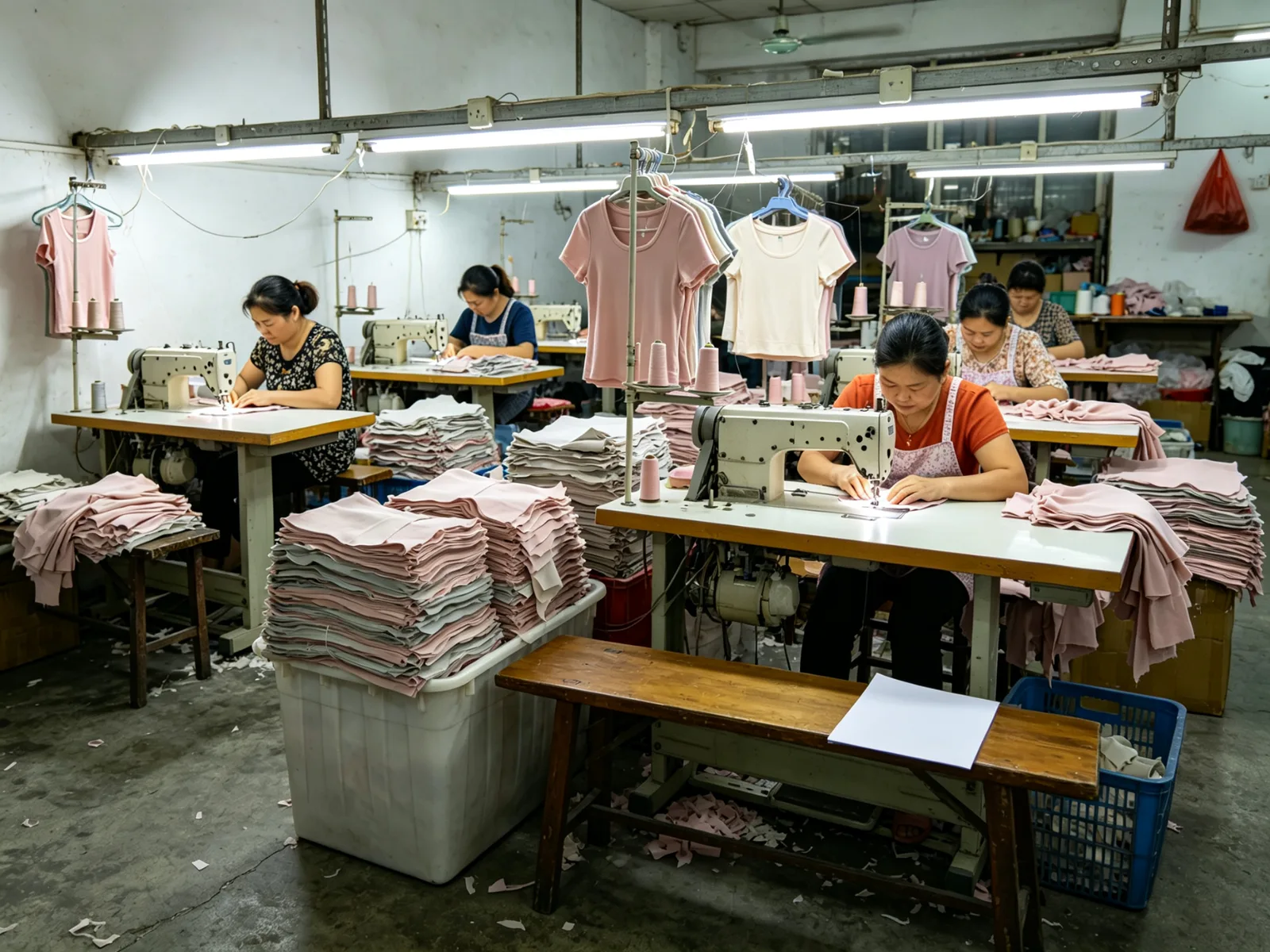
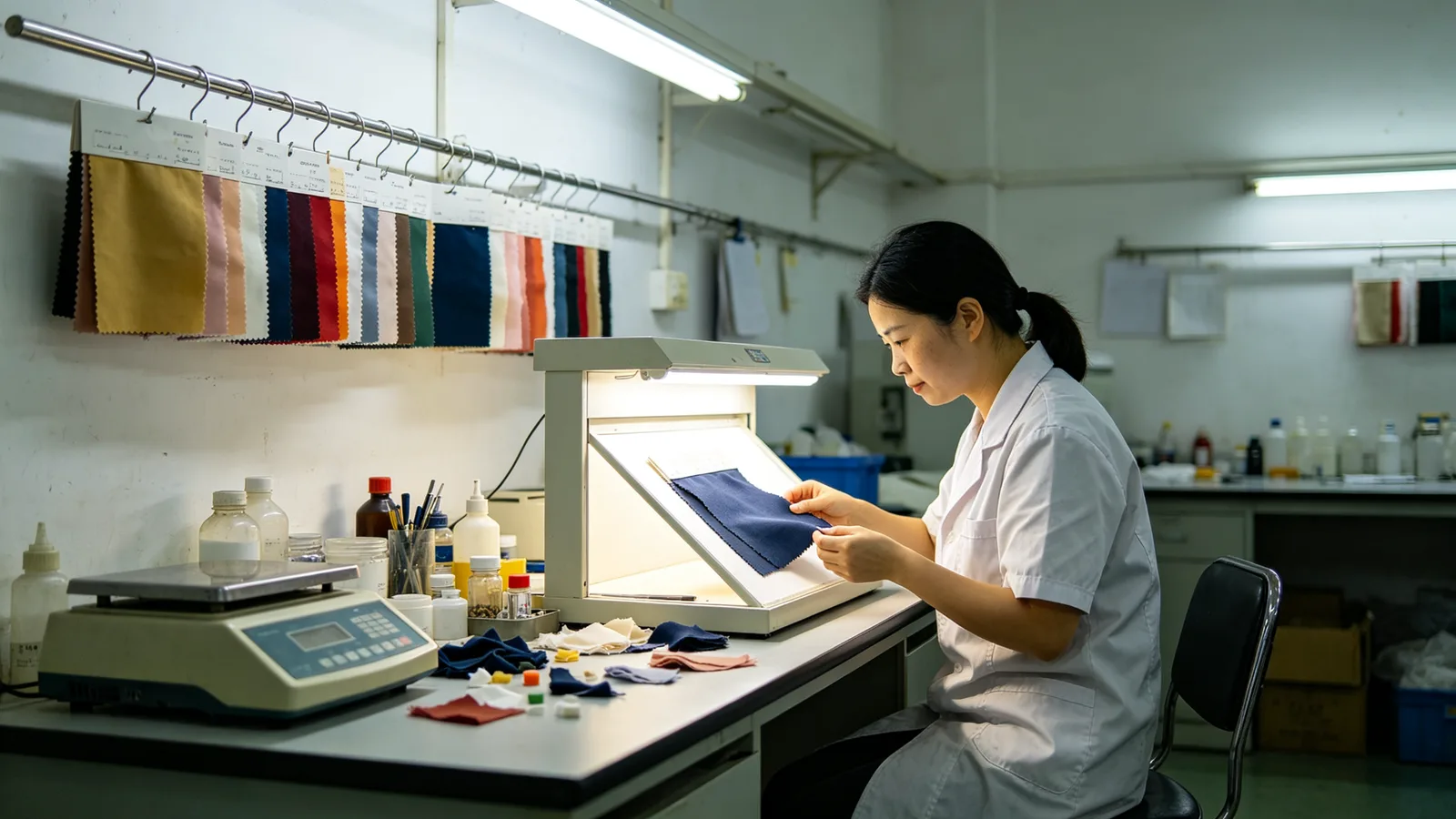
The photo above is used as production context only. It does not show a recycled polyester programme or prove a material claim. A trustworthy material route keeps the product-specific evidence separate from the visual context used to explain development and manufacturing work.
What should change when a recycled polyester style moves into bulk or repeat?
Before a bulk material is released, align the controlling sample or specification, pattern or measurement version, material reference, colour and finish route, components, decoration, labels, packing, quality priorities, quantity structure, approved exceptions, and decision owner. The release record should make it clear whether the material decision is fully approved or still conditional on a named proof, document, or buyer review. That record is more useful to a factory than an unstructured collection of chat messages.
For a repeat order, compare the old record with the new request. Check whether the material source, composition information, colour route, construction, trim package, label wording, packing, market, quantity allocation, and supporting documents remain applicable. A repeat does not automatically inherit availability, price, timing, certification, or performance. It starts from a better record, then identifies the differences that need new confirmation.
Yinshan Fashion can coordinate the material conversation with pattern, sample, component, private-label, factory, quality, packing, and repeat-order records. Buyers can begin by sending the product reference, intended use, material requirement, known claim scope, fabric behaviour, colour and component direction, quantity, target market, sample objective, and open decisions. This turns recycled polyester from a general preference into a practical development route that a supplier, manufacturer, and factory team can work through together.
Yinshan Fashion supports recycled-polyester sourcing discussions through product briefs, fabric and colour review, sample development, trims, labels, packing, quality control, and repeat-order records. The most useful enquiry includes the style reference, intended material claim, product application, fabric behaviour, colour direction, quantity, target market, and timing. That allows the team to build a sample route around the garment rather than a generic material promise.
Recycled polyester review
The four points that decide whether a recycled polyester route is workable
The value of a recycled-polyester discussion comes from matching the material claim to the garment, then reviewing its documents, colour, construction, sample behaviour, labels, and first-order plan as one development route.
Define the product job
Name the intended use: fashion jacket, overshirt, active layer, lining, bag, pouch, or accessory. That choice defines the relevant weight, surface, construction, and quality checks.
Match the evidence
Confirm the claimed component, percentage, applicable supplier documents, and final claim wording before the material story appears on labels or marketing files.
Approve the sample
Check the actual colour, coverage, recovery, seams, lining, trim, decoration, care, and packing route in the finished garment before bulk material is booked.
Recycled polyester pre-sample checklist
This is a product-development checklist, not a substitute for a buyer’s certification, legal, or market-compliance review. It helps the factory and buyer make the material route specific before the first sample is approved.
| Decision area | What the buyer should prepare | What to ask the factory |
|---|---|---|
| Product application | Share the reference style, target wearer, intended use, fit, handfeel, weight, stretch, coverage, surface, and expected care route. | Which recycled-polyester construction is suitable for this garment and its risk points? |
| Material claim and records | State the exact recycled-content requirement, component, required percentage where applicable, preferred document route, and final market or customer requirement. | Which material reference and supplier documents can support this order-specific claim? |
| Colour and finishing | Provide colour standards, print, embroidery, heat transfer, coating, wash, or other finish requirements before the material is approved. | What should be reviewed for colour, surface, print, decoration, handfeel, and care on the actual base fabric? |
| Construction and quality | Identify seams, zip openings, pockets, elastic, lining, high-stretch areas, labels, packing, and any buyer test or inspection requirements. | Which sample checks are needed before the garment can move from approved material to bulk production? |
| Commercial and repeat plan | Share quantity by style and colour, price direction, destination market, launch date, and whether the style or colour will need repeat-order support. | Can material, colours, trims, packing, and records be organised for a practical first order and controlled repeat route? |
Continue the production conversation
Recycled polyester: application and sample-review matrix
| Fashion application | What the buyer should define | What to check before bulk approval |
|---|---|---|
| Lightweight jackets and overshirts | Desired weight, surface, colour, structure, lining, zip or snap route, packing, and intended weather or travel use. | Seam appearance, zip and pocket construction, colour consistency, crease behaviour, lining compatibility, and finished-garment shape. |
| Active-fashion and athleisure layers | Stretch, recovery, coverage, surface, colour, logo method, intended movement, and any buyer test requirement. | Opacity, recovery, seam comfort, print or heat-transfer performance, care route, and shape retention in the actual sample. |
| Linings and internal components | Weight, smoothness, colour relationship with the shell, sewing route, care, and product information requirements. | Pulling, static, seam bulk, show-through, colour transfer risk, and compatibility with the outer fabric and trims. |
| Bags, pouches, caps, and utility accessories | Abrasion needs, reinforcement, hardware, webbing, lining, print, labels, packing, and expected product use. | Edge folding, strap or panel strength, hardware attachment, lining and zip performance, print appearance, and packing protection. |
Buyer FAQs
What should buyers check in recycled polyester fabric sourcing for fashion brands?
Ask for the material reference, claimed recycled component and percentage where supplied, available supplier documents, fabric construction, colour route, sample plan, relevant performance checks, label requirements, commercial assumptions, and repeat-order record. The final route remains specific to the approved material and order.
Can recycled polyester be used for fashion jackets and activewear?
It can be reviewed for both, but the correct fabric route depends on the garment. A jacket may prioritise structure, colour, seams, zips, and lining, while activewear may prioritise stretch, coverage, recovery, comfort, and decoration performance. The approved sample should prove the material suits the actual product.
Does recycled polyester automatically mean a product is fully circular?
No. Recycled content, feedstock source, product construction, trims, documentation, product life, and end-of-life route are separate questions. A brand should use only the specific claim it can support for the material and finished product.
Why should colour and print be reviewed before bulk recycled polyester is booked?
Colour, print, coating, heat transfer, embroidery, and surface finish can change the fabric’s appearance, handfeel, stretch, care behaviour, and production route. They need review on the actual material and garment sample, not only on a digital mock-up.