Article
What should buyers know first?
Short answer: A buyer decision guide to fashion fabric sourcing before sampling, covering structure, weight, drape, opacity, stretch, colour, care, construction, availability, approvals, bulk handover, and repeat-order records.
Fashion fabric sourcing before sampling means choosing a material route against the garment's required silhouette, handfeel, opacity, stretch, colour, care, construction, commercial plan, and future bulk risk. The correct answer is not the fabric with the most impressive name or highest weight. It is the material whose behaviour can be reviewed, approved, recorded, and reproduced for the actual product.
Yinshan Fashion supports custom and private-label bulk programmes developed from a buyer's product brief; it is not an unconditional ready-stock wholesale platform. Fabric availability, colour routes, minimums, price, sampling steps, testing, and timing depend on the product, material construction, quantity, market, trims, finish, and approval requirements. A useful sourcing process exposes those conditions before the sample is treated as proof of bulk feasibility.
This guide is for founders, designers, product developers, sourcing teams, retailers, and private-label buyers selecting fabric for blouses, dresses, shirts, T-shirts, trousers, sweatshirts, streetwear, and loungewear. It explains how to compare a small number of relevant options, how to brief a factory, what evidence belongs in sample approval, and which records should follow the material into bulk production and repeat orders.
How should buyers define the garment result before naming a fibre?
Begin with the job the finished garment must perform. A crisp shirt needs enough body to support its collar and placket without becoming cardboard-like. A fluid blouse needs movement but may also need opacity and stable seams. A summer dress may require drape, colour depth, lining compatibility, and comfort in the intended climate. A streetwear overshirt may depend on texture, structure, surface character, and a controlled wash. A lounge set may place softness and recovery ahead of a sharp press.
Describe the result in observable terms. Explain whether the fabric should hold shape, skim the body, fall away from it, stretch with movement, recover after wear, layer without bulk, resist show-through, accept a print, or retain a particular surface after care. “Premium” is not a material specification. It becomes useful only when the buyer defines what the customer should see, feel, or experience.
State which attributes are essential and which can trade off. A buyer may rank opaque pale colours above extreme lightness, or soft drape above a crisp crease. A fitted knit may require recovery more than a brushed surface. A textured woven may accept more crease character if the visual effect is central to the style. Priorities help the factory narrow the options instead of presenting an unstructured wall of swatches.
The garment role also matters. A hero dress used for campaign imagery may justify a distinctive surface or difficult drape. A core T-shirt expected to repeat may place more weight on stable construction, colour continuity, care, and future availability. A first brief should show that commercial role because the same attractive fabric may be unsuitable for both products.
For softness-led categories, the Loungewear product programme helps frame robes, pyjamas, and lounge sets where skin feel, drape, warmth, opacity, recovery, and care must be balanced. Actual materials still require project review.
How should buyers build fashion fabric sourcing before sampling into one material brief?
A usable material brief connects the product identity with the fabric decision. Start with the style code, category, target customer, sample size, fit direction, destination market, launch or receiving objective, intended care, quantity by style and colour, and the person who owns material approval. Attach annotated product references and state what the material must achieve in that silhouette.
Use both buyer language and technical evidence. Words such as fluid, dry, compact, airy, peach-soft, brushed, matte, crisp, cool, or softly textured help describe the desired experience. Add the practical boundaries: woven or knit direction, stretch requirement, opacity, surface, approximate weight range if known, lining relationship, print or wash, colour priorities, construction risk, and any information or documentation the buyer needs reviewed.
Mark what is fixed, preferred, open for proposal, or excluded. The buyer may require a natural-looking matte surface but remain open to the exact fibre blend. It may require stretch and recovery while leaving the knit structure open. It may prefer an available material for the first order but accept a made-to-order route when the commercial plan supports it. The factory should be able to see where it can advise without silently changing the product.
The fashion product brief before sampling provides the wider product input: style identity, fit, measurements, construction, branding, quantities, packing, approvals, and version control. Fabric should sit inside that brief. A material chosen without the product context can produce a successful swatch and an unsuccessful garment.
Create one comparison sheet for all proposed options. Give each option a temporary code, source date, intended style, current status, known attributes, evidence held, open questions, and decision owner. Do not rely on supplier names such as “premium jersey” or “luxury satin” as permanent identities. Those descriptions may not distinguish one construction, finish, or batch from another.
How should buyers compare structure, weight, and drape instead of using GSM as a quality score?
Fabric weight can be helpful, but it does not describe the entire material. GSM means grams per square metre. It can support comparison when the constructions are understood, yet two materials with the same GSM can differ in yarn, density, knit or weave structure, finish, thickness, air permeability, stretch, recovery, drape, and visual coverage. A higher number is not automatically better.
Ask the factory to identify whether the proposal is woven or knitted and to explain the construction in buyer-useful terms. A plain weave, twill, satin structure, single jersey, rib, interlock, fleece, mesh, or textured knit will create different product behaviour. The exact technical name matters less than understanding why the proposed structure suits the silhouette, seam route, surface, and care expectation.
Evaluate drape in the shape of the garment. A swatch hanging from one corner can reveal movement, but it cannot show how a dress falls across its panels, how a blouse behaves at the placket, or how trousers respond at the seat and knee. Pin or sample enough material to observe the relevant proportion. Compare how the material folds, gathers, pleats, presses, and returns after handling.
Thickness and bulk influence construction even when weight appears suitable. A fabric can be light but lofty, or heavy and compact. Layered seams, collars, cuffs, waistbands, pocket edges, bindings, elastic channels, zips, and hems may become too bulky or unstable. The sample should test the construction points where several layers meet.
Use the Casual Fashion programme to frame real categories such as T-shirts, blouses, dresses, trousers, and sweatshirts. The page is a product-development reference, not a promise of ready stock. The selected material, colour, quantity, size range, branding, and sample route still need project-specific confirmation.
How should buyers review opacity, stretch, recovery, and dimensional stability together?
Opacity depends on more than weight. Colour, yarn, construction, density, surface, stretch, lighting, and the wearer's underlying layer can change show-through. Review pale or lightweight options over a contrast layer and in the intended garment shape. A fabric that looks opaque while flat may become more transparent when stretched across the body or placed under strong light.
Stretch describes how far a material moves; recovery describes whether it returns. A fabric can stretch easily but remain bagged at the knee, elbow, seat, neckline, or waistband. For fitted products, check direction of stretch, recovery after repeated movement, seam compatibility, and whether the pattern assumes a particular behaviour. Mechanical and fibre-based stretch can feel different even when a simple percentage appears similar.
Dimensional stability concerns how length, width, and shape respond to handling, sewing, finishing, and care. The buyer does not need to prescribe a laboratory method without reason. It should state the care and product outcome it expects, then ask which sample, wash, or other project-specific checks are appropriate before bulk material is released. The factory should explain what the result means for pattern allowance, measurements, and production control.
Surface stability also matters. Review pilling tendency, snagging, brushing, shedding, abrasion at high-contact areas, creasing, glazing, or other changes where relevant to the product. A lounge fabric, brushed sweatshirt, textured overshirt, and fluid dress do not share one risk profile. Focus the review on the contact points and care route the garment will actually experience.
Record the condition of every reviewed sample. A fresh header, washed panel, fit sample, and production garment are not equivalent evidence. If handfeel is approved after washing, an unwashed reference does not prove the same result.
How should buyers evaluate colour, print, wash, and finish on the actual material base?
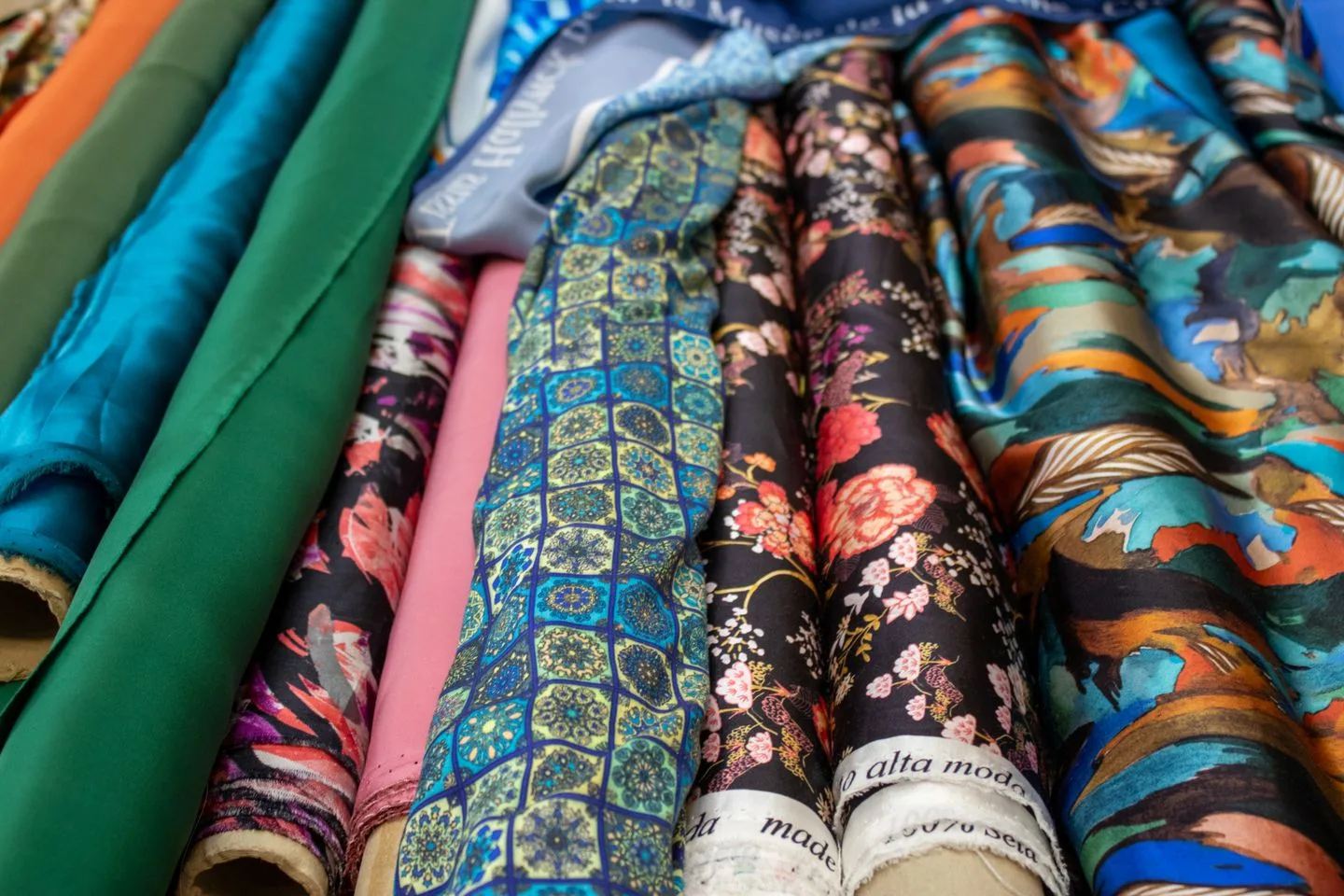
Colour is a relationship between the chosen standard and the actual material surface. A digital value or screen image can communicate direction, but it cannot show how a shade reads on matte poplin, lustrous satin, compact jersey, rib, twill, or a brushed surface. Approve colour on the intended base through the project-specific physical or agreed evidence route.
Name the evidence and its status. This may include a physical colour reference, lab dip, strike-off, print panel, washed panel, bulk swatch, or garment sample. Record proposed, reviewed, approved, conditionally approved, rejected, or superseded. If the buyer accepts a colour subject to a revised finish or fabric base, write that condition instead of treating the shade as fully closed.
Print needs scale, repeat, placement, colour, and substrate context. A design may lose sharpness on a textured surface or appear different when stretched. Large garment panels can reveal repeat or alignment effects that are invisible in a small strike-off. The buyer should distinguish an engineered placement from an all-over repeat and state which seams or product areas need special review.
Garment wash, brushing, coating, printing, pleating, embossing, or other finishing can change colour, handfeel, dimensions, surface, seam appearance, trims, labels, and care. Review the finish on the intended base and, where relevant, in the garment. A finish approved on development material should not automatically release a different bulk base.
Dark, saturated, pale, fluorescent, or season-defining shades may require extra attention depending on product and market. Avoid universal promises about colourfastness or test performance. Identify the actual risk, buyer requirement, evidence needed, and decision owner. Keep unverified performance or sustainability language out of marketing copy.
How should buyers connect fabric with pattern, construction, lining, and trims?
Material and pattern development are one conversation. Fabric drape, stretch, recovery, shrinkage, thickness, and finish influence ease, seam position, grain direction, panel balance, pocket behaviour, neckline stability, hem, and measurements. A pattern approved in one base may not perform the same way when the material changes.
Ask which construction points are sensitive to the proposed fabric. Fluid wovens may need careful seam and edge control. Lightweight pale fabrics may require lining or changed pocketing. Soft knits may need neckline and shoulder stability. Thick or textured materials may affect buttonholes, zips, bindings, cuffs, plackets, or layered seams. The factory should propose a sample route that proves the buyer-visible result.
Trims must be reviewed with the material. Button weight can distort a light placket. A zip can create rippling or stiffness. Elastic recovery needs to work with the shell or waistband construction. Thread, interlining, lining, rib, tape, label base, print, embroidery backing, or heat transfer can change appearance and comfort. A trim selected in isolation may fail when attached to the garment.

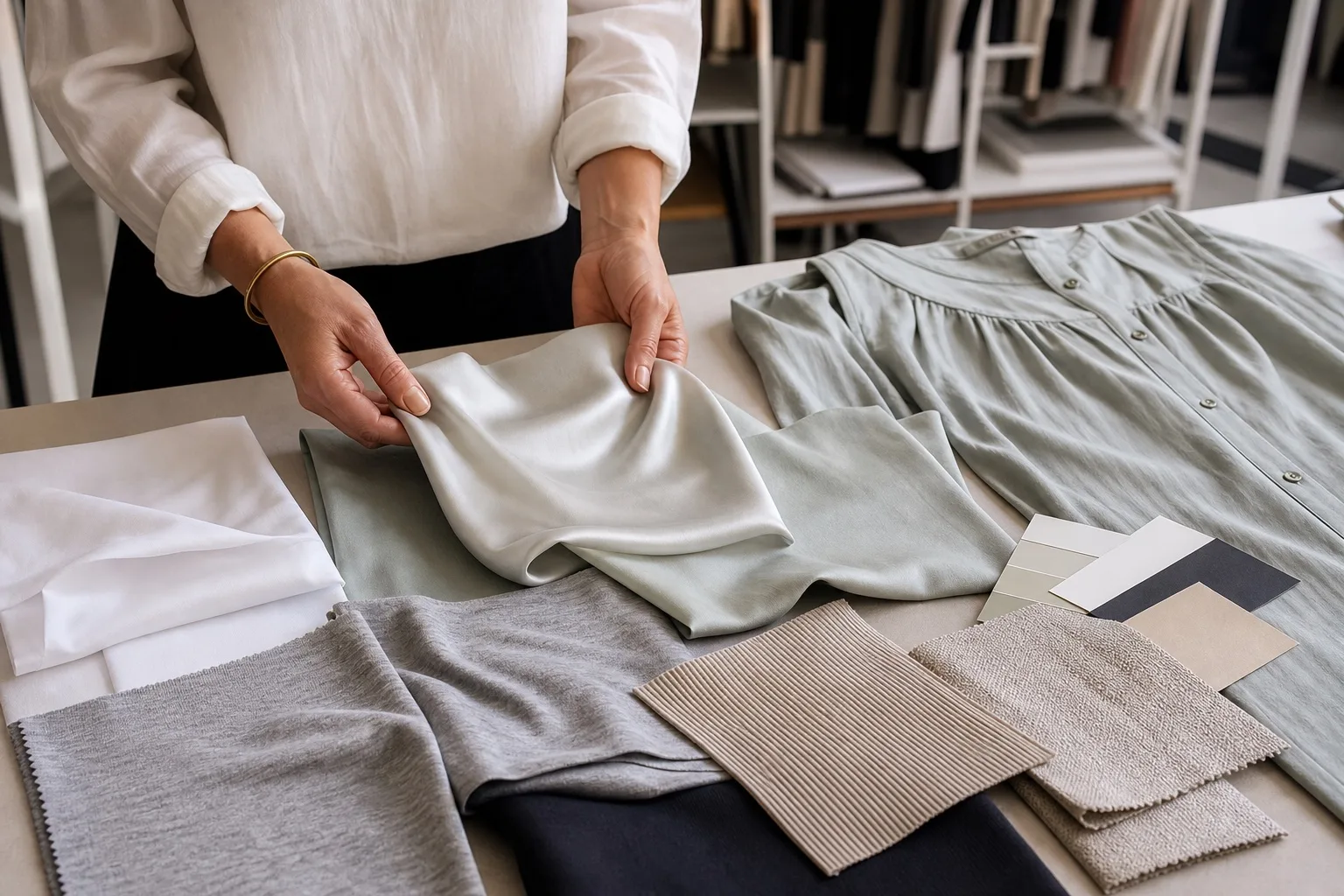
This real Yinshan development image shows why fabric selection is not a catalogue lookup. The practical decision connects material, garment references, construction, and buyer priorities. It does not imply that every style uses the same fabric source, testing plan, sample stages, or approval route.
Use the fabric and trim development page to organise the discussion around material direction, colour, lining, buttons, zips, elastic, labels, stitching, and finishing. The page describes collaboration areas; the actual component source and commercial conditions remain subject to the project.
How should buyers plan care, shrinkage, surface change, and evidence before approval?
Start from the intended care route and customer use. State whether the garment is expected to be washed, dry cleaned, hand washed, line dried, tumble dried, ironed, steamed, or handled in another way, but treat this as a design input until the final product and market information are reviewed. The care instruction should reflect the actual garment components, decoration, finish, and evidence.
Fabric care cannot be separated from lining, trims, thread, elastic, print, embroidery, labels, and packing. One component may create the limiting condition. A shell can tolerate a process that damages a decoration or changes a lining. A washed fabric may be stable while the assembled garment twists because of panel direction or construction. Review the complete product where the risk crosses components.
Create an evidence plan that answers a defined question. If the concern is shrinkage, identify the measurement method, condition before and after care, sample identity, and acceptable product decision. If the concern is pilling, colour rubbing, seam appearance, or recovery, state why it matters to the product and who will review the result. Do not order tests by habit or imply that one result proves every market requirement.
Requirements vary by product, buyer, destination, and intended claim. The buyer should identify contractual, retailer, regulatory, or internal requirements and obtain appropriate professional guidance where needed. The factory can coordinate material and garment evidence within the agreed scope, but it should not invent compliance conclusions.
Keep rejected and conditional results as well as approved ones. They explain why a material changed and protect against an earlier option returning later. The record should connect the evidence to the exact fabric proposal and sample, not simply to the generic style name.
How should buyers choose an available, made-to-order, or custom route without assumptions?
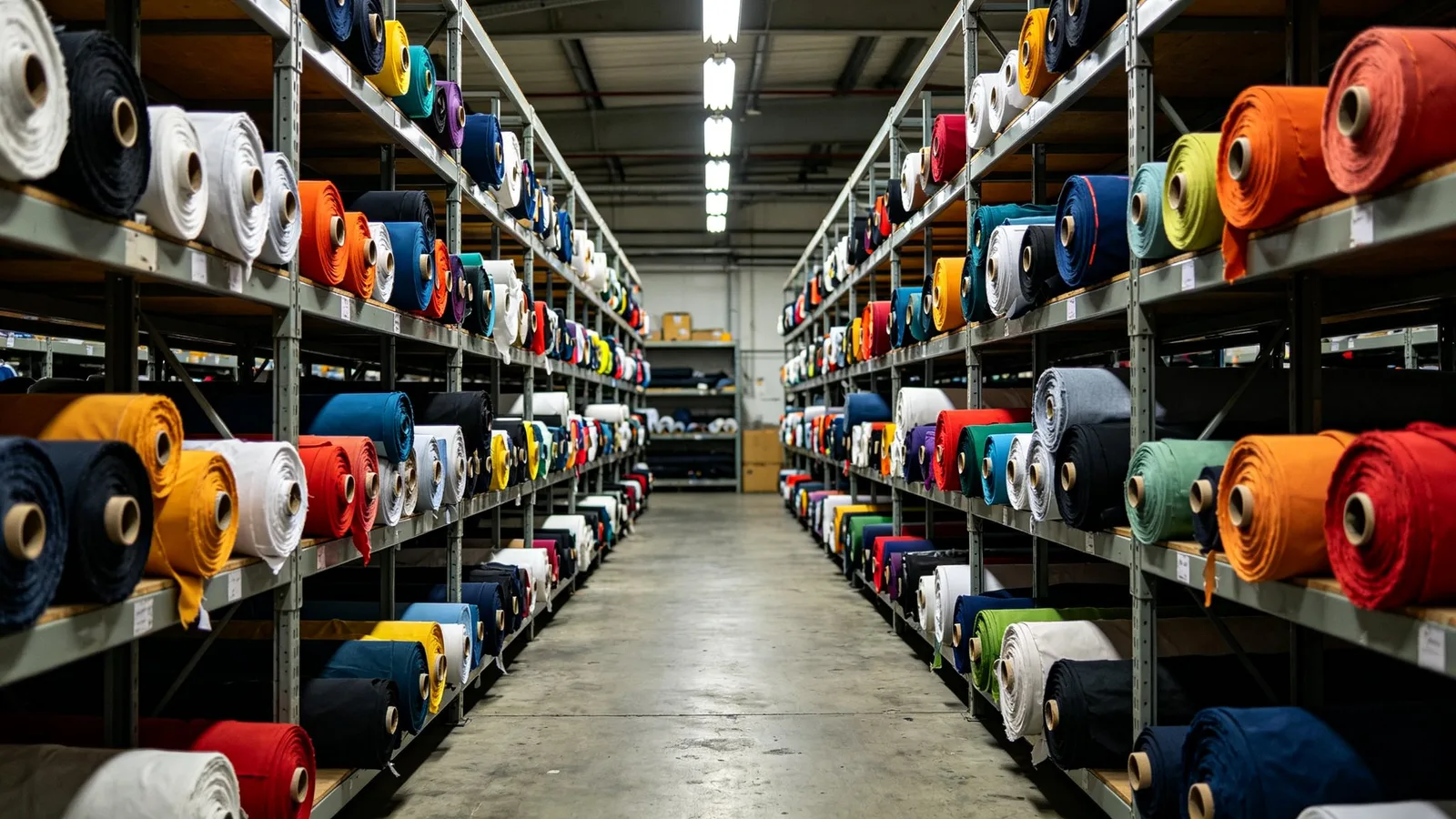
An available material may support faster evaluation or a smaller first programme when the source, quantity, colour, and continuity fit the buyer's needs. It is not automatically an unrestricted stock promise. Availability can change between enquiry, sample, order, and repeat production. Confirm the actual reference, usable quantity, colour, condition, and reservation or booking assumptions at the relevant decision point.
A made-to-order route may support a preferred construction or colour but introduce separate material quantities, production timing, lab dips, finishing, and approval dependencies. A custom-developed route may create more distinctive behaviour or surface, yet it can require additional development, evidence, minimums, and commercial commitment. The correct route depends on the product and business plan, not a hierarchy in which custom is always better.
Ask the factory to compare routes on the same decision fields: product result, material identity, colour process, sample evidence, quantity conditions, cost assumptions, approval stages, expected continuity, and open risk. Avoid comparing one available fabric quote with one custom route as though only the price differs.
For a first collection, shared material families can reduce fragmentation. One woven base may support a blouse and dress; one jersey may support several tops; one lining or trim family may work across related styles. Shared materials can help colour, component, and repeat-order planning when the product result remains appropriate. They should not be forced onto styles with different functional needs.
Do not describe a fabric as available for repeat orders without a retained identity and a fresh availability confirmation. A repeat may require a new lot, colour review, substitute, or revised approval. The material record reduces avoidable reconstruction; it does not freeze the market.
How should buyers create a style-colour-quantity matrix before discussing material minimums?
Material feasibility begins with the assortment. List style, colour, size range, quantity, fabric use, lining, contrast material, rib or trim relationship, and any shared base. Separate estimated quantities from confirmed quantities. State the date and owner for the next update.
MOQ can arise from different places: greige fabric, dyeing, printing, finishing, a special yarn, one colour, one construction, trim production, or another component. There is no reliable universal number for every fashion fabric sourcing programme. Ask which decision creates the constraint and whether the unit is metres, kilograms, rolls, colour, artwork, or another supplier measure.
Translate material quantity into garment planning carefully. Fabric consumption depends on pattern, width, size ratio, marker, placement, print direction, shrinkage allowance, defects, and other project factors. An early estimate can support feasibility, but the factory should confirm the method and assumptions before it becomes an order quantity.
Use scenarios when the collection is still changing. A base scenario may concentrate quantity in core colours. An alternative may share one fabric across related styles. Another may move a low-volume fashion colour to an available material. Compare the effect on product result, sample approvals, colour identity, timing, and commercial scope rather than presenting consolidation as a purely financial decision.
The matrix also helps prevent hidden fragmentation. A collection described as “three styles in four colours” may require several different bases, linings, ribs, prints, or finishes. Count each material-colour-finish combination and identify which one needs its own approval and continuity record.
What should buyers check about approve fabric in the garment context and name each sample stage?
Fabric approval is not one event. A buyer may first approve a header for direction, then a sample garment for drape and construction, a colour reference on the chosen base, a washed or finished result, and finally a bulk reference. Name what each approval proves and what it does not prove.
The first sample should reveal the highest-risk product questions. Use the intended or clearly identified substitute fabric and record every substitute. If the sample uses a temporary colour, lining, button, zip, or finish, mark it on the sample identity and comment sheet. A visually successful sample should not conceal an unresolved bulk material route.
Review the garment in the conditions that matter: on the intended body or form, in relevant light, after movement, at layered seams, against the skin where relevant, and after the proposed care or finish when that decision is material. Photograph front, back, side, inside, and critical details. Record both accepted points and changes.
Approval language should be scoped. “Handfeel approved on header A” is different from “fabric approved for bulk.” “Colour direction accepted subject to the actual base” is conditional. “Fit approved” does not settle opacity, shrinkage, print, care, or availability. The sample record should name the product, material code, colour, sample type, version, date, and decision owner.
Connect the material decision with the manufacturing workflow before bulk. The approved reference needs to reach material receiving, cutting, sewing, in-line quality, finishing, packing, and later repeat-order records. A development team may understand an informal description that is unusable on the production floor.
What should buyers check about record material identity, substitutions, and the bulk handover?
Create a material identity that is specific enough to retrieve the approved route. Record the internal or supplier code, composition information as supported, construction, weight or width where relevant, colour reference, surface and handfeel description, finish, approved evidence, date, source status, intended styles, and any lining or trim relationship.
The fashion fabric traceability checklist explains how to organise identity, bill of materials, evidence status, colour, substitutions, bulk handover, and repeat-order records. Traceability here means retaining the relationship between the approved garment and material evidence. It does not create an unsupported sustainability or origin claim.
Substitutions require a delta record. State why the original is unavailable or unsuitable, what the proposed replacement changes, which styles and colourways are affected, and what needs to be rechecked. Compare construction, weight, width, handfeel, drape, opacity, stretch, recovery, shrinkage, surface, colour, care, trims, price assumptions, and timing where relevant.
Before cutting, confirm the current material reference, colour or lot identity, required checks, usable width or consumption assumption, pattern version, direction or nap, print or placement logic, shrinkage route, and styles or sizes released. The actual controls depend on the garment and production setup. The record should make clear what was checked and who released it.
Keep the bulk swatch, lot observations, approved deviations, cutting notes, quality findings, and final garment evidence with the style. After shipment, add receiving or customer feedback that affects the next order. This creates a practical starting point for a reorder while preserving the need to reconfirm availability and changed requirements.
What should buyers check about send a factory-ready fashion fabric sourcing brief?
The handover should help the factory propose a small number of relevant material routes and explain their trade-offs. Start with the product and decision, not a request for every fabric in the market.
- Product identity: style code, garment category, assortment role, intended customer, season or climate, market, sales channel, and sample objective.
- Silhouette and fit: reference images or sample, desired structure or drape, sample size, fit direction, key measurements, stretch or movement needs, and high-risk construction areas.
- Material priorities: woven or knit direction, handfeel, weight range if known, thickness, opacity, stretch, recovery, texture, surface, lining, breathability or warmth outcome, and acceptable trade-offs.
- Colour and finish: physical or digital direction, core and fashion colours, print, wash, brushing, coating or other finish, evidence required, and continuity needs.
- Care and evidence: intended care route, product risks, buyer or market requirements, checks to discuss, documentation needs, claims excluded until verified, and approval owners.
- Construction and components: seams, collars, plackets, pockets, hems, waistbands, trims, elastic, rib, lining, decoration, labels, and packing interactions.
- Commercial plan: quantities by style and colour, size range or ratio, destination, target positioning, launch or receiving objective, available versus custom preference, and repeat-order potential.
- Process control: material comparison format, sample stages, temporary substitutes, colour approval, version method, open-question log, quotation assumptions, bulk release, and retained records.
Ask the factory to respond with proposed material codes, the reason each option fits, known differences, current availability assumptions, colour route, sample evidence, construction effects, component dependencies, commercial assumptions, and the next buyer decision. The response should distinguish confirmed information from a proposal.
Before sending, align the brief with measurements, artwork, labels, quantities, packing, and market information. Name the decision owners and identify every point that remains open.
Private-label details also depend on material. Fibre information, care wording, label base, print or decoration, colour, packaging, and destination requirements should be reviewed against the final garment. Use the private-label development page to organise those inputs without assuming the factory can decide legal or market information on the buyer's behalf.
For a Yinshan Fashion review, send product references or a tech pack, garment category, fit and measurements, material behaviour, colours, finish, quantities by style and colour, size range, trims, labels, packing, destination market, sample objective, evidence requirements, and target receiving window through the contact page. The team can compare practical routes and identify the decisions required before sampling. Exact MOQ, price, testing, availability, and timing remain programme-dependent.
Material decision
Compare fabric as a garment decision, not a swatch collection
Fibre composition is a starting point. The buyer decision also depends on structure, weight, drape, opacity, stretch, recovery, surface, colour route, care, trim compatibility, commercial conditions, and how those variables behave in the garment.
Start with the garment job
A soft blouse, draped dress, heavy overshirt, polished trouser, premium T-shirt, or lounge set requires a different balance of feel, structure, care, and cost.
Approve behavior, not only handfeel
A beautiful swatch can still shrink, bag, crease, show through, bleed, pill, or lose its intended drape after sewing and washing.
Review color on the actual base
The same color reference can look entirely different on poplin, satin, jersey, twill, rib, or a textured woven blend.
Questions to settle before fashion fabric approval
The buyer and factory should make these decisions together before the style moves beyond a first sample. Requirements and testing should always be confirmed against the actual material and intended market.
| Decision area | What the buyer should prepare | What to ask the factory |
|---|---|---|
| Silhouette and product use | Explain whether the garment needs to hold shape, skim the body, drape, layer, travel well, stretch, or create a premium tactile impression. | Which material route gives the right balance of silhouette, comfort, appearance, cost, and availability? |
| Weight, opacity, and handfeel | Specify whether the brief needs crisp, fluid, soft, brushed, compact, airy, textured, cool, warm, opaque, or lightly sheer material. | Can we review fabric headers in natural light, over a contrast layer where relevant, and in the actual garment shape? |
| Care, shrinkage, and surface behavior | State the expected care route and identify risks such as pilling, creasing, color rubbing, lining show-through, or shape loss. | What sample, wash, or finished-garment checks are sensible before bulk material is booked? |
| Color, print, and finish | Share the core palette, print direction, wash or finishing idea, and whether the collection needs color continuity for repeat orders. | Is this material stock-dyed, made to order, or custom-developed, and what is the practical lab-dip route? |
| Trims and market requirements | Confirm buttons, zippers, labels, lining, elastic, embroidery, packaging, care wording, and any buyer documentation requirement. | Which fabric and trim records should be held before sampling is signed off for bulk? |
| Quantity, route, and approval status | Share style-colour quantities, size range, destination, timing objective, repeat plan, material-route preference, decision owner, and any open evidence requirement. | Which available, made-to-order, or custom route is being proposed, what assumptions drive it, and what must be approved before booking or cutting? |
Continue the production conversation
Fashion fabric sourcing decision table before sampling
| Decision area | Buyer should define | Factory should confirm | Risk if left open |
|---|---|---|---|
| Garment result | Silhouette, fit, customer, climate, care, surface, opacity, movement, and priority attributes. | Which material routes can create that result and which trade-offs remain. | An attractive swatch produces the wrong shape, comfort, coverage, or customer experience. |
| Structure and weight | Woven or knit direction, desired body, drape, thickness, layer points, and any weight range. | Construction, weight, width, thickness, handling, and garment areas that need sample proof. | GSM is treated as quality while bulk, seam, drape, or pattern behaviour is missed. |
| Stretch and stability | Direction of movement, recovery, fit, care outcome, and high-contact product areas. | Stretch and recovery behaviour, dimensional checks, pattern implications, and sample method. | The garment bags, twists, changes size, loses support, or no longer matches the approved fit. |
| Colour and finish | Colour standard, print or wash, finish, appearance range, continuity needs, and approval owner. | Actual base, colour route, evidence stages, finish effect, substitutions, and current status. | A screen or development panel is mistaken for approval on the finished production material. |
| Construction and trims | Seams, lining, closures, elastic, rib, decoration, labels, care, and packing relationships. | Material compatibility, layered bulk, stability, component choices, and checks to repeat. | Individually approved components distort, damage, or visually conflict in the garment. |
| Quantity and sourcing route | Style-colour quantities, size range, scenarios, destination, timing objective, and repeat plan. | Available, made-to-order, or custom assumptions; source of minimums; and quotation scope. | The collection fragments into several unplanned material, colour, or finish commitments. |
| Approval and records | Sample purpose, decision status, version owner, required evidence, claims boundary, and release scope. | Material identity, sample and bulk references, change log, cutting release, and retained records. | A partial approval or substituted material becomes an uncontrolled bulk-production standard. |
Buyer FAQs
What is fashion fabric sourcing before sampling?
Fashion fabric sourcing before sampling is the process of comparing material options against the garment's silhouette, fit, structure, drape, opacity, stretch, colour, surface, care, construction, commercial plan, and bulk risks before treating a sample as the product standard. The buyer defines the required result; the factory proposes and documents practical routes, assumptions, and approval steps.
Is higher GSM always better for fashion fabric?
No. GSM is fabric weight per square metre, not a complete quality score. Yarn, knit or weave construction, density, finish, thickness, drape, stretch, recovery, opacity, surface, care, and the garment's construction all affect performance. Compare the material in the intended product and at its high-risk seams or fit areas.
Should a buyer choose stock fabric or custom-developed fabric?
Neither route is universally better. An available material may support efficient evaluation when its identity, quantity, colour, and continuity fit the programme. Made-to-order or custom routes may support a specific construction, colour, or surface but can introduce separate minimums, timing, evidence, and approvals. Compare the product result and commercial assumptions for the actual order.
How should colour be approved during fashion fabric sourcing?
Approve colour on the intended material base using the evidence appropriate to the project, such as a physical standard, lab dip, print strike-off, washed panel, bulk swatch, or garment sample. Record the material code, colour, finish, evidence type, status, version, date, and decision owner. Screen images can communicate direction but do not prove the final surface.
What should a buyer send Yinshan Fashion for fabric sourcing before sampling?
Send product references or a tech pack, garment category, silhouette and fit, key measurements, material behaviour, colours, print or finish, quantities by style and colour, size range, construction, trims, labels, packing, destination market, care and evidence needs, sample objective, and target receiving window. Exact MOQ, pricing, availability, testing, and timing require project review.