Article
What should buyers know first?
Short answer: A B2B apparel target-costing guide for turning retail-price, margin, product and channel assumptions into a comparable factory brief without treating a target as a fixed quote.
Apparel target costing is the disciplined process of turning a brand's retail-price, channel, discount, margin, and product-priority assumptions into a clear factory brief before development decisions harden. It is not a request for a factory to guarantee a number from an incomplete sketch. For custom fashion, the useful question is: “What product, quantity, material, construction, sample, label, packing, and delivery assumptions would make this commercial target plausible to review?” Yinshan Fashion supports custom and private-label bulk programmes rather than unrestricted ready-stock wholesale, so every costing conversation needs a defined garment and a buyer-owned commercial scenario.
Direct answer: begin with the brand's intended selling route, not a guessed factory unit price. Name the product version, target retail position, expected discount or promotion scenario, channel deductions that the brand controls, planned margin view, desired product-cost boundary, quantity structure, and non-negotiable product attributes. Then give the factory the technical brief it needs to identify material, construction, sample, trim, label, packing, and quantity questions. Keep the target as a decision input until the actual product scope and quote basis are reviewed. A price target can guide trade-offs; it does not prove that a garment is feasible, authorize bulk, or replace a current quotation.
What is apparel target costing in a custom fashion programme?
Apparel target costing connects two different views of the same product. The brand starts with a commercial intention: the customer it wants to serve, the selling channel, the planned price position, promotion approach, and contribution it needs from the style or range. The factory starts with a product route: the silhouette, material, construction, components, colours, quantities, sample purpose, labels, packing, and required approvals. A useful target-cost process lets those views meet without pretending that either side already knows every answer.
For a custom product, a target cost should be written as a boundary with conditions, not as a demand for one unexplained number. A buyer may state that the first collection needs an accessible core item, a higher-value hero piece, or a test product that protects a particular fabric handfeel or construction detail. The factory can then explain which inputs still need clarification before it can assess the relevant production route. That conversation is more useful than asking for the “lowest possible price,” because it identifies which product choices create the commercial pressure.
The target also has a different job from a supplier quotation. The target is a buyer-owned planning assumption. A quotation is a supplier response to a defined scope at a stated point in time. They may eventually align, but they should never be treated as the same document. The target explains what the brand is trying to achieve. The quotation explains what the supplier is currently pricing, including any assumptions, exclusions, and questions that remain open.
Start with the customer-revenue scenario, not a factory-unit guess
Before discussing the factory cost, make the revenue scenario explicit. A list price is not automatically the money the brand collects on every unit. A direct-to-consumer product may have a promotion calendar, payment fees, fulfilment, returns, or other commercial inputs. A wholesale product may have a different selling price, customer terms, packaging expectation, or account requirement. A marketplace route may add its own deductions and operating rules. These are brand and channel decisions, not default factory inputs.
Write one scenario per product and route. State the intended sales channel, the planned list-price position, any expected discount or promotion treatment, and the decision owner. If the brand has more than one route, do not blend their assumptions into one average simply because the garment is the same. A dress sold through a boutique account, a brand site, and a marketplace can produce different commercial results even when the approved garment reference is identical.
The brand does not need to disclose every commercial detail to begin a factory discussion. It does need to decide what target-cost boundary matters for the current product. For example, the commercial owner may say that a core blouse must support a particular price tier after the brand's own channel assumptions, while a limited seasonal dress may carry a different target because the product proposition relies on a specific fabric or construction. This is a planning instruction, not a promise of price or margin from Yinshan Fashion.
Separate the buyer's target cost from the supplier's quote
A target cost gives the factory context. It does not remove the need for a product brief. When a buyer sends only a target, the factory still cannot know whether it describes a simple available-material route, a custom colour, a lined construction, a complex print, special trim, a retail pack, or several small style-colour-size splits. The same target can point to very different development choices.
Keep two columns in the working record. In the first, record the buyer's intended cost boundary and the commercial scenario behind it. In the second, record the supplier's current response: product version, material direction, construction, included work, exclusions, quantity assumption, quote validity, and open questions. A third column can show the action required to close a gap. This structure prevents a team from calling a target “met” when the supplier was pricing a different product or a different order structure.
The fashion manufacturer quote-comparison guide gives a broader method for aligning competing proposals. Use it after the target brief is stable enough to compare like with like. A lower figure is not a saving when it excludes a component, describes another material, assumes a different quantity split, or leaves a required approval outside the scope.
Define the product version before treating any cost number as useful
Costing follows the product version. Assign a style code or working name, revision date, category, intended wearer, channel, and sample objective. Separate confirmed requirements from visual inspiration and open questions. The brief should say which decisions are fixed, which are preferred, and which can be reviewed for a more workable route.
For a dress collection, the cost conversation may depend on silhouette, lining, drape, length, closures, seam detail, print or solid-colour route, and the planned size and colour matrix. For a blouse collection, the relevant questions may be fabric behaviour, coverage, placket, collar, sleeve, buttons, transparency, and finishing. Both can sit under a similar retail-price tier while needing very different material consumption, operations, sample review, and packing decisions.
Describe the intended product outcome before requesting a specific solution. State the required handfeel, structure or drape, fit direction, construction features, components, decoration, labels, packing, market, quantity plan, and target delivery objective. Where a term is uncertain, mark it as a question. A factory can propose a practical route only when it can see the garment that the target is meant to support.
Map the main cost drivers by product family
The following matrix is a planning tool. It does not set a price, MOQ, sample fee, material availability, or delivery commitment. It helps the buyer identify the inputs that should sit beside the target before asking a factory to assess a specific programme.
| Product family | Product choices that need to be clear | Costing question to ask | Evidence or decision owner |
|---|---|---|---|
| Dress | Silhouette, length, lining, closures, fabric drape, print or solid colour, size and colour plan | Which material, construction, component, or quantity choice has the largest effect on this version? | Brand product owner; factory reviews the stated product route |
| Skirt | Waist route, length, lining, closure, hem, fabric, grade, colour split | Does the target protect the fit and construction choices the product needs? | Brand product owner with sample-review input |
| Blouse or women's top | Fabric coverage, collar or placket, sleeve, buttons, decoration, finishing | Which feature is required for the product promise and which may have alternatives? | Brand product and commercial owners |
| Knitwear | Yarn or material direction, gauge direction where known, shape, ribs, trims, care-data question | Which sample and material questions must be answered before the target is tested? | Brand product owner; factory sample and material discussion |
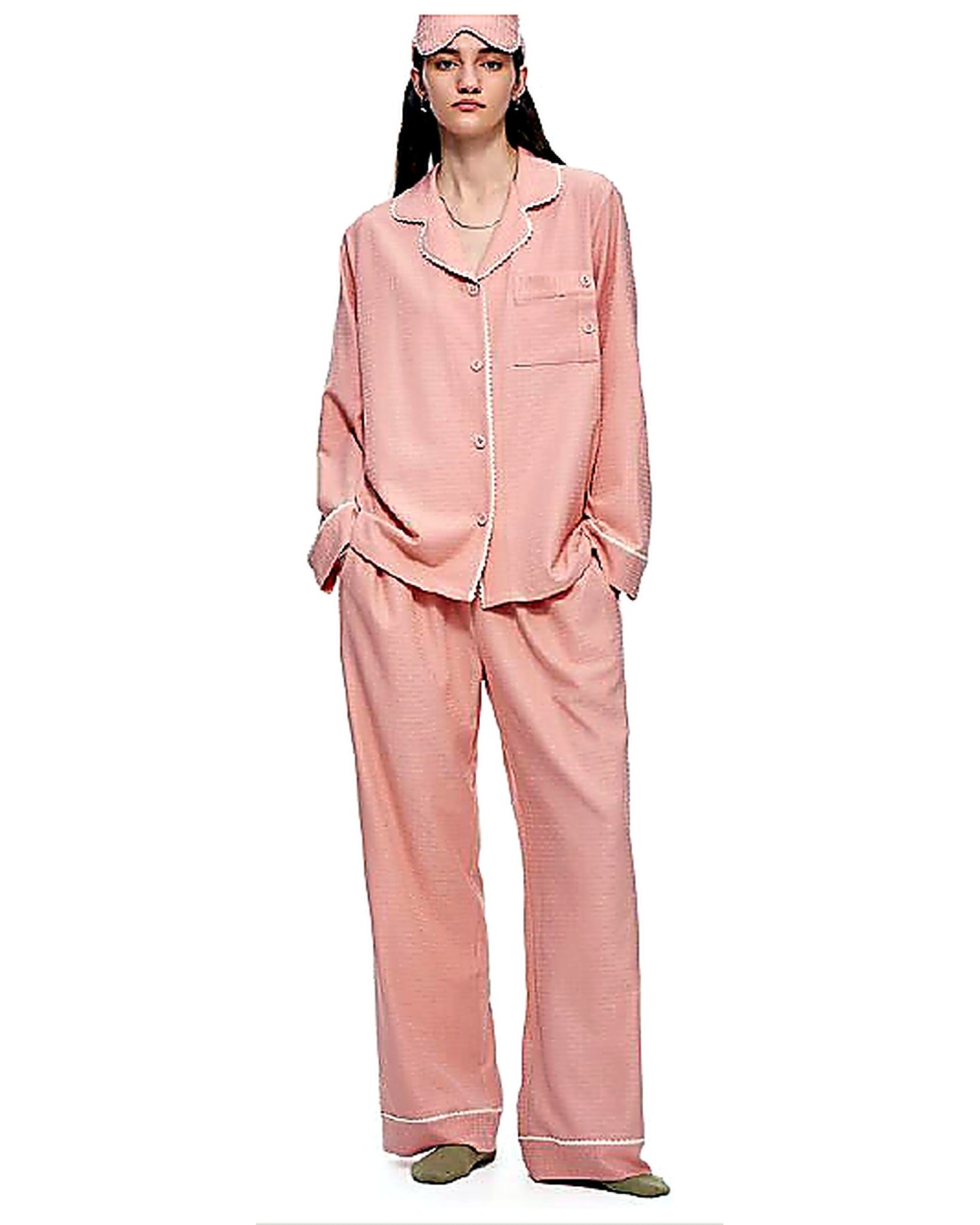
| Pajama or nightwear | Comfort direction, set components, elastic, piping, print, size range, folding or pack | Which comfort, component, or presentation decision changes the scope? | Brand product and channel owners |
| Occasionwear | Fabric effect, lining, decoration, structure, closures, special handling, presentation | Which feature is genuinely central to the garment, and what evidence is needed before simplification? | Brand commercial approver with product team |
Use the product-specific row to ask better questions. A target cost for a simple jersey top may be affected by a different combination of material, rib, print, labels, and size splits than a target for a lined dress or embellished occasionwear. A table does not make those routes equivalent. It makes the differences visible before a commercial target becomes a poor development instruction.
Protect the product promise before simplifying the wrong feature
Target costing is not an instruction to remove every cost driver. A product needs a reason to exist for its intended customer. That reason may be a particular silhouette, drape, fit, construction detail, tactile direction, colour relationship, or private-label presentation. If the first response to a cost gap is to change the feature that gives the garment its purpose, the brand may meet an internal target while weakening the product it planned to sell.
List the product's protected attributes separately from adjustable attributes. A protected attribute could be the fit reference for a hero dress, the coverage and handfeel required for a blouse, the comfort direction of a pajama set, or the construction feature that differentiates an occasionwear piece. Adjustable attributes might include a lower-priority colourway, a compatible component route, a presentation option, a lower-volume variation, or the timing of a secondary style. The buyer should decide the commercial value of each choice; the factory can explain what the defined option changes in the current programme.
For a women's knitwear collection, a buyer may need to protect the intended silhouette and current material direction while reviewing the colour plan, trim route, or size allocation. For pajamas and loungewear, comfort, component interaction, and the sellable set definition may matter more than copying a previous folded presentation. Do not claim that one product category is automatically cheaper than another. Compare the actual version and state the trade-off.
Build scenarios instead of asking one number to answer every question
A single target can hide decisions that are not yet made. When the range, materials, or channel plan is still open, create a small number of named scenarios. For example, the commercial team might compare a core version, a version that protects a distinctive material or finish, and a version that delays a lower-priority variation. Each scenario should use the same product identity and show what changed.
For every scenario, state the channel and list-price position, promotion or discount assumption if any, product scope, material direction, construction, quantities by style and colour, size range or ratio, labels, packing, destination, and sample purpose. Keep any return, fulfilment, payment, marketplace, customs, or warehouse assumption with the brand or named service provider that owns it. The factory can review the garment and production inputs, but it should not be asked to invent a channel's economics.
Scenario planning is particularly useful when a buyer has a target landed-cost boundary rather than a factory-only objective. The apparel landed-cost planning guide explains how freight, duties, receiving, fulfilment, discounting, returns, and quality exposure belong to a separate commercial model. Do not make a factory quote carry estimates that belong to a logistics provider, customs adviser, marketplace, warehouse, or brand commercial owner.
Make quantity structure visible beside the target
Total units alone can make a target-cost discussion misleading. The same total can represent one focused style and colour plan or many small style-colour-size combinations with separate materials, labels, packing, or approvals. A buyer should provide the current matrix, not only the grand total. Identify proposed units by style, colour, and size, then flag any route that uses a different material, print, component, label, or presentation.
The apparel manufacturing cost guide explains how MOQ, sample cost, and bulk price answer different questions. Use it to identify the constraints behind a quantity structure. Do not turn it into a fixed minimum or a permanent price rule. Current material availability, construction, decoration, components, labels, packing, and approval scope all need confirmation for the actual order.
If the buyer is considering a first run and later repeat, state both as separate commercial scenarios. A planned repeat may help the buyer see which records and material choices need continuity, but it is not a factory promise that the future order will have the same price, inputs, availability, or timing. The supplier's current quote should show its validity and the conditions that could require another review.
Use samples to test the cost-sensitive product question
Sampling is not just a presentation step between a target and a bulk order. It is the point where the brand can test the material, fit, construction, decoration, or component question that may change the target-cost conversation. A sample can show whether the intended drape, coverage, closure, seam, placement, or finished shape works on the proposed product. It cannot automatically prove that every production assumption is settled.
Name the sample purpose. Is it testing silhouette and fit? A fabric and drape direction? A print placement? The relationship between a lining and outer fabric? A label placement or packed presentation? The buyer should record the sample version, observations, required actions, and decision owner. If the garment changes, make the cost review conditional on the revised evidence instead of treating the earliest estimate as the settled basis.
The sample approval before bulk guide helps buyers turn comments into a controlled handover. Use that method before comparing a final bulk route with the target. A sample decision can confirm one question while reopening another; it should not be described as a blanket authorization for price, production, customer claims, or launch.
Show where a target differs from the current supplier response
After the product brief and supplier response exist, compare them line by line. The useful outcome is not only “above target” or “below target.” It is a short list of the differences: material direction, construction, colour route, component, decoration, label, packing, quantity split, sample scope, delivery term, or another assumption. Give each difference an owner and a next action.
Some gaps may need no change. A brand may decide that a protected product attribute justifies a different commercial scenario. Others may be candidates for a controlled alternative, a focused first order, a revised range architecture, or an additional quotation scenario. Still others may show that the target was based on an incomplete revenue or channel model. The decision belongs to the named commercial approver, not to an unreviewed spreadsheet total.
Ask the factory to identify what it can confirm, what it proposes, and what needs another input. Ask the commercial team to decide whether the proposal still supports the customer and margin scenario. This division prevents an operational cost discussion from silently becoming a change to the product or a customer promise.
Keep factory, brand, and service-provider responsibilities distinct
Yinshan Fashion can review the defined garment, material direction, construction, sample questions, labels, packing, quantity structure, and production-coordination implications of a custom programme. Its team can help explain which product choices need more evidence before a commercial response becomes comparable. It does not own the brand's retail price, promotion strategy, marketplace charges, payment fees, return policy, customs treatment, warehouse process, or final launch decision.
The brand commercial owner should own the revenue scenario, product role, target-cost boundary, acceptable trade-offs, and approval gate. The product owner should own the active brief, sample comments, and protected attributes. Ecommerce, marketplace, warehouse, finance, logistics, and customer-service teams should own their route-specific inputs. When an outside adviser is needed for a trade, tax, legal, or market issue, record that dependency rather than assuming that a prior order settles it.
This ownership map makes a smaller brand faster, not slower. It tells the factory which question needs a product response and tells the commercial owner which assumption must be decided before the product is pushed into sampling or bulk. A custom womenswear manufacturing discussion can connect the garment-development side of that work, but the buyer retains the commercial and market decisions that define its target.
Use a short target-cost brief that a factory can act on
The most useful target-cost brief is concise enough to update and specific enough to compare. Include the current style code and revision, category, product references or tech pack, target wearer and channel, retail-price position, discount or promotion scenario, target-cost boundary, quantity matrix, size and colour plan, fabric and construction direction, components, decoration, labels, packing, destination, sample objective, desired decision, and approval owner.
Then add three columns: confirmed, proposed, and open. A confirmed field might be the product category or approved sample version. A proposed field might be an alternative component or colour strategy. An open field might be material availability, a decoration proof, a market-specific packing instruction, or the quantity allocation still being decided. This record lets the factory respond to the product it can see and lets the brand decide whether the response fits the scenario it actually plans to run.
Do not send a target cost without the product context and then treat a preliminary response as a commitment. Do not send a complete product brief while hiding the commercial boundary that would make an alternative worth discussing. The value of target costing is the controlled conversation between those two inputs.
When is a target-cost decision ready, conditional, or unsuitable?
A target-cost decision is ready for the next stage only when the brand can name the product version, the commercial scenario, the quantity structure, the main cost-sensitive choices, the supplier's scope, and the decision owner. “Ready” may mean ready to request a quote, select a sample route, or review an alternative. It does not automatically mean ready for bulk production or promotion.
It is conditional when a named material, sample, quantity, label, packing, channel, landed-cost, or approval question remains open. The record should say what is missing and who will close it. It is unsuitable when the available information does not support the planned product or commercial promise. The right response may be a revised brief, a different range architecture, a new sample, a new channel scenario, or a hold. Calling the issue visible is more useful than forcing a spreadsheet target to look approved.
What should a buyer send Yinshan Fashion for an apparel target-costing review?
Send the current style references or tech pack, product category, intended wearer, channel, retail-price position, relevant promotion or discount assumption, target-cost boundary, product priorities, current material and construction direction, colours, components, labels, packing, destination, quantity matrix, size range or ratio, sample purpose, target delivery window, and the decision the brand needs to make. Mark what is fixed, what can change, and who can approve a trade-off.
Yinshan Fashion can use those inputs to discuss custom design, fabric direction, fit, sample development, private-label elements, and production coordination for the defined programme. Actual costs, MOQ, materials, availability, lead times, tests, freight, taxes, channel fees, and commercial terms remain project-specific and require the responsible parties' current review. The next useful step is to turn the brand's target into one clear product-and-scenario brief rather than another isolated number.
Apparel target-costing control kit
Turn a price ambition into a product brief a factory can review
Keep the commercial scenario, current garment version, quantity structure, and supplier scope connected before a target becomes a misleading production instruction.
Name the commercial scenario
State the selling route, price position, promotion assumptions, and target boundary owned by the brand.
Cost the current garment
Link the target to a dated product version, material route, construction, components, labels, packing, and quantity matrix.
Approve the trade-off deliberately
Record what is protected, what can be reviewed, and who decides whether the supplier response supports the launch plan.
Buyer inputs and factory questions for apparel target costing
The brand retains responsibility for commercial scenarios, channel costs, product positioning, and final approval. Yinshan Fashion can review the defined custom-production inputs and the questions they create.
| Decision area | What the buyer should prepare | What to ask the factory |
|---|---|---|
| Commercial scenario | Provide the target channel, list-price position, relevant promotion or discount assumption, and target-cost boundary. | Which product and production inputs must be stated before this target can be assessed? |
| Current product version | Share the current style reference, revision, fit direction, material behaviour, components, labels, packing, and sample objective. | Which material, construction, component, or sample question could change the current production scope? |
| Quantity structure | Provide quantities by style, colour, size, material variation, and presentation route rather than a grand total alone. | Which split creates separate sourcing, development, minimum, production, or packing work? |
| Target-versus-quote review | List the protected product attributes, adjustable attributes, and named commercial approver for each scenario. | What is included, excluded, assumed, conditional, or still open in the current response? |
| Next decision | Name the sample, alternative, quantity plan, or commercial approval needed next. | What evidence would make the current product route ready for a more comparable discussion? |
Continue the production conversation
Apparel target-costing brief: questions, owners, and release conditions
| Brief layer | Question to answer | Evidence owner | Do not assume |
|---|---|---|---|
| Product version | Which style, revision, material direction, construction, components, labels, packing, and sample purpose are being costed? | Brand product owner and factory review for the defined programme | That a visual reference, earlier sample, or category name identifies the current garment |
| Commercial scenario | Which retail-price position, channel, promotion or discount assumptions, and target boundary is the brand testing? | Named brand commercial owner | That a list price equals collected revenue or that one channel applies to every route |
| Quantity structure | How are proposed units split by style, colour, size, material, label, or packing variation? | Buyer with factory input on the stated production route | That the total units alone describe the work or commercial basis |
| Supplier response | What does the current quote include, exclude, assume, and need before it can be confirmed? | Factory quote owner and buyer reviewer | That a preliminary figure is a final price or an approval to begin bulk |
| Channel and landed inputs | Which fulfilment, payment, marketplace, freight, duties, warehouse, discount, return, or quality assumptions affect the brand's model? | Brand and named service providers as applicable | That a factory quote owns another party's charges or processes |
| Decision gate | What makes the route ready, conditional, or unsuitable for the current product and commercial plan? | Named commercial approver | That a completed spreadsheet total authorizes production or promotion |
Buyer FAQs
What is apparel target costing?
Apparel target costing is a buyer-led planning process that connects a commercial scenario to a defined garment brief. It states the product version, target-cost boundary, quantity structure, and assumptions that a factory needs to review before a quote is compared or a product decision is made. It is not a universal factory price.
How should a brand calculate a target cost for apparel?
Start with the brand's own intended channel and revenue scenario, then state the product-cost boundary that the commercial owner wants to test. Keep discounts, promotions, fulfilment, payment, returns, warehouse, freight, duty, and other route-specific inputs with their owners. Give the factory a current product, material, construction, quantity, label, packing, and sample brief rather than a number alone.
Is an apparel target cost the same as a factory quote?
No. A target cost is the buyer's planning boundary. A factory quote is a supplier response to a stated scope at a particular point in time. Compare them only after the product version, material, construction, quantities, included work, exclusions, and open questions are visible.
Why can target costing change after a sample?
A sample can clarify or change the material, fit, construction, components, decoration, consumption, labels, packing, or quantity assumptions behind an early scenario. Record the new version and ask which commercial assumptions it affects rather than treating the first estimate as a fixed bulk commitment.
Can Yinshan Fashion help review an apparel target-costing brief?
Yinshan Fashion can discuss the defined custom or private-label garment, fabric direction, fit, sample, components, labels, packing, quantity structure, and production-coordination questions. The brand and its named providers retain responsibility for retail pricing, channels, margin choices, returns, freight, taxes, marketplace rules, and final commercial approval.