Article
What should buyers know first?
Short answer: A practical B2B guide for startup fashion brands planning a focused first collection with a clothing manufacturer, from product brief and samples to quantities, private labels, bulk control, and repeat-order records.
A fashion clothing manufacturer for startups should help a new brand turn a focused product idea into a sample and order plan that can be checked, approved, and repeated. The useful partner does more than quote a garment. It identifies the decisions behind product scope, fabric, fit, construction, quantities, private labels, quality control, packing, and the handover from an approved sample to bulk production.
For Yinshan Fashion, this means a custom or private-label bulk programme, not an unrestricted ready-stock wholesale offer. The practical route depends on the actual products, materials, colours, quantities, size split, branding, packing, destination market, approval timing, and delivery objective. A startup does not need to have every document finished before contacting a factory, but it should make its known decisions and open questions easy to see.
Direct answer: Start with fewer products, a clear customer and price position, one organised product brief, realistic quantity scenarios, and a sample plan with named approval points. Compare manufacturers against the same assumptions. The first collection becomes more manageable when every added colour, fabric, trim, label, and packing variant has a commercial reason.
What a fashion clothing manufacturer for startups should help you decide?
The first useful test is not whether a supplier says it supports startup brands. It is whether the team can discuss the decisions inside your actual collection. A jersey T-shirt, woven blouse, overshirt, lounge set, and active layer require different fabrics, patterns, construction methods, trims, finishing, and quality priorities. A relevant manufacturer response should name those differences and explain what must be reviewed before a sample or quotation can be treated as reliable.
Begin with the role of the first collection. Is it a small online launch, a boutique capsule, a trade-show presentation, a preorder range, or the first group of products for a repeatable brand programme? The answer changes what should be sampled first, how many variations are sensible, which packaging is necessary, and what the brand needs to learn before committing to bulk. A startup testing fit and product-market response may need a more concentrated assortment than a retailer with an established customer and historical size data.
Use the Yinshan Fashion product programmes to identify category direction before discussing details. The Casual Fashion collection, for example, helps a buyer distinguish between T-shirts, shirts, blouses, dresses, trousers, and co-ordinated daywear. These pages are development references, not a promise of ready stock or permission to copy an existing design. Their purpose is to make the first conversation more specific.
A fashion clothing manufacturer for startups should also be comfortable saying that an answer depends on information the brand has not yet supplied. That is often more useful than an immediate universal promise. Ask which choices affect the material route, sample scope, component minimums, production sequence, quality checks, packing work, and commercial assumptions. The quality of those questions is evidence of whether the factory is reasoning about the project rather than only responding to a keyword.
What should buyers check about give every first-collection product a clear commercial job?
New brands often begin with many attractive ideas but no hierarchy. A first collection becomes easier to develop when every product has a job. One style might be the entry product that introduces the brand. Another might carry the strongest design signature. A third might create an outfit or improve the average order. A fourth might test a new material or category. If two products serve the same customer need with only minor changes, the startup should ask whether both are necessary in the first order.
Write one sentence for each style: who will buy it, when they will wear it, what makes it recognisable, and why it belongs in the launch. This exercise reveals whether the collection is commercially connected. It also gives the manufacturer context for questions about weight, drape, durability, finishing, size range, decoration, and packing. A relaxed everyday T-shirt needs a different decision path from a structured overshirt or a semi-sheer blouse, even when all three share a colour story.
The target retail position matters too. The factory does not need an invented final selling price presented as a guarantee, but it needs to understand whether the buyer is developing an accessible core item, a more detailed seasonal product, or a higher-value piece where fabric and finishing carry more of the product promise. Share a target cost direction or commercial boundary if one exists, then ask what product decisions are compatible with it. Hiding the commercial context until after sampling can lead to a beautiful sample that cannot support the intended business model.
Keep the launch customer visible. State the market, sales channel, climate or season, expected use, and any fit or care expectation that matters. A direct-to-consumer order, a boutique delivery, a marketplace launch, and a distributor programme can place different demands on size information, labels, barcodes, individual packing, carton assortment, and documentation. These are not finishing details to discover at the end. They shape the order plan.
What should buyers check about reduce variables before asking for a low first-order quantity?
A startup may need to protect cash and test demand. That does not mean every variation in the mood board should become a separate bulk option. Each style, fabric, colour, size range, trim, decoration, label, and packing route creates another decision and sometimes another material or component minimum. A fashion clothing manufacturer for startups can explain these effects, but the brand still needs to decide which variations are commercially necessary.
Start by grouping products that can share something meaningful. Two styles may use the same approved jersey base. A blouse and dress may share a woven fabric and colour route. Several products may use one main label, care-label format, hangtag stock, barcode system, or carton mark structure. Shared elements do not make the products generic. They reduce avoidable fragmentation while the brand learns which silhouettes, colours, and sizes customers actually reorder.
Keep colour architecture deliberate. A useful first range might contain one core neutral, one brand colour, and one controlled seasonal accent rather than every reference colour. Ask whether the selected fabric is available in the required shades, whether colour needs a separate lab dip or print approval, and how the colour split affects sourcing and cutting. The total order quantity alone cannot answer those questions. The factory needs units by style and colour.
Do the same with size planning. A wide size range can be an important brand decision, but it should be supported by measurements, grading direction, sample review, and a quantity split. If sales data does not exist, label the first size ratio as a planning assumption rather than pretending it is proven demand. Record what the brand expects to learn from the launch, then keep enough production information to make the next order more informed.
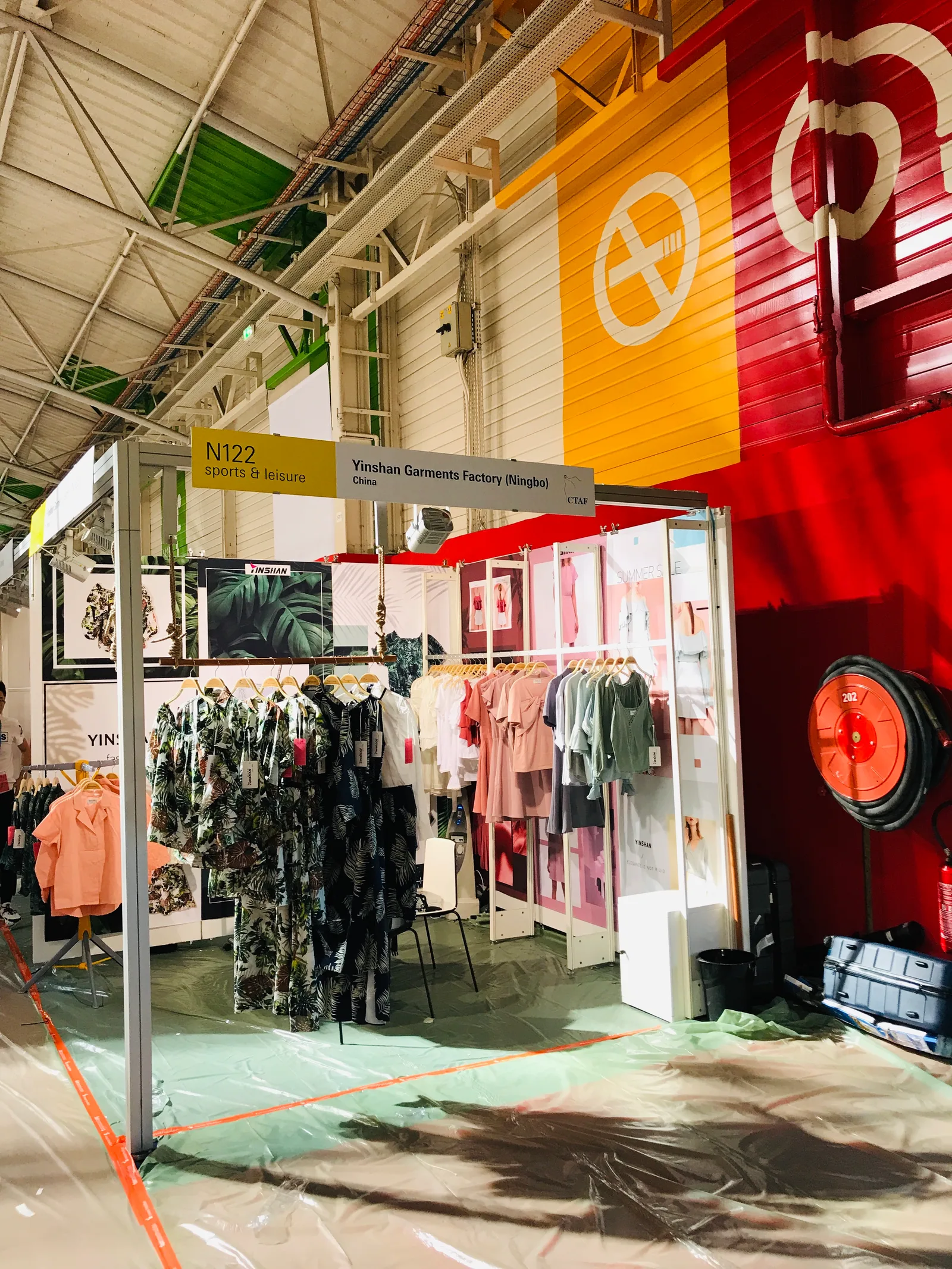
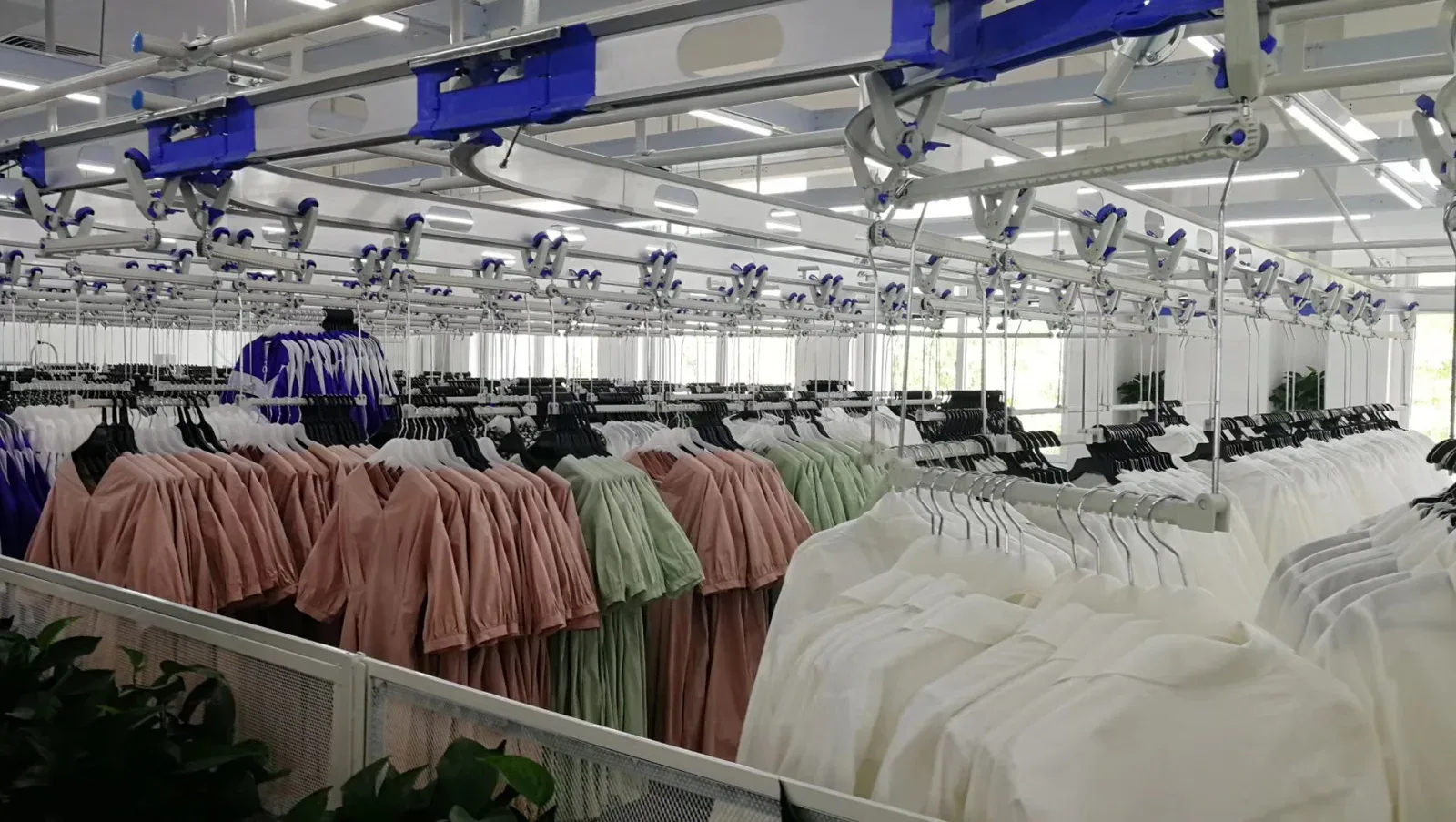
The trade-show image above illustrates a useful collection principle: products can feel related through colour, fabric story, print direction, and presentation without every item using a unique supply chain. For a startup, coherence usually creates a stronger buying story than unnecessary variety. It also gives the manufacturer a clearer route for samples, material reservations, labels, packing, and future reorders.
How should buyers build a factory-ready brief from the information you already have?
A startup does not always have a complete tech pack. That should not stop it from preparing a useful brief. The minimum objective is to separate fixed decisions from references and open questions. A mood board can show atmosphere. A reference garment can show proportion or construction. A sketch can show a new detail. An annotated image can explain what to retain and what to change. The manufacturer then knows where advice is welcome and where a silent substitution would change the design.
For each style, include front, back, and important detail views. Name the product category, intended fit, sample size, size range, fabric behaviour, colourways, construction points, trims, decoration, labels, packing, and initial quantity scenario. If a measurement, component, or material is unknown, write “open for factory proposal” and describe the result you need. “Soft woven with enough opacity for an unlined pale blouse” is more actionable than a random fibre name copied from another product.
Mark the sample purpose. The first sample may test silhouette, fit, fabric behaviour, decoration, or the complete retail presentation. A sample made to review shape cannot automatically approve a substitute fabric, final care information, or bulk packing. The brand and factory should state what the sample proves, which components are temporary, which comments are still open, and what the next approval stage must confirm.
The fashion apparel RFQ guide provides a practical structure for the commercial input pack. Use it to organise product information, quantity scenarios, labels, packing, market, sample needs, timing, and quotation assumptions. Sending the same organised brief to each prospective supplier also makes comparison more meaningful. If one quotation excludes labels and another includes retail-ready packing, the final numbers are not directly comparable.
Version control can be simple. Give every style a code and every document a date or revision. Keep the current image set, measurement chart, material reference, comments, label artwork, and packing direction together. A fashion clothing manufacturer for startups should be able to state which version it used for the sample or estimate. This prevents a later message from being mistaken for an approved change.
How should buyers use samples to close decisions in a planned order?
Sampling is most effective when each stage has one clear job. A startup can otherwise enter an expensive loop where each new sample introduces a different fabric, fit, trim, and colour at the same time. When many variables change together, the team cannot tell which change improved the product and which created a new problem.
Plan the sequence around risk. For a fit-led garment, review the first pattern and silhouette before investing in every branded component. For a material-led product, confirm that the fabric behaves correctly in the intended shape. For a decorated style, test print, embroidery, heat transfer, wash, or surface compatibility where relevant before bulk approval. For a private-label programme, decide when the actual main label, size label, hangtag, barcode, fold, and individual packing need to be present.
Record comments by location and effect. Instead of “the sleeve is wrong,” state whether the concern is length, pitch, volume, cuff, armhole, or movement. Instead of “the fabric is cheap,” identify the handfeel, weight, opacity, surface, recovery, drape, or colour issue. The manufacturer can then explain whether the change affects pattern, material selection, construction, consumption, sample timing, or cost direction.
Agree on the approval owner. A founder, designer, buyer, and operations partner may all review the sample, but the factory should receive one consolidated comment set. Conflicting messages create hidden revisions and make later responsibility unclear. Use a short change log with the point, requested action, owner, current status, and the version in which it should be checked.
The sample-to-bulk process shows how enquiry, feasibility review, material direction, sampling, production, QC, packing, and delivery preparation connect. A startup should use the route as a decision map, not a fixed promise that every project follows identical timing. Product complexity, material availability, revision speed, quantity, branding, and approval discipline all affect the practical schedule.
How should buyers select fabric and trims for the garment, the price position, and the reorder?
Material choice is not a catalogue exercise. Fabric should be reviewed in relation to silhouette, customer use, care, colour, decoration, construction, target price direction, and future availability. A jersey may feel comfortable but recover differently after wear. A woven fabric may drape well but need a lining or a different seam finish. A heavy base may support a structured product but change freight, pressing, or seasonal use.
Describe material behaviour before naming composition. State the desired handfeel, weight direction, drape, opacity, stretch or recovery, surface, colour depth, wash expectation, and any print or finishing need. Then ask the factory which options fit the garment and which points require a header, lab dip, sewn sample, wash review, or bulk approval. This produces a more useful conversation than requesting “premium fabric” without a product standard.
Trims deserve the same discipline. Buttons, zips, elastic, drawcords, rib, snaps, thread, labels, and decoration can each affect appearance, function, component minimums, and timing. Use custom hardware only when it contributes enough product value to justify the extra route. For a first collection, a well-selected available component can be more practical than a custom part with no confirmed repeat plan. The brand should still approve quality, colour, dimensions, placement, and how the trim behaves on the actual garment.
Ask what must be recorded for a reorder. Keep supplier or material references where appropriate, approved colour information, trim details, label files, sample notes, and any substitute decision. A fashion clothing manufacturer for startups cannot guarantee that every material will remain available indefinitely. It should be able to identify what was used and what needs reconfirmation if the brand returns for another colour or season.
What should buyers check about discuss MOQ through style, colour, size, and component scenarios?
MOQ is not one number that applies equally to every fashion product. The practical minimum can be shaped by fabric availability, dyeing or print route, colour count, trim and label quantities, cutting efficiency, construction, decoration setup, size range, packing, and production planning. A startup should give the manufacturer a quantity structure rather than ask for the lowest possible number without context.
Prepare at least two sensible scenarios. One might be the preferred launch plan; another might consolidate colours, reduce styles, share a material, or simplify packaging. Show units by style and colour, plus the proposed size range or ratio. Ask the factory which part of the plan creates the main constraint and what would change if the brand adjusted it. This keeps the conversation tied to product choices rather than a promotional claim.
The T-shirt Collection 2026 can help a startup discuss how one category may be organised around fit, fabric weight, neckline, sleeve, colour, print or embroidery, labels, and size mix. It does not create a universal T-shirt MOQ. A compact programme using one suitable base and a controlled colour plan can have a different route from several weights, washes, placements, and private-label variations.
Compare price scenarios only after assumptions are visible. Confirm whether the estimate includes the intended fabric, colour route, construction, decoration, labels, packaging, sample scope, testing or document requests where relevant, shipping terms, and quantity split. An early estimate can support planning, but it should not be presented as a final order cost until the product and commercial basis are aligned.
Cash planning belongs with quantity planning. Include sample costs, possible development revisions, label and packing components, quality checks, freight preparation, duties or taxes handled by the responsible party, and a contingency for approved changes. The factory can explain its scope. The startup remains responsible for its retail margin, launch budget, sales forecast, importer obligations, and channel costs.
How should buyers compare manufacturers using one decision matrix and one quotation basis?
A polished factory presentation can introduce capabilities. It cannot prove that the team understands the startup’s product. Compare suppliers using the same brief, then score the quality of the assumptions and questions. Does the reply describe the correct garment? Does it identify missing information? Does it separate sample work from bulk? Does it explain which material, component, colour, or packing choice affects the route?
Look for category reasoning. A fashion clothing manufacturer for startups should not give the same answer for a blouse, T-shirt, active set, and overshirt. It should name the fit, fabric, construction, decoration, finishing, and quality points relevant to the selected item. A supplier may be capable in one category and less suitable in another. Product fit is more useful than a long list of general services.
Review communication as a production control. Clear questions, version references, written assumptions, and consolidated comments reduce ambiguity. Fast replies are valuable, but speed without a usable record can create more work later. Ask who coordinates development, how comments reach the sample or pattern team, what becomes the approved bulk reference, and how open issues are tracked.
Use the decision table below to compare each factory on evidence the startup can verify. Price remains important, but compare it alongside sample scope, material basis, quantity split, labels, packing, quality plan, commercial terms, and unresolved points. The lowest visible number may describe the narrowest scope rather than the best route.
What should buyers check about turn the approved sample into a bulk-production record?
Approval should be a handover, not a celebratory message with no supporting file. Before bulk, connect the approved sample version with measurements, fabric and colour, construction, trims, decoration, labels, packing, quantity, size plan, and quality priorities. If the brand accepts a point that differs from the original brief, record the decision. If a point remains open, give it an owner and deadline.
Ask what the production floor will use as the standard. It may be a pre-production sample, current tech pack, measurement chart, material header, trim card, label artwork, packing master, and change log. The format depends on the project. The principle is stable: development, production, QC, and packing teams should not be relying on different images or message threads.
Quality control begins with that standard. Name the features that must not drift: key measurements, seam appearance, print or embroidery placement, colour, handfeel, collar or pocket shape, closure function, label order, barcode identity, folding, and carton assortment. The manufacturing page explains how production planning, in-line checks, finishing, packing, and delivery preparation fit together. Final inspection cannot recover a product standard that was never defined.
Bulk release should also reflect commercial conditions. Confirm the order quantities, size split, packing route, delivery terms, approval owner, and any buyer-supplied file or component. Do not assume an earlier sample discussion automatically updated every order document. A concise release checklist protects both sides from working with an obsolete version.
How should buyers plan private labels, packing, and market ownership before production?
Private-label elements make the garment a selling unit. A main label, size label, care information, hangtag, logo, barcode, size sticker, individual bag, tissue, carton mark, and assortment instruction each needs an approved file, placement, quantity, and owner. A startup can decide that some elements are not necessary for the first launch, but the decision should be deliberate.
Start with the sales channel and destination market. A direct-to-consumer parcel, boutique delivery, distributor warehouse, department-store receipt, and marketplace programme may require different product identification and packing. Ask the retailer, logistics partner, importer, marketplace, or responsible compliance adviser for the current requirements that apply to the programme. The factory can coordinate approved labels and packing; it does not replace the brand’s legal or market review.
Keep claims conservative. Fibre content, care, origin, responsible-party information, certifications, sustainability statements, and performance claims should be supported and approved by the responsible owner. Do not copy wording from a competitor’s label. Link the final text to the actual material and product version, then check placement and readability on the sample or packing reference where relevant.
The private-label programme helps organise the route from product direction to branded presentation. For a startup, consistency is usually more valuable than unnecessary complexity. One clear label system and one packing master can support several related styles, while multiple uncoordinated versions create avoidable component, inspection, and warehouse risk.
How should buyers build reorder memory before the first order leaves the factory?
The first order should create information for the second. Keep the approved sample identity, material and colour references, measurements, construction, trims, label files, packing master, quality notes, quantity split, and final changes together. After launch, add sell-through, return reasons, fit feedback, colour response, damaged-unit observations, and actual size demand. This turns a first collection into a learning system.
A reorder is not automatically identical. Fabric availability can change. A new colour may need a fresh approval. A different size ratio affects cutting and packing. A revised label, new market, retailer rule, or delivery route can change components and documents. State what remains unchanged and what must be reviewed again. This is faster and safer than sending an old image and asking the manufacturer to repeat “the same.”
Use style codes that survive beyond the launch name. Keep dated versions and archive retired files. When a fashion clothing manufacturer for startups can identify the previous approved record, it can have a more precise conversation about availability, changes, quality controls, packing, and timing. The factory cannot preserve a decision the brand never documented.
Repeat-order planning also influences the first assortment. A style built around a fabric, trim, or decoration route that is difficult to identify later may be less useful as a core product. A deliberate seasonal experiment can still be worthwhile. The brand should know whether it is creating a repeatable base, a limited edition, or a test, because each requires a different record and inventory decision.
What a startup should send before requesting the next step?
- Brand and launch context: target customer, sales channel, destination market, product role, retail position, launch method, and the business question the first collection should answer.
- Focused style list: product category, style code, front and back references, key details, fixed design points, open decisions, and which products share a fabric, colour, trim, or label system.
- Fit and size direction: target sample size, intended silhouette, measurements or base chart, size range, draft size ratio, and the body or movement points that need special review.
- Material and colour brief: desired handfeel, weight, drape, opacity, stretch, surface, care direction, colourways, print or wash, season, price direction, and any concern to test in the garment.
- Construction and branding: seams, lining, closure, pockets, buttons, zips, decoration, main and size labels, care information, hangtags, barcode, size sticker, logo placement, and required artwork.
- Quantity scenarios: units by style and colour, proposed size split, preferred launch plan, consolidated alternative, expected reorder logic, and which numbers remain provisional.
- Sample and approval plan: sample purpose, required components, comment owner, version system, approval points, bulk reference, quality priorities, and the target decision date for each stage.
- Packing and delivery direction: fold, bag or box, tissue, carton assortment, carton marks, retailer or warehouse instructions, destination, requested delivery window, and the responsible market or compliance owner.
Yinshan Fashion can review this input for a custom or private-label first collection. Send the product references or tech pack, category, fit, fabric and colour direction, quantity by style and colour, size plan, labels, packing, market, sample purpose, and delivery objective through the contact page. The next useful response should identify the missing decisions, a practical sample route, and the assumptions that must be confirmed before bulk.
Startup first-collection planning
Five decisions that turn a startup collection into a workable factory plan
A practical first collection connects a clear customer and product role with a focused style list, visible sample approvals, quantity scenarios, private-label files, bulk controls, and records that support the next order.
Focused range
Give every style a commercial job, share materials or components where useful, and remove variants that do not create customer value or useful launch learning.
Approval route
Name what each sample must prove, who consolidates comments, which version is current, and what record will release the approved product to bulk.
Repeat memory
Keep material, colour, measurement, trim, label, packing, QC, and change records so the second order can distinguish a repeat from a new decision.
Startup first-collection buyer and factory checklist
Use this before comparing quotations or releasing samples. It keeps collection scope, product details, quantities, brand presentation, production controls, and open commercial assumptions visible.
| Decision area | What the buyer should prepare | What to ask the factory |
|---|---|---|
| Collection purpose and scope | State the target customer, sales channel, market, launch objective, product roles, focused style list, and which styles share fabric, colour, trims, or labels. | Which products fit the relevant category capability, which variables create unnecessary complexity, and what should be reviewed first? |
| Product brief and sample purpose | Provide front, back, and detail references; fit and size direction; material behaviour; construction; fixed versus open decisions; and the question each sample should answer. | What is required for the first sample, what can it approve, which components are temporary, and how will comments and versions be controlled? |
| Quantity and quotation basis | Share units by style and colour, the size range or ratio, preferred and consolidated scenarios, decoration, labels, packing, market, and delivery objective. | Which material, component, colour, cutting, production, packing, and commercial assumptions apply to each scenario? |
| Bulk production standard | Connect the approved sample with measurements, fabric and colour, construction, trims, decoration, labels, packing, quality priorities, final quantities, and every recorded change. | Which current sample and files will reach production, QC, and packing, and which open point must be closed before bulk release? |
| Retail presentation and reorder record | Approve label artwork, care information, hangtags, barcode, size sticker, fold, individual packing, carton plan, and the records to retain after the first order. | What must be checked before shipment, what can be retained for a repeat, and which new colour, size, material, market, or packing change requires fresh approval? |
Continue the production conversation
Startup first-collection manufacturer comparison table
| Decision area | Startup should provide | Manufacturer should confirm |
|---|---|---|
| Collection scope | Target customer, sales channel, product roles, focused style list, shared materials or components, and launch objective. | Which styles fit the factory’s category experience, which variables create avoidable complexity, and what should be reviewed first. |
| Product brief and samples | References or tech pack, fit and measurements, fixed versus open decisions, sample purpose, comment owner, and version system. | What is required for the first sample, what it can approve, how revisions are recorded, and what becomes the bulk reference. |
| Fabric, colour, and trims | Handfeel, weight, drape, opacity, stretch, colourways, print or finish, trim details, care direction, and price position. | Which material and component routes suit the garment, what needs testing or approval, and which choices affect availability or minimums. |
| Quantity and quotation | Units by style and colour, size range or ratio, preferred and consolidated scenarios, branding, packing, market, and delivery objective. | The quotation basis, material and component assumptions, practical constraints, sample scope, commercial terms, and unresolved items. |
| Bulk, QC, and reorder | Approved sample, current files, quality priorities, labels, packing master, carton plan, final quantities, and repeat-order intent. | How the approved standard reaches production, QC, and packing, which records are retained, and what must be reconfirmed for a reorder. |
Buyer FAQs
How should a startup choose a fashion clothing manufacturer?
Send the same focused brief to each prospective manufacturer and compare category reasoning, sample scope, material assumptions, quantity basis, communication records, quality controls, labels, packing, and unresolved points. A useful partner should explain what depends on the actual product rather than offer a universal MOQ, price, or delivery promise before the collection is understood.
Can a startup contact a clothing manufacturer without a complete tech pack?
Yes. Start with organised front, back, and detail references, product category, intended fit, material behaviour, colours, quantity scenarios, size range, labels, packing, market, sample purpose, and a clear distinction between fixed decisions and areas open for factory advice. The manufacturer can then identify what is still required before sampling or a confirmed quotation.
What is a practical MOQ for a startup fashion collection?
There is no universal figure. The practical route depends on fabric availability, colour count, dyeing or print, trims, labels, decoration, style complexity, size range, packing, cutting efficiency, and production planning. Provide units by style and colour plus at least one consolidated scenario, then ask which decision creates the main constraint.
How many styles should a startup include in its first collection?
Use the smallest assortment that clearly tests the brand’s customer, product promise, price position, fit, and sales channel. Give every style a commercial job and remove variants that do not create meaningful learning or customer value. The right count depends on the category, budget, material sharing, quantities, launch route, and team’s ability to review samples and manage approvals.
What should be approved before a startup releases bulk production?
Connect the approved product version with measurements, fabric and colour, construction, trims, decoration, labels, packing, quantity and size plan, quality priorities, delivery basis, and all recorded changes. Production, QC, and packing teams should be able to identify one current standard, with every remaining open point assigned to an owner.
Does Yinshan Fashion provide ready-stock clothing for startup brands?
Yinshan Fashion focuses on custom and private-label bulk programmes. Product collections can support a development conversation, but the final product, materials, colours, quantities, sizes, labels, packing, production timing, and delivery requirements need to be confirmed against the startup’s brief and approved samples.