Article
What should buyers know first?
Short answer: Compare undyed fabric and dyed alternatives by appearance, processing, colour consistency, care and evidence for environmental statements.
Undyed fabric should be compared with dyed fabric as a complete product and processing choice. Confirm what the supplier means by undyed, which other treatments remain and whether the natural appearance suits the garment. Then review care, shade variation and any environmental evidence. A beige photograph alone cannot establish that a fabric was made without dyeing.
Yinshan Fashion supports custom and private-label bulk programmes rather than unrestricted ready-stock wholesale. For brands developing natural-tone womenswear or a small coordinated capsule, the sourcing question is practical: can the proposed material deliver the required appearance and continuity with an accurate description of how it was made?
Define Undyed Fabric in the Sourcing Brief
Ask the supplier to state exactly what has not been dyed. The description may concern a fibre, yarn, fabric or finished garment. A garment that has not been garment-dyed can still be made from dyed fabric. A recycled material may retain colour from an earlier product. The buyer needs a clear scope before using undyed as a product description.
Keep undyed, unbleached and unfinished as separate questions. The absence of a dyeing step does not answer whether another treatment took place. If the buyer needs a specific process exclusion, write it explicitly and request confirmation for the offered fabric reference. Do not rely on the supplier inferring that requirement from a general natural-material mood board.
A useful material record starts with composition, construction, weight, width, colour description and finish. Add the process statement as a separate field. This allows the development team to compare the fabric's identity and appearance without losing the information behind the claim.
If the supplier uses a commercial colour name, ask whether it describes appearance or processing. Names such as natural, ivory and ecru can be useful for a palette, but they are not process records. The buyer should retain the material reference and supplier explanation that connect the selected shade to the actual offer.
Consider a hypothetical brand requesting an undyed overshirt. The brief might allow washing and a specified finish while excluding dyeing at a defined stage. Another brand might want an unbleached base with a different treatment boundary. Those are separate enquiries, even if both mood boards show similar cream garments.
Resolve the terminology before the first sample order. Otherwise, the buyer may reject a technically correct proposal because the parties used the same word to mean different things. A short written definition prevents that disagreement and gives later product copy a factual starting point.
Use an Undyed Denim Example with Clear Boundaries
BIG JOHN describes a natural-colour version of its WILD DUCK range as made with undyed cotton. The example shows that an undyed direction can be part of a defined commercial product rather than an abstract material concept. It does not establish the process of every denim sold by that company or any fabric offered by Yinshan Fashion. BIG JOHN's product introduction is the source.
For a buyer, the lesson is to connect a process description to a specific product. Identify the relevant fabric or style reference, the stated material and the claim's scope. Do not borrow a photograph or description from one brand to imply that a proposed garment uses the same material or has the same supply history.
The design lesson is separate. A natural-tone textile can support a collection with a different visual language from a dyed alternative. A brand may value subtle surface character, restrained colour or variation that would be unacceptable in another range. Those preferences should become sample criteria rather than remain a vague aesthetic direction.
Do not import the example's construction into unrelated womenswear without review. A fabric developed for a particular denim garment may not provide the drape, weight or coverage needed for a dress or blouse. Ask which aspect of the example is relevant: the colour approach, material source, surface or product story. Then evaluate the actual candidate fabric for the proposed garment.
The example also should not become a shortcut to environmental conclusions. A product page may describe selected material features, while the buyer's own comparison concerns a different garment, supplier and process. Keep the source attribution narrow and request project-specific evidence for any broader statement.
Used carefully, a commercial example helps the team ask better questions. It should not close the investigation. The next step remains a confirmed material specification and a sample review for the buyer's own product.
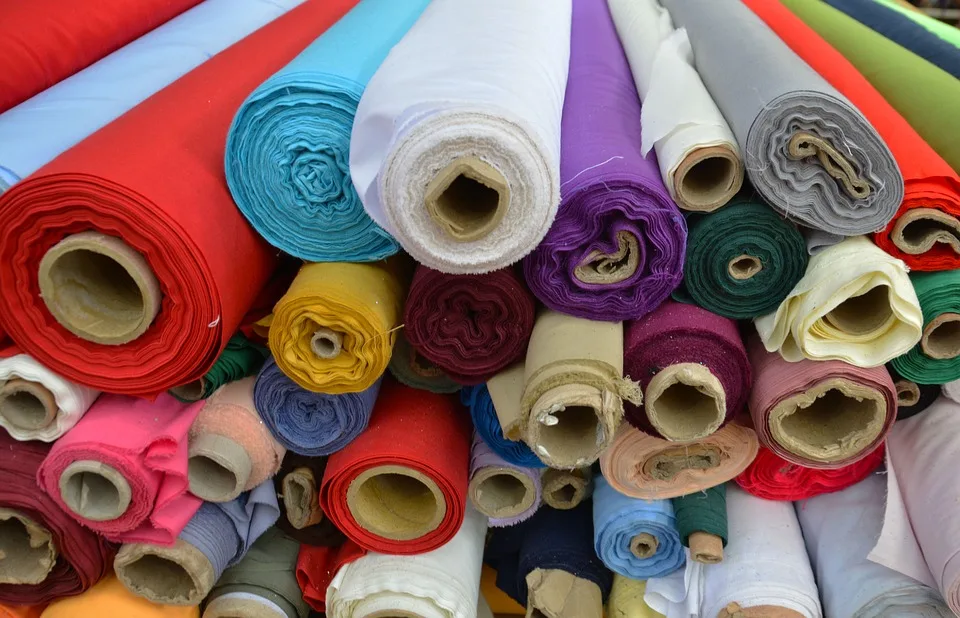
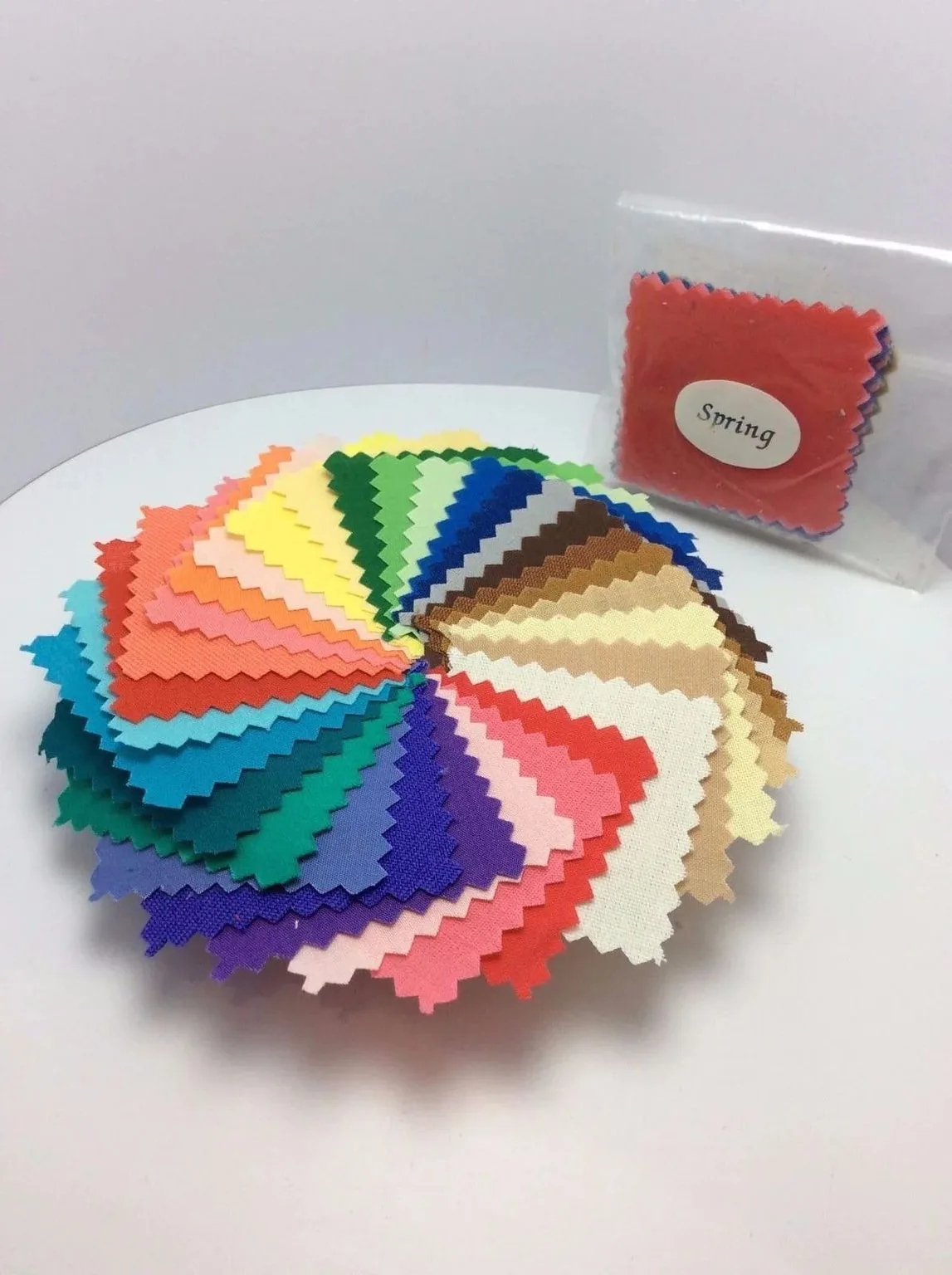
Colour references: the swatches and fabric rolls illustrate palette choices. A pale appearance does not identify an undyed material; confirm the actual process history, composition and approved shade with the supplier.
Map the Processing Steps That Still Remain
Create a simple process map for each candidate route. Ask the supplier to identify the relevant preparation, colour-related treatment, finishing and garment-processing stages. The map does not need to reveal confidential manufacturing detail, but it should be clear enough to explain what the proposed undyed statement covers.
An undyed route may still involve processes needed to produce the intended material and garment. Ask what happens before weaving or knitting, after fabric formation and during garment finishing. If a treatment is described only with a broad commercial term, request an explanation of its purpose and its relationship to the buyer's specification.
Use the fabric production-process guide as a way to organise the questions. The exact route should come from the actual supplier. A general process diagram is helpful background, but it is not proof of how a particular lot was manufactured.
Compare the candidates at equivalent stages. If one quotation covers finished fabric and another covers a base that needs further processing, the buyer is not comparing like with like. Identify the additional work required to reach the same garment-ready state before reviewing commercial or environmental information.
The garment stage deserves equal attention. A finished product may be washed, pressed, printed or combined with treated components. If the buyer wants the public statement to apply to the whole garment, the evidence needs to address that broader scope. Otherwise, keep the wording attached to the specific fabric or process feature that has been confirmed.
Record changes as the development evolves. A supplier may propose an additional finish to improve handle or a garment treatment to achieve the approved appearance. Those changes can be reasonable, but they should reopen any process statement they affect. The final description needs to follow the approved production route, not the simpler route considered in the first enquiry.
Decide How Natural Shades Fit the Collection
A natural-tone range needs an explicit colour strategy. Decide whether the collection depends on close matching or can work as a family of related shades. That distinction affects how the buyer should review fabrics, linings, threads, labels and other components.
For casualwear, a varied surface may be an intentional part of the design. The buyer still needs to identify which differences are acceptable. A range that welcomes visible character does not automatically accept a mismatched sleeve or an uneven panel arrangement.
Review complete material combinations under agreed lighting. A shell that looks warm beside one lining can look different beside another. A bright label or zipper tape may draw attention to a shade difference. Keep the selected components together during review so the team can assess the actual product rather than a collection of separately approved swatches.
Use the existing colour-palette planning guide to define the relationship between styles. A brand might approve a looser relationship between a blouse and trousers while requiring closer matching within a two-piece set. Record those decisions where purchasing and production teams can find them.
Photography adds another layer. Decide how to show the material's colour and surface without relying on images that flatten the variation. Retain a physical standard for approval, and avoid treating a screen image as the sole colour reference. The person producing catalogue images should know which differences are expected in the delivered product.
The final palette decision may involve fewer styles or fewer exact-match commitments. That can be appropriate for a small capsule. What matters is that the buyer chooses the relationship deliberately and communicates it before different components are ordered under an assumption that all natural whites will match.
Review the Fabric in Dresses and Blouses
An undyed material still needs to perform in the chosen silhouette. Assess coverage, handle, seam appearance and support in the intended garment. The sourcing route does not remove the need for fit and construction review.
For a natural-tone dress, compare the material over the intended underlayer and, where applicable, with the proposed lining. Review the garment in motion and under the lighting relevant to the product presentation. Use the dress collection to specify the silhouette family, then identify the exact design in the sample brief.
For a blouse, review the collar, button stand, cuffs and areas where layers overlap. A local support can change the visible tone or stiffness of a pale fabric. The blouse collection provides a garment context, but the proposed material and support combination still need their own sample approval.
Decide whether visible natural variation is welcome in every part of the garment. A small fleck or tonal difference may fit a relaxed design, while the buyer may want a quieter appearance at a focal area. If special placement or selection is requested, discuss what it means for cutting, material use and inspection before approving the design.
An illustrative buyer could compare an undyed loose blouse with a dyed alternative using the same pattern. The comments should identify differences in appearance and behaviour, not assign an overall environmental score. If one fabric needs a different construction, show that revised option as a separate complete proposal.
Keep the product decision independent from the story the brand hoped to tell. If the undyed option does not meet a fixed requirement, the buyer can revise the design or choose another material. The purpose of the sample is to reveal that trade-off while changes remain manageable.
Agree on Care, Staining and Appearance Expectations
A pale garment should be reviewed against the care and appearance expectations the brand will communicate. Ask what the customer is likely to do with the product and what condition the buyer expects it to retain. Do not assume that the absence of a dyeing stage answers questions about cleaning, dimensional change or surface appearance.
Define the sample and conditions for the review. Identify the fabric lot, construction, support and trims. Record relevant measurements and photographs before the agreed care procedure, then compare the same points afterwards. If the buyer requires formal testing, agree on an appropriate method and acceptance criteria with the responsible technical parties.
Staining and contact should be considered in the intended use. A light blouse may be worn against a darker layer. A pale dress may contact a bag, belt or seating surface. The review should identify which interactions matter for the product rather than claim that every pale fabric will behave in the same way.
Keep cleanability separate from a chemical-free claim. A process description about dyeing does not establish the absence of all substances used in production. If the buyer has restricted-substance requirements, specify them and request the relevant information for the actual material and garment. Avoid replacing a defined requirement with a broad reassurance.
Evaluate the entire assembly after the selected care review. A shell and lining may change differently, a support may become more visible or a trim may affect the appearance around its attachment. The buyer's approval needs to cover the finished combination, including components that do not share the shell's process story.
If the product is intended to develop a changing appearance with use, describe that expectation accurately and review whether the sample supports it. Intentional ageing should not become a general excuse for faults. The brand and factory still need a shared standard for the product delivered to the customer.
Compare Water and Energy Information on the Same Basis
A supplier may offer environmental information about an undyed route, but the buyer should first understand what the figures describe. Ask for the quantity measured, process boundary, reference product, period and source of the information. Without those details, apparently precise numbers can represent different things.
For example, one figure might cover a processing stage per kilogram of fabric, while another concerns a completed garment. They should not be compared directly. The buyer needs a common basis that is relevant to the decision, and any conversion should use documented inputs. A rough assumption should not become a precise public saving.
Check whether the candidate products provide the same intended function. If an undyed option needs a heavier construction, additional lining or a different finishing route, those changes belong in the comparison. A removed stage can be worth investigating without proving that the complete garment has a lower total impact.
Ask whether the data describe the offered material or a broader company or facility average. Broader information may provide context, but it does not automatically substantiate a claim about one product. Retain the source and scope so the commercial team knows how far the information can reasonably be used.
Do not invent savings when the evidence is incomplete. The brand can state a verified process feature without adding an unsupported percentage. It can also record that environmental comparison remains open while the product development proceeds on appearance and performance grounds.
If the team intends to publish a comparative environmental statement, give its responsible reviewers the underlying information and the proposed wording. The development file should make the boundary and uncertainties visible. This article offers a purchasing framework; it does not supply a life-cycle assessment or a legal conclusion for a particular garment.
A disciplined comparison may therefore end with two separate conclusions: the undyed fabric meets the collection brief, and a broader environmental claim still needs evidence. Keeping those conclusions separate helps the buyer move forward without overstating what has been established.
Set Batch and Repeat-Order Approval Rules
A first approved sample is a reference for future decisions, not proof that every later lot will look identical. Ask the supplier what variation is expected for the specific material and what controls are available. Agree on the approval method before the buyer promises continuity to retailers or customers.
Retain physical fabric and garment standards with clear identifiers. Where a range is acceptable, preserve examples that show the approved boundaries. Note whether the standard applies within one garment, within a delivery or across separate orders. A statement such as natural variation accepted is too broad to guide cutting or inspection.
For coordinated products, discuss lot allocation. If matching within a set is important, ask how the relevant components will be identified and kept together through production. Confirm the practical method and any constraints for the order rather than assuming that a shared colour name is enough.
A repeat order should include a current material sample and a review of the specification. Compare composition, construction, finish and the confirmed process statement as well as shade. An apparently similar colour does not establish that the supplier has maintained the same route.
Plan what happens if the new lot falls outside the approved range. The buyer might accept it under a new colour name, reserve it for another style or request an alternative. Those are commercial and design decisions that need an owner. They should not be left to the cutting room after the material has arrived.
The fabric traceability checklist can help connect lot identity, sample approval and order records. Clear records make it easier to investigate a difference without assuming that every variation is a defect or that every variation must be accepted because the material is described as natural.
For a small brand, a limited first capsule can be a practical way to learn how the material works. State the replenishment expectation honestly and review the results before committing the same colour promise to a continuing range.
Review Cost and Development Complexity as a Whole
An undyed option should not be assumed cheaper simply because one processing step is absent. Ask for a quotation that reflects the actual fabric specification, order quantity, colour or lot requirements and necessary development work. Compare complete offers rather than isolating one stage from the rest of the programme.
Additional review or selection work may be relevant to the project. A buyer asking for a narrow shade range, special panel placement or closely matched sets should ask how those requirements affect the proposal. The supplier should explain the practical conditions before the brand fixes its retail or wholesale plan.
Keep material price separate from garment development cost. A fabric that requires a revised lining, support or construction can change the total product. Conversely, a material that fits the selected design with a straightforward construction may simplify the sample process. The comparison should show those consequences rather than rank fabrics on purchase price alone.
For a small-batch programme, discuss the colour plan and range structure together. Several closely related natural shades across many styles may create more approval work than the buyer expects. A focused palette or a smaller initial style group can make the evaluation more manageable, but the actual commercial benefit needs confirmation in the proposal.
Avoid treating a limited lot as equivalent to a continuing specification. A one-off material opportunity may suit a capsule if the brand can accept its quantity and repeat limitations. A core style intended for frequent reorders may need a different arrangement. The buyer should know which type of offer is being approved.
Record why the selected route fits the programme. The reason might be appearance, a confirmed process requirement, an acceptable sample or a workable supply arrangement. A clear decision note helps future buyers understand the trade-offs and prevents a later reorder from being placed under assumptions that were never part of the first agreement.
Record the Final Choice and the Next Sample
Bring the comparison back to the original product question. Has the team found a material that meets the silhouette, colour, coverage, care and supply requirements? Which parts of the process description are confirmed? Which proposed statements still require evidence? These questions should lead to a defined next action.
A useful decision record identifies the selected fabric code, approved sample, colour standard, construction and process wording. It also lists any conditions that remain open before production. If the buyer selects a dyed alternative, record that choice with the same care rather than treating it as a failure of the investigation.
An illustrative capsule review might approve an undyed overshirt while keeping a blouse in a dyed fabric to achieve the required shade and coverage. The two products can still belong to one collection if the palette relationship is deliberate. The buyer's product information should describe each material accurately rather than impose one process story across the range.
Use the fabrics and trims discussion to submit candidate materials and the manufacturing overview to clarify sample and production responsibilities. Yinshan Fashion should receive the requirements it needs to assess the actual garment programme, including any process exclusions or evidence requests.
The sample brief should include a sketch, intended use, market, colour expectations, quantities, care route and repeat-order plan. Attach the agreed terminology and tell the team what the next sample must resolve. If the key uncertainty is shade matching, make that the focus. If it is coverage or construction, specify the relevant garment areas.
The final approval should be understandable to someone who did not attend the review meeting. A buyer, developer and factory should be able to locate the same material reference and see why it was selected. That shared understanding is what turns an undyed fabric direction into a controlled product decision.
Material development checklist
Three actions before sampling
Connect the material identity, sample decision and supporting evidence to the actual garment brief.
Write the Process Definition
State what undyed means for this fabric and which other treatments must be disclosed. Keep unbleached and unfinished as separate requirements.
Approve the Whole Palette
Review shell, lining, thread and trims together. Define matching expectations within garments and across the range.
Separate Product and Environmental Decisions
Record sample suitability independently from any comparative environmental statement. Keep unsupported figures out of product copy.
Buyer and factory checklist
Confirm these inputs for the material and garment being considered.
| Decision area | What the buyer should prepare | What to ask the factory |
|---|---|---|
| Terminology | Required process scope and exclusions | Written description for the offered material |
| Colour | Standard or acceptable range | Lot variation and matching approach |
| Product | Silhouette, coverage and care needs | Sample construction and evaluation |
| Evidence | Exact proposed process or environmental statement | Relevant records and limitations |
| Continuity | Reorder plan and palette commitments | Availability and new-lot approval conditions |
Continue the production conversation
Undyed and Dyed Route Comparison
| Question | Undyed proposal | Dyed proposal | Approval record |
|---|---|---|---|
| What does the process statement cover? | Identify the stage and any earlier colour history | Identify the colouring route | Supplier description linked to fabric code |
| Does the palette work? | Review natural shade and acceptable variation | Review the approved colour standard | Complete component combination |
| Does the garment perform? | Check coverage, seams and intended care | Apply the same product requirements | Identified sample comments or reports |
| Are environmental figures comparable? | Confirm unit, scope and reference | Confirm the equivalent basis | Source data and limitations |
| Can the style be repeated? | Agree on new-lot review and variation | Agree on new-lot review and shade control | Retained standards and change rules |
Buyer FAQs
Is undyed fabric always unbleached?
No. Ask separately about dyeing, bleaching and other processing. The supplier's statement should identify the actual material and stage covered.
Does undyed mean chemical-free?
No. The absence of a dyeing stage does not establish the absence of every substance used in production. Specify any relevant restricted-substance requirement directly.
How should buyers compare environmental claims?
Use a defined product, equivalent basis and clear processing boundary. Retain the data source and avoid calculating a total saving from one omitted stage.
Can natural shades vary between batches?
The buyer should ask what variation is expected for the proposed material and agree on a physical approval standard or range. Review each new lot against that agreement.
What belongs in an undyed fabric brief?
Include the garment, composition, process definition, colour expectations, care requirements, quantities, repeat plan and any evidence the brand needs for product statements.