Article
What should buyers know first?
Short answer: A B2B buyer guide to turning a fashion color direction into a controlled apparel palette, with fabric review, Lab Dip, sample, component, and bulk shade-management steps.
What is apparel color palette planning for a fashion brand?
Apparel color palette planning is the process of converting visual inspiration into a controlled product decision that a fabric mill, sample room, trim supplier, factory, photographer, and buyer can interpret consistently. It is more than choosing attractive shades. A usable palette identifies each colour's role, the material surface it will appear on, the proof needed before it is approved, the components it must coordinate with, and the record that will guide bulk production.
Yinshan Fashion supports custom and private-label bulk programmes rather than unrestricted ready-stock wholesale. For that reason, a palette discussion begins with the actual garment plan: category, intended wearer, silhouette, fabric direction, construction, colourways, decoration, labels, packing, quantity structure, destination, sample purpose, and the decisions that remain open. The factory can help turn those inputs into practical questions, but an inspiration board should not be treated as a confirmed dye route, material availability, commercial term, test result, or production promise.
The most reliable approach moves in a sequence. Define what the palette must do for the collection, translate each idea into a colour reference, review it on the intended material, approve the right proof, connect it to trims and presentation, and preserve a versioned record. That sequence makes a creative direction easier to quote, sample, inspect, photograph, replenish, and explain to everyone involved.
How should buyers start with the collection's commercial job, not a collage?
The starting point for a useful palette is the product plan. A board full of attractive images may express a feeling, but it does not yet explain which shades will carry the collection, which items need visual continuity, or where a bold decision is worth the development work. Begin by naming the collection's commercial roles. A core colour may need to work across several styles and support a repeat order. A neutral may need to make different silhouettes read as one offer. An accent may need to create a clear visual signal without forcing every fabric and component into a difficult match.
Write down the product families before choosing the full colour range. A relaxed woven shirt, a ribbed jersey top, a brushed fleece layer, a lined trouser, and a coated outer layer can all react differently to the same visual reference. One colour may be essential on a fluid dress but unsuitable for a structured jacket. Another may be useful only as a lining, piping, label ground, printed detail, or packing accent. This is why a palette should be built around specific style-colour-material combinations rather than a list of generic colour names.
For each proposed shade, state its job in plain language. Is it a core selling colour, an entry neutral, a contrast trim, a small graphic detail, a merchandising bridge, or a limited product-specific option? Also state what it must work with: a fabric base, lining, thread, zipper tape, elastic, print ground, label, hangtag, or e-commerce image. When a buyer has not decided all of those points, mark them as open. A visible open decision is safer than a hidden assumption that later becomes a colour mismatch.
The product brief should also explain where the collection will be seen. Retail lighting, a studio photograph, a matte woven surface, a glossy knit, washed fabric, and a phone screen will not present a shade in the same way. The goal is not to guarantee that every viewer sees identical colour. The goal is to decide which physical reference controls the product and which review steps will make the intended result clear enough for the current programme.
What should buyers check about give every colour a role and an approval owner?
A palette becomes manageable when every shade has a role, a scope, and an owner. Most apparel ranges benefit from distinguishing between a small number of colour roles rather than treating every swatch as equally important. The exact number depends on the collection, but the buyer should be able to identify which colours carry the greatest financial, visual, or approval risk.
Use the decision table below as a working record. It does not prescribe a fixed palette size. It shows the information that lets the team decide what should be reviewed first and what a later colour change would affect.
For every colour, record the current status: inspiration only, proposed, submitted for proof, approved for a named sample, approved for the stated bulk scope, or reopened. Do not use a verbal "approved" without the object of approval. A colour can be acceptable for a small swatch and still be open for a garment, a print, an adjacent rib, a zipper tape, or a later production lot. The record should state what has actually been reviewed and what must happen next.
Assign one buyer-side approval owner. That person does not need to make every creative choice alone, but they should consolidate design, merchandising, commercial, and sales feedback into one decision. On the factory side, identify who will return the material or colour proof, note substitutions, and record the result. Without named ownership, a team can receive several comments about a pink, blue, or neutral tone and still have no clear decision for the sample room to follow.
This simple discipline also helps prevent colour proliferation. A collection may need several related shades, but each additional colourway can affect material preparation, component matching, lab work, sample handling, packing references, photography, inventory split, and later reorders. A buyer can protect the creative idea by concentrating early proof on the shades that make the collection recognisable, while keeping lower-priority alternatives visibly provisional.
What should buyers check about turn visual inspiration into a usable colour reference?
An image, paint chip, garment, or screen grab can start a colour conversation. It is not automatically a production reference. Images are affected by camera settings, filters, display calibration, lighting, background, compression, and surrounding colours. A physical garment can be more useful, but it may also have fading, washing, age, or a fabric surface that will not be repeated in the new product. The buyer should identify what the reference is intended to communicate: hue, lightness, saturation, surface mood, contrast relationship, or a complete garment result.
Build a colour reference pack with stable identifiers. Give each proposed shade a name or code, a role, the styles and materials it may cover, the source image or physical item, the date, the owner, and the current decision status. If the buyer has a physical standard or brand colour system, state that it is the controlling reference. If the team has only visual inspiration, state that a material proof is still required. The difference matters because it changes what the sample room, fabric source, and buyer can fairly compare.
Describe colour in terms that help a material discussion. Instead of asking only for "soft green" or "warm beige," note whether the shade should read muted or clear, yellow-leaning or blue-leaning, pale or deep, flat or lustrous, solid or heathered, and where it will sit beside other colours. These descriptions do not replace a physical reference. They make it easier to identify whether a returned proof is solving the intended problem. They also help the factory flag a conflict, such as a pale shade on a fabric that may look more translucent than the buyer expects.
Keep inspiration images and approval records separate. Inspiration can remain broad and expressive. The approval record should be exact enough to identify the material, finish, colour proof, style scope, version, date, reviewer, and next action. When a buyer later asks why a garment looks different from the original board, the team can distinguish an unapproved mood reference from the physical decision that controlled the order.

How should buyers review colour on the intended fabric and finish?
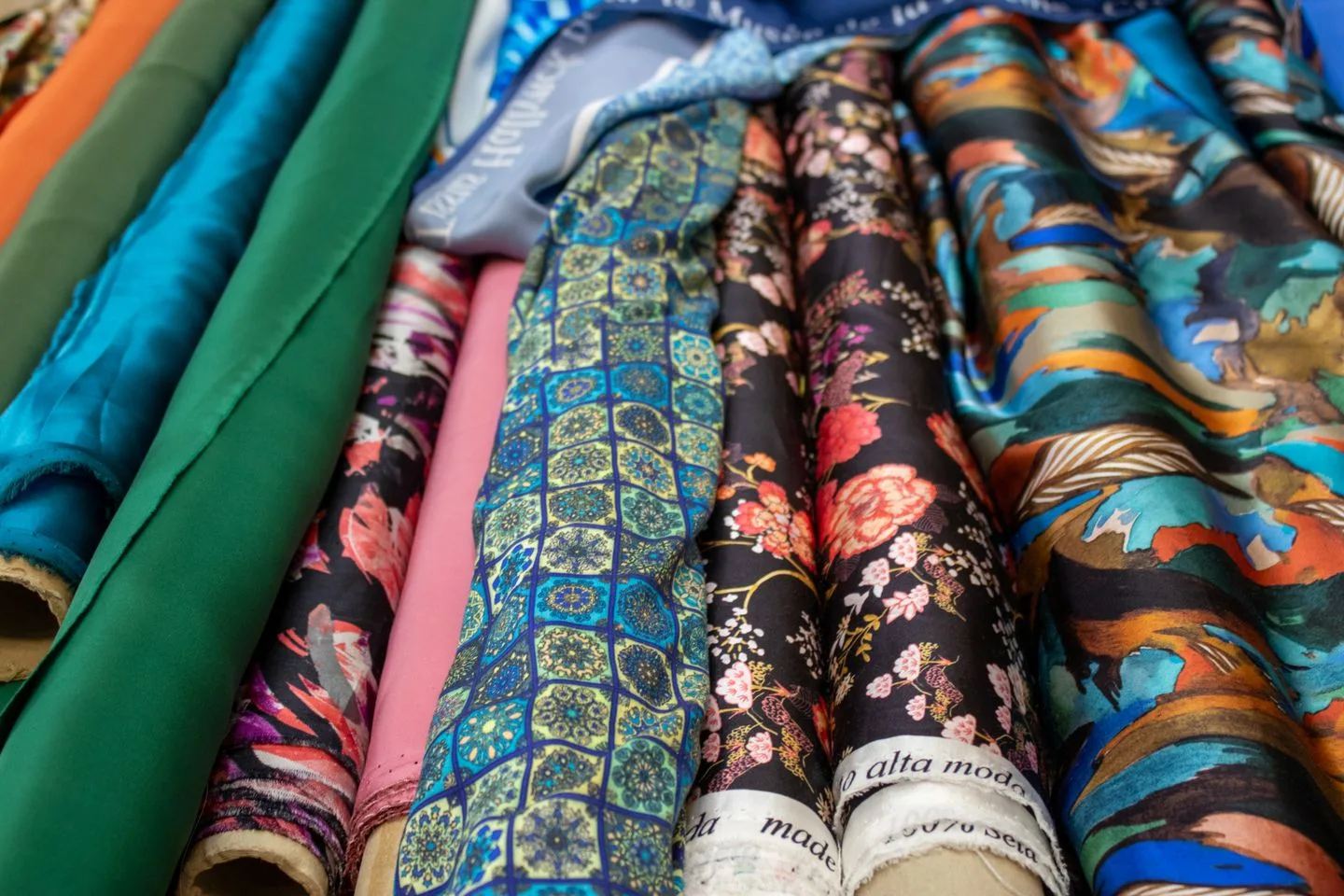
Colour is inseparable from material. The same dye direction can look different on a compact jersey, brushed knit, open weave, rib, satin-like surface, washed twill, printed base, lining, or stretch fabric. Fibre blend, yarn, construction, weight, surface texture, opacity, sheen, dye route, wash, and finish can all influence the result. A swatch that looks balanced under one light or on one base may appear deeper, duller, brighter, warmer, cooler, or more uneven when made into the intended garment.
That does not make colour development unpredictable. It means the proof should answer a specific product question. Ask whether the buyer is approving the hue only, the hue on a specified material, the relationship between a body fabric and a rib, the result after a wash process, the appearance next to a print, or a complete garment under agreed viewing conditions. The more precisely the question is stated, the more useful the returned sample can be.
The fabric selection guide helps buyers connect material behaviour with garment outcome, components, care questions, and sample evidence. Use that framework before asking a supplier to match a colour on an undefined fabric. A factory should be able to explain which material facts are known, which physical proof is available, and which point still needs a swatch, header, Lab Dip, strike-off, or garment sample.
Review adjacent materials together whenever possible. A body fabric can look correct alone but clash with a collar rib, cuff, lining, thread, drawcord, woven label, or zipper tape. An apparent mismatch may be acceptable when the collection intentionally uses contrast. It should not be discovered only after bulk components arrive. Mark the related materials in the same palette record and decide whether the goal is exact matching, tonal coordination, deliberate contrast, or a component-specific tolerance that the buyer will accept.
How should buyers use Lab Dips to answer a defined colour question?
A Lab Dip is a small dyed fabric proof prepared to show a proposed colour on a specified material. It is not the same as a finished garment approval, and it should not be treated as one. Its value is that it lets the buyer compare the current colour route against the approved reference before larger-scale garment decisions are made. The exact process depends on the fabric source and programme, but the record should identify the fabric base, construction or finish information available, colour reference, Lab Dip version, date, reviewer, viewing notes, decision, and any next proof required.
Ask the right question when reviewing a Lab Dip. Is the concern hue direction, depth, undertone, surface appearance, colour on a particular material, or coordination with another component? Is the proof being viewed beside the controlling reference and under a stated lighting condition? Does the buyer need an alternative that is slightly warmer, cooler, lighter, deeper, clearer, or more muted? A clear comment such as "return one option with less yellow cast on the same fabric base" gives the development team an actionable next step. "Make it better" does not.
Do not assume a Lab Dip settles every garment question. A style with garment wash, print, embroidery, coating, lining, layered fabric, contrast binding, or a complicated texture may need an applied proof or full sample. The Lab Dip can establish a useful starting point, but the buyer should state what it proves and what it does not. This avoids an approval record being stretched beyond the material or product scope it actually covers.
The commercial stage should be equally clear. If a project requires sample garments after colour work, scope, quantity, materials, components, and approval needs should be confirmed before the sample is treated as a price benchmark. Yinshan Fashion generally quotes a sample garment at two to three times the corresponding bulk garment price. For the same style, the sample charge may be refunded at 10% with an order of 100 pieces, 30% at 300 pieces, 50% at 500 pieces, and 100% at 1,000 pieces. These reference terms apply only after the current product and order details are confirmed.
How should buyers connect colour approval to samples, trims, and private-label details?
The colour route does not end at the main fabric. A garment includes components that can change how the product reads: sewing thread, interlining, lining, zipper tape, elastic, drawcord, buttons, snaps, print inks, embroidery threads, labels, hangtags, stickers, poly bags, and cartons. Some elements may not need an exact match. Every element should still have an intentional relationship to the approved garment colour.
Create a component map for each high-priority style. Name the main fabric, contrast fabric, lining, rib, thread, closure, decorative item, label ground, packaging component, and the required relationship. For example, the buyer might approve an exact body-and-rib coordination, a darker zipper tape, neutral thread, a contrast label, and a packaging sticker that uses a colour code rather than a visual match. This gives the supplier room to propose appropriate materials while keeping the buyer's visual priorities visible.
Private-label details need the same control. A woven label may look warmer than a printed neck label. A hangtag can make a muted garment look different when placed in a retail photograph. A care label, barcode, or size sticker may depend on the colour name and product mapping. The private-label clothing development page is a useful place to organise labels, branding files, packing, and approvals around the real style-colour-size scope. It is not a substitute for confirming product information, customer wording, or market requirements for the actual programme.
Use garment samples to judge relationships that a small proof cannot show. Review the full silhouette, seams, folds, gathers, print area, lining, components, labels, and finishing route together. Photograph the sample beside the controlling reference, but do not rely only on photographs for approval. Keep the physical sample or a well-identified retained reference where the buyer and factory can connect comments to the version reviewed.
How should buyers build a controlled path from sample approval to bulk shade management?
Bulk colour management is not a claim that every garment will look identical under every light. It is a process for making the approved reference, acceptable variation, inspection point, and escalation route visible before the order moves forward. The actual controls depend on product, material, shade, construction, and programme requirements. A buyer should ask the factory how the current reference will be identified, where it will be compared, who records a finding, and who decides whether a result needs a correction or another review.
Keep one release pack for each approved style-colour route. It should connect the style code, material and component references, approved colour proof, sample or pre-production reference where applicable, versioned comments, measurements or construction notes that affect appearance, labels, packing, quantity matrix, quality priorities, approved exceptions, and authorised changes. The pack should state whether the approval applies to a single sample, a named material route, or a broader production scope. That detail becomes important if a fabric, dye lot, component, print, wash, or packing choice changes later.
Ask how colour differences will be presented if a question is identified. The right response is not always to reject or accept immediately. A team may need to compare a submitted piece against the controlling reference, check which styles or components it affects, review the intended product context, and decide the next action. Record the decision and the scope. That is more useful than relying on a verbal memory of a shade that was seen weeks earlier.
The fashion sample approval guide explains how to turn an approved sample into a usable production reference for materials, fit, trims, quality, and packing. Pair that process with the palette record so that colour is not approved in isolation from the garment it will become.
How should buyers use a versioned palette record to protect repeat orders?
A palette record is valuable after the first launch because it gives the team a starting point for the next conversation. Retain the approved colour identifier, controlling physical reference where applicable, fabric and finish details, Lab Dip or sample version, component relationships, colour names used in product data, style scope, quantity structure, images, comments, approvals, exceptions, and changes. Keep the record connected to the product rather than saving it only as an unlabelled planning board or a folder of images.
A repeat is not automatically unchanged. Material availability, fabric finish, colour route, component source, quantity split, product construction, label, packing, destination, or retail presentation can alter the question. Begin a repeat discussion with the last approved palette record and a difference list. Ask which style-colour-material combinations remain the same, which need a current proof, which component has changed, and who will approve the updated scope. This preserves useful history without pretending that an old approval covers a new programme.
The record also improves collection continuity. If a buyer adds a new silhouette, it can identify the existing core shades, materials, and component rules that should inform the next development step. If the new silhouette needs a different fabric or finish, the team can state that the original reference provides visual direction but not automatic material approval. That distinction lets a brand extend a colour world while preserving accurate production controls.
What should buyers check about buyer checklist before releasing a colour direction?
Before a palette moves from creative direction into development, a buyer should be able to answer these questions:
- Which styles, materials, and components will use each colour, and what is the colour's role in the collection?
- What is the controlling reference for each proposed shade: a physical standard, material proof, sample, or visual inspiration that still needs confirmation?
- Which product characteristics may change the appearance: surface, texture, sheen, opacity, wash, print, lining, rib, or component relationship?
- What must the next proof answer: hue, depth, undertone, fabric appearance, coordination, print result, garment appearance, or bulk reference?
- Who consolidates buyer feedback, who records factory responses, and what decision status applies to each version?
- Which sample, Lab Dip, component proof, product data, label, packing, quantity, quality, or approval record must be reviewed before the next gate?
When those answers are visible, colour planning becomes a practical part of product development rather than a late-stage correction. The buyer does not need every creative idea final before speaking with a factory. It does need a clear first question and a record that shows what the next proof must resolve.
How Yinshan Fashion can support a colour-development discussion?
Yinshan Fashion can review a buyer's colour direction as part of a custom or private-label apparel development conversation. Share the collection role, product references, fabric direction, proposed colourways, physical standards or inspiration images, component needs, labels, packing, quantity assumptions, destination, sample purpose, approval owner, and open questions. The most useful first response may be a request for a material reference, a clearer colour standard, a component map, a quantity split, or a definition of what the first proof needs to answer.
That is constructive progress. It gives the development team a basis for discussing fabric manufacture and sourcing, samples, private-label details, quality priorities, packing, and export coordination without making an unsupported commitment about a material, shade, commercial term, test, certification, availability, timing, or delivery result. For a project-specific discussion, share your fashion product brief with the current decision record and the questions you want the next proof to resolve.
Colour development kit
Three controls that make a colour palette usable in apparel development
A colour direction becomes production-ready when each shade has a product role, a material-specific proof, and a clear next approval. These controls keep visual intent connected to the garment, not isolated on a mood board.
Assign the palette role
For each shade, identify the style-material scope, collection role, adjacent colours, component relationship, decision owner, and whether it is core, neutral, accent, or still exploratory.
Bind colour to the material
Review colour on the intended fabric and finish. State whether the next proof is a swatch, Lab Dip, print proof, coordinated component review, or full garment sample.
Release a traceable record
Keep the approved reference, proof version, comments, style-colour-material scope, components, quality priority, exceptions, and authorised changes together before a bulk decision.
Buyer action and factory confirmation before a colour route moves forward
Use one dated decision record to connect inspiration, fabric, colour proof, samples, components, private-label details, quality priorities, packing, and later repeat checks. Exact material availability, commercial terms, tests, approvals, and timing remain programme-specific.
| Decision area | What the buyer should prepare | What to ask the factory |
|---|---|---|
| Collection role and product scope | Provide the product families, style-colour-material matrix, palette roles, target wearer, visual priorities, fixed decisions, and questions that still need a proof. | Which proposed shades affect fabric, component, sample, quantity, packing, or quality decisions, and which should be reviewed first? |
| Controlling colour reference | Share the physical standard, garment, swatch, inspiration image, colour code, status, owner, and the specific visual result each reference is meant to communicate. | Which reference controls the current discussion, what information is still missing, and what material-specific proof is needed next? |
| Fabric and surface appearance | State the proposed material, construction or finish information held, desired depth and undertone, texture, sheen, opacity, wash, print, lining, and adjacent materials. | What can be assessed from the current reference, and does the colour need a swatch, Lab Dip, applied proof, or garment sample on the intended base? |
| Lab Dip and sample scope | Name the colour question, fabric base, proof version, reviewer, viewing notes, decision wording, and the garment question that remains after the small proof. | What does this proof confirm, what remains open, and which style, material, wash, print, or component must be carried into the next sample? |
| Components, labels, and packing | Map rib, lining, thread, zipper tape, elastic, decoration, labels, hangtags, stickers, and packing components to the appropriate style and intended colour relationship. | Which component needs an exact match, tonal coordination, deliberate contrast, a separate proof, or a buyer decision before it is used? |
| Bulk release and repeat control | Retain the approved reference, material route, sample evidence, component decisions, quality priorities, exceptions, quantity matrix, product data, packing record, and authorised changes. | How is the current reference identified in the workflow, where is a colour question reviewed, and which later change reopens the approved route? |
Continue the production conversation
Apparel color palette planning: decision record for a production-ready collection
| Palette role | Buyer record | Factory confirmation before the next gate |
|---|---|---|
| Core colour | Style-material scope, visual role, controlling reference, target depth, owner, and quantity exposure. | Which material proof, component relationship, or sample is needed before the shade can be confirmed for the stated scope? |
| Neutral or bridge shade | Adjacent colours, materials, silhouettes, components, and desired coordination rather than a generic name alone. | How the shade reads on each intended surface and whether body fabric, rib, lining, thread, or packing needs a related proof. |
| Accent or detail | Exact application: print, binding, label, zipper tape, embroidery, lining, or retail detail, plus the effect it must create. | Whether an applied proof is needed and which base material, component, artwork, or placement changes the result. |
| Lab Dip | Colour reference, fabric base, version, viewing notes, reviewer, decision, and the question the proof must answer. | What the proof confirms, what remains open, and whether a garment, wash, print, or coordinated-component check is required. |
| Garment sample | Style, size, material and component route, colour scope, sample purpose, comments, and approval owner. | Which colour, surface, construction, trim, label, packing, or product-data decision moves forward and which remains conditional. |
| Bulk release and repeat | Approved reference, style-colour-material matrix, component relationships, quality priority, exceptions, and change log. | How the current reference is identified, where a shade question is reviewed, and which later change reopens the approval route. |
Buyer FAQs
What should an apparel color palette include before sampling?
Include the colours' roles, style-material scope, controlling references, component relationships, approval owners, quantity assumptions, and the next proof required. A visual board can set direction, but the sample brief should also state whether each shade needs a Lab Dip, strike-off, coordinated trim proof, or full garment review.
Why can the same colour look different on different fabrics?
Fibre blend, yarn, construction, weight, texture, opacity, sheen, dye route, wash, and finish can change how a shade appears. Review colour on the intended material and, where relevant, beside rib, lining, print, thread, or other components. A small proof should state exactly what material and question it covers.
Is a Lab Dip enough to approve apparel colour?
A Lab Dip can approve a defined colour question on a named fabric base, but it may not answer garment-level questions about wash, print, embroidery, lining, texture, construction, or adjacent components. Keep its scope in the approval record and use an applied proof or garment sample when the product requires one.
How should a fashion brand manage colour differences in bulk production?
Use a controlled release pack that links the approved reference, fabric and component route, style-colour matrix, sample evidence, quality priorities, exceptions, and change log. Ask where the reference will be checked, how findings are recorded, and who decides the next action if a colour question is identified.
How are Yinshan Fashion sample charges handled for a colour-development project?
Yinshan Fashion generally quotes a sample garment at two to three times the corresponding bulk garment price. For the same style, the sample charge may be refunded at 10% for 100 pieces, 30% for 300 pieces, 50% for 500 pieces, and 100% for 1,000 pieces. Confirm the current product, materials, quantity, and order details before relying on these reference terms.