
Article
What should buyers know first?
Short answer: Choose fabrics for custom fashion clothing through garment outcome, construction, samples, colour, components, care, evidence, quantities, quality, and repeat records.
How should B2B buyers choose fabrics for custom fashion clothing and accessories?
Choosing fabrics for custom fashion clothing and accessories is a product decision, not a swatch-shopping exercise. A fabric can look promising in a photograph and still be unsuitable once it is cut, sewn, decorated, washed, labelled, packed, and reviewed against the intended wearer, channel, and destination. The useful starting question is not “Which fabric is best?” It is “What must this material allow this specific product to do, and what evidence should answer the next question?”
Yinshan Fashion works on custom and private-label bulk programmes, not unrestricted ready-stock wholesale. That means a buyer should bring a current product brief to the fabric conversation: category, target wearer, use, silhouette, fit direction, construction, handfeel, drape, coverage, stretch, surface, colour, components, decoration, labels, packing, quantity structure, destination, sample objective, and open decisions. A factory can identify feasible routes and dependencies, but it should not turn an early material preference into a fixed availability, MOQ, cost, lead time, test, certification, performance, or delivery promise.
This guide gives buyers a practical way to compare fabric options before sampling. It focuses on garment outcome, fabric construction, physical evidence, colour, components, care, records, and the next approval gate. These are working methods, not universal guarantees about any fibre or fabric route.
How should buyers start with the product outcome, not a fibre name?
A fibre name describes only part of the material decision. “Cotton,” “polyester,” “viscose,” “linen,” “wool,” or a blend can appear in many constructions, weights, finishes, colours, and component combinations. Those routes can behave differently in a loose blouse, structured overshirt, soft dress, jersey top, fleece layer, lined accessory, or garment with retail packing requirements.
Write the product outcome first. Does the garment need to hang close to the body or keep a defined shape? Is the buyer comparing a light layer, an opaque dress, a stretch top, a relaxed casual piece, a brushed surface, a crisp woven, a rib, a lining, or an accessory shell? What must the wearer see, feel, move through, wash, or receive? Which result is fixed, which is proposed, and which needs a physical proof?
This approach prevents a common error: asking for a familiar fibre name while leaving the actual garment behaviour unspecified. A factory may be able to show several material directions, but the buyer needs to explain the purpose of the comparison. The fashion product brief before sampling can keep the silhouette, fabric direction, components, quantities, sample purpose, and unresolved choices in one dated record.
What should buyers check about separate fibre, construction, weight, and finish?
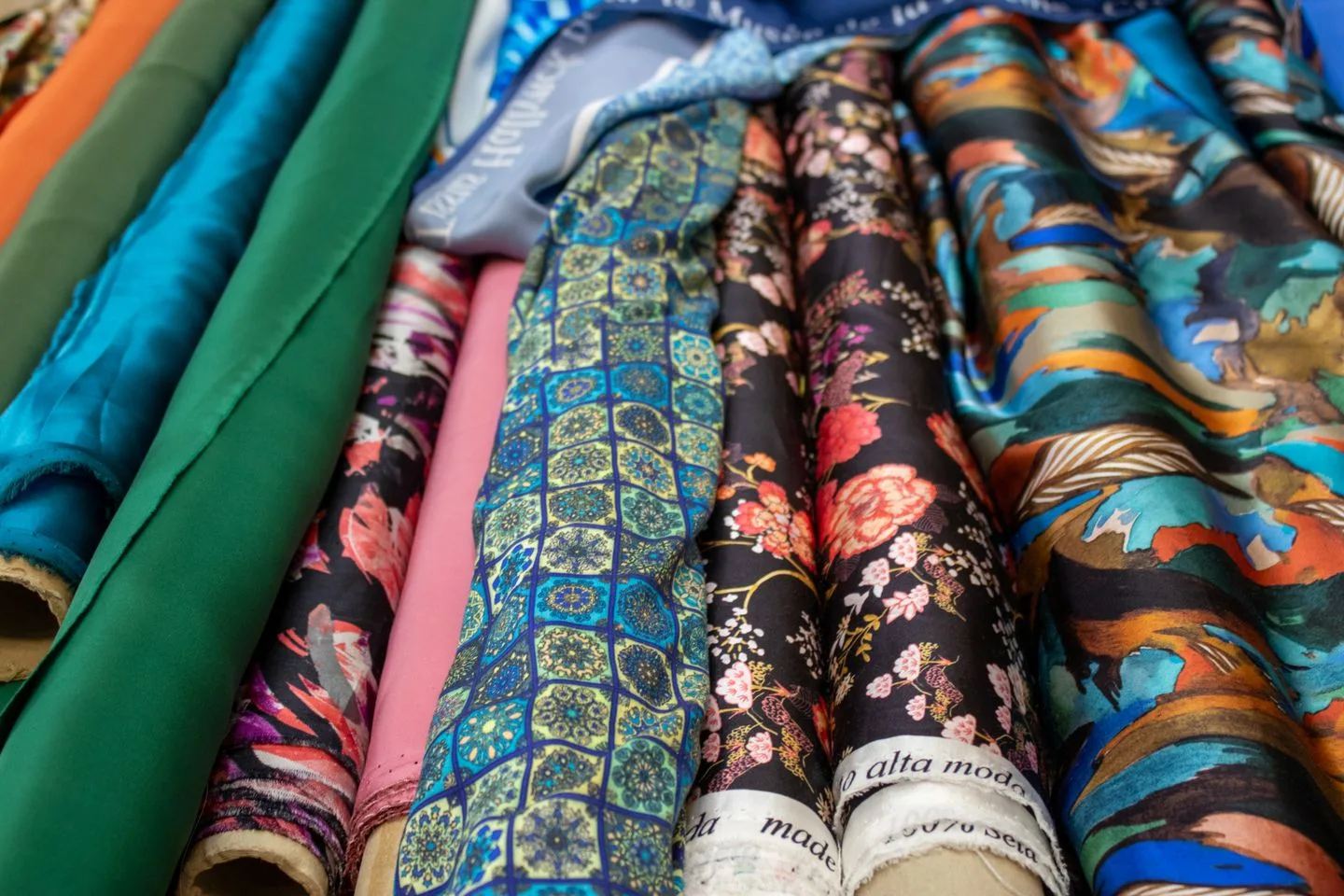
Treat the material as a combination of variables. Fibre composition is one variable. Construction is another: knit, woven, rib, jersey, interlock, terry, fleece, poplin, twill, satin, mesh, or another route. Weight, density, yarn choice, surface, dyeing, printing, coating, washing, brushing, and other finishing choices can change the way the material looks and feels in the garment.
Instead of describing a choice as “a premium cotton” or “a better polyester,” make the requested product evidence more specific. Record the material reference or supplier code where supplied, the composition information available, construction, weight or range if known, colour direction, surface, stretch question, expected garment use, components, proposed decoration, care question, and the sample or document still needed. This does not require a buyer to know every technical term. It requires the buyer to say what the current information does and does not establish.
For example, a soft jersey direction may need a garment sample to assess coverage, recovery, seam appearance, print compatibility, and fit. A woven direction may need a swatch and a constructed sample to assess drape, opacity, crease appearance, button or zip interaction, and the effect of lining. The physical material, the garment, and the customer-facing description are related records, not interchangeable evidence.
What should buyers check about turn a mood board into a fabric comparison brief?
A visual reference can explain a desired mood, colour, silhouette, or retail position. It cannot reliably identify the fabric, composition, construction, finishing route, care basis, or source evidence of the item pictured. Convert the image into questions the factory can answer. Which product feature matters most: softness, structure, transparency, stretch, surface texture, wash effect, sheen, print base, colour depth, or weight? Which elements are merely inspiration, and which must be matched or deliberately changed?
Build a comparison sheet with one row for each candidate material. Include the material reference, proposed styles, garment purpose, composition information supplied, construction, colour route, finish, handfeel description, drape or structure question, coverage question, stretch and recovery question, components, decoration, care consideration, evidence held, owner, status, and next proof. The sheet can say “under comparison” without creating a false production commitment.
Give every candidate a decision question. A buyer might ask whether a fabric is suitable for a lightweight shirt with a particular collar and button route, whether it can support an applied print sample, or whether the intended colour should be assessed on a garment rather than a small swatch. A clear question produces a clearer factory conversation than a request to “find something similar.”
How should buyers compare handfeel, drape, structure, and coverage together?
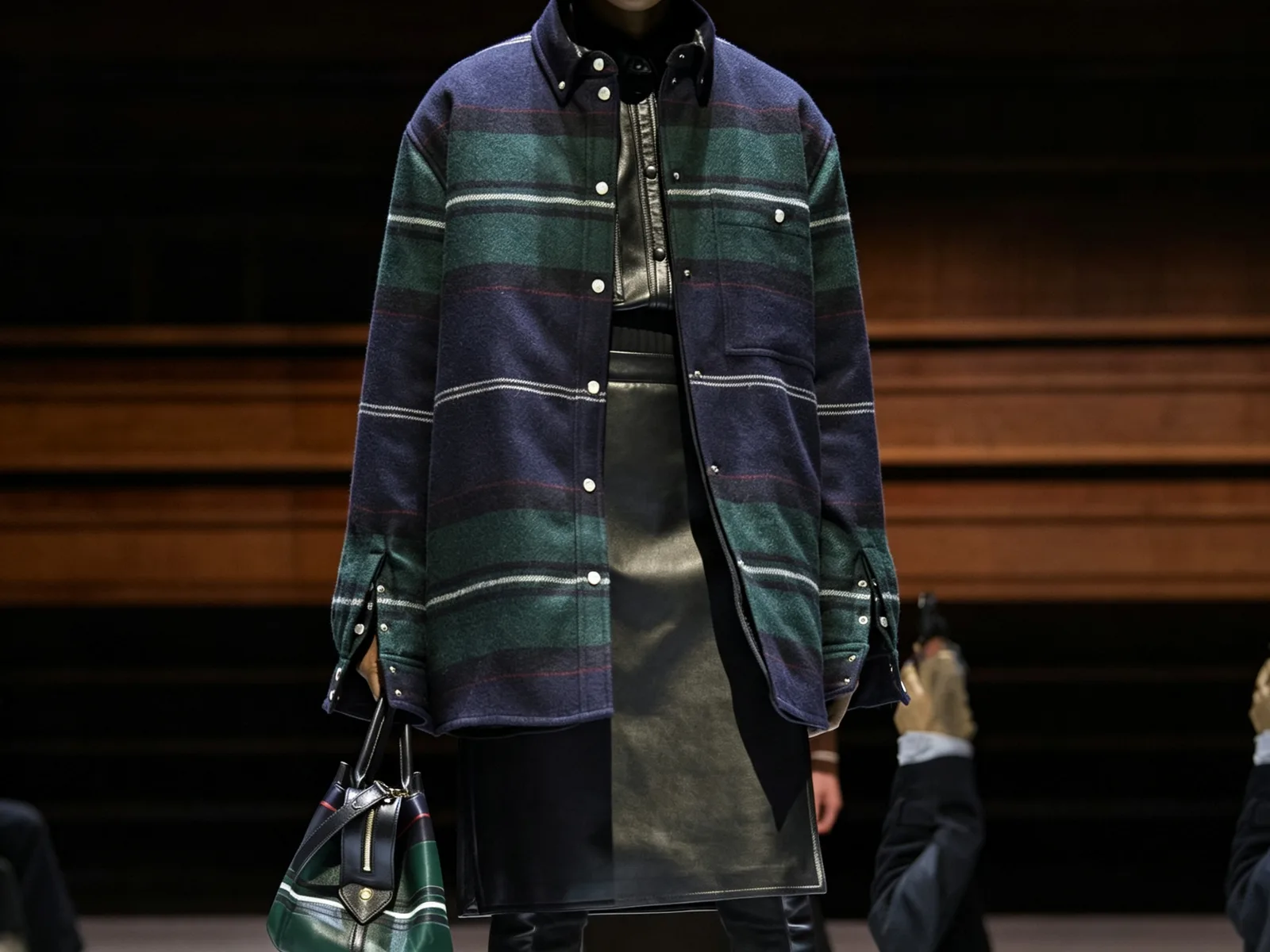
Handfeel is important, but it is not a complete fabric specification. A material may feel soft in the hand and still be too transparent, too fluid, too heavy, too unstable for the selected seam, or too different once a garment has components and finishing. Drape describes how material falls and moves; structure describes how it holds shape; coverage concerns what can be seen through or beneath it in the intended use. These questions should be reviewed together on the appropriate product form.
For a blouse or dress, the buyer may need to compare how the fabric falls at the shoulder, sleeve, waist, placket, hem, and lining. For a casual top, the relevant questions may be body weight, neck rib interaction, print surface, seam appearance, and how the garment hangs after construction. For an accessory, a material that looks useful on a flat card may still need reinforcement, lining, interfacing, or a different edge treatment. The answer depends on the actual product, not on a general hierarchy of materials.
Describe the intended result in plain language and connect it to a proof. “Soft, with enough body for a shaped sleeve” is more useful when the buyer also identifies the pattern, expected silhouette, and sample question. “Opaque enough for the intended dress, subject to garment review” is more honest than claiming opacity from a small fabric cutting. The fabrics and trims resource can help organise material, component, and garment questions before the first sample.
How should buyers plan stretch and recovery as garment behaviour?
Stretch is not only a number on a fabric card. A buyer should ask which direction of stretch matters, whether the garment relies on it for fit or movement, whether the construction and pattern assume it, how the material returns after extension, and how components such as elastic, rib, binding, tape, lining, print, or heat-applied decoration interact with it. A relaxed garment can have a different stretch question from a close-fitting top or a product with fitted cuffs, necklines, or waist construction.
Do not treat a stretch fabric as automatically suitable for every active, casual, or fashion item. The buyer should state the use, expected movement, relevant body areas, fit reference, and the issue to review. A development sample can show the garment's current behaviour. It does not automatically prove a particular long-term result, test outcome, or performance claim. If a test method, specification, or customer requirement applies, identify the exact product, sample, destination, and acceptance process rather than using broad language.
When a material or pattern changes, reopen the stretch and fit question. A substitute fabric, a revised weight, a different rib, or an adjusted seam can change the outcome. Preserve the prior sample record, but show which conclusion remains applicable and which needs another proof.
How should buyers review colour and finish on the actual material route?
Colour direction should travel with the proposed base fabric. The same colour reference can look different across fibre blends, constructions, weights, surfaces, linings, thread, rib, print bases, or finishing routes. A screen image can be helpful for communication, but it is not a substitute for the physical evidence agreed for the current product.
State the colour reference and the next evidence gate. Depending on the product, that may be a material cutting, swatch, lab dip, strike-off, component proof, wash-effect sample, print proof, garment sample, or buyer review. The purpose of the evidence matters. A swatch may support a handfeel or general colour-direction discussion, while a garment can show how the material works with shape, seams, contrast components, and retail presentation. Record what has been approved for a stated purpose and what remains open.
If the project includes an effect such as printing, washing, coating, brushing, embossing, or a special surface, attach the question to the precise material and sample version. Do not assume that a finish on a reference item will transfer without change to another fibre, construction, colour, or component route. The buyer should identify the visual outcome sought; the factory can identify whether a sample, proof, source, or additional discussion is needed before the next stage.
What should buyers check about bring trims, decoration, and lining into the material decision early?
Fabric is part of a system. Buttons, zips, elastic, thread, rib, lining, interfacing, drawcords, labels, patches, embroidery, print, heat transfer, hardware, and packing can influence the appropriate material route. A lightweight base may need a different construction approach from a heavier one. A print, embroidery, or heat-applied element may require an applied proof on the actual proposed base. A lining or reinforcement can change the garment's drape, coverage, care question, or packing result.
Create a component map beside the fabric comparison. For every candidate, show the affected style, component, placement, visual reference, source, current status, sample question, owner, and next approval. This helps the team spot where a fabric change affects more than one design decision. The custom labels, trims, and packaging guide offers a useful framework for connecting product identity, components, labels, and packing without treating a generic reference as a finished instruction.
Ask the factory what the candidate material changes in the current programme. The answer may be a construction question, a component proof, a decoration trial, an applied sample, a different packing need, or a revised discussion about quantities. It should be recorded as an open product decision until the relevant evidence is available.
How should buyers use samples to answer the highest-risk material question first?
Sampling becomes more useful when each proof has a named purpose. A fabric cutting can compare handfeel, surface, colour direction, or general construction. A header or material reference may clarify the route being discussed. A garment development sample can review silhouette, fit, drape, coverage, seam appearance, components, decoration, and material behaviour together. A later proof may focus on a revised colour, label, packing element, or final presentation.
Give every sample a version, material and component references, intended size, product question, reviewer, due date, approval wording, unresolved condition, and next gate. “Approved for fit on sample version 2; final fabric direction remains open” is a more reliable record than “fabric approved.” It avoids using one answer as proof for a different question.
Consolidate comments before they return to the factory. Product, design, sourcing, retail, quality, and compliance teams may each notice something relevant. The buyer should reconcile the feedback against the same sample version and issue one controlled change list. The fashion sourcing trends guide explains how visible decisions, evidence scope, and a defined next gate reduce ambiguity across a custom programme.
How should buyers connect fabric choice with care information and product data?
Fabric selection and care wording should develop together. For U.S.-directed programmes, FTC guidance is a useful reminder that covered clothing and certain textile goods need care information supported by a reasonable basis, and that the finished garment's components matter to that care question. FTC textile guidance also gives context for fibre content, country-of-origin, and responsible-business details. For EU-directed programmes, the textile labelling regulation is relevant context for fibre composition, labels, and language planning. These sources help a buyer plan; they do not provide legal advice or decide the final requirements for a specific item or destination.
Do not draft consumer-facing fibre, care, origin, environmental, performance, or marketing claims from a mood board or a partial material note. Keep the material reference, composition information supplied, source evidence, proposed claim wording, product scope, labels, destination, channel, and final approver in connected records. A document may apply to a fibre, yarn, fabric, component, transaction, or previous lot rather than the full garment. The buyer should use its own legal, retailer, and market review process for the final product language.
The practical manufacturing question is simple: what information must be confirmed before labels, hangtags, product pages, or packing material are ordered? The answer may include a material source, final composition detail, care basis, product sample, component proof, customer wording, or destination review. Show the missing item rather than filling the gap with a broad claim.
What should buyers check about treat material documentation and preferred-fibre claims as scoped evidence?
Many buyers want to consider recycled, organic, cellulosic, regenerated, or other preferred material directions. The right question is not whether a broad material label makes the product inherently better. The buyer should identify the actual fabric or component, evidence currently available, claim proposed, product or percentage scope where relevant, destination, channel, owner, and the next verification step.
Textile Exchange material reporting can provide industry context, but it does not certify a particular garment or establish what a brand may claim. The eco friendly fabric options guide and fashion fabric traceability checklist show how to separate physical material references, evidence, product scope, customer wording, and later handover records. Use these guides to structure questions rather than infer availability, certification, cost, performance, or a marketing benefit for the current programme.
When a buyer receives material documents, retain the date, source, item covered, scope, applicable product or component, and open condition. If a fabric, colour, component, destination, or claim changes, reopen the evidence question. This is a more useful practice than attaching a generic sustainability statement to a changing product route.
What should buyers check about let the quantity matrix reveal material complexity?
A total order number does not show the full material decision. The factory needs the current quantity by style, colour, and size where relevant, alongside fabric count, component packages, decoration, labels, packing variations, destination, channel, sample purpose, and timing context. Mark estimates as estimates. A single total can have very different material and development implications when it is divided among many unrelated fabrics, colours, finishes, or components.
The buyer can use the matrix to decide where simplification helps and where variation is essential. It may be practical to share a compatible fabric across selected styles, align colour directions, reduce a lower-priority component, or focus early sampling on the highest-risk material. Another programme may need deliberate variation because the collection's product proposition depends on it. The goal is not to remove every option; it is to make the material, sample, sourcing, SKU, packing, and approval work visible before a commercial discussion is treated as comparable.
The fashion clothing MOQ, sample cost, and bulk price guide explains why commercial questions depend on the actual product basis. It should not be read as a fixed MOQ, price, sample fee, stock position, or lead-time promise. Current materials, components, quantities, and approvals must be confirmed for the specific programme.
How should buyers build quality visibility around the approved material reference?
Quality visibility begins with the product reference that the team agrees to compare. Identify the exact style-colour-size, material and component route, approved or provisional sample, construction priorities, measurement basis, decoration, labels, packing, quality questions, evidence, owner, and unresolved condition. A material record should be useful at cutting, sewing, finishing, component application, packing, and later repeat review.
Avoid a generic statement that a fabric or garment is “quality assured.” The relevant inspection or review point depends on the product and current risk: appearance, seam behaviour, measurement, colour, print placement, component attachment, label position, packing identity, or another agreed criterion. The buyer should name the priority and any applicable product or market requirement. The factory can then describe the appropriate checkpoint, documentation route, and next decision without promising an outcome that has not been verified.
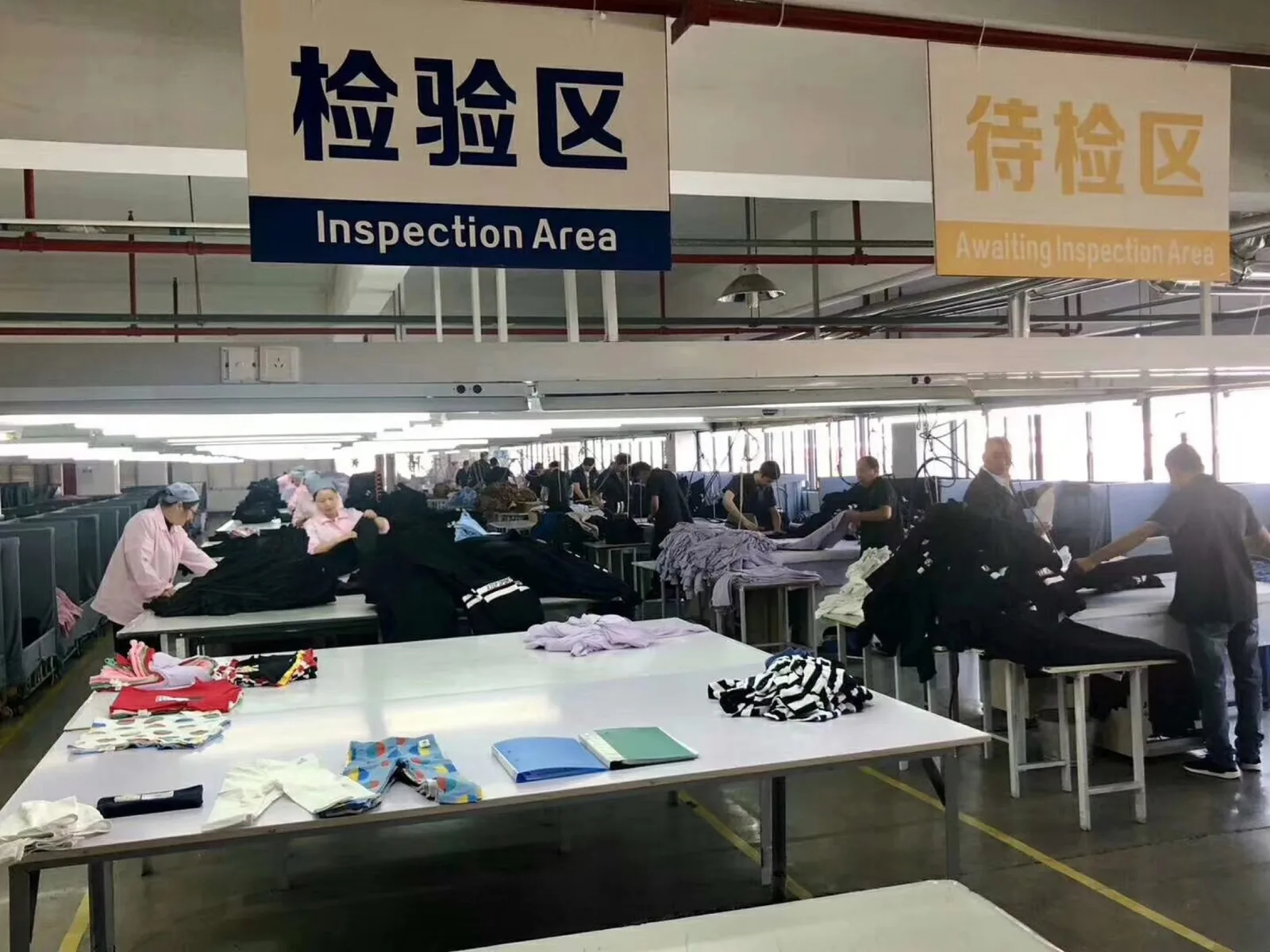
The fashion clothing accessories quality control guide provides a route for connecting materials, production, labels, packing, findings, corrections, and release evidence. If the material route changes, reopen the connected check rather than assuming an earlier approval still covers the product.
How should buyers keep a repeat-ready fabric record?
The first material route can make the next conversation easier if the evidence is retained. Keep the approved material reference or source code where available, composition information supplied, construction and finish notes, colour reference, component list, sample photographs, comments, care or product-data inputs, quantity structure, quality observations, packing record, exceptions, and authorised changes. Link each item to the actual style-colour-size scope rather than a broad season name.
A repeat is never automatic. Material availability, colour route, component package, quantity split, destination, customer claim, channel, and timing context can change. Start with the last approved record plus a visible difference list. Ask whether the original material source still applies, whether a substitute needs a sample, whether labels or care language need review, and whether the previous quality or packing checks remain relevant. This creates a controlled starting point without presenting a historical result as a current promise.
What should buyers send to begin a fabric-development conversation?
Send one dated product pack through the contact page. Include the category, target wearer and channel, style references or tech pack, intended silhouette and fit, construction, desired handfeel and drape, coverage or stretch question, material references, composition information supplied, colour direction, components, decoration, label and packing requirements, quantities by style-colour-size, destination, sample objective, target arrival context, source documents held, planned claims, decision owner, fixed decisions, and open questions.
Yinshan Fashion can then discuss a custom or private-label material route, possible evidence gates, sample planning, components, manufacturing, quality, packing, and export coordination. The most useful first response may identify a missing swatch, garment reference, material source, component proof, quantity matrix, destination input, or approval owner. That is constructive progress because it makes the next decision visible. It is not a promise that the material, claim, commercial basis, test, certification, production route, stock, timing, or delivery result is already confirmed.

Fabric decision kit
Three controls that turn a fabric preference into a workable garment route
A fabric choice becomes useful when the garment outcome, material record, and next approval are visible. These controls help buyers compare construction, colour, components, samples, care, quantities, and repeat records without treating a swatch as a bulk promise.
Control the garment outcome
Name the style, wearer, use, fit, handfeel, drape, coverage, stretch, surface, colour, construction, components, care question, and product risk the material must support.
Control the material record
Keep the physical material reference, composition information supplied, construction, colour, finish, source evidence, component route, proposed wording, owner, and open condition in connected records.
Control the next proof
State whether the next decision needs a swatch, header, colour proof, applied component, garment sample, document check, revised quantity matrix, quality review, or buyer approval.
Buyer action and factory confirmation before a fabric route moves forward
Use one dated checklist to connect garment outcome with material construction, colour, components, samples, product data, quantities, quality priorities, and repeat records. Exact availability, commercial terms, tests, certifications, approvals, and timing remain programme-specific.
| Decision area | What the buyer should prepare | What to ask the factory |
|---|---|---|
| Garment outcome and fabric role | Provide the style-colour-size route, target wearer, use, silhouette, fit, handfeel, drape, coverage, stretch, surface, construction, care question, and fixed versus open decisions. | Which material characteristics can be reviewed now, which need a swatch or garment sample, and what product detail could change the route? |
| Construction colour and finish | Share the material reference, composition information supplied, construction, weight if known, colour reference, finish, lining, thread, rib, and acceptable alternatives. | What physical reference, colour proof, source, finish, component, or applied sample is needed before the current product record can move forward? |
| Components and decoration | Give the print, embroidery, heat application, buttons, zips, elastic, labels, hangtags, packing elements, style scope, and the product question each item creates. | Which component, decoration, construction, applied proof, or substitute needs review before the next sample or production decision? |
| Sample and approval scope | Name the sample version, material and component references, intended size, question to answer, reviewer, feedback date, approval wording, and unresolved condition. | What does the proof demonstrate, what remains open, and which connected material, product, or component record must be updated? |
| Product data and evidence | Provide composition information supplied, care question, proposed customer wording, source documents where available, label and packing files, destination, channel, and final approver. | What does each document or claim apply to, what is conditional, and which buyer, retailer, legal, or market review is needed before use? |
| Quantities quality and repeat | Share the style-colour-size quantity matrix, quality priorities, approved material reference, exceptions, packing record, retained evidence, and authorised change log. | How will the material route be compared during production and packing, and what future change must reopen the material, sample, or approval discussion? |
Continue the production conversation
How to choose fabrics for custom fashion clothing: buyer inputs and factory confirmation
| Decision point | What the buyer should prepare | What the factory should confirm before the next gate |
|---|---|---|
| Garment outcome and material role | Style-colour-size route, target wearer, use, silhouette, fit, handfeel, drape, coverage, stretch, surface, construction, care question, and fixed versus open decisions. | Which material characteristics can be assessed now, which need a swatch or garment sample, and what garment detail may change the route? |
| Fabric construction and colour route | Material reference, composition information supplied, construction, weight if known, colour reference, finish, lining, thread, rib, and acceptable alternatives. | What physical reference, colour proof, source, finish, component, or applied sample is needed before the current product record can move forward? |
| Components and decoration | Print, embroidery, heat application, buttons, zips, elastic, labels, hangtags, packing elements, style scope, and the exact product question each item creates. | Which component, decoration, construction, applied proof, or substitute needs review before the next sample or production decision? |
| Sample and approval scope | Sample version, material and component references, intended size, question to answer, reviewer, feedback date, approval wording, and unresolved condition. | What does the proof demonstrate, what remains open, and which connected material, product, or component record must be updated? |
| Product data and evidence | Composition information supplied, care question, proposed customer wording, source documents where available, label and packing files, destination, channel, and final approver. | What does each document or claim apply to, what information is still conditional, and which buyer, retailer, legal, or market review is needed before use? |
| Quantities quality and repeat record | Style-colour-size quantity matrix, quality priorities, approved material reference, exceptions, packing record, retained evidence, and authorised change log. | How will the material route be compared during production and packing, and what future change must reopen the material, sample, or approval discussion? |
Buyer FAQs
How should buyers choose fabrics for custom fashion clothing?
Start with the garment outcome: intended wearer and use, silhouette, fit, handfeel, drape, coverage, stretch, surface, construction, components, colour, labels, packing, quantities, destination, sample purpose, and open decisions. Then compare fabric candidates against a named product question and physical proof, rather than selecting from a fibre name or photograph alone.
What fabric information should a factory receive before sampling?
Send the style reference or tech pack, garment use, fit and construction direction, desired handfeel and drape, coverage or stretch question, material references, composition information supplied, colour, components, decoration, labels, packing, quantities by style-colour-size, destination, sample purpose, source documents held, and open decisions. State what the sample should prove and who approves the next gate.
Should fabric colour be approved from a screen image?
A screen image can guide discussion, but it is not a substitute for the evidence agreed for the current product. A swatch, material cutting, lab dip, strike-off, component proof, or garment sample may answer different questions. Record the colour reference, the product scope, the current proof, and what remains open.
Does a fabric document prove a claim for the whole finished garment?
Not necessarily. A document may apply to a fibre, yarn, fabric, component, transaction, or previous lot. Keep the physical material reference, evidence record, proposed customer wording, product scope, destination, and approval owner connected, then use the buyer's appropriate legal, retailer, and market review process for final product claims.
How do quantities affect a fabric sourcing conversation?
A total number is only a starting point. The style-colour-size split, fabric count, component packages, decoration, labels, packing variations, destination, sample needs, and current assumptions all shape the practical material discussion. Mark estimates clearly and ask the factory to separate confirmed inputs, assumptions, exclusions, alternatives, and dependencies.