Article
What should buyers know first?
Short answer: Brief a graphic t-shirt manufacturer on fabric, artwork, print placement, colour variants, wash review, sample evidence, and production approval for your brand.
For a custom graphic T-shirt programme, Yinshan Fashion can review the brand's garment, artwork and sampling brief. The buyer's task is to define the intended result and establish how the sample will be assessed. A print file can be approved while the complete tee remains under development. This guide explains how to separate those decisions, compare samples on a consistent basis, plan care-related review, and authorize a resolved product. It is written for brands building their own programme, with quantities, prices, methods, and timing confirmed against the actual enquiry.
How should buyers give the graphic t-shirt manufacturer a complete product brief?
State the intended customer, garment role, silhouette, size range, colour plan, artwork direction, and preliminary quantities. Explain whether the graphic is the main selling feature or one element of a broader collection. That distinction can help the team understand which visual decisions the buyer considers essential when discussing material and application options.
Provide technical views and captioned references. If one image illustrates a boxy fit and another shows a preferred graphic scale, label those purposes. A factory should not have to decide which parts of several unrelated garments the buyer wants to combine. Mark details that need a proposal and identify who will approve them before they enter the next sample instruction.
Use the fashion T-shirt collection to frame the product category, then describe the actual design separately. Include neckline, sleeve and body proportions, hem treatment, label plan, and any wash or surface effect. The brief should still describe a coherent tee when the graphic is removed from the drawing; the underlying garment is part of the product decision.
Define the purpose of the first sample. It might establish the fit block, compare material candidates, or bring a chosen fabric and print together. State any temporary substitutions and the observations they leave unresolved. The buyer can then use development samples effectively without approving requirements that the sample was never intended or equipped to demonstrate.
How should buyers select the fabric for both the tee and the graphic?
Identify the proposed fabric by reference, composition, construction information, weight where relevant, colour, finish, and sourcing status. Ask to see a physical candidate rather than relying only on a generic description. The selection should address the desired silhouette and appearance of the tee alongside the requirements for the proposed decoration.
CottonWorks' printing process overview explains that preparation, fibre content, construction, colourant system, and printing process are connected technical decisions. This supports a practical buyer question: what material and preparation does the provider propose for this artwork and application? The decorator should assess the actual candidate instead of treating every fabric with the same broad fibre description as interchangeable.
Keep garment handling preferences separate from unverified performance statements. A buyer may prefer the feel of one candidate or its appearance in a sample, but that does not establish all care, durability, or comfort claims. Record the reason for selection and the evidence still required. The technical team can then plan appropriate review for the requirements that matter to the project.
Review any change of fabric after print development. If the factory proposes another source or finish, identify whether the prior decoration trial remains relevant and which observations need repetition. A successful print on the first candidate should not automatically approve a different production combination. The material reference on the final print approval needs to identify the product intended for bulk.
How should buyers settle fit before treating placement as final?
Define body width and length, shoulder position, sleeve shape, neckline, and other points needed for the intended silhouette. Give the measurements a clear method and reference size. If the buyer uses an existing tee as a starting point, explain which proportions to retain and which to change. The factory should be able to distinguish the fit reference from a request to duplicate every visible detail.
Review the proposed silhouette in the intended wearing context. Record the sample identity, fit reference, and relevant observations. A photograph with the tee tucked, tied, or styled differently may be useful for creative direction, but the technical review also needs a consistent presentation. Otherwise, a visual difference between sample rounds can be mistaken for a pattern change.
The custom womenswear manufacturing solution offers a starting point for discussing fit and sampling across a wider casual assortment. Each style still needs its own fit and artwork decisions. A shared collection theme does not mean that one measurement chart or graphic placement rule automatically suits every silhouette.
When fit changes, recheck the graphic's relationship with the garment. Shortening a body or moving a seam can alter the available area and the intended visual balance. Update the drawings and placement page together. The buyer should approve the complete revised composition rather than separately accept a new garment shape and assume the earlier graphic decision remains unchanged.
How should buyers prepare a production artwork file and a readable approval view?
Supply the original artwork in the format requested by the responsible provider, plus a preview that clearly shows the intended result. Identify the revision, finished dimensions, colours, orientation, and any intentional texture or distress. Keep the source file and production adaptation distinguishable so the buyer can see when the decorator has modified the design for the chosen application.
Ask the provider to review the file at the proposed garment scale. Fine lettering, photographic detail, small gaps, and gradients may need specific discussion for the application under consideration. Have the provider flag questions before making the trial. Avoid converting the request into a universal rule about a single file format or resolution without reference to the actual artwork and production method.
Check spelling and all text content at the approval stage. Confirm that the preview and production file agree, including hidden or alternate layers where relevant to the supplied package. If the artwork contains a deliberate irregularity, explain it. The decorator should not clean up a designed feature or reproduce an accidental error because the approval view was too small to inspect clearly.
Record the scope of artwork approval. A buyer can approve the design file while leaving application, colour on the selected substrate, and placement pending. Use separate fields for those decisions. This prevents a message saying that the graphic looks good from being read as authorization to produce the final tee before the complete decoration and garment review has occurred.
How should buyers choose the print route through a sample comparison?
Describe the visual and tactile result the brand wants, then ask the factory or decorator to propose suitable options. Provide the actual artwork, garment material, colour plan, quantities, and evidence requirements. The proposal should explain the relevant tradeoffs for this project. A method name alone cannot establish that the proposed result meets the buyer's design and commercial needs.
Agree what each trial is intended to show. The buyer may compare colour presentation, detail, surface feel, or another specified characteristic. Use identified samples and a consistent review basis. Record which option is preferred and why, together with unresolved requirements. A concise decision note makes the choice easier to revisit if the order scope or material changes later.
Keep the final process specification with the responsible technical provider. The buyer does not need to invent application settings or copy a generic recipe into the factory brief. The useful requirement is an approved result supported by an appropriate production and assessment plan. Ask the provider to identify the process reference used for the trial and how it will remain connected with the bulk instruction.
Where a special effect is proposed, require an actual relevant sample and a clear description of acceptable appearance. Intentional texture or variation needs its own agreement. Do not assume that a creative effect makes all irregular results acceptable. The approval should tell the factory which aspects are designed, which are controlled, and how questions outside the agreed reference will be resolved.
How should buyers make placement measurable and review it across sizes?
Specify the graphic's dimensions and position from named garment reference points. Include orientation and any relationship with the neckline, pocket, sleeve, seam, or hem. A centred image in a mockup can communicate direction, but the production brief should define how the factory locates it on the actual garment. Ask for clarification where a reference point is ambiguous.
Review a physical sample at the intended scale and in the agreed presentation. Record the garment size and artwork revision with the photographs. A placement that appears balanced on one sample may need further consideration across the proposed size range. Have the technical team explain the options and the review needed before issuing one unqualified placement instruction for every size.
Decide whether graphic dimensions remain fixed, change between selected size groups, or follow another approved approach. This is a project decision requiring a clear rule and confirmation from the application provider. Keep it separate from the garment grading chart while connecting the two documents. The buyer should know which graphic version belongs to each production variant.
Revisit placement when construction changes. A new pocket, revised sleeve, or altered neckline can affect the intended composition. The final specification should contain one reconciled instruction, with superseded placement pages clearly archived. This saves the production team from deciding whether to follow the latest garment drawing or an older decoration approval that no longer fits the design.
How should buyers treat garment colours as a deliberate approval matrix?
List each proposed base colour with its fabric reference, artwork version, print colour requirements, and sample status. The same graphic may be planned across several colourways, but the buyer should know which combinations have actually been reviewed. Do not extend an approval from one identified sample to every variant without considering the evidence needed for the proposed range.
Discuss contrast and the intended visual relationship on the actual garment colour. A digital background can help plan the collection, while a relevant physical sample supports the product decision. Record the approved reference and any limitation. If the buyer accepts a colour concept while waiting for the final material or decoration trial, keep those pending items visible rather than marking the complete colourway approved.
Use the women's knitwear collection to consider how graphics relate across product types. A shared image can support a collection identity while each garment retains its own scale, placement, substrate, and review requirements. The buyer should not assume that a decoration approval for a tee establishes the complete result on a pullover.
When adding a colour late, ask the factory to identify the material, decoration, quantity, and timing implications. The buyer can then choose whether to include it in the first production scope or complete the remaining work separately. This turns a merchandising addition into an explicit development decision and prevents it from bypassing the review used for the original colours.
How should buyers define the wash review before examining the result?
Write down the purpose of the care-related review with the responsible technical team. Identify the appropriate procedure, garment version, preparation and observation conditions, characteristics to assess, and acceptance basis. The requirements should reflect the product the brand intends to sell. Avoid declaring a fixed number of washes or a generic home routine to be a universal proof of print quality.
Distinguish development observation from formal testing. A buyer may use a controlled practical review to notice a concern, while a formal claim or specification may require an appropriate laboratory assessment. Both records should say what was actually done. Do not give an informal trial the name of a standard method unless that method was followed and the result is validly reported within its scope.
Identify the aspects to examine before the treatment occurs. Depending on the brief, these may include garment dimensions, graphic appearance, colour relationships, surface condition, or another specified feature. A pre-agreed review makes the final decision easier to explain. Choosing the acceptance criteria after seeing the result can leave the buyer and factory working from different expectations.
Keep the evidence tied to the final combination of fabric, print application, construction, and any other relevant treatment. If the sample used a temporary component or earlier artwork, state that fact. The review can still inform development, but the team must decide which conclusions carry forward and which requirements need confirmation on the product intended for bulk.
How should buyers record before-and-after observations that can be compared?
Identify the sample visibly and retain its revision in the record. Take the required measurements using the stated method and capture the relevant graphic and garment details before the agreed treatment. Use a consistent presentation for the corresponding observations afterward. The aim is to make an actual comparison possible, with enough context to distinguish a product change from a difference in how it was documented.
Record findings in specific language. A comment about a particular edge, colour area, letter, surface feature, or dimension is easier to investigate than a general statement that the print failed. Reference the requirement against which the observation is assessed. If the reviewer is uncertain, preserve that uncertainty and request the appropriate further assessment instead of converting a suspicion into a confirmed cause.
Do not let a photograph replace measurements or technical assessment where those are required. Conversely, do not let a single numerical result stand in for an unresolved appearance decision. The buyer should retain the different types of evidence under the relevant requirement. That makes the final review more useful than a folder of unlabeled images or a report with no connection to the approved artwork.
Close the comparison with a scoped conclusion. State which requirements were satisfied, which need correction, and which were not assessed. The factory can then propose the next step against a defined issue. If a repeat review is requested, explain why and identify any changed conditions so the later result is not mistakenly treated as a direct repetition of the original.
Decide in advance which physical references will be retained and where they will be stored. Where the review plan uses a separate untreated comparison, identify it clearly and confirm its relationship with the treated sample. Do not rely on memory to reconstruct the original colour or surface appearance several weeks later. Keep the reports, photographs, and retained pieces under the same reference system. The buyer and factory should be able to retrieve the relevant evidence when a later production question arises, including the limits of the comparison rather than only its final approved or rejected label.
How should buyers investigate a concern before prescribing the correction?
When a sample does not meet the agreed requirement, preserve the original observation and ask the responsible provider to investigate. Supply the sample identity, material reference, artwork version, application reference, and review conditions. The provider needs enough information to locate the relevant process and product decisions. A general request to use better ink or stronger fabric may not address the actual issue.
Separate a proposed cause from a verified explanation. The team may need a further trial or technical review to distinguish possibilities. Record the chosen correction and the evidence needed to confirm it. The buyer should not approve a revised production instruction simply because the proposed explanation sounds plausible; the change must be evaluated against the product requirements it is meant to satisfy.
Review the full effect of the correction. If an application change resolves one appearance concern, the buyer may still need to assess detail, handle, colour, or another requirement affected by that change. Do not close the complete product approval through a narrow demonstration that only addresses the original symptom. Keep the final combination and its evidence identifiable.
Update the technical pack and retained references when the correction is approved. Archive the superseded trial so it cannot be mistaken for the production standard. The revised sample, artwork page, material list, and application record should all point to the same authorized outcome. This is particularly useful when several colourways are being developed and only some require the change.
How should buyers connect print decisions with quantities and commercial options?
Request a quotation based on the actual graphic, print dimensions, number of locations, garment material, colour and size quantities, packing, and current style revision. Ask the provider to identify assumptions and pending technical decisions. The buyer should be able to see what the offer includes and whether the proposed sample represents that same scope.
Compare alternative designs on consistent quantities and terms. A smaller graphic, fewer locations, another application route, or a different variant plan may produce a different offer, but the saving should be confirmed rather than guessed. Keep the visual and technical implications beside the revised quotation. The cheapest proposal is not a meaningful comparison if it describes a product the brand would not approve.
For a hypothetical collection with two graphics and three base colours, the planning sheet could contain six graphic-and-colour combinations before sizes are added. That arithmetic is a planning example, not a recommended range size or a statement of factory minimums. The useful question is which combinations have a clear commercial role and which have completed the necessary material and print review.
Clarify the reorder basis. Ask what information must be retained and which sourcing or application details would need reconfirmation for a later order. Do not promise an unchanged price or identical availability without confirmation. The brand's records should make the original product identifiable, allowing the next enquiry to start from the approved specification rather than a photograph and a remembered process name.
How should buyers release the tee through one reconciled approval pack?
Use the published fashion product brief guide to check whether the final product decisions are clearly expressed. At release, the pack should include the approved garment chart, drawings, material identities, colour matrix, artwork, placement rules, decoration references, care-related evidence, labels, and packing instructions. Identify the actual sample used for comparison.
Close contradictions before authorizing production. If the artwork sheet has one dimension and the retained sample another, resolve the difference explicitly. If the final colourway was added after the wash review, determine what further evidence it needs. The buyer should not combine approvals for different product versions and assume that the resulting file describes the intended bulk goods.
Agree the handling of proposed changes after release. The factory should identify what changes, why, which goods are affected, and which requirements need review. The buyer can then authorize a revised instruction or retain the existing one with the appropriate technical basis. Keep order-specific concessions separate from permanent specification changes so future production remains clear.
Retain a compact final approval summary for the team handling the next order. It should identify the finished garment, the accepted graphic combination, the evidence supporting the relevant requirements, and the approved commercial scope. A well organized record preserves the decisions that made the tee successful as a product, instead of leaving only a print file whose original fabric and application context have been lost.
How do artwork and fabric decisions change the print comparison?
A graphic that looks crisp on screen can present a different question on a finished tee. The surface, colour and construction of the actual fabric are part of the comparison, as are the scale and intended feel of the artwork. Start with the final artwork revision and a representative fabric candidate. Ask the decorator to identify which details need a trial, whether a proposed application changes the intended appearance, and what it needs from the source file. A small swatch can help narrow a choice, but it does not show how a full graphic sits on the worn garment.
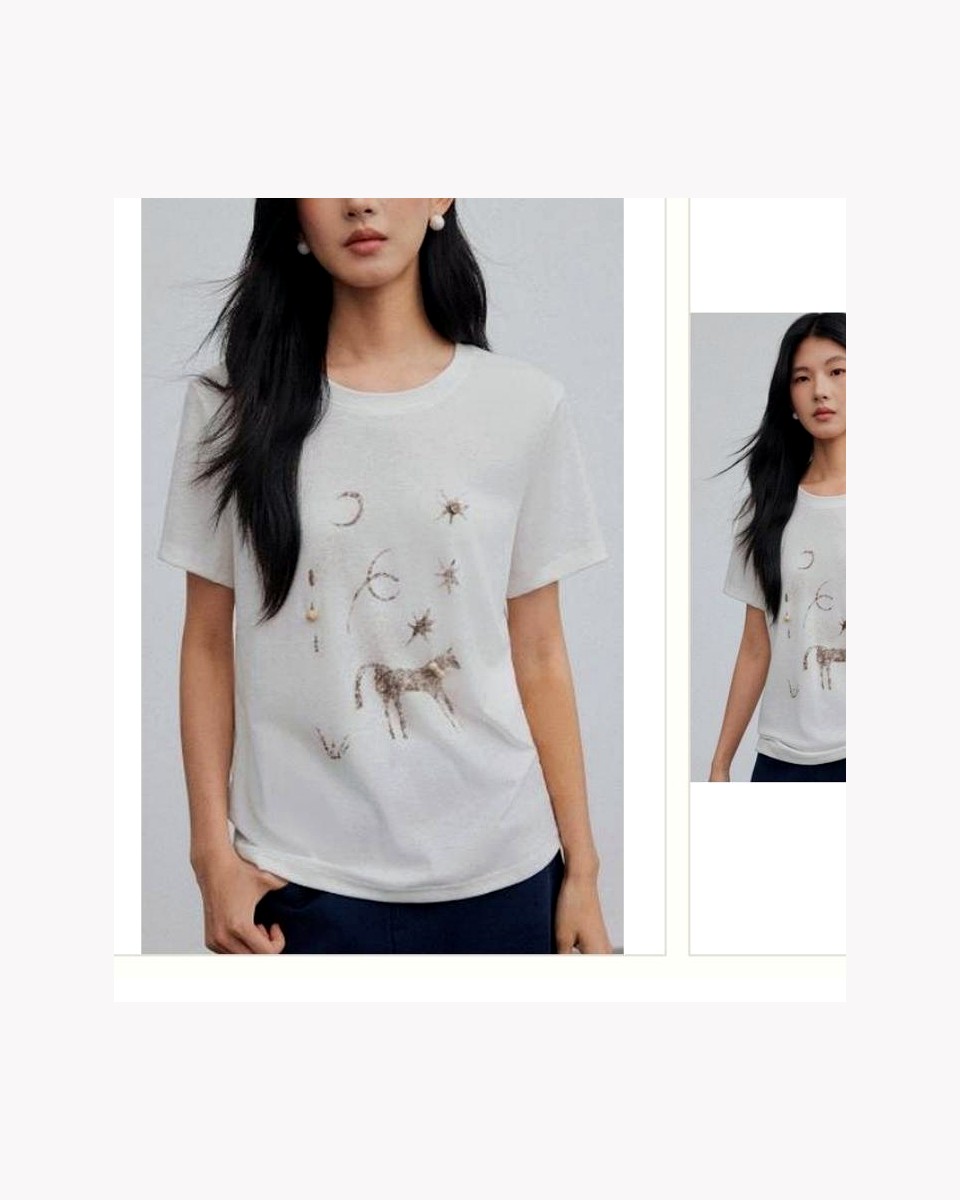
For a capsule built around the fashion T-shirt collection, the buyer can use a style as a silhouette reference and provide a separate graphic, size range and material brief. Yinshan Fashion can discuss the custom or private-label sample route for the enquiry; the precise fabric, method and commercial terms remain to be confirmed for that programme. If the collection also includes a women's knitwear style, identify its different surface and construction before carrying the same artwork over. A tee approval is not automatically an approval for another knit garment.
Use the print, embroidery and heat-transfer comparison to frame the tradeoffs, then ask the provider to compare the actual options for this design. Screen printing, transfer and other routes can involve different preparation, colour handling and surface results; the practical result and cost depend on the artwork, substrate, order split and provider. Do not select a method from a generic ranking or assume that a particular result is guaranteed. Record what each trial can establish, what it cannot establish and who decides the next version.
Which approval travels with each tee colour and size?
Create one line per relevant artwork, base colour and placement combination, with the proposed garment sizes linked to that line. Record the artwork revision, finished dimensions, placement measurement points, fabric reference and sample identifier. A visual proof can confirm text, orientation and layout at a stated revision; an identified garment sample is needed for the physical relationship among print, fabric, fit and placement. Keep those approvals separate, as explained in the apparel artwork approval guide.
For example, a front graphic on a light tee and the same graphic on a dark tee are two planned combinations. The artwork may be identical, but the buyer still needs to decide what physical colour and appearance evidence applies to each. If the style is also offered in several sizes, agree whether the artwork remains one size or uses approved size groups. Document that rule rather than asking the production team to infer it from the photograph of a single sample.
The custom logo placement guide helps distinguish a chest mark, neck label and other brand elements from the main graphic. Each has its own file, position and approval scope. If a neckline or shoulder measurement changes after the placement review, compare the revised pattern with the approved positioning points and agree whether a new sample or another form of evidence is needed. A change log should identify the affected variants and the person who accepts the outcome.
How should the buyer close a print concern before bulk?
Suppose the lettering on a reviewed sample is less legible than the approved artwork. Preserve the garment and file revision, photograph the affected letters at the agreed scale and describe the observation without assigning an unverified cause. Ask the responsible provider to explain the proposed investigation. It may involve the artwork adaptation, substrate, application or another factor; the buyer should not choose a correction before the provider has assessed the actual combination.
If the artwork is revised or the application changes, compare the new sample with the original requirements for legibility, placement, colour and handfeel as applicable. A correction for one issue does not by itself approve the remaining requirements. The buyer and provider should agree any wash or other assessment appropriate to the product and claims, record the method and scope used, and retain the result alongside the final sample. An informal observation is not a substitute for a formal test where one is needed.
Close the issue with a dated instruction that names the accepted revision, the affected style-colour-size lines and any condition still open. For a broader collection that pairs the tee with a woven blouse, maintain a separate material and decoration record for that garment rather than extending the tee decision across the range. The result is one usable handover for each product, not a generic promise that every future print or wash will behave the same way.
How can buyers discuss next steps with Yinshan Fashion?
Send your tee references, artwork files, intended print dimensions, material priorities, colour and size plan, and preliminary quantities through Yinshan Fashion's contact page. The team can review the custom or private-label programme and identify the sample and assessment work needed before production approval.
Sourcing Guide buyer guide
Graphic T-Shirt Manufacturer: How to Plan Fabric, Print, and Wash Review
Brief a graphic t-shirt manufacturer on fabric, artwork, print placement, colour variants, wash review, sample evidence, and production approval for your brand.
Identify the exact combination
Record the garment material, colour, artwork revision, placement, and application reference on every trial and sample.
Agree the wash review in advance
Define the method, observations, and acceptance basis with the responsible technical team. Keep informal observations accurately described.
Reconcile corrections across the pack
Update the actual sample reference, artwork page, materials, and evidence after a change so the production instruction stays coherent.
Buyer and factory handover checklist for graphic t-shirt manufacturer
Use these prompts to make the current product decision reviewable. Confirm market requirements and commercial details for the specific programme.
| Decision area | What the buyer should prepare | What to ask the factory |
|---|---|---|
| Approval point 1 | provide garment direction, original artwork, desired appearance, variant plan, and order assumptions. | identify sample materials, application proposals, placement methods, and unresolved questions. |
| Approval point 2 | distinguish file approval, print trial approval, fit approval, and final product approval. | retain the link between corrections, process references, and verification evidence. |
| Release and repeat | Record the current requirement, reference and approval owner for this product decision. | Which proof or record should confirm the decision before the next stage? |
Continue the production conversation
Decision table: graphic tee development and wash review
| Decision | Required input | Approval evidence |
|---|---|---|
| Base garment | Intended fit, construction, material | Identified sample and chart |
| Artwork | Original file, revision, scale, colours | Approved file and readable preview |
| Print route | Desired result and actual substrate | Relevant trial and scoped assessment |
| Placement | Named reference points and size rule | Physical garment review |
| Colour range | Every intended combination | Variant matrix and applicable evidence |
| Care review | Procedure, characteristics, acceptance basis | Comparable before-and-after records |
| Correction | Specific finding and investigated proposal | Revised sample and verification |
| Production release | Reconciled files and order scope | Final approval and change process |
Buyer FAQs
What should a graphic t-shirt manufacturer receive with the artwork?
Provide the intended garment, material and colour direction, finished graphic dimensions, placement, size range, quantities, and the requirements the sample must demonstrate.
Does approving a digital file approve the complete printed tee?
No. Application, colour on the actual substrate, placement, fit, and other product requirements still need their own relevant review.
Can one colour sample cover every base colour?
Identify the scope of the evidence and ask the technical provider which additional combinations need review before extending approval.
How many washes prove a print is durable?
There is no universal number supplied by this guide. Select a suitable method and acceptance basis for the actual requirement with the responsible technical provider.
What should happen after a print correction?
Review the revised combination against all affected requirements, update the pack, and retain the evidence that supports the final decision.