Article
What should buyers know first?
Short answer: A buyer guide to deciding when a fashion supplier factory network adds value, how to divide work by category and capability, and how Yinshan Fashion keeps one project controlled.
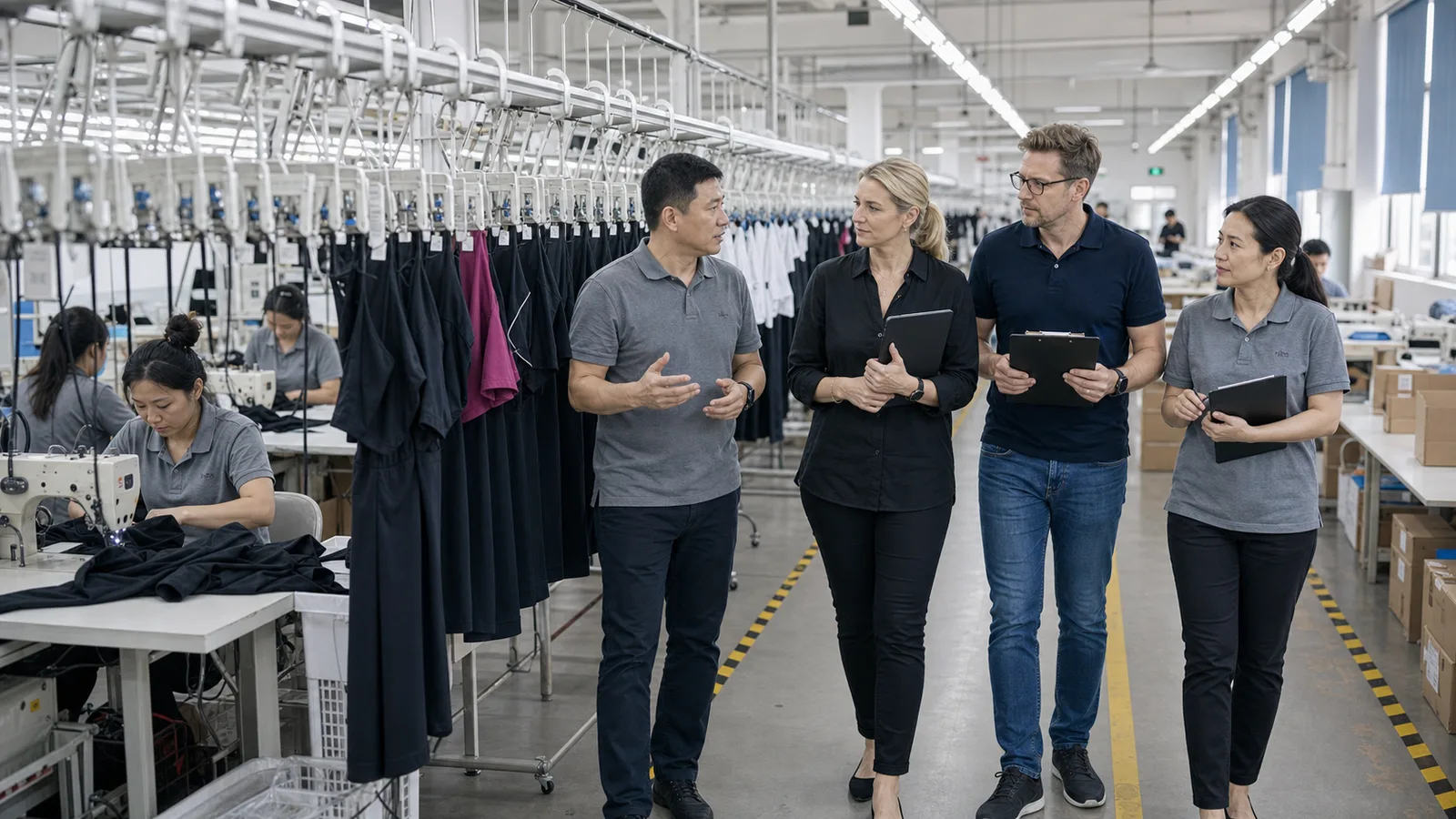
For a growing fashion brand, one factory is not always the best answer for every garment. A blouse, a printed dress, a fleece layer, a pajama set and an active style can require different equipment, material experience, finishing methods or production rhythms. The important question is not whether a supplier has a long list of factories. It is whether a fashion supplier factory network can assign work intelligently while giving the buyer one controlled project route.
A fashion supplier should coordinate more than one factory when the product range has genuinely different technical needs, when one partner cannot support the required category or capacity, or when a brand needs a staged programme rather than one undifferentiated order. Coordination adds value only when the supplier keeps the brief, sample decisions, material references, quality priorities and change records aligned. Without that control, multiple factories can create different interpretations of the same brand.
Yinshan Fashion works with custom and private-label buyers who may need several garment categories in one seasonal plan. Its role is not to promise that every style will be made in the same place. The role is to connect the product brief to suitable supplier and factory capabilities, explain trade-offs, coordinate approvals and keep the buyer’s decision route clear. This guide shows when that model makes sense and how to manage the risks.
What does a fashion supplier factory network mean?
A fashion supplier factory network is a coordinated group of production partners selected for relevant product, material, process or capacity needs. It should not mean an anonymous list of factories passed to the buyer. A useful network has an operating model: who reviews the product brief, who recommends the factory, who controls the sample, who confirms the material, who checks production information, who coordinates quality and who owns the next action.
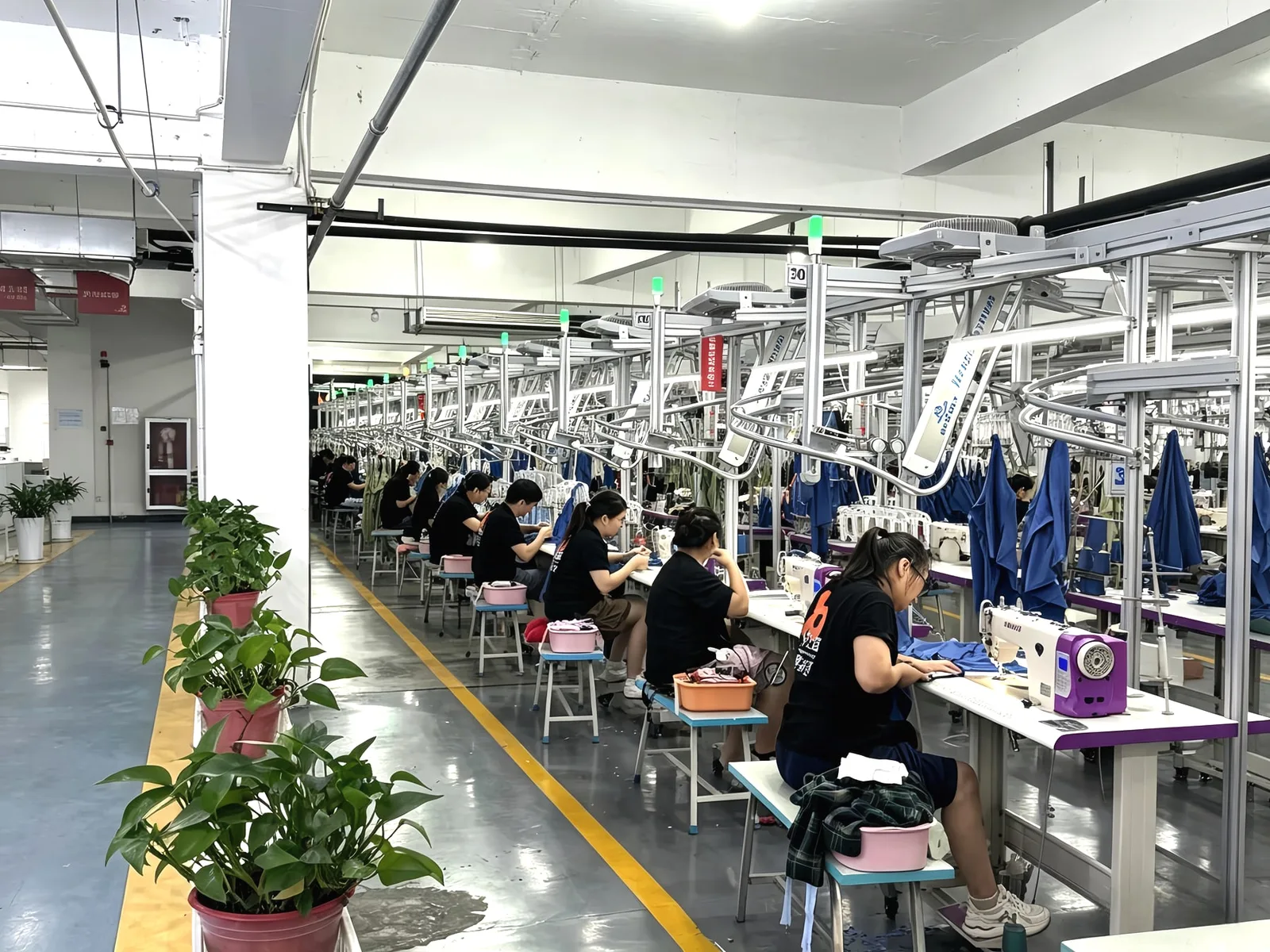
The network may include a woven womenswear factory, a knit or jersey partner, a sleepwear and lounge specialist, an active fashion line, a printing or embroidery resource, a finishing and packing team, or a factory suited to a particular scale. The exact combination depends on the programme. A buyer should not assume that a partner used for one garment is automatically appropriate for a different construction.
The value is concentration of knowledge at the supplier level. The buyer can discuss the range with one team while the supplier routes each style to the partner that can best answer its production question. The buyer still receives style-specific information and approvals. A network is useful only when it reduces duplicated work and uncertainty rather than adding another layer of messages.
When is one factory enough?
One factory may be the right choice when the range shares a fabric family, construction method, fit block, decoration route, order structure and quality standard. It can simplify communication, sampling, packing, inspection and repeat-order records. A focused programme may benefit from one production team learning the brand’s preferences deeply.
Do not introduce a second factory merely because another quotation looks lower. Compare the complete basis: fabric, pattern, sample scope, trims, labels, packing, quality priorities, quantities, colour count and change control. A different price may represent a different product assumption. A supplier should make those differences visible before the buyer decides to split the order.
One factory can also be enough when the category is technically simple and the buyer’s priority is a consistent small run. In that case, the supplier’s main job may be development, material advice and production control rather than network design. The buyer should ask how the partner handles the current product, what evidence supports the recommendation and what happens if capacity or material availability changes.
When should a supplier coordinate more than one factory?
Coordination becomes reasonable when product requirements diverge. A brand may need structured dresses, soft sleepwear, lightweight blouses and performance-oriented active pieces in one launch. Those products can share a design language while requiring different machines, seam methods, fabric handling, testing approach or operator skills. Sending everything to one partner may force compromises or create a long sequence of unrelated development work.
It can also make sense when the programme has different material routes. A fluid printed woven, a stretch jersey, a brushed fleece and a recycled performance fabric each bring different pattern, cutting, sewing and finishing questions. The supplier should identify which partner has relevant experience and which decisions can still be shared at the brand level.
A second factory may be useful when capacity needs are separated by timing or category, but timing should not be treated as a guaranteed promise. The supplier should explain the current planning assumptions and identify what would change if quantities, colours, materials or approvals move. Multi-factory coordination is a decision about control and suitability, not a shortcut around a realistic product schedule.
What should buyers check about divide work by capability, not by convenience?
The first allocation question is capability. List each style’s construction, fabric behaviour, decoration, finishing, label and packing needs. Then identify the factory that can provide relevant evidence: a comparable sample, pattern experience, material handling, equipment, quality process or finished product reference. Do not allocate a style only because a factory has space or because it is geographically close.
For a dress, capability may mean clean finishing, lining, zipper or drape control. For a blouse, it may mean collars, cuffs, plackets and delicate pressing. For sleepwear, it may mean soft-hand fabrics, relaxed fit, elastic comfort and label placement. For active fashion, it may mean stretch, recovery, seam security, movement and coverage review. For a skirt, it may mean waistband, lining, shape, pleat or drape control.
Yinshan Fashion can help frame these differences before a quotation or sample route is selected. The buyer should receive a recommendation tied to the product brief rather than a generic factory name. If the relevant evidence is not available, mark that as an open point and define what the first sample must prove.
How should buyers keep one product brief across the network?
Each factory may have a different production language, but the buyer’s product identity must remain stable. Use one master brief for brand, customer, category, reference, fit, material direction, colour, trims, labels, packing, quantities, target market and approval owner. Add a style-level section for factory-specific construction and open questions.
Version the brief and identify the current file. If the colour changes in one email, the label changes in a second and the measurement chart changes in a third, every factory may work from a different product. A master brief does not eliminate factory-specific technical notes. It gives those notes a common source so differences are deliberate rather than accidental.
The fashion product brief guide is useful when a brand needs to organise references, fit, material, components, quantities and sample purpose before contacting more than one production partner. Send equivalent information to each candidate so their questions and assumptions can be compared fairly.
How should buyers decide what should be shared and what should stay factory-specific?
Some decisions should be common across the range: brand identity, target customer, approved colour story, measurement philosophy, label artwork, packing principle, quality priorities and approval workflow. Other decisions should stay style- or factory-specific: construction method, machine setting, seam finish, pressing sequence, stitch type, marker approach, material handling and operator instruction.
Do not force identical construction where the fabrics or product functions are different. A woven blouse and stretch active top may both use a black label but not the same seam method. A pajama robe and a lined dress may share a colour story but require different hem and closure reviews. The supplier should explain which details transfer and which need a fresh sample or test.
This distinction helps a small brand keep one identity without creating artificial uniformity. It also protects quality: the factory can use a suitable method while the buyer retains control of the customer-visible result.
How should buyers compare factories using the same decision matrix?
| Decision area | Buyer asks | Supplier coordination evidence | |---|---|---| | Product fit | Can this partner develop the category and intended silhouette? | Relevant samples, pattern discussion and fit questions | | Material route | Can it handle the proposed fabric, print, stretch or finish? | Material review, swatch or header, and open risks | | Construction | Which details need special equipment or skilled operators? | Method recommendation and sample proof | | Quantity plan | Does the proposed order structure suit the partner? | Programme assumptions, capacity discussion and change triggers | | Quality | What will be checked and who owns exceptions? | Style-specific priorities, inspection route and report owner | | Brand handover | Can labels, packing and approved files stay aligned? | Versioned artwork, applied proof and release record | | Repeat order | How will next colours, sizes or styles be controlled? | Saved references, change log and reapproval rules |
The matrix is a way to ask better questions, not a scoring system that invents certainty. A supplier should state what it knows, what it has observed, what remains programme-dependent and what the first sample must prove. The buyer can then compare partners on product suitability and control rather than on a single unit figure.
How should buyers use one sampling gate for every partner?
If two factories make related styles, the buyer should not use two completely different approval standards. Define the common gates: product brief accepted, material direction reviewed, first sample received, fit comments recorded, revised sample checked, components approved, pre-production reference approved and bulk release confirmed. Each factory can have additional technical checks, but the buyer should know where every style sits.
Sample purpose matters. A first sample at one factory may prove a new print while a first sample at another proves the fit block. Do not compare them as though they answer the same question. Record the purpose, current version, open points, approver and next evidence for every sample. The fashion factory sampling guide explains how pattern, fabric and fit comments can become a production standard instead of remaining informal feedback.
This common gate also helps when a brand wants to move a style between partners. The receiving factory can review the released product record and identify what must be reconfirmed. A transfer should not begin with “copy the last sample” if the material, construction, equipment or grading context changes.
What should buyers check about control fabric and trim consistency?
Material is one of the largest sources of unexpected difference across factories. The same colour name can appear different on two constructions. A similar fibre route can behave differently by weave, knit, weight, finish, print or wash. Trims can vary in width, recovery, shine, thickness or handfeel. A network needs a material record that is more specific than a descriptive adjective.
Record the approved material reference, supplier information available for the programme, composition information supplied, colour standard, construction, weight or handfeel target, stretch direction, recovery, surface and care context. Record the trim reference and placement. If a factory proposes a substitute, identify whether it changes fit, comfort, drape, coverage, colour, care or cost assumptions.
The fabrics and trims service can help a buyer discuss material options before styles are split across factories. A shared material family may simplify a collection, but it should be tested against each garment’s pattern and construction rather than assumed to work everywhere.
How should buyers keep quality priorities visible by style?
One network-wide quality phrase such as “premium quality” is not enough. Translate the brand’s priorities into visible checks for each product. A dress may need balance, lining, zipper and hem review. A blouse may need collar, cuff, placket, print placement and pressing review. A pajama set may need softness, elastic comfort, label contact and seam bulk review. Active fashion may need movement, recovery, seam security and coverage review.
The buyer should identify which issues are critical, which are acceptable within the programme and which require discussion. The supplier should route the information to the relevant factory and ensure the inspection report refers to the current approved reference. Do not invent universal tolerances or certifications. Use the project standard, market requirement and approved sample.
When more than one factory is involved, a central supplier can compare reports and identify a recurring issue. If the same label position causes discomfort across styles, the brand can revise the common brief. If one factory’s construction creates a product-specific problem, the supplier can keep the lesson local rather than forcing an unsuitable method on other categories.
What should buyers check about coordinate labels, packing and brand presentation?
Network coordination often fails at the final stage because labels and packing are treated as an afterthought. Keep the brand artwork, care and size information, barcode mapping, hangtags, individual protection, folding, stickers and carton marks in a shared approval route. Map every component to style, colour, size, market and channel.
Factory-specific packing instructions may differ because products have different shapes, fabric surfaces or presentation needs. A folded blouse, a robe, an active top and a lined dress should not automatically use one folding instruction. The buyer should approve the visible result and confirm any channel-specific requirement. The supplier should identify which files are common and which need a style proof.
The private-label clothing route gives brands a place to discuss these components alongside development. A network is only useful when the product arrives as the intended branded item, not when the garment is correct but the label, barcode or packing belongs to another style.
How should buyers build a single communication and escalation route?
The buyer should not have to resolve conflicting factory messages alone. Establish who receives the brief, who consolidates questions, who reports sample status, who requests approval, who records changes and who escalates a quality or capacity issue. Factory specialists can communicate technical details, but the supplier network should provide one buyer-facing summary.
Use short, structured updates: current stage, completed evidence, open decisions, owner, due context and risk if a decision moves. Avoid promising a fixed date when material, artwork, quantity or approval remains open. Explain what would change the plan. This is especially important for small brands that may have one person approving all styles.
Yinshan Fashion can act as the coordination point for a custom programme, connecting design, material, pattern, sample, factory and private-label discussions. The buyer retains final approval. The benefit is that the buyer receives a coherent decision route instead of managing a set of disconnected factory conversations.
What should buyers check about know the risks of splitting a programme?
More factories can create more interfaces. The same colour may be interpreted differently, the fit block may drift, the label may be applied at a different height, the packing may look inconsistent, or a repeat order may lose the original reference. A network should reduce these risks with records and review; if it cannot, one factory may be the safer choice.
There can also be commercial and operational trade-offs. Separate sampling and component routes may require more coordination. A small quantity split across factories may change the practicality of materials or trims. A transfer between partners may require new approval. The supplier should make these trade-offs visible without promising a fixed MOQ, price or lead time that the programme has not established.
Ask what the network is solving. If it is solving a genuine capability difference, define the evidence. If it is solving a temporary assumption, define the trigger for reviewing the decision. Multi-factory work is a management choice, not a badge of scale.
How should buyers plan repeat orders across the network?
Save the approved sample, pattern, grading, material, colour, trims, labels, packing, quality priorities, inspection notes and change history for each style. Also record which factory produced the approved reference and which decisions are shared at brand level. At reorder, identify what is unchanged and what needs reconfirmation.
A new colour may need colour approval. A new material may reopen fit and care review. A new factory may need a construction handover and sample. A new market may change label or packaging information. A new quantity structure may change the production route. The repeat record gives the supplier a basis for recommending whether the same partner remains suitable or whether a second partner should be considered.
For a small brand, the record turns the network into an asset rather than a dependency. The buyer can see which partners are strongest for which categories, which materials are stable, and which common brand decisions can be reused. The network becomes more controlled with every approved style only if the learning is recorded.
What should buyers check about buyer checklist before approving a multi-factory route?
Prepare the range map, style categories, product roles, fabric directions, colour story, size approach, private-label components, packing, target market, quantity context, sample purpose, quality priorities, approval owner and repeat-order expectation. Mark which decisions should be common and which may be factory-specific. Ask the supplier to explain why each style is assigned to a particular partner.
Request a clear list of assumptions and open decisions. Ask what evidence supports the capability recommendation, what the first sample must prove, what may require a second sample, and what would trigger a change in route. Do not approve a network because it sounds broad; approve the product-specific control plan.
What should buyers check about factory coordination checklist?
For every partner, record the current brief, style code, material reference, pattern version, sample purpose, component files, quality priorities, approval owner and current status. Use equivalent gates so the buyer can compare progress. Keep factory-specific methods separate from common brand requirements. When a change occurs, record whether it affects one style, a category, or the whole range.
Before bulk, confirm that the approved sample, material, components, labels, packing, quantities, inspection focus and change record align. If a factory proposes a substitute or transfer, reopen the affected evidence. A central supplier should not hide the difference between an unchanged decision and a new assumption.
What questions do buyers ask most often?
When should a fashion supplier use more than one factory?
Use more than one factory when product categories, materials, construction methods, capacity needs or quality requirements genuinely differ and a coordinated route can keep approvals and records aligned. Do not split work only for a lower headline quote.
Does a factory network increase the risk of inconsistent quality?
It can if the brief, sample gates, material references and quality priorities are not controlled. A supplier should use one master brand brief, style-specific technical notes, common approval gates and a clear report and escalation route.
Can several factories use the same fabric or colour?
They can when the material and colour references are controlled and each garment is checked for construction, fit, shade, print or finishing differences. A shared fabric family should not be assumed to behave identically in every style.
Who owns the final approval in a multi-factory programme?
The brand normally owns the commercial and customer-facing approval, while the supplier coordinates evidence and factory actions. The agreed project should name the approval owner, the current file and the change-control route.
How does Yinshan Fashion coordinate a factory network?
Yinshan Fashion can connect a buyer’s product brief with suitable design, material, pattern, sampling, private-label and production partners, then consolidate questions, approvals and production records. Final scope and commercial terms depend on the confirmed programme.
What should buyers check about next step: ask for a product-specific network plan?
Send the product categories, reference images or tech pack, materials, colours, sizes, quantities, private-label needs, quality priorities and target market. Ask which decisions can be shared across the range, which must stay factory-specific, and what evidence the first sample should prove.
For a broad womenswear plan, review the casual fashion collection and identify the styles that need different material or construction routes. If the programme needs custom development, the custom womenswear manufacturer solution provides a starting point for connecting design, pattern, fabric, sampling and production. Share the brief through contact so Yinshan Fashion can discuss whether one factory or a coordinated supplier factory network better fits the current range.
Coordinated factory network
Match each style to the right capability while keeping one buyer-facing route
A factory network is useful when categories, fabrics or construction needs differ. It only creates value when the master brief, approval gates, material references and repeat records remain controlled.
Allocate by product capability
Choose a partner for the category, material behaviour, construction and quality question the style must answer—not only for a headline price or available space.
Share one master brief
Keep brand, customer, colour story, labels, packing, approval owner and quality priorities common while recording factory-specific methods separately.
Use common approval gates
Track the purpose, version, comments, evidence and approver for every sample so a multi-factory range can be compared and repeated.
Buyer and supplier checklist for a multi-factory route
Use this checklist to decide whether a network solves a real capability need and to keep the product record aligned across partners.
| Decision area | What the buyer should prepare | What to ask the factory |
|---|---|---|
| Capability reason | List category, fabric, construction, decoration and quality requirements for each style. | What evidence supports the recommended partner and what must the first sample prove? |
| Master brief | Provide brand, customer, fit, colour, labels, packing, quantity context and approval owner. | Which decisions are common across the range and which need factory-specific notes? |
| Sample gates | Name sample purpose, current version, comments, approver and next evidence. | How will each partner report progress using comparable gates? |
| Quality and escalation | State visible product priorities and the person who can decide an exception. | Who consolidates reports and what change reopens approval? |
| Repeat record | Save approved sample, materials, components, packing and authorised changes. | What is unchanged, what must be reconfirmed and when would a transfer need a new sample? |
Continue the production conversation
Multi-factory coordination decision matrix
| Question | Evidence | Control action |
|---|---|---|
| Does the product need different capability? | Category, fabric, construction and quality requirements | Assign by capability and record the reason |
| Which decisions are shared? | Brand, colour story, labels, packing and approval route | Keep one master brief and version |
| Which decisions are local? | Machine, seam, pressing and material handling method | Keep factory-specific notes with the style |
| How will samples be compared? | Purpose, gate, version, comments and approver | Use common approval gates |
| How will repeats stay consistent? | Approved sample, material, components and change record | Save a style and network handover file |
Buyer FAQs
When should a fashion supplier use more than one factory?
Use more than one factory when product categories, materials, construction methods, capacity needs or quality requirements genuinely differ and a coordinated route can keep approvals and records aligned. Do not split work only for a lower headline quote.
Does a factory network increase the risk of inconsistent quality?
It can if the brief, sample gates, material references and quality priorities are not controlled. A supplier should use one master brand brief, style-specific technical notes, common approval gates and a clear report and escalation route.
Can several factories use the same fabric or colour?
They can when the material and colour references are controlled and each garment is checked for construction, fit, shade, print or finishing differences. A shared fabric family should not be assumed to behave identically in every style.
Who owns the final approval in a multi-factory programme?
The brand normally owns the commercial and customer-facing approval, while the supplier coordinates evidence and factory actions. The project should name the approval owner, current file and change-control route.
How does Yinshan Fashion coordinate a factory network?
Yinshan Fashion can connect a buyer’s product brief with suitable design, material, pattern, sampling, private-label and production partners, then consolidate questions, approvals and production records. Final scope and terms depend on the confirmed programme.