Article
A fashion apparel RFQ is a request for quotation sent to a clothing manufacturer or supplier. Its job is simple: give the factory enough information to understand what you want to make, what assumptions they must not make, and which parts of the quote are still open for discussion.
For a fashion brand, an RFQ is not just an email asking for a price. It is the first version of the production brief. It influences whether the factory quotes the right fabric route, builds the correct sampling plan, includes labels and packing, understands the target market, and gives a realistic response instead of a price that later needs to be rebuilt.
This fashion apparel RFQ template explains what buyers should send before requesting a quote. It is written for private-label brands, product developers, sourcing teams, and first-time buyers discussing woven apparel, knitwear, dresses, shirts, trousers, outerwear, loungewear, streetwear, and fashion accessories. It is not a contract or a substitute for a final tech pack. It is a practical way to start a useful factory conversation.
Start with the decision you need the quote to support
Before writing the RFQ, decide what you need to learn. Are you comparing two factories? Checking whether a style can fit a target retail price? Pricing a small first run before developing a full collection? Looking for a development partner that can source fabric and trims? Or asking a current supplier to quote a repeat order with changes?
The answer changes the detail you should provide. A first feasibility enquiry can state that some elements are open for factory advice. A quote that will support a buy decision needs more settled information. Do not present an early concept as a fixed production file if fabric, construction, branding, or quantities are not yet decided. It is better to identify open points clearly than to hide them behind a vague request.
State the project in one short paragraph. Include product type, customer or market position, intended sales market, whether the order is a sample, first bulk run, repeat, or range development, and what you want back from the factory. For example: “We are preparing a first private-label overshirt program for the EU market. We need a development and bulk quotation for three colours, with fabric sourcing, woven labels, individual folding and packaging. Please identify any information needed before a confirmed bulk price.”
That opening gives the factory a frame. It also makes it easier for the sales, development, sourcing, and production teams to ask useful questions rather than guessing what the buyer means by “a quality shirt.”
Give the factory a clear product picture
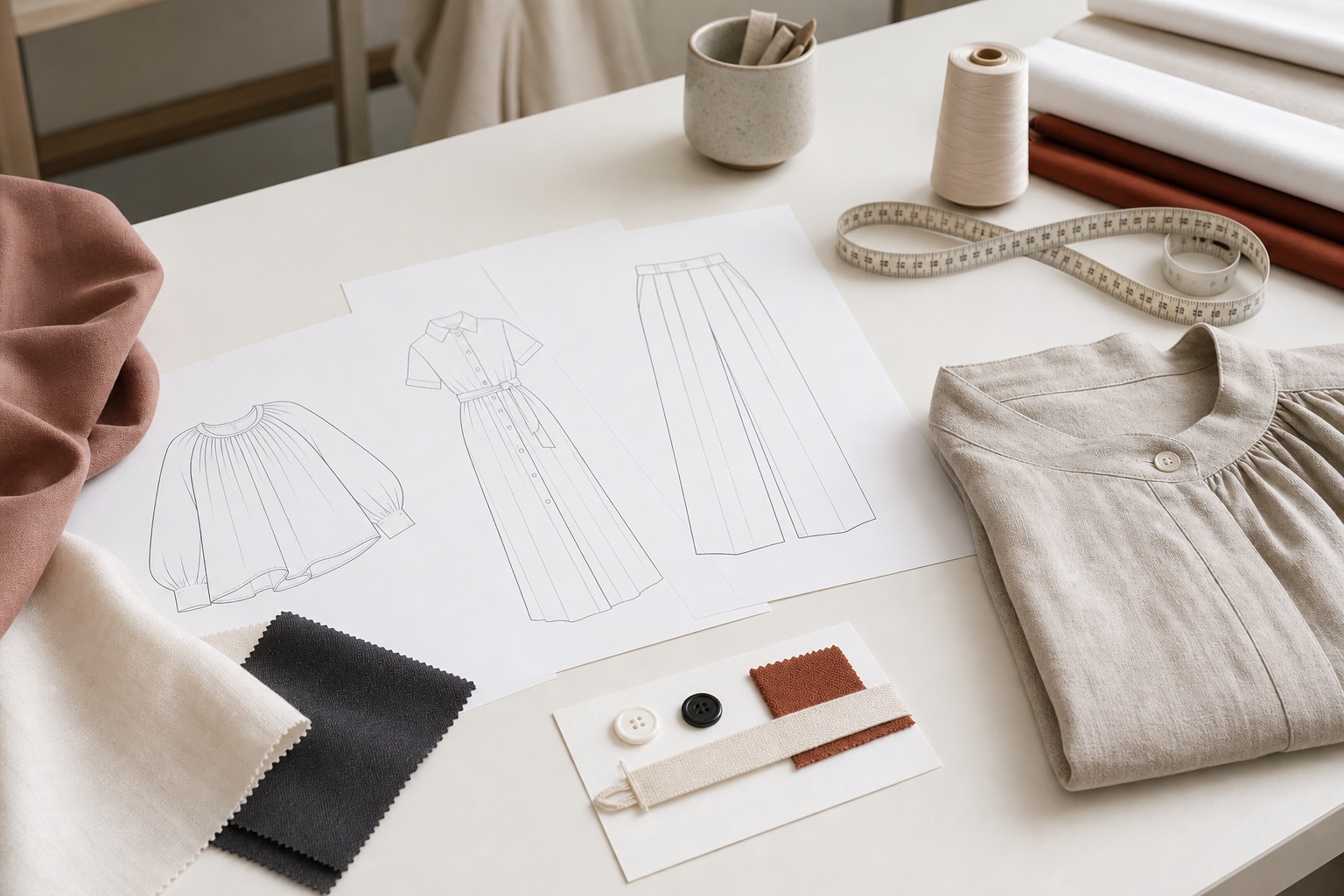
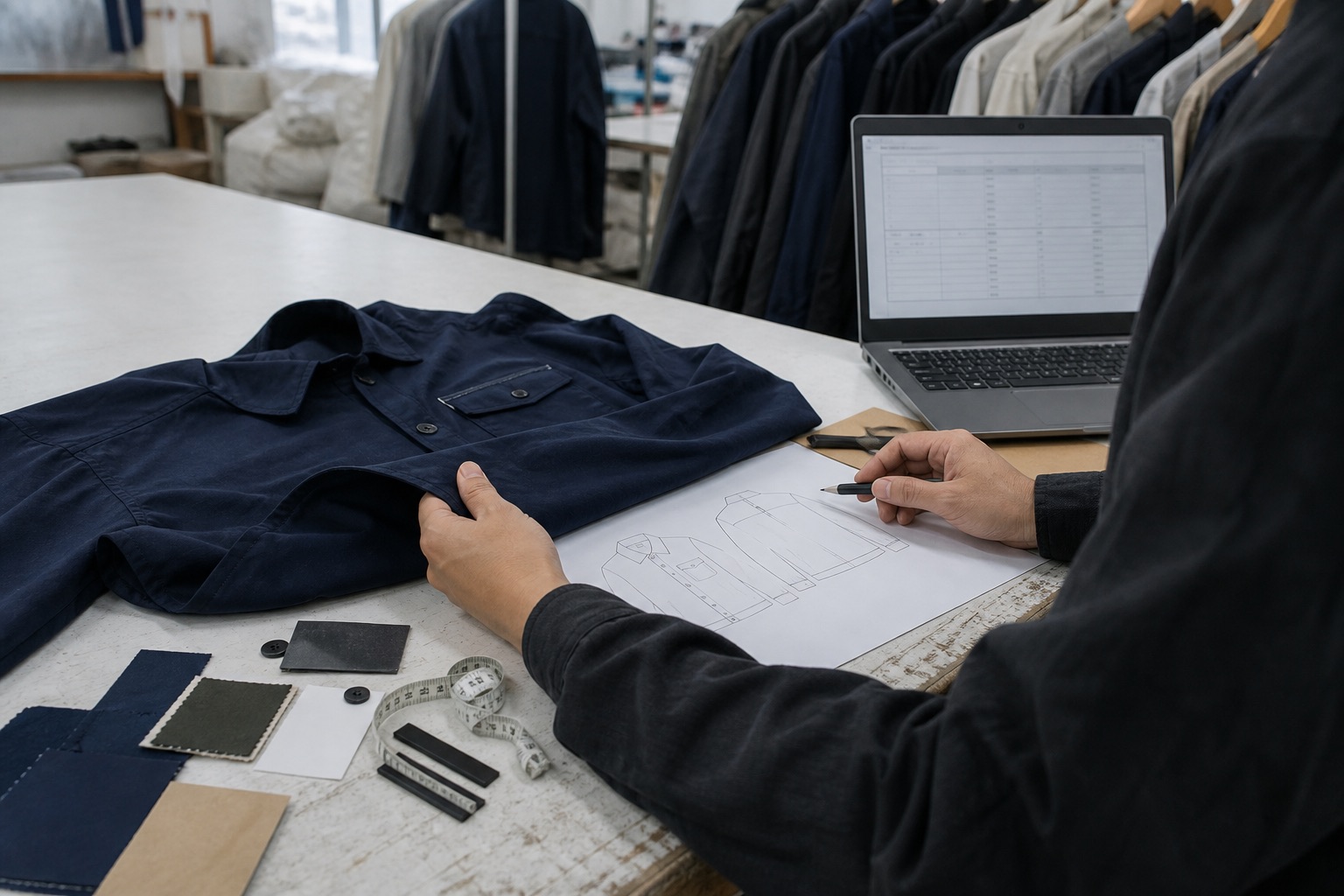
The factory needs to see the product, not only read its name. “Jacket,” “dress,” or “T-shirt” describes a category, not a build. Share reference images, front and back views, a sketch, a previous sample, a tech pack, or a line sheet where available. Mark which details are essential and which are only direction.
For each style, explain the silhouette and construction points that affect labour, material use, or development risk. A shirt may need a shaped collar, two chest pockets, side-seam pockets, a concealed placket, or contrast topstitching. A dress may have a lining, gathers, adjustable straps, a concealed zip, or an uneven hem. A sweatshirt may include rib quality, print placement, brushed-back fleece, and a wash effect. These details change the quote.
Photos help, but they can be misleading. A clean reference image may hide the inside finish, fastening, lining, seam structure, fabric weight, or decoration route. Add short notes directly beside the image. If the construction is unknown, say that it is unknown and ask for a recommended approach. This is more useful than allowing the factory to price a simplified version that does not match the intended product.
If you have a tech pack, send the current version and show its revision date. If you do not, include basic specifications: garment measurements or size range, points that must fit a specific way, intended fabric category, closure, pocket count, label locations, decoration, and product photos. A good fashion apparel RFQ template turns this information into a repeatable style-by-style format.
Describe fabric and colour at the right level of certainty
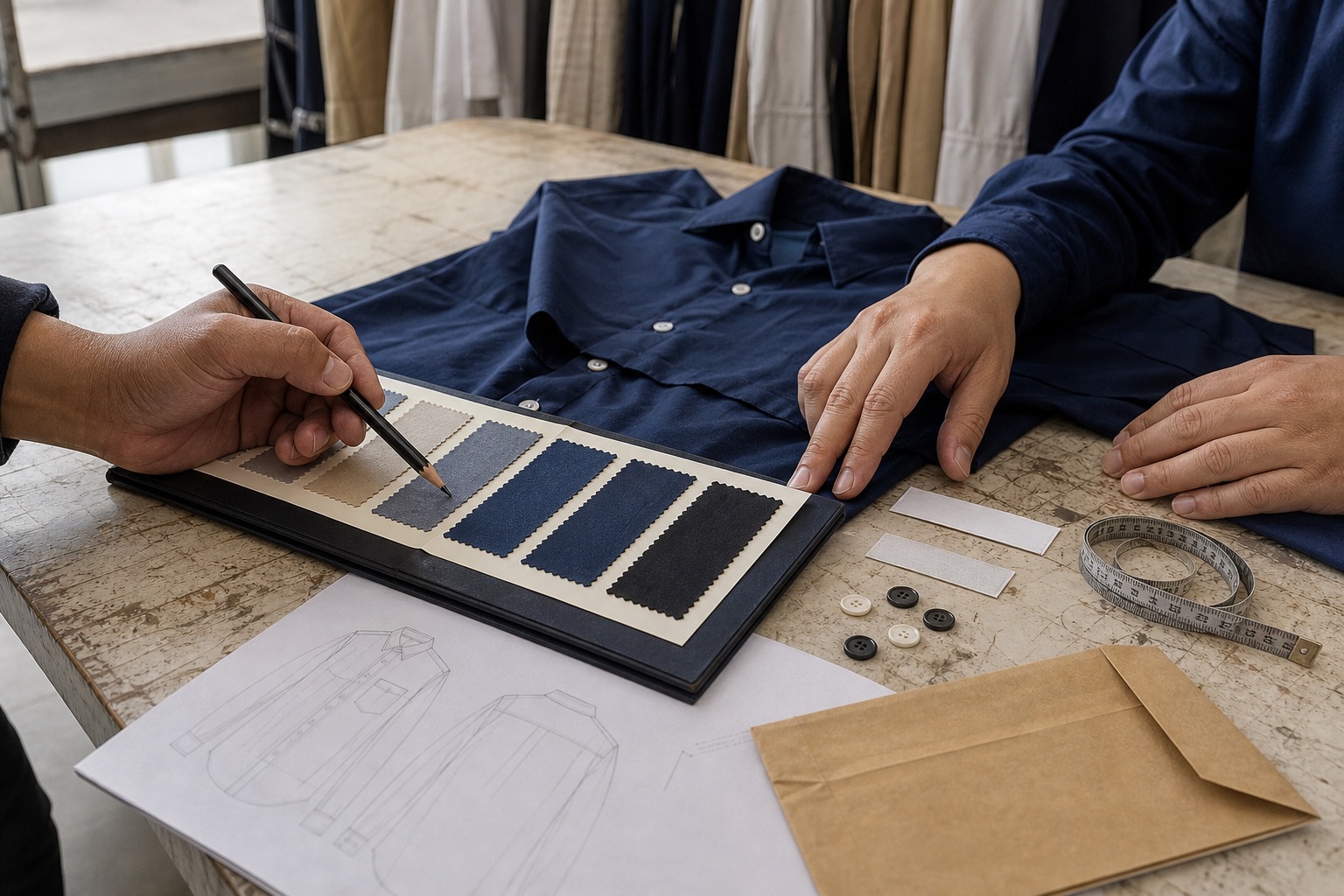
Fabric is often one of the largest variables in a clothing quote. The buyer should state what is known: fibre direction, weave or knit type, intended handfeel, approximate weight, stretch, surface, colour direction, wash or finish, and performance or care expectations relevant to the product.
You do not need to name a precise mill article before first contact if it has not been selected. You do need to make the product intent clear. “Mid-weight brushed cotton twill with a soft washed handfeel” gives a factory a better starting point than “good cotton.” “Soft matte drape with minimal shine” is useful for a blouse. “Dense stable rib at cuffs and hem” is useful for a sweatshirt. If you have a swatch or previous fabric, note whether it is a reference only or must be matched.
List every colourway you intend to quote, even if the exact colour standards will follow later. The number of colours changes fabric planning, dyeing, cutting, labels, packing, and minimums. State whether a colour is a core carry-over, a seasonal shade, a contrast panel, or a print ground. If a special wash, garment dye, coating, brushing, pleat, print, embroidery, or heat transfer is required, include it before pricing. These are not small finishing notes; they can change the route and the final appearance.
For products sold in different markets, say where the goods will be sold and whether you already have material, labelling, care, packaging, or retailer requirements. The factory can then identify which product information needs confirmation. A factory quote cannot prove market compliance by itself. The buyer should still review the final product, labelling, packaging, and any required testing for the actual market and product category.
State quantities, size range, and the quote scenarios you need
“What is your MOQ?” is not enough for a comparable RFQ. Quantities shape fabric minimums, colour allocation, trim purchasing, cutting efficiency, line planning, packing, and freight preparation. Give the expected total quantity by style and colour. Add a size range and, where possible, a size ratio. If you do not have a final ratio, provide a planning split and label it as an estimate.
It is useful to request more than one scenario when the order plan is still open. Ask for example pricing at two or three sensible quantity levels, such as a first order, a planned reorder, and a larger option. The factory can explain what changes with each scenario: fabric route, minimums, sampling cost, decoration setup, label or packaging quantities, and price break. This is more informative than asking for a single low MOQ price and assuming it scales cleanly.
Separate sample quantity from bulk quantity. A development sample, fit sample, sales sample, photo sample, and pre-production sample may have different material and labour routes. State how many you need, how many size or colour versions are required, whether samples must carry final branding, and when you need them. This makes the development quote easier to understand.
Include every branded and packed component
Private-label details are easy to omit from an RFQ and expensive to add late. List the components you expect: main label, size label, care label, fibre-content or market information where applicable, hangtag, barcode sticker, buttons, zip, drawcord, patch, embroidery, print, inside tape, polybag, tissue, folding board, individual box, and carton mark.
At RFQ stage, final artwork is not always necessary. What matters is that the factory knows the component exists, its likely material or quality level, its location, and whether the buyer supplies it or asks the factory to source it. “Woven main label at centre back, size label under main label, care label in left side seam, branded hangtag and barcode sticker supplied after sample approval” is much clearer than “private label required.”
Packing deserves the same care. Define whether garments are folded, hung, bagged, boxed, or packed in another route. Mention any tissue, insert, protective layer, barcode position, size sticker, retail carton mark, assortment, or special e-commerce presentation. The right packing method protects the fabric, collar, print, embroidery, and shape that the buyer approved. It also affects the quote, carton plan, and final inspection.
Ask for a quote you can actually compare
A useful RFQ tells the factory how you want the quote returned. Ask them to separate the parts that matter to your decision. Depending on the project, that may include sample development, bulk garment price, fabric and trim assumptions, print or embroidery, labels, packing, sampling courier, tooling or setup, testing if separately requested, and shipping terms if the factory is asked to arrange freight.
The goal is not to force every factory into identical columns. It is to show which assumptions sit behind the number. One supplier may quote a basic cotton fabric while another has priced a heavier washed twill. One may include folding and individual bags while another has not. One may have assumed buyer-supplied labels. A low number is not useful if the product, materials, or delivery responsibility differ.
Ask the factory to flag uncertainties and alternatives. They may suggest a similar fabric with a more workable minimum, a different button construction, a revised pocket method, or a fold that protects the garment better. Treat this as development input, not as a reason to abandon the product brief. The buyer should decide which changes preserve the intended product and which do not.
Set the timing, approvals, and communication route
Include your target sample date, bulk delivery window, launch date if relevant, and the decisions that must happen before each stage. Do not ask a factory to “deliver fast” without giving a real date and the state of the product file. The factory needs to see which elements are already approved and which are still being developed.
Name one contact person for questions and one person who can approve product or commercial changes. If several people comment on fit, fabric, price, labels, or packaging, set a route for consolidating comments. That avoids a factory receiving conflicting instructions from design, purchasing, and marketing.
Your first RFQ does not need to solve every detail. It should make the remaining work visible. A responsive factory will normally return questions about fabric, construction, measurements, decoration, quantities, labels, packing, market, testing, timing, and shipping terms. Those questions are a positive sign when they connect directly to your brief. They show the factory is trying to price the actual program rather than sending an unsupported number.
Use the RFQ as the first production record
Once the project moves forward, keep the accepted RFQ with the approved sample, tech pack, material references, colour approvals, label files, packing instructions, and quote revisions. The document becomes useful beyond initial sourcing. It helps the factory prepare development, supports an internal purchase decision, and gives both sides a reference when a bulk order, repeat order, or change request is discussed later.
Update the file when important points change. If quantities move, a fabric is replaced, a wash is added, labels switch from buyer-supplied to factory-sourced, or the shipping route changes, record the revision. Do not rely on a chain of email comments to carry the final version. A simple dated RFQ file with clear open points reduces avoidable re-quoting and makes a first production conversation more direct.
Yinshan Fashion can review an RFQ for fashion apparel development, fabric and trim sourcing, samples, private labels, packing, bulk production, quality control, and export preparation. Send the product information you have, identify what is open, and include your target market, quantities, timeline, and quotation request. The fastest route to a useful answer is a clear brief, not a perfect document.
A better first factory conversation
Five RFQ details that turn a vague price request into a comparable quote
A factory can only quote the product it understands. This short RFQ handover keeps product, fabric, quantities, private-label details, packing, market, timing, and open decisions visible before sample development or bulk planning begins.
Show the actual product
Provide images, sketches, key construction points, size range, and notes on what must be kept. A category name alone cannot support a reliable clothing quote.
Make assumptions visible
State what is fixed and what is open: fabric, colour, wash, decoration, quantities, labels, packing, market, sample need, timing, and delivery terms.
Compare like with like
Ask suppliers to identify material, trim, packing, sample, quantity, and freight assumptions so a low number is not mistaken for the same product.
Fashion apparel RFQ handover checklist
Use this working checklist before requesting a factory quote. It makes the commercial and development questions clear; it does not replace a final tech pack, purchase agreement, or the buyer’s own market-compliance review.
| Decision area | What the buyer should prepare | What to ask the factory |
|---|---|---|
| Product definition | Share the style name or code, product type, reference images, front and back views, silhouette, must-have construction, measurements or size range, and which points are still open for factory advice. | Which construction, measurement, inside finish, closure, pocket, lining, or decoration details need confirmation before the product can be quoted as intended? |
| Fabric, colour, and finish | State known fibre, weave or knit, handfeel, weight direction, stretch, swatch or reference, colourways, wash, garment dye, print, embroidery, transfer, coating, or surface expectation. | Which fabric route, colour information, finish, decoration method, or minimum needs to be confirmed for a meaningful sample and bulk quotation? |
| Quantities and sample plan | Provide units by style and colour, size range and split where available, alternate order scenarios, sample quantity, sample sizes or colours, and the purpose of each sample. | How do the proposed quantities affect fabric and trim minimums, sampling, cutting, production planning, packing, and price assumptions? |
| Branding and final presentation | List labels, care information, hangtags, buttons, zips, patches, barcodes, folding, bags or boxes, carton marks, retail presentation, and whether the buyer or factory sources each component. | Which artwork, placement, packing, and market details must be provided before labels, trims, individual packing, and cartons can be priced accurately? |
| Market, timing, and quote format | Confirm target sales market, retailer requirements, sample and bulk dates, shipping terms if known, decision deadline, contact person, and the quote elements you want shown separately. | What must be clarified about product information, approvals, timing, packing, shipping, or delivery responsibility before the factory can return a comparable quote? |
Continue the production conversation
Fashion apparel RFQ template: details that make a quote useful
| RFQ section | What the buyer should provide | Why it changes the factory quote |
|---|---|---|
| Product and construction | Style name or code, product type, photos or sketches, front and back view, must-have construction details, measurements or size range, and open points. | Construction, pockets, closures, lining, seam work, and finishing all affect material use, labour, sample work, and production planning. |
| Fabric, colour, and finish | Known fibre, weave or knit, weight or handfeel, swatches, colourways, print, embroidery, wash, garment dye, or surface direction. | Material route, colour count, finishing, decoration, and available minimums can change the product cost and lead-time assumptions. |
| Quantity and size split | Expected units by style and colour, size range, size ratio or planning estimate, sample quantity, and any alternate quantity scenarios. | Fabric, trims, cutting efficiency, setup, packing, and price breaks depend on the actual order shape, not only an overall unit number. |
| Labels, trims, and packing | Label positions, hangtag, buttons, zips, decoration, individual packing, barcode, carton marks, assortment, and who sources each component. | Private-label components and packing require materials, artwork review, placement checks, purchasing, and final-inspection planning. |
| Market, timeline, and quote request | Target sales market, retailer needs, requested sample and bulk dates, shipping terms if known, and whether you need separated sample, bulk, packing, and freight assumptions. | The factory can identify missing product information and return a quote that is transparent enough to compare with other suppliers. |
Buyer FAQs
What is a fashion apparel RFQ?
A fashion apparel RFQ is a request for quotation sent to a clothing manufacturer or supplier. It describes the product, materials, quantities, private-label details, packing, market, timeline, and quote format needed for the factory to price and assess the project.
Can I send an RFQ without a complete tech pack?
Yes. Send the best information you have: product images or sketches, key construction points, size range, fabric direction, colourways, quantities, label and packing needs, market, and timeline. Mark which decisions are still open, and ask the factory to identify what is needed for a confirmed quote.
What quantities should I include in a clothing RFQ?
Provide the estimated units by style and colour, the size range, and a size split if you have one. When the order is still being planned, ask for two or three quantity scenarios. This makes price, material-minimum, and production assumptions clearer than asking for a single MOQ figure.
Why do two factory quotes for the same garment differ?
The suppliers may be using different assumptions for fabric, weight, finishing, construction, trim quality, decoration, labels, packing, quantity, sampling, shipping terms, or delivery responsibility. Ask each factory to state the assumptions and open points before comparing only the final number.