Article
What should buyers know first?
Short answer: A practical B2B guide to the garment finishing process for fashion brands, covering approved standards, thread trimming, pressing, wash and decoration review, appearance checks, labels, folding, packing, warehouse identity, and release records.
The garment finishing process for fashion brands is the controlled sequence that turns sewn garments into clean, shaped, checked, labelled, folded, and packed products. It can cover thread trimming, cleaning, pressing, wash or decoration review, final appearance, function and measurement checks where required, retail presentation, individual packing, carton preparation, and release records. Every step should follow the approved garment, material, brand files, and delivery route.
Finishing is not a generic promise to make a garment look premium. The appropriate route depends on the fabric, construction, colour, wash, decoration, trims, approved sample, labels, packing, destination market, sales channel, and order plan. Pressing that gives a woven shirt a clean result can create shine or a hard edge on another material. A fold that protects a T-shirt print may not suit a draped blouse or a soft robe.
Direct answer: Approve the finished appearance before bulk, identify material and decoration risks, and connect thread trimming, cleaning, pressing, labels, final checks, folding, individual packing, cartons, and release evidence to one current product standard. Finishing should preserve the buyer-approved garment through warehouse receiving and customer presentation, not simply remove wrinkles at the end of production.
How should the garment finishing process for fashion brands begin?
Finishing should not begin from a vague instruction to make the garment look premium. The factory needs a visible product standard. Before bulk production, the buyer should confirm the approved sample, measurements, fabric reference, colour standard, construction notes, decoration route, label files, folding method, individual packing, and carton requirements.
The approved sample is the main visual reference. It tells the finishing team how flat the collar should sit, how crisp or soft the garment should feel, how the front should lie, how sleeves and hems should be shaped, and whether a washed or relaxed appearance is intentional. A navy overshirt may need a clean placket and controlled collar. A fluid dress may need soft drape without hard press marks. A brushed lounge set may need a relaxed handfeel and low-bulk folds. These are different finishing jobs.
Use an actual product direction to make the standard specific. The Casual Fashion collection can help a buyer identify whether the brief concerns shirts, blouses, dresses, T-shirts, trousers, coordinated daywear, or another product route. Collection pages support the conversation; they do not replace the buyer's current sample, specification, measurements, material approval, or packing instruction.
Write down the non-negotiable points. They may include a sharp collar edge, an uncreased logo area, a particular wash appearance, a smooth front body, a specific fold, or a wrinkle-free presentation in a clear bag. The factory can then set up the final process around the product rather than treating all styles as the same.
If a product uses a special wash, garment dye, print, embroidery, heat transfer, coating, pleat, brushing, or other finish, keep that information in the production file. The sequence matters. Some operations happen before final pressing. Others must be checked after. The buyer should not assume a finish shown in a photo can be repeated without an approved sample and clear handling instructions.
What should buyers check about thread trimming is a quality check, not a cosmetic afterthought?
Loose threads are easy to notice in finished goods. They make a product look unfinished even when the main stitching is sound. But thread trimming is not simply cutting every visible end. The finishing team needs to remove loose thread tails without damaging stitches, pulling seams, opening bartacks, or leaving small pieces trapped in pockets, cuffs, plackets, buttonholes, or packing.
The relevant check depends on the garment. A shirt needs close review around the collar, buttonholes, placket, cuffs, side seams, hem, and pocket corners. A trouser needs attention at the waistband, fly, pocket openings, inseam, hem, and belt loops. A dress may need review at gathers, zip ends, lining openings, straps, and hem layers. A streetwear or decorated style may need additional checks around embroidery, patches, applique, or heavy seams.
The buyer should identify visible quality points on the approved sample. If a style has contrast thread, topstitching, raw-edge detail, distressed effects, or intentional loose elements, record what is deliberate and what is not. A factory cannot judge this from a simple product photo. The product file needs to show the accepted appearance.
Thread trimming also connects to packing. A loose dark thread can be more visible on a pale garment once it is folded into a clear bag. A small thread tail can catch on a label or pull at a seam during handling. Final appearance checks should happen before the garment is packed and again when packing changes the way a product is presented.
What should buyers check about pressing sets the shape the customer sees first?
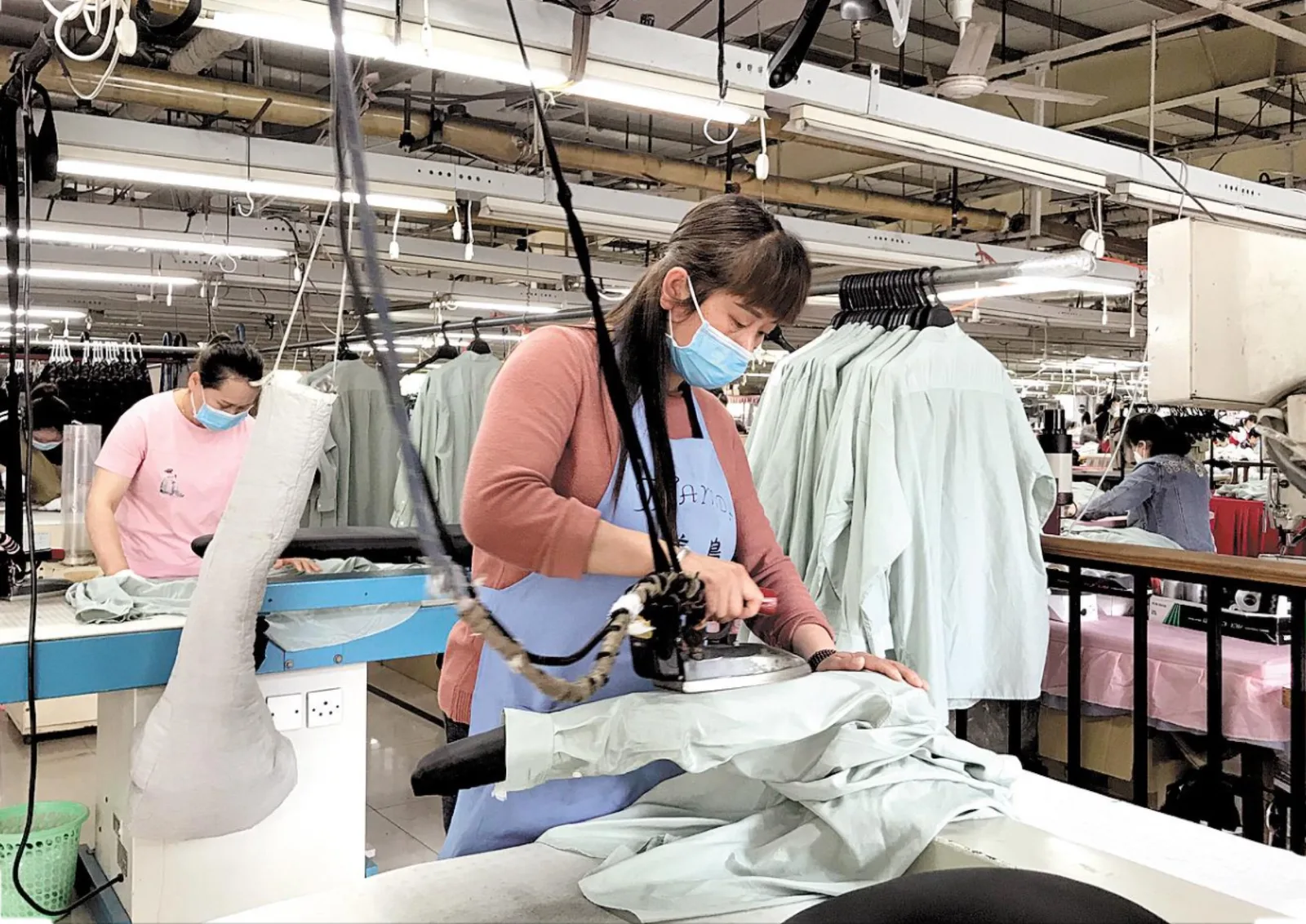
Pressing is a controlled shaping process. It can flatten seams, set creases, improve collar and cuff shape, remove handling wrinkles, and prepare a garment for folding. It can also create problems when temperature, pressure, steam, time, press cloth, or garment position do not suit the fabric and trim.
Different materials need different judgement. A crisp cotton woven may need a clear press at collars, plackets, cuffs, and hems. A soft rayon blend may need a gentler route to avoid shine or hard edge marks. A dark fabric can show pressure marks. A brushed knit can lose surface direction if it is pressed badly. A coated fabric, bonded component, heat transfer, plastic button, metal trim, or sensitive decoration may need separate handling or protection.
The buyer does not need to prescribe a machine setting. It is more useful to define the desired result and the risk points. State whether the garment should look crisp, relaxed, washed, softly draped, flat at the front, or naturally textured. Identify any area that should not carry a press mark: logo, transfer, embroidery, coated panel, pleat, pocket flap, or special surface.
Review pressing on the actual fabric and finished garment. A press test on a spare panel does not always show how a collar, seam allowance, lining, zip, or label reacts in the completed style. The approved sample should show the intended appearance after the same route planned for bulk finishing.
The finishing team also needs the current component record. Lining, fusible, rib, elastic, buttons, zippers, labels, prints, embroidery, transfers, and coated details may react differently to heat, steam, pressure, or handling. The fabric and trim development route shows why material, colour, component, sample, and construction decisions should reach the finishing brief before the product is pressed or packed.
What should buyers check about washes, decoration, and final handling can change the product?
Many fashion programs include a step that changes the garment after sewing. It may be garment washing, softening, pigment dyeing, enzyme treatment, brushing, printing, embroidery, heat transfer, or a final surface treatment. These choices can change colour, handfeel, measurements, seam appearance, print texture, and how the garment sits after pressing.
That is why the finishing route must be included in sample approval. If a garment is washed after sewing, the buyer should approve the look after that route. If a logo is printed or transferred, check it after the relevant pressing and care process. If embroidery sits near a pocket, seam, or neckline, assess the backside, stabilisation, comfort, and appearance in the actual garment.
Make comments specific. “The wash looks wrong” does not show the factory what to correct. Better comments are: keep more colour depth at the pocket edge; reduce the crease mark at the placket; avoid shine on the black collar; flatten the hem without making the jersey stiff; check the print handfeel after care; or keep the sleeve fold clear of the embroidery.
Some variation can be part of a wash or garment-dyed aesthetic. It still needs an approved range. Use sample photos, colour references, notes, and visible comparison points. That helps the buyer and factory distinguish an intended effect from an unwanted lot difference or handling issue.
How should buyers review final appearance before folding and packing?
The final appearance check is the point where finishing, construction, labels, and packing meet. The garment should be reviewed in a clean condition and in the form the customer will see. Check overall shape, pressing, visible threads, stains, marks, broken stitches, missing or incorrect buttons, zip function, pocket shape, label order, print or embroidery placement, and the visual balance of the garment.
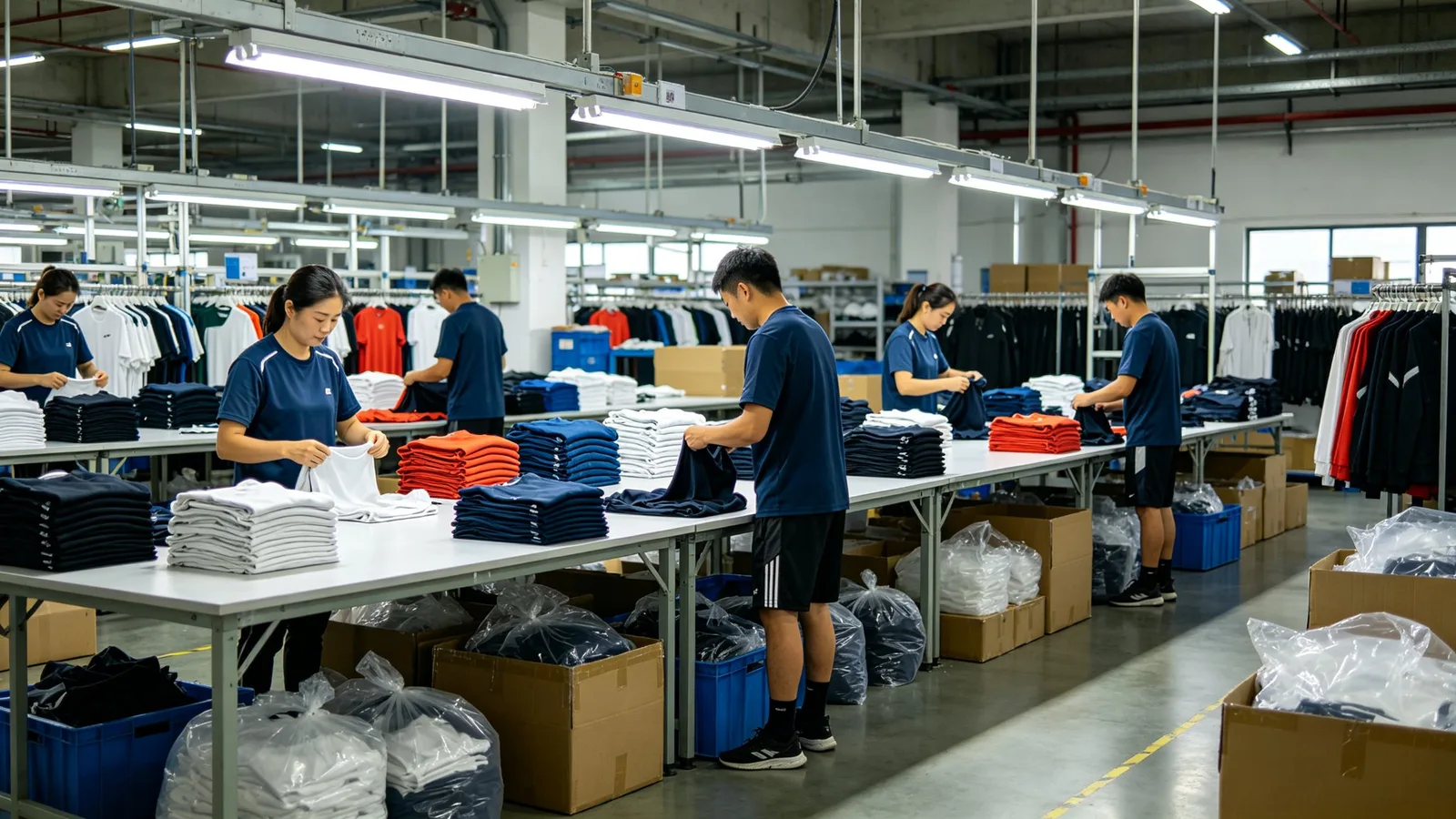
The Yinshan image above shows a real garment inspection area. It provides production context rather than a universal promise about one inspection method. The relevant final checks, sampling plan, decision rules, and evidence depend on the buyer's product, order structure, market, and quality agreement.
Measurements should be reviewed against the approved production standard where required. This does not mean every garment must be handled like a sample. It means the quality team should use the agreed points of measure, tolerance, and inspection plan. If a wash or finishing process affects body length, sleeve length, width, or drape, that effect should be understood before bulk approval.
Colour also needs a final look. View dark, pale, and contrast garments under the intended quality-review conditions. Check whether different panels, lining, thread, labels, or trims create an unwanted mismatch. A garment can pass a fabric review but still look inconsistent when all components are assembled and pressed.
If an issue is found, capture it in a way the production team can use. Note the style, size, colour, location, issue, and decision. Is it reworkable? Does it need re-pressing, thread trimming, stain removal, a replacement trim, a label correction, or a broader review of the line? Clear records prevent the same issue from moving into folding and cartons.
The wholesale fashion quality-control guide explains the wider release decision: the product, style-colour-size identity, labels, barcode, packing, cartons, correction evidence, and warehouse record should agree. Finishing feeds that review, but it does not replace a project-specific inspection or buyer approval.
What should buyers check about match finishing controls to the garment category?
The process should change with the product. A single finishing checklist copied across every order can hide the details that customers actually notice. Start with the approved silhouette, surface, handfeel, decoration, and retail presentation, then identify where handling can change those results.
For a woven shirt or overshirt, review collar and stand shape, placket, cuffs, pocket flaps, buttonholes, side seams, hem, pressing shine, and the way the garment holds its form after folding. A contrast topstitch or heavy fabric may make thread ends more visible. A dark surface may show lint, pressure, or handling marks that are less obvious before final cleaning.
A blouse or dress often needs a different balance. Drape, gathers, lining, zip areas, seams, pleats, sleeve volume, transparency, hem balance, and soft pressing can matter more than a sharp crease. Excess heat or pressure can flatten texture, create shine, expose seam allowances, or make a fluid fabric look stiff. The finishing reference should show how the garment falls on a form or body, not only how it looks flat on a table.
T-shirts and other knit tops may need checks on body twist, neckline shape, rib recovery, shoulder line, shrinkage direction, surface marks, print or embroidery condition, and whether the fold stresses or transfers the decoration. The finishing team should know whether the product is intended to look compact, softly washed, heavy and structured, or light and relaxed.
Loungewear brings another set of priorities: skin-facing comfort, softness, matching top-and-bottom identity, belt or piping details, print direction, gentle pressing, and presentation after folding. Buyers can use the Loungewear product collection to make a robe, pajama, lounge-set, or comfort-product brief more precise before final packing is approved.
Streetwear garments may include heavy fleece, garment wash, pigment colour, graphics, embroidery, patches, hardware, distressed effects, or intentionally relaxed shape. The factory and buyer should distinguish approved variation from handling damage. A washed finish can be intentionally uneven within an agreed direction, while unexpected shade panels, print damage, hard press marks, or distorted rib remain different issues.
Category-specific controls do not need to make the process complicated. They direct attention to the few points that define the product. The buyer should name those points in the finishing brief, and the factory should show where they are checked before the garment enters its final pack.
What should buyers check about folding and packing protect the finished product?
Packing is part of final presentation and product protection. A good folding method keeps the collar, front, sleeves, print, embroidery, and key shape points in the condition the buyer approved. The same garment can look sharp in a sample review and look careless after a poor fold, a cramped bag, excess pressure, or an incorrect carton assortment.
Set the folding method before bulk packing. Use an approved folded sample, folding board, photo, or instruction sheet. Define the direction of the front, sleeve fold, collar support, tissue placement, cardboard insert where needed, individual bag, sticker, barcode, hangtag placement, and how the product should sit inside an inner box or master carton.
Consider the material and finish. A delicate blouse may need tissue to protect a surface. A printed T-shirt may need the print face protected from transfer or abrasion. A heavy overshirt may need a fold that does not crush the collar. A lounge set may need low-bulk packing that keeps it soft and avoids unnecessary hard creases. Packing choices should be reviewed on the finished garment, not selected from a generic packaging list.
The buyer should also provide market and retailer requirements early. These may affect polybag warnings, barcode placement, size stickers, carton marks, assortment, individual presentation, and export documentation. The final packing file should match the approved garment, label route, and shipping plan.
Private-label information should reach packing as controlled files. The private-label programme helps connect main labels, size labels, care information, hangtags, barcode data, stickers, folding, individual packs, and cartons with the physical product. A clean fold does not make a unit retail ready when its style, colour, size, label, barcode, or market information is wrong.
The detailed wholesale apparel packing checklist provides a separate decision framework for barcode, size stickers, individual protection, carton marks, assortment, packing lists, and warehouse handover. Use it when the main risk is not only garment appearance but the relationship between the packed unit and the receiving record.
How should buyers connect finishing, packing data, and warehouse identity?
Finishing creates the last physical version of the garment before it becomes a warehouse unit. The product and its data should therefore be checked together. Each style-colour-size combination needs one clear identity that continues through sewn labels, hangtags, barcode, size sticker, individual pack, carton assortment, carton mark, packing list, and the buyer's product system.
Start with an SKU master or equivalent product map. It should show the style code, colour, size, ordered quantity, barcode or other identifier, label version, individual packing instruction, and carton plan. Controlled source files are safer than retyping the same information on several templates. If a garment or market changes, review the connected label and packing files rather than assuming the previous version is still correct.
A barcode should be checked for the data it returns, not only whether a scanner reads it. A readable code can still point to another colour or size. Confirm placement and orientation against the approved pack, and ensure stickers do not cover required information or damage the intended presentation. Where the buyer has retailer-specific data, name the file owner and approval version.
Carton checks should trace in both directions. From the packing list, the team should be able to find the carton and confirm the physical assortment. From a selected garment, it should be possible to identify its style, colour, size, individual pack, carton, and purchase-order relationship. This catches an identity or assortment error while correction is still possible.
Warehouse requirements can affect the finish itself. A hanging-garment route, boutique back room, e-commerce fulfilment centre, distribution centre, courier parcel, or export carton exposes the product to different handling and presentation needs. The buyer should explain the receiving route and any approved limits or retailer instructions. The factory can then assess fold recovery, protection, marks, carton assortment, and the sequence in which items are checked and sealed.
Keep an approved packing master with the product record. It may include a folded sample, photographs, diagram, label and barcode placement, bag or box, tissue or insert, units per carton, size ratio, carton marks, and a trace check. That record protects the next order from reconstructing presentation out of memory.
What should buyers check about record rework decisions before cartons are released?
Finishing work is often judged quickly because it happens near the end of production. That is exactly when a clear rework record is useful. A garment may only need another press, thread trim, stain treatment, replacement button, corrected size sticker, or refold. But if the team does not separate a one-piece correction from a repeated issue, the same problem can enter packing across a whole size run or colour lot.
Keep the record simple and usable on the floor. Note the style, colour, size, location, issue, date, action, and final decision. A photo helps when the issue concerns collar shape, a crease line, print surface, embroidery, shade difference, or a fold mark. The quality team can then ask the right question: is this isolated damage, a handling issue, a machine or material issue, or a finishing standard that was never made clear?
The buyer should agree in advance who can approve a borderline appearance decision. This is particularly important for washed, garment-dyed, textured, distressed, or naturally variable products. Some variation may be acceptable; it should still sit inside an agreed reference range. If the factory sees a potential bulk issue, a small comparison set and clear photos are more useful than waiting until the last carton is closed.
For repeat orders, keep the approved appearance reference with the production file. It gives the next production team a practical standard beyond measurements and construction. The best repeat program is not one that relies on memory. It is one where the material, sample, finishing expectation, packing method, and past corrections can be checked before the line reaches final presentation.
The manufacturing workflow connects these decisions with material approval, cutting, sewing, in-line quality, finishing, packing, and export preparation. A final correction should be recorded at the stage where its cause can be prevented on the next order, rather than treated only as a last-minute repair.
What should buyers check about give the factory a finishing brief before bulk begins?
The useful finishing brief is short, visual, and specific. Include the approved sample, product photos, fabric and colour references, care or wash direction, decoration details, pressing expectation, visible quality points, measurements where relevant, label package, folding method, individual packing, carton mark, destination market, and delivery plan.
Mark each item as approved, pending, or open for factory advice. If the buyer needs a crisp collar but is open to the folding method, say so. If a print must not carry a press mark, make that a fixed requirement. If the garment is meant to retain a washed, relaxed look, show a sample photo and define what should not be flattened or over-pressed.
Assign an owner to every open point. The buyer may need to approve artwork, care information, barcode data, a colour range, a fold, or a retailer mark. The factory may need to confirm material handling, a press route, decoration protection, rework feasibility, carton assortment, or the evidence available before release. An unanswered message should not silently become a bulk instruction.
Before packing begins, review one finished and packed unit against the approved garment and data. Open it, check its recovery and presentation, confirm the labels and identifiers, and trace it to the carton plan. Record any change to pressing, folding, tissue, sticker position, or protection before the instruction is repeated across the order.
Yinshan Fashion can connect the approved sample with production planning, finishing, quality control, labels, packing, and export preparation. Send the product reference or tech pack, garment category, material and colour direction, quantities by style and colour, size plan, decoration, labels, barcode data, packing, destination market, quality priorities, sample needs, and target delivery window through the contact page. The practical aim is simple: the product that leaves the factory should reflect the product the buyer approved, subject to the agreed bulk standard, finishing route, packing plan, and release decision.

Final presentation control
Three controls between sewing completion and a customer-ready garment
Finishing protects the approved product standard. The garment needs to be cleaned, shaped, checked, folded, and packed in a way that suits its material, construction, decoration, labels, and the customer experience the brand intends to deliver.
Set the appearance standard
Use the approved sample to define whether collars, plackets, hems, sleeves, fabric surface, and the overall garment should look crisp, relaxed, washed, soft, flat, or textured.
Protect fabric and decoration
Review the actual garment for shine, pressure marks, surface change, wash behaviour, print handfeel, embroidery, trim safety, colour, and the areas that should not be over-pressed.
Pack the approved product
Connect the folding reference, labels, hangtags, bag or box, barcode, tissue, carton marks, assortment, and retailer instructions to the finished garment rather than a generic packing list.
Garment finishing and packing handover checklist
This brief makes final presentation specific before bulk production. It should be reviewed against the approved sample, actual fabric, trims, decoration, market, and order plan; it does not replace the buyer’s own market or compliance review.
| Decision area | What the buyer should prepare | What to ask the factory |
|---|---|---|
| Approved product appearance | Provide the approved sample, product photos, desired collar, placket, sleeve, hem, drape, texture, and overall presentation; mark what is deliberately relaxed or raw. | Which finishing sequence, press route, and visual checkpoints will produce this intended result without damaging the actual fabric or details? |
| Material, wash, and decoration | State the fabric, wash, garment-dye, softening, brushing, print, heat transfer, embroidery, coating, trim, and relevant care direction before bulk approval. | What must be checked for colour, handfeel, measurements, surface, seam appearance, decoration, and trim compatibility after the planned finishing route? |
| Final appearance and QC | Identify the points that cannot drift: key measurements, pressing, loose threads, marks, buttons, zips, pocket shape, label order, logo placement, and final visual balance. | How will reworkable issues be recorded and corrected before folding and cartons are released? |
| Folding and individual packing | Supply a fold photo or sample, tissue or insert need, bag or box route, sticker and barcode position, hangtag placement, and any retailer presentation requirement. | Which fold protects the collar, surface, print, embroidery, and key shape points for this garment? |
| Carton and delivery plan | Confirm carton marks, size assortment, carton quantity, destination market, retailer instructions, shipping timing, and any final approval point before dispatch. | Which packing files must be checked against the finished garment, labels, and agreed shipping route? |
Continue the production conversation
Garment finishing process: buyer approval points
| Finishing stage | What the buyer should define | What the factory should check before packing |
|---|---|---|
| Thread trimming and clean-up | Intentional raw-edge, distress, contrast-thread, or decorative details; visible quality points on the approved sample. | Loose threads, seam security, buttonholes, pockets, cuffs, hems, labels, and any thread trapped during folding. |
| Pressing and shape setting | Whether the result should be crisp, relaxed, softly draped, washed, flat, or naturally textured; any no-press areas. | Shine, pressure marks, collar and cuff shape, placket appearance, hem condition, trim safety, and garment silhouette. |
| Wash and decoration review | Approved wash or colour range, print, embroidery, transfer, coating, or surface direction; relevant care expectations. | Colour, handfeel, measurement change, seam appearance, decoration placement, surface condition, and repeatability against the approved sample. |
| Final appearance and QC | Product measurements, key visual priorities, label package, inspection standard, and rework decision path. | Stains, marks, thread ends, construction faults, colour mismatch, label order, zip and button function, pressing, and overall presentation. |
| Folding and packing | Fold reference, tissue or insert needs, bag, sticker, barcode, hangtag, carton marks, assortment, retailer, and market requirements. | The finished garment stays protected, presentable, correctly labelled, and packed according to the approved product and shipping route. |
Buyer FAQs
What is included in the garment finishing process for fashion brands?
The route can include thread trimming, cleaning, pressing or shape setting, wash or decoration review, final appearance checks, measurement and function checks where required, folding, individual packing, carton packing, and final inspection. The exact sequence depends on the garment, material, approved sample, and order plan.
Why should a brand approve finishing before bulk production?
Finishing affects the visible product. It can change collar shape, crease level, colour appearance, handfeel, print or embroidery condition, measurements after a wash route, and the way the garment looks in its final packing. An approved sample gives the factory a clear bulk reference.
Can pressing damage a fashion garment?
It can if the fabric, trim, decoration, temperature, pressure, steam, or handling route is unsuitable. Dark fabrics, delicate surfaces, coatings, transfers, embroidery, plastic trims, and bonded components often need careful review on the actual finished garment.
How is garment finishing different from final inspection?
Garment finishing is the production work that cleans, shapes, checks, labels, folds, and prepares the product for packing. Final inspection verifies selected finished and packed goods against the approved product, order, labels, packing, cartons, and agreed quality plan. Inspection can identify a finishing issue, but it should not replace controls during trimming, pressing, rework, and packing.
What packing information should a fashion buyer provide?
Provide an approved fold reference, individual bag or box route, tissue or insert requirement, barcode and sticker position, hangtag placement, carton marks, size assortment, retailer instructions, destination market requirements, and delivery plan. Check the packing route on the finished garment before bulk packing begins.