
Article
What should buyers know first?
Short answer: A B2B guide to turning an approved fashion sample into a controlled order file that links the current style, materials, fit, labels, packing, quantities and buyer-defined market inputs.
Export-ready fashion production records are the controlled files and physical references that carry an approved product from sample review into bulk preparation. They keep the current style, fabric, colour, fit, components, labels, packing, quantities and buyer-defined market or channel inputs connected to one order route. A production record is not a generic export checklist and it is not proof that every requirement has already been confirmed. It is the working basis that lets a buyer and factory see what is approved, what is still open and which decision applies to a particular product version.
For a custom or private-label programme, the approved sample is important but it is not enough on its own. A sample may confirm one silhouette, one material direction and a set of visible details. The order still needs a usable identity, current files, measured points, colour and component references, packing direction, quantity context, approval owners and a way to record later changes. Yinshan Fashion supports custom and private-label bulk programmes rather than unrestricted ready-stock wholesale. The practical task is to turn the buyer's approved information into an order record that development, sourcing, production, quality and packing teams can use without relying on a memory of the last email.
Direct answer: Start with the approved sample and a buyer-defined style-colour-size identity. Add the current material, pattern or measurement basis, components, labels, packing, quantity matrix, market or channel inputs, evidence, owner and release status. Treat every later change as a named version or exception. That makes an export-ready order file a production control, rather than a folder of unrelated attachments.
What should buyers know first about export-ready fashion production records?
An order file becomes useful before the first bulk piece is cut. Its purpose is to connect the physical garment with the information that changes how it is made, checked, presented or routed. That includes the product identity, not just a collection name. It includes the current fabric and trim references, not just a material description copied from an early mood board. It includes the approved fit scope, labels and packing directions, not a loose statement that the shipment is "for export."
The buyer does not need to produce a perfect technical dossier before asking for help. It does need to make the information it has visible and separate it from points still needing confirmation. A fashion brand might begin with a dress sample, a blouse fit reference, a lounge set, a skirt, an active-fashion top or a multi-style capsule. In each case, the production record should identify what is common across the order and what is unique to a style, colour, size, channel, destination or customer account.
The international private-label production brief guide explains the inputs a factory needs before sampling. This article begins at the next gate: the moment a buyer wants to convert an approved sample and related decisions into a controlled production handover. If a file is not final, the record should say so. A clear pending item protects a project better than an assumed instruction.
What makes a production record ready for bulk preparation?
“Export-ready” should describe the state of a controlled order route, not a promise about customs, compliance or delivery. A record is ready for a bulk discussion when the people who must act can identify the current product, its scope and any remaining approvals. The factory should be able to see the style and version it is preparing, the evidence behind that version and the boundary between an approved instruction and a question that must go back to the buyer.
At minimum, the record should link five layers. The first is the product layer: style code, category, colour, size context, sample or reference and intended fit. The second is the material and construction layer: fabric direction, lining where relevant, trims, decoration, stitching or finishing details that affect the finished garment. The third is the commercial presentation layer: labels, product information, hangtags, barcodes, individual packing and cartons. The fourth is the order layer: quantity structure, approved or open route, buyer or channel context and planned order split. The fifth is the control layer: file version, proof, owner, approval date, scope, conditions and next action.
This does not mean every project needs the same number of documents. A simple repeat in an existing fabric can be controlled differently from a new private-label dress with a new print, lining, size range and carton route. The question is whether a missing detail would cause sourcing, pattern, production, inspection or packing to take a different action. If it would, that detail belongs in the controlled record or in an attached proof that the record identifies.
Which approved sample controls the bulk order?
An approved sample should be identifiable in a way that no team has to guess. Record the buyer's style code, colour reference, sample size, sample purpose, version or revision, the date and the approval scope. State what the sample approves and what it does not approve. For example, a sample may approve silhouette and construction while a label artwork proof, final colour reference or individual packing mock-up is still open. The distinction stops an attractive fit sample from being treated as permission for every component and presentation choice.
The production record should point to the sample's current physical or digital reference. It may link to a photograph, a fitting record, a measurement sheet, a pattern version, a swatch card, an approved component proof or a retained physical sample. The record does not need to reproduce confidential buyer files in a public system. It needs enough traceability for the authorised project team to distinguish the latest reference from a previous one.
For custom garments, a buyer should also state the sample's role. Is it a development sample that invites further comments, a fit sample, a revised sample, a size-set reference, a pre-production review or the version accepted as the current bulk basis? Those terms can mean different things in different programmes, so the record should say what decisions have actually been made. The custom fashion design localization guide is useful when a market or channel input changes the garment itself. A changed length, fabric, pattern, construction or fit route may need a new product sample, not only a new order-file note.
How should fabric, colour and trim references map to the style?
Material information should be specific enough to keep the sample and bulk conversation connected. Identify the fabric reference supplied or selected for the relevant style-colour version, the working colour reference, usable material notes, lining and any trim or decoration directions. If a material, colour or component is still being compared, mark it as an option or pending decision. Do not describe an early swatch or supplier conversation as a confirmed bulk choice.
The record should also show where a material direction changes the garment. A fluid woven cloth may affect drape, seam treatment, lining choice, pressing or measurement review. A stretch knit may affect recovery, ease, neckline construction or the fit sample needed before release. A print, embroidery or applied patch may need an artwork file, placement proof and an instruction tied to the relevant size or pattern piece. The factory can help translate those choices into sample and production questions. It should not infer a final fibre claim, material performance claim or care wording from a fabric image or a brief composition note.
Use the fabrics and trims development page to frame the material and component conversation. For a dress, blouse, shirt or fashion top, the casual-fashion collection gives the buyer a real product category for discussing fabric behaviour, silhouette and construction. In the production record, the garment and material references should meet at the same style-colour-size identity. That is what prevents a suitable fabric note from travelling to the wrong garment version.
How should fit, measurements and construction comments be retained?
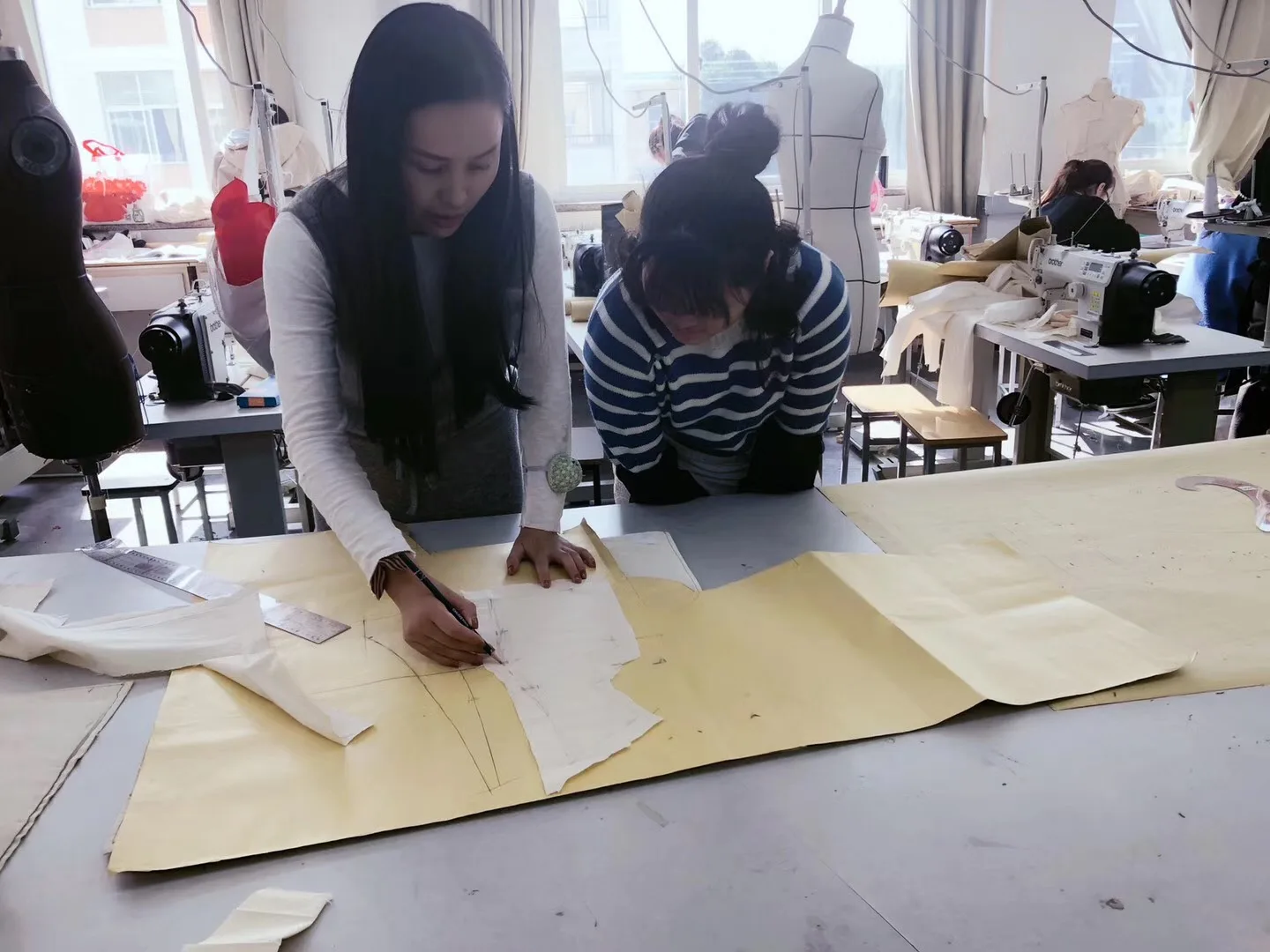
Fit comments become useful in bulk only when the record makes them actionable. A comment such as “make the sleeve cleaner” may be meaningful during a conversation, but it cannot control a production handover without a reference, a location, a requested result and an owner. The order file should identify which measurement or pattern version relates to the approved sample, which points were reviewed, which allowances or tolerances are buyer-defined for the programme and which decisions remain open.
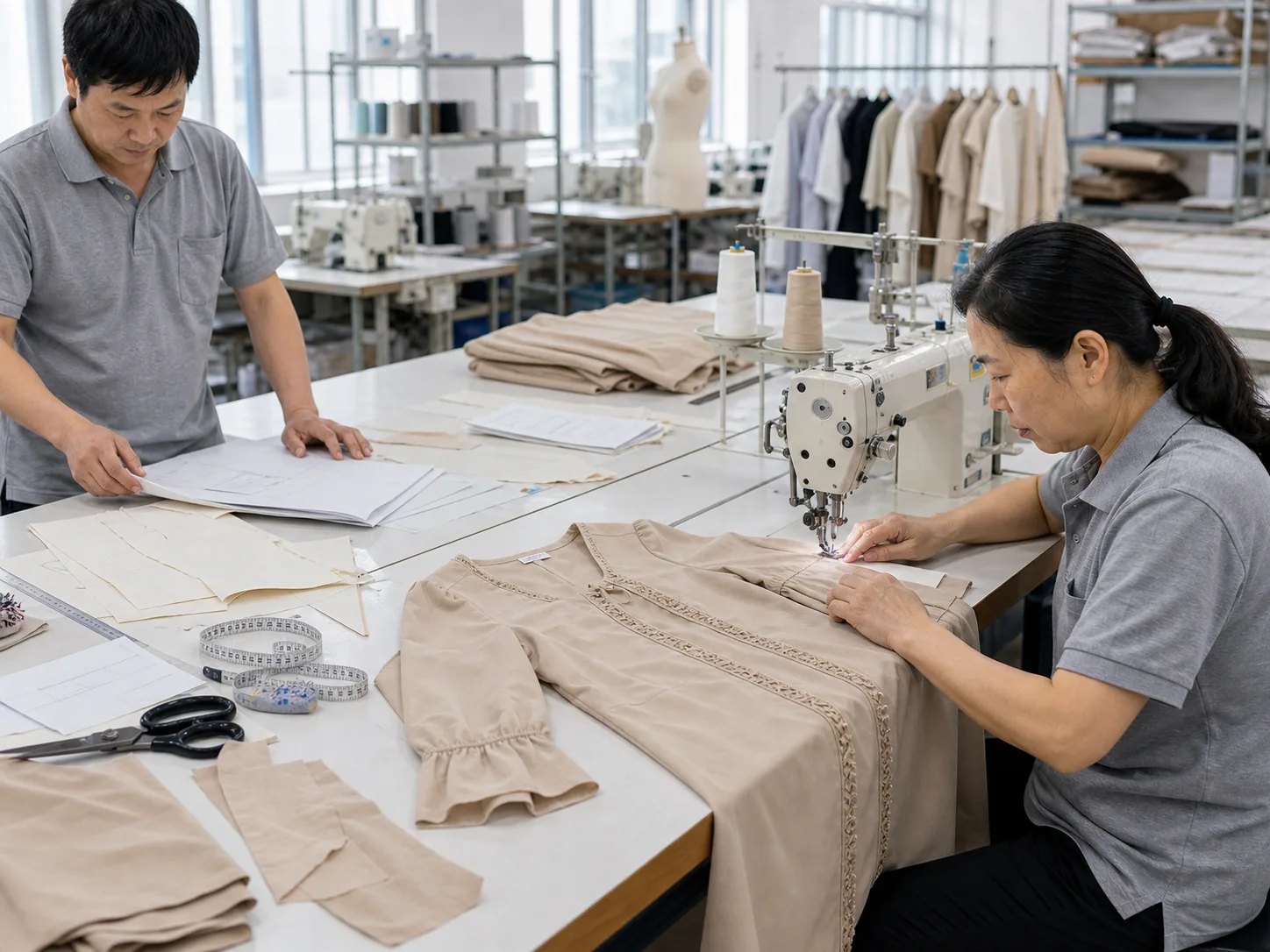
Record construction points that affect the actual product outcome. Depending on the garment, this may include neckline shape, shoulder position, body or skirt length, lining, closure, pocket, hem, seam position, elastic, binding, panel placement or decoration. Do not turn the record into an unnecessary restatement of every sewing operation. Retain the details that distinguish this product from a previous sample, another colourway or another style in the order.
A useful sample-comment log identifies the source sample, comment date, affected product version, requested action, evidence needed, decision owner and status. When a comment changes the pattern, material, component or packing route, ask whether another proof is needed. This is the point where many projects lose control: the garment changes, but its label placement, measurement sheet, packing photo or quantity split still refers to an older version.
How do labels, artwork and packing become part of the order file?
Labels and packing are not post-production decorations. They are controlled components that need a product mapping. Main labels, size labels, care or product-information labels, hangtags, stickers, barcode files, inserts, individual protection, folding, hangers, carton marks and carton assortments may each have a separate revision. The order record should identify the file or proof, the product scope, the current revision, placement or packing relation, status, approval owner and items still open.
It is useful to distinguish a source file from an approved applied proof. An artwork attachment may show the intended design but not whether its position, scale, colour, component or product mapping has been reviewed. A packing instruction may describe a retail route but not show which style, colour, size or channel it applies to. Treating these as controlled components lets a buyer request the right evidence: a label proof, placement sample, hangtag proof, folding mock-up, bag and sticker review or carton-mark confirmation.
The private-label development route provides a practical way to organise labels, artwork, hangtags, barcodes and packing around a custom product. Final copy, barcode data, consumer-facing claims and applicable market-specific information remain the responsibility of the buyer, brand, importer or relevant specialist to confirm. Yinshan Fashion can help make the current inputs visible and connected to the correct style before the team moves to a component or packing release.
When should a market or channel input create a separate order version?
A market, retailer or channel name should not become a catch-all instruction. Add a separate order, component or packing version when a buyer-defined input changes what someone needs to make, check, apply, fold, pack or record. That might be a different product-information file, language artwork, hangtag, barcode, individual packing, carton mark, assortment, approval owner or destination split. The change should say what is different and whether it affects the garment itself, a component, a packing route or only a supporting record.
For example, one blouse body may use the same approved pattern, fabric and size range across two selling routes. If the routes use different hangtags and carton marks, the product can stay common while the components and packing have named versions. If a route instead changes the blouse length, fit or lining, it may need a revised sample and a new product version. The multi-market apparel version-control guide explains how to keep those relationships visible without treating a broad country label as a final product requirement.
Buyers should record market and channel context as an input with an owner. Do not assume that a destination name alone confirms consumer copy, labelling, packing, retailer routing or legal applicability. If the relevant information is not confirmed, state the open action and the person responsible for it. That lets a factory coordinate a controlled version while the buyer completes its own market or commercial review.
How can a buyer turn sample approval into a production handover?
The handover should follow a clear sequence. First, identify the current sample and product version. Second, collect the material, colour, trim and construction references that belong to it. Third, map any labels, artwork, packing and product-information components to the same style-colour-size scope. Fourth, add the quantity structure, channel or market context and approval owners. Fifth, record which proof is accepted, what conditions remain and what change would reopen review. Finally, issue one controlled order file or register that points everyone to the current sources.
This is not a demand that a small brand build an enterprise system. A concise register can work when it remains current and is used at each decision gate. The risk is not that a record is too short. The risk is that a key decision exists only in an attachment, chat thread or unlabelled image. One product can then be manufactured from an earlier pattern, packed with an earlier barcode or inspected against an earlier measurement note while each team believes it is following the latest instruction.
The manufacturing overview shows the broader handover from materials and cutting through production, quality checks, finishing, packing and delivery preparation. For an export-ready order file, use that sequence to ask a focused question at each handoff: Which product version is current? Which source or physical proof governs it? Is the decision released, conditional or still open? Who can answer if the factory finds a mismatch?
How do teams prevent a production record from drifting after approval?
Drift begins when a change is accepted in one place but not captured in the record used by the next team. A buyer revises a label file after sample approval. A material alternative is accepted because the original is unavailable. A quantity allocation changes the carton assortment. A revised fit comment affects a measurement. Each may be a sensible decision. The problem is not the change. It is leaving the former version in circulation without a clear statement of what now controls production.
Use a change log that retains the original reference and makes the current version unmistakable. Each entry should state the product or component identity, what changed, why it changed, the source or proof, the date, the decision owner, the affected order scope, the status and the next action. If the change affects fit, fabric, construction, decoration, applied components, labels or packing, the team should ask what else must be checked. A record that only updates a filename can leave the physical sample and packing instruction out of sync.
The factory should make assumptions and missing inputs visible before bulk preparation. The buyer should make the final release scope clear. Yinshan Fashion can coordinate questions between development, materials, pattern, sample review, private-label components, production and packing. Quantities, timing, cost, testing, certification, commercial terms and final market requirements remain programme-dependent and must be confirmed for the actual order.
What does Yinshan Fashion coordinate in an export-ready order handover?
Yinshan Fashion works as a fashion supplier, manufacturer and factory coordinator for custom and private-label programmes. The team can help a buyer organise the relationships between the product brief, fabric and trim direction, pattern and fit comments, sample objective, approved details, labels, packing and production handover. The objective is not to claim that every order follows one fixed form. It is to identify the current product route and make each required decision visible before the next team acts.
For buyers developing dresses, skirts, shirts, blouses, fashion tops, nightwear, homewear, partywear or active fashion, the same core control remains useful. Identify the style and version. Connect the evidence to it. Separate approved instructions from open questions. Keep product, component and packing changes within the correct scope. The how-it-works process page can help a buyer see how inquiry, development, sampling, production, quality checks and shipment coordination relate to the order-file conversation.
What questions do buyers ask about export-ready fashion production records?
Is an approved sample enough to start bulk production?
Not by itself. The sample should be connected to the current style-colour-size identity, material and construction references, measurement or pattern basis, components, packing, quantities, approval scope and any open conditions. The exact evidence needed depends on the confirmed programme.
What must be in an export-ready fashion production record?
An export-ready fashion production record should identify the current product version, approved sample or reference, material and component sources, fit and construction notes, labels and packing files, quantity structure, buyer-defined market or channel context, approval owner, status and open actions.
Does every market require a different order file?
No. A separate version is useful when a buyer-defined market, customer or channel input changes the garment, component, packing, product information, quantity split or approval route. A broad destination label on its own is not a complete instruction.
Who approves labels and market-specific product information?
The brand, buyer, importer or relevant specialist should own final consumer-facing copy and applicable market review. A factory can help map current files and proofs to the correct garment version, but it should not infer or certify content from an incomplete input.
How should changes be recorded after bulk preparation begins?
Use a dated change record that names the style or component version, the changed item, reason, evidence, decision owner, affected order scope, status and next action. Review whether the change also affects the sample, material, labels, packing or quantity plan.
What should a buyer send for an export-ready production-record review?
Send Yinshan Fashion the current style or approved sample reference, style-colour-size identity, fit and measurement or pattern information available, fabric and trim direction, label and artwork files, packing and carton inputs, quantity matrix, buyer or channel context, target market, approval owners, confirmed points and open questions. The team can then help identify which record, proof, sample, component or packing review is needed before the product moves forward. Start through contact.
Production-record handover kit
Three controls that keep an approved sample connected to the current order
A production record is useful when it identifies the current product, the evidence behind it and the person who can close an open decision. Use the same control at every handover from sample review to packing preparation.
Name the controlling sample
Record the style, colour, size context, sample purpose, revision, approval scope and source reference so an earlier sample cannot be treated as current bulk approval.
Map every supporting component
Connect fabric, trim, artwork, labels, product information, individual packing and carton directions to the same product version, with a status and owner.
Release changes deliberately
Use a dated change log to show what changed, why, which proof applies, who approved it and whether the product, component or packing route needs another review.
Buyer actions and factory questions before a production record moves to the next gate
Use this list to keep the approved sample, the current product version and the buyer-defined order route aligned. Exact quantities, costs, timing, testing, commercial terms and final market requirements remain specific to the confirmed programme.
| Decision area | What the buyer should prepare | What to ask the factory |
|---|---|---|
| Style and sample control | Provide the style code, category, colour, size context, sample purpose, current reference, approval scope, owner and open conditions. | Which physical or digital sample controls the order, and which previous version must be removed from the working route? |
| Material and construction route | Share current fabric, colour, lining, trim, decoration, pattern, measurement and construction inputs with known alternatives or exceptions. | Which material, fit, pattern, construction or application decision still needs a swatch, proof, sample or buyer response? |
| Labels and artwork | Map label, hangtag, barcode, sticker, insert and artwork files to the correct style-colour-size version, revision, status and approval owner. | Which file is a source reference, which is approved for this product and which applied proof remains necessary? |
| Packing and order split | Give individual packing, folding or hanger direction, carton inputs, quantity matrix, channel context and open packing decisions. | Which product and quantity version does the packing route serve, and what proof or instruction is still missing? |
| Buyer-defined market context | State the buyer, market, channel or customer context only where it affects the product, supporting components, packing or information file. | Which input changes a production action, and which consumer-facing or market detail still needs confirmation from the responsible owner? |
| Release and change record | Record the approval date, scope, conditions, exceptions, current next action and changes after the sample was reviewed. | What can proceed now, what must stay conditional and which later change would require the product route to be reviewed again? |
Continue the production conversation
Export-ready production record: buyer inputs and factory handover questions
| Control area | What the buyer should retain | What the factory should clarify before the next gate |
|---|---|---|
| Current product identity | Style code, category, colour, size context, current sample or reference, version, status and approval scope. | Which sample or reference controls this order route, and which earlier version must not be used? |
| Materials and construction | Fabric, colour, lining, trim, artwork and construction references with any open alternatives or exceptions. | Which material, pattern, fit, construction or placement point still needs a swatch, proof, sample or decision? |
| Fit and sample evidence | Measurement or pattern basis, sample purpose, dated comments, requested actions, evidence and decision owner. | What does the current sample approve, and which feature remains conditional for bulk preparation? |
| Labels and product information | Current artwork or component files, style mapping, placement, revision, status, approval owner and required applied proof. | Which file, proof or component route is current for this exact style-colour-size version? |
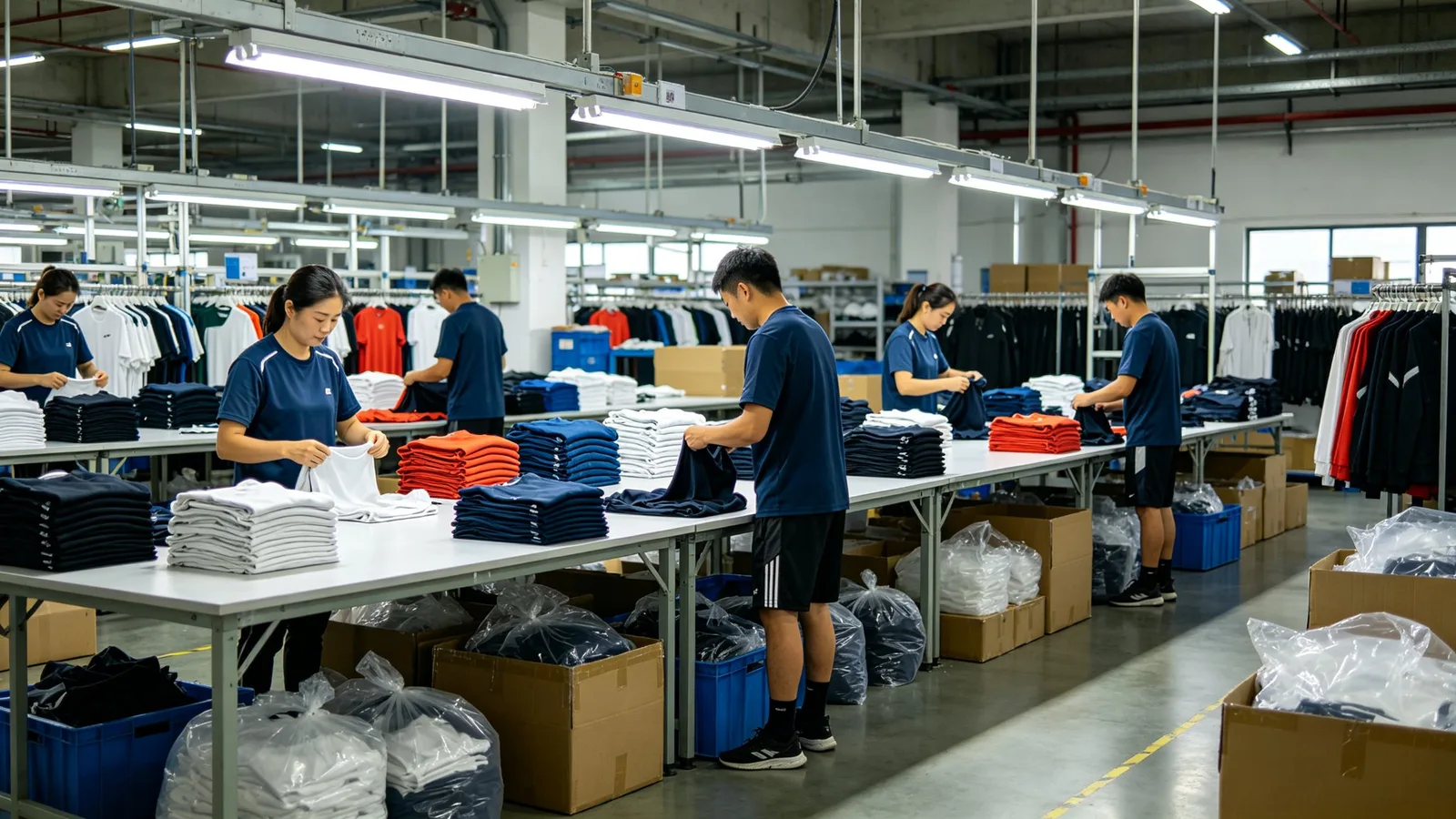
| Packing and order split | Individual packing, folding or hanger direction, stickers, inserts, carton marks, assortment, quantities and buyer-defined channel context. | Which packing proof or matrix connects this route to the correct product and quantity version? |
| Release and change control | Approval date, scope, conditions, open actions, named exceptions and a dated change log. | What is released for the next operation, what is still open and which change must reopen review? |
Buyer FAQs
Is an approved sample enough to start bulk production?
Not by itself. Connect the approved sample to the current style-colour-size identity, material and construction references, measurement or pattern basis, components, packing, quantities, approval scope and any open conditions. The exact evidence depends on the confirmed programme.
What must be in an export-ready fashion production record?
Identify the current product version, approved sample or reference, material and component sources, fit and construction notes, labels and packing files, quantity structure, buyer-defined market or channel context, approval owner, status and open actions.
Does every market require a different order file?
No. Create a separate version when a buyer-defined market, customer or channel input changes the garment, component, packing, product information, quantity split or approval route. A destination label alone is not a complete instruction.
Who approves labels and market-specific product information?
The brand, buyer, importer or relevant specialist should confirm final consumer-facing copy and applicable market review. The factory can map current files and proofs to the correct garment version but should not infer or certify incomplete content.
How should changes be recorded after bulk preparation begins?
Use a dated change record naming the style or component version, changed item, reason, evidence, decision owner, affected order scope, status and next action. Check whether the change also affects the sample, material, labels, packing or quantity plan.