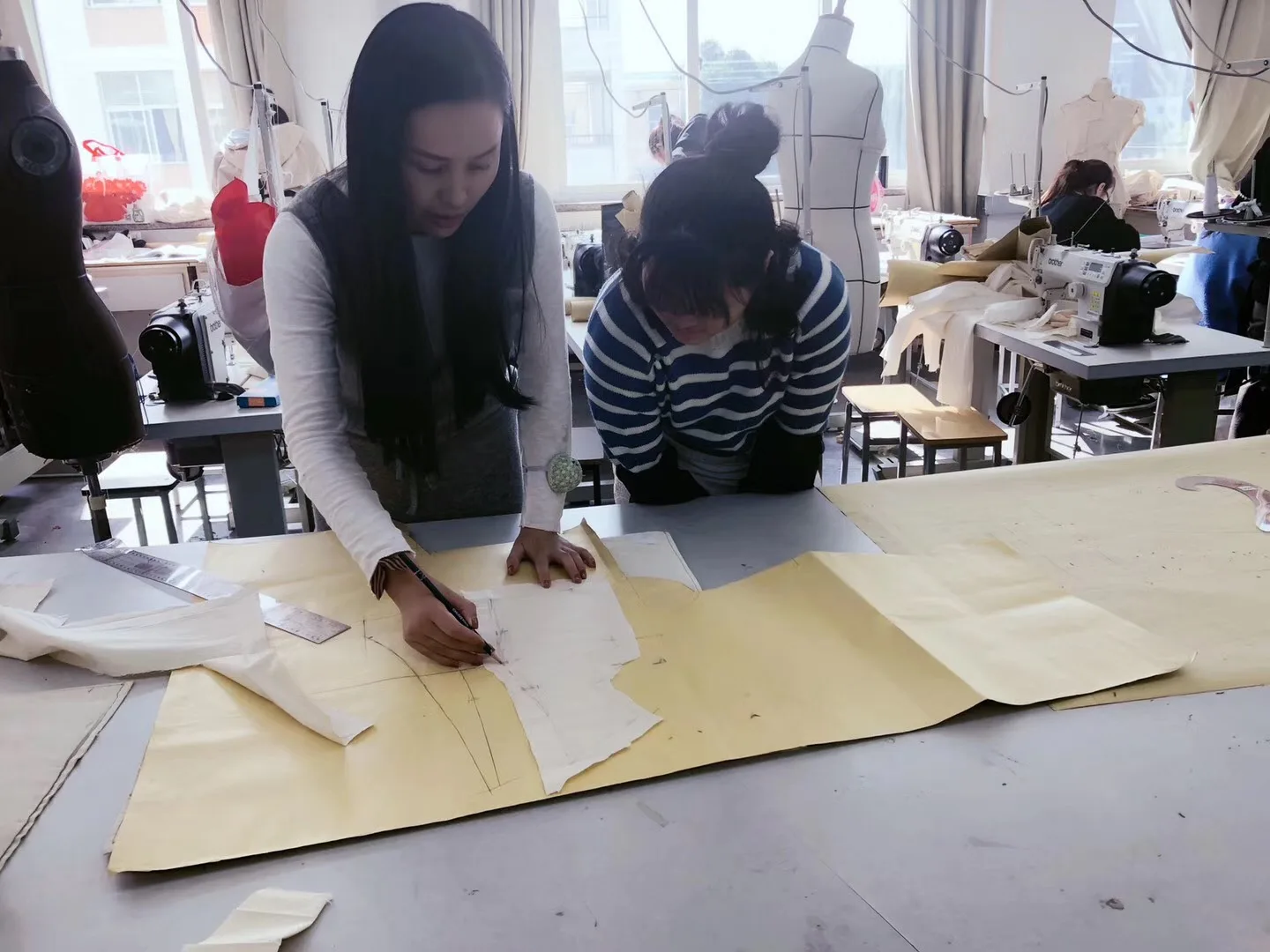
Article
What should buyers know first?
Short answer: A B2B repeat-order guide for brands managing country and channel variations in labels, language files, barcode ownership, packing and controlled factory handover.
Multi-market apparel repeat orders become unreliable when a familiar style name is treated as proof that its labels, language files, barcode, fold and carton instructions are still current. A brand may have an approved dress, blouse, sleepwear set or active-fashion top from a previous season. The new request can still serve a different recipient, use a changed colour or material, carry revised product information, or move through another packing route. A repeat is useful because it starts with known evidence. It is not permission to copy every attachment from the last order.
Yinshan Fashion supports custom and private-label bulk programmes rather than unrestricted ready-stock wholesale. For a repeat programme, Yinshan Fashion can help buyers connect an approved product reference, current fabric and trim discussion, sample or proof needs, private-label components, packing records and factory handover. The brand, importer, retailer and appropriate advisers retain responsibility for customer-facing information, commercial terms and market decisions for the confirmed order.
This guide is for sourcing, product and brand teams handling a single fashion style across more than one buyer-defined country, account or channel. It explains how to retain the useful evidence from the previous order while keeping a language file, label, barcode or packing instruction from being applied to the wrong version.
What should buyers check about begin multi-market apparel repeat orders with the exact previous product?
“Repeat the blue shirt from last season” is not a controlled factory instruction. Start with the prior product identity: buyer style code, colourway, size context, intended recipient, approved sample or production reference, pattern or measurement basis where relevant, material and component route, label and packing version, purchase reference, and known exceptions. Then attach a dated difference list for the new order.
The difference list should distinguish unchanged, changed and unresolved fields. It might show that the silhouette, measurement basis and buttons are unchanged while the material availability, size ratio, hangtag artwork, barcode mapping, sales account and carton mark need review. This makes a repeat order faster to understand without pretending that the old order is automatically current.
Keep the commercial identity beside the product identity. Commercial fields include the customer, quantity structure, style-colour-size breakdown, recipient or channel, packing scope and order revision. Product fields include the approved sample or reference, material, components, construction, labels, product information, packing proof and quality priorities. Neither list is enough alone; the factory needs to know which product is being repeated and who will receive the new version.
How should buyers use the old order as evidence, not as a default instruction?
The previous order can answer real questions. It may show the approved silhouette, construction route, measurement basis, button placement, fit comments, material reference, colour standard, trim package, folding result and quality priorities. It should be retained with its date and scope. It becomes dangerous only when a team assumes that a product image or old PDF applies to a new colour, account, language or packing route without checking.
Ask one simple question for every retained file: what did this file approve, for which style-colour-size and recipient, and what changed since then? A prior neck-label proof may confirm placement on one blouse but not the wording now required by a new account. A previous carton image may show a fold that suited a stable knit but not a light woven with a different front detail. A buyer can preserve the relevant proof while opening the new decision deliberately.
The fashion wholesale reorder planning guide is useful for holding the prior record and new difference list together. The quick repeat orders guide explains how an identified product, current quantities and visible changes help a factory distinguish an accelerated repeat route from new development. Neither guide turns past availability, price, timing or market inputs into a permanent promise.
How should buyers keep labels tied to the product version, not the style family?
A label is often described by a convenient family name: “the EU label,” “the Japanese care label,” “the retailer neck label,” or “use last order’s hangtag.” That language hides the fields that need control. A usable label record identifies the style-colour-size scope, material and component route where relevant, purpose, source, file revision, placement, recipient or channel, owner, review status and whether it may be applied to a sample or to bulk.
Separate files that answer different questions. A neck-label proof can establish placement. A care-information source can support a buyer’s review of a specific garment. A hangtag artwork can communicate brand and sales information. A barcode file maps a product to a receiving system. Their relationship matters, but one does not automatically approve the others. A changed material, colour, country, customer or product-data owner can reopen only one part of the group, which is why each record needs its own scope.
The private-label service can help a brand organise buyer-owned label, artwork and presentation inputs before a factory handover. It is not a substitute for a brand’s review of final customer-facing content. The practical benefit is clarity: the factory can identify the released file and placement instruction instead of relying on the file with the most recent timestamp.
What should buyers check about treat language as a buyer-owned input with a product scope?
Language is not an embellishment added after a garment is complete. It can appear in buyer-owned product data, labels, inserts, hangtags, packaging and retailer files, each with a different audience and owner. A word that is correct for an online product page may not be a released instruction for a sewn-in label. A translated draft can be useful for review without being suitable for application. The factory should know what the file is, who controls it, which product it covers and whether it is still open.
For a multi-market repeat, retain a compact language register: item name, intended use, style-colour-size or pack scope, source or file location, version, language, responsible buyer owner, status and next action. Do not ask a factory to infer final wording from a previous order, a sales listing or a translation embedded in an image. A factory can show placement on a sample, preserve the named artwork with the order record and ask for the missing release; it should not make a legal or market conclusion from a general request.
This protects small brands as well as large teams. A lean team may carry fewer files, but it can still have more than one channel, customer or language version. A one-line register is often enough to make a late change visible before it becomes an applied component.
How should buyers map barcode and account data to the recipient who will receive it?
A barcode, SKU, size identifier, carton mark or retailer label does not belong to a garment simply because the body pattern is unchanged. It belongs to a buyer-controlled account and product version. Store the account or recipient, item mapping, style-colour-size scope, source, version, owner, status and packing relationship together. If any of those values differ, keep the instruction visibly separate.
For example, one direct brand order may use the brand’s own size label and carton mark, while a boutique account needs an account-specific barcode and fold. A distributor may have a different carton split or receiving identifier. The garment can remain the same while the presentation route changes. The goal is not to create an elaborate data system. It is to make sure the factory never assumes that the previous account’s barcode belongs to the next one.
Before packing begins, ask the buyer to reconcile the account mapping against the current style-colour-size quantity matrix. That lets the product team catch a mismatch between a label file, barcode file and order mix while the correction is still a controlled change rather than a shipment exception.
What should buyers check about let packing prove the current presentation route?
Packing is part of the repeat-order product. A fold, hanger, tissue, protective material, size sticker, insert, barcode position, bag and carton route can affect the way the receiving account identifies and handles a garment. A past packing photograph is useful reference evidence; it does not release the same route for every later customer or product variation.
Create a packing record that names the style-colour-size scope, recipient, physical route, file revision, buyer owner, current proof and open condition. Where the detail is meaningful, use a packing mock-up or proof to show the intended garment after the proposed fold or hanger route. This can be especially valuable for soft, pale, printed, embellished or shape-sensitive fashion pieces where collar, placket, surface or trim presentation matters.
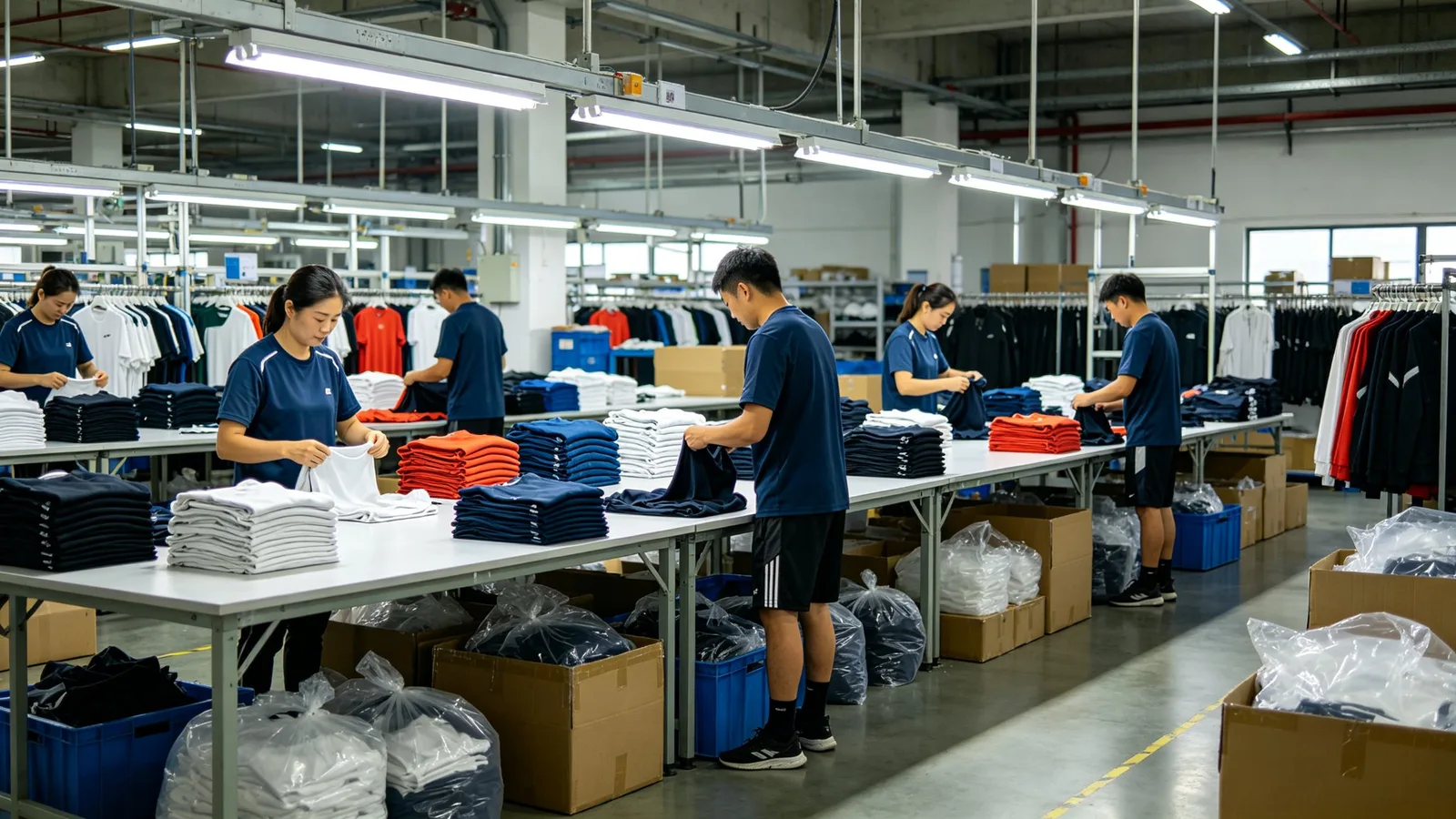
The manufacturing overview is useful for relating buyer-approved product, label and pack files to a broader production and finishing handover. It does not guarantee a logistics or receiving outcome. It helps the buyer ask the factory which release belongs to the product moving through finishing and packing.
What should buyers check about link material and component changes to the information they can reopen?
Material or component changes are often described as minor because the style looks the same. Yet a different fabric, lining, button, elastic, print base, trim or finish can affect the product information, fit, sample evidence, label source or packing behaviour the buyer needs to review. The right response is not to restart the whole programme. It is to make the impact visible.
When a buyer proposes a change, record the prior input, proposed input, reason, affected style-colour-size, available evidence, owner, decision and next proof. Then ask: which previous approvals still apply? A new fabric might reopen a care-information input and a fold proof. A different button might require a component and presentation check. A revised label location can reopen only the label-placement proof. This targeted discipline preserves the efficiency of a true repeat.
The fabrics and trims resource can help structure material, lining, component and colour questions before the buyer treats the earlier route as unchanged. The relevant source or supplier detail remains programme-specific; the page is a planning aid, not a claim that a given material or trim is always available or appropriate.
How should buyers use a repeat sample only for the question that changed?
Repeats do not always need the same sample route as first development. The buyer should decide what the retained evidence already establishes and which new question needs proof. If the silhouette, material and construction are unchanged but the packing route has changed, a presentation proof may be more useful than a new fit sample. If the material has changed, a material and fit review may be needed even if the old label artwork remains relevant. If an account has a new barcode, the buyer may need an application and packing check rather than a garment redevelopment.
Write this purpose into the request. “Repeat sample for navy colour and new fold only; previous measurement approval remains the reference” is specific. “Send a repeat sample” is not. The factory can support the buyer by identifying which physical proof can answer the defined question and which prior evidence remains connected to the new order.

How should buyers keep quality findings in the repeat handover?
The previous order should not be remembered only as an approved sample. Retain useful quality observations: measurement points that required attention, seam or component observations, colour or surface questions, pressing expectations, label accuracy, packing issues, corrective actions and released exceptions. They are not evidence that the next order will have the same result; they tell the buyer and factory where the programme learned something specific.
At the repeat stage, review the relevance of those points against the current product. A new material can change seam appearance. A new account can change pack inspection priorities. A new colour can alter the visibility of thread, print or label placement. The buyer should say which observations remain important and which are obsolete. The factory should record the product-specific priorities in the current handover, rather than relying on a generic statement that quality is “the same as last time.”
What should buyers check about make a release register before the order is treated as ready?
A simple release register brings the controls together. Each row should name the product version, decision area, relevant file or proof, recipient or channel, current status, owner, condition and next action. Common rows are: material confirmation; fit or measurement basis; label artwork; language file; barcode mapping; fold or hanger; protective material; carton data; and quality priorities. A small brand can keep this in a controlled spreadsheet; a larger team may connect it to product-information and purchase-order systems.
The key is scope. “Approved” should always answer “approved for what?” A buyer might accept a material for sample review, a label placement for one colourway, a language file for one account, or a fold for a named retailer. It does not turn every file into a bulk release. This distinction gives the factory a practical way to continue the ready part of the order while asking for the specific input that remains open.
What should buyers check about separate the source file from the released file?
Teams often keep a source folder full of useful artwork, past labels, retailer documents, product descriptions and packing images. That is valuable history, but source material is not the same as a released production file. The difference is practical: a source shows where information came from; a release tells the factory what it may use for one defined product and recipient. Mixing the two creates most repeat-order errors.
Use a visible status for every high-impact asset: reference only, under buyer review, proof requested, approved for sample, approved for the named bulk version, superseded, or not applicable. Add the date, owner and style-colour-size scope. This is not a technical requirement for a particular software platform. It is a working rule that lets a buyer prevent a relevant old label from being mistaken for a current one.
For example, an old French-language hangtag can remain in the source record because it explains the history of an account. The current repeat order may use a different colourway, product description, recipient or barcode mapping. The buyer can preserve the prior file as evidence while issuing a new released version for the actual order. A factory can then retain both without guessing which document controls application.
How should buyers build a channel matrix before labels or packing are booked?
A channel matrix is a simple view of one product across its intended recipients. Use one row per meaningful variation and fields such as style, colourway, size context, country or account, sales channel, product-information owner, label route, language or artwork version, barcode owner, fold or hanger route, protective material, carton route, current status and next decision. It turns a loose statement such as “the same blouse goes to three markets” into a controlled set of questions.
The matrix should not imply that each country always needs a distinct physical product. Many fields may remain shared: the fabric, pattern, component list, sample evidence, measurement basis or primary label placement. The purpose is to identify the few points that differ. A direct brand e-commerce route could share the same garment as a wholesale boutique route but use another insert or carton mark. A store group can share labels across several countries while one local account owns a distinct barcode file. Write the actual difference rather than inventing a market rule.
Keep the matrix with the repeat-order brief, not in a separate sales-only folder. The buyer needs it during product review; the factory needs it during packing preparation; the account manager needs it when a label or carton question is raised. One shared record reduces the chance that a correct label is applied to the wrong recipient because teams were each looking at a different version.
What should buyers check about reconcile the order matrix with the presentation matrix?
The product file can be accurate while the order allocation is wrong. Before a repeat moves forward, compare the style-colour-size quantity matrix with the recipient-specific label, barcode and packing matrix. Check whether every colourway and size in the order has a corresponding current presentation route. Check whether a style that is split between two recipients has an explicit instruction for both. Check whether the carton and insert assumptions match the order scope rather than a past shipment.
This is a buyer-led reconciliation. It does not require the factory to interpret a retailer system or decide the right customer-facing data. The factory can point out where no current file is attached to a product line or where two files conflict. The buyer then decides which document is current and records the release. That is safer than waiting until finished garments are being sorted or packed to discover that a previous account’s components were supplied for the new order.
For a small programme, the reconciliation can be a table with a handful of rows. For a larger programme, it may be part of a product-information, order-management or warehouse workflow. The scale does not change the principle: the product, the order allocation and the presentation release should all describe the same current version.
What should buyers check about do not turn a market label into a generic compliance claim?
Terms such as “EU-ready,” “Japan-approved” or “export label” may sound convenient in a repeat conversation, but they conceal the owner, source and product scope of the underlying decision. A style can be sold through several countries or channels with different buyer inputs, and those inputs can change when the material, product data, retailer, account or recipient changes. A factory should not be asked to resolve that uncertainty by treating an old version as a universal conclusion.
Instead, the brand should state the exact country or channel, the customer-facing item under review, the current product version, the evidence or source held, the person responsible for the decision and the remaining condition. Yinshan Fashion can help turn that information into a controlled sample, label-placement, packing or factory-handover question. The brand, importer, retailer and appropriate advisers determine the final product-information and market position for the programme.
This wording is not a delay tactic. It lets the team keep a true repeat moving: unchanged records remain visible, while changed market or account inputs are assigned to the correct owner. The next order benefits from the first order’s knowledge without making a claim that the first order solved every future destination or customer decision.
What should buyers check about buyer checklist for a multi-market fashion repeat?
- Name the prior approved product and the exact current style-colour-size, account and channel scope.
- Attach the current quantity matrix and a dated list of what is unchanged, changed or still to be confirmed.
- Provide the current material, component and colour references, and identify which old evidence remains relevant.
- Separate label, care-information, language, hangtag, barcode, size-ID and packing files by purpose and product scope.
- State the buyer owner and release status for each customer-facing or account-specific file.
- Describe the fold or hanger, protection, insert, carton and recipient route the factory should prepare for review.
- Specify the purpose of any repeat sample, proof or mock-up and the decision it must answer.
- Carry forward relevant quality observations and say which ones matter to the new product version.
What should buyers check about factory checklist before a repeat moves toward bulk?
The factory should return a compact version summary: prior reference identified, new order version identified, material and components confirmed or open, sample purpose, label and language files received, barcode and recipient mapping, packing route, quality priorities and missing approvals. It should highlight an unclear scope rather than filling it with a guessed prior file.
Yinshan Fashion can coordinate that record around custom and private-label fashion programmes. The useful outcome is a buyer-defined repeat route that preserves prior knowledge and exposes current differences. It is not a promise of fixed availability, price, minimum order, lead time, test result, certification, legal compliance or delivery outcome.
What should buyers check about a practical next step?
Send Yinshan Fashion the prior approved style or production reference, current quantity matrix, dated difference list, material and component status, label and language files, barcode and account mapping, packing route, quality observations and named approval owner through the contact page. The next step may be a material comparison, label-placement proof, packaging mock-up, focused repeat sample or a revised factory handover.
That gives the brand a repeat process that is faster because it is specific. It does not erase the decisions that changed; it gives each one a visible owner and a controlled next action.
Multi-market repeat-order kit
Three controls that keep an earlier order from becoming the wrong current instruction
Use one identified prior product, one buyer-owned difference register and one released recipient-specific presentation route before treating a repeat as ready for bulk.
Identify the prior product
Tie the approved sample or production record to the new style-colour-size, quantity matrix, recipient and current revision before an old file is reused.
Expose every difference
Keep material, fit, label, language, barcode, account, packing and quality changes in a dated buyer-owned register with an owner and next proof.
Release the recipient route
Match artwork, size ID, fold or hanger, protection, insert and carton direction to the actual channel receiving the order.
Buyer actions and factory questions for multi-market fashion repeat orders
Use this before an earlier sample, label, language file or packing proof is treated as current. Final product and market decisions remain with the brand, retailer, importer and appropriate advisers.
| Decision area | What the buyer should prepare | What to ask the factory |
|---|---|---|
| Repeat identity | Provide the prior approved product, current style-colour-size, recipient, order revision and quantity matrix | Which exact previous version is being used as evidence for this order? |
| Difference register | Mark material, components, fit, labels, language, barcode, packing, account and quality points as unchanged, changed or open | Which changed point requires a proof, sample or buyer release? |
| Label and language | State source, product scope, file revision, intended use, owner and status for each customer-facing item | Which file may be applied, and which remains a review draft? |
| Account mapping | Supply SKU, barcode, size-ID, recipient and channel mapping for the current order | Does the buyer record map this code to the correct style-colour-size and account? |
| Presentation route | Approve fold or hanger, protection, insert, carton and recipient-specific packing details | Which product version and recipient does this packing release cover? |
| Quality and release | Carry forward relevant prior findings and name the current approval owner and next action | Which prior observation remains relevant to the new product route? |
Continue the production conversation
Multi-market repeat orders: the records that stop a previous file becoming the wrong instruction
| Control | Buyer-owned decision | Factory handover input | Question before release |
|---|---|---|---|
| Repeat identity | Previous style, colour, revision, recipient and current order | Approved reference and dated difference list | Which earlier version is being repeated? |
| Label and language | Source, scope, owner, version and review status | Released artwork and placement instruction | Which file is approved for this style-colour-size and channel? |
| Barcode and account data | Account, SKU, size range and destination mapping | Buyer-supplied account-specific record | Can this code be used for this recipient? |
| Packing route | Fold or hanger, protection, insert and carton path | Packing proof and current instruction | What physical presentation should the receiving account get? |
| Change control | Changed material, fit, label, language, account or pack input | Open proof and approved release record | Which prior decision must reopen? |
Buyer FAQs
What should a multi-market fashion repeat order include?
Include the exact previous product identity, current style-colour-size and recipient scope, approved sample or record, dated difference list, material and component status, labels, language files, barcode or account data, packing route, quantity matrix, approval owner and open decisions. A repeat is controlled only when the buyer states what remains the same and what changed.
Why can a label from a previous order cause an apparel reorder error?
A previous label can have the wrong product scope, material basis, language, version, recipient or placement status. Treat it as evidence for a named prior product, then confirm the current buyer-approved artwork and release before application.
Should each market have its own fashion packing instruction?
Use a separate record whenever the recipient, style-colour-size scope, fold or hanger, protection, insert, barcode, carton or account requirement differs. The same garment can have more than one valid presentation route; each needs a clear buyer-owned release.
How should a factory handle a new language or barcode on a repeat order?
The factory should keep it as an open buyer input until the correct source, product scope, owner, version and application instruction are supplied. It can prepare a proof or identify the physical placement question, but should not infer the final content from an earlier order.
How can Yinshan Fashion support multi-market repeat orders?
Yinshan Fashion can coordinate product references, materials, samples, labels, packing proofs and change records for custom and private-label repeat programmes. Availability, pricing, timing, testing, customer-facing content and destination obligations remain specific to the confirmed order and buyer approvals.