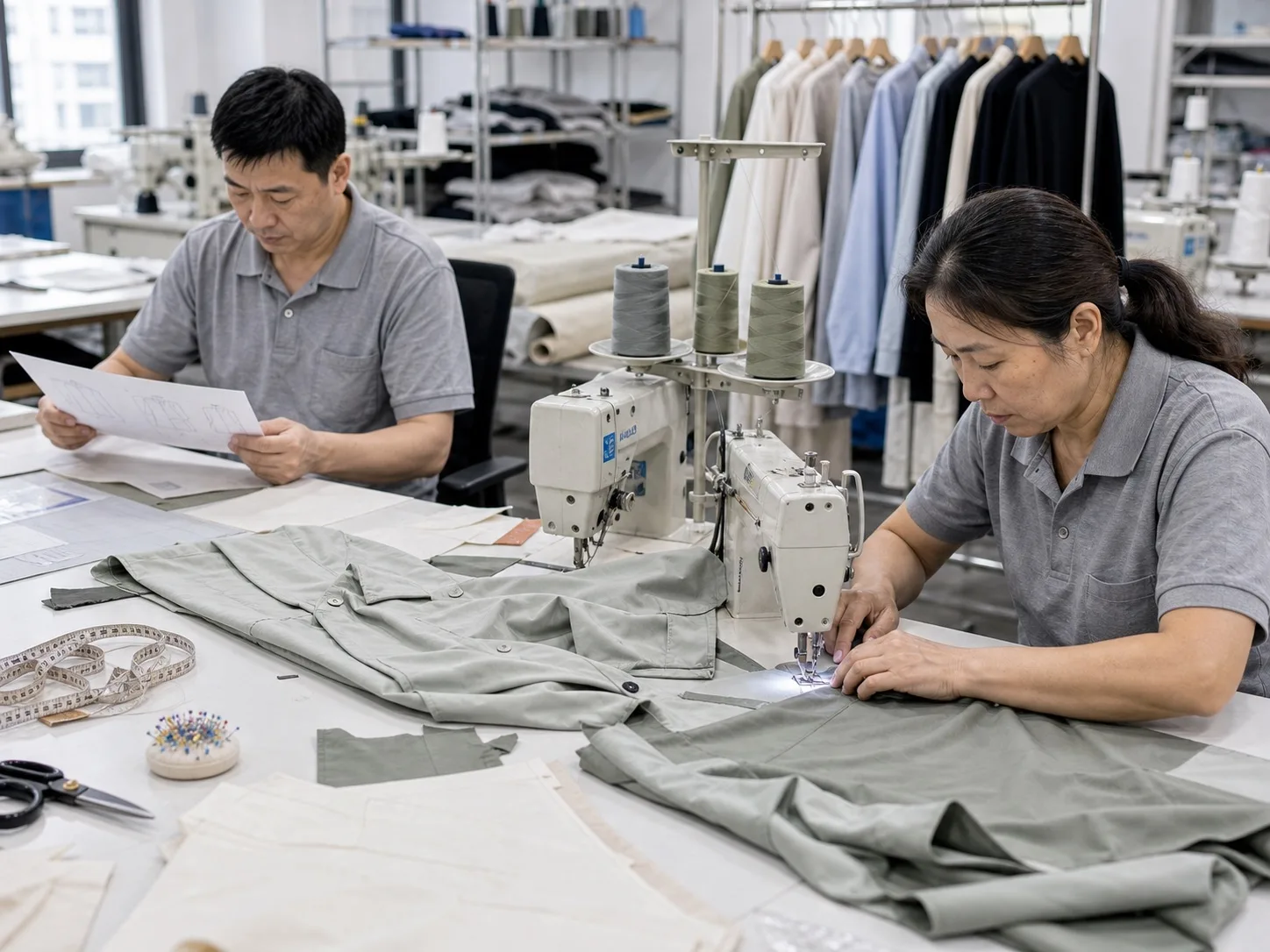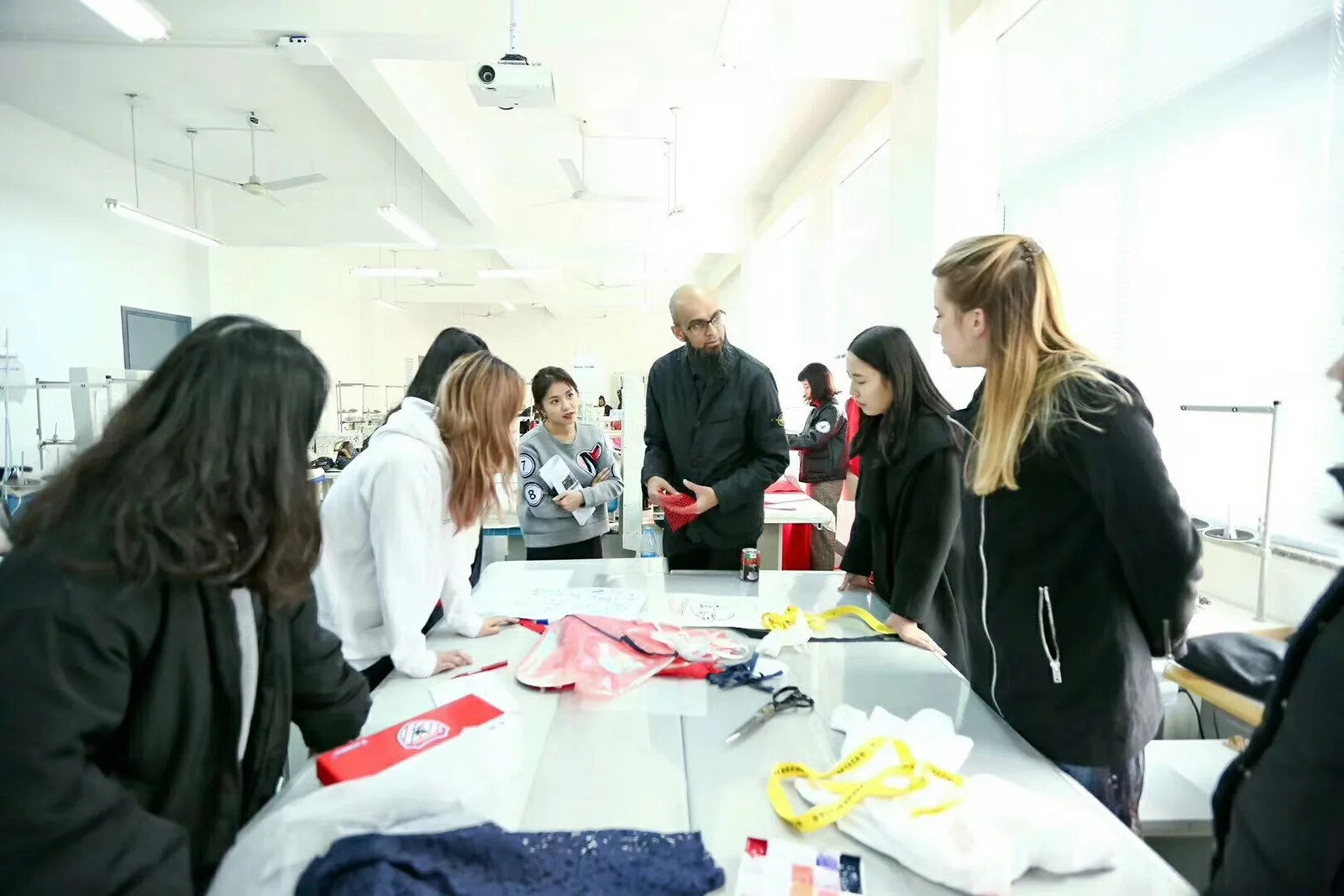
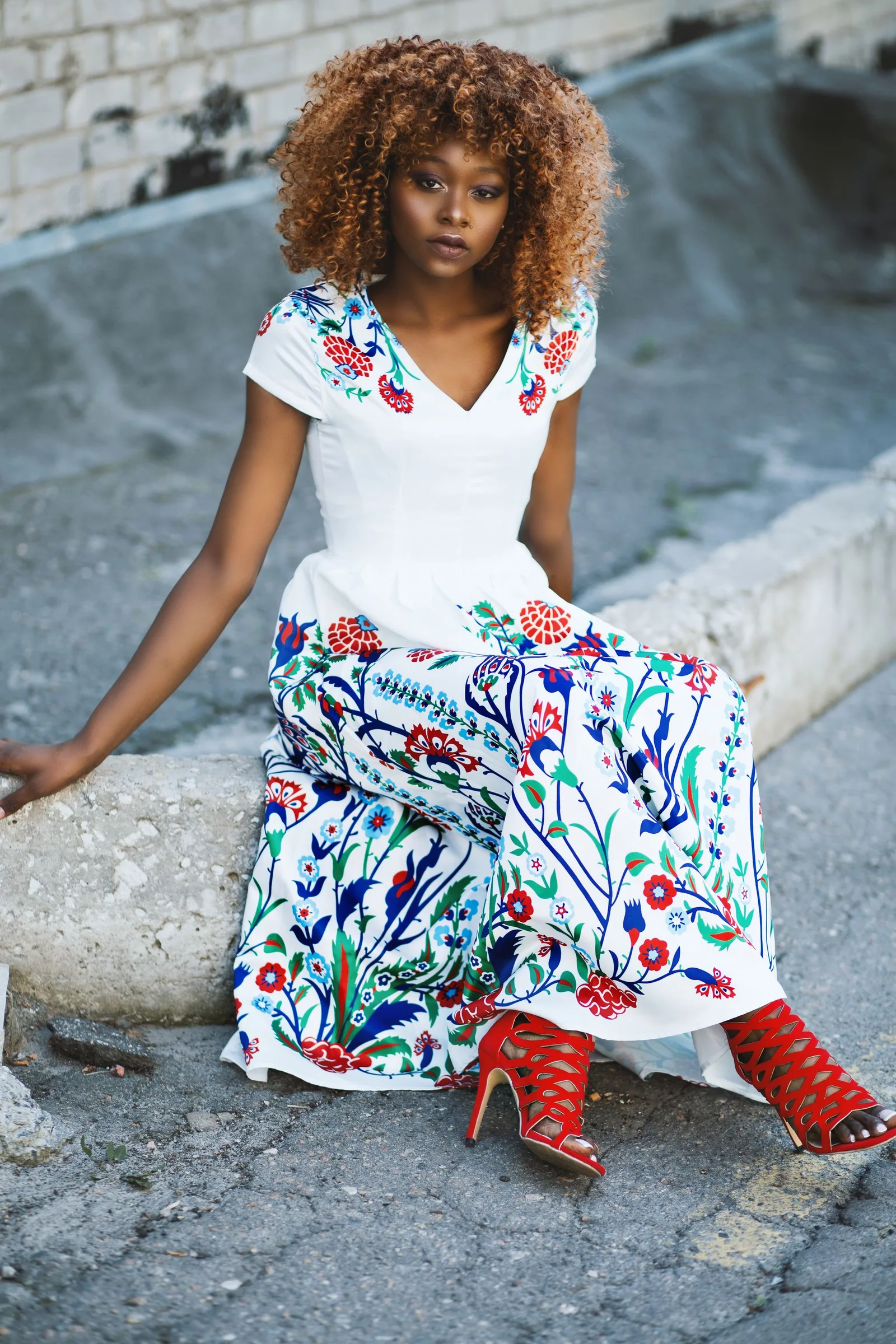
Article
What should buyers know first?
Short answer: A B2B guide for brands preparing custom dresses for buyer-defined Gulf-market channels with controlled coverage, fit, fabric, lining, sample, label and packing decisions.
Custom dress production for Gulf markets works best when a brand turns a regional sales ambition into a precise garment brief. “For the Gulf” does not define a neckline, dress length, lining, fabric weight, colour, size range, care label or retail pack. Those are buyer choices that may differ by country, customer, channel, season and collection. The factory needs a current product record that shows what is decided, what is under review and who can release the next version.
Yinshan Fashion supports custom and private-label bulk programmes rather than unrestricted ready-stock wholesale. A brand can bring an early dress concept, a tech pack, a physical reference, an existing block or a retail plan. Yinshan Fashion can help translate it into practical questions about silhouette, fabric, lining, fit, sampling, labels, packing and production coordination. The brand, importer, retailer and appropriate advisers retain responsibility for final market, consumer-information, commercial and legal decisions for the confirmed programme.
This guide does not treat Gulf customers as one audience or prescribe a style of dress. It shows how a buyer can make its own coverage, length, comfort, presentation and channel priorities visible to a manufacturing team. That is the foundation for a useful sample and a more reliable bulk handover.
What should buyers check about begin with a dress identity, not a broad market label?
Start with the specific dress the buyer wants to sell. Record a style code or buyer reference, target country or countries, channel, intended wearer, occasion or daywear context, colourway, size context, revision, current pattern or measurement basis, material route, lining, components and sample status. If one visual design is made with different lengths, linings, sleeves, labels or packs for different customers, show those as distinct controlled versions.
This does not mean that every early decision must be fixed. A buyer can mark a fabric route as “under comparison,” a lining as “to be sampled,” or a final presentation file as “pending retailer.” The useful distinction is between an open decision and an approved instruction. A vague phrase such as “long modest dress” may be an appropriate creative starting point, but it does not tell a sample room which hem length, opacity question, sleeve construction, fabric, lining or customer file controls the work.
The casual-fashion range can help a brand name a dress, blouse, shirt or fashion-top direction before development starts. It is a category reference, not a ready-made product specification. The buyer’s own brief still needs to define the actual silhouette and commercial route.
What should buyers check about turn coverage and opacity into sample questions?
Coverage is a product question, not a single fabric property. A dress may need a buyer-defined view of neckline, sleeve length, skirt length, ease, slit position, transparency, lining, movement, seam appearance and how the garment behaves under its intended use. A fabric that looks opaque as a folded swatch can behave differently at the bodice, sleeve, skirt, pleat, gathered panel or under light. A lining can change drape, weight, colour perception and comfort.
Write the specific question the sample should answer. For example: does the selected material need a lining at the skirt for the intended colourway; does the sleeve provide the buyer’s desired coverage while allowing movement; does a gathered bodice change the appearance of the underlying construction; or does the dress need a different seam or hem treatment for the selected fabric? These are observable development questions. They do not create a universal claim about opacity or suitability.
Review the garment in the intended colour and construction whenever possible. A light colour, print, stretch route, lining, pleat, panel, seam direction or finish can change what the buyer sees. The factory can identify which question a swatch can answer and which needs a constructed sample. The buyer decides what result is acceptable and retains the approval record.

How should buyers define length, proportions and fit from a buyer-owned basis?
Length preferences should be written as a product decision, not assumed from a regional label. Identify the body reference or garment measurement basis, base size, intended heel or footwear context if relevant, shoulder-to-waist relationship, waist placement, skirt silhouette, sleeve shape, hem intention and fitting purpose. A fitted waist, elastic waist, tiered skirt, bias cut, wrap construction and straight column dress can each create different questions about balance and movement.
The buyer should also identify which measurement points need the closest attention. That may include body length, sleeve length, bust, waist, hip, hem sweep, slit placement, neckline opening, cuff, placket or closure. If a tolerance is defined, tie it to the exact style, size, fabric, construction and measurement method. A number copied from a different dress type does not create a meaningful control.
Use an agreed sample purpose. A first sample may establish silhouette and proportion. A fit sample can test the buyer’s critical measurement points. A later sample may bring final fabric, lining, components and branding together. “Fit approved” should always state the scope: approved for which size, material route, construction and question? If lining, fabric weight, stretch, seam or pattern changes, reopen the affected fit decision instead of carrying the earlier result forward by assumption.
The custom womenswear manufacturer solution is a useful starting point for connecting dress blocks, pattern questions, fabric, fit and sampling. It helps structure the brief; it does not replace the brand’s own fit acceptance process.
What should buyers check about treat climate as a wearer and material input, not a claim?
Climate references can be relevant to a buyer’s product direction, but no country has one temperature, one lifestyle or one retail season. A collection may be designed for air-conditioned retail, travel, evening occasions, outdoor use, layered presentation, resort channels or a particular selling period. Instead of requesting a “hot-weather fabric,” describe the expected wearer experience and the product question that follows.
A buyer might want to assess drape, airiness, coverage, lining, surface feel, movement, crease appearance, colour depth or packability. Another programme may place more emphasis on structure, layered styling, a lined skirt, a special surface or presentation on a hanger. The correct material route depends on the exact dress and buyer-defined use. A factory can compare options and explain what needs a sample, but it should not promise a performance result, fixed availability, cost or delivery outcome before the programme is confirmed.
Keep the material record alongside the dress identity. Include the source or reference where available, composition information supplied, construction, colour direction, surface, weight or range if known, lining, trim, intended dress, evidence held, sample question, owner and next decision. This gives a buyer a more useful comparison than a fibre name alone.
The fabrics and trims resource helps organise fabric, lining, component and colour questions. It is not proof that every material is in stock, suitable for every dress, certified, tested or commercially fixed. Those conditions remain programme-specific.
What should buyers check about put lining, seams and components inside the material decision?
Dress fabric is part of a system. A lining, interfacing, zipper, button, elastic, waist tape, hook, belt, trim, print, embroidery, beadwork or label can change how a dress hangs, feels, moves, is finished and is packed. Bring those items into the sample brief early. A lightweight base may create a different lining question from a stable woven. A soft draping fabric may behave differently at a zip, neckline, waist seam or gathered section. A decoration may need an applied proof on the proposed material.
Build a component map for the current version. For every component, state placement, source, material relationship, visual reference, status, sample purpose, owner and next proof. This prevents a design note from becoming an unreviewed instruction. It also reveals which product questions reopen when an apparently small change is made.
For a printed dress, the buyer may need to review how a motif appears across panels and seams. For an embellished style, the buyer may need to define the reference, attachment question, base fabric and packing protection. For a wrap dress, the team may need to review coverage, tie placement and movement. The practical answer is not a generic statement that the factory can “do everything.” It is a sample route that answers the current product’s highest-risk question.
How should buyers use colour and surface references carefully?
Colour and surface can carry a strong collection message, but a screen image or inspiration photograph does not establish the final material, print, finish or customer-facing claim. The same colour can look different on a woven, satin route, knit, lining, thread, trim or printed base. Drape, sheen, coverage and surface can also change after construction, lining and pressing.
Record the reference, proposed material route and next evidence gate. That may be a swatch, lab dip, print proof, strike-off, component proof, garment sample or buyer review. State what is being assessed: colour direction, surface, coverage, drape, pattern placement, contrast component or retail appearance. A physical sample can answer a product question; it should not be used to infer a broad promise about future lots, colour matching, test performance or commercial supply.
Use a dated decision log when a colour, material or print changes. It should identify the affected style-colour-size scope, source file, owner, status and next action. A later bulk file is safer when it says which exact swatch or sample supports the decision rather than only naming a collection colour.
What should buyers check about give every sample a defined evidence gate?
Sampling is most useful when each proof has a stated purpose. A first development sample might test shape, construction and general silhouette. A fabric comparison sample could focus on drape, lining, coverage or surface. A fit sample can address buyer-defined points. A later sample may bring current material, components, applied labels and finishing together. The buyer does not need to use the same sequence for every dress, but it should know what the next proof is meant to establish.
Before sampling, record the product version, sample size, material and component route, question, supplied files, reviewer, approval wording, conditions and next gate. After review, record what was accepted and what remains open. “Silhouette approved on sample 1; lining and final pack remain open” lets the factory move forward without confusing a partial decision with a bulk release.
Consolidate comments from product, design, sourcing, quality and retail colleagues. Multiple messages can create conflicting changes to a neckline, hem, label or pack. A controlled change list should name the sample version and affected point, then state who owns the next decision. The fashion product brief before sampling guide offers a practical structure for this work.
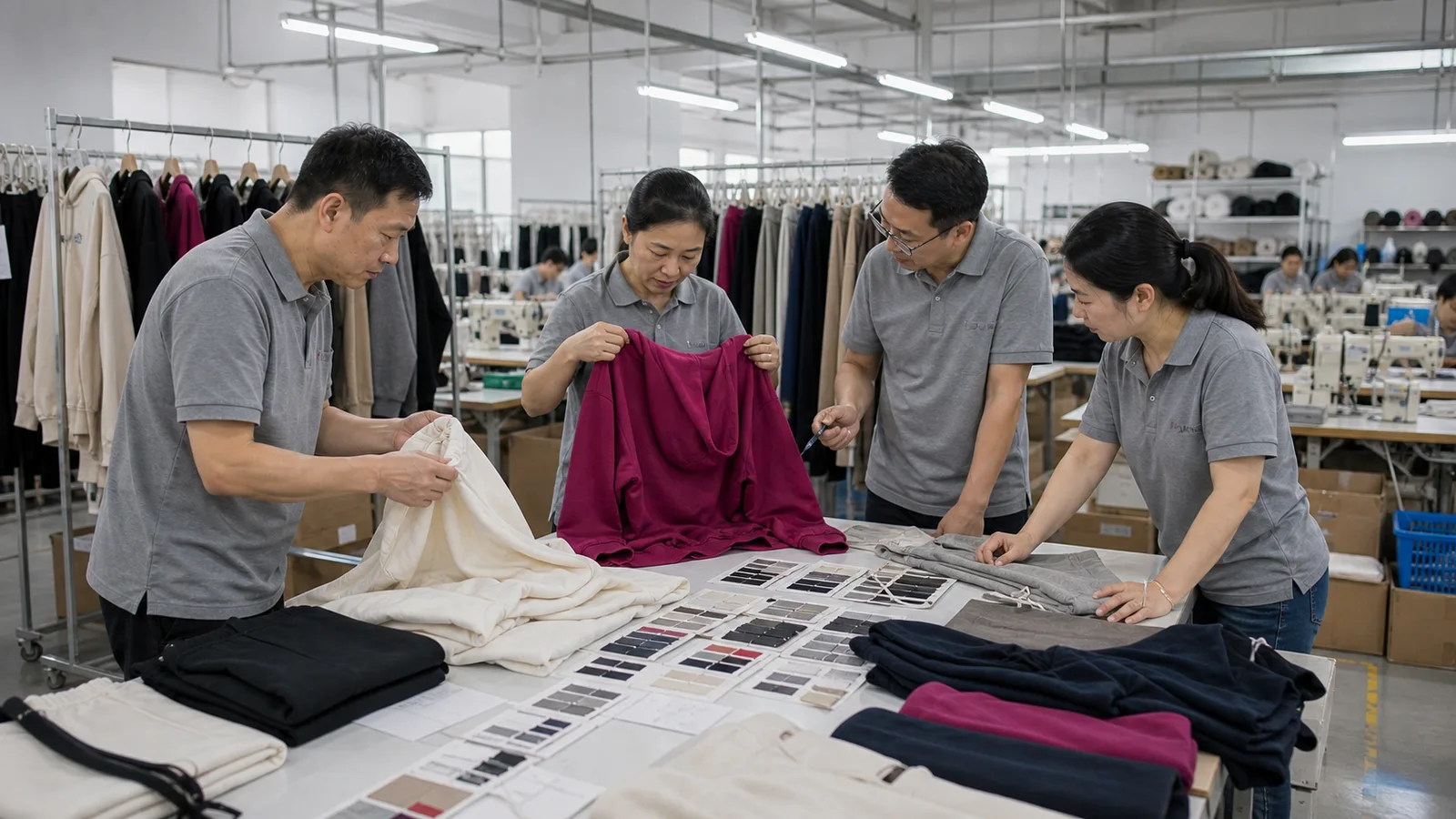
What should buyers check about separate garment approval from retail-presentation approval?
An accepted dress sample and an approved retail presentation are related but different evidence gates. The same garment may be folded, hung, protected, labeled or packed differently for a boutique, department-store route, marketplace account or direct-to-consumer channel. A size sticker, hangtag, barcode, insert, protective material and carton mark should be tied to the correct dress version and recipient.
Create a presentation record that names style, colourway, size scope, channel, label version, size identifier, barcode owner where applicable, fold or hanger route, protective material, insert, carton instruction, owner and status. If a buyer has not finalised an item, mark it open. Do not use another account’s pack file merely because the silhouette looks similar.
The private-label service can help a buyer organise brand components, labels and packing inputs around a custom production route. The brand supplies and approves the customer-facing information. Yinshan Fashion can coordinate buyer-approved files and show their placement on a relevant sample or packing proof.
What should buyers check about make cultural sensitivity a buyer input, not a factory assumption?
The Gulf includes varied countries, languages, communities, retail channels and customer preferences. A factory should not reduce that diversity to a fixed “modest” silhouette or make an unsupported cultural claim. The buyer should define the product direction for its actual brand and audience: coverage, length, sleeve, neckline, fit, colour, fabric, lining, decoration, label language, packaging and retail context. The factory can ask practical questions and help turn approved inputs into a sample and production route.
This approach also helps brands avoid overgeneralisation in their own marketing. A dress can be designed for a named channel or wearer scenario without presenting one customer preference as a rule for an entire region. Keep the brief factual, product-specific and reviewed by the people who understand the brand’s actual market. Local product, labeling and consumer-information questions should remain with the brand, importer, retailer and appropriate advisers.
How should buyers build quality review around named product references?
Quality review is clearer when it begins with a named sample and buyer-defined priorities. State which current material, lining, construction, measurements, components, colour or print, label placement, finishing and packing identity the team should compare. A broad request for “premium quality” cannot tell a factory which feature needs the closest review.
For a dress, the relevant discussion could include fabric appearance, seam finish, measurement points, drape, lining behaviour, closure, trim placement, label comfort, press appearance, fold or hanger presentation and the correct size identifier. The checkpoint depends on the product and current risk. The buyer names the acceptance reference; the factory can explain which review stage and record can support the question.
The fashion clothing accessories quality-control guide helps connect product references, materials, construction, components, labels, packing, findings and corrections. It is not a zero-defect promise. It is a practical framework for making the buyer’s priorities visible.
What should buyers check about release the dress in stages instead of using one vague approval?
A dress programme often has several decisions that mature at different times. The silhouette can be accepted while the fabric is still being compared. The fabric direction can be chosen while the final lining is open. A fit sample can answer the buyer’s key measurement question while the print, embellishment, care file or packing route still needs another proof. Treating every positive sample comment as a universal approval creates avoidable risk at bulk handover.
Use a release register with a small number of plain-language fields: product identity, decision being made, sample or file reviewed, scope, owner, result, condition and next action. For example, “DR-204, emerald, sample 2: neckline and waist position accepted for fit review; final printed base and lining remain open.” Or, “DR-204, emerald, pack version B: fold and sleeve protection accepted for boutique route; buyer barcode file pending.” Those records are more useful than a folder of images because they state what the evidence actually covers.
The buyer should also decide which questions have the highest cost of being wrong. A long fluid dress may need material and lining evidence before a final pattern release. A dress with a special closure may need an applied component proof. A colour-sensitive occasion style may need a garment-level review rather than a screen reference. A retailer pack may need a separate mock-up. Put the most consequential question first in the sample route. This does not dictate the number of samples or a fixed timetable. It helps the brand and factory use each proof for a defined reason.
When one choice changes, update the release record rather than simply adding another comment. If the buyer replaces the fabric, changes the lining, adjusts the length, adds a trim, revises artwork or redirects the dress to another channel, identify which accepted decision remains valid and which needs another review. Clear release language lets a small team move quickly without treating a remembered conversation as a production instruction.
What should buyers check about preserve a difference list for the next dress order?
An approved dress route can make future development more efficient if its evidence is retained. Keep the approved or current sample, pattern or measurement basis, material and lining references, components, colour direction, fitting notes, labels, packing data, quality observations, exceptions and authorised changes connected to the correct style-colour-size scope. This does not guarantee that a future order can be copied without review. It provides a starting point for an honest comparison.
At reorder, ask what is the same and what is different. Has the fabric source, construction, colour, lining, trim, label, recipient, size range, pack route or sales market changed? Does an earlier sample answer the current question, or is it only a visual reference? Who owns the approval for the new difference? A short difference list can prevent a repeat programme from inheriting outdated labels, components or assumptions.
The fashion wholesale reorder planning guide helps brands organise colour, labels, packing and quality records for repeat work. Use it to maintain traceable decisions, not to promise unchanged availability, timing, price or performance.
What should a Gulf-market dress handover include before bulk?
A factory can begin a useful bulk discussion before every item is final, as long as the handover distinguishes confirmed decisions from options and missing inputs. Include:
- Style, colourway, size context, intended country or channel, revision and buyer owner.
- Current tech pack, measurement sheet or reference garment marked as an instruction, visual reference or open development input.
- Dress silhouette, length, coverage, neckline, sleeve, fit and movement priorities written in buyer-owned language.
- Fabric, lining, trim, component, colour and surface route, plus evidence held and alternatives under review.
- Sample record with purpose, size, material route, comments, accepted scope, open conditions and next gate.
- Buyer-owned label, care-information and language files with product scope, owner, version and release status.
- Retail-presentation record for size ID, hangtag, barcode, fold or hanger, protection, insert and carton route.
- Quantity assumptions by style, colour and size, marked as provisional if they remain estimates.
- Quality priorities, approval owners, change log and a clear next action.
This gives Yinshan Fashion enough context to discuss fabric, fit, sample work, private-label components, finishing, packing and manufacturing coordination. It does not guarantee a fixed MOQ, price, lead time, test result, certification, delivery date, logistics outcome or legal conclusion.
How Yinshan Fashion supports custom dress programmes?
Yinshan Fashion helps brands turn a dress idea into a controlled manufacturing conversation: material and lining review, pattern and fit questions, sample development, component and label placement, finishing priorities, packing inputs and production records. For a Gulf-market programme, the useful output is a buyer-defined product route, not a generic regional promise. The buyer can see which decisions are current, what evidence supports them and which market or retail review remains open.
To begin, send Yinshan Fashion the current dress reference, target channel, intended wearer, fit and length direction, fabric and lining options, colour and component inputs, labels, packing route, quantity structure, sample purpose and named approval owner through the contact page. The next step may be a fabric comparison, pattern question, fit sample, applied-label proof, finishing review or packing mock-up. That creates a practical path toward production without treating an early brief as a final market approval.
Gulf-market dress brief kit
Three decisions that make a custom dress sample useful before bulk
Use one buyer-defined dress identity, one sample question and one released presentation version rather than treating regional context as a fixed product specification.
Define the sellable dress
Connect the target country and channel, intended wearer, silhouette, length, coverage, fabric, lining, size context and sample revision to one product record.
Prove the material route
Use a swatch and sample to review opacity, drape, lining interaction, movement and colour on the intended dress rather than relying on a broad regional assumption.
Release the presentation
Tie applied labels, size identifiers, fold, hanger, protection and carton details to the correct style-colour-size and recipient.
Buyer actions and factory questions for a Gulf-market custom dress brief
The brand, importer, retailer and appropriate advisers remain responsible for final market, consumer-information and product decisions.
| Decision area | What the buyer should prepare | What to ask the factory |
|---|---|---|
| Product and channel | Name the target country, channel, intended wearer, dress use, style, colourway, size context and revision | Which reference controls the current sample and factory handover? |
| Coverage and fit | State the buyer's length, coverage, lining, ease, movement and fitting priorities | Which points require a garment sample rather than a fabric-only decision? |
| Material and colour | Supply the fabric, lining, trim, colour and surface direction with evidence held | Which swatch, component proof or sample can answer the open question? |
| Presentation | Approve labels, size ID, fold or hanger, protection, barcode and carton instructions by recipient | Which current file may be applied to this dress version? |
| Change control | Log changes to fabric, lining, length, components, artwork or market route with owner and date | What approval must be reopened before production moves forward? |
Continue the production conversation
Custom dress production for Gulf-market channels: buyer decisions and factory inputs
| Record | Buyer decision | Factory execution input | Control question |
|---|---|---|---|
| Dress identity | Style, colourway, size, channel and revision | Current brief, sample and order record | Which exact dress is moving forward? |
| Coverage and fit | Length, neckline, sleeve, lining, ease and movement priorities | Pattern, fabric and fitting route | What must the sample prove? |
| Material and components | Fabric, lining, trim, colour and evidence held | Swatches, component callouts and sample route | Does the sample use the intended material route? |
| Presentation | Labels, size ID, fold or hanger, protection and recipient | Buyer-approved packing specification | Which file applies to this dress version? |
| Change and release | Owner, date, condition and next action | Controlled production handover | What change reopens an approval? |
Buyer FAQs
What should a custom dress brief for Gulf markets include before sampling?
Include the specific country or channel, intended wearer, dress identity, coverage and length priorities, fit basis, fabric, lining, components, colour, sample purpose, labels, packing, quantity context, approval owner and open decisions. The brand and appropriate advisers remain responsible for final market review.
Can a fabric swatch prove that a dress provides the right coverage?
No. A swatch can inform a material conversation, but coverage depends on colour, construction, lining, pattern, stretch, movement and intended use. Use a dress sample to review the buyer's actual question.
How should a buyer define dress length and fit?
Tie them to a buyer-approved base size, measurement or pattern basis, wearer scenario, silhouette, fabric route, construction and sample purpose. Reopen affected decisions when those inputs change.
Why are packing instructions separate from garment approval?
The same dress can need different size identifiers, labels, folds, hangers, protective materials, barcodes or cartons for different recipients. A separate record prevents one account's pack file becoming an accidental instruction for another.
How can Yinshan Fashion help with a Gulf-market dress programme?
Yinshan Fashion can coordinate product, material, fit, sample, component, finishing, packing and factory-handover questions around buyer-approved records. Availability, commercial terms, testing, certifications, logistics and final market obligations remain programme-specific.