Article
What should buyers know first?
Short answer: A buyer-focused guide to defining active-fashion fit, material, construction, claim, product-data and presentation inputs by the actual sales route.
Active fashion production for US, EU and Japan works best when a brand turns a performance idea into a specific garment record. A phrase such as “supportive,” “squat-proof,” “quick drying,” “second skin” or “training ready” does not tell a factory which active top, legging, bra, short or set is being made, how it should fit, which material route applies, what sample needs review or whether a customer-facing claim has evidence for the precise product. The buyer needs a versioned brief, not a broad market label.
Yinshan Fashion supports custom and private-label bulk programmes rather than unrestricted ready-stock wholesale. A brand can bring a reference garment, tech pack, pattern or measurement basis, material direction, component map, planned activity, product-page draft, label artwork or packing guide. Yinshan Fashion can help translate those inputs into questions about fabric, construction, fit, samples, private-label components, quality priorities and production handover. The buyer, importer, retailer and appropriate advisers retain responsibility for final market, consumer-information, commercial, claim and legal decisions for the confirmed product route.
This guide does not present the US, EU or Japan as single activewear specifications. A brand may sell through one country, several countries, a marketplace, a retailer or its own site. Each active style can have a distinct fit, material, product-data or presentation question. The practical task is to make the exact buyer-controlled route visible before a sample or a production discussion.
How should buyers start with an active-fashion product identity, not a claim?
Give each active garment a record that survives from reference to sample and production handover. Include a style code or buyer reference, category, colourway, intended activity or wearer scenario, sales channel, target country or countries where relevant, base-size context, pattern or measurement basis, material and component route, sample revision, product-data version, packing version, owner and approval state. This does not require a large document. It requires the team to know which physical garment a decision belongs to.
The same set may look identical across a campaign while carrying different instructions. One colourway could use a revised pocket, a different size presentation or a retailer-specific packing route. A bra may share an outer fabric with leggings while needing a different elastic, lining, construction, fit sample or product-page explanation. Make such differences visible as controlled versions instead of assuming that a shared photograph means all inputs are shared.
Use simple status terms: fixed, proposed, under comparison, approved for the stated scope, superseded or open. A buyer can approve silhouette on a development sample while still comparing materials. It can accept a material direction while keeping final customer wording open. This is the difference between an activewear range that can be discussed clearly and one that depends on a factory reconstructing assumptions from messages.
The active-fashion category can help frame a brand’s initial direction across active tops, leggings, bras, sets or layers. It is a category reference, not a pre-approved material, performance, fit, price, availability or market specification. The buyer’s current product record remains the instruction.
What should buyers check about turn the wearer scenario into a product question?
“For yoga,” “for studio,” “for running,” “for training” or “for everyday movement” can be useful commercial direction. They do not automatically define garment construction. The buyer should describe what it needs to learn from the sample or material route. Does it need to inspect the intended waistband position during a nominated movement? Is pocket placement part of the product proposition? Does the buyer want to assess coverage, seam position, mesh placement, lining, strap geometry, neckline, hem or the visual relationship between the garment and a layer worn over it?
Name the scope of the question. A buyer can say that sample one should examine the placement of a side pocket and waistband for a stated legging version in the named base size and current material route. Another sample could address the relationship between bra straps, elastic and the buyer’s intended fit review. These are observable product questions. They do not promise that every wearer, fabric lot, activity or future version will deliver the same result.
Avoid using an image as the whole specification. An image can communicate proportion, colour, style, surface or a wearer context. It cannot reliably establish fibre content, construction, pattern, coverage, stretch, recovery, finish, wash, pocket depth, applied component route or claim basis. Convert the image into a list of questions, then keep the image marked as inspiration, sample reference or approved visual evidence for a named version.
How should buyers define active-fashion fit from a buyer-owned measurement basis?
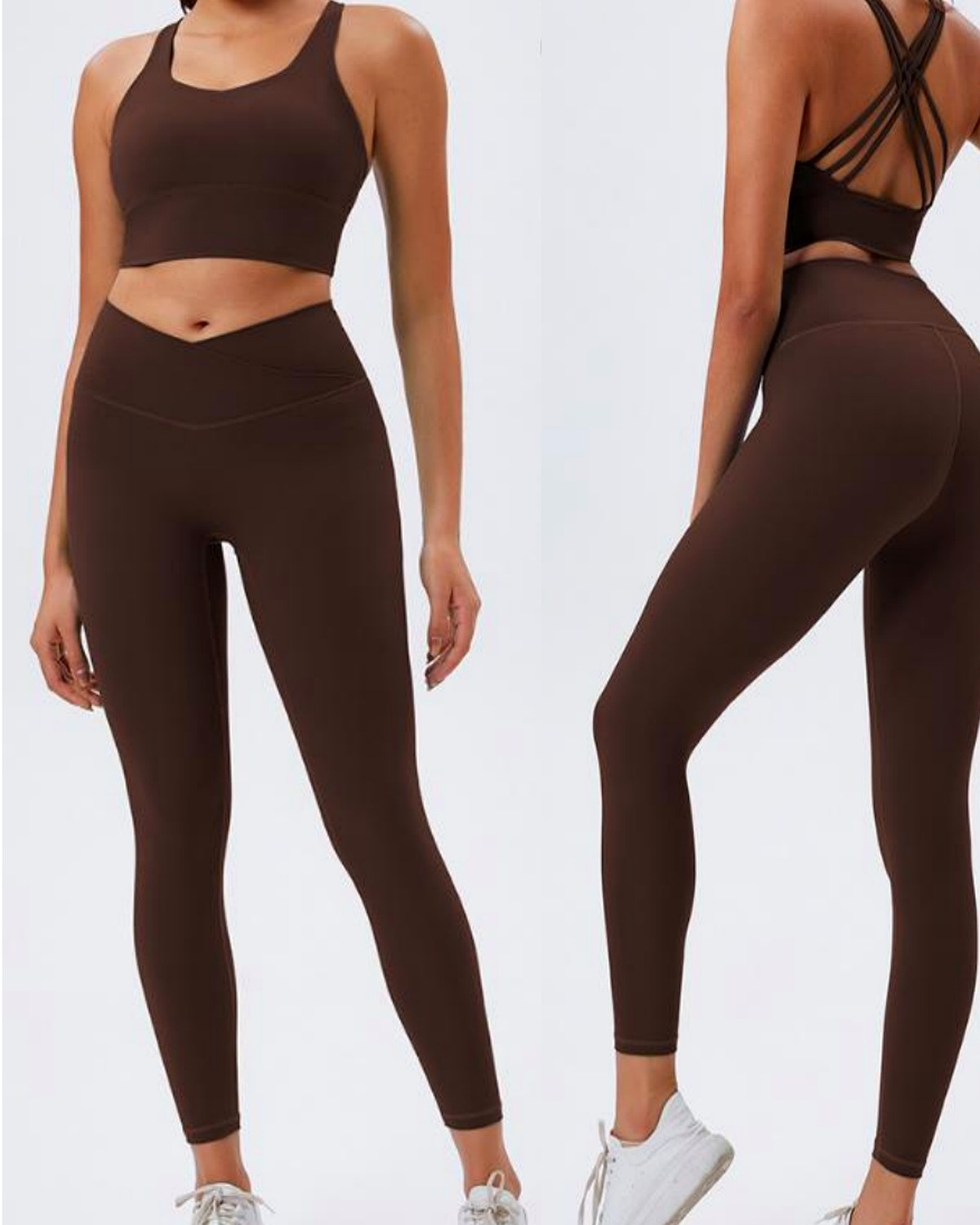
Fit is product-specific. A fitted legging, relaxed jogger, high-neck bra, cropped top and soft studio layer create different questions about body relationship, movement, coverage, seam placement and length. A country name or a generic size label does not answer those questions. Start with the buyer’s current pattern, measurement sheet or reference garment, base-size context, intended wearer, silhouette, critical points, material route, construction and sample purpose.
For a legging, the buyer might identify waistband placement, rise, hip, inseam, hem opening, gusset, pocket position and the construction points it wants to review. For a top, the discussion could include chest, hem, neckline, armhole, strap, sleeve, back opening, underband or layer relationship. A factory can translate an identified basis into pattern and sample work. It should not infer the buyer’s desired fit from “small,” “medium,” “US fit” or “Japanese fit” alone.
Keep comments tied to the product revision. “Coverage and waistband position accepted for sample two in the named base size and material route” says something useful. “Fit approved” does not. If the outer fabric, lining, elastic, seam, pattern or base-size context changes, the buyer should decide whether the previous sample still answers the new question.
The custom womenswear manufacturer solution can help a buyer organise a pattern, material, fit and sample conversation for an active-fashion programme. It structures development work. It does not replace the brand’s own acceptance process or establish a universal fit outcome.
How should buyers keep material, elastic and construction in the same route?
An active garment is a system. Outer fabric, lining, mesh, elastic, thread, gusset, pocket bag, zipper, bonded element, drawcord, print, label and finish can each affect the garment that a buyer sees and reviews. A fabric swatch may answer part of a surface or colour question. It does not by itself prove the behaviour of a completed waistband, strap, seam, lined bra, pocket or hem on the current pattern.
Create a material-and-component map for each version. Record buyer or supplier references where available, composition information supplied, construction, colour direction, surface, finish, lining, elastic or support component, placement, evidence held, open question, owner and next proof. If a material or trim is being compared, label it as under comparison rather than treating it as final merely because it is familiar from another active style.
Material choices should be linked to the product question, not converted into generic promises. A buyer might need to assess how a proposed surface appears on a tight-fitting legging, how a lining works with a top, whether a mesh panel aligns with the pattern, or how an applied pocket appears on the nominated size. The relevant evidence may be a swatch, an applied proof, a development sample, a fit sample or a later production reference. Which proof is useful depends on the exact garment route.
The fabrics and trims resource gives brands a starting structure for discussing fabric, lining, mesh, colour and components. It is not proof that a material is in stock, fits every activity, has a fixed cost, meets a particular performance threshold or supports a consumer claim. Those points remain programme-specific until the relevant product evidence and approvals are available.
What should buyers check about treat performance language as buyer-owned product data?
Performance language belongs in the product record from the beginning, even when it remains open. A brand may be considering a statement about support, opacity, stretch, recovery, breathability, moisture handling, compression, abrasion, sun exposure or another benefit. The factory needs to know whether the phrase is a creative direction, an internal product target, a request for evidence, a retailer requirement or customer-facing copy. These are not interchangeable uses.
For every proposed statement, record the exact wording, style-colour-size scope, intended activity or use, material and construction route, evidence currently held, source or test question where applicable, target channel, destination context, owner, review state and next decision. A phrase that applies to a flat fabric note may not apply to a finished garment with a different lining, pocket, seam, print or care route. A result for one product is not a license to use the same language across a collection.
This approach is deliberately cautious. Yinshan Fashion can help connect an active-fashion brief to material, sample, construction and manufacturing questions. Yinshan Fashion does not make an unsupported product claim, certify a performance outcome or decide the final wording for a brand. The buyer should use its own evidence and appropriate product, retailer and market review for the product it intends to sell.
How should buyers build a sample route around the highest-risk question?
Every sample should have a reason. A first development sample might explore silhouette, construction and component placement. A fabric comparison sample can address a material, lining or surface question. A fit sample can review buyer-defined measurements and movement priorities. A later proof may bring the current fabric, elastic, labels, finishing and retail presentation together. The sequence can vary by garment. What matters is that each sample has a named question and an identifiable scope.
Before a sample begins, keep the style-colour-size identity, revision, pattern or measurement basis, material and component route, intended size, objective, supplied files, reviewer, evidence sought, acceptance language, conditions and next action in one place. After review, record what the evidence actually supports and what remains open. “Sample one supports the buyer’s review of pocket placement and waistband construction; final material, customer wording and retailer packing remain open” is a usable decision. “Looks good” is not.
Consolidate comments. Product, design, marketing, sourcing, quality and retail teams can have valid views, but feedback should return against the same sample revision. Record the affected point, requested change, owner, date and next proof. The fashion product brief before sampling guide gives a practical framework for keeping those decisions together without treating a conversation history as the production record.
What should buyers check about separate a market route from a market stereotype?
The US, EU and Japan are not single activewear customers. A brand’s actual route could be a named country, an e-commerce channel, a retailer account, a distributor, a studio partnership or its own direct sales. It may need different owner, language, product-data, size communication, label, product-page or packing inputs. The buyer should describe the route it is actually planning and keep its own applicable-market decisions with the appropriate brand, importer, retailer and adviser.
Create a channel register alongside the product record. Include the active garment version, intended country or channel, recipient, buyer owner, product-data file, label or artwork version, status and next decision. A web listing draft should be marked as web copy. A file for a sewn label, hangtag, size sticker, insert or carton should identify that use, version and recipient. This avoids using another account’s artwork, barcode, translation or packaging instruction simply because the garment silhouette is similar.
The goal is not to create a different garment for every country. It is to show when a difference changes the buyer-owned instructions. A base pattern or active set may be shared. If size presentation, customer wording, retailer route or packaging is different, the team can record a controlled version and decide whether another sample, proof or approval is needed.
How should buyers use size grading as a development record, not a shorthand?
Activewear grading requires a clear base. Identify the nominated base size, pattern or measurement basis, size range, critical measurement points, garment category, material and construction route, grade direction where the buyer provides it and the reviewer who accepts the relevant evidence. A top, bra and legging may have different critical points even when they are sold together as a set.
The buyer may want to identify underband, cup or strap relationship, bust, hem, waistband, rise, hip, inseam, leg opening, sleeve, pocket placement, gusset or seam location. The right points depend on the garment, not on a generic activewear template. If a number or tolerance exists, tie it to the precise product, size, method, material and revision. If the input is not yet decided, make it a sample question instead of silently copying a figure from another style.
Retain the scope of any reviewed grade evidence. A buyer may approve the feel of a development sample in one size while still requiring a separate decision on the intended range. A changed fabric, elastic, seam or construction detail can reopen the relevant fit question. A short change log keeps this manageable: date, changed input, affected style-colour-size scope, previous evidence, owner, status and next action.
How should buyers keep labels, care inputs and presentation separate from garment approval?
A garment sample, a sewn label, a care-input file, a hangtag, a size sticker and a packing proof answer different questions. A sample can show that a label placement is visually acceptable. It does not decide final customer-facing wording. A packing proof can show an intended fold or protective material. It does not establish that a product-data statement still applies after a fabric or component change.
For each active style, create a presentation record with the style, colourway, size scope, channel or recipient, label and artwork version, size ID, barcode owner where applicable, fold or hanger route, protective material, insert, carton instruction, owner and release status. If a point has not been finalised, leave it visibly open. A controlled record is more useful than a generic instruction to “pack activewear carefully.”
The private-label service can help a buyer organise buyer-approved brand components, labels and packing inputs for a custom programme. Yinshan Fashion can coordinate the applied placement or packing proof for the released files. The brand and its appropriate partners remain responsible for the final customer-facing content and channel requirements.
What should buyers check about put quality discussion around named buyer references?
Quality discussion becomes useful when the buyer says which reference and question control the review. Name the current active style, colourway, sample or approved condition, material and component route, pattern or measurement basis, critical construction points, label placement and packing identity. The buyer can then identify the questions most important to the product: appearance, seam placement, pocket construction, waistband finish, print or trim application, size ID, pressing or presentation.
Do not rely on a broad instruction such as “premium performance quality.” It does not identify a product, a claim, an observable point or an approval owner. The appropriate review route depends on the garment and the current risk. Yinshan Fashion can help connect buyer-defined priorities to a practical sample, construction, finishing, inspection or packing conversation. It does not provide a zero-defect promise, a test result, a certification or an unverified product performance conclusion.
The fashion clothing accessories quality-control guide helps a buyer connect materials, components, product references, labels, packing, observations and corrections. It is a useful control framework, not a substitute for the buyer’s own acceptance requirements.
What should buyers check about release changes deliberately?
Changes are normal in active-fashion development. A brand may replace an elastic, move a pocket, alter a seam, revise a waistband, add a mesh detail, switch a fabric, change a print, update a size route or redirect the product to another retailer. The risk is treating the change as an ordinary message when a sample, product-data file or packing instruction still represents the old version.
Use a concise change log with date, reason, affected style-colour-size scope, source file, prior version, new instruction, owner, status and next action. Ask two practical questions: which previous approval still applies, and which question must reopen? A changed material may reopen appearance, fit and customer wording. A moved pocket can reopen construction and pattern review. A new channel can reopen label or packing presentation. The log gives a small brand a way to move faster because it does not have to rediscover its own decisions.
For a repeat or extension, start with the last accepted record and make a difference list. Identify changes in material, components, pattern, measurements, colours, labels, product data, recipient, packing, quantity structure or market route. This does not guarantee that an older product can be copied without review. It creates an honest starting point for the next factory conversation.
What to hand over before active-fashion bulk discussion?
A factory can start a useful production conversation before every point is final when the buyer separates confirmed instructions from open choices. A practical active-fashion handover includes:
- Style, colourway, category, intended wearer or activity, channel, revision and buyer owner.
- Current tech pack, measurement basis, pattern or physical reference, marked as instruction, inspiration or open development input.
- Fit, coverage, movement and construction priorities linked to the nominated base-size context.
- Fabric, lining, mesh, elastic, trim, pocket, print, closure, colour and finish route, together with evidence held and alternatives under review.
- Sample record with purpose, material route, reviewer, accepted scope, open conditions and next evidence gate.
- Proposed customer wording and product-data files with exact product scope, evidence status, channel, owner and intended use.
- Buyer-approved label, size ID, packaging and presentation files for the relevant recipient.
- Quantity assumptions by style, colour and size, marked as estimates where they are not fixed.
- Quality priorities, change log, approval owners and a specific next action.
This record gives Yinshan Fashion enough context to discuss material, pattern, sample, private-label, manufacturing, quality and packing questions. It does not establish a fixed MOQ, quote, capacity, lead time, availability, test result, certification, customs result or delivery outcome. Those conditions depend on the confirmed product and commercial programme.
How Yinshan Fashion supports a buyer-controlled active-fashion route?
Yinshan Fashion can help make a buyer’s active-fashion decisions workable in a custom development and bulk-production conversation. That can include comparing material and component directions against the actual garment, identifying pattern and fit questions, organising a sample purpose, connecting buyer-approved product data and private-label files to the correct version, and keeping a change visible through development and handover.
Send the active category, reference or tech pack, intended wearer and activity, current size or measurement basis, fit and coverage priorities, material and component direction, proposed customer wording, labels, packing route, quantity structure, sales channel, sample objective and open questions through the contact page. The next useful response may be a request for a material reference, a pattern basis, an applied component proof, a product-data source, a sample purpose or an approval owner. That is productive progress because it makes the next decision visible.
Active-fashion specification kit
Three controls that turn a performance idea into a reviewable active-fashion product version
Use one garment identity, one buyer-owned product claim or wear question, and one released route for fit, materials, components and presentation before bulk discussion.
Name the product version
Connect category, colour, size context, wearer scenario, construction, fabric, component, sample revision and channel to the active garment under review.
Define the proof question
State whether the current sample should address fit, coverage, recovery, pocket stability, seam placement, surface, care input or another buyer-owned question.
Release the commercial route
Keep approved labels, product data, care input, size ID, fold or hanger, protection and carton instruction linked to the same style-colour-size scope.
Buyer actions and factory questions for active-fashion development
The brand, importer, retailer and appropriate advisers remain responsible for final market, consumer-information, performance-claim and legal decisions.
| Decision area | What the buyer should prepare | What to ask the factory |
|---|---|---|
| Product identity | Style, colourway, intended activity, channel, size context, revision and sample objective. | Which sample, pattern, material and presentation record control this version? |
| Fit and coverage | Named movement, fit, coverage and critical measurement questions for the nominated base size. | Which questions need a constructed sample rather than a flat reference? |
| Material and components | Fabric, lining, elastic, mesh, pocket, trim, print, closure and care inputs with evidence held. | Which material or applied component proof should happen before approval? |
| Claim and product data | Proposed customer wording, intended channel, source evidence, owner and review state. | What must remain open until the relevant product and evidence review is complete? |
| Retail release | Buyer-approved label, size ID, fold or hanger, protection, insert and carton instructions by recipient. | Which files release the correct active style-colour-size route? |
Continue the production conversation
Active-fashion development: buyer decisions before a production discussion
| Record | Buyer decision | Factory execution input | Control question |
|---|---|---|---|
| Product identity | Style, colour, intended activity, channel, revision and size context | Current reference, style code and sample purpose | Which active garment version is being reviewed? |
| Fit and coverage | Named base-size, movement, coverage and critical measurement questions | Pattern or measurement basis and construction route | What should the sample prove about the buyer’s intended fit? |
| Material and components | Fabric, elastic, mesh, lining, pocket, trim, print and closure direction | References, evidence held and alternatives under comparison | Which question needs a swatch, applied proof or garment sample? |
| Performance language | Proposed customer wording, channel, evidence source, owner and review status | Product scope and proof needed before a claim is released | What is confirmed, conditional or still unverified? |
| Product data | Style-colour-size data, care input, artwork, labels and release owner | Versioned files tied to the actual product route | Which data can be applied, published or packed for this route? |
| Presentation | Size ID, fold or hanger, protection, insert and carton route | Buyer-approved packaging file and recipient | Which presentation version releases the intended channel? |
Buyer FAQs
What should a buyer send to start active fashion production for US, EU and Japan routes?
Send the actual selling countries or channels, product category, wearer and activity context, style references, base-size or measurement basis, fit and coverage priorities, material and component direction, proposed customer wording, labels, packing route, quantity structure, sample objective, owner and open questions.
How should a brand define a performance claim for active fashion?
Treat the wording as a buyer-owned product-data decision. Record the exact garment and scope, the proposed language, evidence held, test or review question where applicable, market or channel, owner and status. Do not release a broad claim because a similar fabric or sample once appeared to support it.
Which activewear fit questions need a garment sample?
Questions about buyer-defined movement, coverage, waistband placement, seam interaction, pocket position, lining, mesh, elastic or the relationship between material and construction normally need a product-specific garment sample rather than a flat image alone.
Can one activewear style use the same record across multiple markets?
It can share a base record when the product route is genuinely identical. Show separate controlled versions when a size presentation, label, product-data file, packing route, retailer recipient or other buyer instruction changes.
Can Yinshan Fashion support private-label active-fashion presentation?
Yinshan Fashion can coordinate buyer-approved labels, size IDs, packing files and sample or production references for a defined custom programme. The brand, importer, retailer and suitable advisers retain responsibility for final customer-facing, market and legal decisions.