Article
What should buyers know first?
Short answer: Explore upcycled textile materials for accessories through fabric composites, carbonised waste, component testing, documentation and practical use limits.
Upcycled textile materials can follow very different routes. Some recovered textiles become new fibres, some remain part of a composite, and others are transformed before being incorporated into another material. Buyers should identify the route, full component specification and intended use before comparing samples. A waste-origin story alone cannot establish flexibility, durability, recyclability or suitability for an accessory.
Yinshan Fashion supports custom and private-label garment programmes rather than unrestricted ready-stock wholesale. This guide offers a framework for discussing material and component ideas alongside a clothing collection. It does not establish a supply relationship with the named material companies or a confirmed Yinshan capability to manufacture specialist accessories.
Define the Upcycled Textile Materials Route First
Start by asking what happens to the textile. Is it opened into fibres for spinning, retained as fabric within another structure or changed into an ingredient used in a new formulation? These routes can all be discussed under broad reuse language, but they produce different materials and require different purchasing questions.
Identify the form of the proposed output. It might be yarn, fabric, a flexible sheet, a rigid panel, a moulded part or another specified component. Ask for the exact material reference and intended processing guidance. A buyer should not evaluate a panel using expectations developed for a draping apparel fabric.
The original textile is only one part of the material identity. If the route uses a binder, coating, backing or other ingredient, request the information needed to understand the finished component. Where a formulation is confidential, ask what product-level specification and evidence the supplier can provide without requiring disclosure of protected technical detail.
Keep waste origin and finished performance in separate fields. A supplier may be able to describe where the input came from while the buyer still needs to assess the proposed part under its intended use. Conversely, a sample may perform acceptably while the supporting source information remains incomplete.
For a first enquiry, draw the intended component and explain its job. A decorative garment tab, a removable tag, a small case panel and a load-bearing strap create different demands. The supplier needs that context before it can advise whether a material form is suitable for further development.
Use the established recycled-fabric guide to distinguish conventional textile-material questions from composite-component questions. The purpose is not to rank the routes by a broad environmental label. It is to identify which route could plausibly meet a defined product brief and what must be verified next.
Understand Fabric Composites through the NUNOUS Example
NUNOUS describes a material that combines fabric with a biopolymer and offers different forms, including SKIN and STONE. Its guidance distinguishes processing methods for those forms and identifies use considerations such as moisture, colour transfer and surface treatment. Those details show why the exact material form matters. NUNOUS's material and processing information is the source for this example.
The buyer's next question is which form and reference are being offered for the proposed component. Do not ask a converter to work from the brand name alone. Obtain dimensions, thickness information, surface description, handling guidance and the relevant limitations for the actual sample.
A flexible-looking material should not be assumed suitable for every sewn accessory. The component may fold repeatedly, hold a fastener or rub against another surface. Ask the supplier which uses it supports and what further testing or development it recommends. Then assess the material in the intended assembly.
The visual character deserves its own approval. A layered or varied surface may be central to the design, but the buyer needs to know how samples represent future material. Discuss whether patterns are individually variable and how an acceptable range will be communicated to the converter, inspector and commercial team.
Avoid treating the example as an ordinary blouse fabric. If a brand wants to explore a composite detail on a garment, begin with a small, defined component and assess its interaction with the shell. A material suited to a panel or object may introduce weight, stiffness or attachment questions that do not arise with a conventional textile trim.
The same care applies to the material story. Combining recovered fabric with another substance creates a finished product that needs its own composition and end-of-use discussion. The origin of the fabric does not answer what happens to the complete composite later. Keep those questions open until the relevant supplier provides information for the actual material.
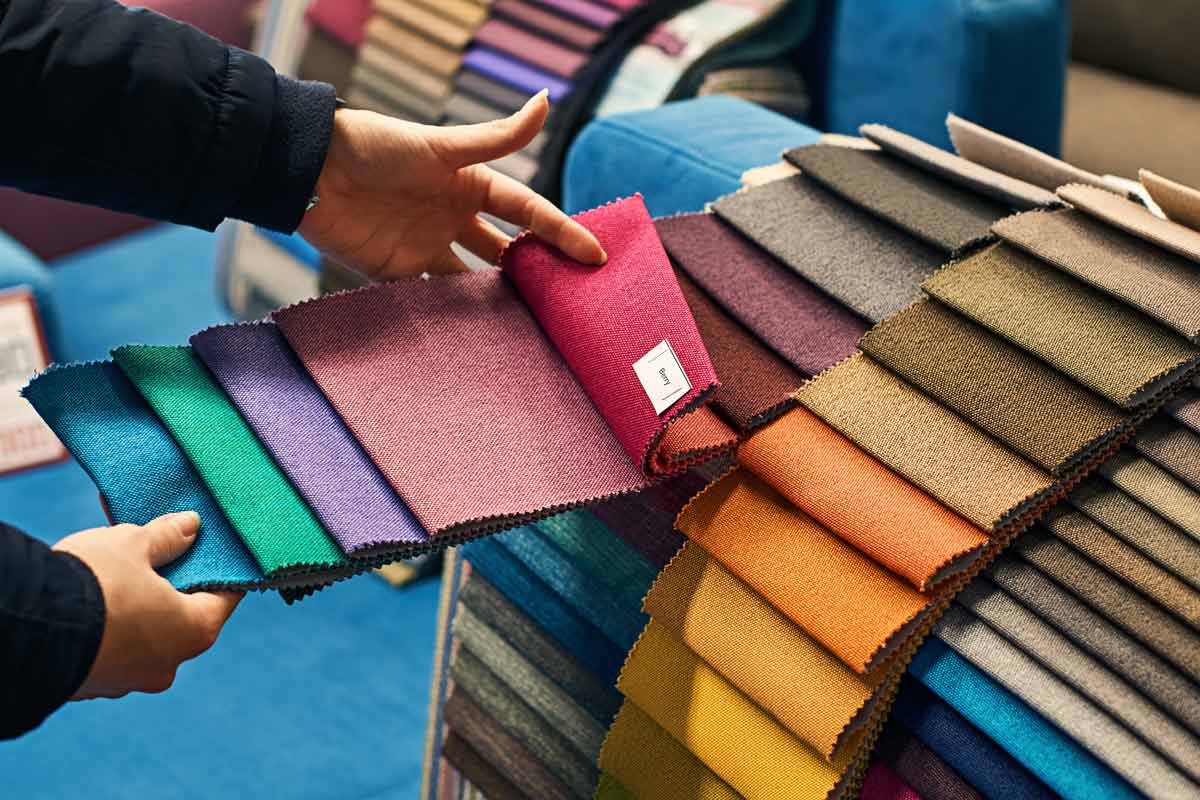
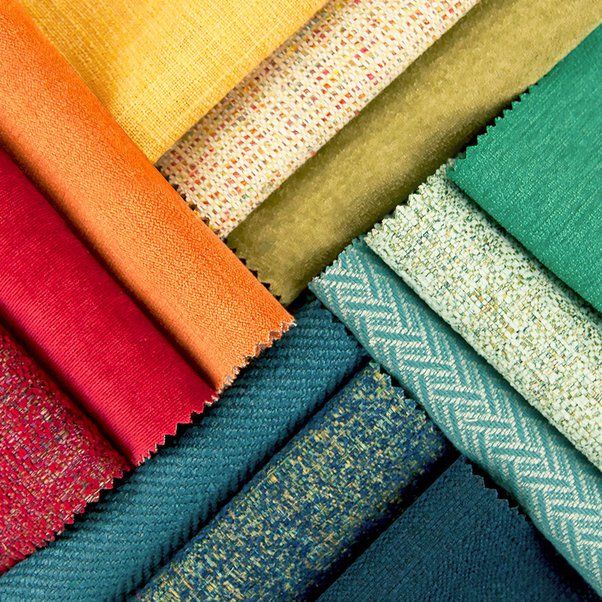
Visual references: these are conventional fabric sample photographs, not identified NUNOUS, Garbon or other upcycled composites. They help describe surface and colour; obtain supplier-identified component samples to assess a specialist material route.
Understand Carbonised-Waste Formulations through the Garbon Example
.Garbon describes converting waste into carbonised material and using it in new applications, including artificial leather. This route changes the input before it becomes part of another formulation. The resulting product should therefore be assessed through its complete specification rather than described simply as a piece of recycled cloth. .Garbon's service information explains the manufacturer's route.
Ask what the offered material contains and what role the transformed input plays. The buyer needs enough information about the finished material, backing, surface and other relevant components to plan an appropriate product review. Do not infer that the entire product consists of carbonised textile waste.
Keep performance language tied to evidence. If a supplier presents a test result or functional description, ask which material version, sample and conditions it covers. A result for one sheet or formulation should not automatically be applied to a different thickness, colour, backing or completed accessory.
For an initial component enquiry, describe the intended contact and loading. Will the part touch skin, bend at a fixed point, be exposed to moisture or rub against a pale garment? Those questions help the supplier determine what information and sample work are relevant.
Avoid transferring the source company's commercial terms to a Yinshan enquiry. Published ordering arrangements or development timelines for a specialist material do not establish the terms of a separate garment programme. Availability, conversion, testing and responsibility need to be confirmed between the parties actually involved.
The example is useful because it broadens the buyer's material map. Recovered textile waste may become an ingredient in a different material system rather than return to yarn. That can create new design possibilities, but it also requires a different specification, a suitable converter and a product-level approval process.
Match the Material to a Specific Component
Choose the component before choosing the story. Draw its dimensions, thickness needs, contact surfaces, attachment points and expected movement. Explain whether it is decorative, protective, structural or used for carrying load. A supplier can assess those requirements more effectively than an open request for an innovative sustainable accessory.
A small brand exploring details for a dress collection might investigate a removable decorative element. The material would need to be reviewed for weight, edge comfort, attachment and contact with the shell. This is a possible development question, not a statement that a particular material or accessory is already offered in that collection.
For a blouse programme, a rigid or heavy component could affect how a lightweight panel hangs. The buyer should compare the garment with the proposed part attached, rather than approve the component from a tabletop sample alone.
A broader casualwear range may create different use conditions. A detail on an overshirt can face different rubbing, cleaning and attachment demands from a removable tag. Give each application a separate component reference so approval for one does not silently become approval for another.
Ask whether the component is replaceable and whether a conventional alternative would meet the same design purpose. Comparing an established option can help the buyer identify what the new material adds and what extra work it creates. The comparison should include appearance, function, care, supply and evidence requirements.
If the proposed application falls outside the garment manufacturer's confirmed scope, identify the specialist converter or supplier needed. The buyer should know who develops the part, who supplies it and who takes responsibility for the finished assembly. A material research article cannot substitute for that commercial and technical agreement.
Check Thickness, Cutting and Joining in the Assembly
Material thickness affects more than the appearance of a sample. It can influence edge treatment, folding, attachment and the fit of hardware. Ask for the relevant specification and variation information, then examine the actual component rather than relying only on a nominal value.
For a cut part, review the edge after the proposed process. Ask whether it needs finishing, whether the chosen shape is practical and how the supplier recommends handling corners or small openings. The appropriate method depends on the specific material and should be confirmed with the material supplier and converter.
Joining deserves a separate trial. A sewn, bonded, riveted or otherwise attached component creates a different assembly. Ask which method is proposed and what evidence is needed to assess it. A material that looks suitable before attachment may behave differently around holes, folds or bonded areas.
Prepare a representative sample with the intended surrounding materials. If the component attaches to a garment, use the actual shell and support arrangement where possible. Record any substitutes so the buyer knows what must be rechecked before final approval.
Describe the review in functional terms. The part may need to stay attached during the intended use, retain an acceptable edge or bend without an unacceptable change in appearance. Agree on how those requirements will be assessed and what would trigger a redesign or rejection. Do not invent a universal test threshold for all composite accessories.
Keep process changes visible. A different cutting method, adhesive, backing or hardware choice can alter the assembly even when the surface looks similar. The final component specification should identify the approved combination and make clear which substitutions require renewed review.
Review Moisture, Flexing, Abrasion and Colour Contact
Build the sample review around the component's expected use. A part carried outdoors, held in the hand or rubbed against clothing creates different questions from a decorative piece kept away from contact. Identify the exposure before selecting a test or accepting a supplier's general performance description.
Moisture review should reflect the intended product and care instructions. Ask what the material supplier recommends and what the finished assembly needs to demonstrate. A surface treatment may change the result, so identify whether the sample is untreated, coated or combined with another layer.
Flexing should be examined where the component actually bends. A broad sheet folded once on a desk does not represent every hinge, strap or attachment in a product. Show the intended geometry to the converter and ask how the material should be evaluated at that location.
For abrasion and colour contact, identify the surfaces likely to interact. A dark component against a pale blouse, for example, creates a different review from a protected panel inside an object. Test or review the relevant combination rather than assuming that a general material result covers every contact situation.
Keep formal reports and development observations distinct. A supplier's report can be useful if it identifies the material version and conditions. A designer's sample notes may reveal a practical issue that needs further investigation. Neither should be described as more conclusive than its scope supports.
If the component fails the agreed requirement, investigate the material, construction and intended use separately. A different edge, backing or attachment may be worth comparing, but each revision should be reviewed in the assembly. Do not claim the problem is resolved because one isolated sample looks better.
The approval record should show what was assessed, how it was assessed and what remains unknown. That record allows the buyer to make a proportionate decision about a trial order, a redesign or stopping the investigation before the material is allocated across a collection.
Keep Waste Use Separate from End-of-Use Claims
Using recovered textile input is one fact about a material's production. It does not automatically establish that the finished product can be recycled again, composted or returned through a collection system. Ask separate questions about the complete component and its intended route after use.
A composite may combine materials that follow different processing paths. The buyer needs to know whether a receiver accepts the assembled product, whether separation is required and whether the route is available in the relevant market. A general statement about the original textile does not answer those questions.
The word biobased also needs a defined scope. If a binder or other ingredient has a stated material origin, that does not establish the origin of every component or a whole-product breakdown claim. Ask what share and component the information covers and how it is documented for the offered material.
For a return programme, identify the party operating it and the conditions of receipt. Confirm which products, quantities and conditions are accepted. A development conversation about future recovery should not be presented to customers as an existing service until the arrangement is established.
Avoid broad claims that turn a waste input into proof of an overall environmental advantage. A comparative statement needs a defined basis and evidence appropriate to the actual product. The buyer can describe a confirmed material feature without inventing a total-impact saving or a universal end-of-use benefit.
The existing material-options guide provides a related framework for keeping material statements specific. Apply the same discipline to accessory components as to garment fabrics.
A useful decision may be to proceed with a limited material trial while withholding a broader claim. The team can learn about processing and product performance without committing to wording that the supplier's current evidence does not support. Record that distinction so the commercial launch does not get ahead of the technical review.
Define Appearance Variation and Repeatability
Recovered-material designs may be selected partly for their visual character. The buyer should still decide what variation is acceptable and how it will be represented to customers. A unique surface is a product feature only when the approval and sales information describe it accurately.
Ask the supplier how the development samples relate to later material. Are they representative of a continuing specification, selected examples of a varied range or pieces from a limited lot? Those distinctions affect sample approval, photography, inspection and repeat-order planning.
Create an appearance reference that fits the material. A single ideal photograph may be inappropriate when the design deliberately includes variation. The buyer might need a range of physical examples and a written description of unacceptable defects. The actual method should be agreed with the supplier and converter.
For a component used across a garment collection, decide whether matching matters within a pair or set. Two pieces that are individually acceptable may look inconsistent when sold together. Identify any pairing or placement requirement early and ask how it affects production and material use.
Photography should show a fair representation of what customers may receive. Do not select a rare pattern as the only product image if the delivered material will vary substantially. The commercial team should understand the approved range and any information that needs to accompany it.
A repeat order requires renewed comparison. Check the material reference, formulation or construction information, appearance range and relevant supplier guidance. A product that shares a brand name with the original sample may still have a changed version or finish.
Keep the commercial expectation realistic. A finite material lot may suit a small capsule with a defined quantity. A continuing accessory line needs a discussion about specification stability, future availability and approval timing. The buyer should select the route with those conditions visible rather than discover them after committing a replenishment programme.
Confirm Documentation, Branding and Image Rights
Request a component file that links the material reference to the supplier, specification, source description and relevant evidence. Include the version used for development and any limitations communicated by the supplier. The finished assembly should be traceable to the material that was actually reviewed.
If a third-party name is used, ask what branding and attribution arrangements apply. A buyer may be allowed to identify a material in a technical discussion without having permission to reproduce a logo or use promotional photographs in a campaign. Confirm the intended use with the relevant rights holder.
Use project photographs carefully. A generic textile offcut, a conventional leather-like sheet or an AI-generated surface should not be presented as a sample of a named commercial material. Label illustrative diagrams as diagrams and keep supplier images within their authorised context.
Separate the material supplier's claims from the brand's own observations. A product page may describe certain features, while the buyer's sample review concerns a different component configuration. Cite the source for the former and record the conditions of the latter. Combining them into one confident statement can hide the gap between material information and finished-product evidence.
Ask for the documentation that supports the proposed wording rather than a general collection of favourable certificates. The buyer should know what each record covers and whether it applies to the offered material, supplier, process or transaction. Keep anything still awaiting confirmation visible.
Yinshan Fashion should be described only within its confirmed role in the actual project. A garment enquiry may lead to a discussion about a separately supplied component, but that does not establish a specialist material partnership. Confirm responsibility for sourcing, conversion, testing and final approval before presenting a combined offer.
This documentation also protects continuity. If the buyer changes a supplier or component version, the team can identify which evidence and imagery need review. The material story remains connected to the product instead of being copied unchanged from an earlier sample.
Plan a Limited Trial before a Collection Commitment
A first trial should answer a small number of meaningful questions. Choose one component and one intended use, then agree on the sample configuration and review criteria. Avoid distributing an unfamiliar material across many styles before the team understands how it is processed and how it behaves in the assembly.
Set a clear decision point. The trial might determine whether the selected material can be cut and joined as intended, whether the component remains acceptable after the agreed use review or whether the appearance range fits the brand. State what evidence will allow the team to proceed and what would lead to revision.
Include the practical costs of development. Material samples, conversion work, testing, specialist advice and revisions may all be relevant. Commercial terms should be discussed with the parties involved and confirmed for the actual programme. Do not assume that a small component automatically makes a low-complexity project.
Ask how material use and remnants will be handled during conversion. A design inspired by waste reduction can still create cutting waste or unusable parts. The buyer should understand the proposed layout, acceptable appearance selection and destination of remnants without assuming that all material will become saleable product.
Keep a conventional reference option where it helps the decision. It can show the performance and appearance the new component needs to meet. The comparison should focus on the product brief, not on creating a superficial ranking in which the recovered-material option must win.
After the trial, write a short decision record: proceed with the identified configuration, revise a specified feature, seek more evidence or stop. Save the rejected sample and explanation where useful. A well-documented decision to stop can prevent a costly mismatch between a material story and a product requirement.
Prepare a Component Development Enquiry
Send a drawing or clearly marked image of the proposed component, its dimensions and its role in the finished product. Identify contact surfaces, loading, bending, cleaning and appearance expectations. Include the garment or accessory context so the recipient can assess the assembly rather than an isolated material swatch.
State the quantity assumptions, market and repeat-order expectation. If the project is exploratory, say so and define the first sample objective. A supplier can then respond with appropriate questions about feasibility, available material forms and development conditions instead of interpreting the enquiry as a confirmed bulk order.
List the material statements the brand hopes to investigate. Ask for the exact component specification, source information and relevant evidence. Keep desired wording separate from approved wording. This gives the supplier a chance to explain what can be supported and what would need additional work.
Identify the parties needed to deliver the component. A specialist material supplier may provide the sheet or formulation, another company may convert it, and the garment factory may assess attachment. Confirm that arrangement rather than assuming one party performs every stage.
Use the fabrics and trims enquiry for a garment-related material discussion and the manufacturing overview to clarify the production context. Yinshan Fashion can review the enquiry within its confirmed programme scope, while specialist accessory production and material supply remain subject to separate assessment.
The strongest enquiry ends with a concrete request: assess the proposed use, identify the material information still needed and recommend the next representative sample. That gives the buyer a useful response without requiring anyone to promise performance or supply before the actual component has been reviewed.
Material development checklist
Three actions before sampling
Connect the material identity, sample decision and supporting evidence to the actual garment brief.
Draw the Component
Define its job, dimensions, contact surfaces, movement and attachment. Choose one use for the initial investigation.
Identify the Complete Material
Request the exact reference, construction or formulation information, handling guidance and evidence relevant to the proposed statement.
Review a Representative Assembly
Combine the material with the intended backing, hardware and surrounding garment. Record results and limitations before expanding the programme.
Buyer and factory checklist
Confirm these inputs for the material and garment being considered.
| Decision area | What the buyer should prepare | What to ask the factory |
|---|---|---|
| Intended use | Component drawing and functional requirements | Suitable material forms and open questions |
| Construction | Attachment and surrounding materials | Processing and joining proposal |
| Performance | Contact, flexing, moisture and care expectations | Appropriate sample review and available reports |
| Appearance | Acceptable range and matching requirements | Lot variation and repeat conditions |
| Claims and imagery | Proposed wording and intended image use | Supporting scope, attribution and permissions |
Continue the production conversation
Material Route and Component Comparison
| Route | Output to identify | Relevant component questions | Evidence boundary | Next step |
|---|---|---|---|---|
| Recovered textile to new yarn | Yarn and finished fabric code | Does the fabric suit the garment? | Source and content apply to the specified material | Review a fabric and garment sample |
| Fabric combined with binder | Exact composite form and thickness | Can it be cut, joined and used as intended? | Original fabric does not describe the complete composite | Obtain supplier guidance and an assembly trial |
| Carbonised waste in a formulation | Finished material and backing | Does the component meet the intended contact and use? | Waste origin does not establish full composition or performance | Review product-level information |
| Decorative garment component | Material, edge and attachment | Does it distort or rub against the garment? | A visual sample is not durability evidence | Sample on the actual shell |
| Functional accessory part | Load, movement and care requirements | What must the assembly demonstrate? | Specialist production capability must be confirmed | Define converter and testing responsibilities |
Buyer FAQs
Are upcycled textile materials the same as recycled fabrics?
Not necessarily. The output may be textile fibre, fabric, a composite or another formulation. Identify the route and finished material before selecting an application.
Can these materials replace apparel fabric?
Only if the actual material and garment requirements support that use. A rigid or composite component should not be assumed suitable for a draping dress or blouse.
Does a biobased binder make the whole product biodegradable?
No such conclusion should be assumed. Check the complete composition and evidence for the exact product and conditions.
What should accessory samples test?
Assess the intended assembly for its relevant use: attachment, bending, contact, moisture, abrasion, appearance and care. Agree on methods and criteria for the specific component.
What supports an end-of-use claim?
The complete material specification, a relevant receiving or processing route and evidence for the actual statement. Waste origin alone does not establish future recyclability.