Article
What should buyers know first?
Short answer: A B2B guide to preparing an EU private-label fashion brief that keeps the product identity, fibre inputs, components, sample evidence, buyer-owned information and production record connected before bulk planning.
Private label fashion production for EU brands starts with a product record that connects a buyer-defined style, material and component route to the sample, product-information inputs and approval path before bulk planning. The record does not decide every country-specific obligation or replace advice from the brand, importer, responsible operator or specialist. It gives the buyer and factory a shared way to identify which garment, fibre information, label file, packing instruction and proof are current before an early sample becomes an expensive assumption.
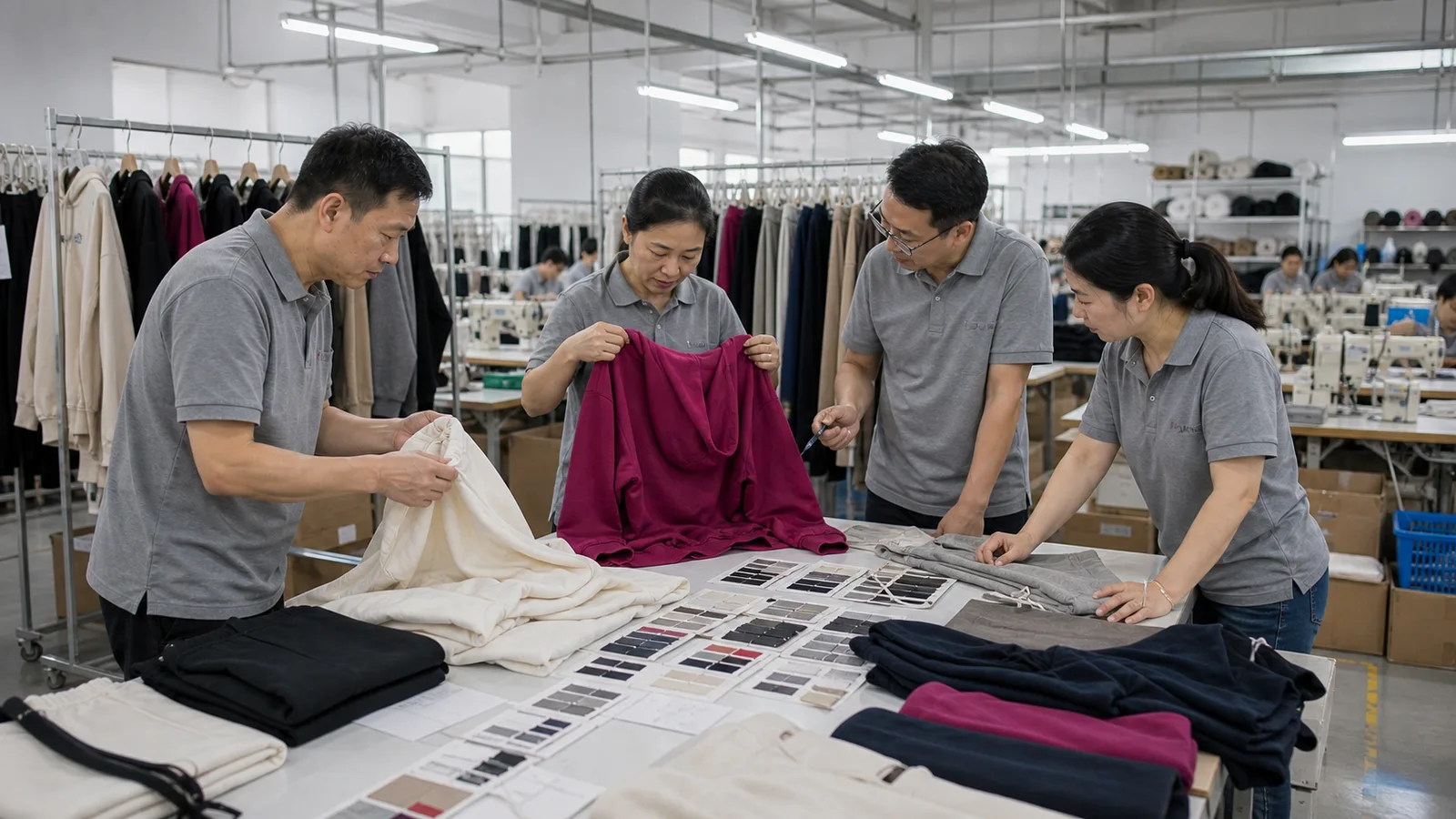
Yinshan Fashion supports custom and private-label bulk programmes rather than unrestricted ready-stock wholesale. For EU-directed fashion, the useful work begins before a factory is asked to make a sample. A brand needs to identify its target markets and channels, the style and colour version, intended material and component route, the source of product information, the sample question and the person who can approve an open point. Yinshan Fashion can help turn those inputs into fabric, fit, sample, label, packing and production questions while the buyer retains responsibility for final market applicability and product claims.
Direct answer: Build the EU private-label brief around one controlled style-colour-size identity. Add the target countries and sales channels, intended material and component references, product and label information with its source and owner, sample purpose, packing route, approvals and unresolved choices. Make the factory work from the current record, not from a marketing image or a folder of unnamed files. This helps a brand prepare traceability and product-information inputs before sampling without treating the factory as a legal or certification authority.
What should private label fashion production for EU brands establish before sampling?
Before a sample is requested, identify the physical product and the market context that could change it. “A private-label blouse for Europe” is too broad to control a material, label or packing instruction. The brief should state the buyer’s style code or working identity, category, target customer, countries or channel scope, colour route, sample size where relevant, current reference, intended use and the decisions that are fixed or still open. A dress, shirt, blouse, loungewear set and active-fashion style can all need different records even when they belong to the same collection.
This is not a request to complete every file on day one. It is a request to distinguish a confirmed input from an idea. The buyer may have a decided silhouette and colour story while the final fabric construction, lining, label language, product-data source or packing route remains undecided. Name those open points. A factory can propose a swatch, sample or applied proof for an open physical question. It should not convert an old sample, a mood board or a seller listing into an approved production instruction.
The international private-label production brief guide provides a wider structure for target market, channel and buyer inputs. For an EU private-label programme, add the record controls that show what product information belongs to the exact garment and who is expected to confirm it before an instruction moves into sampling or bulk preparation.
How should a buyer create one traceable fashion product identity?
Create a stable identity for every product version. It can include a buyer-defined style code, colour reference, size context, sample purpose, current revision and source reference. Keep it beside the buyer-facing marketing title rather than replacing it. Marketing language changes as a campaign evolves. The factory still needs a reliable way to distinguish a navy blouse sample from a later navy blouse with another fabric, a different label package or a changed fit.
Use the same identity on the tech pack, measurement sheet, fabric or swatch record, trim list, artwork files, sample photos, comments, packing proof and quantity matrix. If a component changes, record whether the change affects the garment itself, a label or information file, individual packing, carton data or only the internal record. This gives the next reviewer a clear question: does the earlier sample still prove the current product, or does the change need a targeted new check?
Traceability in a production conversation is not a slogan about a supply chain. It is the practical ability to find the current style, material, component, sample, document source, decision owner and next action. Yinshan Fashion can help organise those handovers between development and manufacturing. That support is most useful when the buyer supplies a clear version owner instead of expecting an unnamed shared drive to function as a release record.
How should material information stay connected to the actual garment?
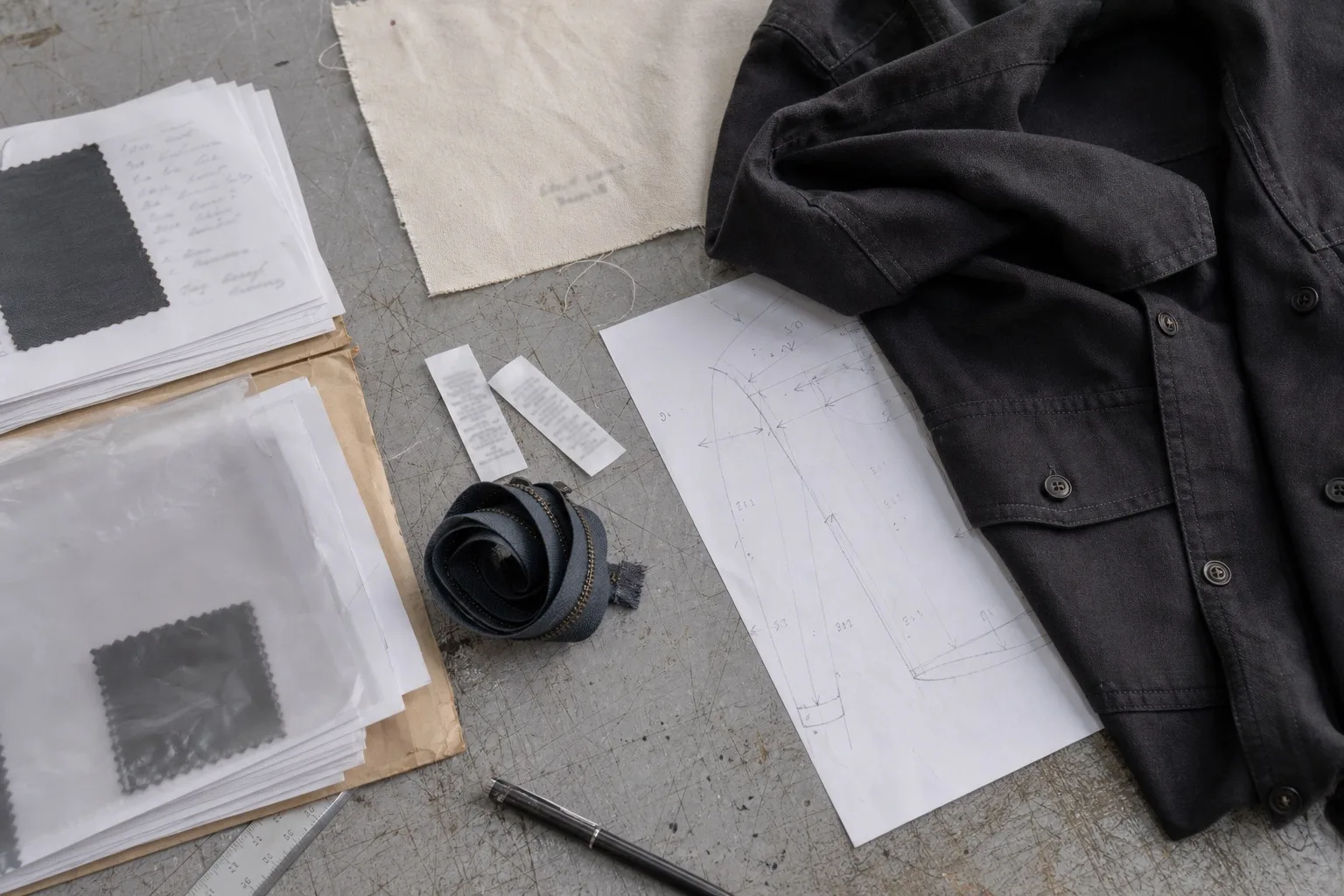
Fibre information is one part of a material record, not a complete description of a garment. A buyer should retain the supplied composition information, fabric construction or source reference where available, colour route, finish, lining, components and the particular style-colour-size scope to which each item applies. The same broad fibre description can perform differently when the construction, weight, density, finish, print, lining or cut changes. A swatch can begin the conversation; a garment sample often answers the questions a buyer needs for drape, coverage, seam behaviour or final presentation.
The European Commission’s textile-labelling material explains that the current Textile Labelling Regulation concerns fibre names and fibre-composition marking. It does not itself settle a programme’s size, country-of-origin or wash/care labelling question. Treat that boundary as a reason to organise inputs rather than to make a broad compliance claim. The brand or importer should confirm what applies to its product, target country and selling route. The factory needs the approved garment-level information it is asked to apply, plus a way to tell a source document from a final file.
The fabrics and trims development page is a useful place to begin material discussion. Record the chosen reference with the garment rather than leaving it in a separate purchasing conversation. If a buyer switches from one woven to another, changes a lining, adds a print or replaces a trim, reopen the related sample and information question. This is more reliable than declaring a later garment covered by a generic material note.
How should product information be separated from marketing copy?
Product information should be traceable to a source and an owner. For each style, the buyer can list facts it intends to use on a label, hangtag, package, product page or retailer file: fibre input, care direction, origin input, size information, brand or operator details, product name, warning or handling note where applicable, barcode, language version and any customer-facing claim. Each line needs a version, status and person responsible for its final approval.
Marketing copy serves another purpose. Phrases such as “responsibly made,” “easy-care,” “soft touch,” “perfect for travel” or “premium fabric” may be campaign language, but they are not factory instructions unless the brand can connect them to the physical garment and supporting evidence. Do not ask a sample room to infer a consumer promise from a mood board. State the property or visual outcome that needs review, then let the buyer decide whether the final claim is supported and suitable for the intended market.
This separation makes an ecommerce launch easier to manage. A product title may change, while the garment’s style code, current fabric, label file and packing route must remain stable. If the sample changes the length, lining, transparency, material or closure, the brand should revisit any product facts that rely on those features. A controlled record does not write a product page. It stops a draft product page from silently becoming a bulk instruction.
How should an EU private-label brand use sampling as an information check?
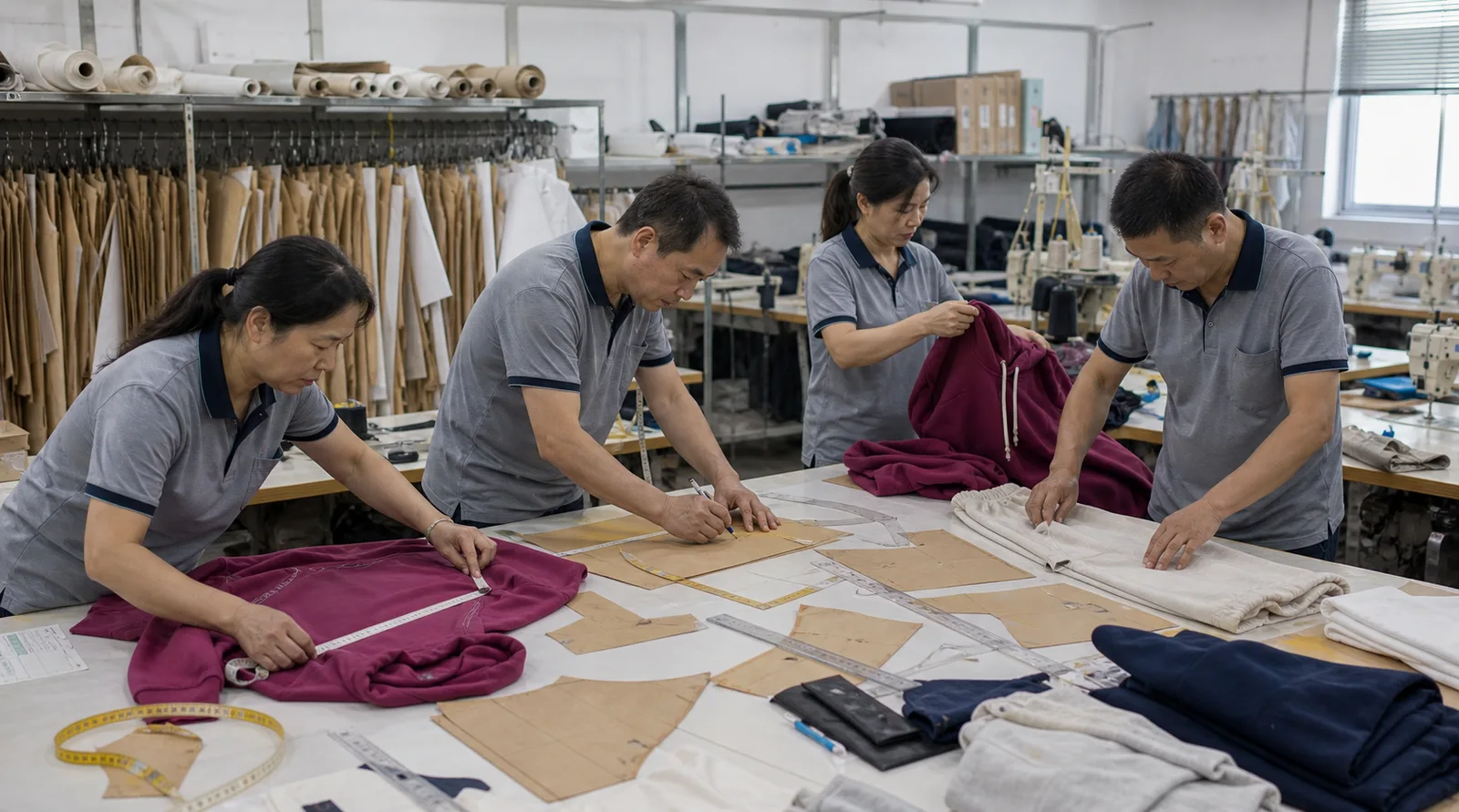
Give each sample a named purpose. A development sample may test the design direction or construction. A fit sample may test the pattern, measurements, ease and movement. A material or colour proof may clarify fabric, print, finish or trim direction. A later sample can bring the approved garment, components, buyer-supplied labels and packing together. The exact sequence depends on the product. The important control is that the review states what this particular sample approves and what remains open.
For a woven blouse, a buyer may need to review fabric transparency, collar shape, button placement, sleeve opening, seam appearance and label feel. For a lined dress, the key question may be how outer fabric, lining, closure, waist and hem behave together. For a sleepwear or loungewear piece, the sample might focus on comfort, fabric handfeel, fit and care direction. Do not use one approval word for all these purposes. Tie each comment to the sample ID, material route, affected part, requested action, evidence needed, owner and next gate.
The export-ready production records guide shows how an approved sample can become a current order file. Before that handover, keep the distinction between a development observation and a bulk approval visible. This helps a brand compare what was agreed rather than relying on screenshots, memory or a previous season’s product.
How should labels, artwork and language versions be controlled?
Label and artwork control begins with the file source. A buyer should map main labels, size labels, care information, fibre inputs, hangtags, barcode stickers, inserts and packaging statements to the correct style-colour-size identity. Add the revision, target language or market scope where relevant, source file, physical placement, approval owner and status. A design PDF can look finished while its wording, language, placement or application method is still open. The factory should be able to distinguish a source reference, a draft, an approved print file and an applied sample proof.
The language route belongs in the buyer’s market brief, not in a general “EU” folder. Different countries, retailers and channels may require different review or information paths. Avoid assuming one language file, one legal statement or one packaging instruction is automatically sufficient across every destination. Instead, identify the product’s actual country scope and ask the owner responsible for the market review to confirm which files are released for that scope.
Yinshan Fashion can prepare the specified component and show how it sits on a sample. The brand, importer and appropriate specialist remain responsible for final content and applicability. The multi-market label, artwork and SKU control guide is useful when a collection includes several language, channel or packing versions that must remain tied to one baseline garment.
How should GPSR and product-safety context affect the production brief?
EU product-safety context should make a buyer’s record more careful, not make a fashion supplier claim to certify the order. The European Commission explains that the General Product Safety Regulation is intended to ensure only safe products are available on the market, including through online channels. That high-level context belongs in a buyer’s planning and review process. It does not tell a factory which legal conclusion applies to an individual dress, blouse, trim, country, customer or marketplace listing.
For the production brief, name who owns the final product-safety and market review, which supporting information has been supplied to the factory, what physical sample or component needs review, and what must be approved before a production action occurs. A factory can check an instruction against the product reference, raise a question about an unclear trim, attach a buyer-approved label or prepare a sample. It should not be asked to decide whether a market condition is satisfied simply because the file has an EU flag in its name.
This boundary is especially helpful for small brands. It lets the brand use a supplier’s practical knowledge of fabric, fit, construction, labels, packing and factory records while retaining ownership of its market, consumer and legal decisions. The result is not a compliance promise. It is a clearer path for identifying missing evidence before a purchase or production instruction becomes difficult to change.
How should a private-label programme prepare product information before bulk?
Build a short product-information matrix for each current style. The matrix can include the style identity, product category, colour and size context, target country/channel, source reference, fabric and composition input, lining and trim inputs, fit or measurement version, label and artwork list, product information, packing route, sample status, owner and unresolved actions. It does not need to duplicate every document. It should point people to the current approved document and make gaps visible.
Review the matrix before a material, label or packing order is released. A late change to an outer fabric can affect the fibre input, care direction, sample observation and product description. A changed hangtag can affect language, barcode, retailer information and packing proof. A revised size range can change label, product-page and quantity records. Show each change in one place, then decide whether the related sample, data or packing needs another check.
The private-label service page helps frame labels, hangtags, logo components and presentation as part of a custom product route. The custom womenswear manufacturer solution is useful when a buyer needs to connect design, fabric, fit and sample decisions across dresses, blouses, skirts or related womenswear. Both routes work best when the buyer says which information is ready and which still needs a decision.
How should packing protect information control as well as the garment?
Packing is a product version, not a final warehouse afterthought. State whether the garment should be folded or hung, what individual protection is intended, where barcodes, size stickers or inserts belong, how the style-colour-size identity is shown, and which carton or retailer information is supplied by the buyer. A product title is not enough for factory control because it can change with merchandising. Use the stable product identity on the physical packing proof as well as on the buyer’s commercial systems.
The brand should confirm channel differences before materials are ordered. A direct-to-consumer product, boutique delivery and retailer inbound order can require different data or presentation. Do not create a generic EU packing claim. State the actual route, identify the supplied instruction and leave an item open when the channel owner has not released it. The factory can then prepare a packing proof or raise a precise question rather than applying a guessed procedure to every order.
The manufacturing overview and how-it-works process show how development, production, inspection, finishing and packing connect. Those pages are not substitutes for a buyer’s destination-specific review. They make it easier to see why an approved sample, product data and packing instruction must describe the same current garment.
How should a buyer compare supplier responses for an EU private-label brief?
Compare supplier responses against the same record. Two factories may both quote a “viscose blouse” while working from different assumptions about the fabric, lining, labels, language files, packing, quantities, sample stage or country scope. A unit price or broad capability statement cannot reveal those differences. Ask each partner to identify the product version it is considering, what it treats as confirmed, which document controls each component, what it excludes and which decision would change the route.
Look for practical questions. Does the supplier ask which sample controls fit? Does it identify an absent fabric reference? Does it separate the buyer’s product wording from a factory instruction? Does it show when an artwork file needs approval? Does it explain what must be known before packing material is prepared? These are stronger signals than a generic assurance that a factory “handles EU compliance.”
Yinshan Fashion can operate as a manufacturer and supplier by helping the buyer connect design, fabric, sample, private-label components, production and packing across a coordinated factory route. Exact costs, quantities, timing, availability, testing, claims and market requirements remain specific to the confirmed programme. A transparent response should name those dependencies rather than hiding them behind a general quotation.
How should a brand retain a repeat-ready EU product record?
After an order moves forward, retain the controlling sample, pattern and measurement version, material and component references, product-information source, approved artwork, label proof, packing reference, quantity matrix, quality priorities, country/channel scope and authorised changes. The retained record should show what it covers. A fibre input may relate to one material route. A packing proof may apply to one channel. A language file may be limited to one buyer-approved market version.
When a future order changes a fabric, colour, label, country scope, retailer route, sizing or packing requirement, compare the new request with the stored record. Decide whether the previous sample still proves the right product or whether a targeted material, fit, information or packing review is needed. This keeps a repeat order from relying on an earlier order’s unresolved assumptions.
The European Commission’s textile strategy describes a direction toward more durable, repairable, recyclable textiles and Digital Product Passport work. Treat that as context for designing records that can identify a product and its material inputs over time, not as a claim that a current garment automatically qualifies for a future product-data scheme. Use evidence and current official guidance for the actual market and product before making any public statement.
What questions do EU private-label fashion buyers ask before sampling?
What should a brand send a factory before sampling private label fashion for the EU?
Send the current style reference or tech pack, target countries and channels, buyer-defined style-colour-size identity, intended customer and fit, fabric and component inputs, source of product information, label and artwork status, packing route, quantities, sample purpose, approval owner and open decisions. Mark drafts clearly so a factory does not treat them as released instructions.
Does EU textile labelling settle every product-information requirement for a fashion item?
No. The EU Textile Labelling Regulation addresses fibre names and fibre-composition marking. A brand or importer should assess its actual product, countries, channel and other applicable requirements with the responsible owner or specialist. The factory needs the approved information it is asked to apply.
Can a manufacturer confirm that a private-label garment is compliant for every EU country?
No. A manufacturer can help prepare samples, components and records around buyer-approved inputs. Final market applicability, product-safety review, consumer claims, responsible-operator information and legal decisions remain with the brand, importer and appropriate specialist.
Why should product information be ready before sampling?
The brief does not need final wording for every item, but it should identify the product information that could affect a material choice, label, component, sample, packing proof or approval route. This prevents a late file change from silently changing a garment or order instruction.
Can Yinshan Fashion support a small EU private-label fashion programme?
Yinshan Fashion can discuss custom and private-label development for fashion categories including dresses, skirts, blouses, tops, nightwear, loungewear and active fashion. The team can connect reference review, fabric and fit direction, sampling, labels, packing and bulk preparation. Final project scope, commercial terms and market requirements depend on the confirmed programme.
How should a buyer begin an EU private-label production conversation?
Send Yinshan Fashion the product reference, intended target countries and sales channel, style-colour-size identity, fabric and component route, source of product information, label and artwork status, sample purpose, packing route, quantity structure, approval owner and open questions. The next step is a product-specific development discussion that separates facts, assumptions and required proof before the garment is treated as ready for bulk. Start through contact Yinshan Fashion.
EU private-label record-control kit
Three controls that keep product information connected to the garment
A private-label brief becomes actionable when the buyer can identify the current garment, the source of its product information and the person who can approve an unresolved item. Use these controls before a sample, component or packing direction is treated as a bulk instruction.
Anchor one product version
Keep the buyer-defined style, colour, size context, current sample, material route, target market/channel and revision together so an earlier garment cannot become an untracked instruction.
Separate source facts from claims
Map fibre, care, origin, brand or operator inputs, labels and product-page facts to their source, owner, status and garment scope instead of treating a draft as released content.
Release a current packing route
Connect label and artwork files, barcode identity, individual packing, carton information and channel differences to the style-colour-size version that is actually being prepared.
Buyer actions and factory questions before an EU private-label fashion sample moves toward bulk planning
Use this list to keep the buyer's current garment, material and product-information inputs, sample evidence and packing route aligned. Exact market requirements, quantities, costs, timing, testing, commercial terms and final legal decisions remain specific to the confirmed programme.
| Decision area | What the buyer should prepare | What to ask the factory |
|---|---|---|
| Product and market scope | Provide the style-colour-size identity, category, target countries and channel, customer context, current reference, sample purpose and decision owner. | Which physical or digital reference controls this version, and which market or product input is still open? |
| Material and components | Share the fabric or swatch route, supplied composition information, lining, trims, colour, finish, desired garment behaviour and alternatives. | Which material or component needs a swatch, sample or buyer clarification before it can be treated as selected? |
| Product-information source | Map buyer-owned fibre, care, origin, brand or operator, label, product-page and language inputs to a source, version, owner and status. | Which information is only a source note or draft, and which is approved to apply to this precise garment? |
| Sample evidence | State the current sample version, intended proof, fit/material/component priorities, comments, conditions and next approver. | What does this sample prove, what remains conditional and which change would require another review? |
| Labels, artwork and packing | Provide approved files, language scope, applied placement, barcode ownership, individual packing, carton data and channel-specific differences. | Which applied proof or packing reference belongs to the current style-colour-size version? |
| Handover and repeat record | Retain current references, approvals, country/channel scope, approved changes and the person who can release the next action. | Does a material, product-information, country or packing change reopen a previous sample or record? |
Continue the production conversation
EU private-label product record: buyer inputs and factory questions before sampling
| Control area | Buyer should identify | Factory question before the next step |
|---|---|---|
| Product identity | Style-colour-size identity, category, source reference, target countries, channel and current revision. | Which sample, file and material route control this current garment rather than a similar or earlier version? |
| Material inputs | Fabric source or swatch, supplied composition information, lining, trims, colour, finish and open alternatives. | Which material or component needs a swatch, garment sample or buyer clarification before it is treated as selected? |
| Product information | Fibre, care, origin, brand or operator inputs, language scope, source, owner, status and final approver. | Which information is a source note, which is a draft and which is approved for the exact product? |
| Sample evidence | Purpose, sample version, review priorities, comments, conditions and decision owner. | What does this sample prove, what remains open and what would require a later review? |
| Packing and SKU | Packing route, barcode owner, style-colour-size mapping, individual protection, carton data and channel differences. | Which packing proof belongs to this specific version and buyer-defined fulfilment route? |
| Repeat control | Approved record, market/channel scope, changes and the person who can release the next version. | Does a later material, label, country or packing change reopen an earlier decision? |
Buyer FAQs
What should a brand send a factory before sampling private label fashion for the EU?
Send the style reference, target countries and channels, style-colour-size identity, intended fit, fabric and component inputs, product-information source, label and artwork status, sample purpose, packing route, quantities, approval owner and open decisions.
Does EU textile labelling settle every product-information requirement for a fashion item?
No. The Textile Labelling Regulation addresses fibre names and fibre-composition marking. The brand or importer should assess its actual product, countries and channels with the responsible owner or specialist.
Can a manufacturer confirm that a private-label garment is compliant for every EU country?
No. A manufacturer can prepare samples, components and records around buyer-approved inputs. Final market applicability, safety review and legal decisions remain with the brand, importer and appropriate specialist.
Why should product information be ready before sampling?
It need not be final on day one, but the brief should identify information that could affect a material choice, label, component, sample, packing proof or approval route.
Can Yinshan Fashion support a small EU private-label fashion programme?
Yinshan Fashion can discuss custom and private-label development, sampling, labels, packing and bulk preparation. Final scope, commercial terms and market requirements depend on the confirmed programme.