
Article
What should buyers know first?
Short answer: A B2B guide to turning a US e-commerce clothing idea into a factory-ready private-label brief with product, fit, fabric, care, label, packing, SKU and approval inputs that help reduce avoidable customer-expectation gaps.
Private label clothing for US e-commerce brands needs a production brief that does more than describe a style. It should connect the product a customer sees online with the garment a factory develops, checks and packs. That means recording the intended wearer, product version, fit, material, care direction, labels, presentation, SKU data and approval route before the programme moves toward bulk. It will not eliminate returns or decide every marketplace requirement. It can reduce avoidable expectation gaps by making the buyer’s product promise specific enough to be sampled and produced.
For an online brand, the same garment has to work in several places at once: on a product page, in a size guide, in a customer’s hands, in a warehouse receiving process and in the factory’s production record. A reference image can begin the discussion, but it cannot answer which measurements control the fit, whether a knit should recover after wear, which colour is approved, what care wording is supported or which label and packing version belongs to a specific SKU. Yinshan Fashion supports custom and private-label bulk programmes rather than unrestricted ready-stock wholesale. The practical aim is to turn the brand’s commercial idea into a controlled sample and bulk route.
Direct answer: Build the brief around one buyer-defined style-colour-size identity. Add the target customer and selling context, product-page promises, fabric and construction direction, fit and measurement evidence, care and label inputs, packing and SKU data, sample purpose, approval owner and open decisions. Use each sample to confirm a named scope. This reduces ambiguity before an online product description, a garment and a fulfillment route drift apart.
What should private label clothing for US e-commerce brands decide before asking for a sample?
Start by deciding what the product is meant to do for the brand and for its customer. “An oversized everyday hoodie” or “a soft lounge set for online launch” is helpful as a creative direction, but it is not yet a production instruction. The brief should state the category, intended wearer, use case, style code or working name, colour direction, target size range, source reference and the decisions that must be made before a sample can be approved.
An online programme also benefits from separating confirmed information from research. A buyer may know the silhouette, target retail context and first colour direction, while fabric handfeel, size measurements, trim route or label copy are still open. Those open points should remain visible. A factory can help turn them into development questions; it should not treat them as confirmed just because they appeared in a mood board, an old sample or a product-page draft.
The international private-label production brief guide explains the broader market and channel inputs that matter before sampling. For a U.S. e-commerce route, add the detail that affects an online buyer’s expectation: how the garment is shown, how size is explained, which facts belong to the product page, how the item is individually packed and who will approve the final commercial data.
Why does return-risk planning begin in the production brief rather than after bulk?
Return risk has many causes that a factory cannot control, including customer preference, styling choices, delivery experience and retailer policy. The production team can, however, help prevent avoidable mismatches between what the buyer intends to sell and what is made. The brief is where the buyer makes the product’s physical and commercial identity visible before those mismatches spread into samples, photographs, listings, labels or fulfillment files.
For apparel, a customer may react to length, body width, sleeve shape, rise, fabric weight, opacity, stretch, lining, texture, colour appearance, closure or care needs. The point is not to predict every customer reaction. It is to identify the product facts that could materially change a purchase decision and connect them to a sample and a repeatable factory instruction. A simple size chart copied from another brand, for example, is not enough when the new garment uses a different fabric, fit block or wearing allowance.
Teams should also distinguish product facts from marketing language. “Relaxed fit” may be a useful starting phrase, but the factory needs a reference garment, measurement points, sample size, desired ease or a clear visual intent. “Soft” may point to handfeel and fabric construction, but it does not replace a material reference or a care review. When a buyer defines the evidence behind a claim, a product page can later describe the garment more accurately without asking the factory to infer a customer promise from a slogan.
What belongs in a private-label clothing brief for a US online product?
The most useful brief is a linked set of decisions, not one oversized PDF. It may include a tech pack, reference images, measurement chart, fabric swatch, label artwork, packing sketch, SKU sheet and sample comments. What matters is that each item maps to the right style-colour-size version and has a status. A development sample may approve the silhouette while its fabric is still under comparison. A fit sample may confirm body and sleeve measurements while label artwork and packing remain open.
| Brief area | Buyer input | Factory use before bulk | | --- | --- | --- | | Product identity | Style code, category, colour, sample size, intended wearer, channel and current reference | Keeps one garment version separate from a similar style or old sample | | Fit and size | Measurement points, fit reference, size logic, comments and approval scope | Guides pattern review, sample work and the questions needed before size-set or bulk decisions | | Fabric and construction | Swatch or fabric direction, handfeel, weight, stretch, lining, trim and visible details | Identifies material, sewing and finish questions that can affect the sample and care route | | Product information | Buyer-owned product facts, fibre and origin inputs, care direction, label text and approval owner | Maps files and applied proofs to the correct garment without treating draft wording as released | | Online fulfillment | SKU, colour and size mapping, barcode owner, individual packing, fold or hanger direction and carton data | Connects the item that is packed to the item that is listed and received | | Approval control | Sample purpose, current revision, decision owner, open conditions and next action | Makes clear what the factory may act on and what still needs buyer confirmation |
The export-ready production records guide is the next stage after the brief. It shows how an approved sample and supporting decisions can become a controlled bulk handover. Until that point, keep the brief candid about what is provisional. A visible open decision is safer than a silent assumption.
How should an e-commerce brand define fit, size and wearing expectation?
Online customers cannot try the garment on before ordering, so a brand should not leave fit language disconnected from measurement and sample evidence. Identify the intended fit: close, regular, relaxed, oversized, cropped, longline, high rise, full length or another product-specific direction. Then support it with the measurement points that affect the garment, its sample size, a reference comparison where available and any wearing allowance that the buyer wants the development team to review.
For a dress, the buyer may focus on bust, waist, hip, body length, strap or sleeve length, lining and closure placement. For a blouse or top, shoulder, chest, body length, armhole, sleeve opening and fabric transparency may be central. For knit loungewear, ease, recovery and the way a garment changes after care can matter as much as one flat measurement. Use the real casual-fashion product range to frame the garment category before turning general fit words into a production request.
Do not promise a universal U.S. size standard. Size labels, curves and customer expectations vary by brand and product. A buyer should specify the size architecture it owns, the customer or fit reference it is using, the points that require review and the sample purpose. If the goal is to reduce a sizing surprise, ask the factory to show the relevant sample against the current measurement sheet and record what the review actually approves.
Good product-page content can then follow the approved product rather than trying to compensate for an unclear one. It may describe the intended fit, identify the sample or model context where the brand has chosen to use it and provide measurements that correspond to the production record. The wording belongs to the brand; the source facts should be traceable to the product route.
How do fabric, opacity and care direction affect an online clothing promise?
Fabric is one of the first places where a screen image can diverge from a customer’s expectation. The brief should identify the fibre direction or supplied swatch, fabric construction, handfeel, weight range where known, stretch direction, recovery question, colour reference, opacity or lining concern and any finish that affects the garment’s look or care. If the buyer is comparing options, list them as options. Do not turn a preliminary fabric note into a fixed bulk specification.
The decision should sit next to the garment, not in a separate material conversation. A fluid woven dress may need a different lining, seam route, pressing approach and size review from a ribbed knit top. A brushed sleepwear set may need a different comfort and laundering discussion from a structured blouse. The fabrics and trims development page is the useful place to begin a material conversation; the production brief should retain the particular fabric reference that relates to the chosen style.
Care information also needs evidence. The FTC’s Care Labeling Rule guidance explains why covered manufacturers and importers need care instructions supported by a reasonable basis before sale. FTC textile guidance is relevant to fibre, origin and responsible-business details for many U.S. textile products. These references are planning context, not a universal label template or legal advice. The brand, importer and appropriate specialist should confirm the product, evidence, destination and final copy before labels are ordered or product claims are published.
For the factory, the practical question is simple: which garment components and actual care route are being reviewed? Main fabric, lining, print, embroidery, heat transfer, labels, closures and trims can change the final discussion. For the buyer, the task is to keep the care direction, supporting evidence and final approved wording connected to the same product version.
Which US label and product-information decisions need an owner?
Label, care and product-information content should have a named owner before a factory applies it. A manufacturer can help prepare label placement proofs, make a sample with the specified component and track the approved file. It should not decide legal applicability, write an importer’s business identity, approve a fibre statement without source information or assume a marketplace’s current policy from an old order.
For a U.S.-directed textile programme, list the label and information components separately: main or brand label, size label, care label, fibre information, origin input, responsible-business or importer information, hangtag, barcode label, package statement, product-page facts and any retailer-specific file. Map each to the style-colour-size version, file revision, status and owner. This makes it possible to distinguish a design file from an applied label proof and a draft from an item approved for the current order.
Yinshan Fashion can coordinate the sample, fabric, pattern, applied labels, packing and production questions around those buyer-owned inputs. Final content, market applicability and legal or retailer approval remain with the brand, importer and relevant specialist. That boundary protects both the buyer and the factory from treating a plausible-looking label as a confirmed production instruction.
How should SKU, barcode and product-page data connect to the garment?
An online product is often handled by an SKU identity before it is seen as a garment. That can create problems if an SKU sheet is built separately from the sample and packing route. A buyer should identify the style, colour and size mapping; state who owns the barcode or product identifier; name the current product title or description scope; and record which file, label, sticker, carton mark or fulfilment instruction relies on that identity.
Do not use a product title as the only factory reference. Titles are made for customers and may change with search, campaign or merchandising choices. The factory needs a stable style code or buyer-defined production identity as well as the colour and size context. The commercial title can live alongside it, but a small wording change should not accidentally replace the measurement, label or packing instruction that controls the physical item.
The multi-market label, artwork and SKU control guide is useful when a garment has channel-specific files, labels or packing. Even a U.S.-only launch may use more than one route: direct-to-consumer fulfillment, a marketplace, a wholesale test or a retailer drop. If the product, applied components or packing changes, keep the difference visible rather than sending a general email that could be interpreted as applying to every SKU.
What packing details should be decided for e-commerce clothing?
Packing is part of the customer and warehouse experience, not a final-stage decoration. The brief should explain the individual garment presentation, protective bag or sleeve direction, fold or hanger route, stickers, inserts, barcode placement, hangtag relationship, carton mark, size or colour assortment and any fulfilment or retailer routing data supplied by the buyer. A clear route lets the factory make a packing proof or ask the right questions before materials are ordered.
For a first private-label launch, simplify where the brand can. A separate bag, insert, barcode location and carton presentation for every colour or size can create unnecessary variants. If a change is genuinely required for one channel, name the channel and record the file or proof that controls it. The private-label service page can help frame which labels, artwork, hangtags and packing components belong in the product plan; the buyer still needs to own final commercial and market information.
The supplied product and packing direction should also reflect the garment’s needs. A delicate printed blouse, a loungewear set, a structured dress and a heavier casual layer may need different folding, protection or carton discussions. Use the loungewear product range when the programme includes sleepwear or homewear rather than applying a generic fashion packing direction to every item.
What should a sample approve before a US e-commerce launch moves toward bulk?
No single sample answers every question. State the sample purpose before it is made and record the scope of its approval after review. A development sample might explore construction or silhouette. A fit sample might focus on pattern, measurements and ease. A colour or material proof may confirm a fabric direction. A pre-production sample can bring the current garment, applied components and packing route together once the buyer has made the remaining decisions.
The sample review should ask what the customer would notice and what the factory must reproduce. Depending on the style, check drape, opacity, neckline, body length, ease, sleeve movement, closure, fabric handfeel, print or trim placement, lining, labels, size information, folding and individual presentation. The answer does not have to be a long generic inspection list. It should identify the points that distinguish this product and the evidence that supports them.
Use a comment log with the sample identity, current revision, affected area, requested action, evidence needed, decision owner, status and whether the change affects later product facts or packing. If a fit change alters length, stretch, coverage or component placement, review whether measurements, product description, labels, photographs or presentation need to be reconsidered. This is how a sample becomes a reliable decision point rather than an attractive object photographed for approval.
How can a private-label factory support the brief without taking over brand decisions?
A factory-based supplier can make the brief more actionable by identifying gaps, asking which evidence governs a decision and translating a product request into sample, material, pattern, production and packing questions. The manufacturing overview explains how materials, development, production, quality checks and packing relate to one another. The how-it-works process provides a useful route from a buyer brief to sample review and bulk preparation.
Yinshan Fashion can support fashion brands with reference review, fabric and trim discussions, pattern and sample development, fit comments, applied component proofs, packing coordination and production handover. That role is valuable for a small e-commerce team because it separates factory execution questions from decisions that must remain with the product owner. Exact costs, quantities, timing, testing, compliance, retailer rules and shipping arrangements depend on the confirmed programme.
The buyer should be able to ask, at every stage: Which product version are we reviewing? What does this proof approve? Which file or sample governs the next action? Who can close the remaining decision? A factory can help structure those questions. It should not replace the brand’s approval, legal review or commercial judgment.
What questions do US e-commerce brands ask about private-label clothing briefs?
How should private label clothing for US e-commerce brands prepare a first brief?
Begin with the buyer-defined product identity, customer, channel, intended fit, material direction, label and packing status, sample purpose, approval owner and open decisions. The brief should show what is confirmed and what still needs evidence or review before a factory treats an instruction as ready for bulk preparation.
What size information should a factory receive for a private-label online product?
Provide the buyer-defined size range, sample size, measurement points, fit reference, intended fit, review priorities and any approved comment record. Do not rely only on a generic size name. A factory can then identify what needs a pattern or sample review.
Does the factory decide U.S. care-label or textile-label wording?
No. The factory can apply buyer-approved files and coordinate proofs, but the brand, importer and appropriate specialist should confirm final wording, evidence and applicability. FTC guidance is useful planning context, not a universal finished-label instruction.
Should product-page data be included in the production brief?
Include the product facts that affect what is made, checked, labeled or packed, such as fit description scope, material direction, care route, colour and size identity. Keep marketing copy separate from the stable style and version information that the factory needs to control production.
Can Yinshan Fashion help a small US e-commerce brand start a private-label programme?
Yinshan Fashion can help turn references and buyer inputs into questions for fabric, fit, sample development, labels, packing and bulk preparation. The brand remains responsible for final commercial choices, quantities, product information, retailer requirements and market approval.
What should a buyer send Yinshan Fashion before the first review?
Send a current reference or sample, category and target customer, style-colour-size identity, intended fit, measurement or fit reference, fabric and trim direction, label and product-information status, packing and SKU inputs, channel context, quantity structure, sample purpose, approval owner and open questions. Yinshan Fashion can then help organise the development route around the evidence the programme actually has. Start a private-label clothing discussion through contact.
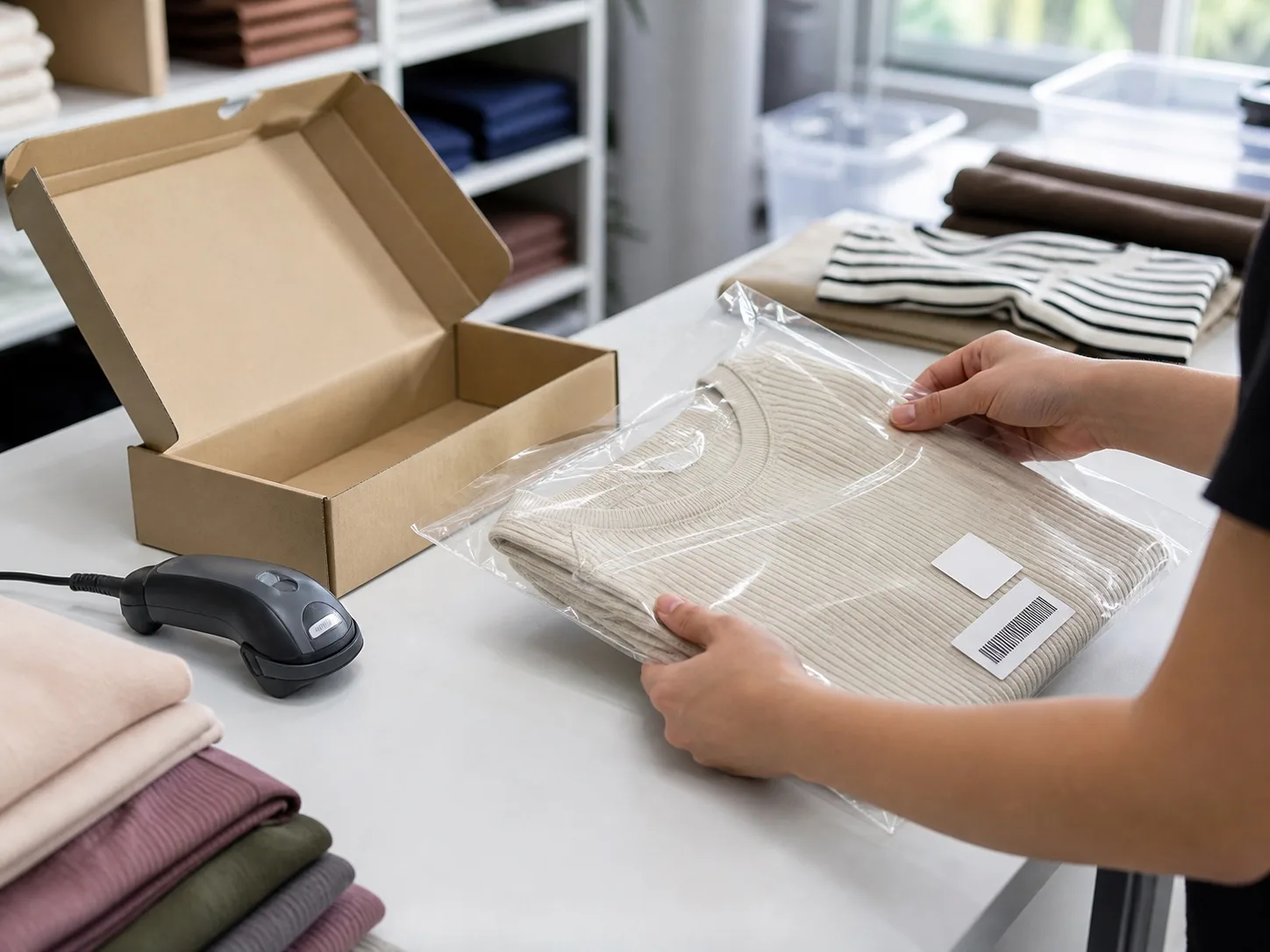
US e-commerce brief-control kit
Three controls that keep an online product promise connected to the garment
A first sample becomes useful when the buyer can name the product version, the facts a customer will rely on and the person who can approve the next decision. Use these controls before labels, packing and product data become difficult to reconcile.
Define the product customers will receive
Connect the working style code, colour, size context, intended fit, fabric direction and sample purpose before a product-page phrase becomes a factory instruction.
Separate buyer-owned facts from factory evidence
Keep label copy, care direction, origin and responsible-business details with their owner and approval status, while the factory prepares the requested sample or applied proof.
Map packing to the exact SKU version
Link the individual bag, barcode, fold or hanger route, inserts, carton marks and channel instructions to the style-colour-size version that is actually being packed.
Buyer actions and factory questions before a U.S. e-commerce product moves from sample to bulk planning
Use this list to make the product, customer expectation, applied components and fulfillment route visible. Exact market requirements, quantities, costs, timing, testing and commercial terms remain specific to the confirmed programme.
| Decision area | What the buyer should prepare | What to ask the factory |
|---|---|---|
| Product and customer context | Provide the category, target wearer, style-colour-size identity, sales channel, current reference, product role and source of the product facts. | Which physical or digital reference controls this product, and which commercial statement still needs a buyer decision? |
| Fit and size evidence | Share intended fit, sample size, measurement points, fit reference, comment record, approval owner and any point that needs a sample review. | Which pattern, fabric or construction question could change the fit evidence before a size or bulk route is approved? |
| Fabric and care direction | State the fabric or swatch route, lining, trims, stretch, opacity, finishing, care-information status and source of supporting evidence. | Which material or component needs a swatch, sample, applied proof or buyer clarification before care or product facts are final? |
| Labels and product information | Map main, size and care labels, fibre and origin inputs, responsible-business information, hangtags and product data to the current version and owner. | Which file is a draft, which is approved for this garment and which placement or applied proof still needs review? |
| SKU and individual packing | Provide the style-colour-size mapping, barcode owner, bag or sleeve direction, fold or hanger route, inserts, stickers, carton data and channel differences. | Which packing instruction belongs to this exact SKU version, and what proof is needed before packing materials are prepared? |
| Sample and release control | Name the sample purpose, current revision, approvals, open decisions, requested proof and person who can release the next action. | What can move forward now, what must remain conditional and which later change requires the sample, facts or packing to be reconsidered? |
Continue the production conversation
Production-brief controls that connect an online clothing promise to factory action
| Control point | What the buyer should define | What the factory can prepare or question |
|---|---|---|
| Product identity | Style code, category, colour, size context, target wearer, channel and current sample or reference. | A controlled sample route that does not confuse an old or similar garment with the current product. |
| Fit and measurement evidence | Intended fit, sample size, measurement points, fit reference, comments, approval scope and open risks. | Pattern and sample questions, then evidence for the buyer to review before a fit decision moves forward. |
| Material and care route | Fabric or swatch direction, lining, trim, construction, stretch, opacity, care information status and evidence owner. | Material, construction and applied-component review without treating an early note as final bulk information. |
| Labels and product facts | Buyer-owned content, file revision, garment mapping, placement, approval owner and pending market or channel review. | Applied label proof and a visible distinction between source files, drafts and approved components. |
| SKU and packing route | Style-colour-size mapping, barcode owner, individual packing, fold or hanger direction, carton inputs and channel differences. | Packing proof or a controlled instruction tied to the product version the warehouse will receive. |
| Sample release | Sample purpose, decision date, conditions, unresolved items and the person who can approve the next action. | A clear boundary between what may proceed, what remains conditional and what needs another proof or sample. |
Buyer FAQs
How should private label clothing for US e-commerce brands prepare a first brief?
Begin with the buyer-defined product identity, customer, channel, intended fit, material direction, label and packing status, sample purpose, approval owner and open decisions. The brief should show what is confirmed and what still needs evidence or review before a factory treats an instruction as ready for bulk preparation.
What size information should a factory receive for a private-label online product?
Provide the buyer-defined size range, sample size, measurement points, fit reference, intended fit, review priorities and any approved comment record. Do not rely only on a generic size name. A factory can then identify what needs a pattern or sample review.
Does the factory decide U.S. care-label or textile-label wording?
No. The factory can apply buyer-approved files and coordinate proofs, but the brand, importer and appropriate specialist should confirm final wording, evidence and applicability. FTC guidance is useful planning context, not a universal finished-label instruction.
Should product-page data be included in the production brief?
Include the product facts that affect what is made, checked, labeled or packed, such as fit description scope, material direction, care route, colour and size identity. Keep marketing copy separate from the stable style and version information that the factory needs to control production.
Can Yinshan Fashion help a small US e-commerce brand start a private-label programme?
Yinshan Fashion can help turn references and buyer inputs into questions for fabric, fit, sample development, labels, packing and bulk preparation. The brand remains responsible for final commercial choices, quantities, product information, retailer requirements and market approval.