Article
What should buyers know first?
Short answer: Develop private label cocktail dresses with a clear silhouette, fit reference, lining plan, closure specification and sample approval record.
Private label cocktail dresses need a brief that connects the intended occasion with silhouette, coverage, fabric, construction and sample approval. A reference picture can communicate a mood, but it cannot settle the garment's measurements, lining, fastening or behaviour when worn. Before discussing bulk production, a brand should identify the sample version and the specific evidence that will make it acceptable for its customer and selling position.
Yinshan Fashion works with custom and private-label bulk programmes, including enquiries for occasionwear and small-batch collections. This is not an unrestricted ready-stock wholesale offer. Quantities, materials, colours, specialist construction, prices and delivery arrangements depend on the programme and should be confirmed through the enquiry and sampling process. The guide below focuses on turning a cocktail-dress idea into a reviewable product, rather than choosing an outfit for an individual shopper.
Define the Brief for Private Label Cocktail Dresses
A cocktail dress is identified by its intended occasion rather than one compulsory hem length or construction. For development, the category name therefore needs supporting detail. Describe where the customer is expected to wear the garment, the brand's intended level of formality and the silhouette under consideration. If the phrase “little black dress” appears in the brief, still specify the actual neckline, length, back and closure. A familiar retail term cannot replace the information needed to make a pattern or assess a sample.
Identify the buyer decision at the top of the brief. Perhaps the first sample is intended to choose between a straighter silhouette and a more shaped waist. Perhaps the shape is decided and the unresolved issue is coverage in a lighter colour. Those are different development tasks. State which features are essential to the design and which can be discussed. This helps a factory propose a workable route without unintentionally removing the feature that gives the dress its commercial purpose.
References should be annotated and used with the necessary rights. Instead of asking for a photograph to be copied wholesale, identify the neckline relationship, proportion or construction question that it illustrates. Include your own front and back sketch, even if it is an early version. Where a reference hides the side or back, label the missing information. The production team should not have to invent a fastening or internal support arrangement simply because the image never shows it.
Give the sample a stable identity from the start. The style code, design revision, material candidate and reference size should travel together through the development file. Add the person responsible for design approval and the person responsible for measurements; the same person may own both. Record the desired result of the first review. A clear acceptance question turns sampling into a decision-making activity and makes it easier to explain why another sample is needed when an important issue remains open.
Choose a Silhouette with a Commercial Purpose
Compare silhouettes through their intended shape and review points rather than promises about which body they flatter. An A-line direction, a fit-and-flare dress, a straight cut and a close-fitting design create different relationships between bust, waist, hip and hem. Name the target relationship and show it in the drawing. Avoid claiming that one shape suits every customer. Your brand's size range, fit reference and customer knowledge should guide the choice, with the sample providing evidence for the actual garment.
The Dress Collection is a relevant starting point for discussing dress development. When selecting a direction, explain what you want to retain and what you want to change. A collection photograph does not confirm that a proposed variation can use identical materials or construction. A different neckline, shorter length or more defined waist should be included in the new brief. Treat the reference as a conversation aid, then assess the specific design on its own terms.
Connect the silhouette to the intended range. A brand may need a central dress with a clear design feature, a quieter alternative or a piece that coordinates with an existing outer layer. These are assortment choices, not factory performance claims. If two proposed dresses have the same role, compare the additional development work against the difference the customer will see. Reducing unnecessary variants can make the approval discussion more focused, but the brand should decide which commercial options matter before the factory reviews feasibility.
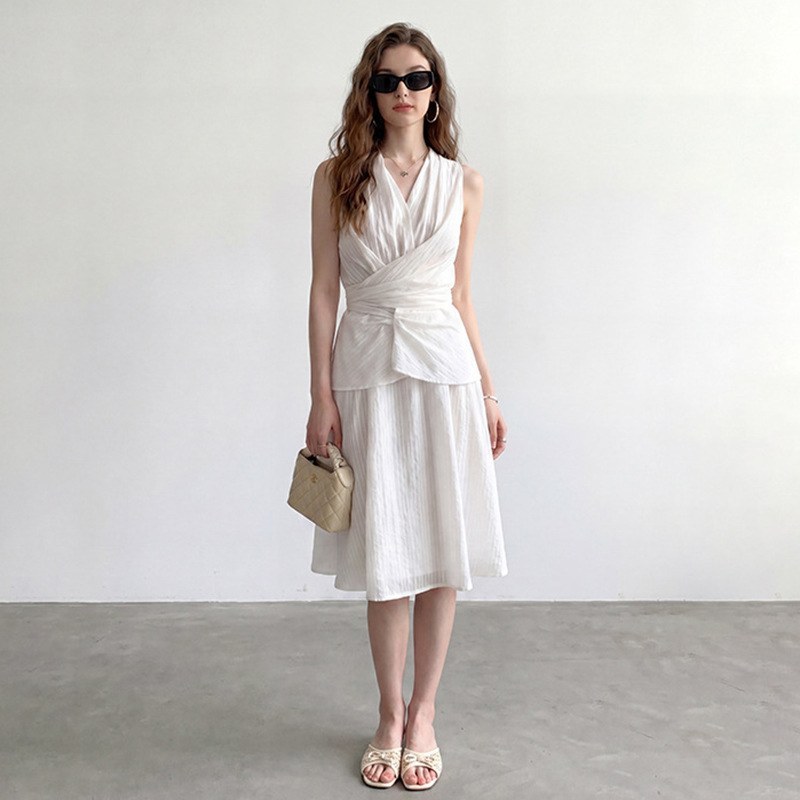
Do not approve a silhouette only through a styled front image. Review the side and back, identify the waist position and observe how the garment settles after ordinary movement. A pose can conceal an unintended side-seam position or a back that does not sit as expected. Use consistent views for comparison and retain the fit comments with the sample identifier. If the outline is accepted while the length remains open, record that limited decision. Approval can be precise without pretending that all details are already resolved.
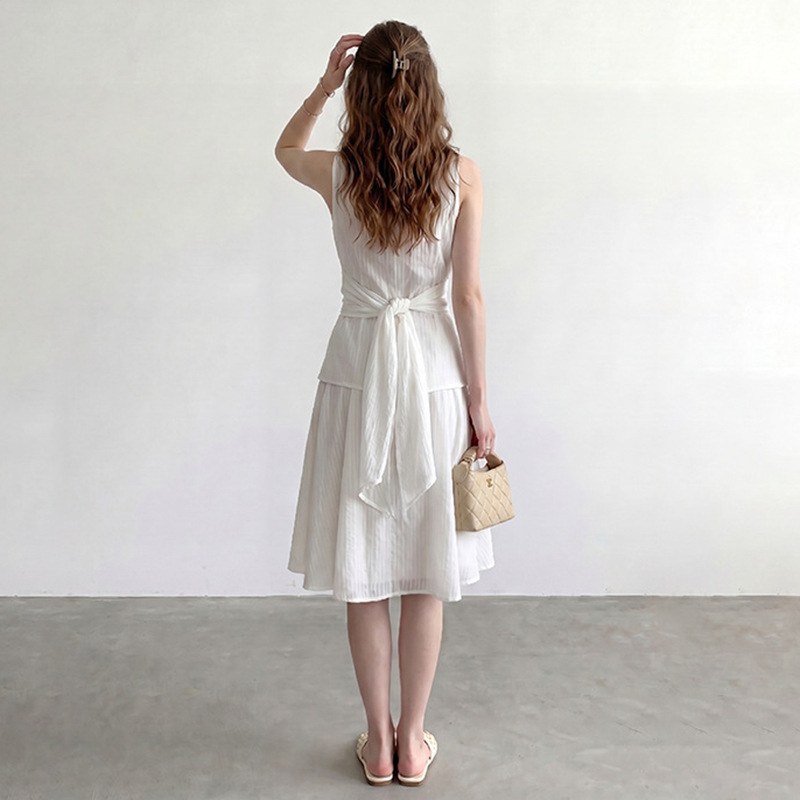
Back-view reference: record the waist treatment and any fastening details that the photograph does not reveal. A styled photograph does not replace an identified fitting sample.
Specify Neckline, Straps, Sleeves and Back Details
Draw the front neckline and back together. A low back, narrow shoulder strap or sleeve opening affects the overall design brief and the questions asked during fitting. Mark the points that need measurement and identify the intended coverage in front, side and back views. Where a body reference is used, record the conditions appropriately and with consent. A neckline dimension on a flat garment is useful, but it should be interpreted alongside the way the actual sample sits on the agreed fit reference.
Describe straps beyond their appearance. State whether adjustment is intended, where the front and back attachments belong and what kind of fastening or hardware is being explored. If the strap is decorative rather than part of the intended support arrangement, make that distinction explicit. Do not assume that adding an adjuster resolves all fit concerns. The review still needs to consider attachment position, neckline balance and the way the dress is held by its complete construction.
Sleeves and shoulder details need their own movement questions. A buyer might want to observe reaching forward, raising the arms or wearing the dress beneath a jacket. Those observations should be agreed as practical sample-review conditions, not presented as formal performance certification. Record any discomfort or unwanted garment movement in the wearer's words, followed by the relevant location and photograph. This keeps subjective experience attached to a specific construction question that the technical team can investigate.
When a dress is part of a wider occasionwear offer, the Pant & Dress Collection may support a discussion of related silhouettes and outfit proportions. It does not replace a detailed brief for the dress being developed. Keep alternative back details or strap arrangements outside the approved version until they have been selected. Otherwise, a factory may receive one front sketch, another back reference and a comment from a third option, none of which describes one complete garment.
Connect the Outer Fabric with the Lining Plan
Record material identity before making claims about appearance or quality. “Satin” describes a fabric construction or surface direction, not proof of silk fibre content. Ask for the candidate material's stated composition and identifier, and keep those details with the swatch and sample. For a fuller distinction, use the silk versus satin buyer guide. In the cocktail-dress brief, the immediate task is to connect each material candidate to the silhouette it is expected to support.
Plan the lining as part of the garment rather than an automatic finishing addition. Identify which areas are lined, where the lining ends and how it meets the neckline, openings and hem. Ask the factory to review the proposed combination for the actual design. The buyer can define the desired coverage and appearance, but should avoid prescribing an untested construction as universally correct. A sample of the complete combination provides more useful evidence than separately approving an outer fabric and a lining swatch.
Review each relevant colour in its intended use. A dark colour should not be assumed to resolve every coverage concern, and approval of one shade should not silently extend to another. Note lighting, underlayers and viewing conditions when recording observations. These are project review conditions, not a universal transparency test. If the brand needs a defined laboratory assessment or formal performance claim, specify that requirement separately and obtain appropriate evidence. A visual sample review cannot stand in for a test that was never conducted.
Look at the relationship between layers after the garment has been handled and worn under the agreed conditions. Note visible lining edges, uneven settling, restricted movement or unexpected surface appearance. Describe the observation before deciding on a remedy. The factory may need to review the pattern, attachment, material combination or finishing method. Keep material substitutions visible in the revision log, because changing the lining while retaining the outer fabric can still alter the complete garment that was previously approved.
Define Closures and Internal Construction
A closure is part of how the customer uses the dress, not merely a line on the back sketch. Identify its position, intended opening and visible finish. Ask how the wearer will put on and remove the sample, and whether the fastening can be reached under the proposed design. Record the actual component reference once selected. A generic note saying “hidden zip” does not establish its length, colour, placement or the way the surrounding layers are finished.
Internal structure should be discussed explicitly when it is relevant. Cups, boning, shaped panels or other support elements are not implied by a fitted photograph. Their feasibility and suitability require confirmation for the proposed construction and intended wearer reference. Avoid promising that a dress eliminates the need for underlayers or offers a particular level of support without evidence. The brand should explain its intended use, while the factory identifies the sample work and technical questions needed to assess that request.
Ask the sample reviewer to inspect the inside as carefully as the outside. Record the finish at seams, closure ends, lining joins and attachment points. If a detail looks unfinished or causes concern, identify it with a close view and relate it to the garment version. Do not infer a production method from the external appearance alone. Two samples can look similar from the front while using different internal arrangements, which may matter to later comments, material records and repeat-order consistency.
The custom womenswear manufacturing route can be used to discuss the development support needed for these decisions. Send sketches of the proposed internal details and state which ones are essential, optional or unresolved. Ask for confirmation before representing a specialist feature as an established capability for your programme. A useful response should identify what can be reviewed in a sample and what additional information is required. This keeps the enquiry constructive without turning an exploratory design request into an unsupported promise.
Review the Sample on the Intended Fit Reference
Begin the fitting with a short record of the garment and the conditions. Include the sample code, revision, labelled size, material references, agreed underlayers and any adjustable settings. Confirm the measurement method before comparing figures with the brief. Flat-garment dimensions and wearing observations answer related but different questions. The first records what was made; the second helps assess how it behaves on the selected reference. Neither should be replaced by a general comment that the dress “looks fine.”
Review bust, waist and hip relationships together. If the waist sits differently from the target, observe the whole garment before prescribing a single alteration. Note side-seam position, neckline balance, closure appearance and hem relationship. A local symptom can have several possible explanations, and the factory needs the complete observation to investigate. The buyer should distinguish the result they need from a technical correction they have not yet validated. That leaves room for the sample team to explain the proposed solution.
Use the intended movements to check the agreed appearance and coverage. Sitting, rising and walking may reveal questions that a static front view does not show. Record the sequence and the result without promising that one review represents every wearer or occasion. If the garment is uncomfortable, stop and identify the concern. Practical fit feedback is valuable precisely because it is specific to the conditions, rather than presented as a universal statement about the design.
After the base sample review, identify remaining size questions. Approval of one reference size does not automatically settle the whole size range. Ask which size samples or other evidence the brand needs before its release decision. The dress sample fit checklist provides a wider framework. For this dress, retain a concise list of accepted points, rejected points and items needing another review, so that the next sample can be judged against the same priorities.
Translate Comments into an Approval Record
Separate observation, requested outcome and proposed correction. An observation might be that the lining is visible at the front neckline during the agreed sitting review. The requested outcome is that the lining remain in the accepted relationship to the neckline under those conditions. The proposed construction correction should be confirmed by the technical team. Combining all three into a vague instruction such as “improve lining” makes it difficult to verify whether the next sample has solved the original problem.
Number the comments and connect each one to a photograph or measurement reference. Give the revision a due review point without inventing a standard completion time. Identify the owner who must confirm the result. If a comment is withdrawn because the design direction changes, keep its history and state the reason. An orderly record does not need a complicated platform; a clear revision table can prevent more confusion than a long chat thread containing contradictory approvals and unlabelled images.
Approve a defined scope. A silhouette approval, material approval and production release are different decisions, even when the same person signs them. State which materials, size, colour and construction the decision covers, and list exceptions. “Approved subject to changes” should name the changes and explain whether another sample is required. Without that information, the phrase can be interpreted as permission to proceed or as an instruction to wait, producing avoidable uncertainty between the brand and factory.
Preserve the accepted sample record alongside the latest specification. If the written measurements and the sample disagree, resolve the conflict rather than asking production to choose a reference. A photograph alone may not reveal the difference. Before release, review the final document set as one package and identify the controlling version. That package should allow a colleague joining the project later to understand what was accepted, what was changed and which evidence closed each important issue.
Handle a Colour Change as a Defined Revision
Imagine an illustrative development case in which a brand accepts the shape of a dark cocktail-dress sample and then requests a pale version. This is not a reported customer project. It demonstrates why the approval record should describe its scope. The silhouette decision may remain useful, but the pale colour still introduces its own material and appearance questions. The buyer should not convert the earlier fit approval into an unrestricted approval of every future colour.
Create a colour-specific review entry with the proposed outer fabric, lining and closure references. Identify whether any of those components differ from the accepted sample. Then list the observations needed on the new combination, including coverage under the agreed conditions, visible internal edges and the relationship between closure and outer material. Keep the same fit setup where comparison is intended. If the new sample is reviewed with different underlayers or lighting, record the difference instead of treating the two images as equivalent evidence.
Suppose the buyer then asks for a different lining. That request should return to the construction record, because the garment being accepted is now a new combination. Ask the factory what needs another sample or confirmation. The commercial team should also check whether any quoted assumptions have changed. Separating these decisions avoids forcing one person to make technical, commercial and launch judgments through a single informal “yes.” Each owner can respond to the part of the revision they are responsible for.
Close the example with a clear outcome: the colour is accepted with identified components, remains under review or is removed from the current order. Update the quantity matrix and product information accordingly. Preserve the earlier sample as the reference for the decisions it actually supports. This approach makes a small range easier to manage because the team can add a considered option without losing the history of the original dress or overstating what has already been verified.
Prepare Labels, Presentation and a Production Enquiry
Keep photography approval separate from garment approval. A sample may be suitable for an internal design discussion while still differing from the version intended for sale. If imagery is prepared before the final decision, label the image set with its sample reference and list any details that may change. Before using the photographs publicly, compare them with the final neckline, back, length and included components. This reduces the chance that the product description and photographs promise a feature that was removed during development, or omit a fastening that the customer needs to understand.
Bring the product information into line with the accepted garment. Confirm the brand name, size designation, material information, care information and other destination-specific requirements through the buyer's responsible review process. Do not copy label content from a visually similar dress. Any legal or test-dependent statement requires its own evidence. The development record should identify who approves that information and which artwork or label version is current, rather than leaving it as an unowned task at the end of sampling.
Decide what the customer receives and how it is presented. List included accessories or removable parts, if any, and distinguish them from styling items used in photographs. Define the packing unit and the identifiers needed by the receiving operation. Review a packing reference against the actual garment and its closure or decorative details. The objective is to make the contents and presentation clear; it is not to assume that one packing method is suitable for every fabric or every destination.
Before requesting the next commercial response, assemble the current sketches, sample comments, material references, proposed quantities by colour and size, label direction and target arrival window. Mark unresolved items so the quotation or feasibility discussion can identify its assumptions. If the sample is still exploratory, say so. A useful enquiry can begin before every detail is final, provided both parties understand what remains to be established and what decision the response is expected to support.
To develop private label cocktail dresses with Yinshan Fashion, share your dress brief and sample questions. Include front and back references, intended occasion, silhouette, neckline, materials, size range and proposed quantities. Add the fit or construction issues you want to resolve first. This allows the discussion to focus on a specific garment and a reviewable next step, while keeping material availability, specialist details, commercial terms and production release tied to the actual programme.
Review sequence before the next sample
- Define the silhouette, occasion and essential details.
- Confirm material and construction questions for sampling.
- Review the identified sample and consolidate comments.
- Align labels, quantities and packing before release.
Occasionwear development checklist
Actions before the next sample
Use the current brief and the identified garment to close the next development decision.
Annotate the design
Replace broad words such as elegant with marked neckline, length, waist and back relationships. Identify essential features.
Review the inside
Compare the lining, closures and proposed internal details with the brief. Record temporary components before judging the sample.
Consolidate the response
Number each issue and give its observation, desired outcome and owner. State what the approval actually covers.
Buyer action and factory confirmation
Use these questions with the identified garment and current programme brief.
| Decision area | What the buyer should prepare | What to ask the factory |
|---|---|---|
| Design brief | Provide the occasion, silhouette and original design direction. | Which hidden or conflicting details need clarification? |
| Material combination | Identify outer fabric, lining and colour candidates. | What sample evidence is needed for each selected combination? |
| Specialist construction | State intended support or internal features without assuming capability. | Can the proposed details be assessed, and what inputs are required? |
| Fit comments | Supply consistent views, measurements and movement observations. | What revision is proposed and how should it be reviewed? |
| Production enquiry | Submit allocations, labels, packing and current approval records. | Which technical and commercial conditions remain to be confirmed? |
Continue the production conversation
Cocktail dress decisions and the evidence to request
| Decision | Buyer direction | Record to retain |
|---|---|---|
| Silhouette | Choose the target relationship between bust, waist, hip and hem. | Front, side and back sample views with the fit reference identified. |
| Neckline and back | Define coverage and connection details as one garment. | Marked drawings and sample observations under agreed conditions. |
| Outer and lining | Review the actual material and colour combination. | Material identifiers, inside views and coverage observations. |
| Internal structure | Request specialist details only with explicit feasibility review. | Confirmed sample construction and evidence for any proposed claim. |
| Release scope | Separate design acceptance from production authorization. | Named sample, current specification and closed exception list. |
Buyer FAQs
Are private label cocktail dresses always short?
No. Private label cocktail dresses are developed around the intended occasion and design, rather than one compulsory short length. The brand should specify the actual hem target, silhouette, neckline and use. Those details need sample review against the intended fit reference.
Can a little black dress be developed in a small batch?
A little black dress can be proposed for a small-batch development programme, but the category name does not establish a fixed minimum or material availability. Send its construction, material, colour and size requirements with proposed quantities. Yinshan Fashion can review the actual brief and its conditions.
What should be approved before bulk production?
Identify the accepted sample and confirm the relevant design, measurements, materials, colour, closure, lining and component details. Keep label and packing decisions aligned with the garment. Production release should also state the current document versions and any unresolved conditions, rather than relying on a general positive comment.
Does a cocktail dress need internal support?
That depends on the design and intended use. Internal cups, boning or other support details should not be inferred from a fitted photograph. State the requirement, ask for feasibility review and assess the proposed sample. Avoid support claims that go beyond the evidence available for the garment.
Can one approved sample cover every colour?
Not automatically. A colour change may involve a different material or lining relationship and needs its own review scope. Retain the original approval for the decisions it supports, then identify the observations and evidence required for the new colour combination.