Article
What should buyers know first?
Short answer: A B2B guide for Australia-facing fashion brands aligning care-information inputs, product-specific fabric decisions, samples, retail presentation and packing before bulk planning.
Fashion production for Australia becomes more controllable when a brand keeps care-information inputs, fabric decisions, sample evidence and retail presentation connected to the exact garment being discussed. A lightweight shirt, printed dress, brushed lounge set or structured skirt can have a clear visual direction long before the material route, care file, applied label and packing version are ready for release. The useful question for a factory is not whether a style is generically “Australia ready.” It is whether the current product record states what the buyer has decided, what evidence exists and what must stay open.
Yinshan Fashion supports custom and private-label bulk programmes rather than unrestricted ready-stock wholesale. A brand can bring a tech pack, reference garment, product concept or early range plan; Yinshan Fashion can help turn it into fabric, pattern, fit, sample, component, label, packing and production-coordination questions that a factory can work with. The brand, importer, retailer and appropriate advisers remain responsible for final consumer information, market obligations and commercial decisions for the actual programme.
Australia is not one material condition, one channel or one customer expectation. A collection may be prepared for different seasons, regions, indoor retail, resort use, direct-to-consumer fulfilment or a specific wholesale account. Treat those as buyer inputs. This article shows how to convert them into a practical development record without turning general climate discussion or an official web page into a promise about the final garment.
How should buyers start with one sellable product identity, not a seasonal nickname?
“Summer rib set,” “coastal capsule” or “winter travel layer” can be useful creative language. They do not control a sample, care label, size sticker or carton. Give every sellable route a product identity that links style, colourway, size context, intended channel, current fabric and component route, sample revision, retail presentation and decision owner. If the same dress uses a different lining, a lounge set changes knit construction, or a top has a different barcode for a wholesale account, mark the difference as a new visible version.
The format does not have to be complicated. A small brand may use a controlled brief and change log; a larger team may have a product-information system, artwork register and purchase-order workflow. In either case, a new colleague should be able to answer: which sample is current; which fabric belongs to it; what the label file can be used for; and which packing route belongs to the intended recipient? That is more useful than relying on the newest attachment in a message thread.
Yinshan Fashion can connect that product identity to pattern work, material comparison, sample comments and factory handover. The buyer should name the person who can release customer-facing and market-specific decisions. Clear ownership lets development advance without asking a factory to make a brand decision from an incomplete file.
What should fashion production for Australia control before a material is released?
The decision table below turns those six records into a working comparison. It is not a legal checklist. It makes it easier to see when a confident sample is still paired with an old care note, an unconfirmed material source or a packing instruction written for another channel.
A brand can approve a silhouette while fabric remains under comparison, or approve a loungewear handfeel while its final care-information review stays open. The point is to state that condition so the factory can develop the supported part of the route and ask the right next question.
How should buyers turn climate and wear context into a garment question?
“Warm climate” is not an adequate fabric brief. A garment may be worn outdoors, in air-conditioned interiors, as a layer, near water, in a commute, for a short occasion or repeatedly across a retail season. A buyer should describe the expected use, coverage, movement, opacity, drape, recovery, wash expectation, lining and presentation priorities. Those inputs lead to specific material and construction questions; a country name alone does not.
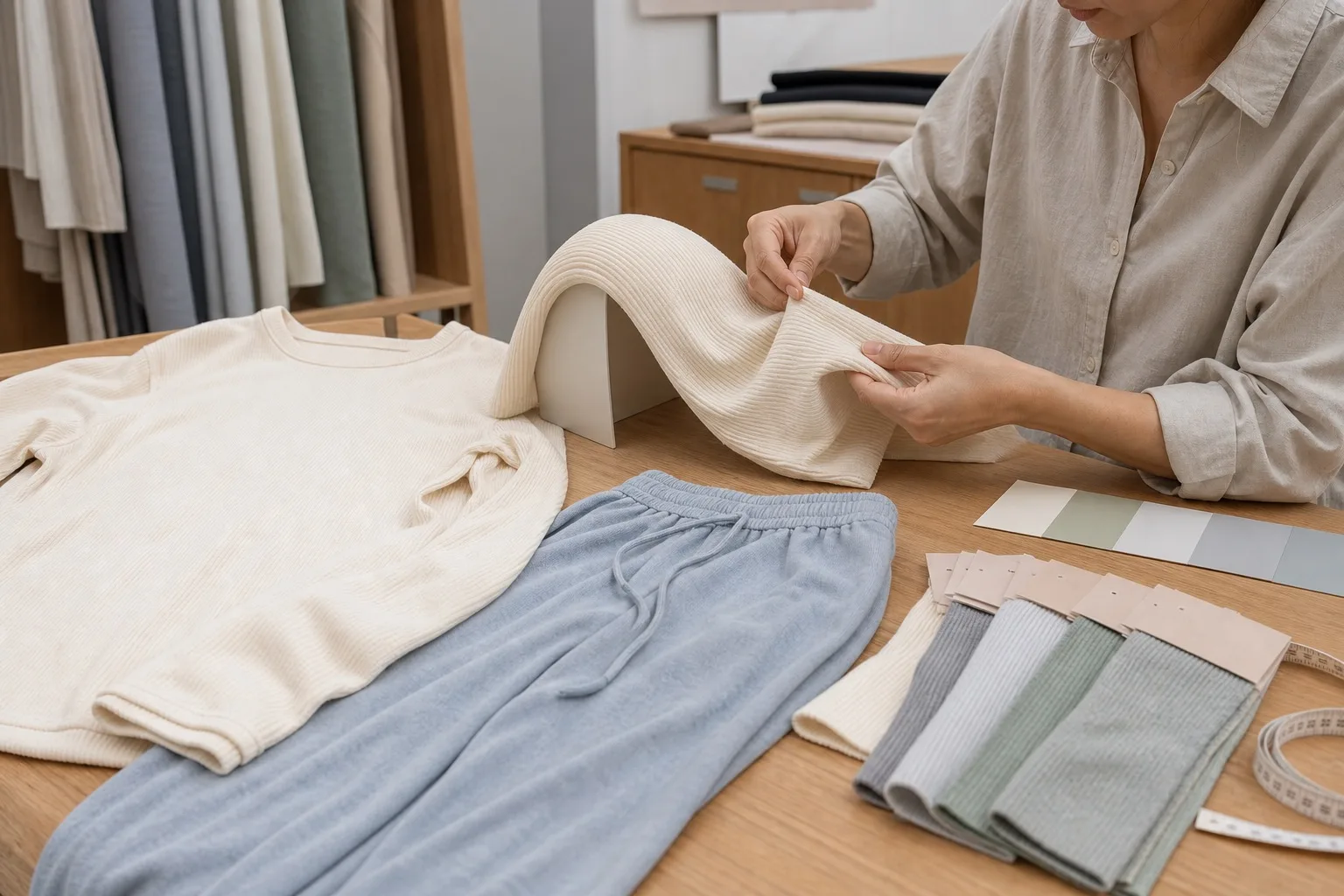
For example, a relaxed woven dress might require the buyer to compare coverage, lining, seam appearance and pack fold on the proposed fabric. A jersey top may need a sample to show stretch, recovery and neckline behaviour. A brushed lounge item may need the team to discuss handfeel, warmth perception, pilling concerns, cuff recovery and its care-information source. None of those questions creates a performance claim. They simply make the sample objective observable.
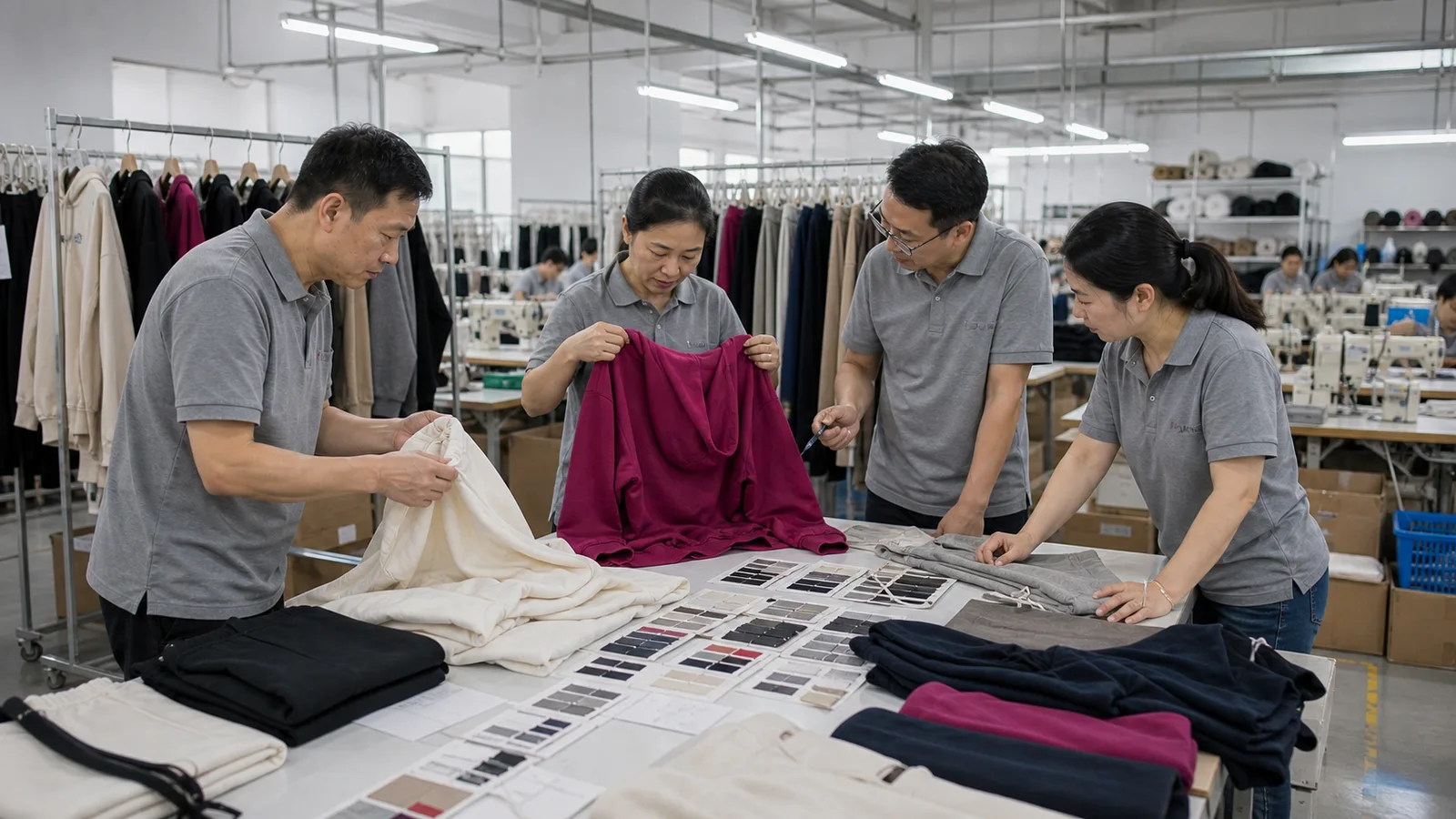
The fabrics and trims resource can help organise possible bases, colours and components. It is a planning resource, not a statement that a fabric is always available, suitable, certified, tested or commercially fixed. Retain the actual supplier reference, composition information supplied, construction or weight where known, finish, swatch date and product scope beside the buyer’s question.
How should buyers compare fabric behaviour on the actual silhouette?
Fabric decisions are clearer when a buyer reviews more than handfeel. A material can feel soft in the hand but create too much transparency, poor seam appearance or unexpected movement once it becomes a garment. It can look structured on a hanger but collapse at the hem. It can work in a short-sleeve top but not in a relaxed trouser, a lined skirt or a piece that will be folded into a small individual pack. Ask the factory to identify what a swatch can answer and what must be seen on the intended garment.
Use a comparison sheet with the fabric reference, supplied composition input, construction, colour direction, finish, drape, coverage, stretch, recovery, lining relationship, trim relationship, intended style, care-information source, evidence held, owner and next proof. A column labelled “open” is valuable: it prevents a mood-board preference from being misread as an approved production material.
The casual-fashion range gives a useful category context for dresses, blouses, shirts and fashion tops. It can help a buyer specify whether it is developing a fluid printed dress, a more structured shirt or a soft layered top. The product page does not replace a custom brief; it helps the buyer name the garment and fabric behaviour it wants to test.
How should buyers keep care information tied to the product and its source?
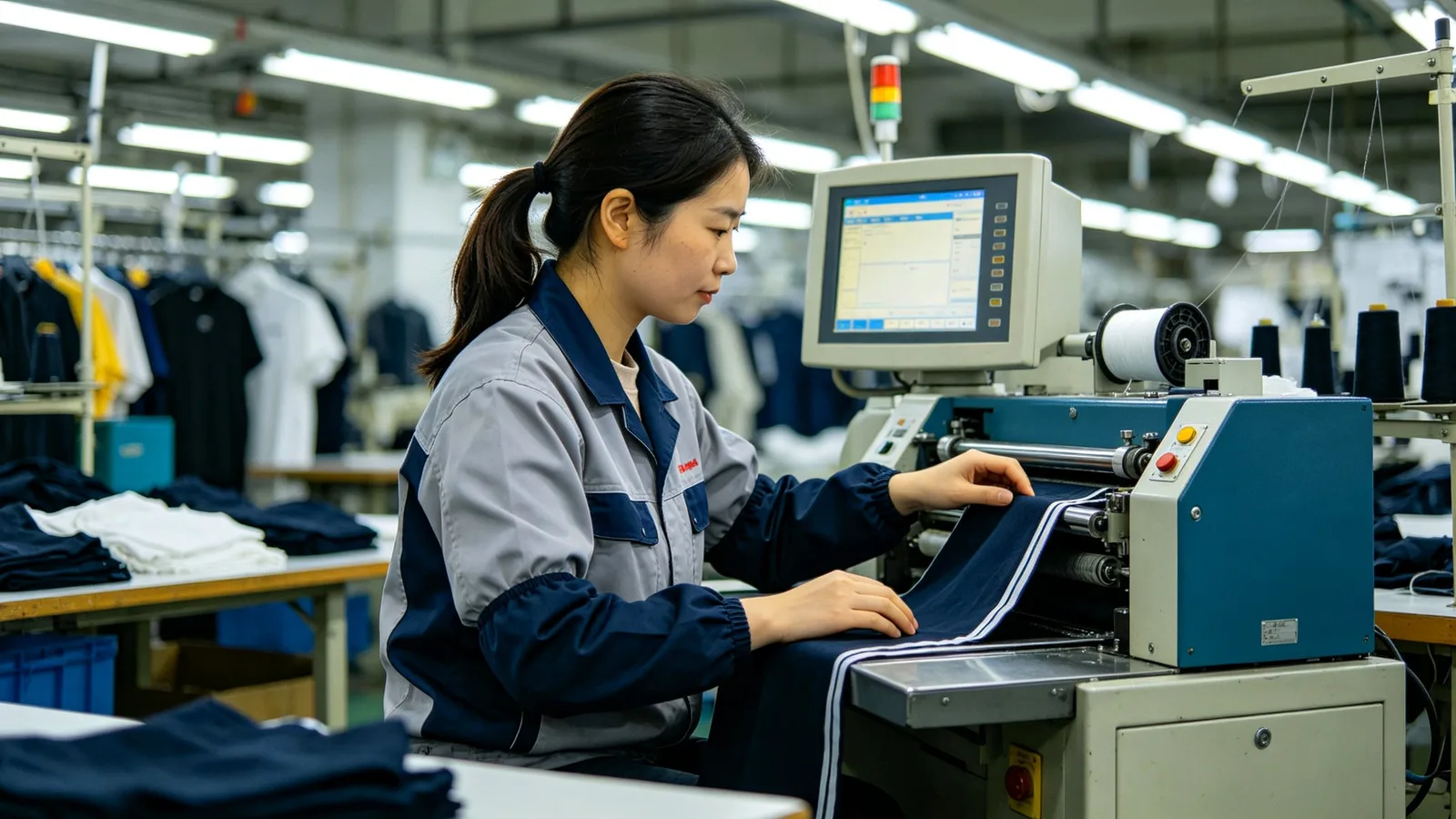
Care information is not a styling afterthought. A fabric, lining, trim, print, coating, closure or applied component can change the question a buyer needs to answer before it releases a consumer-facing instruction. Keep the relevant source materials, product scope, owner, version and review status together. When the material or component route changes, reopen the associated care-information question instead of copying wording forward from a previous style.
The ACCC Product Safety overview for the Care labelling for clothing and textiles mandatory standard is a useful official planning reference. It describes the 2023 standard and states that covered suppliers may use written English care instructions, the recognised international care symbols, or both. The page also says its overview is not a complete compliance guide. A brand should use that as a reason to identify the correct owner and review process for its actual product, rather than treating a generic label or this article as a final conclusion.
For a private-label programme, make the source and use of each file explicit: internal product note, online draft copy, sample placement proof, final buyer artwork or released packing instruction. Yinshan Fashion can apply buyer-approved files, show their placement on a sample and retain the version used. It should not infer a final consumer statement from a fabric swatch, an old label or a request to “make it compliant.”
How should buyers separate a material preference from a customer claim?
A brand may prefer a linen-like hand, a cooling feel, an easy-care route, recycled-content direction, sun-oriented presentation or a particular fibre story. These can be valid design and sourcing questions, but they are not automatically approved customer claims. The buyer should record the proposed phrase, material source, component scope, evidence held, sales channel, owner and review status. If the fabric, production route or wording changes, revisit the claim question.
This distinction matters because the same word can be used differently. “Breathable” might refer to a design intention, an observed handfeel or a performance statement. “Made in” may relate to a product route that needs its own verification. “Sustainable” may refer to a narrow document or a broad marketing message. A factory can help identify the material and process inputs it has; the brand should determine whether and how a consumer-facing assertion can be used.
The private-label service page explains how a brand identity, applied artwork, labels and packing can be connected to factory handover. Use it to structure the programme. Do not convert a private-label conversation into a guarantee about material claims, origin, certification, availability or retail outcome.
How should a sample answer a named fabric-and-care question?
Every sample should have a purpose. A first sample can check the silhouette, pattern balance and construction. A material proof may compare drape, coverage, colour or surface. A later sample can bring current fabric, components, labels and packing together. Before it is made, write down the style, size, material and component route, question, reviewer, expected evidence, conditions and next decision. This avoids the vague approval message “looks good,” which is hard to translate into a bulk record.
For a dress, the question might be whether the intended fabric needs a lining, how the skirt moves, whether a print appears correctly across seams or whether the label placement affects neckline comfort. For a lounge set, it could be whether the chosen knit retains its intended handfeel after the specified product treatment, how cuffs behave, or whether the folded presentation identifies the correct size. The buyer decides the acceptable outcome; the factory can explain the practical sample route and the evidence available.
The loungewear product range is particularly helpful when a buyer needs to distinguish a pyjama, robe, knit set or homewear piece from a generic “soft apparel” direction. Comfort, coverage, fabric, care information and retail presentation should be documented for the specific style rather than assumed from the category name.
How should buyers build retail presentation around the recipient, not a generic pack note?
Retail presentation begins with who receives the garment. Direct-to-consumer fulfilment, boutique replenishment, marketplace stock and a department-store route may use different size identifiers, barcode ownership, inserts, protective materials, fold methods, hanger directions or carton marks. One physical blouse can therefore have more than one valid presentation record. A generic “polybag and carton” instruction is not enough to tell the factory which option to use.
Create a presentation record that names the style, colourway, size context, recipient, channel, fold or hanger route, label and barcode placement, protective material, insert, carton mark, buyer owner and approval version. If an applied component remains open, label it as open. That is safer than issuing a previous account’s pack file just because the garment silhouette looks familiar.
The manufacturing overview shows how product information, finishing, inspection and packing sit within a connected order flow. Yinshan Fashion can coordinate a buyer-approved presentation route with the garment and current sample. Exact packing materials, quantities, retailer conditions, delivery arrangements and commercial terms remain specific to the confirmed programme.
Why should care labels and presentation proofs stay as separate evidence gates?
A care-information file and a packing proof can be related, but they do not prove the same thing. A label layout may be correct for one garment version while the fold, size identifier or carton mark still needs another review. A sample can show that a label sits where intended but not establish that every product information field is final. A packing mock-up can confirm presentation but not determine the care instruction for a changed fabric. Write the purpose and limits of each proof.
A simple release register can record: product or file name, style-colour-size scope, source, version, owner, status, what is approved, what remains open and next action. For example: “LS-104, oat, sample 2; neck-label placement accepted for fit review; final care-artwork file pending brand sign-off.” Or: “Pack A-08; fold and protective sleeve released for boutique channel; account barcode pending buyer file.” The record does not slow a small brand down; it tells everyone which work can proceed safely.
How can channel data protect the product identity?
Retail information has a way of drifting when it is copied across styles. A marketing title changes. A colour name is revised. A barcode belongs to a retailer. A size label follows an old range. A carton file is saved under a vague collection title. The factory needs a stable buyer-defined identity that connects the physical garment to the current label and packing components.
Use a product matrix with style code, colourway, size context, material route, sample revision, components, label version, packing version, channel, quantity assumption, owner and open condition. When the brand changes one of these inputs, it should state whether an earlier approval still applies. That makes later repeat work more reliable too: a previous order can become a starting record and difference list, not a reason to assume that materials, packaging or market inputs are unchanged.
Yinshan Fashion can use this matrix in sample development, production coordination, quality checks and packing preparation. It is not a promise that every system, record or retailer condition is supplied by the factory. The buyer retains the responsibility to provide and approve the inputs that define its product and sales route.
How should quality review stay connected to the current reference?
Quality discussion is most useful when it begins with a named reference. The buyer should state which garment features are important: fabric appearance, seam finish, measurement points, print placement, trim attachment, label position, fold or packing identity. A factory can then describe practical review points and which current product record should be available at each stage. A broad statement such as “high quality” gives no one a comparison basis.
If the material route changes, reopen the checks affected by that change. A replacement knit may alter neck binding behaviour. A different woven may change opacity, seam appearance or label comfort. A new finish may affect the source needed for care-information review. A revised pack may change size-label or barcode placement. Reopening the right question is a sign of control, not a failure of the earlier sample.
The fashion clothing accessories quality-control guide gives buyers a practical route for tying materials, construction, components, labels, packing, findings and corrections to a product record. It should be used to organise a product-specific discussion, not to imply a zero-defect result.
What should a buyer-to-factory handover include before bulk discussion?
The first bulk conversation does not require every variable to be fixed. It does require a clear distinction between confirmed inputs, acceptable alternatives and missing decisions. A readable Australia-facing handover can include:
- Product identity for each style, colourway, size context, channel and revision.
- Reference image, tech pack or measurement basis, marked as visual reference or controlled instruction.
- Fabric, lining, trim, finish and colour direction, together with the source information held and alternatives under review.
- Sample record showing purpose, version, comments, decision scope, conditions and next proof.
- Buyer-owned care-information files with source, product scope, owner, version and release state.
- Retail presentation file covering applied labels, size identification, barcode ownership, fold, protection, inserts and carton route.
- Quantity assumptions by style, colour and size, marked as estimates where they are not yet final.
- A named owner for any retailer, importer, consumer-information or market question that remains open.
This handover gives Yinshan Fashion and a manufacturing team enough context to ask useful questions about fabric, fit, sample work, components, labels, packing and production. It does not create a fixed MOQ, quotation, lead time, test result, certification, shipping outcome or legal conclusion. Those items depend on the actual confirmed programme.
How should buyers plan the first order as a controlled learning route?
The first order can start with a manageable question. A buyer might compare two bases for a soft shirt; request a dress sample that tests drape and lining; develop a lounge set that tests cuff recovery and label comfort; or examine a packing proof for a specific boutique channel. Give the proof a purpose, review it against the current record and note what changes in the next version. This is more useful than treating the first sample as a universal approval.
After each decision, retain the evidence: approved or current sample, material and component references, comments, file versions, presentation proof, exception and next action. On a repeat programme, make a difference list. What remains the same? Which colour, fabric, trim, label, channel, barcode or packing route has changed? Which earlier decision must be confirmed again? This protects both the buyer and factory from relying on memory.
The fashion product brief before sampling guide can help a buyer organise the first handover. The export-ready production records guide explains how an approved sample, product data and packing inputs can move into a controlled market-specific order file.
How does Yinshan Fashion support an Australia-facing fashion brief?
Yinshan Fashion helps brands turn a product direction into a controlled custom or private-label manufacturing conversation: fabric and trim review, pattern and fit questions, sample development, label placement, retail presentation, packing inputs and factory-ready records. For an Australia-facing programme, the useful output is a current product route where the buyer can see the intended use, sample purpose, material source inputs, care-information owner, applied files, packing version and unresolved market-review responsibility.
To begin, send Yinshan Fashion the current style references, garment type, target wearer and channel, fabric and colour direction, size range, known care-information sources, label and packing files, quantity structure, sample objective and named approval owner through the contact page. The next step may be a swatch, pattern question, fit sample, applied-label proof, fabric comparison, packing mock-up or updated buyer file. That creates a practical production discussion without presenting an unfinished input as a final product or market promise.
Australia-market production-control kit
Three checks that keep care information, fabric choices and retail presentation tied to the current garment
Use one product identity, one evidence-backed care-information input and one released presentation-and-packing version before an Australia-facing style moves from sample discussion toward bulk.
Define the product use
Connect the garment type, channel, season context, wearer expectation, fabric route and sample purpose before a material direction becomes a production instruction.
Keep care inputs scoped
Separate buyer-approved care wording or symbols from a development note, material mood board or old label, and retain its source, owner and exact product scope.
Release the presentation version
Match labels, size identifiers, fold, protection, barcode, insert and carton instructions to the current style-colour-size and recipient channel.
Buyer actions and factory questions before an Australia-facing fashion style moves toward bulk
Use this as a production-control tool. The brand, importer, retailer and appropriate advisers remain responsible for final market, product-safety and consumer-information decisions.
| Decision area | What the buyer should prepare | What to ask the factory |
|---|---|---|
| Product identity | Provide style, colourway, size context, target channel, revision and current sample reference | Which brief controls the sample, label, packing and retail-presentation files? |
| Wear and climate context | Describe expected use, season, coverage, layering and channel context without treating a national climate as one condition | Which product-specific fabric, lining, construction or sample question needs proof? |
| Material route | Share the fabric, lining, trim, finish, colour and source information held | Which swatch, garment sample or component needs another review before release? |
| Care information | Identify the approved source, wording or symbol route, owner, version and market-review status | Which file is a draft, and which one may be applied to the current product? |
| Retail presentation | Approve labels, size marks, barcode ownership, fold, protection, inserts and carton inputs | Which product version and recipient does this presentation route cover? |
| Change control | Record sample scope, changes, decision owner and the next release gate | Which change reopens care, material, label or packing review? |
Continue the production conversation
Australia-facing fashion production: buyer decisions and factory inputs
| Record | Buyer decision | Factory execution input | Control question |
|---|---|---|---|
| Product identity | Style, colourway, size context, channel and revision | Current reference, sample and order record | Which exact product is moving forward? |
| Intended use | Layering, coverage, movement, season and retail context | Sample question and construction priorities | What should the sample prove for this product? |
| Material and components | Fabric, lining, trim, finish and source information held | Swatches, component callouts and sample route | Does the sample use the intended material route? |
| Care-information input | Approved source, owner, scope and status | Current artwork or instructions supplied by buyer | Is this a development note or a released applied file? |
| Retail presentation | Label, size mark, barcode, fold, protection, insert and carton route | Buyer-approved packing specification | Which product and recipient does it cover? |
| Change and release | Owner, date, conditions and next action | Controlled production handover | What change reopens a previous decision? |
Buyer FAQs
What should fashion production for Australia include before a material is released?
Keep the style-colour-size identity, expected use, fabric and component route, sample purpose, care-information source and owner, applied label files, retail-presentation version, quantity assumptions, approval conditions and next decision together. Final market and consumer-information decisions remain with the brand, importer, retailer and appropriate advisers.
Can a climate or season reference decide the final fabric for an Australia-facing garment?
No. Treat climate and season as buyer inputs that need to become product-specific questions about layering, coverage, movement, drape, opacity, stretch, recovery, lining, finish and presentation. Use swatches and samples to review the intended garment rather than relying on a country-wide assumption.
How should care information be handled during private-label development?
Record the information source, exact product scope, owner, version, approval status and any open review. Keep development notes, online copy, sample proofs and files authorised for application separate. Reopen the related review if the material, trim, finish or product route changes.
Why does retail presentation need its own version?
The same garment can use different size marks, barcodes, inserts, protection, folds, hangers and cartons for different recipients or channels. A separate version ties those components to the right style-colour-size and prevents a previous account's packing file from becoming an accidental instruction.
How can Yinshan Fashion support an Australia-facing private-label brief?
Yinshan Fashion can coordinate fabric, fit, sample, component, label-placement, packing and factory-handover questions around the buyer's controlled files. Availability, pricing, quantities, timing, testing, certifications, shipping and final market obligations remain programme-specific.