Article
What should buyers know first?
Short answer: A practical B2B guide for fashion buyers developing private-label dresses, covering reference review, fabric behavior, pattern and fit decisions, samples, size planning, factory handover, and bulk-release records.
What should buyers expect from a custom dress manufacturer?
A custom dress manufacturer helps a fashion buyer turn a reference image, original sketch, tech pack, retained garment, or seasonal concept into a repeatable product route. That work is more than sewing a dress that looks similar to a photograph. It includes deciding what silhouette is intended, which fabric can create the right movement, how the pattern should carry the shape, what must be proven on a sample, and which approved details need to follow the style into bulk production.
For a private-label programme, a custom dress manufacturer should help make the development assumptions visible before a quotation or bulk decision. A printed wrap dress, a fitted woven midi, a soft shirt dress, a lined occasion style, and a knitted column dress can all look straightforward in a line sheet. Each one can behave very differently once fabric weight, stretch, lining, closures, seam placement, gathering, size range, and finishing are selected.
Yinshan Fashion supports custom and private-label bulk programmes rather than unrestricted ready-stock wholesale. Buyers can begin with a complete tech pack, but they can also start with a useful reference image and a clear description of the intended customer, price direction, fabric character, size range, colour plan, quantity structure, target market, and launch window. The first objective is not to make every decision at once. It is to separate fixed requirements from areas where material, pattern, construction, or factory advice is still needed.
This guide explains how a buyer can move from dress inspiration to a production-ready fit. It is written for brands, buying teams, retailers, and private-label companies that need a supplier and manufacturer able to coordinate development choices with real factory execution.
How should buyers evaluate a custom dress manufacturer before sampling?
The right question is not simply whether a supplier makes dresses. Ask whether the team can explain how a particular dress will be developed. A useful conversation should cover the product use, silhouette, fabric behavior, construction, fit priorities, sample route, private-label requirements, and the records needed before bulk production. A generic promise to make any dress quickly is less useful than clear questions about the product.
Start with category fit. A casual poplin shirt dress may need clean plackets, collar shape, pocket placement, sleeve proportion, opacity management, and controlled shrinkage. A draped woven dress may depend on bias behavior, lining movement, seam position, hem balance, and zipper performance. A fitted knit dress may raise different questions about stretch, recovery, coverage, neckline stability, and size grading. The manufacturer should identify which decisions matter most for the proposed route rather than applying one generic workflow to every dress.
A factory is the place where the approved product is cut, sewn, finished, checked, and packed. A manufacturer takes broader responsibility for making development information usable on that factory route. A supplier may coordinate materials, components, commercial inputs, and communication across that process. Buyers often need all three functions. The important point is to identify who owns each decision and how the final instruction reaches production.
Why should buyers treat a reference image as a brief, not a production instruction?
A reference image can be an excellent starting point. It may reveal a desired neckline, shoulder line, sleeve volume, waist position, skirt fullness, print mood, length, or general price position. It usually cannot confirm the fabric composition, fabric weight, stretch, lining, internal construction, pattern balance, measurements, seam allowance, closure route, label package, or workmanship standard. Those gaps should become development questions, not assumptions.
Break a reference into visible and invisible decisions. Visible decisions include silhouette, proportion, seams, panels, pleats, gathers, collar, cuff, pocket, hem, print placement, and decoration. Invisible decisions include fabric construction, fibre composition, weight, finish, lining, interfacing, elastic, zipper type, stitch route, tolerance, grading, and packing. A buyer does not need to solve every one alone. The brief should show which points are fixed, which are preferred, and which require practical advice.
For example, a buyer may be fixed on a soft draped midi shape and flexible on the exact woven fibre route. Another buyer may be fixed on a sharp shirt-dress collar and buttons but open to advice on the body fabric. This distinction helps a custom dress manufacturer propose samples that answer real product questions instead of producing an attractive but commercially disconnected first version.
Keep references traceable. Record the image source, date, intended use, and the specific elements it is meant to communicate. A photo that inspires skirt movement does not automatically control neckline depth or fabric choice. A physical retained sample can provide more information, but it should still be reviewed for the parts that matter to the buyer's own product, market, and private-label programme.
How should buyers define the wearer, channel, and commercial role before choosing materials?
The same silhouette can become a very different product when it is intended for a boutique occasionwear range, a direct-to-consumer summer collection, a uniform-inspired capsule, a resort line, or an accessible everyday offer. Before asking for fabric options, state who the dress is for, how it will be worn, the expected retail context, the seasons or markets involved, and the aspects of the look that cannot change.
This context shapes development choices. A light summer dress may need a fabric and lining route that manages coverage while keeping movement. A tailored day dress may require greater support at the collar, placket, waist, or pocket openings. A vacation-oriented maxi can place more importance on drape, print placement, packability, and hem balance. A dress intended for frequent washing may need a different conversation about fabric behavior and construction from a limited occasion style.
Put commercial priorities into the product brief. These may include target handfeel, colour direction, print or embroidery scope, size range, quantity by style and colour, price direction, private-label details, expected care, destination market, and delivery window. Do not use the brief to force a predetermined answer. Use it to give the manufacturer enough context to explain tradeoffs before a sample route is chosen.
How should buyers turn a dress silhouette into measurable fit decisions?
Fashion language can be useful, but words such as relaxed, flattering, feminine, premium, easy, sculpted, oversized, or elegant do not tell a pattern maker exactly what to draft. Translate the intended silhouette into observable points. For a dress, this may include shoulder width, neckline shape and depth, bust ease, waist position, waist circumference, hip allowance, armhole shape, sleeve length and opening, back length, skirt volume, hem circumference, slit length, pocket position, and closure placement.
Identify the fit priorities in order. A buyer may care most about the waistline staying at a certain position, the skirt moving without pulling at the hip, the neckline remaining stable, or the sleeve having a particular volume. Another dress may be defined by shoulder shape and a fitted upper body. When priorities conflict, the product team can make a deliberate decision rather than allowing a later adjustment to change the overall character of the style.
Use a measurement chart that is appropriate to the sample stage. An early fit sample may carry provisional measurements while the team assesses silhouette and fabric behavior. Once the direction is approved, the final measurement chart should identify the measurement points, tolerance approach, sample size, units, and version. Drawings or photographs with marked points can make comments easier to interpret, especially when several teams are reviewing the same style.
Yinshan Fashion can help buyers turn reference-led shape decisions into pattern notes, size planning, sample comments, and a production-ready record. The practical value is not a generic promise of a good fit. It is a clearer relationship between the intended look, the measurement points that control it, the fabric route, and the next sample decision.
How should buyers choose dress fabric for behavior, not only fibre content?
Fibre content is important, but it does not tell the full story of how a dress will hang, move, cover, recover, or look under retail lighting. Construction, weight, density, finish, surface texture, weave or knit, stretch, lining relationship, and garment details all influence the result. Two fabrics with similar fibre descriptions can create very different waists, sleeves, pleats, hems, and overall silhouettes.
Begin with the behavior the dress needs. Does the skirt need fluid movement or defined volume? Should the bodice hold a clean shape or follow the body softly? Does the fabric need to support gathering without becoming bulky? Is opacity a critical concern in pale colours? Will a sleeve need crispness, softness, or controlled volume? Does the garment need a lining, facing, or a particular seam finish to make the intended silhouette viable?
A custom dress manufacturer should compare physical options against those questions. A fluid woven can create movement but may require careful treatment at a neckline, armhole, zipper, or gathered waist. A firmer poplin may give clearer shape but can change the volume of a sleeve or skirt. A stretch route can affect fit and recovery, while a non-stretch woven requires different ease and closure planning. The sample is where material behavior meets the actual pattern. A swatch alone cannot prove the final dress.
The fabric selection guide can help buyers structure a material conversation before sampling. For every serious option, record what the fabric is expected to achieve, what must be assessed on the first sample, which colour or print route applies, and whether the proposed material remains available, developable, or subject to programme-specific confirmation.
How should buyers plan the first sample to answer the highest-risk questions?
The first sample is not simply a marketing photograph. It is a controlled test of pattern, fabric, construction, components, and feasibility. The sample objective should be stated before it is made. Is the main question overall silhouette, fabric drape, neckline shape, waist position, skirt volume, size relationship, print placement, lining behavior, closure route, or a combination of these?
Keep the first sample focused. A buyer may choose to use a development fabric if the primary question is fit or construction, then move to the target material when the pattern is closer. In another project, the actual fabric must be used from the first sample because its drape or stretch controls every aspect of the dress. The right route depends on what the sample needs to prove, not on a universal sample formula.
Ask the factory to record the version, fabric and trim references, construction route, current measurements, open questions, and comments carried forward. If the dress needs a lining, identify whether the sample uses the intended lining, a substitute for fit evaluation, or a provisional route that will need later review. This prevents a sample from being treated as a final production standard when key product elements are still open.
How should buyers review dress fit in motion as well as in a static pose?
A dress can look correct in one photograph and fail in movement. Fit review should include standing posture, walking, sitting where relevant, arm movement, turning, and any use situation that changes how the garment sits on the body. A wrap construction may shift at the neckline. A fitted woven may pull at the back or hip. A full skirt may change balance when the wearer moves. A sleeve may restrict reach even when it looks correct at rest.
Set up the review in a repeatable way. Use the sample size and intended fit model or fitting approach. Photograph or record the front, back, side, key construction details, and movements that matter to the product. Compare the garment with the current measurement chart and the original visual priorities. Capture comments by location and action. “Raise the waist seam by a stated amount,” “reduce sleeve opening volume,” or “check the front overlap during movement” is more useful than “make it more flattering.”
Separate observation from approval. An observation can identify a concern. A proposed revision can state the suggested pattern or construction change. A final instruction should identify what is approved for the next sample or production version. This distinction is especially useful when brand designers, buyers, merchandisers, and factory teams all comment on the same garment.
The sample-to-bulk production guide explains why the approved sample must connect to a clear production reference. Fit comments should not stay only in email threads or unlabelled images. They need to become a versioned document that the development and production teams can identify.
How should buyers build a size strategy before grading becomes a late correction?
Size planning is a product decision, not a final spreadsheet exercise. The buyer should state the intended size range, reference body or market assumptions available, expected fit profile, and any known high-risk points. A dress with a fitted bodice and full skirt may grade differently from a relaxed shirt dress. A stretch knit can require a different review from a non-stretch woven. A single sample size cannot answer every size question.
Decide when a size set is useful. It may be needed when the style has a complex bodice, a close fit, a defined waist, a sleeve with limited movement, an unusual length, a high-volume skirt, or a broader size range. The purpose is to find where the pattern, grading, fabric behavior, or construction route changes the intended silhouette. The final approach should be proportional to the product risk and buyer requirements.
Record the size decision together with the approved measurements, sample size, grading assumptions, required fit comments, and any market-specific requirements the buyer has confirmed. A manufacturer can help organise these records, but the buyer should make the final decision on the target customer and commercial fit standard.
How should buyers confirm linings, closures, and internal construction early?
Many dress problems emerge in details that are not prominent in the original reference. Lining can affect weight, coverage, movement, seam behavior, and how the garment sits at the waist or hem. A zipper route can change the back fit or side seam. Interfacing can alter a collar, placket, waistband, or neckline. Elastic, shirring, internal tape, boning, facing, and seam finishes can each change both appearance and wear.
Map the components that are visible or structural. For each item, identify the required function, visual relationship, material compatibility, and approval method. A button may need to coordinate with the fabric and survive intended use. A zipper may need a defined position and finish. A lining may need to work with the outer fabric in movement. A gathered waist needs a construction route that produces the intended volume without unpredictable bulk.
These choices should be reviewed on the actual sample route whenever they affect fit or appearance. A digital sketch can show a zipper line. It cannot prove how the zipper affects a fitted bodice or a delicate fabric. Keep component decisions in the same release record as pattern, fabric, fit, labels, and packing so the final garment does not lose the approved design logic during production preparation.
Why should private-label details be part of the dress development file?
A dress programme does not end with the garment itself. Main labels, size labels, care information, composition wording, hangtags, barcode labels, individual protection, folding, cartons, and shipping marks can affect product presentation and warehouse readiness. Discuss these items early enough for the buyer to review their relationship with the dress and its target channel.
The private-label page is a useful starting point for organising branding and packing inputs. For an open-back dress, a soft woven label or printed information route may create a different wearer experience from a prominent neck label. A delicate pleated dress may require a different folding or hanging decision from a casual jersey style. The right choice depends on the actual product, buyer requirements, and market route.
Keep the product and packing files aligned. The style code, colour, size, approved label artwork, care wording, folding instruction, quantity matrix, and carton mark should describe the same final version. A supplier that raises these questions before bulk is helping protect the buyer from downstream relabelling or warehouse errors.
How should buyers prepare a factory-ready handover after sample approval?
An approved sample becomes useful for bulk production only when it is connected to a shared set of references. The production pack should identify the current pattern and measurement version, approved material route, colour and print details, trims and components, construction sequence or critical points, labels, packing requirements, quality priorities, quantity structure, and authorised changes. It should also state what evidence controls a specific question if one appears on the line.
For dresses, confirm the features most likely to vary in production. These can include neckline shape, strap length, sleeve volume, waist seam position, pleat or gather distribution, print placement, lining behavior, zipper insertion, seam balance, hem level, button spacing, and final pressing. The exact list should match the dress. A better handover is specific without pretending every garment has the same risk.
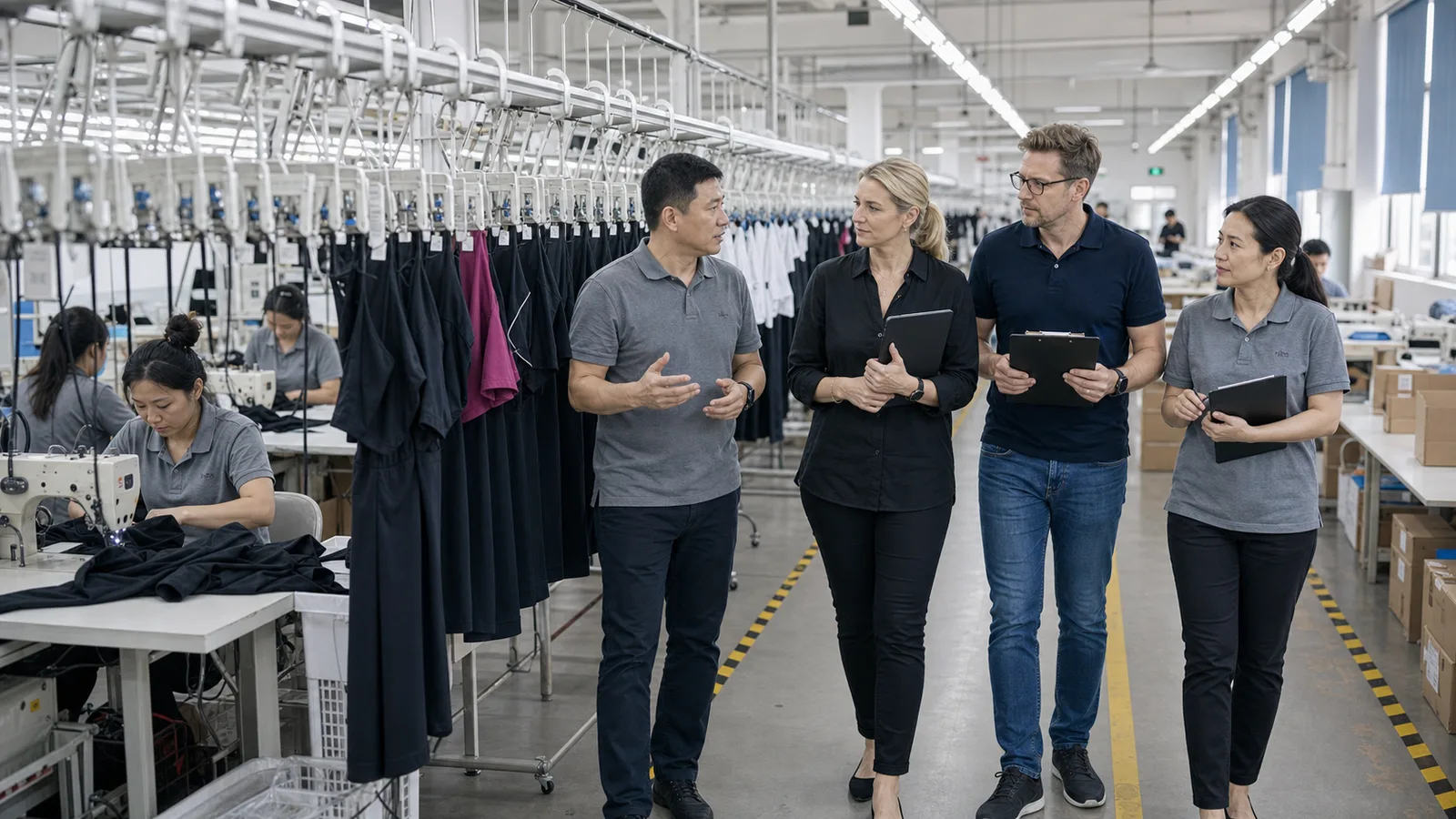
Yinshan Fashion draws on more than 30 years of garment production experience, an in-house design team, and long-term cooperative factory resources. The company can coordinate a buyer's reference, material direction, fit comments, sample route, private-label details, and production file. The practical test is whether each style arrives at the factory with an approved, usable record rather than relying on memory or an old photograph.
How should buyers use factory coordination as a buyer control, not a vague capacity claim?
Some programmes benefit from a factory-led network because product categories, materials, machinery, and production timing can differ. That does not remove the need for accountability. The buyer should still know who owns development coordination, where the style will be produced, which approved references are used, how questions are logged, and who can authorise a change.
When Yinshan Fashion acts as a supplier and manufacturer, the role is to connect the buyer's technical and commercial inputs with the right production route. The factory's role is to execute the approved version through cutting, sewing, finishing, quality checks, packing, and export preparation. This division of work should be visible in project records. It should not be reduced to a generic statement about capacity.
Ask direct questions before bulk begins. Which sample version controls the order? Which fabric and components are in scope? What needs a pre-production confirmation? How are fit, quality, label, and packing questions captured? What change requires new approval? Clear answers create a stronger working relationship than a broad promise that all details will be handled.
How should buyers move from approved fit to a controlled bulk decision?
Bulk production should begin from the agreed product version, not from a collection image or a partially resolved sample. Review the current sample, measurements, materials, components, labels, packing, quantity structure, and quality priorities together. If the buyer changes fabric, colour, print, trim source, label package, or pattern after approval, decide whether the existing sample still proves the right thing or whether a targeted new review is needed.
Quality control is most effective when the product standard is clear before final inspection. A dress factory can check measurements, sewing, components, symmetry, print placement, label accuracy, pressing, packing, and visible appearance. Final inspection cannot fully recover a product whose fit, material route, or construction decisions were never settled. The buyer and manufacturer should therefore protect the development record through the production handover.
For a repeat order, begin with a difference list. Identify what remains the same and what has changed: fabric availability, colour, pattern version, trim, labels, packing, size mix, market, or quality priorities. This helps the next order reuse useful information without treating an old dress sample as automatic approval for a changed product.
What should a buyer send before discussing a custom dress programme?
Send the strongest available information, not a perfect package that delays the conversation. Useful inputs include reference images or a physical sample, product category, intended customer, target silhouette, fabric direction or desired behavior, colours or prints, size range, logo and label needs, packaging direction, quantity by style and colour, target market, price direction, launch timing, and the decisions where advice is needed.
Yinshan Fashion can review those inputs with the buyer to propose a practical sample path. A custom dress manufacturer adds value when the team makes the risks visible early: what the reference proves, what the fabric still needs to prove, what the pattern must control, which components affect fit, and what must be recorded before bulk. That is how a creative dress direction becomes a product a brand can review, approve, and repeat with greater confidence.
Custom dress development kit
Three controls that turn a dress reference into a bulk-ready product
A useful dress sample route connects the intended silhouette with real fabric behavior, measurable fit decisions, and a release record that the production team can use.
Define the silhouette
Separate visible design priorities from open questions about measurements, ease, lining, closures, construction, and the sample route.
Prove the fabric and fit
Review drape, coverage, volume, neckline stability, waist position, movement, and hem balance on the intended garment route.
Release one usable version
Keep the approved pattern, material route, components, sample comments, labels, packing, and authorised changes in the production record.
Buyer actions and factory questions before a custom dress moves into bulk production
Use this record to connect the reference, intended customer, fabric behavior, fit priorities, sample evidence, components, private-label details, packing, quantities, and authorised changes. Material availability, commercial terms, testing, approvals, and timing remain programme-specific.
| Decision area | What the buyer should prepare | What to ask the factory |
|---|---|---|
| Reference and product role | Share the visual source, product category, target customer, selling context, fixed design elements, and decisions where advice is needed. | Which elements control silhouette, which are only inspiration, and what must be defined before the first sample? |
| Fabric behavior | State the needed drape, volume, coverage, handfeel, stretch, finish, colour or print direction, lining relationship, and any open material question. | Which fabric route can answer the dress requirements, and what must be assessed on a garment sample? |
| Pattern and fit | Rank the fit priorities and identify measurements, size range, sample size, movement concerns, and styling points that cannot change. | Which pattern points, measurements, construction choices, or size reviews are needed to keep the intended shape? |
| Components and construction | Map closures, lining, interfacing, elastic, buttons, decoration, labels, and visible finishing to their product purpose and approval need. | Which components affect fit, material behavior, or appearance and require an applied sample review? |
| Sample comments | Record sample version, material and trim references, marked fit comments, review photos, decision owner, approved points, and remaining questions. | What does the current sample prove, what changes next, and which version will become the production reference? |
| Bulk release | Confirm the pattern, materials, components, labels, packing, quantity structure, quality priorities, exceptions, and authorised changes. | Where is the controlling production pack kept, and what later change requires a new buyer approval? |
Continue the production conversation
Dress development decisions from reference to bulk release
| Stage | Buyer decision | What to review | Production record |
|---|---|---|---|
| Reference review | Define the intended silhouette and fixed visual elements | What the image shows and what remains unknown about material, fit, construction, and components | Dated reference notes and open-decision list |
| Material route | Choose fabric behavior for the dress | Drape, volume, opacity, stretch, recovery, lining relationship, colour, and finish | Fabric and component references with sample objective |
| Fit sample | Confirm shape and wearer movement | Neckline, shoulder, bust, waist, hip, sleeve, skirt, closure, lining, and hem | Measurement chart, marked sample photos, comment version, and next action |
| Bulk handover | Release the approved product version | Pattern, materials, construction, labels, packing, quantity structure, and quality priorities | Production pack with authorised changes and control references |
Buyer FAQs
What should a buyer send a custom dress manufacturer before sampling?
Send the strongest available reference, the target customer and silhouette, fabric direction or required behavior, colour or print direction, size range, private-label needs, quantity by style and colour, target market, price direction, launch timing, and the decisions where the buyer needs advice. A full tech pack is useful but not required for an initial feasibility discussion.
Can a reference image be used to make a private-label dress?
Yes, as a starting point for development. The image should be treated as a visual reference rather than a complete production instruction. The buyer and manufacturer still need to define the pattern, material, measurements, construction, components, sample route, and private-label details for the new product.
How does fabric affect dress fit?
Fabric construction, weight, stretch, surface, finish, opacity, and lining relationship can change drape, volume, ease, neckline stability, seam behavior, skirt movement, and hem balance. Review the selected material in the intended sample because a swatch alone cannot prove the complete dress.
When is a size set useful for a dress programme?
A size set can be useful when the dress has a close-fitting bodice, defined waist, unusual length, limited sleeve movement, broad size range, or fabric behavior that may change the silhouette across sizes. The need and scope should follow the product risk and buyer requirements.
Does Yinshan Fashion supply ready-stock wholesale dresses?
Yinshan Fashion focuses on custom and private-label bulk programmes. Material availability, sampling, order structure, commercial terms, timing, and production route are reviewed for the specific dress programme rather than treated as unrestricted ready-stock wholesale.