Article
What should buyers know first?
Short answer: Compare minimum quantities, quote assumptions and production risks across apparel print routes without relying on a universal price threshold.
Apparel printing methods affect MOQ, cost and risk through the way artwork is prepared, materials are purchased, production is scheduled and changes are controlled. There is no single quantity at which one method becomes cheaper for every garment. Yinshan Fashion supports custom and private-label garment projects; the print route and commercial terms must be assessed for the actual design, fabric and order.
Direct answer: define the garment and artwork, request comparable quotes with the same assumptions, then evaluate sample evidence and the consequences of a change or failure. Ask what each supplier's minimum applies to and who owns each decision. A low unit price alone cannot reveal the cost of a missing proof, an unsuitable base or unused fabric.
Why do apparel printing methods affect MOQ, cost and risk?
Different routes involve different preparation, materials and handovers. A placed decoration on a finished top is not the same operation as printing a repeat on fabric that will later be cut and sewn. One supplier may combine stages in its quote while another lists them separately. Compare the actual production sequence before comparing the totals.
Minimum order quantity, or MOQ, is a commercial condition, not a universal property of a named process. It may arise from the printer, fabric supplier, garment maker, trim supplier or packing operation. Ask whether a stated minimum applies to a design, colourway, fabric length, garment style or purchase order, and whether the conditions change when several options are combined.
Production risk includes the possibility that the approved appearance is not achieved, a component is delayed or a discrepancy is found after material has been cut. The chance and consequence depend on the specific design and controls. The goal is not to avoid all uncertainty; it is to identify which uncertainty matters and who will make the next decision.
What should be fixed before asking for quotations?
Start with the intended garment, material, artwork file and order split. Specify the size range, quantities by size and colourway, print coverage, target market, labels, packing and any required testing. State which items are confirmed and which need advice. If the brand has only a visual reference, say so and ask what further artwork preparation is necessary.
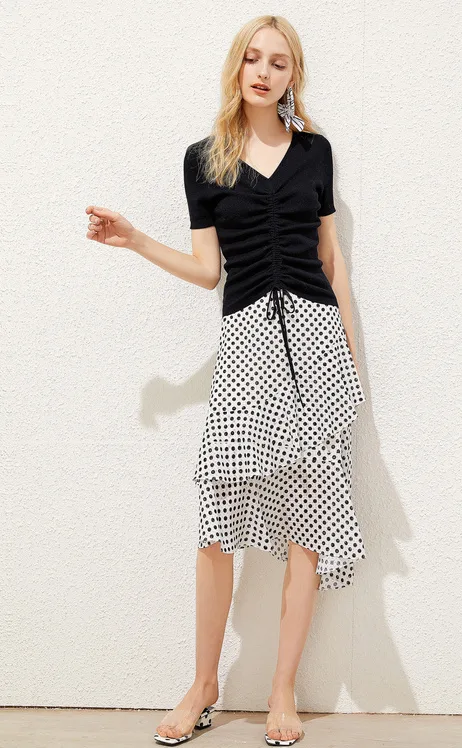
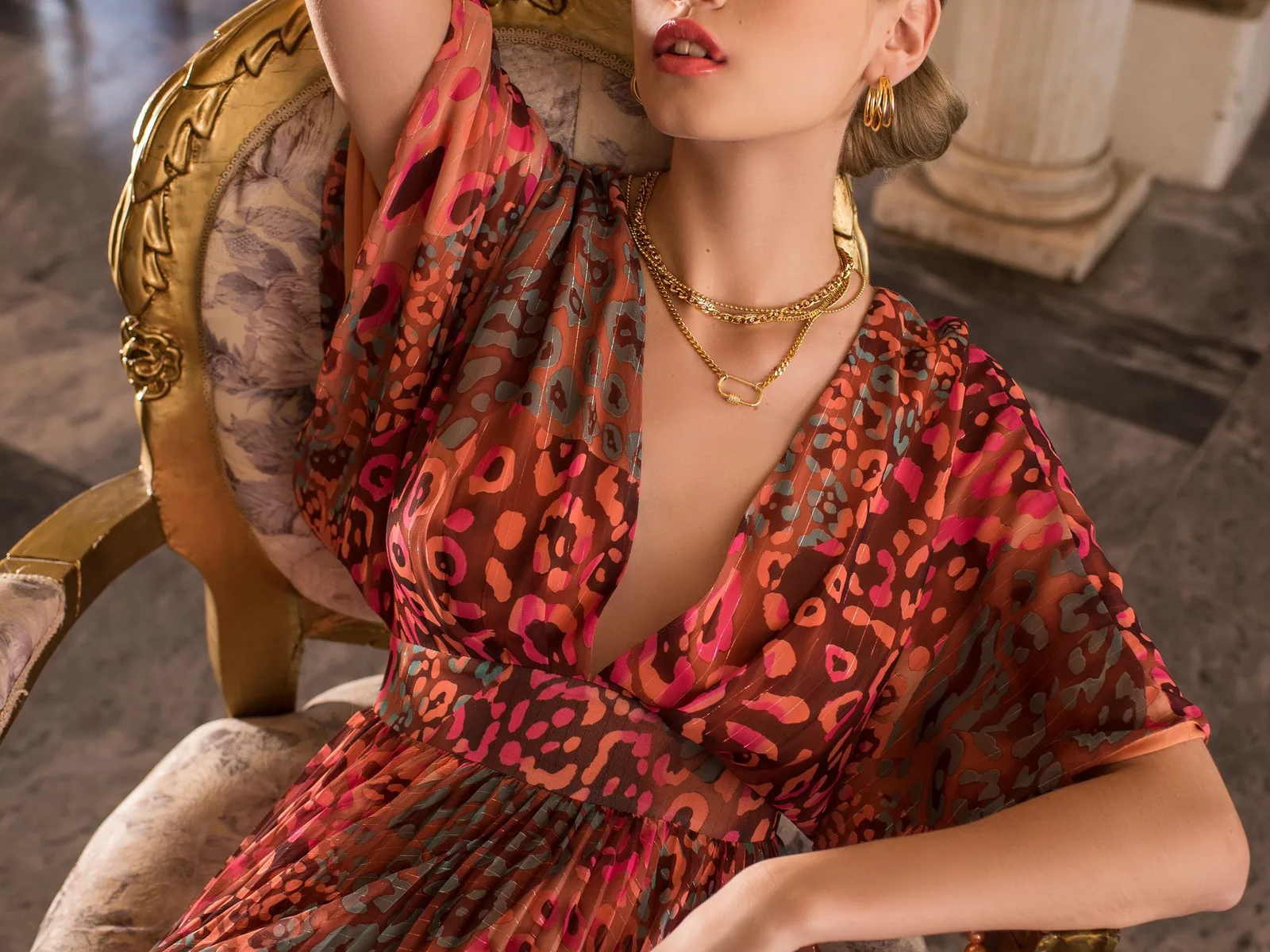
The T-shirt collection can help a buyer identify silhouette and placement points for a placed graphic. A dress collection raises different questions about panels, openings and print continuity. These are garment references, not evidence that a particular decoration method was used for the pictures.
Provide the same brief to each potential provider. If one quote assumes an available stock base and another assumes a newly developed base, their prices answer different questions. Record the date, currency, delivery terms and validity stated by each supplier. Ask for missing assumptions before treating the prices as comparable.
Where can a minimum quantity arise?
The fabric supplier may have a minimum for a particular ground, construction or finish. A printer may state a minimum length, setup charge or schedule condition for a design. The garment maker may set a minimum per style, colour or production run. Labels, special trims and packaging can introduce further conditions. None should be guessed from a generic article.
Ask each partner for the unit and boundary: for example, does a condition relate to one colourway, a combined quantity of compatible colours, or a single artwork file? Does it cover sample material as well as production? If the order is below a preferred quantity, ask whether an available base, shared preparation or another construction could be considered without assuming it will be accepted.
The small-batch manufacturing solution is a starting point for discussing a limited launch. A supplier can review the particular material and print route, but a small-batch service description is not a promise that every custom fabric or decoration is available at every quantity.
How should a buyer separate fixed and variable costs?
Ask for the costs of development and approval as well as the production cost. Artwork preparation, samples, material sourcing, print setup, cutting, sewing, labels, inspection and packing may be included or charged separately. The way a provider invoices them can differ, so request a written list of inclusions and exclusions rather than assuming that a single line item tells the whole story.
Some preparation is incurred for an order or design regardless of the number of garments; other costs change with the amount printed, cut or sewn. If preparation is spread over more units, its average contribution per unit can decrease. That arithmetic does not prove that a larger order is best: inventory, financing, storage, unsold stock and changes to the design also matter.
Use a simple comparison model: total expected programme cost equals quoted development and production charges plus separately identified testing, freight and other agreed costs, with any uncertain items shown as assumptions. Divide only when quantities and inclusions are aligned. If a number is not known, mark it as unknown instead of inserting a convenient estimate.
How do placed transfers and garment screen printing compare?
A placed transfer and a garment screen print both need the correct artwork, garment surface and position, but their preparation and production steps differ. Screen printing commonly involves preparing a stencil for each relevant colour layer; the equipment supplier's screen-printing guide describes separations, registration and curing. The actual screens, inks and charges depend on the provider's process.
For a transfer, ask how the film or other carrier is produced, how it is applied, what material and artwork it is suitable for, and whether the proposed application works on the garment's texture and seams. A proof on the actual fabric is more useful than assuming that the same file will have the same hand or appearance across every route.
The DTF versus screen printing guide explores these placed-decoration choices in more detail. Ask each provider to quote the same motif size, number of positions, colours, garment base and required sample. A multi-position design may create different work from a single front graphic even when the total number of garments is unchanged.
How do fabric-printing routes change the calculation?
For an all-over design, the team may print fabric before cutting. Digital direct-to-fabric and rotary screen printing use different preparation and equipment. The direct-to-fabric versus rotary guide sets out the questions to ask about file, repeat, base, finishing and setup. A method label alone does not reveal a provider's actual minimum or quality capability.
Rotary proposals may involve colour separations, screen preparation and a repeat compatible with the available equipment. Digital proposals can still require file preparation, colour management, sampling and finishing. Request the usable width, finished fabric assumptions and any preparation or change charges for both. A digital route can be used at different scales; a rotary route is not automatically unsuitable for every smaller project.
The fabric development and sourcing solution connects the print decision to the material. Ask whether both quotes refer to the same base, ground and finish. If not, compare the resulting garment samples and identify the consequence of the difference before calling one route cheaper.
What should be compared in a sublimation proposal?
Some programmes use a printed transfer paper and heat to move the design to a compatible material. The Epson overview of digital printing describes a sublimation route and its use for athletic apparel. Compatibility, colour and performance must still be evaluated for the actual substrate and process; do not assume that any fabric or blend gives the same result.
Ask how the transfer image is produced, what the provider means by any process terminology and which steps are included. For a repeated design, clarify whether a change to scale, colourway or panel layout affects preparation. For an engineered panel, ask how the artwork is aligned to each size and what happens to unused printed areas.
The digital versus offset sublimation guide explains why the paper-production route deserves a separate discussion. Comparing those routes is not a substitute for confirming the final garment material, transfer procedure and approved physical sample. A proposed process change should be approved, not silently substituted after a price is agreed.
Why does the order split matter more than the headline total?
Imagine a brand planning one order across several print designs and colourways. The total number of garments may look substantial, but each individual design can have a much smaller run. If a provider treats each artwork or colourway as a separate setup, the practical economics can differ from a single design printed across the entire order. Ask how the provider groups work and whether any materials can actually be shared.
Size split also changes the cutting plan and, for engineered artwork, the file or placement work. A small additional size might be important commercially even if it adds complexity. Provide a realistic breakdown early, including sets that require matching tops and bottoms. The supplier can then identify what is feasible rather than quoting an average item that does not exist.
For a reorder, distinguish an identical repeat from a revised artwork, new fabric or new colourway. Ask whether a saved setup or reference remains available and what needs to be checked again. A prior unit price does not automatically apply to a changed order; nor should a previously approved proof be assumed to cover a different material.
How do artwork changes affect price and schedule?
Artwork can change through a revised motif, colour, scale, placement or repeat. The impact depends on the selected process and the point at which the change occurs. A change before proofing may require different preparation from a change after approved fabric has been printed or garments cut. Ask for the decision deadline and the work already committed at each stage.
Use a controlled file name and an approval record that identifies the version, colourway and intended material. The artwork approval guide describes how to keep that record. If a printer proposes a technical adjustment, the brand should approve the visible result and retain the updated file rather than assuming the change is merely administrative.
Specify who can authorise the revised cost or timing. A casual message asking to make a colour brighter may have several interpretations and may not be sufficient for production. Request a clear description of the proposed change, any new proof and the effect on the order before issuing a revised instruction.
How does print coverage affect fabric yield?
Print coverage and motif placement can change cutting efficiency. A random repeat may allow greater flexibility than a large focal design that must sit in a specific location, but the actual yield depends on the pattern, fabric width, repeat, size mix and matching requirements. The cutting team needs those requirements before estimating fabric consumption.
For yoga and jogging activewear, curved panels and stretch direction can make artwork placement a separate planning task. The all-over print activewear guide discusses panel and seam priorities. A perfectly matched motif at every seam may be impractical or expensive; identify which visible joins matter to the brand.
Ask whether the quote includes allowances for sampling, print preparation, cutting and agreed inspection. Do not equate an allowance with an actual defect rate or a guaranteed amount of waste. If a design revision changes the repeat or fabric width, review the cutting plan and consumption estimate again before placing the order.
Which quality costs should a buyer consider?
The cost of a proof or inspection is visible before the order ships; the cost of a problem may appear later as rework, replacement, delay or customer returns. ASQ's cost-of-quality framework distinguishes prevention, appraisal and internal or external failure costs. It is a useful way to ask what a quote includes, not a guarantee that a specific inspection will prevent all failures.
For each proposal, identify the sample stages and the quality decisions they support. A colour strike-off, fit sample and production inspection do different jobs. Agree which tests are required, who selects the method and who pays for them. A supplier should not be described as having passed a test unless the actual applicable result is available.
If a problem is discovered, the print defect investigation guide recommends preserving evidence and tracing the affected material before assuming a cause. Agree responsibilities for a hold, investigation, rework or concession. A low initial quote can be misleading when these responsibilities are left undefined.
How can buyers compare risk without inventing probabilities?
List the main uncertainties for each option: material availability, artwork readiness, approval time, capacity, colour consistency, print placement, test evidence and handover between partners. For each, record the possible consequence, who can provide evidence and the action that would reduce uncertainty. Do not assign numerical probabilities without reliable project data.
For example, a brand may be uncertain whether a fine line will remain visible on a textured fabric. The next action is to request a representative proof at the intended scale, not to declare the route incapable. If a proof is acceptable but uses a provisional base, record that limitation and agree what must be checked on the production-intent base.
Another project might have a fixed launch date but an unapproved colourway. Ask the supplier for a schedule with explicit dependencies and decision points. A production estimate is not an unconditional delivery promise, especially where fabric, print, fit and labels remain subject to approval. Escalate unresolved decisions to an authorised owner rather than hiding them inside a buffer.
What does a useful sample sequence look like?
Begin with a material comparison where the base is still undecided. Use a print proof to evaluate the artwork on the proposed ground, then a sewn sample to review fit, placement and construction. Where the programme requires performance testing or market-specific evidence, identify the right specimen and provider separately. The sequence can change by product; ask what each sample is intended to answer.
The print sample approval checklist helps record file revision, material, colourway and outstanding changes. Make it clear whether a proof is exploratory or the reference for bulk. A preliminary print on a different fabric is valuable learning, but approving it does not automatically approve the final base.
Compare sample charges and timing on equivalent terms. A low-priced sample may omit the actual production material or finishing; a more complete sample may answer more questions. Neither is necessarily wrong if its purpose is clear. Record what is included, how many revisions are allowed if stated, and who decides whether another sample is needed.
How should two real quotes be compared?
Place both quotes beside the same brief and check design, base, usable width, colourways, quantity breakdown, sampling, print coverage, garment construction, labels and packing. Highlight every difference. If one quote excludes freight or testing, add those as separate unknowns or obtained estimates; do not fill the gap with a fabricated number.
Ask which minimum applies and what changes if the brand adjusts a colourway or moves volume between sizes. Clarify whether the quoted preparation can be reused for a reorder and under what conditions. Then review the sample quality and the supplier's proposed handover alongside the commercial terms. The objective is a comparable programme, not a contest between two isolated unit prices.
Document the decision in plain language: the chosen route, accepted assumptions, outstanding risks and the person responsible for closing them. If the brand accepts a higher initial cost for an additional proof or a smaller launch, state why. If it accepts a larger run to meet a material condition, make the inventory exposure visible to the commercial team.
When does a lower MOQ create another risk?
A low minimum can help a brand test demand, but it does not eliminate development work or prove that the requested material will be available for replenishment. Ask whether the same base and finish are expected to be obtainable for a reorder and what the provider can actually confirm. A useful answer may be a documented uncertainty rather than a promise of future availability.
Splitting a small order among many designs can also leave limited material for a representative proof or for replacing rejected pieces. Discuss the sample allowance and the process for handling a shortage before production. If the colour or print is central to the brand, agree what comparison will be used when the first production material arrives.
The trade-off is commercial as well as technical. More options may improve the range, while fewer options may simplify purchasing and approval. The appropriate choice depends on the brand's demand, cash position and tolerance for inventory. A manufacturer can explain its actual constraints; it cannot establish what quantity is financially safe for every buyer.
What must be agreed before production?
Collect the approved artwork, physical print reference, fabric specification, size chart, construction notes, label files, packing instructions and final order split in an identifiable release package. Name the printer, garment maker and responsible approval contacts where known. The bulk print quality control guide explains why this handover should also include inspection criteria and retained references.
Define how an exception or proposed substitution reaches the buyer. A replacement ground, revised artwork scale or changed transfer route may affect appearance and price. Agree whether a new proof, test or authorisation is needed and who can approve it. Keep the earlier reference alongside the revised one so the team can trace the decision.
For a small brand, a short, accurate package is better than a long but contradictory one. Identify the fields that are still open and the date by which an answer is needed. A supplier cannot reliably cost or schedule a requirement that has not yet been chosen, and the buyer should not treat an unresolved assumption as an agreed guarantee.
What should a buyer send to Yinshan Fashion?
Send the intended garment, size and colour split, artwork, target material, desired print appearance, market and target delivery window. Include the planned sample stages, any known test or labeling requirements, and a note about what is negotiable. If you have competing quotes, compare their assumptions before sharing the specific questions you need answered.
Discuss your print and production brief with Yinshan Fashion. The team can review custom design, fabric and sample options and discuss a project-specific manufacturing proposal. Minimums, prices, capacity, lead times and test results remain subject to the actual project and written agreement.
Print sourcing decisions
Three checks before choosing a route
Make the order split, quote assumptions and approval evidence visible.
Define the order
Specify design, base, colourways and quantities.
Align the quotes
Compare preparation, samples, production and exclusions.
Control risk
Agree evidence, owners and the change process.
Buyer inputs and factory confirmations
Record unknowns rather than assuming identical terms across suppliers.
| Decision area | What the buyer should prepare | What to ask the factory |
|---|---|---|
| Order | Provide the size and colourway split. | Which minimum applies to each part? |
| Artwork | Share the current production file. | What preparation and proof are needed? |
| Material | Identify the desired base and hand. | Is the proposed material production-intent? |
| Quote | List required tests and packaging. | Which costs and exclusions apply? |
| Quality | Name the authorised approver. | What evidence supports release? |
| Change | Confirm priorities and decision dates. | How will revisions affect the order? |
Continue the production conversation
Compare the programme, not just the unit price
| Question | Ask each supplier | Decision evidence |
|---|---|---|
| Minimum | What unit, design or colourway does it apply to? | Written order split and conditions |
| Preparation | Which file, setup and samples are included? | Itemised quote and approval plan |
| Material | Are the base, width and finish equivalent? | Identified swatches and specifications |
| Quality | Who tests, inspects and approves exceptions? | Agreed plan and actual reports |
| Change | What happens if artwork or fabric changes? | Revision owner and revised quote |
Buyer FAQs
How do apparel printing methods affect MOQ, cost and risk?
They change preparation, materials, production and approval requirements. The practical minimum and total cost depend on the supplier and the specific order.
Is digital printing always cheaper for small orders?
No. Compare written quotes for the same artwork, material, quantities, finishing, samples and other included services.
Does a garment MOQ also cover the fabric minimum?
Not necessarily. Ask whether each condition applies per fabric, print, colourway, garment style or order.
Can a visual proof replace performance testing?
No. A visual proof helps assess appearance; any required performance decision needs the agreed test and actual evidence.
Can setup be reused for a reorder?
Possibly, depending on the provider, retained materials and whether the design and process remain the same. Confirm the conditions in writing.