Article
What should buyers know first?
Short answer: Compare digital direct-to-fabric and rotary screen printing through repeat design, base cloth, colour, sampling, yield and production records.
Direct-to-fabric vs rotary screen printing is a fabric-planning choice that begins with a particular design, base cloth and order—not with a universal claim that one process is better. Digital direct-to-fabric printing applies the design to the fabric using a digital print system; rotary screen printing uses prepared cylindrical screens to apply the design as the cloth moves. Yinshan Fashion supports custom and private-label bulk programmes rather than unrestricted ready-stock wholesale. Discuss the actual fabric and print with the supplier before treating a method as available or a sample as approved.
Direct answer: compare an agreed artwork repeat, representative printed fabric and complete production proposal. Digital may be useful to investigate when a buyer wants several design variations or an uncertain initial run; rotary screen may merit comparison when an established repeat will be produced repeatedly at a suitable scale. Neither description proves a fixed minimum, a cheaper price, faster delivery or better colour and durability. Those answers depend on the design, material, provider and order.
What does direct-to-fabric vs rotary screen printing mean for a buyer?
Here, direct-to-fabric means digital printing directly onto a fabric substrate. It is different from printing a transfer film or paper that later carries the image to a garment. A digital workflow still needs an appropriate fabric, ink system and finishing route. Depending on the selected technology and material, preparation and post-processing requirements differ. Do not assume that every digital system eliminates treatment, washing or other production steps; ask what the proposed system actually requires.
Rotary screen printing uses a cylindrical screen with patterned openings. Printing paste is applied through the screen as the fabric passes through the machine. A multicolour design commonly involves a prepared screen for each separated colour, with the screens aligned to build the complete pattern. The equipment provider SPGPrints explains these textile printing techniques and describes rotary screens and digital printheads as distinct production routes. Its equipment descriptions are technical background, not evidence that Yinshan owns a particular machine.
Both routes can involve the garment maker, fabric supplier, artwork owner and a specialist print provider. Before requesting a quote, ask who will control the base fabric, print, finishing, sample approval and production handover. The answer matters more than an assumed factory label. Yinshan Fashion can coordinate a buyer's garment, fabric and sampling discussion, while exact processes, external partners and availability must be confirmed for each programme.
Why should the garment be defined before the print method?
A design is not evaluated in isolation from the garment it will become. A dress with a gathered waist and a full skirt may consume the print differently from a narrow blouse panel. A fluid material may change the apparent scale as it drapes. A lining can alter the impression of a light ground, while a button placket can interrupt a motif. Begin with the intended silhouette, approximate pattern pieces and wearing appearance, then select the fabric questions that matter.
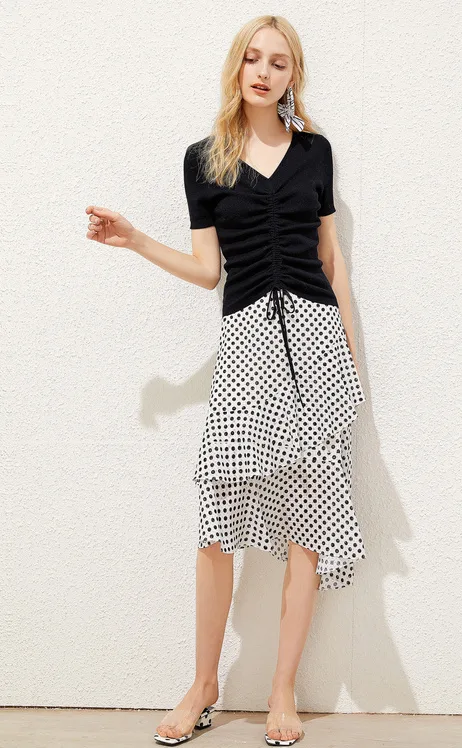
For a style in the dress collection, ask how the proposed print should appear across the bodice and skirt, what matching is important at major seams, and whether a directional motif must face a particular way. The pictured collection is a design reference, not proof of the print method for a new design. A buyer should provide the actual style, fabric and artwork rather than asking for an assumed method from a product photograph.
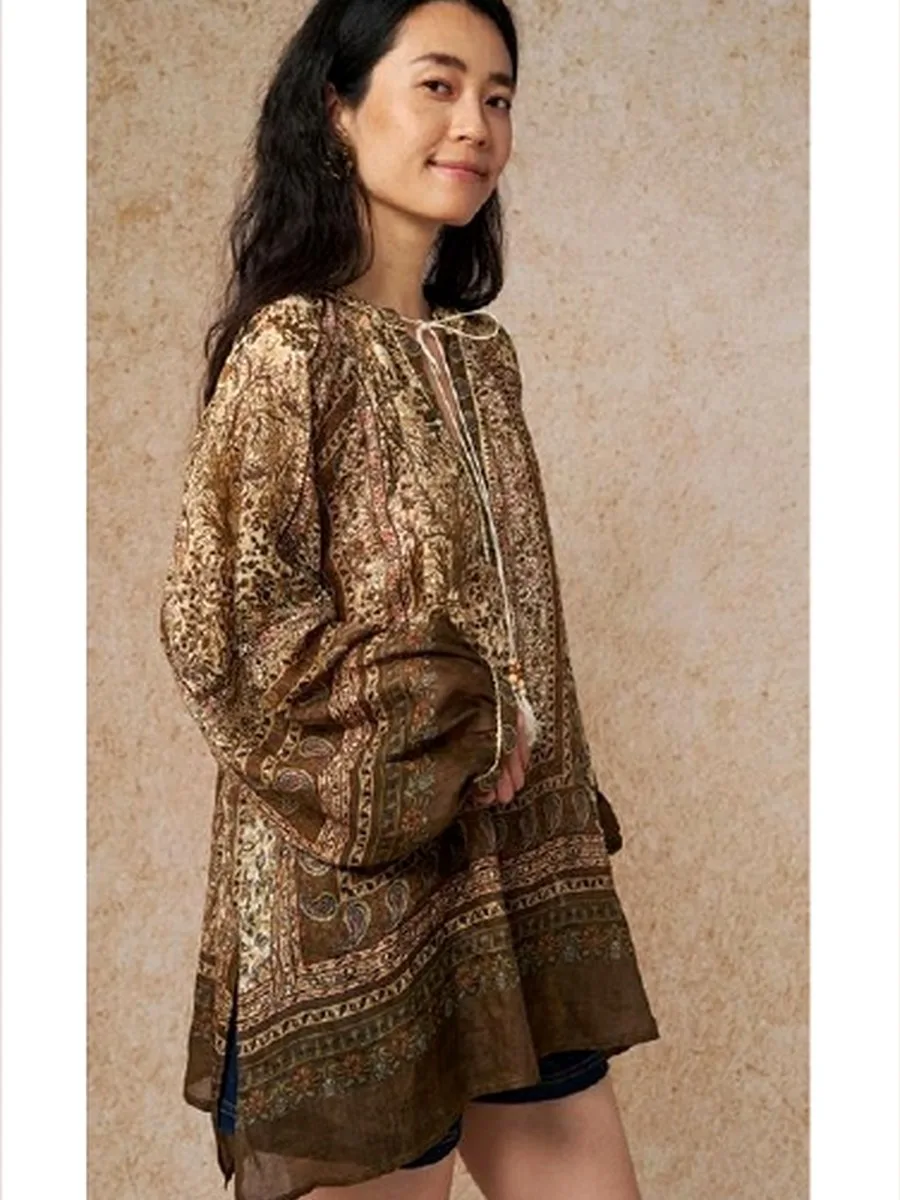
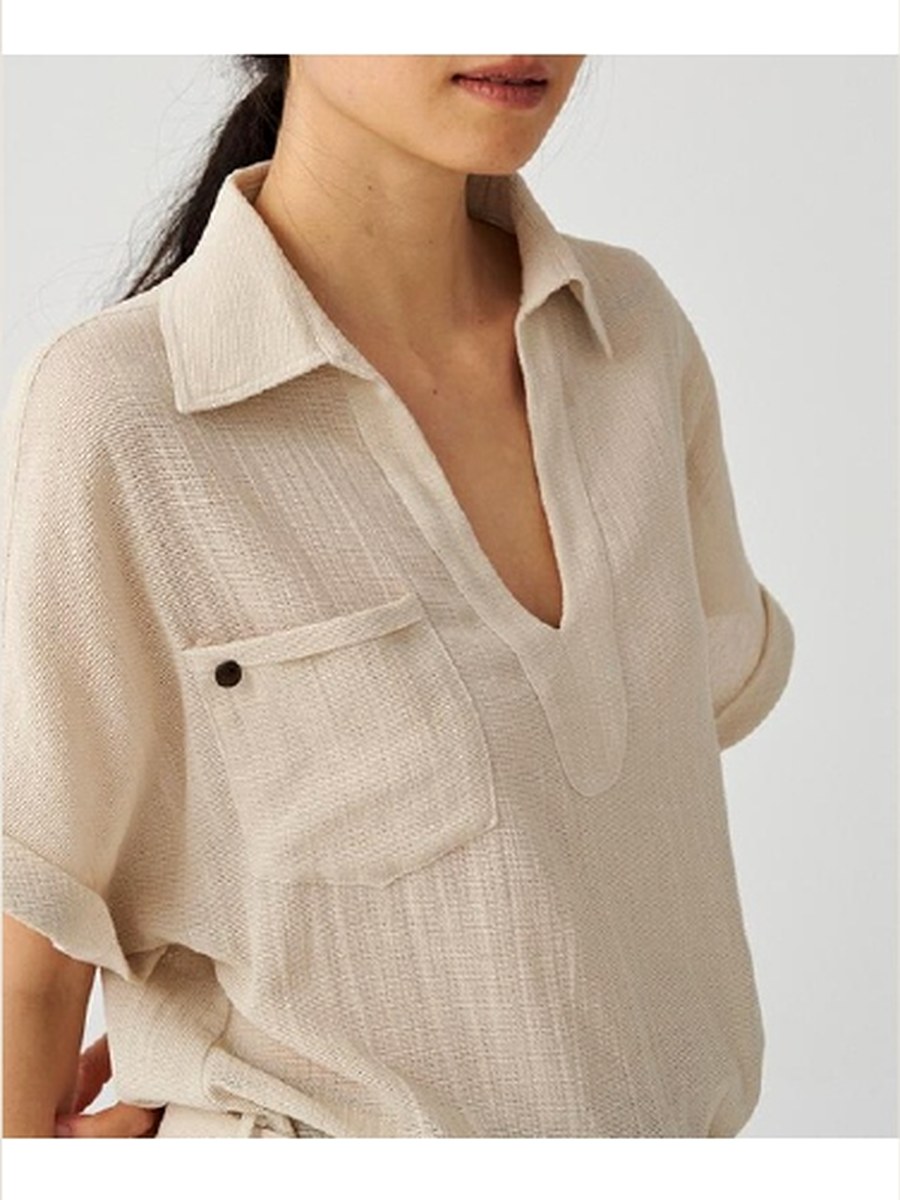
Use the blouse collection to discuss a different construction: a front opening, collar, sleeves and perhaps a pocket. Decide whether the design needs matching around the placket and whether the pocket should blend into or interrupt the ground. These choices affect layout, sampling and consumption before they become production instructions. The factory needs a priority order when not every seam can be matched at the same time.
How should a repeat be described and checked?
The repeat is the design unit and the way it joins its neighbours across and along the fabric. Share the artwork in its original editable form where possible, with a visual layout, intended scale, orientation and colourway. State the width and length of the repeat and show how the edges join. A photograph of a garment might suggest a style of print, but it does not define a production repeat or establish the rights to reproduce the artwork.
For a rotary proposal, ask the print provider what screen repeat and working width can accommodate the intended artwork, and what adjustment would be needed if the supplied repeat does not fit. Different equipment and screens have different options. A public rotary system specification illustrates that a machine can offer a defined set of repeat choices; it does not establish the equipment or dimensions available for this order. Do not resize a brand's artwork to a guessed circumference and call it approved.
Digital preparation may allow a design to be arranged without the same screen circumference constraint, but the file, width, print software and fabric still set practical limits. Check the join, spacing and scale on a printed length large enough to show several repeats. A single small motif can hide a visible seam in the repeat, a stripe that drifts or a density that feels wrong on a full garment. Record the approved file version and the length used for review.
What artwork and colour information does each route need?
Send the source artwork, version identifier, intended finished scale, reference image, colour targets and a clear statement of what may be adjusted. Distinguish a design concept from an approved production file. If a design uses gradients, small details, overlapping colours or fine lines, ask the provider to flag areas that may require a proof or an agreed alteration. Keep the brand's original file and any supplier-prepared production file linked in the approval record.
For rotary printing, the provider will normally need to separate the design into a workable set of printing layers. Ask which colour separations and screens are proposed, how the layers register, and whether a change to one motif or colour creates a new preparation step. Fine lines, halftones and large areas of flat colour can raise different screen-selection questions; the SPGPrints screen guide describes why screen choice interacts with the design. It is not a guarantee of any specific result on the buyer's fabric.
For digital printing, ask how the provider interprets the file and colour references on the proposed base and ink system. A screen image cannot establish the final shade, and a different printer or fabric route may produce a different result from the same file. Specify whether the priority is an overall impression or a particular brand colour and identify the person who can approve a revision. The apparel artwork approval guide helps document the file and approval owner without claiming that file approval replaces a fabric proof.
How do base fabric and finishing change the decision?
Record fibre composition or proposed fibre direction, construction, weight where available, usable width, surface finish, colour, stretch and intended product. A smooth woven, brushed knit and textured blouse fabric present different surfaces. The same artwork may appear softer, darker, more broken or less defined depending on the base. If the exact cloth is not yet selected, identify the sample as provisional and state which questions must be repeated on the final material.
Ask the provider to specify the proposed ink or paste family and all material preparation and finishing stages that are relevant to that route. The correct treatment depends on the selected fibre, colour system and equipment. A particular integrated pigment system can operate differently from a reactive or other dye route. Avoid a blanket claim that one method always needs steaming, always consumes less water or is automatically more sustainable. Ask for project-specific evidence if the brand makes a performance or environmental claim.
Review the cloth after the proposed finishing, not only immediately after colour application. The buyer may care about hand, drape, odour, opacity, dimensional behaviour or the appearance of the reverse. The fabric development and sourcing solution is a place to connect the base cloth and print brief. Yinshan Fashion can discuss material options and sample coordination; confirmation of the chosen supplier, treatment and actual result remains part of the project review.
How should colour matching and colourways be approved?
Identify a physical reference or an agreed colour target, the fabric ground, the comparison conditions and the decision owner. A paper proof, monitor image and printed cloth can all look different because the surface and viewing conditions differ. A picture can help the team locate an obvious issue or compare the overall design, but it does not by itself establish a precise colour approval. Where a close match matters, ask for physical evidence and an agreed method of comparison.
For a new colourway, record which parts of the design change, whether the base cloth changes and whether the print provider needs a new preparation or proof. Even when the same artwork repeat is retained, a light and a dark ground can change the perceived contrast. Do not assume that approving a blue colourway automatically approves the beige version. A colourway matrix can connect the artwork revision, base reference, proof date and approval scope to the garment quantities.
If the designer accepts a deliberate change from the reference, document it as the current target rather than leaving the supplier to choose between two conflicting samples. Name the reference that governs bulk, where it is retained and whether a later batch is compared to the approved sample or to another agreed standard. The correct tolerance and test method, if any, must be decided for the actual programme rather than borrowed from a generic guide.
How can buyers compare quotes without inventing a break-even quantity?
Ask both proposals to describe the same fabric, artwork, colourways, usable width, finishing, sample scope and deliverable length. A quotation for unfinished printed cloth should not be compared directly with one that includes washing, finishing, inspection and delivery. Similarly, a price for a single colourway may not describe a programme split across several designs and small quantities. Identify what is excluded and who supplies the artwork and base fabric.
For a rotary proposal, ask about design preparation, colour separations, screen preparation, sampling, setup, colour changes, running, finishing and whether any screens are retained for a possible repeat. For digital, ask about file preparation, sampling, colour management, printing, treatment, finishing and any changeover or handling. These are questions, not a claim that every supplier charges the same items. Quote assumptions should also identify minimum lengths or commercial conditions only after the provider confirms them.
Discuss one launch scenario and a realistic repeat scenario. A design that changes frequently may make preparation costs important; a stable repeat produced over time may make screen setup worth comparing. Digital can also operate at industrial scale, while a rotary supplier's actual minimums and capacity vary. No fixed crossover can be inferred without the two quotations and their included services. The small-batch clothing manufacturer solution provides context for the garment programme, not a guarantee that every fabric-print route is viable at every quantity.
What should a useful strike-off and garment sample demonstrate?
Name the sample stage and its purpose. A strike-off is a small printed fabric proof used to review specified aspects of the design and colour. Ask whether it represents the actual base, printing and finishing route, and whether it is large enough to show the repeat and colour relationships. An early laboratory or development proof may answer a limited colour question while leaving production width, bulk finishing or garment appearance open. State those limits alongside the decision.
Review the fabric face, reverse, repeat joins, fine lines, large areas and overall scale. Compare the proof to the named reference in consistent conditions. If the pattern will be cut into several pieces, a longer length or an actual garment may reveal how the design falls at seams. A garment sample adds fit, drape, construction and visual balance questions that a small square cannot answer. The two proofs should be linked, not treated as interchangeable.
Agree any care or performance review with its method, sample identity, acceptance criteria and owner. An informal wash observation is not a certification. If the market or buyer requires formal testing, the responsible party should confirm the applicable standard and laboratory separately. Do not claim a print is colourfast, safe or compliant solely because the artwork looks good. The printed fabric guide provides a broader fabric-print context; this article focuses on choosing and controlling these two fabric routes.
How do cutting, pattern matching and usable width affect consumption?
The required fabric length depends on more than the number of garments. Ask the garment factory for a consumption estimate based on the current pattern, size range, fabric's usable width, repeat direction and matching priorities. A large repeat, one-way design or strict seam alignment may limit the way pattern pieces can be arranged. Selvage, non-printable edges or finishing changes can reduce the width available to the cutter. Confirm which width is quoted and which width can actually be used.
State where matching is essential, desirable or not required. For a blouse, a buyer might prioritise the centre-front relationship while accepting a different arrangement at a side seam. For a dress, the bodice and centre-front skirt may matter more than an internal seam. These are illustrative choices, not universal quality rules. A cutting plan needs the brand's visual priorities and the fabric supplier's repeat information before it can produce a meaningful estimate.
Use the women's knitwear collection to discuss how stretch direction and garment shape can change layout decisions. A knit may behave differently from a stable woven during spreading and cutting, so the factory should assess the actual construction and sample. Ask how roll identification, direction and pattern pieces will remain connected through cutting; approving an attractive strike-off is only one step in protecting the finished product.
How can the team protect consistency across rolls and repeat orders?
Give each approved combination a record: base cloth and supplier, print provider and process, artwork file and revision, repeat dimensions, colourway, finished proof, finishing route and approval date. Link the production order, roll or batch references where available. A production discussion can then distinguish a new batch of the same combination from a material substitution or a new colourway. Avoid describing every future order simply as “same print as last time.”
Ask the provider how rolls are identified, where the approved reference is kept and which checks are performed before the cloth moves to the garment factory. If an observed colour or registration difference matters, record the affected roll and position, compare it against the agreed reference and ask the supplier to investigate. A photograph, roll number and retained fabric piece can help describe a problem, but they do not establish its cause or prove that an entire batch is defective.
If the brand proposes moving a repeat from one process to another for a later run, treat it as a new comparison. The same design file does not guarantee identical colour, surface, scale or finishing. Review a representative proof on the intended base and decide what evidence is needed before accepting the new combination. The multi-market version-control guide shows how a controlled change can remain separate from unaffected versions.
What information should travel with each fabric roll?
Agree the roll label and packing list before dispatch to the garment maker. A practical handover can identify the order, base-fabric reference, artwork revision, colourway, print batch, roll number, usable width and reported length. Where the provider records an issue or a section that requires special handling, connect that note to the affected roll and location rather than leaving it in a separate email. The parties should agree who checks the information on receipt and how a mismatch is escalated.
Keep the approved reference available to the receiving team. A photograph can help identify the overall pattern, but it may not show the ground shade or small repeat join reliably. If the delivered cloth differs from the retained proof, place the affected material on hold for review and involve the designated decision owner. Record the finding and the disposition against the roll and version. Do not instruct the cutting team to blend an unresolved material difference across garments merely to use the cloth.
What might a fashion launch comparison look like?
Imagine an illustrative brand developing a printed blouse and a coordinating dress. This is a hypothetical planning example, not a Yinshan customer case. The designer supplies a small floral repeat in two colourways, while the buyer is unsure how the first order will be divided between the two styles. The garment factory needs the pattern, intended fabric, working width and matching priorities before it can estimate a useful length for each colourway.
The buyer asks for a digital proposal and a rotary proposal using the same design, fabric and finishing assumptions. One provider reports that the proposed repeat would need adjustment to fit the available rotary screen setup. The brand reviews that suggestion on paper, then requests an actual printed length before deciding whether the revised scale is acceptable. A digital proof retains the submitted scale, but it still needs review on the selected base and after the proposed finish.
The first blouse sample shows that the most prominent motif falls awkwardly across the front opening. The team can revise the cutting priority, adjust the repeat or accept a deliberate interruption. It should not assume that replacing the print process alone will solve a pattern-placement decision. The dress sample reveals a separate issue: the skirt uses the print across a larger area, making the repeat more visible. Both observations belong in the sample record and should be resolved before calculating final consumption.
Once the brand chooses the route, the record specifies the current artwork, accepted colourways, base cloth, proof, repeat, finishing and cutting assumptions. The provider can then revise the quote and the garment maker can plan a representative production handover. If the order size or a fabric source changes, the affected assumptions are reopened instead of silently applying the original estimate.
What should a buyer send Yinshan Fashion for a print review?
Send the garment category, sketches or tech pack, sample size and size range, intended market, target fabric construction and any base swatch. Include the design file and permission to use it, repeat dimensions, colourway references, preferred orientation and seam-matching priorities. If the brand is open to resizing the repeat or changing the fabric, say which decisions are flexible and which are not. Identify estimated quantities by style and colourway, the sample purpose and the person who can approve changes.
List the specific questions the next proof must answer: scale, colour, repeat join, hand, drape, finishing or cutting alignment. Tell the team whether the request is for a preliminary comparison or a production-intent sample. The custom womenswear manufacturing solution connects the design, fabric, sampling and production discussion around the actual garment. Yinshan Fashion can review possible sourcing and coordination routes without promising a fixed machine, process, quantity, cost or schedule.
Use the DTF vs screen-printing garment guide for placed garment decoration rather than confusing that question with an all-over fabric repeat. Then send the print brief with the current file and sample objective. A clear next decision—such as whether a repeat can be sampled at the intended scale on the selected fabric—is more useful than a request for an unconditional process guarantee.
Fabric-print planning
Three checks before selecting the fabric-print route
A garment reference or digital design is not an approved print sample. Compare the real material, repeat and intended production scope.
Define the repeat
Identify the design revision, repeat dimensions, orientation, colourways and acceptable changes.
Approve the material
Review the chosen base and finishing route on a representative printed length.
Plan garment yield
Connect usable width and matching priorities with size range and pattern consumption.
Buyer decisions and factory confirmations
Use these questions with the artwork, fabric and sample record for the actual order.
| Decision area | What the buyer should prepare | What to ask the factory |
|---|---|---|
| Artwork | Provide the editable file, revision, repeat, orientation and colour target. | Does the proposed route require a change to scale or separation? |
| Base fabric | Name composition, construction, width, colour and intended garment. | Which preparation and finishing route is proposed? |
| Strike-off | Define review scope, comparison reference and approver. | Does this proof represent the intended base and finish? |
| Garment layout | Prioritise matching, direction and critical seams. | How will usable width and repeat affect consumption? |
| Quote | Break required lengths down by design and colourway. | Which setup, sample, finishing and delivery items are included? |
| Repeat | Keep the accepted fabric, file, colourway and proof linked. | Which change requires another approval? |
Continue the production conversation
Compare the fabric route against the same brief
| Decision | Digital direct-to-fabric | Rotary screen | Buyer evidence |
|---|---|---|---|
| Repeat | File layout, width and digital interpretation | Prepared screen repeat and colour separations | Approved dimensions and joined repeat |
| Base cloth | Fabric and ink compatibility, preparation and finish | Fabric, paste, screen and finish compatibility | Actual material and finished proof |
| Colourways | File and colour management for each version | Colour setup and registration for each version | Physical targets and approval matrix |
| Order | Preparation, print and finishing by design | Screen setup, print and finishing by design | Usable length and quantity split |
| Garment | Repeat direction and cutting layout | Repeat direction and cutting layout | Garment sample and matching priorities |
Buyer FAQs
What is direct-to-fabric vs rotary screen printing?
Digital direct-to-fabric printing applies a digital design to fabric. Rotary printing uses prepared cylindrical screens to apply the pattern. The actual ink, base cloth and finishing differ by provider and project.
Is digital fabric printing always cheaper for a small order?
No. Ask for comparable quotes including preparation, sample, finishing and order split. Actual minimums and setup depend on the provider, fabric and artwork.
Does a rotary screen limit the repeat size?
The proposed screen and machine have specific repeat options. Ask the provider to check the current artwork and approve any required scale change before production.
Does a strike-off approve the finished garment?
Not by itself. It can show specified fabric and artwork details, but garment construction, repeat placement, fit and matching may require a further sample.
Can a repeat move from digital to rotary later?
Possibly, after the provider assesses the artwork, screen repeat, fabric and finishing. Treat the change as a new sample and approval question rather than assuming an identical result.