Article
What should buyers know first?
Short answer: A practical handover for approving printed fabric, garment placement, colour, sample scope and production changes.
Apparel print sample approval connects a design on a screen to a physical reference that a production team can understand and use. The decision is more precise than saying a print “looks good”: the buyer and supplier need to identify the artwork version, fabric, colourway, process, sample stage, placement and the person who approved each part. Yinshan Fashion supports custom and private-label bulk programmes rather than unrestricted ready-stock wholesale; the exact print route and sample scope must be confirmed for the project.
Direct answer: approve the print against a named reference on the relevant material, record the limits of the proof, and separately review a garment sample where scale, placement or construction matters. A printed fabric strike-off, an approved artwork file and a pre-production garment answer different questions. None automatically proves wash performance, regulatory compliance or the suitability of every future fabric batch.
What is apparel print sample approval?
An apparel print sample approval is a documented decision about a specific physical print and its intended use. The sample may be a printed fabric piece, a panel or a finished garment. The record should say what was inspected, what was accepted or rejected, which questions remain open and how the supplier will recognise the correct reference. It should also connect the decision to a file and version rather than a vague description such as “the floral print.”
Some teams call a small printed fabric proof a strike-off. In this guide, that term means a development sample made to review stated print or colour questions, not a universal guarantee that the full production conditions have been reproduced. Ask the supplier whether the sample uses the intended base, inks, printing route and finishing, and whether its dimensions are sufficient for the decision. A preliminary proof can be useful even when it is not production-representative, provided the limits are visible.
The apparel artwork approval guide deals with file preparation and ownership. This guide focuses on what happens after the design is made physical: how the brand compares the print, how the garment shows the design, and which record travels with the order. Approval of the file does not automatically approve the printed cloth.
Which decisions belong to each sample stage?
An early colour or design proof can help a brand decide whether a direction is worth developing. It may use provisional fabric or a simplified setup. Mark it as development-only if important production conditions are still open. The buyer can accept the general direction while explicitly withholding approval of the final shade, scale or fabric.
A production-intent printed piece should be identified against the proposed material, artwork and process. It can be reviewed for colour relationships, clarity, repeat join, hand and other project-specific points. Ask which aspects actually represent bulk and which will change when the full order is made. If the proof is too small to show a repeat, request another format before approving repeat alignment.
A garment sample adds construction context. A graphic can cross a dart, be interrupted by a button placket or sit differently when the body is worn. A sample garment may reveal those effects, but it still does not approve an unexamined colourway or a later material substitution. Describe the boundary of every approval so the next person does not turn a limited decision into a general release.
How should the garment affect the approval plan?
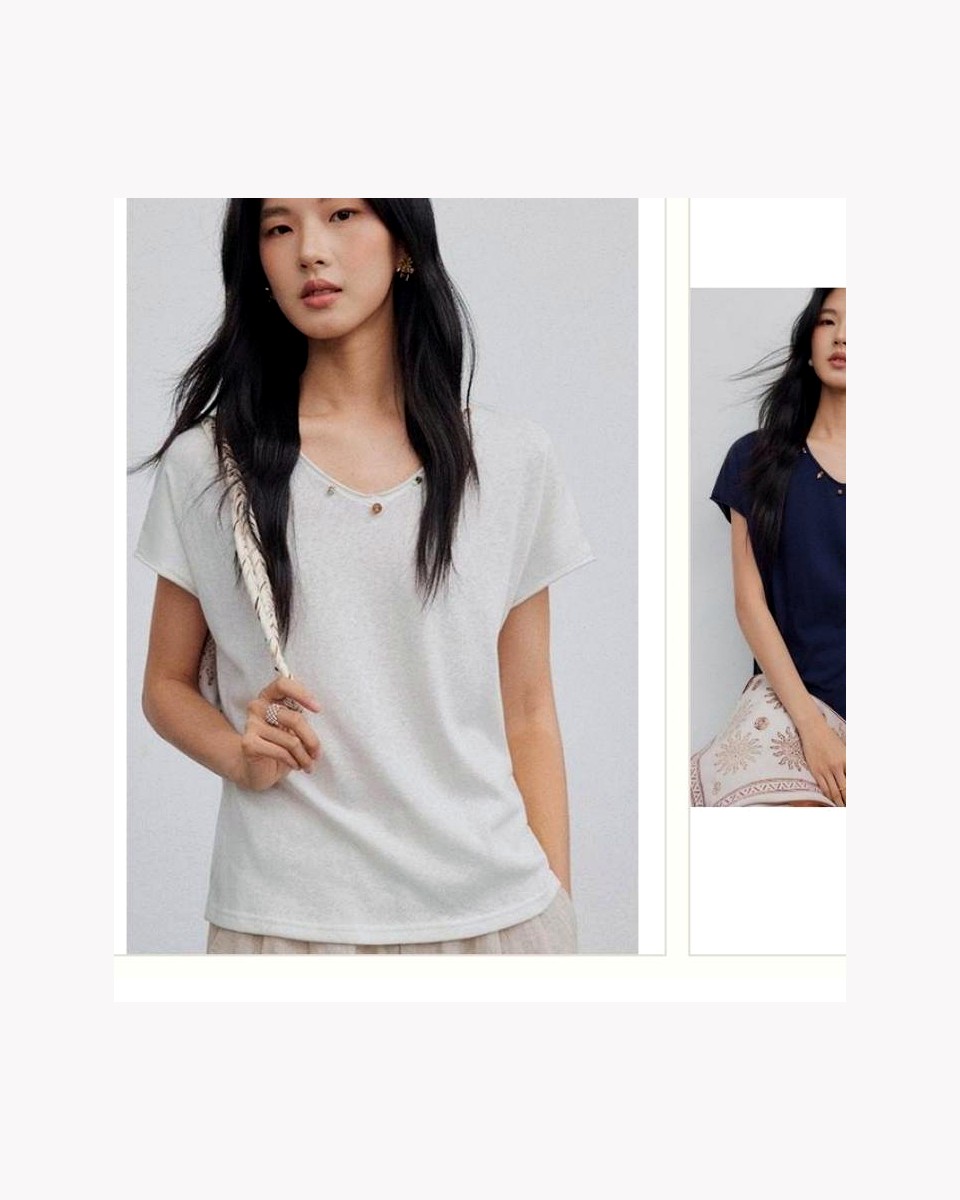
Begin with the silhouette, pattern pieces and proposed location of the artwork. A placed motif on a T-shirt may be assessed relative to the neckline and centre front; an all-over dress requires attention to repeat direction, cutting and the visible relationship of bodice and skirt. Use the T-shirt collection to discuss construction and placement, not as proof that the pictured styles use a particular print method.
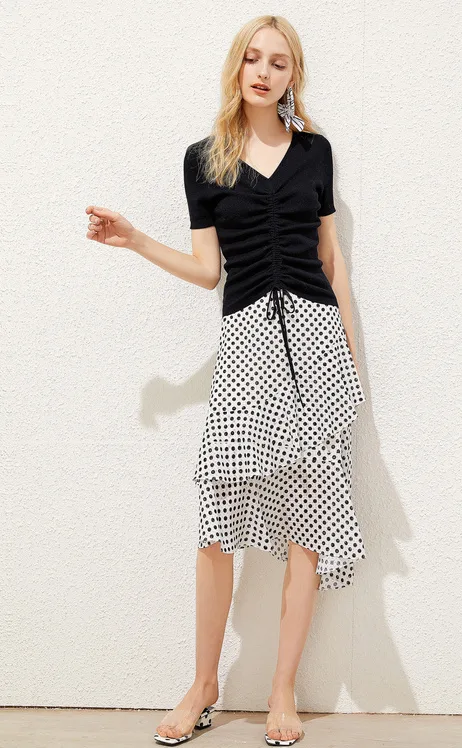
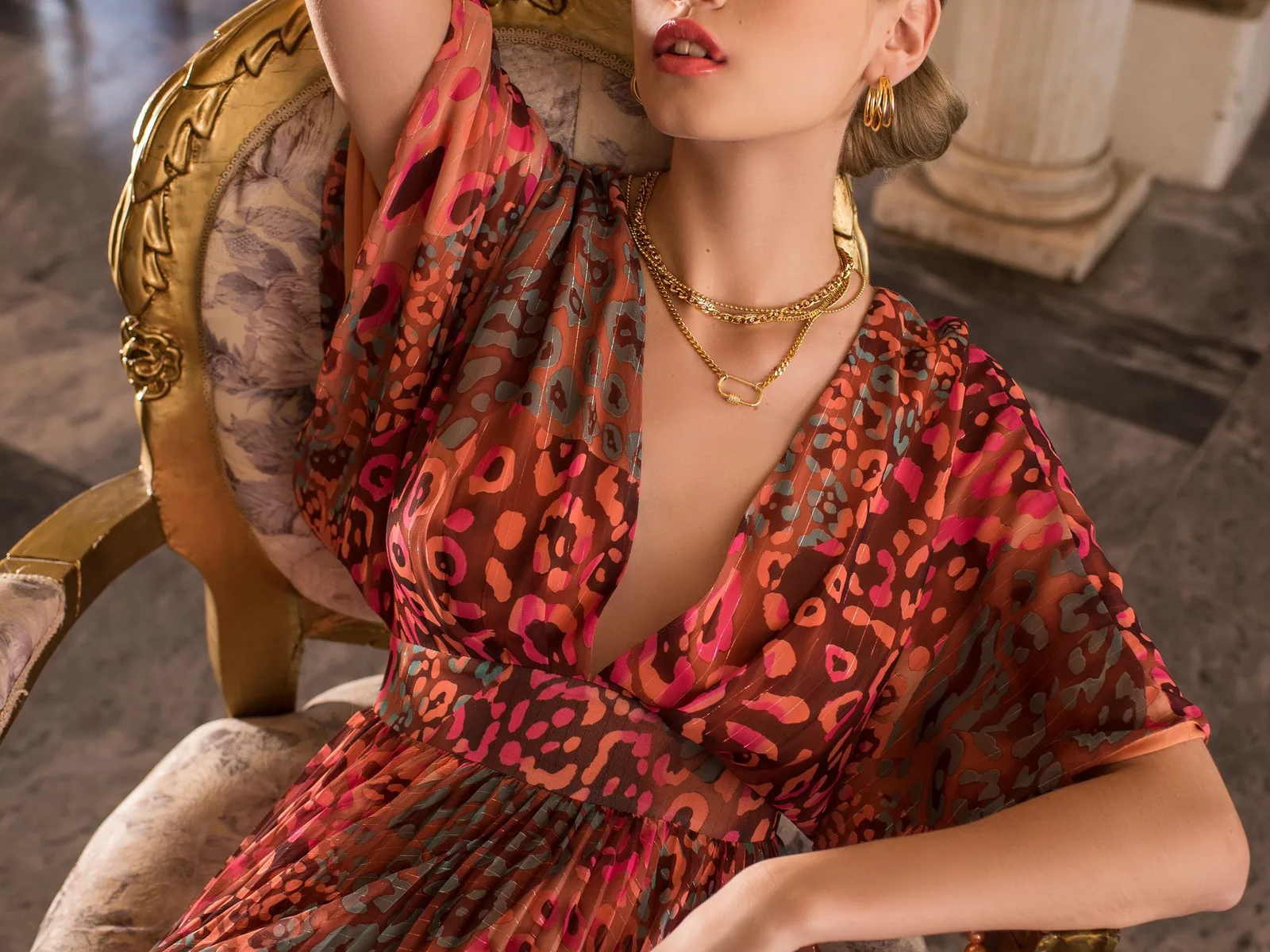
For a style in the dress collection, identify whether the front focal point, waist seam or skirt panels matter most. Matching every seam may not be technically or commercially practical. The buyer should specify which alignments are essential, desirable or deliberately unrestricted so the sample can be assessed against an actual brief rather than an unstated expectation.
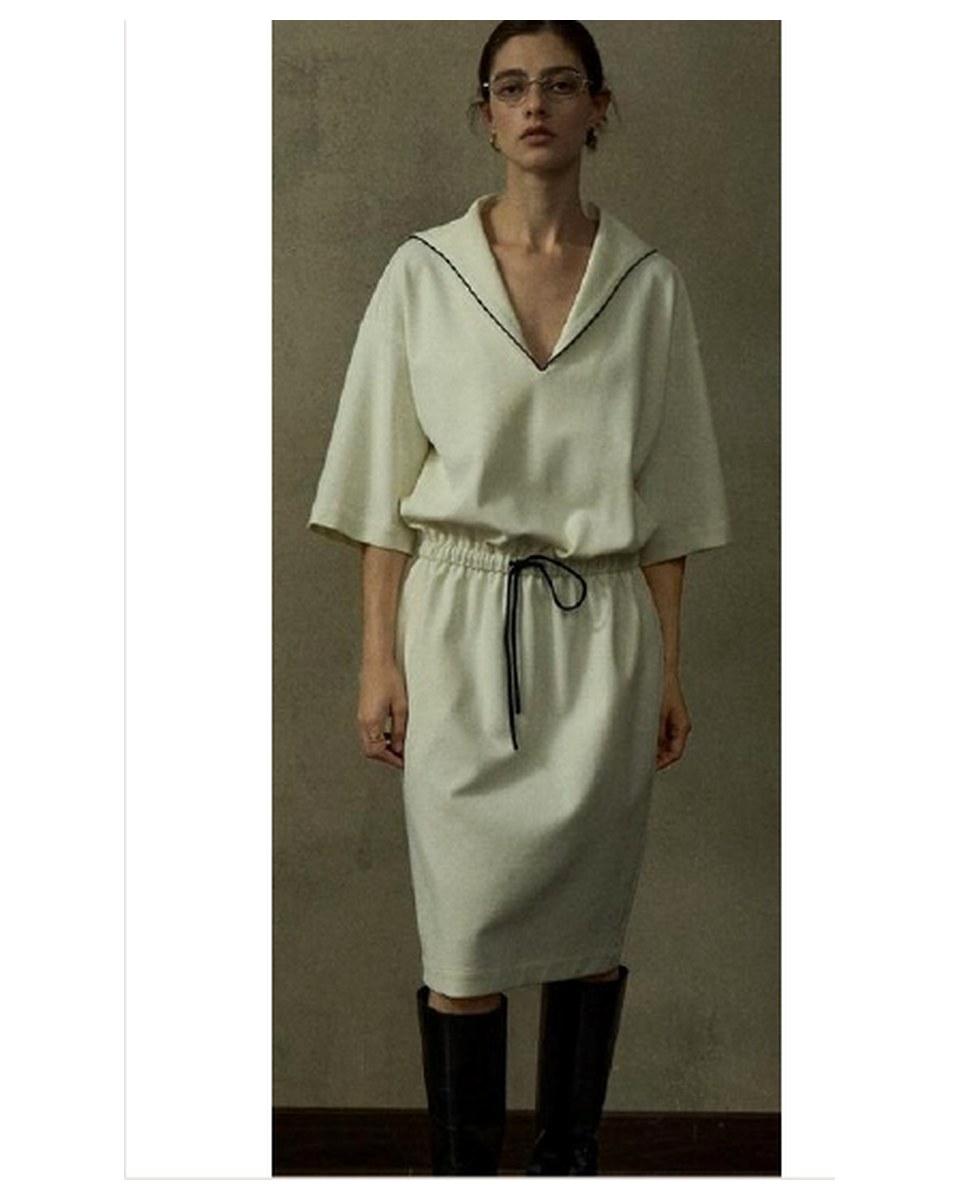
A blouse can introduce a collar, pocket, sleeves and an opening that divide the design. Decide how a motif should be positioned around those features and whether any interruption is acceptable. Reference garments illustrate construction; their photographs do not establish the method, ink or fabric for a new project.
What information must accompany the first proof?
Give the sample an identifier and link it to the brand's project, style, colourway and artwork revision. Record its base fabric reference, print method as described by the provider, dimensions and intended purpose. If the sample uses a temporary material, experimental colour or incomplete finish, state that plainly. Include a photograph for identification while retaining a physical reference when colour and surface details matter.
Share the original design file or production-ready file as agreed, the size of the motif or repeat, orientation and colour references. Clarify whether the image was resized, mirrored or otherwise adapted. If the supplier prepares a new production file, keep it connected to the original and ask the brand to approve material changes. Confirm the right to use the artwork before it is distributed to outside partners.
The supplier should name the person responsible for the sample and communicate the remaining decisions. The brand should identify one authorised approver and a way to consolidate feedback. When several people comment separately, an approval can be undermined by a later message that refers to a different file or swatch. One controlled decision record reduces that ambiguity.
How should the actual base fabric be checked?
Record the proposed fibre composition or material reference, construction, ground colour, finish, width where relevant, stretch direction and any surface texture. The same graphic can look different on a smooth woven, a brushed knit or a textured fabric. A proof on a substitute base may answer a limited artwork question but cannot establish the final colour or hand on the production material.
Ask whether the proof was printed and finished in the way proposed for the order. Processes vary: a fabric print, garment screen print, film transfer and sublimation transfer do not share identical material and finishing requirements. The fabric development and sourcing solution is a useful place to connect the base material, design and sample objective. Confirm the actual supplier and process for the programme rather than assuming every option is available.
If the base shade changes after the first proof, make another decision about its effect on the design. A light motif on a pale ground might lose contrast; a darker ground can alter the perceived colour. Do not approve a final material from a colour code alone if the brand needs to judge the combined appearance. Ask for a representative proof on the relevant base.
How can buyers and factories compare colour reliably?
Identify the physical target or other agreed standard, the viewing conditions and the person making the decision. Monitor images and phone photographs can help locate a problem, but they may not show the same colour as a printed textile. Datacolor's discussion of light sources explains that a change in lighting can alter how a material appears and how two materials compare.
For a critical colour, ask the parties to agree how samples will be presented and compared. A fabric's texture, gloss, transparency and direction can affect appearance. If instrumental measurement is relevant, the responsible specialists should agree the applicable procedure, instrument, reference and acceptance criteria. Do not invent a universal tolerance or imply that a numerical measurement alone approves every visible feature of a print.
Separate a colour decision from the overall design decision. A brand may accept the background shade while asking for a darker motif, or accept the visual balance while requesting another test. Record the accepted target and the open items for each colourway. A physical approval under the agreed conditions is more useful than a long email chain saying that a colour is “close.”
How should repeat scale and orientation be reviewed?
For an all-over design, review enough material to see how the repeat joins across its edges and along the fabric. Compare the finished scale with the artwork instructions and the intended garment. A small square may show colour but hide a gap, an unintended stripe or a repeat that feels too large when placed across a skirt. Ask the supplier what size of proof is feasible and what it can actually demonstrate.
Record the direction of one-way motifs, stripes or text. If the cutting team may rotate pieces, specify whether the design permits that choice. A repeat can be technically continuous on fabric yet visually awkward on a garment if a prominent element falls at an important seam. Use a garment sample or cutting layout to decide those placement questions rather than treating a fabric proof as sufficient.
The direct-to-fabric versus rotary screen guide explains why the selected fabric-print route may have its own repeat or width requirements. If the provider proposes changing the scale to fit a production setup, the brand should approve the change explicitly and retain the revised file. Do not allow an unrecorded resize to become the bulk reference.
How should a placed print be measured?
Agree a reference size, the finished graphic dimensions and a measurement method. State whether the location is measured from a seam, neckline, centre front or another repeatable point. A drawing can show orientation and intended position, but a physical sample is still needed when the design interacts with a pocket, curved seam or neckline. Decide how placement should be adjusted across the size range.
Measure the garment under the agreed condition: for example, flat and relaxed rather than stretched. If the fabric or construction makes a rigid measurement difficult, discuss an appropriate reference and permissible variation for that project. The buyer should specify the critical visual result as well as the measurement, since a mathematically centred print may look off-centre when a design itself is asymmetric.
When approving a sample, photograph the measuring points and record the measurements beside the size and artwork version. The DTF versus screen-printing guide describes separate placed-decoration routes; selecting a route does not replace a clear placement instruction. If another size is important to the retail range, agree whether a further sample or graded placement plan is needed.
What surface and construction details should be examined?
Review the whole print and the surrounding fabric. Look for missing elements, unintended marks, blurred edges, alignment differences, a change in fabric hand or an unwanted ridge where the decoration meets a seam. A visible issue should be described with its location and sample identifier. It should not automatically be assigned a cause: several material, artwork, handling or process factors may need investigation.
For a layered print, ask which colours and elements should align and which overlap is intentional. For a large panel, examine whether the print affects drape or the appearance of the reverse. For an all-over pattern, review repeat joins and where the print is interrupted by seams or gathers. Where the garment includes lining, buttons or trim, confirm that these are represented or explicitly excluded from the sample's scope.
Do not confuse a photographic product reference with an approved print sample. A picture of a dress or T-shirt can clarify silhouette and scale, but it does not prove the fibre content, ink, process or test result for the new order. Keep the actual project proof and its agreed description available to the people responsible for bulk decisions.
What is the difference between visual approval and testing?
Visual review asks whether the sample meets the agreed appearance and construction expectations. A performance or care test asks a different question, using a specified method and specimen. If the brand requires wash, rubbing or other assessments, agree the method, sample, laboratory where relevant, acceptance criteria and decision owner before treating a result as evidence. The AATCC standards directory illustrates that textile evaluations use distinct procedures; it does not mean any particular method is required for every order.
An informal wash at home can be a useful development observation if the parties describe how it was done and do not misrepresent it as a laboratory result. Likewise, a supplier's statement that a technique is durable is not a test report for the buyer's actual base and artwork. If a required test has not been completed, mark it as open rather than recording a broad “approved” status.
Legal and market requirements depend on the product and destination. The brand and its qualified advisers should determine the applicable obligations, including any particular requirements for children's clothing. This article provides purchasing questions, not a compliance certification or a promise that a given print will pass a chosen test.
How should an approval record be written?
Use one record per meaningful combination of garment, material, design version and colourway. Include sample identifier, date, scope, physical reference location and approver. List the exact decision: accepted, rejected, or accepted subject to named changes. A conditional approval should identify who will make each change and what evidence is needed to close it; “approved with comments” alone leaves too much room for interpretation.
Describe changes in operational language. Instead of “make the pink better,” identify which element differs, the reference to compare against, and whether the target is darker, lighter or otherwise specifically adjusted. If the brand changes the size of a motif, supply the revised dimensions and confirm whether the file or the supplier's production setup will be updated. Keep the earlier sample record rather than erasing the history.
Share the consolidated record with every party who needs it: brand, garment maker, fabric supplier or specialist printer as applicable. Confirm that the receiver has the same physical reference or an agreed equivalent. The record should identify which decisions are still open and who can authorise moving to the next step. An approval email without the sample ID can easily be applied to the wrong colourway.
When does a change require another proof?
Consider a new proof when the production fabric, print method, artwork, colourway, size, placement or finishing changes in a way that may affect the accepted result. The actual scope depends on the change. Replacing a file with an identical documented copy is not the same as changing the artwork scale; switching to a different base fabric is not a purely administrative change. Ask the parties to assess the impact before proceeding.
If a supplier proposes a different transfer route, describe it accurately. The digital versus offset sublimation guide distinguishes paper production methods and explains why the word “offset” needs clarification. Changing a supplier or route does not automatically mean an identical visual result. Agree what sample is required on the actual material.
The small-batch clothing manufacturing solution can help frame a discussion about phased orders and sampling, but it does not guarantee the availability, cost or minimum of every print process. If a small first order is followed by a larger repeat, check whether the original provider, base and approval record remain valid instead of assuming scale alone leaves all conditions unchanged.
How should the sample travel into bulk production?
Link the approved sample to the production order, style, artwork revision, material and colourway. Identify who retains the physical standard and how it is made available to the printer and garment team. Agree how batches or rolls will be identified and how an observed discrepancy is escalated. Where relevant, connect panel or garment identifiers to the approved placement plan.
Before cutting or printing in bulk, the responsible parties should confirm that the current instructions match the accepted sample and any subsequent changes. If a different fabric, file or print provider appears in the handover, pause that part of the decision and ask the authorised approver how to proceed. A retained swatch helps, but only if the team knows exactly which version it represents.
The approval record also supports inspection and repeat orders. It does not eliminate normal production variation or replace agreed inspection criteria. If an issue appears, preserve examples and describe the location, batch and observed difference. A photograph can help the team discuss the problem, but diagnosis and disposition belong to the parties responsible for the actual production.
What might a practical approval sequence look like?
Imagine a fictional brand developing a floral blouse and a coordinated dress. The designer supplies a repeat file and a colour reference, while the buyer is still deciding between two base fabrics. This example is hypothetical, not a Yinshan Fashion customer case. The team labels the first proofs as development samples and compares the overall motif and contrast on both materials.
The blouse proof shows a satisfactory colour direction, but the repeat was resized to fit the sample setup. The brand accepts the direction and asks for the intended scale on the final base. On the garment sample, a large flower falls directly across the opening. The designer decides that the centre-front relationship matters more than matching every side seam and documents that priority in the placement brief.
The dress uses more fabric and reveals a repeat join that was not visible on the first small proof. A longer printed piece lets the team examine the join before cutting another garment. The buyer also requests a separately agreed care evaluation; until its result is available, the record says that visual appearance is accepted while that requirement remains open.
After the final decision, the production package identifies the artwork version, fabric, colourway, retained sample, placement priorities and any completed test evidence. If the brand changes the base on a later order, the team reopens the relevant material and colour questions. The sequence is useful because each sample resolves a named uncertainty rather than trying to make one small proof stand for the whole garment programme.
What should a brand send Yinshan Fashion?
Send the garment category, sketches or tech pack, sample size and size range, artwork file and permission to use it, intended scale, placement or repeat and colour references. Provide the fabric swatch or material direction, estimated quantities by style and colourway, destination market and the decision the next sample should answer. State which details are fixed and which can be discussed.
Name the approver, required sample stages and any testing or customer requirements that must be agreed separately. The custom womenswear manufacturing solution connects fabric, fit, sampling and production planning around the actual style. Send the print brief with the current file and reference so Yinshan Fashion can discuss a practical sampling route without promising an unverified process, minimum, price or result.
Print sample handover
Three checks before approving a print sample
A file, a strike-off and a garment sample each answer different production questions.
Identify the proof
Link the sample to the artwork, fabric, colourway and stated production route.
Define the decision
Separate colour, repeat, placement and any agreed test from one another.
Control the handover
Name the approver, retained reference and open changes before bulk.
Buyer inputs and factory confirmations
Record the decision for each meaningful garment, material, artwork and colourway combination.
| Decision area | What the buyer should prepare | What to ask the factory |
|---|---|---|
| Artwork | Provide the current file, rights, scale and colour target. | Has any production adaptation been identified? |
| Base | Name the material, ground colour and finish. | Does this proof use the intended base and route? |
| Colour | Identify the physical reference and review conditions. | Which aspects can this sample represent? |
| Placement | Specify reference size and measurement points. | How will the design interact with seams and grading? |
| Testing | Define required method, criteria and decision owner. | Which evidence is complete or still pending? |
| Approval | Name the approver and resolve conditional comments. | Which reference and revision govern bulk? |
Continue the production conversation
Match each approval to its actual evidence
| Stage | Useful decision | What it does not automatically approve | Record |
|---|---|---|---|
| Artwork file | Design version, scale and ownership | Printed colour or fabric result | File ID and authorised changes |
| Development proof | Direction on the identified provisional material | Production conditions or all colourways | Sample limits and open questions |
| Fabric strike-off | Colour, repeat and details on the stated base | Garment placement or fit | Base, route, revision and approver |
| Garment sample | Placement and construction at the sample size | All sizes, later substitutions or test results | Measurements and matching priorities |
| Test result | The reported result under its agreed method | Every visual or legal requirement | Method, specimen, result and owner |
Buyer FAQs
What is apparel print sample approval?
It is a recorded decision about a specific physical print, its reference and the scope approved. Identify the artwork version, material, colourway, sample stage and approver.
Does an approved artwork file approve the printed fabric?
No. File approval identifies the design; a physical print proof may still be needed for colour, repeat, surface and the proposed base fabric.
Can a small strike-off approve placement on every garment size?
Not by itself. Confirm the sample size, measurement points and placement plan; request further evidence when other sizes or construction features are important.
Does visual approval prove wash fastness or compliance?
No. Any required performance or compliance review needs its own agreed method, specimen, criteria and responsible party.
When should a print sample be reviewed again?
Assess changes to fabric, artwork, colourway, process, placement or finishing and agree whether a new representative proof is needed.