Article
What should buyers know first?
Short answer: A practical buyer's guide to selecting stretch fabric, planning repeat and placement, approving samples and controlling cut-and-sew trade-offs.
All-over print activewear begins as a relationship between a design and a fabric, but the finished product is judged on a moving body. A repeat that looks balanced on a flat screen can be interrupted by a gusset, distorted over a bent knee or appear different across a size range. Yinshan Fashion works with brands on custom active-fashion development; the actual material, print route, sampling scope and order conditions need to be agreed for each project.
Direct answer: choose the garment and performance brief first, then develop the print on the intended stretch material. Define the repeat, orientation and seam priorities before planning the cut. Approve representative fabric and garment samples separately, and document what changes require a new decision. A visually attractive strike-off alone does not approve fit, performance or every placement in bulk.
What is all-over print activewear?
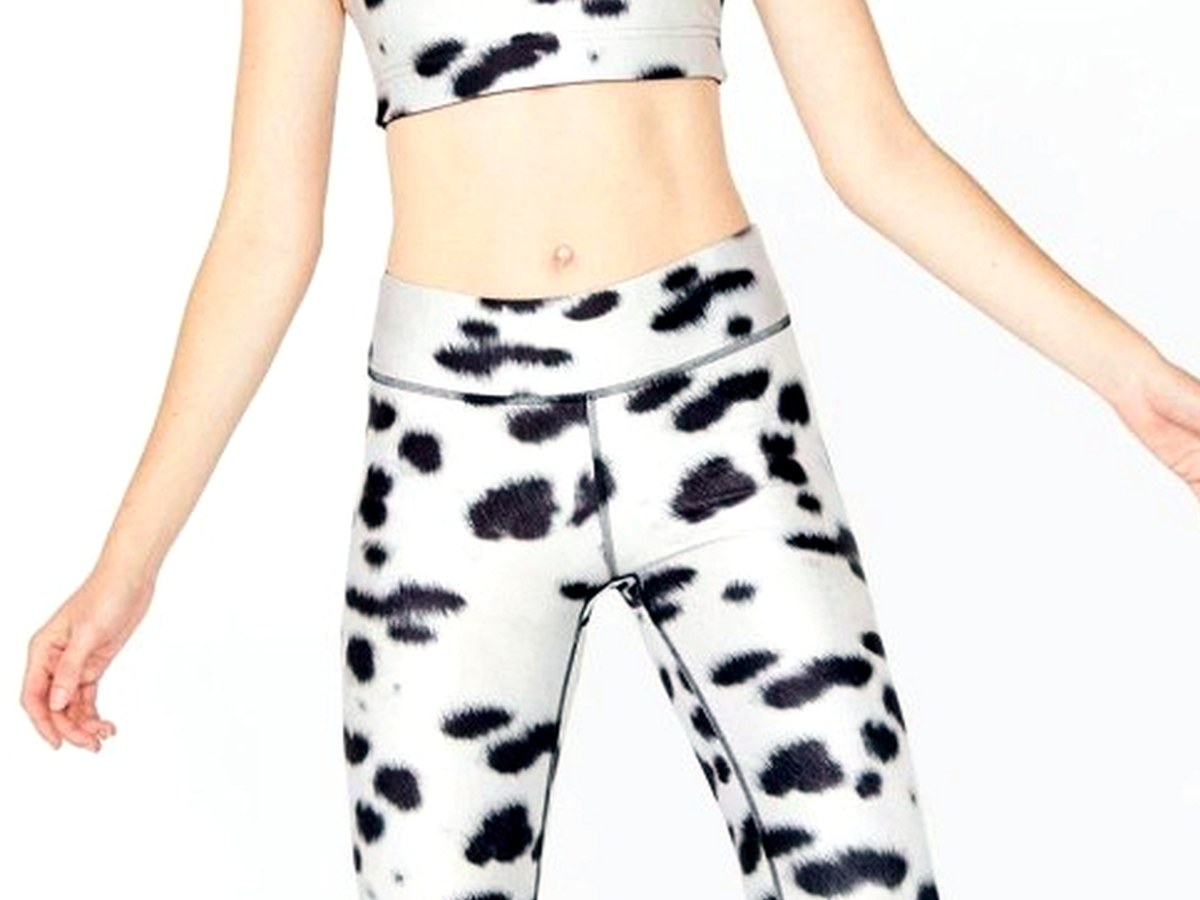
All-over print activewear is a garment whose visible fabric carries a design across much or all of the surface. The design can be a repeating motif, a directional pattern or a composition prepared for individual panels. A bra and legging set may share the same artwork while using different pattern pieces, seams and degrees of stretch. The product brief should say whether visual continuity or a coordinated but varied appearance is the goal.
All-over does not mean that every seam will automatically match. A sleeve, curved waistband or shaped front panel may interrupt the design. Nor does it identify a single printing process. The appropriate method depends on the base material, artwork, available supply chain, quantity and agreed quality requirements. Ask the supplier what they propose and which parts of the process will be performed by which party.
For a practical silhouette discussion, use the Yoga and Jogging Activewear collection as a reference for bras, leggings, shorts and coordinated sets. Product imagery shows garment possibilities; it does not establish the ink, print route or performance of a new order.
Start with use, fit and fabric rather than the artwork
A studio legging, a jogging layer and a tennis skirt can face different wear conditions. A buyer should describe the intended activity, coverage, desired hand, support, wash expectations and customer price position before asking for a printed sample. Define whether the garment must remain opaque during movement, whether a lining is needed and where seams or pockets must sit. These are project objectives to review, not claims that any fabric automatically meets them.
The Yoga Activewear collection includes tops, leggings, shorts and other shapes that can help a brand discuss fit and coverage. Select one representative style for development rather than trying to approve an entire collection from a single swatch. A design that works on a small fitted top may need a different scale on a full-length legging.
Ask the factory to review the pattern and proposed size range alongside the print. State what the brand will accept if a panel must be changed for fit. If the artwork is fixed before a garment pattern exists, allow time to revisit it after a fit sample. A little space for adjustment early in development can avoid a late dispute over whose instruction takes precedence.
How should buyers specify the stretch base?
Identify the fibre composition or a named material reference, knit construction, approximate weight, usable width, ground colour, stretch directions and finish. These inputs help a supplier identify a comparable material and explain which print routes may be suitable. The percentage printed on a fabric label alone does not describe stretch recovery, opacity, texture or the appearance of colour under strain.
Request a sample of the intended base in an appropriate size. Review it flat, stretched and in a garment where possible. A light-coloured ground may influence the appearance of a dark motif when the fabric extends; a coarse or brushed surface can change how fine lines appear. Ask whether the proposed finishing process or later handling is expected to affect the hand or dimensions. Do not promise that a particular print will remain opaque or unchanged without testing the actual construction.
The fabric development and sourcing solution provides a starting point for discussing fibre, construction and the proposed application together. If the initial proof uses a substitute fabric, label it as a development reference and agree what still needs confirmation on the production-intent material.
Which print route should be considered?
Digital dye sublimation is one route often discussed for suitable polyester-based activewear. The design is printed onto transfer paper and applied with heat; Epson's printing overview describes this process and its use for athletic apparel. That description does not mean every blend, colour or supplier will deliver the same result. Confirm the actual material, process, scale and proof with the production partners.
Other fabric-printing routes can be considered when the material, design and order justify them. The comparison is not simply “digital is small, rotary is large.” Artwork revisions, colour requirements, available width, setup, sample stages and scheduling can affect the recommendation. Ask for a project-specific proposal that distinguishes the proposed printing partner from the garment maker and identifies what each party will approve.
Read the direct-to-fabric versus rotary screen guide when the choice is between those fabric routes. If a project also needs a logo on top of an all-over design, review that operation separately. A logo method suitable for one area or fabric is not necessarily suitable for every stretched seam or panel.
What should be in the artwork file?
Give the production team the source file in an agreed format, a preview, the file owner and written permission for use. Identify the repeat dimensions, scale, orientation, colourway and any changes made from the original design. Include clear reference points for motifs that must not be reversed or cut through. A screenshot is useful for communication but may not contain the technical information needed to prepare production artwork.
Separate creative approval from technical readiness. A brand may approve a visual direction while the printer still needs to check repeat joins, file resolution at the intended size, colour conversion or artwork boundaries. Record any resizing, mirroring or colour adjustments as a new revision. The artwork approval guide explains why a named file and controlled handover matter.
If different panels use different files, list them explicitly. Give each a unique identifier linked to the garment pattern and colourway. Confirm how the team will distinguish a left panel from a right panel and whether the artwork is meant to be mirrored. Do not assume that a printer can infer the intended body position from the file name.
How should the repeat be planned?
A repeat is the unit that tiles across a printed surface. The relevant question is not just whether the edges meet: it is whether the motif density, direction and scale work on the intended garment. A large graphic may look attractive on a screen but leave an awkward empty area on a narrow waistband. A small repeat may read as texture from a distance while losing detail after cutting and sewing.
Print or display the design at the proposed physical scale and place representative pattern pieces over it. Identify the top and bottom of the motif, whether rotation is allowed and whether the design is directional. Discuss where motifs may be interrupted and whether the brand expects symmetry. A random abstract repeat gives cutters more freedom than a distinctive horizontal stripe or a face-shaped motif.
Ask the supplier to identify the practical repeat and usable-width limits for the selected route. If a repeat must be changed, compare the revised version on the actual garment pieces before approving it. Keep an original file, an approved production file and a physical reference connected by revision number so a reorder does not quietly use a different scale.
Why do seams and pattern pieces change the result?
Activewear often uses shaped panels, a gusset, curved seams, elasticated waistbands and bindings. These features serve fit and movement, but they can divide a continuous image. Make a garment map showing centre front, centre back, side seams, crotch, waistband, pockets and any contrast panels. Mark the places where alignment is essential, desirable or not required.
For an abstract print, the buyer may accept that motifs differ between left and right legs. For a stripe, misalignment at a prominent front seam may be much more visible. The factory can explain how the pattern shape and cutting plan affect the requested match. Some matches may require extra fabric or limit marker efficiency; ask for that effect in the quotation rather than treating alignment as free.
The Activewear Performance collection provides examples of bras, sets and one-piece silhouettes for a construction conversation. Use it to identify seam and coverage choices, not as evidence that a particular print or test has been approved.
Should fabric be printed before or after panel cutting?
One approach is to print a fabric length and cut pieces from it. This can suit a repeat where individual motif positions are allowed to vary. Another is to prepare artwork for individual panels and place those panels deliberately. That may help protect a focal motif or create engineered placement, but it adds file, alignment and handling decisions. The available options depend on the production route and supplier.
Compare the two approaches on the actual style. A loose abstract all-over can tolerate more variation; a large artwork designed to flow across the front of a set may need a more controlled panel plan. Ask how the material will be identified after printing, how left and right pieces will be paired and what happens if an individual panel is damaged.
Do not decide solely from a mock-up. Request a sample showing the intended route, or a documented explanation of where the sample differs from bulk. If an early proof is made by a different method, record what it can establish and request the remaining evidence before production approval.
How should the print be reviewed on a moving body?
Review the garment flat and during representative movements appropriate to the product. Look at print balance, seam comfort and coverage at the hip, knee, waist or chest where relevant. A motif can appear wider when the fabric stretches, while an opening between knitted yarns can change the perceived ground. Lighting and the wearer's body can also affect appearance, so agree the observation conditions instead of relying on a single photo.
Choose a fit model or evaluation method and record the garment size, fabric reference and observations. A photo can identify the location of a concern but should not be the only evidence for a critical colour or fit decision. If an issue appears only at a particular movement, describe it precisely and agree whether the resolution is a fabric, print, pattern or construction change.
Testing is separate from this visual review. The AATCC testing programme lists different methods for properties such as dimensional change and knit stretch; it does not certify a particular garment. The brand and supplier should agree the relevant method, specimen, criteria, laboratory and responsibility. Avoid claiming a performance result that has not actually been obtained.
How do size grading and matching affect placement?
A size set changes the dimensions of each panel. The same repeat can land in different positions as pieces become longer or wider. Decide whether the design should keep a constant physical scale across sizes or be adapted to a panel. A constant repeat often creates visual variation; an engineered layout may need additional files or a size-specific placement plan.
For critical features, define the reference size and measurement points. A request such as “place the motif near the hip” is less useful than a diagram showing the intended relationship to the waistband and side seam. Discuss what happens in sizes where the same placement would intersect a seam or pocket. Include acceptable variation in the written approval rather than relying on a perfect image of one sample.
Check a representative size range before releasing bulk when placement is important. The supplier and buyer can agree which sizes deserve an additional visual sample and which can be reviewed from an accurate layout. The correct evidence depends on the design and the consequences of variation.
What should the brand approve before bulk?
Approve the design file, base fabric, colourway and printed proof as separate but connected references. A strike-off can help review colour, repeat and detail; a sewn garment is needed to discuss fit, seam interruption and movement. Record the sample date, size, file revision, material, process as described by the supplier, approver and any conditions. The print sample approval checklist separates these decisions.
Define the limits of the approved reference. A small proof may not show a full repeat, and a fit sample may use provisional fabric or unfinished trim. If a second colourway is added, decide whether it needs its own proof. If the base, print route, layout or finishing changes after approval, identify who assesses the impact and whether another sample is required.
Keep the physical reference accessible to the people who need it. A photograph and electronic approval are useful for identification, but they do not replace an agreed physical standard where colour or hand is critical. Confirm how the reference will be retained and returned, and how the bulk team will identify the governing version.
What affects the quote and minimum discussion?
Give the supplier quantities by style, size and colourway rather than one total. Explain whether the design is shared across pieces, whether seams must match, whether extra panels are needed and what sample or test evidence is required. A print provider's setup or material requirements may differ from the garment factory's cutting and sewing requirements; ask for both to be explained.
Costs can also be affected by usable width, artwork preparation, special placement, extra material allowance, pattern matching, changes after sampling and the number of revisions. The trade-off is project-specific. An intricate match might be commercially sensible on one premium capsule and unnecessary on another. Request an itemised explanation where useful instead of assuming a universal surcharge or minimum.
The small-batch clothing manufacturer solution is relevant when a brand is testing a limited run. Discuss the proposed style and quantity with the actual production team; a small-batch capability does not mean that every print route, fabric or colourway is available at an identical minimum.
How can the cutting and sewing handover reduce risk?
Prepare a production pack that names the approved artwork, printed material and garment sample. Include the pattern revision, size breakdown, grain or stretch direction, cutting plan, seam matching priorities and any panel-specific identifiers. State which face of the fabric is the outside and how directional motifs should run. If matching is limited to selected seams, say so.
Ask how the team will separate colourways, sizes and left/right pieces and how it will deal with defects found during cutting. Identify whether replacement panels must come from the same approved material batch or be assessed for colour compatibility. Record responsibilities for checking the print before cutting and for examining assembled garments after sewing.
A sewing operator cannot restore a motif already cut in the wrong orientation. Likewise, a good marker cannot compensate for an outdated artwork file. Keep the decisions connected to named owners and approval dates so that a late substitution is visible before it becomes a finished garment.
Build a simple exception path into the instructions. If the fabric arrives with a visible print fault where an essential front panel must be cut, the cutter should know whether to move the piece, set the area aside or ask for a new decision. Moving a panel may protect a motif while changing its relationship to another panel; cutting through the fault may preserve a match but fail the appearance brief. Neither outcome should be chosen from an ambiguous comment in an email.
For a coordinated top and bottom, identify whether the buyer expects the two pieces to share a colour reference as well as a design. They may be made from different materials or printed in separate runs. Compare representative references together and agree how the relationship will be reviewed. A matching artwork file is helpful, but it is not evidence that two different materials will show the same shade under every light.
What should be checked during bulk review?
Compare production against the approved reference and the written acceptance criteria. Depending on the project, review print clarity, colour relationship, orientation, panel pairing, visible seam priorities, coverage, measurements and construction. Decide beforehand how many pieces or areas will be examined and how a finding is recorded. A general instruction to “check quality” does not tell a team which variations matter to the brand.
Separate an isolated defect from a repeated process problem. Photograph and identify the affected roll, panel, garment, size and position; retain the relevant reference. Agree who can authorise rework, replacement or a revised acceptance decision. Do not present a production sample as proof of completed independent testing unless the corresponding report exists.
For subsequent orders, compare the approved reference and material specification again. A supplier or fabric change, different ground shade, revised artwork or new size range may affect the result. Decide the evidence needed for the reorder instead of assuming that an earlier approval covers a different production setup.
Keep a short change log with each order. For example, if the brand accepts a revised waistband height, mark whether the print placement drawing also changed. If the factory proposes a substitute fabric, keep the proposal separate from an approval until the buyer has reviewed its effect. This record gives both sides a practical way to distinguish an intentional improvement from an accidental departure.
What should buyers send in the first enquiry?
Send the garment category, intended activity, reference images, size range and approximate quantity by style and colourway. Include the artwork file or a preview, repeat dimensions if known, preferred material or swatch, desired coverage and any important matching or placement. Identify the destination market and any testing, labelling or packaging requirements that need separate confirmation.
Explain which decisions are fixed and which are open. A start-up brand may have a clear print but need guidance on the base; an established buyer may have an approved fabric but need a factory to assess its pattern and cut. Share the current file revision and say whether a printed fabric proof, fit sample or production-intent garment is the next decision.
Send the activewear brief to Yinshan Fashion with the artwork and garment objective. The team can discuss a practical development route, the evidence needed and the specific project's feasibility without promising an unverified minimum, price, delivery date or print result.
Activewear print handover
Three checks before the fabric is cut
Connect the approved repeat to the stretch base and the exact garment panels.
Confirm the base
Name the fabric, ground and stretch direction used for the proof.
Map the repeat
Mark direction, focal motifs and the seams that genuinely need to match.
Control the release
Connect the artwork revision, size set and sample to cutting instructions.
Buyer inputs and factory confirmations
Record the agreed evidence and open decisions for each style and colourway.
| Decision area | What the buyer should prepare | What to ask the factory |
|---|---|---|
| Garment | Provide the activity, coverage and fit objective. | Which panels and seams affect the artwork? |
| Fabric | Share the material reference and stretch direction. | Is the proof on the proposed production base? |
| Artwork | Provide the file, rights, scale and repeat. | Were any technical changes made? |
| Cutting | Rank the matching and placement priorities. | What material or marker impact follows? |
| Samples | Name the reference size and approver. | Which colourways or sizes need further evidence? |
| Bulk | Agree test and acceptance requirements separately. | How will revisions and panel defects be controlled? |
Continue the production conversation
Choose evidence for each activewear decision
| Decision | Useful reference | Check before approval | Not automatically covered |
|---|---|---|---|
| Base fabric | Production-intent swatch | Stretch direction, ground and hand | Finished garment performance |
| Repeat | Full-scale print proof | Scale, orientation and joins | Panel placement on every size |
| Panel placement | Layout or garment sample | Seam priorities and motif position | Later pattern changes |
| Fit and movement | Representative size garment | Coverage, comfort and distortion | Unseen sizes or colourways |
| Performance | Agreed test report | Method, specimen and criteria | Unrelated visual or legal requirements |
Buyer FAQs
What is all-over print activewear?
It is activewear whose visible fabric carries a design across much or all of the garment. The artwork can repeat across fabric or be prepared for individual pieces.
Does all-over print automatically match across seams?
No. Matching depends on the artwork, pattern shapes, cutting plan and agreed priorities. Specify prominent seams and discuss the fabric and cost implications.
Can one strike-off approve the full garment?
Not by itself. A proof can help assess the print on the stated base, while garment samples address placement, fit and movement. Any testing is a separate decision.
Is sublimation suitable for every stretch fabric?
No. Compatibility depends on the material and production route. Confirm the actual base and request an appropriate proof from the proposed supplier.
Should the print change across sizes?
Agree whether to keep a constant repeat scale or create controlled placements. Review representative sizes when motif position is commercially important.