Article
What should buyers know first?
Short answer: Prepare clothing care labels and size labels with verified product facts, market review, size mapping, controlled artwork, placement, and sample approvals.
This is a guide to organising that work, not a universal legal label template. Requirements depend on the product and market, and the responsible business should obtain the appropriate compliance review. The practical aim is to give the factory controlled information that has a clear source and approval status. That makes it easier to produce the intended component, identify missing inputs, and prevent outdated content from being carried into the next order.
How should buyers give clothing care labels and size labels separate information owners?
Start by assigning responsibility for the different fields. The design team may own brand presentation, the technical team may maintain measurements and care evidence, and the importer or compliance reviewer may approve market-specific wording. One person should consolidate the final release, but that does not mean one person must invent every answer. The brief should show where the information comes from.
Distinguish factual confirmation from layout approval. A designer can confirm that a line is readable without confirming that its content is correct. A factory can reproduce supplied artwork without knowing whether the buyer has completed the intended market review. Record those approvals separately so a positive comment on the visual proof is not mistaken for acceptance of all the underlying information.
Make unresolved items visible at the first handover. Use a status such as awaiting material confirmation, awaiting care review, or awaiting translation approval. Do not fill a gap with text from another style simply to complete the layout. A clearly identified missing input can be resolved; a plausible but incorrect placeholder can survive several reviews because it looks finished.
How should buyers define the destination and product scope first?
List the intended sales markets and the actual product categories in the order. The label brief for a collection sold in one country may differ from a brief serving several destinations. Identify any retailer-specific instructions separately from legal requirements. This prevents the team from assuming that one customer's preferred layout is a universal rule for every order.
For example, the FTC's textile and wool labelling guide explains that most covered US textile and wool products need information about fibre content, country of origin, and the responsible business identity. It also distinguishes care labelling as a separate rule. This is an orientation to the US framework; the actual garment and applicable requirements still need review.
For EU sales, Your Europe's textile-label guidance addresses fibre-composition information, clear presentation, and the relevant official national languages where products are offered to consumers. It also distinguishes composition from other information such as care. Do not take either market example as a complete template for all destinations or all apparel requirements.
How should buyers build the content brief from the final garment facts?
Connect each proposed label to the current garment specification and bill of materials. Identify the shell, lining, and other relevant parts for the person reviewing the required wording. A material description used during early design may no longer match the final sourced option. The label content should be checked against the product that is actually intended for production.
Keep supporting records accessible to the content reviewer. These may include material confirmations, component details, approved changes, or other evidence relevant to the garment. The buyer should know which facts are confirmed and which remain provisional. A marketing description such as silky or soft is not a substitute for the factual information needed to prepare a composition statement.
If the material changes, treat the information label as an affected part of the specification. Do not assume that a similar appearance means the existing wording remains correct. Ask the responsible reviewer to confirm what needs updating, then revise the artwork and component allocation accordingly. This keeps label production connected to sourcing decisions instead of running as an independent branding task.
How should buyers establish care instructions from the relevant evidence?
Care wording should be supported for the actual garment. The FTC's care-labelling guidance describes the need for a reasonable basis for care instructions and warnings, including reliable evidence for the garment as a whole when several components are involved. It also explains that an unsupported restrictive instruction is not a substitute for evidence. Use the applicable framework and technical review for the intended market.
For the project brief, identify the proposed care route, the available supporting information, and the person responsible for confirming the final instruction. Ask what further assessment is needed where evidence is incomplete. Do not derive the final wording from the fibre name alone or copy it automatically from a visually similar garment. The label decision should follow the actual product review.
Keep the scope of the evidence clear. A record for one material or component does not necessarily describe every part of a finished style. The technical reviewer should decide whether it supports the proposed wording and what additional information is required. The factory needs the approved outcome and its revision, while the responsible team retains the evidence that supports the decision.
How should buyers map size names to the approved measurement system?
Prepare a size matrix that links the garment style, size identifier, measurement specification revision, and order quantity. A letter or number on a label should refer to the size system the brand has actually approved. Do not assume that a familiar name such as medium establishes a universal set of garment measurements. The technical package and the label mapping must agree.
Keep body measurements, garment measurements, and retail size descriptions distinguishable in the source records. They can support different aspects of product communication, but they should not be interchanged casually. If the brand uses a market conversion, ask the responsible technical or merchandising team to approve it. The factory should receive the final mapping rather than be expected to invent an equivalence.
For a dress collection, review whether different fit blocks or styles use the same size naming consistently. A shared label component may be appropriate, but the order allocation still needs to identify which garments receive each size. This is particularly useful when a small range combines fitted occasionwear with more relaxed silhouettes.
How should buyers keep origin information distinct from brand identity?
A brand's address, design location, supplier contact, and country-of-origin statement are different pieces of information. Keep them in separate fields during preparation. The responsible reviewer should confirm the wording required for the actual goods and destination, using the relevant production and import information. Do not ask the printer to infer origin from a logo, company name, or shipping address.
Where information is supplied by several parties, preserve the source and date. The factory can provide relevant manufacturing facts, while the buyer or importer coordinates the appropriate market review. If any detail is uncertain, keep it unresolved until the responsible party confirms it. An attractive layout should not force an early decision on wording that has not been verified.
Record the approved statement exactly as released. If a later order changes production arrangements or market scope, review the information again instead of reusing the old file by default. The operational principle is straightforward: the label should describe the actual order, and the team should be able to trace its wording to a deliberate approval rather than a copied template.
What should buyers consider about organise languages before choosing label dimensions?
List the language versions required by the approved market brief and obtain reviewed translations. Keep each translated block connected to the source wording and its revision. If the source changes, identify which language versions need rechecking. A translation that was correct for an earlier composition or care statement may no longer be suitable for the current product.
Review the full text at the intended physical scale. Adding languages after the component size has been fixed can create a layout problem that should be resolved explicitly. Consider the approved format, number of panels, and placement with the factory. Do not solve a space problem merely by reducing text until the proof appears to fit, without checking the required readability and presentation.
Keep the language order and orientation controlled. A folded or multi-panel component should have a clear reading sequence, with front-and-back references where needed. The buyer should approve the actual arrangement supplied for production. The factory then has a reproducible instruction rather than several translated text files whose final order is left to interpretation.
How should buyers treat symbols as controlled content rather than decoration?
If the brief uses care symbols, identify the applicable system and obtain the appropriate authorised artwork and guidance through the responsible reviewer. Do not choose icons because they resemble familiar washing or ironing images. The intended meaning, permitted use, and relationship to the accompanying wording need confirmation for the market and product involved.
Keep symbols and text aligned during revisions. If the care instruction changes, review both rather than editing only the English sentence. A component with inconsistent visual and written instructions creates an avoidable ambiguity. The approval record should cover the full information block as it will appear to the customer, including language versions and any relevant qualifiers.
Provide the factory with the approved files and a readable reference. The printer should not have to recreate a symbol from a screenshot or substitute a similar character from an unrelated font. Where a technical or licensing question remains open, resolve it before production release. A clear source for the artwork is part of a reliable information-label brief.
How should buyers approve the component in its intended garment position?
Specify the label's finished dimensions, material direction, folds, orientation, and attachment location. Show the visible area after sewing, not only the flat component size. The content reviewer and garment team should both understand the proposed arrangement. A legally reviewed text block still needs a physical format that can be read and attached as intended.
Check the garment sample for placement, comfort, and outside appearance. Record whether the label is easy to locate, whether folds hide information, and whether the attachment creates an unwanted effect on the fabric. These are practical observations for the actual sample. Avoid universal claims that one component material or placement is comfortable for every wearer and garment.
For a lightweight blouse programme, the label's interaction with the shell and seam may need particular attention. A larger information block might require a different format from the main brand label. Ask the factory to assess the complete arrangement and obtain the relevant approval before component production is treated as final.
How should buyers distinguish artwork approval from information approval?
Use separate status fields for content, artwork, physical component, and garment attachment. These stages can be reviewed efficiently, but their meanings should remain clear. Content approval confirms the wording and mapping supplied by the responsible reviewer. Artwork approval confirms that the layout reproduces it correctly. Physical and garment approvals address the component and its use in the actual product.
A message saying approved can be ambiguous when several versions are circulating. Include the file identifier, revision, style scope, and any exceptions in the release record. If only the layout is accepted, say so. The factory should not interpret a partial approval as permission to print an unresolved care statement or attach a component to styles outside the reviewed scope.
Keep the final release package small enough to use but complete enough to control. It should contain the current artwork, approved content source, component specification, style-and-size mapping, and approval record. Avoid sending a folder of drafts without identifying the governing files. The aim is to reduce interpretation at the point where the component is purchased and used.
What should buyers consider about handle coordinated sets and separate pieces explicitly?
A matching set can contain several garments with different materials, construction, or care considerations. Show every piece in the information brief and explain how the set will be sold. The responsible reviewer should confirm the labelling arrangement for the actual market and sales configuration. Do not assume that one label on one piece is always sufficient or that every set must follow the same layout.
Connect the size plan with the retail configuration. If the top and bottom can be ordered in different sizes, the component mapping needs to reflect that. If the set uses one retail size, still identify how the garment measurements and individual pieces are controlled. The packing team should be able to verify the correct combination without treating the outer package as the only source of information.
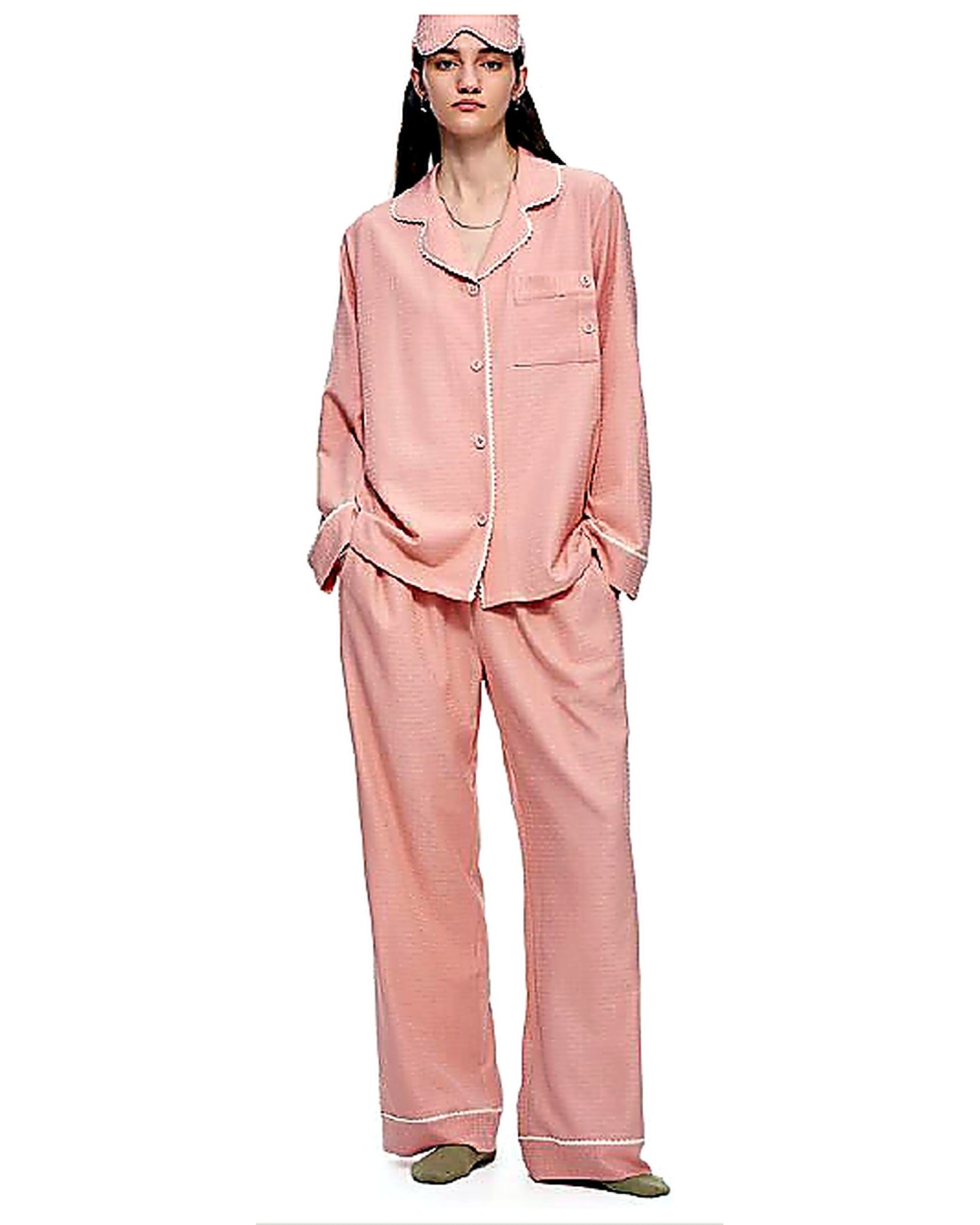
For a soft lounge set, include both pieces in the sample and packing review. Check that their labels correspond to the approved specification and intended selling arrangement. If the brand later decides to sell the pieces separately, return to the information brief for review rather than assuming the original set approval covers the new channel automatically.
How should buyers manage material and colour variants without silent assumptions?
Create a label-version matrix where product facts or approved instructions differ between variants. The same style name does not prove that every colour uses an identical material specification or component arrangement. Ask the technical team to identify any relevant differences and confirm which label versions apply. Where one approved version covers several variants, record that scope clearly.
Keep colour names used for marketing separate from technical references where necessary. The label may not need to display every internal identifier, but the production mapping should connect them. This is useful when similar shades or alternate materials are handled in the same order. The component allocation needs an unambiguous link to the garment specification, not just a descriptive name.
If a substitute material or trim is proposed after approval, identify the information review as part of the change assessment. Ask whether the existing content remains appropriate and whether the physical component or artwork needs revision. This does not mean every change produces a new label. It means the decision should be made deliberately by the responsible reviewer instead of being skipped because the label order is already underway.
How should buyers reconcile label quantities with the production breakdown?
Calculate the requirement for each unique component version. A common brand label, separate size marker, and market-specific information label can have different quantity totals. Show the arithmetic against the garment order and identify whether the count is per piece or per set. The supplier should be able to see exactly what is being requested for assessment and purchasing.
Ask the factory to confirm the relevant component purchasing conditions, including any additional quantities or separate charges in the proposal. Do not assume that a small first garment order means every label variant is available under the same conditions. Keep the commercial response attached to the version map so the buyer can understand the full component commitment before release.
Agree how remaining labels will be identified and handled. Size, composition, origin, and care versions can become obsolete even when the brand artwork does not change. A future order should not use leftover components merely because they are available. Record the retained reference and require a fresh match to the current product facts and approved market brief before considering reuse.
How should buyers make production checks readable for the people using them?
Provide the production team with a clear map of component identifiers and garment variants. Include readable reference images or samples, but do not rely on visual similarity alone where the difference is a small line of text. The person issuing components should be able to identify the correct version through the order documents and the component reference.
Define what the check should cover before and after attachment. Before sewing, the team can compare component identity and visible content with the released reference. After attachment, it can assess orientation, placement, and whether the intended information remains readable. Keep the criteria tied to the approved brief rather than using an undefined instruction to check the labels generally.
When an error is found, identify the affected style, size, market version, and component batch or reference where available. The report should make it possible to determine the scope of the issue. A photograph of one label is useful, but the factory also needs to know which garments may have received it. Specific identification supports a more effective corrective discussion.
How should buyers keep product listings consistent with the approved information?
Use the same controlled product facts when preparing the garment page, wholesale line sheet, and internal selling documents. The format may differ across channels, but the underlying information should not conflict. A product listing drafted from an early design brief can become outdated after material or care decisions are finalised. Add those channels to the review when relevant facts change.
Assign a person to reconcile the final information before launch. They should compare the approved garment label, product specification, and customer-facing description for the fields that overlap. The purpose is not to copy every label line into every marketing surface. It is to avoid presenting different composition, size, or care information for what the brand describes as the same product.
Keep the source records available after launch. Customer-service or retail teams may need to answer a question about a specific order version. An archive that connects the style, production revision, and approved information is more useful than a generic label template. It also helps the brand explain changes between earlier and later versions of a continuing garment.
How should buyers use a two-market brief as a controlled example?
Imagine a brand developing a lined slip dress and a relaxed blouse for two intended sales markets. The buyer begins with one product-fact record for each style, then asks its responsible reviewers to identify the required content and language arrangements. It does not assume that a single attractive label layout will automatically satisfy both destinations. The example is a workflow illustration, not a legal conclusion for any specific product.
The technical team confirms the current material and measurement records and identifies the evidence supporting the proposed care instructions. The artwork team prepares the approved wording in the chosen component format, with distinct version identifiers where needed. The factory assesses the component and attachment in the relevant garment samples. Each decision points to the same style revision and market mapping.
Before production release, the buyer reconciles the quantity plan, approved files, and component allocation. Open questions remain visible until the responsible reviewer resolves them. The resulting brief is manageable because the team has separated product facts, market requirements, physical construction, and order distribution. The factory receives a coherent package rather than several unrelated emails containing partial label instructions.
How should buyers define the repeat-order review before archiving the first order?
At the end of development, save the final content, artwork, component specification, and approval evidence under stable identifiers. Note the styles, sizes, and markets covered by the approval. A repeat enquiry can then begin with a known reference package. The team should still verify whether the new order changes materials, production information, market scope, or other facts that affect the labels.
Set a clear rule for handling revised content. If a later order requires a new statement or language version, create an identifiable revision and update the component mapping. Do not alter the archive so that the first order appears to have used the new wording. Keeping historical and current records distinguishable makes later questions easier to answer accurately.
The final test is whether another colleague can prepare a correct repeat enquiry from the record. They should be able to identify the approved content, who reviewed it, where the evidence is stored, and what needs current confirmation. That continuity turns the label brief into a reusable operational reference while preserving the limits of each approval.
How can buyers discuss next steps with Yinshan Fashion?
Use the fashion factory sampling and production standard guide to connect label approvals with the overall garment reference. Then send Yinshan Fashion your information-label brief with the style list, market scope, approved wording, size mapping, component layout, placement, and quantity breakdown. Request a physical and garment-sample review while your responsible team completes any outstanding technical or market-specific content approval.

Sourcing Guide buyer guide
Clothing Care Labels and Size Labels: How to Build a Clear Factory Brief
Prepare clothing care labels and size labels with verified product facts, market review, size mapping, controlled artwork, placement, and sample approvals.
Establish one factual record
Connect every style to its current materials, measurements, component information, intended markets, and relevant care evidence. Mark missing inputs and assign their owners.
Approve content before final artwork release
Obtain the appropriate market and technical review, then check the layout, translations, symbols, and size mappings against the approved source. Keep each approval's scope explicit.
Verify the garment and quantity mapping
Review the physical label in the relevant sample, reconcile each component version with the production breakdown, and release one controlled package for purchasing and attachment.
Buyer and factory handover checklist for clothing care labels and size labels
Use these prompts to make the current product decision reviewable. Confirm market requirements and commercial details for the specific programme.
| Decision area | What the buyer should prepare | What to ask the factory |
|---|---|---|
| Approval point 1 | Identify the destination markets, sales configuration, and responsible content reviewers. | Identify the proposed component construction, dimensions, folds, placement, and attachment. |
| Approval point 2 | Provide current product facts, approved size mapping, and the evidence or review supporting care instructions. | Confirm which sample details are final and which remain provisional. |
| Approval point 3 | Supply final wording, reviewed translations, and authorised symbol files where applicable. | Which proof or record should confirm this decision before the next stage? |
Continue the production conversation
Decision table: prepare the right input for each label field
| Information area | Source to organise | Reviewer to identify | Factory handover |
|---|---|---|---|
| Fibre or material facts | Current product and material records | Technical and market-compliance reviewer | Approved wording linked to the style revision |
| Care instructions | Relevant garment evidence | Responsible technical and compliance reviewer | Final text and approved symbols, where used |
| Size identifier | Approved size and measurement mapping | Technical or merchandising owner | Component allocation by garment size |
| Origin and business information | Relevant production and business facts | Responsible importer or compliance reviewer | Exact approved statement and market scope |
| Languages | Approved source content and translations | Qualified content reviewer | Controlled language versions and reading order |
| Physical component | Dimensions, folds, material, and placement | Garment and branding reviewers | Approved component and attachment reference |
Buyer FAQs
What should a brief for clothing care labels and size labels include?
Include approved product information, market scope, size mapping, content sources, artwork versions, component specifications, placement, quantities, and the responsible approvals.
Can one label template be used for every country?
Do not assume that. Review the actual product and destination requirements, including language and presentation, before deciding which versions are needed.
Can care wording be copied from a similar garment?
It should be supported for the actual product. Ask the responsible technical reviewer to assess the relevant evidence and approve the instruction for the intended market.
Does the size name define the garment measurements?
The label should map to the brand's approved size system and measurement specification. A letter or number alone does not replace that technical reference.
What happens when the fabric changes after artwork approval?
Review the affected product information and care evidence before reuse. Update the content, artwork, and component mapping if the responsible reviewer determines that a change is needed.