Article
What should buyers know first?
Short answer: Compare woven labels vs printed labels through artwork, legibility, comfort, placement, care review, quantities, and a practical garment-sample approval.
A small evening dress, a relaxed shirt, and a hoodie can have different requirements even when they carry the same brand. The visible area, seam construction, fabric opacity, and amount of information all influence what should be checked. This guide explains how to turn those questions into a label specification and approval process without assuming that either construction is automatically more comfortable, more durable, or appropriate for every style.
How should buyers begin woven labels vs printed labels with the label's job?
Write down what the component needs to communicate. A main brand label, size identifier, information label, and decorative outside tab serve different purposes. One component may combine several roles, but that should be a deliberate choice. When the team asks for a better label without identifying the problem, the discussion can drift toward appearance while readability or placement remains unresolved.
Identify the reader and the moment of use. A customer looking for a size, a retail assistant identifying a garment, and a wearer checking care information need different things from the label. Consider how the component will be found and read in the finished item. A beautiful logo does not compensate for important text that becomes hidden in a fold or seam.
Separate brand design approval from information approval. The person responsible for the logo may not be the person who verifies composition, origin, size mapping, or care content for the intended market. Assign those tasks and provide approved wording to the factory. Choosing a woven or printed construction does not, by itself, establish that the information or placement meets the applicable requirements.
How should buyers understand the construction difference without ranking every outcome?
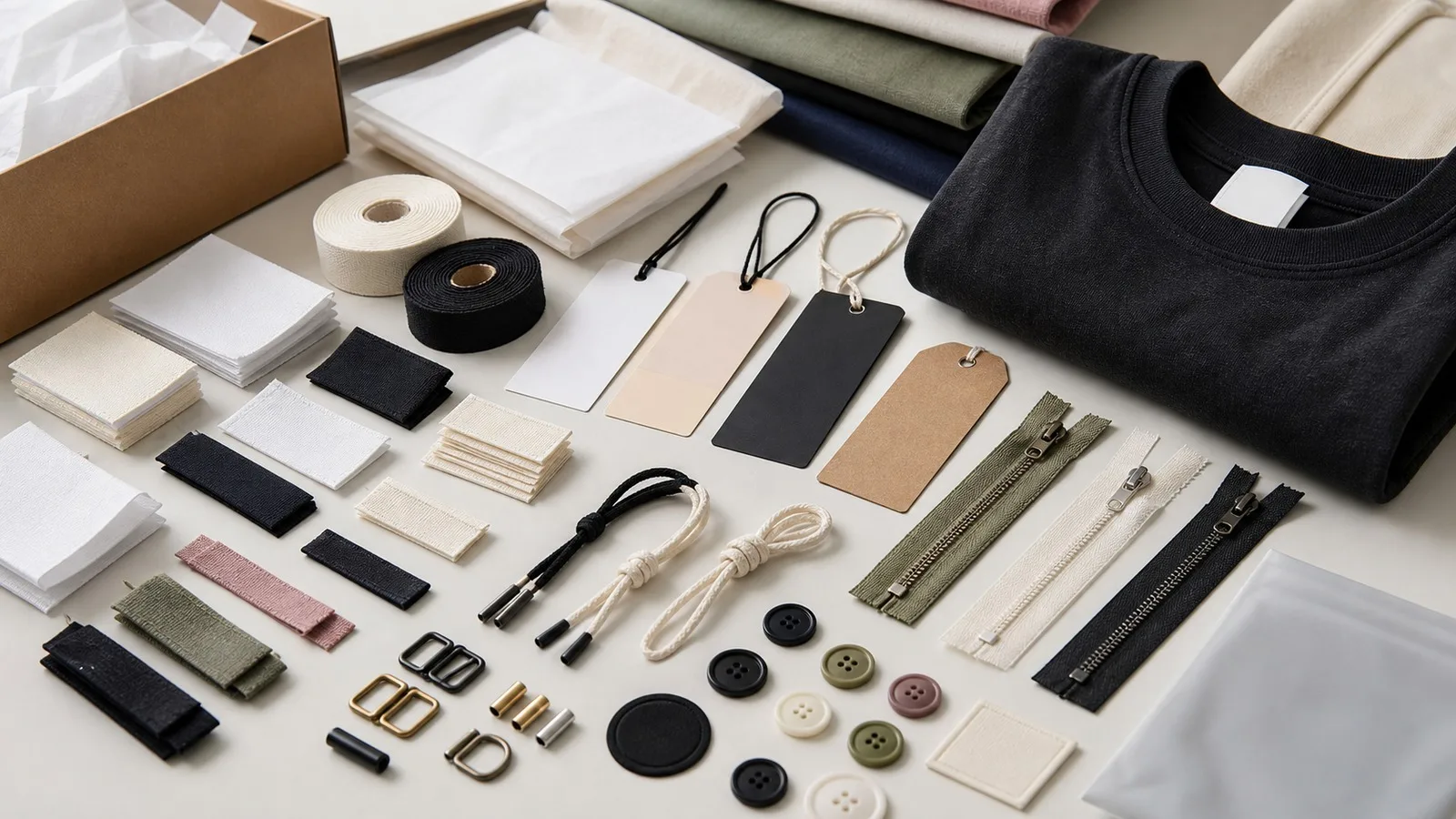
A woven label forms its design through the arrangement of yarns, while a printed fabric label carries printed artwork on a label substrate. Dutch Label Shop's explanation of the two constructions describes this basic distinction and discusses how design detail influences the choice. Use it to understand the options, then request evidence for the specific label proposed for your garment.
Avoid adopting broad supplier marketing claims as universal performance rules. The practical result depends on the actual materials, construction, finish, artwork, and intended use. A sample is more useful than an assumption that every woven label has the same edge feel or that every printed label will behave alike. Ask the component supplier or garment factory to identify the proposed specification.
Also distinguish a printed fabric label from a direct internal transfer. They are separate component or application routes. Avery Dennison's permanent-branding overview lists woven labels, printed fabric labels, and internal heat-transfer labels as options within its portfolio. This guide compares woven and printed fabric components; a transfer proposal needs its own material, application, and garment review rather than being silently substituted.
How should buyers test the artwork at the size that will be sewn?
Send the actual logo and text, then specify the intended finished dimensions. An enlarged digital proof can hide difficulties that become obvious when the label is held at garment scale. Print the proof at its intended size for a first layout discussion, and request a physical sample through the agreed development route. The paper view and physical label answer different questions.
Look closely at letter spacing, small counters inside letters, fine lines, and the separation between neighbouring elements. Ask the supplier which details can be reproduced reliably in the proposed construction. If the artwork needs adjustment, have the brand approve the change. The factory should not be left to simplify a distinctive logo feature without a clear decision from the buyer.
Keep a record of the version used for the proof. A small artwork update can be missed if files have similar names or if a messaging-app image is treated as the master. Use a dated or otherwise controlled reference, and make obsolete versions clearly identifiable. The approved sample should point back to the final artwork rather than rely on someone's memory of which image was selected.
How should buyers separate the cut size from the visible finished area?
A label's overall dimensions do not always describe the space available for visible information. Folds, seam insertion, and attachment margins can change what the customer sees. Ask the supplier to show the proposed construction with dimensions and orientation. The buyer should understand the visible area before approving a layout that fills the entire flat component.
Mark which parts are intended to enter a seam or fold behind the label. Keep essential information away from those areas according to the agreed component design. If text appears on both sides, provide a clear front-and-back reference. Ambiguous artwork orientation can produce a component that looks correct flat but reads incorrectly after it is folded or sewn into the garment.
Review the component with the person responsible for garment construction. The label supplier may understand the component, while the garment factory understands the planned seam and placement. Bringing those views together helps the buyer approve a workable result. A component drawing alone should not be treated as proof that the final attachment will match the intended appearance.
How should buyers check colour and contrast on the physical component?
Specify the intended relationship between background, logo, and text. High contrast may be important for small information, while a subtle tonal brand label may be part of the visual direction. Do not assume that a screen preview accurately represents the final physical contrast. Review the proposed component under suitable agreed viewing conditions and keep an identifiable approval reference.
If the brand uses several label colourways, list which garment colours receive each one. A light label on a dark garment and a dark label on a light garment may need separate appearance checks. The buyer should also decide whether the label is meant to coordinate with the shell, lining, or another component. One general instruction to match the garment can leave several plausible interpretations.
For a collection with changing seasonal colours, consider whether a consistent core label or colour-specific versions better serves the range. Ask the factory to assess the actual quantities and sourcing conditions for the chosen approach. Do not assume that keeping one logo means every colour variation is a single purchasing item. The colour map belongs in the component brief and quotation review.
How should buyers review comfort where the label touches the body?
Handle the sample and assess the finished edges, corners, folds, thickness, and attachment area. Then review it in the proposed garment position. Comfort cannot be established from the construction name alone. A component that feels acceptable in the hand may still need a placement adjustment when it sits against the wearer or moves with the garment.
Use a practical wear review appropriate to the product. Record observations in concrete terms: a corner catches against the neck, a folded edge feels bulky, or the attachment area is noticeable when the wearer moves. Avoid replacing those observations with an unsupported claim that a label is hypoallergenic or universally irritation-free. The purpose is to identify what the actual sample demonstrates and what requires improvement.
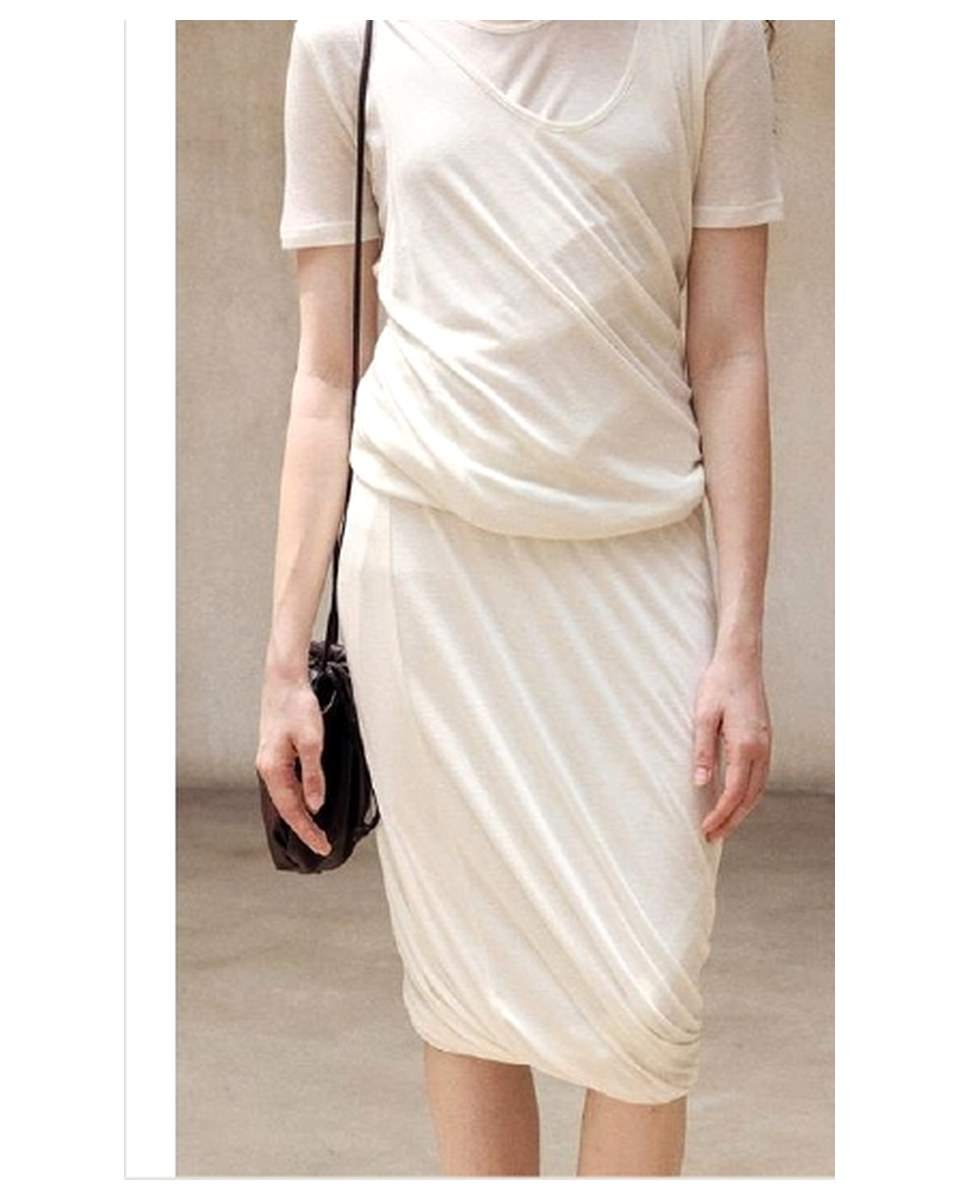
A slip-dress or occasion-dress brief may leave less room for a large internal component than a relaxed outer layer. Show the factory the intended neckline, lining, and placement before ordering labels. The best component on its own may still need a different format or location to work with a particular dress construction.
How should buyers inspect show-through and the outside appearance?
Look at the garment from the outside after the label is attached. Check whether the component or stitching becomes visible through a light or sheer area, changes the way the fabric lies, or creates an unwanted visual interruption. These are sample observations, not reasons to assume that every light fabric needs the same label. Record the result for the specific material and placement.
Compare the garment both laid flat and worn or displayed as intended. A label can look discreet in one position and become visible when the fabric moves. For a lined style, clarify which layer receives the attachment and how the finished garment should appear. The construction decision should be reviewed with the factory rather than improvised after label production.
For a blouse collection, include both the brand presentation and the inside finish in the sample comments. A softly draped blouse may call for a different label size or location from a structured shirt. Explain the observed issue and the required result so the factory can propose a relevant adjustment instead of merely changing woven to printed or printed to woven.
How should buyers define attachment details in the garment specification?
Show the exact placement using an agreed reference point and orientation. Include the label construction, fold, attachment method, thread direction or colour where relevant, and the intended visible result. A photograph can support the instruction, but it should not replace dimensions or a clear description where precision matters. The production team needs a repeatable reference.
Ask for the label to be included in the relevant garment sample before final approval. This allows the buyer to review alignment, seam interaction, and the overall finish together. A loose label approval confirms only part of the decision. If the component is later moved or attached differently, the garment effect should be reviewed again through the agreed change process.
When several styles share one component, verify the placement for each style. A label that fits neatly in the back neck of a shirt may not have the same suitable position in a narrow camisole. Shared branding can still use different attachment instructions. Keeping those instructions at style level avoids forcing a single component arrangement onto garments with different construction needs.
What should buyers consider about agree the care review before making durability claims?
Tell the factory how the garment is intended to be cared for and ask how the label will be assessed within that context. The review should use an agreed method and acceptance criteria suitable for the project. Do not invent a universal number of washes or assume that the label construction guarantees compatibility with every cleaning process. The evidence needs to match the proposed garment and care route.
Identify what will be observed after the agreed review. Relevant questions may include whether text remains readable, the component retains an acceptable appearance, the edges and attachment remain satisfactory, and the label affects the surrounding garment. Keep the observations tied to the sample and conditions used. Passing one limited review should not be converted into an unrestricted lifetime claim.
If the label changes after approval, confirm whether the earlier evidence still applies. A new substrate, ink system, yarn, finish, or supplier route may require renewed assessment. The buyer does not need to dictate technical conclusions without expertise; it needs to ensure that the approval record describes the component actually intended for production. A familiar logo is not proof that the underlying label specification is unchanged.
How should buyers keep brand, size, and care content organised?
A brand may use one main label plus separate size and information components, or combine some content where the design permits. Map the proposed arrangement before finalising artwork. Show where each piece of information appears and who approves it. This helps the team identify duplicated, conflicting, or missing content before physical components are ordered.
For size labels, make the mapping to the garment specification explicit. A size name used in marketing should correspond to the approved size system for the order. If the range serves several markets or includes different fit blocks, ask the responsible team to confirm the intended labelling approach. The label supplier should receive controlled content rather than be expected to infer the brand's size strategy.
For composition, origin, and care information, obtain the appropriate content review for the actual garment and destination market. This guide does not prescribe a universal legal label layout. The practical task is to keep approved wording, placement requirements, and language versions connected to the correct style. A beautifully reproduced label can still be the wrong component if it contains outdated or unapproved information.
How should buyers compare component quantities with garment quantities?
Prepare a label quantity plan that reflects the order's real variations. One brand label may be common across styles, while size labels or care-information versions differ. List each unique component and its required allocation. Do not assume that the total garment count equals the quantity for every label version, especially when sets or multiple pieces carry separate components.
Ask the supplier to state the purchasing conditions for the proposed construction, artwork, colour, and size variations. Record any separate development or setup charge and any additional component commitment. These are project-specific commercial questions. The label type alone does not establish a universal minimum, price advantage, or production schedule, and a small component can still require a clear purchasing decision.
Clarify how remaining components will be identified and treated if the proposal includes them. The buyer should know whether they are reserved for a later order, returned, retained under an agreement, or handled in another agreed way. A future use depends on the component remaining appropriate for the garment and approved information. Do not count obsolete size or care versions as useful inventory merely because the logo remains current.
How should buyers build a label library with controlled references?
Create a simple reference record for every approved component. Include its identifier, artwork revision, finished dimensions, construction, colourway, fold, intended placement, and the styles that use it. Add the approval date and supporting physical sample reference. The record should make it possible to distinguish components that look similar but serve different garments or markets.
Use photographs to support identification, while keeping the physical reference where appropriate. A photograph can help a merchandiser find the right component, but it may not communicate exact colour, handfeel, or edge finish. State which reference governs each aspect of the approval. This prevents a convenient digital image from becoming an unintended substitute for the agreed physical sample.
When the brand updates its logo or wording, identify which components are affected and how the transition will be handled. Do not leave old and new versions available without a clear order assignment. The factory needs to know which reference belongs to the current production release. A controlled library is especially useful when several collections share the same branding but use different sizes or attachment arrangements.
How should buyers use a comparative sample review for a three-style range?
Imagine a brand developing a camisole, a blouse, and a relaxed hoodie under one visual identity. The buyer requests a woven and a printed fabric option using the same approved logo at the intended size. It evaluates the components for legibility and appearance, then asks the factory to attach the proposed option in each relevant garment sample. This is an illustrative review method, not a claim that two options are mandatory for every order.
The camisole review focuses on the limited placement area, contact with the body, and whether the component is visible from outside. The blouse review adds the interaction with the intended drape and back-neck finish. For the fleece hoodie programme, the team checks whether the same dimensions and attachment still look proportionate and remain comfortable in the planned position.
The result may be one shared component with different attachment instructions, or a small family of label formats. Either can be a coherent brand choice when documented clearly. The decision should follow the observed garment results and the confirmed commercial proposal. It should not be forced by a rule that an entire brand must use one label construction everywhere.
How should buyers review defects against an approved component and garment?
Before production, agree the characteristics the receiving or inspection team will compare with the reference. These may include correct artwork, readable text, colourway, dimensions, fold direction, attachment, and the absence of unwanted damage or visible distortion. Describe the expected result rather than using an undefined instruction such as premium quality. An approved sample gives that description a concrete basis.
Keep component and attachment issues distinguishable in the report. A correctly made label can be attached in the wrong place, while a neatly sewn label can contain incorrect text. The corrective action depends on identifying which part of the process needs attention. Photographs and component identifiers help the factory understand the issue without guessing from a broad rejection comment.
If the team proposes a replacement during production, compare it against the approved requirements before acceptance. A different format may solve one problem while changing the appearance or garment interaction. Record the buyer's decision and update the relevant reference if a change is approved. Do not allow urgency to turn an unreviewed component into the new standard for later orders.
How should buyers write a brief that the garment and label teams can both use?
Bring the final decisions into one component specification attached to the style file. The garment team should see the placement and attachment requirements, while the label supplier should see the artwork, dimensions, construction, and colour requirements. Link the two through the same component identifier. That small administrative step makes the approval easier to reproduce across sampling and production.
Include the commercial and review status in a separate note. State whether the component is still being costed, awaiting a physical proof, approved loose, or approved in the garment. These stages answer different questions. A clear status prevents purchasing from ordering a component whose artwork is approved but whose size, fold, or garment placement remains unresolved.
When contacting Yinshan Fashion, present the label as part of the full clothing brief. Include the intended product, material direction, branding artwork, quantity breakdown, and the sample review needed. The factory can then assess the component in context and explain what information is missing. A complete brief is more useful than a request for whichever label type is usually considered better.
How should buyers check the packing and issue of labels to production?
Ask how the approved component versions will be identified when they are supplied to the garment team. The purchasing record should connect the supplier's component reference with the brand's style and order identifiers. If several labels differ only by a small size mark or line of text, clear separation and identification become part of a practical handover.
Provide a readable version map with the production documents. The team issuing components should be able to tell which label belongs to each style, colour, size, or market variant without interpreting the artwork from scratch. This is particularly useful when a collection combines a shared brand label with several information labels.
Keep a reference sample available for the agreed production check. If the delivered components appear different from that reference, identify the discrepancy before treating them as interchangeable. The approval should govern what is used in the garment, not remain an isolated design file that the production team never sees.
How can buyers discuss next steps with Yinshan Fashion?
Use the fashion factory sampling and production standard guide to connect component approval with the wider garment reference. Then contact Yinshan Fashion with your artwork, intended label dimensions, garment styles, placement references, quantity splits, and information versions. Request a component proposal and a clear route for physical and garment-sample approval.
Fabric Development buyer guide
Woven Labels vs Printed Labels: How to Choose for Different Garments
Compare woven labels vs printed labels through artwork, legibility, comfort, placement, care review, quantities, and a practical garment-sample approval.
Define the component's role
Separate brand, size, and information needs. Supply approved artwork and wording, the intended visible dimensions, and the garment placement for assessment.
Review a physical option in the garment
Check legibility, colour, handfeel, edge finish, folds, attachment, and outside appearance. Agree any care review required for the actual component and intended garment.
Release a controlled reference
Record the component identifier, approved specification, style mapping, quantity plan, and approval status. Align the label order with the garment production brief before release.
Buyer and factory handover checklist for woven labels vs printed labels
Use these prompts to make the current product decision reviewable. Confirm market requirements and commercial details for the specific programme.
| Decision area | What the buyer should prepare | What to ask the factory |
|---|---|---|
| Approval point 1 | Supply controlled artwork, approved text, and the intended role of each label. | Show finished dimensions, visible area, folds, orientation, and proposed attachment. |
| Approval point 2 | Identify garment categories, fabric direction, destination requirements, and branding priorities. | Identify the actual component specification and any provisional sample substitutions. |
| Approval point 3 | Confirm size and information mappings and appoint the relevant content approvers. | Which proof or record should confirm this decision before the next stage? |
Continue the production conversation
Decision table: compare label options in garment context
| Requirement | What to compare | Evidence to request | Decision to record |
|---|---|---|---|
| Small logo or fine text | Actual-size legibility and spacing | Physical component proof | Approved artwork and dimensions |
| Close skin contact | Edges, corners, folds, and placement | Component attached in a garment sample | Accepted format and location |
| Light or sheer fabric | Outside visibility and seam effect | Sample viewed from inside and outside | Attachment and layer choice |
| Several garment categories | Proportion and construction compatibility | Relevant style samples | Shared component or separate formats |
| Care compatibility | Readability, appearance, and attachment after agreed review | Results tied to the proposed component | Accepted specification and review limits |
| Multiple versions | Colour, size, text, and quantity mapping | Controlled component matrix | Correct version for each order line |
Buyer FAQs
What matters most when comparing woven labels vs printed labels?
Start with the label's purpose, artwork, finished size, garment placement, and intended use. Compare physical options and the attached garment sample rather than choosing from the construction name alone.
Are woven labels always softer or more durable?
Do not assume a universal result. Review the proposed material, construction, edges, attachment, and evidence from the agreed garment and care assessment.
Is a printed fabric label the same as an internal heat transfer?
No. They are different component or application routes. A transfer proposal needs its own specification and compatibility review.
Can one label be used across an entire collection?
Possibly, if its dimensions, content, and construction suit the relevant garments. Check placement and attachment at style level, and document any separate formats or versions.
Is a digital proof enough to approve production?
It can support artwork review, but it does not demonstrate physical feel, edge finish, colour, or the effect of attachment. Agree the physical and garment evidence needed before release.