Article
What should buyers know first?
Short answer: A B2B sourcing guide for testing recycled-fabric candidates in evening dresses through drape, opacity, lining, seams, product-copy scope and bulk handover.
Recycled fabrics for evening dresses should be selected through the finished garment, not a fibre claim alone. A buyer may want a recycled-content direction, but a dress still needs the intended drape, surface, coverage, lining relationship, seam behaviour, colour result and production record. The most useful question is therefore not “is recycled fabric good for eveningwear?” but “which candidate fabric can meet this specific dress brief, and what evidence and sample checks support the exact claim the brand intends to make?”
Yinshan Fashion supports custom and private-label bulk programmes rather than an unrestricted ready-stock wholesale catalogue. A useful enquiry starts with the current style: silhouette, wearer, occasion, target market, desired handfeel, surface, opacity concern, lining plan, colour direction, trim list, sample objective, quantity context and proposed material wording. That brief lets a supplier compare real candidates without promising that every recycled polyester, recycled nylon or blended fabric will behave alike in an evening dress.
What recycled fabrics for evening dresses means in a buyer brief
“Recycled fabric” is a material-route description. It does not specify a finished construction, a guaranteed recycled-content percentage, the companion fibres, weight, weave or knit, yarn type, finish, colour process, lining, seam treatment or garment performance. Two fabrics can both be described as recycled while giving very different results in a bias-cut slip dress, a body-skimming column, a pleated party dress or a structured occasion style.
Start by writing the candidate fabric in layers. Identify the supplier reference, composition, claimed content scope, construction, finish, intended colour, handfeel, available evidence and open questions. Then place it beside the garment variables: drape direction, body coverage, lining, closure, seam type, hem treatment, embellishment, packaging and care route. Label each input as fixed, preferred, open for proposal or requiring a sample. This protects the brand from treating a broad material description as a finished dress specification.
The dress collection can help a buyer name a silhouette and development conversation. It is not evidence that a displayed dress contains recycled fabric, meets a particular test, or carries a certification. The fabric actually proposed and the sample made from it are the correct references for the live programme.
Begin with drape, weight and silhouette
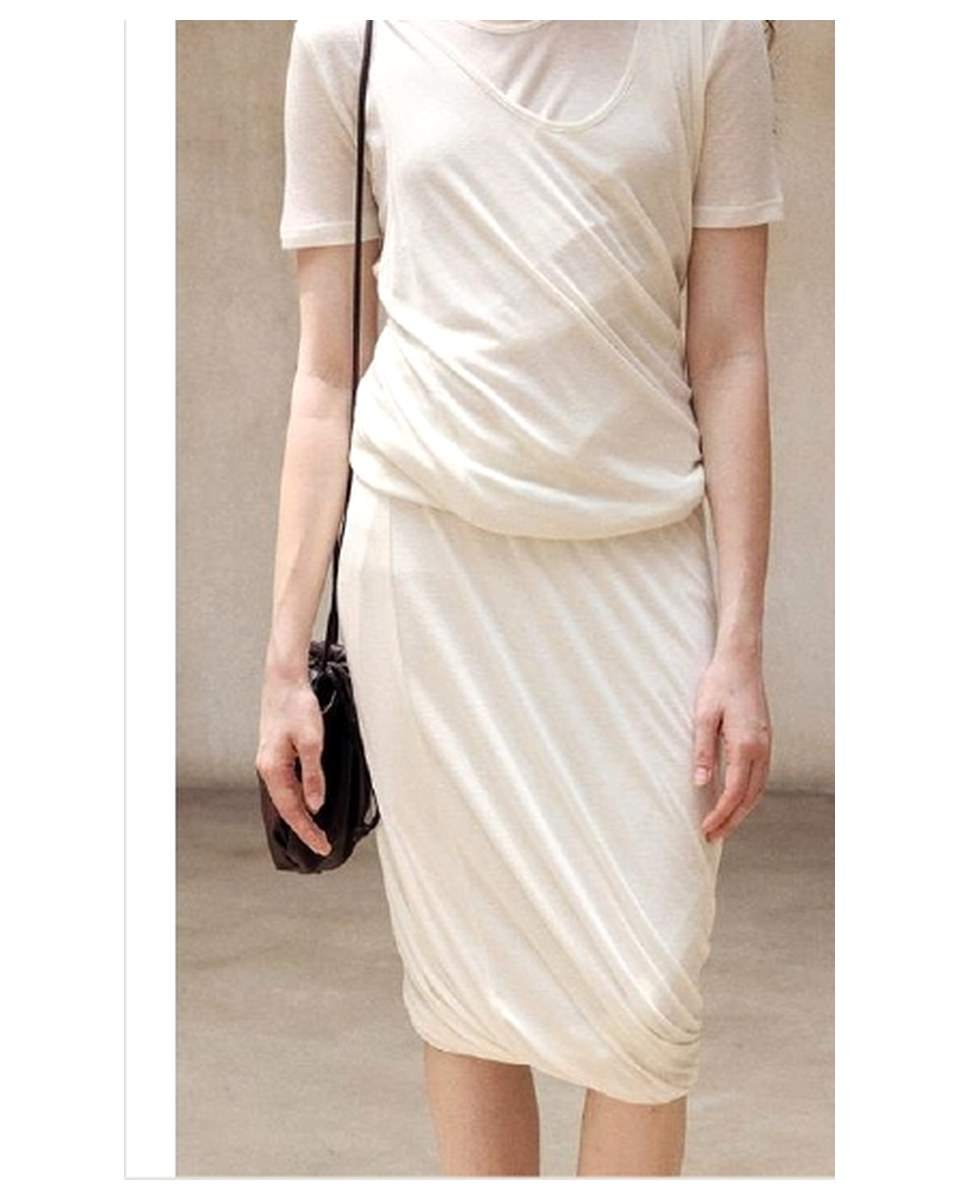
Eveningwear makes fabric movement highly visible. A material may need to fall close to the body, hold a softly shaped sleeve, carry a gathered waist, support a pleat, skim over a lining or retain a cleaner architectural line. Those are construction-and-garment questions. A recycled-content description cannot answer them on its own.
Ask the buyer to name the visual priority. Is it fluidity, body, shine, matte surface, texture, controlled stretch, reduced cling, a crisp edge, or a surface that photographs in a certain way? Then ask which garment area is most sensitive: neckline, bust, waist, hip, skirt, side seam, slit, hem, strap or back closure. A clear risk area helps a supplier choose a swatch, panel or first sample that can reveal the relevant behaviour.
Compare candidates under the same conditions where possible. A pale development colour and a dark final colour can make a fabric appear differently opaque. A lining or a changed seam allowance can alter how the shell hangs. If those variables cannot be held constant, record them. The buyer can still choose the preferred complete option, but should not claim that the comparison isolated only the recycled-content route.
Separate traceability evidence from the dress result
Evidence related to recycled content and evidence related to the finished garment have different jobs. Textile Exchange explains that its Recycled Claim Standard and Global Recycled Standard set criteria for third-party certification of recycled materials and chain of custody. A buyer may request relevant material documentation for the candidate route, but that documentation does not automatically establish that an evening dress will have the intended drape, colourfastness, opacity, fit or durability.
Keep a compact register for each candidate: fabric code, composition, claimed scope, supplier, applicable document type, version or date, colour or development condition, component covered and owner. If a claim matters to the collection, keep the record tied to the material actually sampled. A general supplier certificate should not be allowed to drift into a claim about a different fabric, a different component or every style in a collection.
Use the fabrics and trims process to bring shell, lining, colour, components and sample evidence into one conversation. This does not turn Yinshan Fashion into a certifier of mill documents. It creates a controlled product record so the buyer can see what a document answers, what a physical sample answers and what remains open before public copy is approved.
Check opacity and lining as a complete system
A shell fabric rarely decides coverage by itself. Colour, lighting, garment ease, cut direction, lining type, seam placement and the wearer’s movement can all affect what a dress shows. A swatch can begin the comparison, but a shaped garment or targeted panel is normally more useful when the concern is a fitted hip, a slit, a bias section, a gathered bodice or a light colourway.
Record exactly what is being reviewed: shell alone, lining alone, or the combined garment. A lining may change handfeel, bulk, recovery, static behaviour, seam appearance and opacity. It also has its own composition and evidence scope. Do not allow an approved shell-fabric statement to become a statement about every component in the garment.
For a special-occasion style, write the observation rather than a vague conclusion. “The ivory shell needs another coverage review with the selected lining at the side slit” gives a useful next action. “Looks too thin” does not tell the developer what must change. A good comment connects the garment area, condition, visual result and owner of the next decision.
Review shine, surface and colour after the construction is chosen
A glossy, satin-like, crepe, textured or matte surface changes how seams, gathers and light appear. A fabric may look appealing when flat but reveal tension at a bust seam, show a lining edge, or change its surface when gathered. Ask the buyer to identify the intended visual outcome and any reference style, then compare the proposed construction in a sample rather than relying on a generic fibre name.
Colour needs the same discipline. Confirm whether the swatch is a development colour, the proposed bulk colour, or a proxy used only for initial selection. If the public claim, photography or customer expectation depends on a certain shade, decide which sample observation must be repeated when that shade is available. A dark sample does not settle the coverage of a light final dress; a smooth flat sample does not settle the appearance of a gathered skirt.
The custom womenswear manufacturing route is useful for structuring the sequence from concept through fabric direction, pattern, fit, samples and production handover. It is not a promise of a fixed fabric outcome. The specific dress, material, colour, sample and approvals remain the controlling references.
Sample seams, closures and hems before bulk approval
Eveningwear often concentrates risk at a few visually sensitive areas. Consider the neckline, strap attachment, invisible zipper zone, side seam, shaped cup, waistband, slit, hem and any gathered or bias-cut panel. A candidate fabric can be suitable in a swatch but behave differently once it is cut, pressed, sewn, lined and worn. Use a targeted construction sample when a full prototype is not yet necessary, then use a representative garment sample for the decisions that affect the approved style.
Give each sample one purpose. A first sample may compare two fabric-and-lining systems. A second may confirm the selected route in the intended colour. A third may focus on an altered zipper, trim, hem or drape question. Record the sample identifier, fabric code, colour, components, pattern revision, question, observation, decision and next action. “Approved for silhouette, pending final colour and lining review” is safer than an unqualified approval.
For embellishment, print or applied trim, keep the additional component record visible. The visual result and the material claim may be affected by a new process, backing, tape, adhesive or decoration. Do not assume the shell record covers an added component; decide which item needs its own review.
Make public wording no broader than the evidence held
A dress product page or hangtag should follow the approved material record, not lead it. Begin with the narrowest accurate statement: which component is being described, what material route is supported, and what evidence applies to the current product version. Shell, lining, elastic, thread, zipper, labels and packaging may have different compositions and supplier records.
Avoid turning recycled content into a broad performance or end-of-life promise. A recycled-content route does not by itself prove that a complete evening dress is biodegradable, circular, carbon neutral, more durable, less impactful or suitable for every wearer. Those claims need their own defined boundaries and relevant evidence. The brand should retain control of final legal and market-specific copy.
A practical copy-review gate is simple: put the proposed wording next to the sample, fabric code, component list and supporting document. If the supplier changes a fabric or the buyer changes a lining, colour or component, ask whether the wording must be reviewed again. This habit prevents a useful shell-fabric fact from expanding into a claim the finished dress cannot support.
Compare candidates with one decision table
A comparison table makes the choice explainable. Give every candidate the same fields: fabric reference, composition, construction, finish, colour condition, claimed material route, document available, shell or lining scope, sample purpose, physical observations, copy proposal, commercial assumptions and open decision. This does not create a universal winner. It exposes whether the buyer is comparing material routes, garment outcomes, evidence records, or a mixture of all three.
Commercial inputs should remain conditional. Do not place a universal MOQ, price, lead time, certification outcome or test commitment in an evergreen dress guide. These depend on the candidate fabric, colour, quantity, order timing, supplier and confirmed programme. In a real project, retain the quotation and assumptions with the same product record so a later substitution is visible.
The recycled nylon fabric sampling guide offers a related method for separating material evidence from the behaviour of a completed garment. The garment category differs, but the core control is the same: connect the candidate material, physical sample, claim scope and current product version rather than allowing a fibre name to stand in for all of them.
Create a bulk handover that survives a change
At bulk handover, consolidate the current approved scope. The record should identify the dress style and colourway, controlling pattern or sample revision, shell and lining references, components, finished colour, approved wording, evidence reviewed, open conditions, quantities, packing route, quality priorities and decision owner. Some fields may still be conditional; naming a condition is better than hiding it.
Set change triggers before production begins. A changed fabric code, composition, finish, colour, lining, zipper, elastic, applied trim or claim scope may need a fresh buyer decision. Ask the factory to identify the difference and the likely effect on the current approval. This is not a guarantee of availability or a substitute for technical review. It is a way to stop a prior sample approval from being silently applied to a different garment.
The manufacturing process becomes more reliable when the material record moves with the style from development through production. Yinshan Fashion can help organise the brief, fabric direction, sample feedback, labels, packing inputs and production handover. Certification status, public claims, test scope, commercial terms and final product decisions remain specific to the confirmed order.
How Yinshan Fashion can support a recycled eveningwear brief
Yinshan Fashion can turn a buyer’s recycled-fabric direction into a controlled development path: fabric and lining candidates, silhouette, fit, sample question, colour, trims, label wording, packing and handover. The value is not a generic assurance that one fabric will be ideal for every evening dress. It is a clear record of the current style and a sample plan designed to answer the decisions that still matter.
Send the reference style or tech pack, dress silhouette, intended occasion, material direction, target handfeel and surface, coverage or lining question, colour range, components, sample objective, quantity context, intended market and wording or documents already held. Yinshan Fashion can then discuss suitable fabric proposals and sample steps with the buyer. Start an eveningwear material and sample discussion.
Match the sample format to the decision still open
Not every open question requires a full dress sample, and not every swatch is enough. Choose the smallest physical review that can answer the buyer’s next decision. A swatch may help distinguish handfeel, surface, thickness or initial colour direction. A sewn panel can reveal whether two layers show through, whether an edge reads cleanly or whether a finish changes under a seam. A representative garment sample is the right step when the decision involves the silhouette, bias movement, gathered volume, lining relationship, closure placement, hem fall or the way multiple components perform together.
Write an exit criterion before the sample is made. For example: “select a shell-and-lining system for a second fit sample,” “confirm the dark colour’s surface and seam appearance,” or “decide whether the selected zipper construction changes the side seam.” The criterion should not say simply “approve fabric.” A dress development decision may be conditional: the silhouette can be accepted while final colour, lining or claim wording remains open. Recording the condition avoids false certainty when the next sample is requested.
Keep samples visually and administratively identifiable. A photo can help reviewers locate a neckline, seam or colour reference, but it does not prove recycled content, a certification or the exact fabric route. The product record should still name the fabric reference, components, sample version, purpose and comments. If a buyer receives a later replacement, the team can see whether it is a new material decision or merely another copy of the same approved reference.
Design the lining review around the wearer and occasion
Eveningwear lining is not merely a technical afterthought. It can determine how a dress feels, how it moves on the body, whether a light colour appears covered, how a seam reads, how a garment hangs from a strap, and whether an outer surface looks controlled under event lighting. The buyer should say what the wearer is expected to do: stand through a reception, sit for a dinner, move on a dance floor, attend a formal ceremony or use the dress for a fashion shoot. This gives the development team a context for deciding what to observe in the sample.
Do not convert that context into a universal performance promise. A dress for a warm-weather event might lead the buyer to ask about handfeel, layer count, coverage or movement, but it does not establish a blanket claim about comfort or breathability. The completed garment, selected materials, fit and intended use must be evaluated in the actual programme. A thoughtful brief asks a concrete question; it does not require the factory to guarantee an outcome before the candidate fabric and construction are confirmed.
When a lining changes, reopen the relevant questions. A different colour, fibre mix, finish, weight or stretch direction can affect the outer shell’s appearance. Keep both shell and lining records in the comparison table, including their separate intended wording. This prevents the brand from preserving an earlier shell approval while the layer system underneath has changed.
Protect colour approval from a material substitution
A colour standard, fabric construction and material route can interact in ways that are not obvious from a material name. A dye or finish used for a certain fabric can read differently when the construction changes. A satin-like surface may reflect light differently from a matte surface; a lining may make the same outer colour appear more or less dense. For a dress collection, record whether the material and colour are being approved together or whether the colour is only a development reference.
If the buyer needs a precise colour outcome, identify the relevant reference, viewing condition and sample stage. A fabric change after colour approval should trigger a review rather than relying on the assumption that the same colour name guarantees the same visual result. This is especially important for coordinated bridesmaid, party or event programmes, where variation can become visible across multiple garments.
The same control applies to prints and surface treatments. State whether a candidate fabric is being reviewed with the intended print, foil, pleat, wash, coating or other finish. If not, record that the sample answers only the base-material question. A clear limitation makes the next development round more efficient and keeps product copy aligned with what the team has actually seen.
Use one owner for each unresolved bulk-release question
A source file, sample comment, material document and product-page sentence can all be accurate yet still belong to different versions of a dress. Before bulk, assign an owner to each remaining question: sample approval, evidence review, customer wording, component confirmation, colour approval, packing inputs and production release. The goal is not to create a large administrative process. It is to make sure a small brand and factory do not assume another person cleared a point that is still open.
At a final handover review, read the current sample and records together. Confirm the style and colourway, shell and lining references, visible components, sample revision, material wording and any exceptions. If a material or component differs from the approved reference, decide whether it affects the physical garment, evidence scope, copy or commercial assumptions. Write the decision with a date and owner. This is a practical safeguard for a first order and a repeat order alike.
A controlled handover does not guarantee that future supply conditions will remain unchanged. It makes the approved scope visible so a change can be evaluated rather than missed. For recycled fabrics for evening dresses, that traceable connection between candidate, garment, wording and handover is more valuable than a generic sustainability promise.
Confirm what moves to the order file
Before a bulk instruction is issued, put the approved dress version, material references, colour condition, sample photographs, copy decision and unresolved conditions in the same accessible record. This does not substitute for the buyer's own technical, legal or market review. It prevents a later production discussion from treating a general recycled-fabric preference as a complete, version-controlled dress approval.
Frequently asked questions about recycled fabrics for evening dresses
Are recycled fabrics suitable for evening dresses?
They can be considered, but suitability depends on the particular fabric construction, finish, colour, lining, pattern, components and the physical result in the intended dress. Review a representative sample rather than relying on the material route alone.
Does a recycled-content document prove how a dress will drape?
No. Material documentation can support a content or traceability question. Drape, opacity, seam appearance and lining interaction should be checked in the proposed fabric and garment sample.
Can a brand say the whole evening dress is recycled?
Only when the wording and evidence cover the whole stated scope. Shell, lining, thread, zipper, labels, trims and packaging may have different compositions and records.
What should be checked in a recycled evening-dress sample?
Review the named garment questions: drape, coverage, lining, colour, surface, seams, closure, hem, trim interaction, fit and the accuracy of the proposed material wording.
Does a lining need a separate material review?
Usually yes. Lining can change coverage, handfeel, seam bulk and garment movement, and it may have a different composition or evidence scope from the shell.
What to send for a recycled eveningwear fabric comparison
Send Yinshan Fashion the dress brief or tech pack, intended occasion and wearer, silhouette, reference images, proposed shell and lining direction, target surface and handfeel, colour range, coverage question, components, sample purpose, quantity context, target market and any material wording or documents already held. This allows the fabric route, garment sample and public claim to be reviewed as one controlled product discussion.
Eveningwear fabric approval kit
Three actions that keep a recycled-fabric direction tied to the actual dress
Use a named garment risk, a component-level evidence register and a current sample record before a fabric proposal becomes public copy or a bulk instruction.
Name the visual risk
State whether the sample must answer a question about drape, coverage, a lining edge, seam bulk, colour or a dress component.
Keep claim scope narrow
Attach proposed wording to the current shell, lining or component record instead of extending one fabric document to the entire dress.
Release one current version
Connect the sample, fabric code, components, colour, copy and change triggers before the bulk handover begins.
Buyer actions and factory questions for a recycled evening-dress brief
Material certification, claim approval, test scope, availability, commercial terms and final market decisions remain specific to the confirmed product and order.
| Decision area | What the buyer should prepare | What to ask the factory |
|---|---|---|
| Dress brief | Provide silhouette, occasion, wearer, reference, visual priority, coverage concern and target colour direction. | Which candidate fabric and sample format can answer the highest-risk garment question? |
| Shell and lining | Identify the proposed shell, lining and components, and state whether each has a separate material claim. | Which construction or lining interaction needs a representative sample rather than a flat swatch? |
| Evidence | List the wording and documents the brand needs to review before public copy is approved. | Which current fabric reference, component and document scope can be connected to that wording? |
| Sample review | Give each sample one decision purpose and record observations with an owner and next action. | What did this sample answer, and which product question is still open? |
| Bulk change control | Name which fabric, colour, lining, trim or copy changes require a fresh decision. | Which proposed substitution affects the approved sample or current customer-facing statement? |
Continue the production conversation
Recycled evening-dress fabric review: connect the material record to the sample
| Decision area | What to record | What it does not prove |
|---|---|---|
| Material route | Fabric code, composition, claimed recycled-content scope and applicable supplier record | Drape, coverage or performance of the finished dress |
| Silhouette | Dress shape, high-risk garment area, pattern revision and desired visual outcome | That a flat swatch represents the constructed garment |
| Lining | Lining reference, colour, interaction with shell and coverage observation | That shell evidence covers the lining or every component |
| Sample | Fabric, colour, components, question, observation and decision status | Bulk approval after an unreviewed material or component change |
| Copy | Narrow customer-facing wording and the component/document supporting it | Biodegradability, performance or whole-garment scope not evidenced |
| Handover | Approved current version, change triggers and named owner | Fixed price, MOQ, timing or future availability |
Buyer FAQs
Are recycled fabrics suitable for evening dresses?
They can be considered, but the actual fabric, construction, lining, colour, components and representative dress sample must be reviewed for the intended style.
Does a recycled-content document prove how a dress will drape?
No. Content or traceability documentation answers a different question from drape, opacity, seam appearance and lining interaction in the finished garment.
Can a brand say the whole evening dress is recycled?
Only if the current evidence and wording support that full scope. Shell, lining, thread, zipper, labels and trims may have separate material records.
What should be checked in a recycled evening-dress sample?
Check the named questions for the style, including drape, coverage, lining, colour, surface, seams, closure, hem, trim interaction, fit and copy scope.
Does a lining need a separate material review?
Usually yes. Lining changes the garment result and can have a different composition and evidence scope from the shell.