Article
What should buyers know first?
Short answer: A B2B guide for private-label dress brands aligning fibre inputs, product records, French-market artwork, samples and packing before bulk planning.
Private label dresses for the France market need more than a good silhouette and a French product name. Before a sample becomes a bulk instruction, the buyer needs a controlled dress identity, fabric and lining route, source for product information, current artwork, packing version and an owner for market-facing decisions. A printed viscose dress, lined occasion style or knit day dress can share a collection mood while needing different fit, fibre, label, image and presentation inputs.
Yinshan Fashion supports custom and private-label bulk programmes rather than unrestricted ready-stock wholesale. A brand owns the product proposition and final market decisions. Yinshan Fashion can help turn a reference, tech pack or dress idea into pattern, fabric, sample, component, artwork and packing inputs a factory can execute. That does not replace the brand's legal, retailer or local-adviser review for the exact product and French sales route.
This is a production-planning guide, not a declaration that every dress follows the same rule set. Applicable requirements can depend on the garment, fibres, trims, intended user, sales channel and roles of the businesses involved. The useful record identifies what is approved, what is a source input, what is a draft and who must decide an open question.
How should buyers start with a sellable dress identity rather than an inspiration label?
“Floral midi,” “French capsule” or “summer occasion dress” can guide a design discussion, but it does not control a sample, label or carton. Give each sellable route a stable identity that connects the style, colourway, size context, fabric and lining route, current sample revision, target channel and decision owner. If the same silhouette uses a different print scale, lining, closure, label language or individual pack, show that change as a visible revision.
The system does not need to be complicated. A small brand can use a controlled brief and change log. It needs to answer one question consistently: do the pattern comment, swatch, sample image, label artwork and packing file all refer to this exact dress version? A generic collection file is not sufficient when a colour or material change affects customer-facing product information.
What should buyers check about the short answer: keep six records aligned before bulk preparation?
| Record | Brand decision | Factory input | Control question | | --- | --- | --- | --- | | Dress identity | Style, colourway, size, channel and revision | Current reference across sample and order files | Which version is being released? | | Fabric and lining | Supplied fibre information, drape, coverage, trim and closure route | Swatches, supplier references and component callouts | Does the sample use the intended route? | | Fit and sample | Block, key measurements, sample purpose and comments | Current pattern and construction changes | What does the sample prove? | | Product information | Source, language scope, owner and status | Buyer-approved files for applied items | Is this a source note, draft or released artwork? | | Packing route | Fold, bag, label, barcode, insert and carton version | Issued packing instruction | Which dress and channel does it cover? | | Release control | Owner, date, conditions and next action | Current technical and packing handover | What change reopens a prior review? |
The value is not paperwork. It prevents a beautiful sample from being paired with an older fabric note, a customer draft from being printed as artwork, or a retailer pack from being applied to the wrong channel. A buyer can approve fit while holding label content open. The factory can then move only the supported elements forward instead of guessing.
What should buyers check about treat fibre information as a source record, not a styling claim?
Dress development often begins with feel: crisp poplin, fluid printed woven, textured jacquard, rib knit or a satin-like surface. Those descriptions are useful design inputs, but they do not by themselves establish fibre information, care wording, origin statements or customer claims. Keep the supplier material reference, supplied composition information, lining and trim route, source, product scope, owner and review status together.
If the fabric changes, reopen the connected product-data review. A substitute can change drape, coverage, seam behaviour, print outcome, care-information source, label artwork and packing needs. The fabric and trims planning page helps a buyer organise swatches, components and alternatives during custom development. It should not be treated as proof of availability, price, performance, certification or suitability for a specific France-market product.
The casual-fashion product range is a useful starting point for defining a dress category before production records are prepared. Yinshan Fashion can connect fabric, pattern and sample questions during development; the buyer should confirm which material and product-information route becomes the sellable version.
How should buyers use the sample to connect fit, material and artwork decisions?
A dress sample should have a named purpose. It may test the fit block, length, neckline, ease, lining, opacity, closure, print placement, seam finish, label placement or fold. It does not automatically approve every product-data field or market-facing asset. Record the version, fabric and components, intended size, sample objective, reviewer, observations, approved scope, open conditions and next decision.
For a woven dress, a change in lining or fabric weight can affect the silhouette and the product-information discussion. For a knit dress, a change in recovery or neckline construction may reopen fit. For a print, the buyer may need to review scale and placement on the actual proposed base. Keep those questions attached to the current dress rather than treating a mood-board swatch as a complete manufacturing instruction.
How should buyers keep French-market artwork separate from online drafts?
A product page, a French translation, a hangtag, a care label and a packing insert have different roles. Identify each file's source, intended audience, style scope, version, owner and approval status. “French product copy for online review” should not be confused with “artwork approved for application to dress DR-104, colour 03, revision 5.” When the dress, fabric, channel or target information changes, the affected asset may need a new buyer-side review.
The private-label workflow can help a brand connect its identity, label package and approved artwork to a factory handover. Yinshan Fashion can keep approved files and placement instructions associated with the current garment. The brand or appropriate market operator remains responsible for final market-facing content and applicable review.
How should buyers build the packing route around the recipient and channel?
Packing is part of the dress record because it is the physical presentation that reaches a retailer, warehouse or customer. A draped dress with a belt, a lightweight printed style and a structured occasion dress may need different folding, protective handling or component control. The correct route depends on the buyer's confirmed channel and the product itself. It should never be inferred from a product photo or a generic note such as “standard polybag.”
Start with the recipient. Is the current route for a brand warehouse, a retailer's receiving process, an e-commerce fulfilment programme or another buyer-defined destination? Then describe the version being packed: style, colourway, size, included belt or accessory, fold direction, protective material, size indication, label or barcode owner, insert, individual pack and carton information. If the same dress is distributed through two channels, treat the packing routes as two controlled versions even when the garment is otherwise identical.
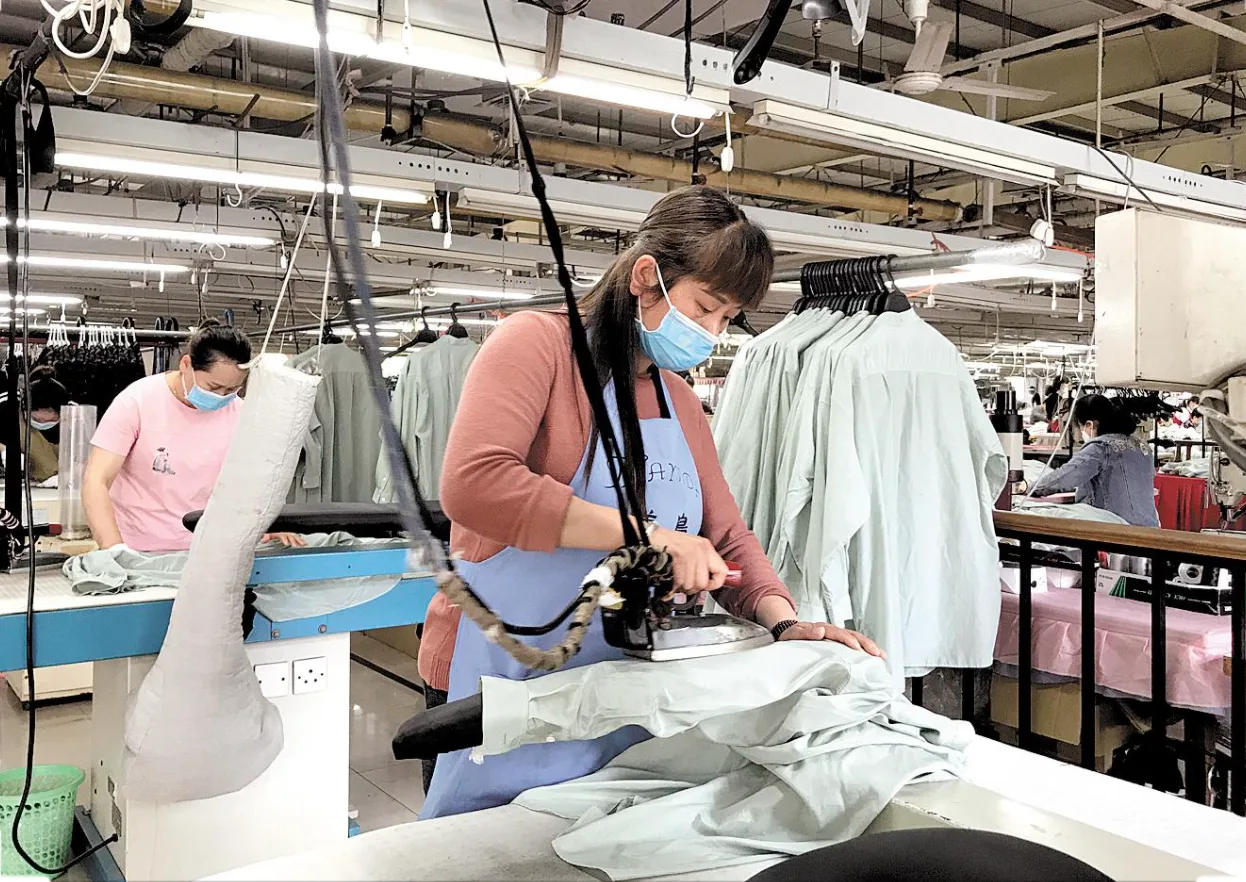
The manufacturing overview explains why finishing, inspection and packing need to remain connected to the current product file. Yinshan Fashion can coordinate factory-ready packing inputs with the confirmed dress, sample and applied artwork. The brand should confirm the channel-specific presentation and any applicable retailer or market review before a packing version is treated as final.
How should buyers use a release register that permits progress without guessing?
The phrase “approved” can hide important limits. A fit sample might be approved for silhouette but not for final fabric. A French listing draft can be suitable for an internal review but not for a hangtag. A branded insert can be ready for one online route but not for a wholesale account. A release register makes those conditions visible.
For each dress version, keep a short entry with the item or file, version, source, status, owner, approved scope, condition and next action. A practical entry could read: “DR-104, colour 03, development sample 2; fit approved for buyer review; print placement confirmation open; owner: design lead; next proof: strike-off on proposed base.” Another could read: “Packing P-04; e-commerce fold and size sticker approved for DR-104 colours 01–03; belt restraint method to be confirmed; owner: operations.” The intent is clarity, not bureaucracy.
This is particularly helpful when a small brand has design, merchandising, sourcing and e-commerce contributors working from separate message threads. One controlled register lets the team distinguish a visual reference, a source record, a draft and a released production instruction. It also helps the factory ask for the missing decision instead of choosing a file that looks recent.
What should buyers check about make every material or trim change reopen the connected questions?
A substitute fabric is rarely only a sourcing event. It can change the dress's drape, coverage, seam appearance, print result, lining need, garment weight, care-information input, photo brief, label artwork or packing method. A new button, zipper, belt, elastic or decorative trim can also affect the sample and associated applied files. The correct response is not to assume the old approval transfers. It is to identify what changed and which earlier decision that change may reopen.
Keep a change log beside the release register. State the previous route, proposed route, reason for the change, styles and colourways affected, evidence needed, reviewer, date and next decision. The factory can explain which proof would be useful: a swatch comparison, an applied print or trim proof, a revised sample, a component review or an updated packing mock-up. The buyer retains the decision about product positioning, customer-facing wording and market use.
For example, a brand may move a printed midi dress from one woven base to another. The team should separately review the visual ground, print clarity, lining decision, seam finish, label inputs and garment photograph rather than treating the new base as an invisible replacement. The goal is not to make change difficult. It is to preserve the evidence that makes a change reversible, traceable and understandable at bulk handover.
What should buyers check about separate a French-facing product page from an applied garment instruction?
Brands often need French product content for a website, catalogue or retail conversation. That content can be valuable, but it has a different operational role from applied label, hangtag, care or packing artwork. Keep content assets connected to their source and intended purpose. A sentence describing a dress's feel, occasion or styling is not automatically evidence for fibre information, care instructions, origin wording, performance, environmental claims or an applied file.
Before a buyer asks a factory to apply information, name the exact product, colourway, material route, language, file revision, placement, audience, source and final reviewer. If a legal, retailer, marketplace or local review is needed, identify that as an open buyer-owned control rather than expecting the factory to determine it. This approach lets a brand move fit, pattern and material work forward while keeping unsuitable assumptions out of customer-facing production files.
The custom womenswear manufacturing solution is a useful route for connecting dress design, fabric direction, fit, sampling and factory execution. It does not decide the final information that applies to a particular French-market garment. That responsibility stays with the appropriate brand and market decision-makers.
What should buyers check about turn the sample cycle into a decision sequence?
The strongest sample process asks one or two important questions at each stage instead of asking a single sample to prove everything. A first development sample may focus on silhouette, balance, key measurements, neckline, sleeve or closure. A later version may test the selected fabric's drape, lining, opacity, print placement or belt construction. A presentation proof may focus on label placement, fold, hangtag relation or ecommerce-ready appearance. Record the purpose before the sample is made so the review has an intelligible outcome.
Send consolidated comments against the exact version. A comment such as “make the waist softer” needs a linked product observation: which dress, which size, what area, against what fit direction, on which sample, with what material and what decision owner? When fit, material and commercial teams make different comments, reconcile them into one current change list. A factory cannot safely act on conflicting screenshots from different threads.
Do not turn a sample photograph into an unsupported claim about bulk quality, availability, cost, lead time, testing, certifications or finished-product performance. It is evidence for the defined sample question. The next gate should make clear what is now accepted, what is conditional and what must be seen again before bulk preparation.
What should buyers check about a buyer-to-factory handover for a France-facing dress programme?
Before a bulk discussion, a useful buyer pack should bring together the product decisions that a factory must see. It can be compact, especially for an emerging label, but it should be dated and internally consistent.
- Stable style identity for each dress, colourway, size context, channel and revision.
- Current reference images, tech pack or measurement direction, with a note of what is a visual reference and what is a controlled instruction.
- Fabric, lining, trim and closure route, plus supplied fibre-information sources and known alternatives.
- Sample record showing version, purpose, comments, approvals, conditions and the next proof.
- Artwork register that separates online draft copy from label, hangtag, packing or other applied files.
- Packing version with recipient/channel, fold, component handling, size identification, barcode ownership, insert and carton instructions where relevant.
- Quantity assumptions by style, colourway and size, marked as estimates where they remain estimates.
- Destination and sales-channel context, named decision owner and any buyer-side legal, retailer or local review still open.
This brief gives Yinshan Fashion and a manufacturing team the information needed to identify practical questions around fabric, pattern, sample, components, labels, packing and production coordination. It does not create a fixed commercial, timing, testing, certification or compliance promise. Those points remain dependent on the confirmed programme, product evidence and relevant approvals.
How Yinshan Fashion supports a controlled private-label dress route?
Yinshan Fashion works with brands on custom and private-label womenswear development, where a clear handover is more valuable than a generic assurance. Once a buyer shares a controlled brief, Yinshan Fashion can help turn the current dress direction into development questions: fabric and lining options to review, fit and construction priorities, sample sequence, component package, artwork placement, packing inputs and factory-ready records.
For a France-facing dress programme, the useful output is not a vague “market-ready” promise. It is a current product route in which the brand can see the sample version, material source inputs, applied artwork, packing version and open review owner. This is especially useful when a collection has printed dresses, light wovens, occasion pieces or several colourways that need to stay visually coherent while their material and product-data details differ.
To begin, send Yinshan Fashion the current style references, fabric direction, target fit, colourways, size range, source information held, label and packing files, quantity structure, target channel, destination context, sample objective and named approval owner through the contact page. The response can then focus on the next evidence gate: a swatch, pattern question, sample, print proof, component review, packing mock-up or updated buyer file. That is the practical beginning of a controlled dress programme, rather than a promise based only on an inspiration board.
How should buyers plan a first order as a learning route, not a test of memory?
For a first private-label dress order, the product team does not need to eliminate every uncertainty before speaking to a factory. It needs to identify the uncertainty that matters most and make the next proof proportionate to it. A label with a new print may need to see the repeat and placement on the proposed base. A wrap dress may need a fit sample that makes the tie construction and coverage visible. An occasion piece may need a lining, closure and fold discussion before its presentation route is settled. The exact order size, commercial basis, timing and delivery plan remain specific to the confirmed programme; a clear first route simply makes the conversation more comparable.
Choose a manageable starting scope. It may be one core silhouette with defined colourways, or two styles that share an intended fabric direction and component package. Keep the decisions visible: what is fixed, what is an acceptable alternative, what must be proved on a sample and what remains buyer-owned. This does not mean that a smaller programme receives a lower-quality development process. It means the team avoids hiding material, fit, artwork or packing complexity behind a single total quantity.
After each sample or approval, retain the evidence that answered the question. Save the current reference, material and component route, comment set, sample photographs, decision wording, current artwork, packing version, exception and next action. A later repeat can begin with this known record and a difference list rather than relying on a team member's memory. If fabric availability, print direction, colourway, size range, channel, buyer requirements or target market changes, review the affected parts again.
The fashion product brief before sampling guide gives brands a way to organise that first handover. The fashion clothing fabric selection guide can help separate a design preference from the material evidence and garment proof still needed. Neither guide replaces a product-specific decision, but both make it easier for the buyer, factory and reviewers to work from the same current information.
What should buyers check about final control before a factory-ready release?
Before asking a factory to treat a France-facing dress as ready to progress, pause for one final version check. Does the current style-colour-size identity match the sample reference? Does the current material and lining route match the product information held? Do labels, artwork and packing instructions state their scope, owner and release status? Does the proposed channel match the packing version? Is there a visible buyer owner for any local, retailer or market question that remains open? If any answer is unclear, record the open condition and request the next proof instead of converting ambiguity into a factory instruction.
That is the core benefit of disciplined private-label development. A brand can keep moving while protecting the distinction between an idea, an approved sample, a source record and a released production file. Yinshan Fashion can help structure the custom dress, fabric, fit, sample, component, private-label and packing discussion around those distinctions. The final decision about what a particular product says, where it is sold and which reviews apply stays with the brand and the appropriate advisers.
France-market dress-control kit
Three controls that keep dress product files connected to the approved sample
Use one dress identity, one source record and one released artwork-and-packing version before a buyer asks the factory to treat a France-facing route as ready for bulk.
Control the dress identity
Link style, colourway, size context, fabric and lining route, sample revision, channel and owner before market-facing assets change.
Map data to its source
Keep supplied fibre, care, origin, language and brand inputs tied to a source, scope, owner and approval state instead of treating a draft as a production instruction.
Release the current presentation
Connect applied artwork, label placement, individual pack and carton inputs to the exact dress version and channel that is moving forward.
Buyer actions and factory questions before a France-facing dress moves toward bulk
Use this control before a sample, artwork or packing file is treated as current. Market and legal decisions remain with the brand and suitable local advisers.
| Decision area | What the buyer should prepare | What to ask the factory |
|---|---|---|
| Dress identity | Provide the style, colourway, size context, channel, revision and current sample reference | Which reference controls the current sample, label, artwork and packing files? |
| Material route | Share fabric, lining, trim and supplied fibre-information inputs | Which material or component still needs a swatch, applied proof or buyer decision? |
| Artwork and language | Identify source, audience, owner and approval state for French-market assets | Which file is draft customer copy and which is approved for application? |
| Packing | Approve label, fold, protective material, barcode and carton inputs | Which dress version and channel does the packing release cover? |
| Change control | Record sample scope, changes, owner and next release | Which change reopens the product record or applied-artwork review? |
| Market review | Name the responsible brand or local reviewer | Which item must stay open rather than becoming an unsupported factory claim? |
Continue the production conversation
Buyer FAQs
What should be in a private-label dress record for the French market?
Keep the style, colourway, size context, fabric and lining route, sample revision, supplied fibre-information source, artwork status, packing version, decision owner and open conditions together. Final market-facing content and applicable French-market review remain the brand's responsibility.
When should a France-market dress sample reopen product-information work?
Reopen the linked product-information review when the fabric, lining, trim, colourway, print, intended channel or other product input changes. A sample can be approved for its stated fit or construction purpose while label or artwork questions stay open.
Can a French online product description be used as label artwork?
No. Treat online copy and applied artwork as separate records. Before an item is applied, the brand should confirm the exact dress version, source, language, placement, owner, approval state and any required market or retailer review.
How does Yinshan Fashion support private-label dresses for the France market?
Yinshan Fashion can coordinate custom dress development through fabric and lining review, pattern and fit questions, samples, components, private-label artwork placement, packing inputs and factory-ready production records. Availability, commercial terms, testing, certification, timing and final market obligations remain programme-specific.
Why does packing need a separate version for a private-label dress?
Packing may change by channel, recipient, dress colourway, size identity, belt or accessory handling, label, barcode, insert and carton route. A separately controlled packing version prevents an approved garment from being paired with an outdated or unrelated presentation instruction.