Article
What should buyers know first?
Short answer: A B2B guide for brands preparing Canada-facing private-label apparel with controlled fibre inputs, bilingual label files, samples, packing and release records.
Private label apparel for Canada is easier to develop when a brand treats English and French product inputs, fibre sources, labels and packing as controlled parts of the garment record. A casual dress, knit top, lounge set or printed blouse can look ready in a sample while its customer-facing information, label artwork, dealer details or carton route still belong to an earlier version. The factory needs to know what applies to the exact style before it prints, applies or packs an item.
Yinshan Fashion supports custom and private-label bulk programmes rather than unrestricted ready-stock wholesale. A brand owns the product proposition and final Canada-facing decisions. Yinshan Fashion can help turn a reference, tech pack or apparel idea into pattern, material, sample, component, artwork and packing inputs a factory can execute. It does not replace the brand's importer, retailer, legal or local-adviser review for a particular garment and sales route.
This is a production-planning guide, not a conclusion that every product follows one label rule. What applies can depend on the garment, material, component, consumer route, province, role of the importer or dealer, and the information placed on the item or sold with it. A useful product record makes those dependencies visible instead of labelling an unfinished file “Canada approved.”
How should buyers start with a sellable product identity, not a collection nickname?
“Summer edit,” “Toronto launch” or “soft lounge capsule” can guide a brand conversation, but these descriptions do not control a sample, neck label, hangtag or carton. Give each sellable route an identity that links the style, colourway, size context, material and component route, sample revision, channel, current artwork and decision owner. If a shirt uses a different fibre blend, a sweatshirt has another label language, or a dress moves to a different package for a retailer, show that difference as a visible version.
The record can be simple. A developing brand may use a dated brief and change log. A larger team may use connected product-information, purchase-order and artwork systems. Both approaches should answer the same question: do the sample, fabric reference, label file, bilingual asset and packing instruction all refer to the same product version? If the answer is uncertain, a factory should ask a question rather than select the attachment that looks newest.
For custom development, Yinshan Fashion can connect this product identity to fabric comparison, pattern work, sample comments, components and factory handover. The buyer needs to decide who owns the product-data and market-facing releases. That distinction lets design and sample work continue while an applied file remains correctly open.
What should private label apparel for Canada control before bulk preparation?
The short answer is six connected records. This is a working decision tool, not a legal checklist. It helps a brand avoid the common mismatch between an approved garment and an older information or packing file.
| Record | Brand decision | Factory execution input | Control question | | --- | --- | --- | --- | | Product identity | Style, colourway, size context, channel and revision | Current sample and order reference | Which exact version is being released? | | Material and components | Supplied fibre information, lining, trims and colour route | Swatches, supplier references and component callouts | Does the sample use the intended route? | | Bilingual assets | Source, language, audience, owner and status | Buyer-approved file for applied items | Is this online draft copy or released artwork? | | Label information | Buyer-owned dealer, fibre, origin or other product inputs | Current label artwork and placement | What source and scope support this field? | | Packing route | Fold, bag, barcode, insert, carton and channel version | Issued packing specification | Which product and recipient does it cover? | | Change and release | Owner, date, conditions and next action | Current technical and packing handover | What change reopens a review? |
The table does not require a complicated approval system. It prevents a good sample from being paired with an outdated fibre note, online translation or retailer pack. A buyer can approve fit while holding a label field open. The factory can prepare only the supported parts of the route instead of making a market decision by assumption.
How should buyers keep Canada-facing fibre and label information tied to a source?
Material descriptions are useful for creative development: brushed fleece, fluid woven, rib knit, printed viscose, stretch jersey or a satin-like hand. They are not, by themselves, the product-information source a brand needs for an applied file. Keep the supplier material reference, supplied composition information, lining and trim route, source date, product scope, owner and review status together. If the material changes, reopen the related information review rather than copying the earlier wording forward.
The Competition Bureau's textile-labelling overview is a useful starting point for a brand, importer or retailer that needs to identify the information relevant to consumer textile products in Canada. Its fibre-content guidance also explains the importance of generic fibre names, fibre-content information and bilingual treatment in the contexts it describes. Use those official materials to organise a buyer-side review. Do not turn a general web page, supplier note or a past label into a conclusion about the current style, province or selling route.
The fabric and trims planning page can help a buyer organise swatches, components and alternatives during custom development. It should not be read as a guarantee that a particular material is available, priced, tested, certified or suitable for a specific Canada-facing apparel programme. The buyer should identify what evidence it has and what needs confirmation on the proposed garment.
What should buyers check about separate bilingual product copy from artwork that may be applied?
A French product description for a website, an English launch deck, a neck label, a hangtag, a care label and a packing insert each have different roles. Identify each asset's source, intended audience, product scope, language, version, owner and approval status. “French product copy for internal ecommerce review” is not the same as “bilingual hangtag artwork approved for style CA-207, colour 04, revision 3.” When the material, product, channel or target information changes, the affected asset may need another buyer-side review.
The practical discipline is to label the file by what it can do. A creative translation may be useful for a merchandiser but not authorised for print. A label layout can be approved for sample placement but not for bulk. A barcode may belong to a retailer rather than the brand. The factory should see the release scope before it applies an item to a garment or individual pack. If the available information is incomplete, state the missing source, owner and next decision instead of leaving a blank for the factory to fill.
The private-label workflow shows how a brand identity, label package and current artwork can be connected to factory handover. Yinshan Fashion can organise the buyer-approved file and placement with the current product reference. The brand and appropriate Canada-facing reviewer still own final information, language, retailer and market decisions.
How should buyers use the sample to test product, fit and applied-component questions together?
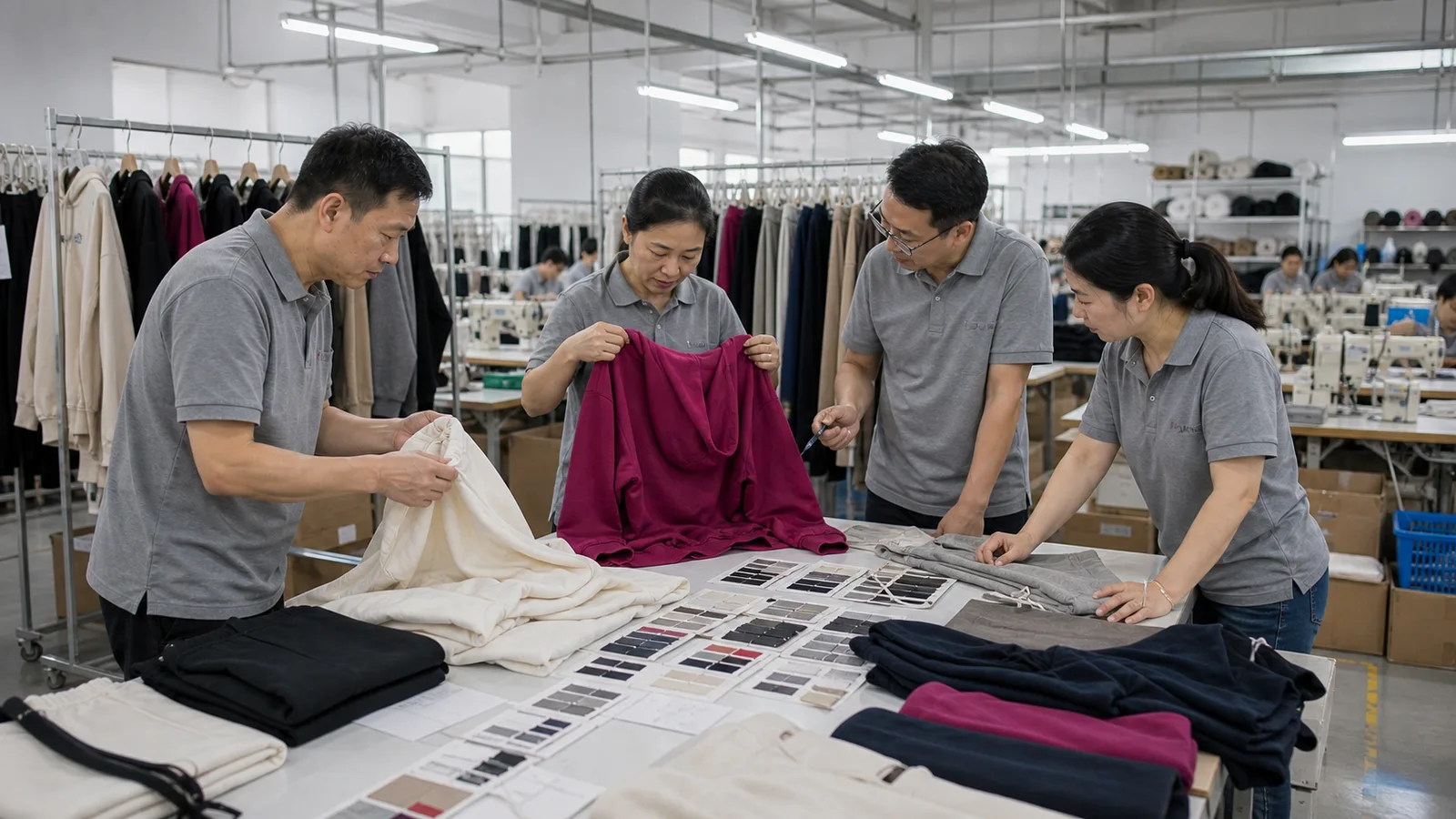
Every sample needs a named purpose. It may test a casual top's shoulder and body ease, a woven dress's drape and lining, a lounge set's comfort and recovery, a print's scale, a label placement, or the fold needed for the intended channel. It does not automatically approve every customer-facing field. Record the sample version, material and component references, intended size, objective, reviewer, observations, approved scope, open conditions and next evidence gate.
For example, a brand might approve the shape of a short-sleeve jersey dress while it is still comparing the final fabric route. Another team may approve the material but need to see the bilingual label placement on an applied sample. These are two different conclusions. Keep them separate so a fit approval does not quietly become an approval for an unreviewed material, customer claim, label file or packing method.
The casual-fashion product range can help a buyer name a real dress, blouse, shirt or fashion-top category before it prepares its product record. For a homewear or lounge programme, the loungewear range offers a different category context, where comfort, material, labels and packing can have their own decisions. These pages help frame a manufacturing brief; they do not represent unrestricted stock availability or a completed commercial programme.
How should buyers build packing around the recipient and the current label version?
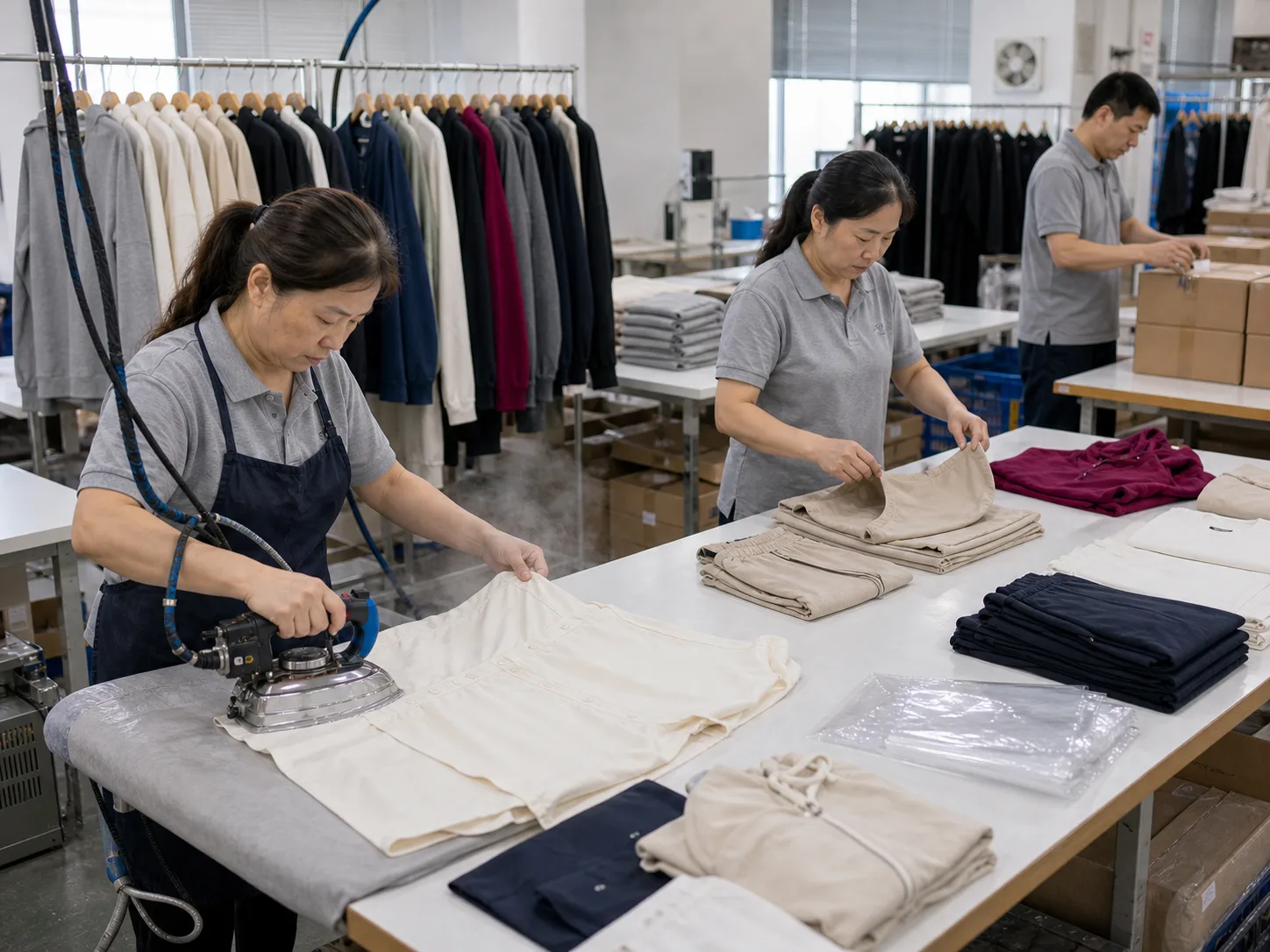
Packing is part of the product record because it changes the item received by a warehouse, retailer or customer. A direct-to-consumer garment, a boutique replenishment and a retailer programme may share the same physical style but use different size identifiers, barcode ownership, inserts, fold methods, protective materials, carton marks or receiving instructions. A generic “polybag and carton” note cannot tell a factory which version to use.
Start by naming the recipient and channel. Then record the style, colourway, size context, set or accessory handling, label placement, fold direction, individual protection, barcode owner, insert, carton detail and buyer owner. When the same garment uses more than one packing route, create a distinct version for each route. That preserves the connection between the product, the applied files and the destination without implying a fixed packing price, quantity, test or shipping outcome.
The manufacturing overview explains why finishing, inspection and packing belong to a connected order flow. Yinshan Fashion can coordinate factory-ready packing inputs with the garment, current sample and approved files. The buyer should confirm its retailer, importer and market requirements before a packing route is treated as final.
What should buyers check about make a release register that states what is approved and what remains open?
The word “approved” is too broad when a product has several moving parts. A fit sample might be approved for silhouette while the final component package is still under review. A bilingual file might be approved for an online listing but not for a woven label. A carton mark might be released for one retail account but not for direct fulfilment. A short release register makes these conditions operational.
For every product version, keep the item or file, source, status, owner, date, scope, condition and next action. One entry could read: “CA-207, colour 04, sample 2; fit approved for buyer review; final fabric source and label artwork remain open; owner: product manager.” Another could read: “Packing P-06; fold, protective sleeve and size sticker released for online route; retailer barcode pending buyer file; owner: operations.” The purpose is to make a partial approval visible, not to burden a small brand with unnecessary administration.
This record also makes a change safer. If a material alternative, new trim, revised colour name, different channel or updated language asset is introduced, the team can see which sample, applied proof, product page, label or packing review may need to reopen. The factory can propose the useful next proof. The buyer retains the market and customer-facing decision.
What should buyers check about treat claims and product data as scoped, not generic marketing language?
Canada-facing product information can include brand language about fibre, origin, feel, quality, performance or a preferred-material direction. Do not create an applied or online claim from a mood board, partial supplier message or old sample. The Competition Bureau states that product claims need to be factual, which is a practical reason to connect each proposed claim to a source, product scope, owner and review state. A broad phrase such as “premium,” “eco,” “breathable,” “recycled,” “Made in Canada” or “easy care” can carry different evidence and review questions depending on the actual garment and route.
Keep the proposed wording beside the fabric or component source, sample, product scope, channel and responsible approver. When a fibre blend, trim, finishing route, product origin, supplier document or marketing wording changes, reopen the associated question. Yinshan Fashion can help a brand keep those inputs linked through development and factory handover. It should not make a legal, origin, environmental, performance or certification claim on the buyer's behalf.
What should buyers check about a buyer-to-factory handover for Canada-facing private-label apparel?
Before a bulk conversation, a buyer pack should be dated, readable and product-specific. It does not need every commercial answer. It needs to distinguish confirmed inputs from assumptions and open review points.
- Product identity for each style, colourway, size context, channel and revision.
- Reference image, tech pack or measurement direction, marked as visual reference or controlled instruction.
- Fabric, lining, trim and closure route, with supplied fibre-information sources and known alternatives.
- Sample record with version, purpose, comments, approvals, conditions and next proof.
- English and French product assets with source, language, intended audience, version, owner and approval state.
- Buyer-owned label and product-information inputs, including any responsible dealer, importer, retailer or other market-review owner identified by the brand.
- Packing version with fold, protection, size identification, barcode ownership, insert, carton and receiving context where relevant.
- Quantity assumptions by style, colour and size, marked as estimates where they remain estimates.
This handover gives Yinshan Fashion and a factory team the context to ask practical questions around fabric, pattern, sample, components, label placement, packing and production coordination. It does not create a fixed MOQ, price, lead time, test, certification, shipping or regulatory conclusion. Those remain dependent on the actual programme, evidence and buyer approvals.
How should buyers plan the first order as a controlled learning route?
For a new private-label programme, the team does not have to resolve every question before a factory conversation. It needs to identify the highest-risk question and choose the next proof. A printed top might need a strike-off on the proposed base. A loungewear set might need a comfort and label-placement sample. A blouse with a revised lining or trim might need an applied proof and a new product-information review. Give the proof a purpose, then retain the record that answers it.
Keep the approved reference, material and component route, sample comments, current label and packing files, exceptions and change record together. A later repeat can begin with a difference list: what remains the same, what has changed and what must be confirmed again. Material availability, component choices, quantities, channel, packing and market inputs can all change. A previous order is a useful record, not an automatic production or compliance conclusion.
The fashion product brief before sampling guide helps a buyer organise its initial handover. The export-ready production records guide explains how an approved sample, product information and packing inputs can stay connected before a market-specific order file is released.
How Yinshan Fashion supports a Canada-facing apparel brief?
Yinshan Fashion helps brands turn a product direction into a controlled custom or private-label manufacturing conversation: fabric and component review, pattern and fit questions, sample development, label placement, packing inputs and factory-ready handover. For a Canada-facing programme, the useful outcome is a product route where the buyer can see the current sample, material source inputs, bilingual files, applied artwork, packing version and open review owner.
To start, send Yinshan Fashion the current style references, material direction, target fit, colourways, size range, source information held, English and French assets, label and packing files, quantity structure, target channel, sample objective and named approval owner through the contact page. The next step may be a swatch, pattern question, sample, label-placement proof, packing mock-up or updated buyer file. That makes progress visible without turning an unfinished input into a factory or market promise.
How should buyers use five release gates to make bilingual product data manageable?
A Canada-facing workflow becomes easier when the team separates the work into small decisions rather than waiting for one final document pack. The first gate is product identity: the team agrees which style, colourway, size context and revision it is discussing. The second is the material and component route: the relevant fabric, lining, trim, closure, print or decoration is identified with the source information available. The third is the sample purpose: fit, drape, placement, pack presentation or another question is assigned to a specific physical proof.
The fourth gate is the customer-facing asset. The buyer identifies the English and French files, their source, audience, product scope, owner and release state. This is the point where an online description, a care label, a hangtag, a brand insert or a retailer file must be separated rather than bundled together. The fifth gate is the factory release. The current product, approved sample scope, label artwork, packing version and buyer-owned open condition are shown in one handover.
Each gate can finish at a different time. For instance, a brand may complete pattern and fit work before it has final retailer barcode information. It may approve a bilingual product page draft before it approves a label for application. It may finalise an individual pack for e-commerce while a boutique carton mark remains under review. The release register gives the factory a safe answer: proceed with the named supported work, hold the named open file, and ask the assigned owner for the next decision.
How should buyers keep a difference list for each colourway, channel and repeat?
Product information can diverge even when the garment pattern does not. A core black top sold through one retailer may have a different pack, barcode, insert or product copy from the same top sold through direct e-commerce. A seasonal colour may use a revised print or a new material source. A bundle can have different size, label or carton context from the standalone item. The team should use a difference list, not memory, to keep this visible.
For each variation, compare the current product identity, sample reference, material and component route, artwork, language files, label placement, packing route, channel, quantity context and owner. State what did not change as well as what changed. This makes a repeat conversation faster without calling the new order identical. It also prevents an earlier supplier attachment, product screenshot or packing file from being adopted simply because it looks close to the current item.
This discipline is especially useful for small brands working with limited internal teams. The brand does not need a large compliance department to keep a clear record. It needs one person to name the product version, one place to hold the source and approval status, and a rule that material, component, language or channel changes receive a targeted recheck. Yinshan Fashion can use that record to coordinate a custom manufacturing handover without replacing the buyer's own market review.
What should buyers check about final review before any Canada-facing factory release?
Before the factory treats a file as ready to apply or pack, pause for five questions. Does the product identity match the sample and order reference? Does the material and component route match the source information held? Does each English or French asset have a named audience, owner and approval status? Does the applied label or packing instruction state the product and channel it covers? Does the record identify the buyer or appropriate reviewer for any information that remains open?
If a question has no clear answer, preserve the open condition. A controlled “pending buyer label file” is safer and more useful than an unsupported assumption. The buyer can then decide whether the next evidence should be a source document, updated artwork, physical proof, revised sample or channel-specific packing instruction. This is how a private-label apparel programme stays practical: development continues, but every release states what it actually authorises.
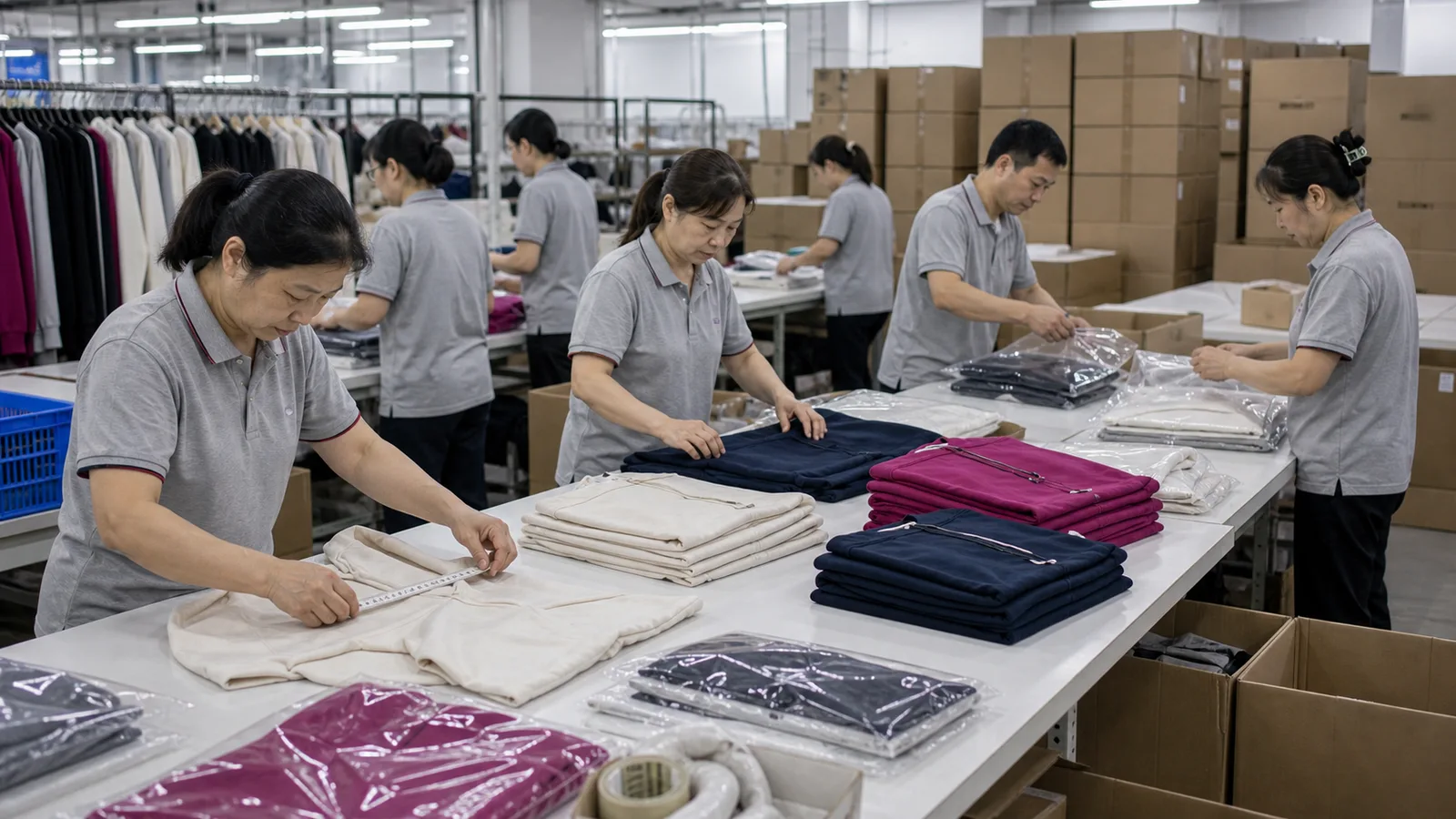
Canada label-release kit
Three controls that keep Canada-facing label files tied to the current garment
Use one product identity, one source record and one released bilingual label-and-packing version before a buyer asks the factory to treat a Canada-facing apparel route as ready for bulk.
Anchor the product version
Connect style, colourway, size context, material and component route, sample revision, channel and owner before a bilingual asset is released.
Trace information to its source
Keep supplied fibre, dealer, origin, language and brand inputs attached to their source, product scope, owner and approval state.
Release the applied version
Match approved label artwork, placement, individual packing and carton inputs to the exact product and channel moving toward bulk.
Buyer actions and factory questions before Canada-facing private-label apparel moves toward bulk
Use this control before a sample, bilingual label, artwork or packing file is treated as current. Product and market decisions remain with the brand, importer and appropriate advisers.
| Decision area | What the buyer should prepare | What to ask the factory |
|---|---|---|
| Product identity | Provide style, colourway, size context, channel, revision and current sample reference | Which reference controls the current sample, label, artwork and packing files? |
| Fibre and component route | Share fabric, lining, trim and supplied fibre-information inputs | Which material or component still needs a source check, swatch, applied proof or buyer decision? |
| Bilingual files | Identify source, language, audience, owner and approval state for English and French assets | Which file is online draft copy and which is approved for application? |
| Dealer and market review | Name the brand, importer or other responsible reviewer for Canada-facing information | Which item must stay open rather than becoming an unsupported factory claim? |
| Packing | Approve label placement, fold, protection, barcode, insert and carton inputs | Which product version and channel does the packing release cover? |
| Change control | Record sample scope, changes, owner and next release | Which change reopens the product record or bilingual-artwork review? |
Continue the production conversation
Buyer FAQs
What should private label apparel for Canada include before a factory starts bulk preparation?
Keep the style, colourway, size context, material and component route, sample version, supplied fibre-information source, bilingual asset status, packing version, owner and open conditions in one controlled product record.
Does a French online product description automatically become bilingual label artwork?
No. Treat online copy and applied artwork as different records. Before an item is applied, the brand should confirm the exact product version, source, language, placement, owner, approval state and any required importer, retailer or market review.
When should a Canada-facing label review reopen?
Reopen the linked review when the material, lining, trim, colourway, component, product scope, channel or customer-facing wording changes. A sample can be approved for its stated fit or construction purpose while label questions remain open.
How does Yinshan Fashion support private-label apparel for Canada?
Yinshan Fashion can coordinate custom development through fabric and component review, pattern and fit questions, samples, private-label artwork placement, packing inputs and factory-ready records. Availability, commercial terms, testing, certification, timing and final market obligations remain programme-specific.
Why does packing need a separate version for Canada-facing apparel?
Packing may change by product, channel, recipient, size identity, barcode owner, insert, protective route and carton instruction. A separately controlled packing version prevents an approved garment from being paired with an outdated or unrelated presentation file.