Article
What should buyers know first?
Short answer: Organise a mini dress fit review with agreed length references, sitting and walking observations, lining checks and traceable sample comments.
Mini dress fit review should connect measured length with the garment's position during standing, sitting, walking and the other uses the brand intends to assess. There is no single hem length that establishes a suitable result for every customer. The buyer needs an identified sample, an agreed fit reference and clear observations of the neckline, waist, hip, opening, lining and hem before deciding what to revise or approve.
Yinshan Fashion supports custom and private-label bulk programmes for brands developing dresses and small-batch womenswear. Materials, quantities, colours, size ranges and commercial conditions are confirmed for the actual programme rather than offered as unrestricted ready-stock wholesale. This guide focuses on the buyer's review process. It does not prescribe one ideal body shape, promise universal coverage or treat a practical fitting as a certified assessment of garment performance.
Define the Purpose of the Mini Dress Fit Review
Identify the intended silhouette before judging the sample. A close-fitting mini, an A-line direction and a straighter dress do not have identical appearance targets. Describe the relationship the brand wants between bust, waist, hip and hem. Include the intended occasions and any important companion garments. These details help reviewers distinguish a garment that differs from the brief from one that matches the brief but reveals a design preference the brand now wants to change.
State the questions the review must answer. The buyer may be investigating the standing length, an opening that changes during sitting or a body position that does not return as expected after movement. Put those questions beside the sample identifier. A general request to “check the fit” can produce many impressions without a usable decision. A focused review should still observe the whole dress, but its priorities help the team collect evidence relevant to the next revision or release.
Agree the fit reference and handle wearer information appropriately. Record the relevant measurements, sample size and consent for internal photographs where a person is involved. A dress form can support some observations, but it does not replace every wearing question. If the review uses different references for different purposes, say so. Keep personal information out of public materials and avoid presenting one review as evidence that the dress will fit every customer associated with the same size label.
Use the Dress Collection to establish a relevant product discussion with Yinshan Fashion, then identify your own garment and its requested changes. A collection image may illustrate a silhouette, but it does not settle your size system, length or movement expectations. The approved reference should be the actual project sample and current specification. This keeps the review anchored to a garment that can be revised, measured and discussed rather than to an attractive but incomplete visual impression.
Agree the Length Measurement Reference
Define where the length measurement begins and ends. Show the points on a drawing and state the condition of the garment when measured. If front and back lengths are recorded separately, make their relationship explicit. A number without a method can create disagreement even when both parties measure carefully. The technical team should confirm the method and any relevant preparation before the buyer compares the sample with the target or describes a difference as outside the agreed requirement.
Record the sample measurement and wearing observation side by side. They answer different questions. The measurement identifies the garment's dimension under the agreed method; the observation describes where the hem sits on the selected reference. A sample can match the written length while still looking different from the design intention. In that case, the brand may need to revise its target rather than ask the factory to correct a measurement that was made according to the brief.
Check the front, side and back relationship without relying on one camera angle. A tilted image or a pose can make the hem appear different from a consistent review view. Keep the camera position and garment setup suitable for comparison, and identify any deliberate asymmetry in the design. The objective is not to force every hem into a horizontal line. It is to determine whether the sample reflects the intended shape and whether the evidence is clear enough for the technical team to interpret.
If length is changed, ask what else needs review. A shorter dress may require reconsideration of an opening, lining length or the position of a design feature. A longer version may alter the intended proportions. Do not assume that changing one measurement leaves every other decision unaffected. Update the drawing and comments together, preserve the previous version and identify which sample should be used for the next comparison. This gives the revision a defined purpose rather than leaving it as an isolated number in a message.
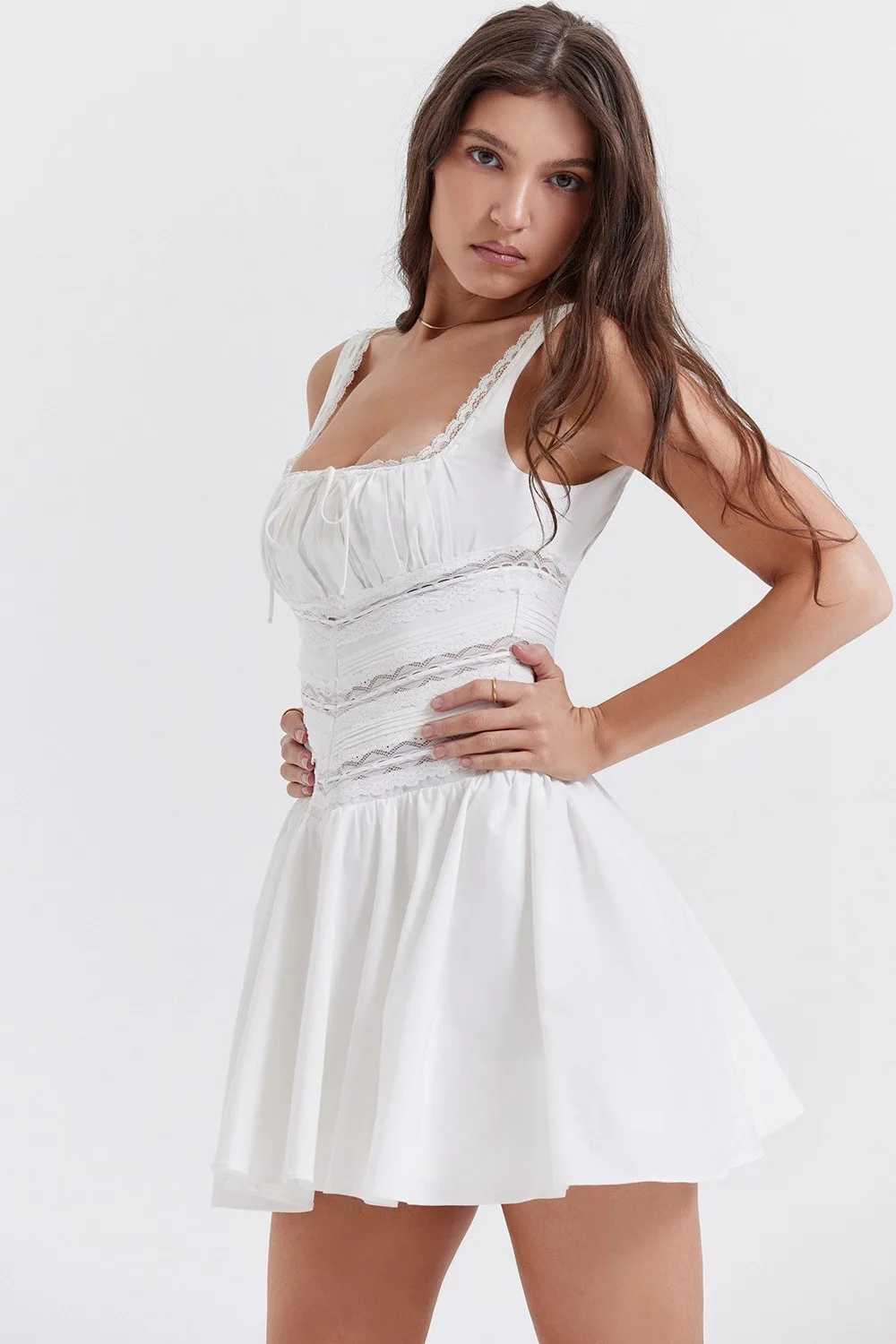
Fit-reference photograph: the waist and skirt proportions are visible in this posed view. Approve length, ease and movement on the identified sample with the agreed review method.
Review Bust, Waist and Hip Relationships
Assess the intended fit through the whole body of the garment. Ease is the relationship between garment dimensions and the body reference, but its appropriate amount and distribution depend on the design and material. The buyer should provide its fit intention and ask the technical team to review the actual sample. Do not use “tighter” as a universal improvement or assume that a loose-looking area can be removed without affecting movement and balance elsewhere.
Observe where the garment sits at the waist and hip, how the side seams appear and how the neckline and closure relate to those positions. If the hem rises during wear, record the associated observations rather than immediately prescribing extra length. There may be more than one question to investigate. The buyer's contribution is a clear account of the result and desired outcome; the technical team should evaluate possible causes and explain the proposed revision before it becomes the next specification.
The Pant & Dress Collection can support discussion of related proportions and garment directions. Use specific references and explain why they are relevant to the mini dress. Do not transfer dimensions from another garment merely because both pieces have a close waist or short hem. Different designs require their own review. Keeping the product discussion concrete helps the factory understand whether the brand wants a shape reference, a construction discussion or a change to the actual sample.
Separate wearer feedback from the technical conclusion. A comment that an area feels restrictive is important and should be recorded with its location and activity. It does not by itself identify the pattern correction required. If discomfort occurs, stop the review and investigate. Avoid asking the wearer to continue so the sample can be labelled acceptable. A good fit record respects the observation, gives it context and leaves the technical diagnosis open until the garment has been assessed by the responsible reviewer.
Observe Sitting and Standing Transitions
Agree a sitting setup relevant to the intended use and record it sufficiently for comparison. The seat, starting posture, underlayers and garment adjustment may all matter to interpreting the observation. The brand does not need to turn an ordinary fitting into a laboratory exercise, but it should avoid comparing images taken under clearly different conditions without noting that difference. The review should be comfortable and consensual, and it should stop if an unwanted exposure or discomfort concern appears.
Observe the garment before sitting, while seated and after returning to standing. Note the hem, opening, waist position and lining relationship at each stage. If the wearer readjusts the dress, record when and why. A photograph taken only after manual adjustment can hide the very issue the buyer needs to discuss. The aim is to understand how this sample behaves under the agreed conditions, without making a claim that the result represents every chair, activity or wearer.
Translate observations into specific questions. If the hem remains higher after standing, show the location and the sequence rather than writing only “rides up.” If the opening reveals more than the brief intends during sitting, mark the actual area and the desired relationship. The factory can then review length, body fit, opening design or another relevant factor. A clear problem statement helps it propose a correction that addresses the issue rather than simply adding fabric wherever the photograph looks shortest.
After a revision, repeat the agreed sequence and check the rest of the garment as well. Solving a seated coverage concern may change the standing silhouette or lining relationship. The buyer should identify which requirements are essential and where compromise is acceptable. Keep accepted details visible in the comments so they are not unintentionally lost. This makes the next review a comparison against a stable target rather than a new set of preferences that appears only when the sample arrives.
Check Walking and Arm Movement
Choose a practical walking and arm-movement sequence based on the garment's intended use. There is no need to invent a universal protocol for all mini dresses. A sleeved design, a strappy dress and a garment with an opening may raise different questions. Agree the conditions, use a suitable space and stop if the wearer is uncomfortable. Record what was observed and avoid describing the exercise as a formal test unless a defined test was actually arranged and conducted.
Watch the relationship between the upper body and hem. If an arm movement changes the garment's position, note which areas move and whether they return to the intended position afterward. For walking, observe the opening, lining and lower-body relationship under the agreed conditions. The buyer should not infer a universal performance claim from a short review. The value lies in identifying concrete sample concerns and giving the technical team enough context to decide what should be investigated or revised.
The custom womenswear development route can help structure that discussion with Yinshan Fashion. Submit the movement sequence, sample reference and annotated observations, then ask for a proposed next step. Avoid sending only a cropped image with an instruction to “fix the fit.” A broader view may show that the concern involves more than the hem or opening. A clear sequence also helps the factory reproduce the relevant observation when reviewing the garment internally.
When comparing samples, keep known conditions stable and document exceptions. If a different wearer, underlayer or strap setup is used, the evidence may still be useful, but it supports a different conclusion from a direct comparison under the same setup. State what is known and what remains uncertain. A careful record can acknowledge that more evidence is needed without delaying every unrelated decision. The team can accept confirmed details while continuing to investigate the specific relationship that has not yet been resolved.
Include Lining, Closures and Underlayers
Identify the complete sample combination, including outer fabric, lining, closure and any internal structure. A length review based only on the outer shell may miss an inner layer that becomes visible or restricts the intended movement. Note where the lining ends and how it relates to the opening and hem. If a temporary lining or closure is used, state that clearly and identify which observations cannot yet be treated as approval of the final garment.
Observe the closure in standing and the agreed movements. Record visible changes, access concerns or areas requiring technical attention. A closure that looks acceptable in a front photograph may still need review from the side or inside. Avoid diagnosing a component problem from appearance alone. The factory should receive the actual reference and observation so it can assess the combination of component, placement and surrounding construction. If formal component testing is required, specify that as a separate evidence requirement.
Underlayers should be part of the agreed fit setup where they matter to the intended use. The brand should state what it wants reviewed and record the result without claiming compatibility with every possible option. If the dress is intended to coordinate with a particular layer, show that actual combination. Do not use a change in styling to conceal a garment concern between sample photographs. Comparability depends on knowing what the reviewer changed as well as what the factory changed.
The custom skirt production guide provides related context for lower-body fit and size discussions. For the mini dress, retain the connection to the upper garment: a concern at the hem may be linked to a relationship elsewhere in the dress. Keep the final lining, closure and underlayer observations with the same sample record so that the approval describes one complete garment rather than several separately accepted parts that have never been reviewed together.
Plan Size and Height References
A base-size sample provides evidence for a defined reference, not the whole customer population. Agree how the brand's size range will be reviewed after the initial fit questions are closed. Identify the measurements, size samples or wearing observations needed for the actual programme. If the brand uses a particular size system, provide its relevant records. A letter or number on a label is not enough to establish the intended body measurements, fit preference or length relationship for every size.
Height is also a review variable, but it should not become an unsupported promise. The brand may decide to examine the design on more than one height reference or offer distinct length options. Those decisions need a clear commercial and technical rationale. Do not infer from one wearer that a hem position is appropriate for everyone in a broad size category. Record the evidence obtained, the conditions under which it was obtained and any remaining questions the brand needs to resolve before release.
Ask which details require particular attention when the pattern is developed across sizes. Neckline position, waist relationship, opening placement and length may all be relevant, depending on the design. Present them as review priorities rather than presumed defects. The technical team should explain the proposed approach and the evidence needed to assess it. If the base pattern changes later, identify which size records must be updated instead of assuming the earlier range review remains valid.
The dress sample fit checklist can support the wider approval structure. Use it to keep size-specific observations organized, then add the mini-dress concerns that matter to this project. If the available sample evidence is limited, say so. A transparent release decision can identify its scope and remaining actions. It is more dependable than a broad statement that a dress fits the entire range based on one successful photograph or one wearer's positive reaction.
Decide Whether a Length Change Solves the Actual Issue
Consider a hypothetical sample that matches the specified flat length but appears shorter than intended after the wearer sits and stands. The first reaction may be to add length. That could be one option, but the observation should first be described in full. Record the waist and hip position, lining relationship and any manual adjustment. This example is a review scenario, not a report of a Yinshan order, and it does not diagnose why a particular garment moves.
Ask the technical team to assess the evidence and propose a revision. If it recommends changing more than one feature, list each change and the reason given. The buyer should confirm the desired standing and seated appearance before another sample is made. If those targets conflict with the original design reference, update the target rather than expecting the factory to satisfy both silently. A clear decision about the intended product is necessary before a technical correction can be judged successful.
Compare the revised sample under the agreed conditions. Check whether the original concern is resolved and whether the standing proportions, opening or lining now raise a new issue. Keep the previous measurement and observation record so the team can see what changed. If the revised sample is accepted, identify the complete combination that produced the result. Do not record the outcome as proof that simply adding length always resolves garment movement; the example supports only the decision actually reviewed.
Update the active specification and associated product information after acceptance. If the final design is longer than the photography sample, review the photographs and description before public use. If the buyer instead chooses to retain the original length with a different intended use, document that choice and its implications. The purpose of the revision process is to create a garment and description that agree with each other, rather than to accumulate sample changes without deciding which version the brand will actually sell.
Turn Observations into Revision and Approval Decisions
Keep any intentional asymmetry visible in the release drawing. If the front, back or one side is designed to finish at a different point, a general request to “make the hem even” can contradict the product. Identify the intended difference and the measurement references used to assess it. The approval record should distinguish deliberate shape from an unexpected result in the sample. This small clarification is especially useful when the fitting is handed over to a production colleague who has the measurements but has not seen the original design discussion.
Prepare one consolidated response after the fitting. Number the issues, attach the relevant views and state the desired outcome for each. Separate accepted details from open questions and identify the owner of the next action. If several reviewers disagree, resolve that internally or present the disagreement as a design decision still pending. The factory should not be asked to interpret which of two contradictory comments has authority simply because one arrived later in a messaging thread.
Approve a named sample for a defined scope. Include its material combination, size, colour, measurement method and relevant review conditions. State whether the decision permits another development step or constitutes the brand's production release. Any conditional approval should list the conditions and explain how they will be verified. An informal positive reaction can be useful feedback, but it should not stand in for authorization of quantities, materials or construction details that the buyer has not actually reviewed.
Retain the record for later colours, size extensions and repeat orders. Confirm current material availability and review changes against the accepted version. A garment that worked in one combination does not automatically establish every future variation. Where the brand requests a different length, material or opening, identify which observations need to be repeated. This makes the earlier work useful without allowing its approval to expand beyond the evidence that supported it.
For a mini dress fit review with Yinshan Fashion, send the sample measurements and observations, including front, side and back views, intended silhouette, fit reference, material details, movement notes and proposed quantities. Explain what the next sample needs to demonstrate. The best handover connects a visible concern with an agreed target and a traceable version, giving the buyer and technical team a practical basis for deciding what can be accepted and what still needs work.
Review sequence before the next sample
- Define the fit target and length measurement method.
- Observe the complete sample in agreed positions and movements.
- Review causes and compare the identified revision.
- Consolidate size evidence and release conditions.
Occasionwear development checklist
Actions before the next sample
Use the current brief and the identified garment to close the next development decision.
Agree the length method
Show start and end points. Keep the measured dimension separate from the observed wearing position.
Record the transition
Observe sitting, standing and walking before readjusting the garment. Note the actual issue and intended outcome.
Release a defined scope
Confirm the sample, materials, size and review conditions. List remaining size or colour decisions.
Buyer action and factory confirmation
Use these questions with the identified garment and current programme brief.
| Decision area | What the buyer should prepare | What to ask the factory |
|---|---|---|
| Fit target | State silhouette, intended use and brand fit reference. | Are the design target and measurements consistent? |
| Length method | Provide marked measurement points and garment condition. | Which method should both teams use for comparison? |
| Movement | Record the agreed sequence and any adjustment. | What evidence is needed to investigate the observed position change? |
| Complete garment | Identify lining, closures and underlayer conditions. | Which revised components affect earlier accepted details? |
| Approval | Consolidate comments and name the current release documents. | What remains open before the requested production decision? |
Continue the production conversation
Mini dress fit evidence before release
| Decision | Buyer direction | Record to retain |
|---|---|---|
| Length | Define measurement points and intended hem position. | Flat measurement plus front, side and back wearing observations. |
| Body relationship | Review bust, waist and hip together. | Located comments and technical review of possible causes. |
| Sitting | Observe the transition and any manual readjustment. | Before, seated and returned-to-standing records. |
| Layers and openings | Assess lining, closure and opening as part of one garment. | Identified components and observations through agreed movements. |
| Size range | Define what each reviewed reference supports. | Size evidence plan and explicit limitations in approval. |
Buyer FAQs
What belongs in a mini dress fit review?
A mini dress fit review should connect measured length with the actual garment position on the agreed fit reference. Review bust, waist, hip, neckline, lining, closures, openings and selected movements. Record sample identity, conditions, observations and the scope of any approval.
Is there one ideal mini-dress length?
No single length establishes the right result for every customer or design. The brand should define its intended silhouette and measurement method, then review the sample on the relevant references. A dimension and a wearing observation provide different, complementary information.
Should the sample be reviewed while sitting?
If sitting is relevant to the intended use, include it in a comfortable, agreed review sequence. Observe the garment before sitting and after standing, including any readjustment. Record the result as sample evidence rather than a guarantee about every wearer or situation.
Can a bodycon style be approved only from photographs?
Photographs can support review but do not establish every wearing or construction question. Use identified measurements, relevant sample observations and appropriate technical assessment. A close-fitting appearance alone should not be treated as proof of acceptable comfort, movement or size-range fit.
Does one fit model represent the whole size range?
No. One fit reference provides evidence under defined conditions. Agree what further sizes, measurements or wearing observations are needed for the range. Keep limitations visible instead of assuming that a successful base-size fitting establishes every customer fit.