Article
What should buyers know first?
Short answer: Brief a matching set manufacturer on coordinated fabric, colour, fit, size pairing, component quantities, labels, packaging, and retail approval.
The first commercial question is whether the pieces will be sold as one fixed unit or as separate items that customers can combine. That decision affects quantity planning, labels, packaging, replacement stock, and the way fit should be assessed. Make it before sampling becomes complicated. This guide follows the decisions a buyer needs to connect the collection idea with actual garment specifications and a workable retail assortment.
What should buyers consider about tell your matching set manufacturer what the customer buys?
Define the sale unit in plain language. A fixed set might contain one top and one bottom in the same named size. A separates programme might allow customers to choose different sizes or buy only one piece. A third arrangement could present coordinated garments together in marketing while keeping every component commercially independent. These approaches can share an aesthetic, but they should not share an ambiguous purchase-order description.
Give each physical component its own style identifier, even when the retail set also has an overall code. This allows sampling comments, measurements, material decisions, and inspection findings to refer to the correct garment. The set code then connects the components for selling and packing. Without this distinction, a note such as “size medium revised” may leave the factory unsure whether the top, bottom, or both were changed.
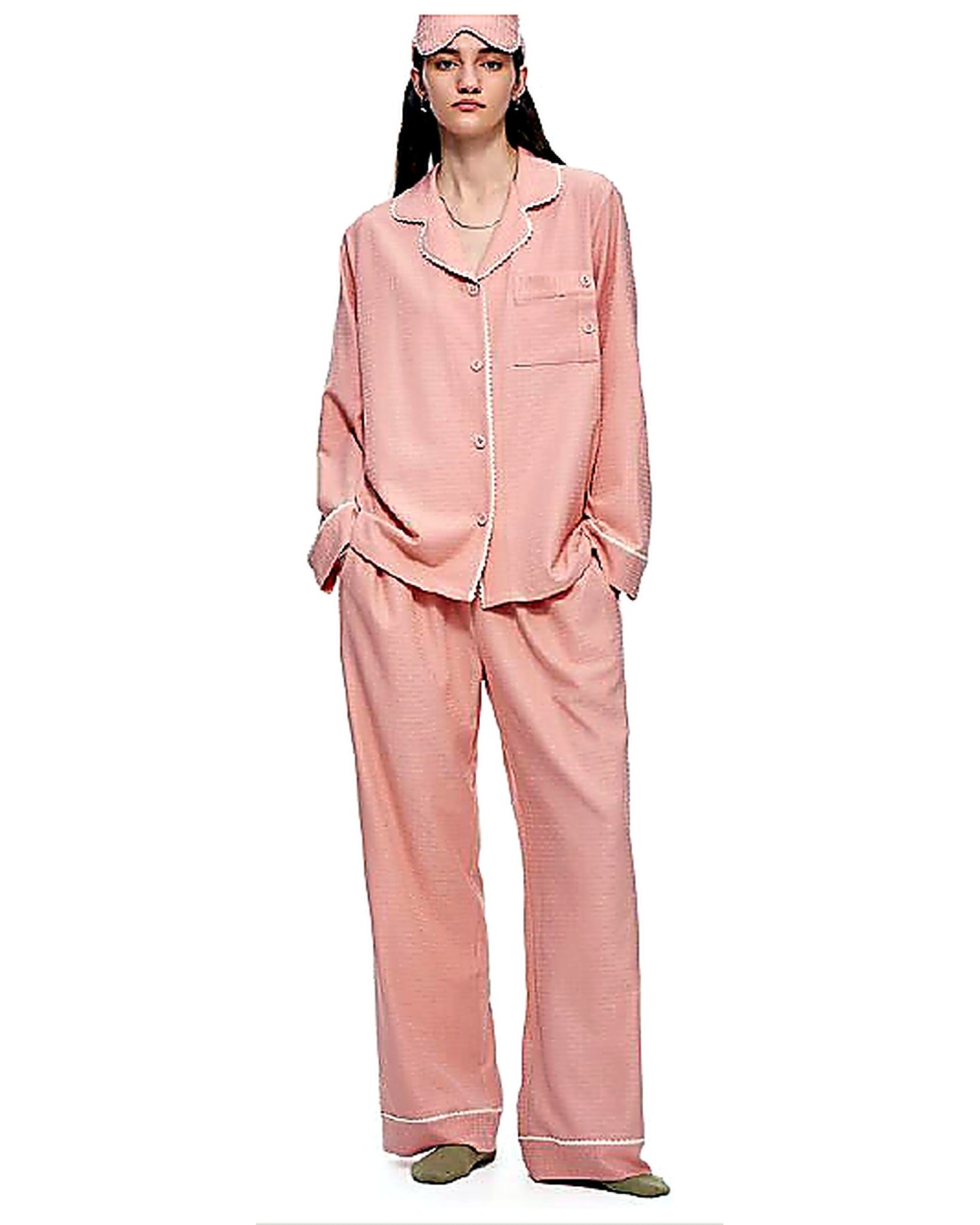
For relaxed coordinated products, the soft lounge set programme offers a relevant starting point for discussing a custom brief. Explain the intended retail model alongside the visual reference. Do not assume that a page showing a set determines your size pairing, fabric, minimum quantity, or packaging arrangement. Those remain project decisions that need explicit confirmation.
How should buyers decide what “matching” means for the design?
Some sets use the same fabric and colour in both pieces. Others coordinate through a shared print, trim, texture, or deliberately related colour palette. Write down which elements must match closely and which may differ. A ribbed top paired with a smooth trouser can be intentional, but the buyer needs a clear visual target. Otherwise, a factory may try to eliminate a difference that the designer intended to preserve.
Distinguish a tonal relationship from an exact visual match. Different surfaces can appear different even when the colour names are identical. Ask for physical combinations where colour is important, and identify the conditions used to review them. A collection board viewed on a phone is useful for direction but insufficient for a demanding approval. The agreed references should describe the relationship the brand expects customers to see.
When a print connects the pieces, specify whether placement, scale, and direction need coordination. An all-over print may create a coherent set without seam-by-seam matching, while a placement artwork may depend on precise positioning. State which expectation applies. Do not introduce a costly matching requirement accidentally through a reference photograph in which a stylist happened to arrange two pieces in a visually continuous way.
How should buyers build two technical files and one coordination record?
Each garment needs its own sketch, measurement chart, material list, construction notes, and revision history. The coordination record should then identify shared materials, shared colours, set identifiers, pairing rules, and joint approval criteria. This arrangement makes it possible to correct one piece without losing control of the other. A single crowded sheet often hides whether a comment belongs to the top or bottom.
Use consistent naming across the files. If a colour is called “warm ivory” in one document and “cream” in another, establish whether those names refer to the same approved reference. If the top uses fabric code A and the bottom also uses A, confirm that the codes actually describe the same proposed material. Shared labels in a spreadsheet should reflect a verified relationship, not a convenient shortcut.
Record which decisions are linked. A change to the shared fabric may require both garments to be reviewed again. A change to a top’s button might leave the bottom unaffected, unless the button colour contributes to a coordinated trim story. The buyer and factory should be able to see these dependencies before authorising revisions. This prevents a local improvement from creating an unexpected mismatch in the complete set.
What should buyers consider about fit the components separately and together?
Begin with the individual garment requirements. The top needs an appropriate shoulder, neckline, sleeve, and body shape for its design. The bottom needs an appropriate waist, rise, seat, and length. A flattering combined photograph should not conceal an uncomfortable component. Ask the wearer to assess both pieces under ordinary movement, and keep the comments separated so the technical team can identify which garment needs attention.
Then review the outfit as intended. Observe the overlap between top and waistband when standing, sitting, and reaching. A cropped top and high-waisted trouser may expose more skin during movement than the brand expects. An oversized shirt may obscure the waist detail that motivated the design. These are collection decisions as well as fit decisions; the team should agree the intended result before making isolated measurement changes.
For a shirt-led set, the shirt series collection can support discussion of the top’s construction and proportion. Bring the actual proposed bottom into the fitting rather than pairing the sample with whatever is available. The relationship between lengths, volume, and fabric movement is difficult to approve when half of the intended outfit is missing.
How should buyers choose a size-pairing policy before ordering?
Selling one named size for the whole set is operationally simple, but it assumes the selected pairing suits the intended customer well enough. Customers do not necessarily wear the same nominal size in tops and bottoms. Consider that issue when defining the product and the retail offer. Do not treat a convenient factory packing rule as evidence that the pairing is appropriate for the customer base.
If the brand offers separate size selection, build the order matrix at component level. Top quantities and bottom quantities may differ. The sample approval should still establish how the garments coordinate, but replenishment and stock reporting need separate identifiers. Ask how the proposed production and packing arrangement handles this structure, including any programme-specific quantity constraints. Avoid promising unrestricted combinations before checking the commercial implications.
For fixed sets, state the permitted pairings explicitly and verify them during packing review. A medium top paired with a medium bottom should be a controlled instruction, not an assumption based on similar labels. If the range uses another pairing system, document it clearly in the order and pack specification. Warehouse staff and retail systems should be able to identify the sale unit without opening every package.
How should buyers review grading as a relationship, not one enlargement?
The two garments may need different grade rules. A top’s shoulder and chest progression does not determine the correct waist and hip progression for a bottom. Ask the technical team to provide the relevant rules for each component and to explain how the selected size-set review will assess the complete outfit. The aim is to maintain an intentional relationship across the range while respecting each garment’s fit requirements.
Check the proportion between top length and bottom rise in more than the base size. If one changes substantially while the other does not, the visual balance may shift. That shift may be acceptable or even necessary, but it should be reviewed deliberately. Avoid forcing a mathematically identical proportion when the intended fit requires another approach. The buyer needs an understandable design decision, supported by appropriate samples or other agreed evidence.
Keep any size-specific changes visible. If the extended range uses a different construction detail or an adjusted pairing, update the technical and commercial records together. Do not allow one team to describe the change as grading while another treats it as a new product. Shared terminology helps the factory price the work correctly and helps the brand communicate the actual range accurately.
How should buyers coordinate fabric approval without overlooking function?
Using the same fabric for both garments can support a consistent appearance, but the material must work for both designs. A cloth that hangs attractively in a loose shirt may need further review in a fitted waistband or seat area. Conversely, a material selected for trouser structure may feel too firm in a softly gathered top. Evaluate the actual assembled samples rather than assuming shared fabric automatically produces a successful set.
If different materials are proposed, explain the reason and approve their relationship. The top may need a lighter handle while the bottom needs more body. Record colour, texture, surface, and care considerations for the combination. Ask the factory to show the proposed materials together and identify any limitations in achieving the intended appearance. A transparent discussion is more useful than a vague promise that two different fabrics will “match perfectly.”
For coordinated trousers, the casual pants programme provides a separate route to discuss waistband, pocket, rise, and leg details. Keep those decisions connected to the set while retaining a complete bottom specification. This allows the brand to decide later whether the trouser can also stand alone as a retail item without discovering that its documentation exists only as a note attached to the top.
How should buyers manage shared colour as a production decision?
Identify how the approved colour reference applies to each material and component. The buyer should know whether the proposal uses one shared fabric source or separate materials that require coordinated approval. Ask how the factory intends to manage identification and separation during production. Do not assume that similar supplier descriptions guarantee the same visual result in the finished garments.
Review the pieces side by side under the agreed conditions. Include visible trims and any lining that contributes to the appearance. If a slight difference is accepted, record the actual reference combination rather than relying on a verbal phrase such as “close enough.” A retained physical reference gives later discussions a more stable basis than memory or photographs taken under changing lighting.
Replenishment deserves a separate conversation. A later order may need new material, and the brand should decide whether replacement components must coordinate with earlier stock or only with other pieces in the new order. That commercial expectation influences the required approval process. Do not promise customers an exact match across separate purchases without evidence and a supply arrangement that supports the claim.
How should buyers use care review to assess the complete outfit?
The intended care information should reflect the actual components, trims, and construction. If the two pieces have different requirements, decide whether that is acceptable for a product sold as one set and how it will be communicated. A customer may reasonably expect a coordinated outfit to be straightforward to care for, but the brand should verify the proposed instructions rather than infer them from the shared appearance.
For development review, document the condition of each garment before and after the agreed care procedure. Examine dimensional changes, twisting, surface appearance, colour relationship, and the way the pieces sit together. Use the same identification and measurement methods so the comparison is meaningful. An informal trial can identify questions; it should not be represented as certification or as a universal guarantee of performance.
If the top and bottom change differently, review the commercial impact as well as the technical result. A small change in each piece may combine into an unwanted shift in outfit proportion. Discuss whether a material adjustment, construction revision, or different care direction is appropriate, supported by suitable evidence. Keep the joint approval open until the buyer understands the resulting product.
How should buyers calculate quantities at both set and component level?
A request for five hundred sets contains at least two production quantities if each set has two garments. The factory needs the number of each component by colour and size, while the brand also needs the number of complete sale units. Keep both views in the order record. This avoids confusion when discussing sampling, spare pieces, replacements, or a component that is also sold individually.
Ask how minimum quantities and material commitments apply to the actual proposal. A shared fabric may connect the components commercially, but it does not automatically remove every construction or colour constraint. A different material for one piece may introduce separate sourcing requirements. Request an explanation of the assumptions and the effect of changing the set ratio rather than relying on a single general minimum.
If the brand plans to sell more tops than bottoms, make that ratio visible before costing. A quotation based on equal quantities may not describe the later separates order. Likewise, an order intended entirely as fixed sets should not arrive as an undocumented mixture of complete units and loose components. The commercial record should identify the intended balance and the handling of any approved exceptions.
How should buyers compare quotations without losing the set relationship?
Ask for enough component detail to understand the total. This does not require disclosing a supplier’s internal costing, but it should clarify the garments, materials, trims, labels, packing, and approval assumptions included. A set price can conceal a simplified top or an omitted bottom lining. The buyer should be able to compare equivalent proposals and understand where alternatives change the product.
When reducing cost, consider the effect on the whole outfit. Removing a trim from one piece may break a shared design story. Changing only the bottom fabric may create an unwanted colour or texture difference. Some adjustments may improve the programme, but they should be presented as design options with consequences. Ask for revised samples or other appropriate evidence where the change affects the approved relationship.
Keep the final commercial version aligned with both component specifications and the coordination record. If only one garment changes, update the set reference as well so the order points to the correct pairing. A buyer should never have to guess whether the quoted set contains the earlier top or the revised one. Clear version control is particularly valuable when several colourways and sizes are being developed at once.
How should buyers specify packaging for the chosen retail model?
For fixed sets, define how the pieces are folded or arranged, how the pair is secured, and where the sale-unit identifier appears. Confirm whether component labels remain visible without disrupting the pack. Ask for a packing sample that shows the actual presentation. A description such as “pack as a set” leaves too many practical decisions to interpretation, especially when the garments differ greatly in size or bulk.
For separates, ensure each component is independently identifiable and complete for retail handling. Marketing them together should not make a single piece dependent on a shared label or accessory that is packed with the other garment. If a belt or other detachable item belongs to one component, specify that ownership clearly. The pack should support the way the customer can actually purchase the product.
Connect the packing instructions to the carton breakdown and inventory data. A set code, top code, and bottom code should have an explicit relationship, and the meaning of a counted “unit” should be consistent. When the brand receives a carton, it should be able to reconcile the contents with the purchase order without manually rebuilding the logic of the set.
How should buyers run a coordinated approval meeting?
Bring the final proposed top and bottom together with the current specifications, material references, labels, and pack sample. Review the components first, then the complete outfit, then the sale unit. This sequence helps the team avoid accepting an individual defect because the overall styling is attractive. It also catches commercial problems, such as correct garments paired under the wrong retail identifier.
Use one decision record that links to the individual garment files. Identify what is approved, what remains open, and who owns the next action. If a replacement trim or corrected measurement is still pending, state whether it affects one component or the whole set. Do not use a general approval email to conceal conditional decisions that production will need to interpret later.
At production handover, highlight the risks discovered during development. A colour relationship that needed careful selection should remain visible in the reference pack. A waistband and top-length interaction should be represented in the fitting notes. The purpose of the meeting is to transfer useful knowledge, not simply to collect a signature saying that two samples were seen.
What should buyers consider about example: converting a fixed set into separates?
Suppose a brand initially develops a relaxed shirt and wide-leg trouser as a same-size set. Retail feedback then suggests that customers want to choose different sizes. The design may remain unchanged, but the buying plan should be revised at component level. Assign independent selling identifiers, check labels and packing, and rebuild the quantity allocation. Confirm the factory’s proposal for the revised ratio before committing to stock quantities.
Next, review whether each garment works as an independent purchase. The trouser needs complete care and identification information, and the shirt should not rely on an accessory supplied only with the set. Product photography and descriptions should explain that coordination is optional. Keep the approved colour relationship, but decide how later replenishment will be assessed when customers may combine garments purchased at different times.
Finally, update the quotation and approval record to describe the actual retail model. The earlier set sample remains useful evidence of coordination, but it no longer fully describes how the goods will be ordered, packed, or sold. This example shows why matching-set development is both a garment task and an assortment task. A complete brief connects those two responsibilities before production begins.
How should buyers keep replacement handling visible in the order?
Agree how the brand will identify a problem affecting only one component of a fixed set. If a top needs replacement, the stock record should show whether the remaining bottom can be held, paired with an approved replacement, or handled another way under the agreed commercial arrangement. Do not assume the factory will supply individual replacement pieces on the same terms as the original complete order. Discuss the procedure while the component quantities and material references are still clear.
This is also useful for customer service planning. The retail team needs to know whether it can replace one garment or must handle the entire sale unit. Keep that policy separate from the factory’s production instructions, but make sure the stock structure can support the intended process. A coordinated product becomes easier to manage when the brand can trace both the complete set and its parts. The objective is practical visibility, not an elaborate system: clear codes, an accurate component count, and a documented rule for any exception are often enough to prevent confusion.
What should buyers consider about three actions to clarify your co-ord brief?
Action 1: Write the sale-unit sentence
State exactly what a customer receives and whether sizes can be chosen separately. Use that sentence to check the order and packaging plan.
Action 2: Identify the shared decisions
List the materials, colours, trims, and proportions that connect the pieces. Mark which require joint approval after a change.
Action 3: Build the component matrix
Show every top and bottom quantity by size and colour, then reconcile those numbers with the planned retail sets or separates.
How can buyers discuss next steps with Yinshan Fashion?
When planning later orders of coordinating components, review the wholesale reorder planning guide.
Prepare the sale-unit description, annotated outfit board, two component specifications, and proposed size and colour matrix. Contact Yinshan Fashion to discuss how the coordinated collection can move into a defined custom sampling programme.
Sourcing Guide buyer guide
Matching Set Manufacturer: Develop Co-Ord Fashion Sets for Retail
Brief a matching set manufacturer on coordinated fabric, colour, fit, size pairing, component quantities, labels, packaging, and retail approval.
Confirm the product brief
Connect matching set manufacturer, intended use, materials, fit, quantities and approvals in one current product record.
Review the next proof
Use the next sample, material swatch or applied component to answer a named buyer question.
Record release decisions
Keep approved scope, open conditions and changes connected to the current product version.
Buyer and factory handover checklist for matching set manufacturer
Use these prompts to make the current product decision reviewable. Confirm market requirements and commercial details for the specific programme.
| Decision area | What the buyer should prepare | What to ask the factory |
|---|---|---|
| Approval point 1 | Confirm sale model, customer size choices, collection role, and intended outfit proportions. | Confirm material proposals, shared and separate sourcing assumptions, and development feasibility. |
| Approval point 2 | Provide component identifiers, quantity matrix, branding, and packaging requirements. | Supply component measurements, grade proposals, construction details, and pairing instructions. |
| Approval point 3 | Approve each garment and the coordinated relationship with one current decision record. | Flag changes that require joint review and confirm the final pack configuration. |
Continue the production conversation
Decision table: choose the coordination model
| Decision | Fixed set | Separates programme |
|---|---|---|
| Sale unit | One defined combination | Independently purchasable components |
| Size choice | Documented pairing rule | Separate top and bottom selection |
| Quantities | Complete sets plus any agreed exceptions | Component-level ratios |
| Labels | Set identity linked to component identity | Each item independently identifiable |
| Packing | Approved combined presentation | Complete individual presentation |
| Replenishment | Review complete combination | Define expectations against earlier components |
| Approval | Individual garments and complete unit | Individual garments and coordinated relationship |
Buyer FAQs
What should a matching set manufacturer receive first?
Send annotated outfit references, a clear fixed-set or separates decision, fabric direction, size range, proposed quantities, and the details that must coordinate across the pieces.
Must both pieces use exactly the same fabric?
No. Different materials can be intentional, but their appearance, function, colour relationship, and care requirements should be approved together.
Can customers choose different top and bottom sizes?
That is a retail and production-planning decision. Define it before ordering, then use component-level identifiers, quantities, and packaging that support the offer.
Does approving the top also approve the bottom?
No. Each garment needs its own fit, construction, and material review. The complete outfit also needs a separate check of coordination and proportion.
Can later stock be assumed to match earlier purchases?
Do not assume it. Agree the replenishment expectation and review the proposed materials and colour relationship against the relevant retained references.