Article
What should buyers know first?
Short answer: A buyer-focused guide to hanging-line workflow for fashion garments: what an overhead garment system can show, which records still matter, and how Yinshan Fashion connects samples, materials, sewing, QC, and packing.
A hanging-line workflow for fashion garments is an overhead system that moves garment units or garment pieces between production operations. For a buyer, its value is not the rails alone. The useful question is whether the system helps the production team keep the current style, approved materials, sample reference, operation sequence, quality priorities, and open findings visible as the garment moves through work.
In practical fashion manufacturing, a hanging line can support the handover between cutting, sewing operations, in-line checking, finishing, and packing preparation. It can be particularly helpful when a programme has several colours, sizes, fabrics, trims, labels, or construction details. It does not, by itself, prove that a garment is correct, that a delivery date is fixed, or that every quality requirement has been met. Those outcomes still depend on the product brief, approved samples, material and component control, trained operators, inspection route, written decisions, and buyer approvals.
Yinshan Fashion works with custom and private-label fashion programmes rather than presenting an unrestricted ready-stock wholesale offer. That means a factory conversation starts with the actual garment: the reference, intended wearer, fit, fabric behaviour, components, colours, branding, packing, quantity structure, target market, sample purpose, and decisions still open. A hanging-line workflow is one part of how an approved product can be organised through production. It is not a substitute for a clear brief or a controlled bulk release.
This guide explains what a hanging-line workflow for fashion garments means from the buyer's point of view. It is designed for brands, retailers, buying offices, and emerging labels developing dresses, tops, blouses, skirts, partywear, sleepwear, homewear, or active-fashion pieces. The aim is to make a factory walk-through or production discussion more useful: you will know what to ask, what evidence to retain, and which decisions should be settled before an order is treated as ready for bulk.
What is a hanging-line workflow for fashion garments?
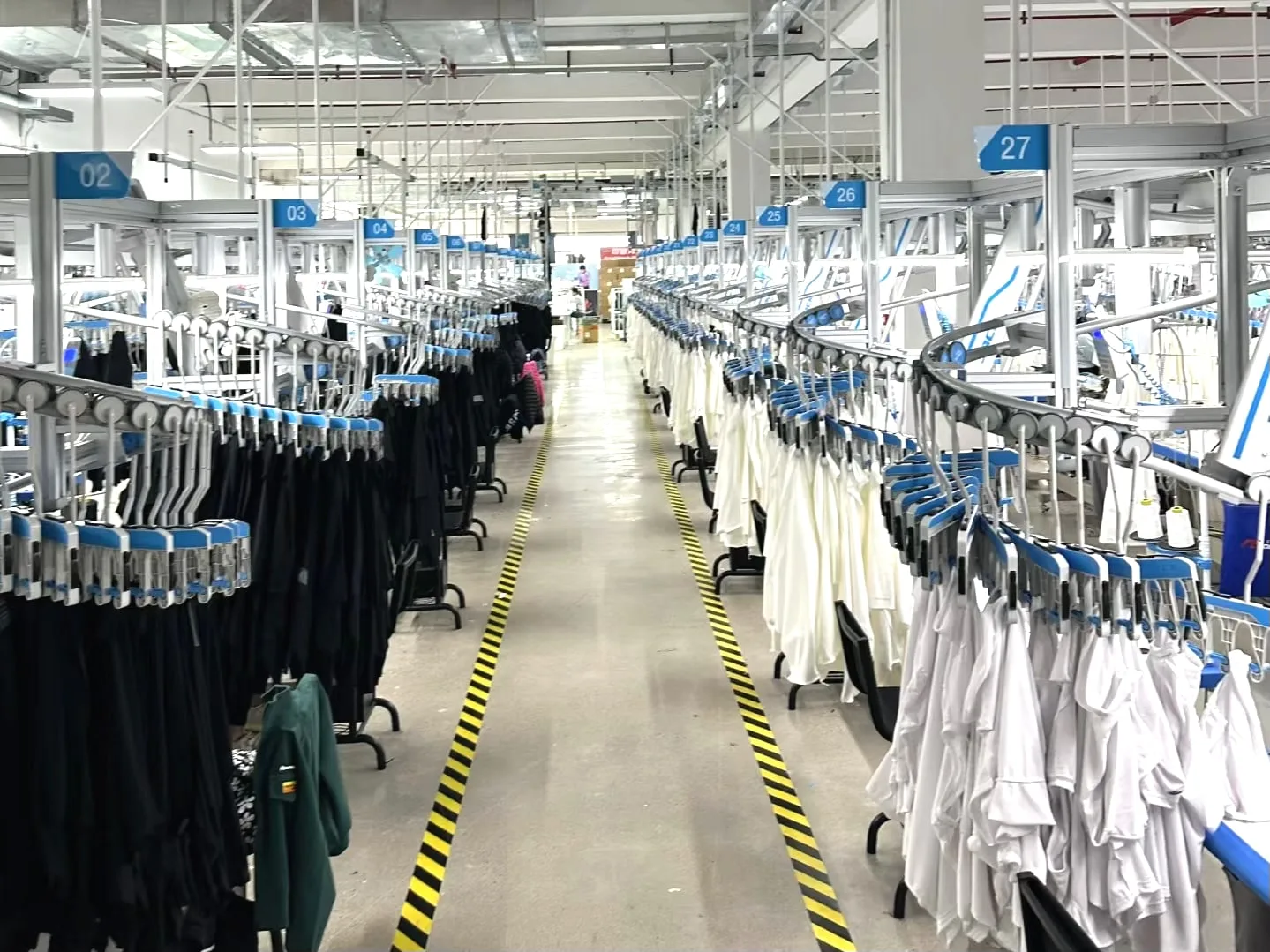
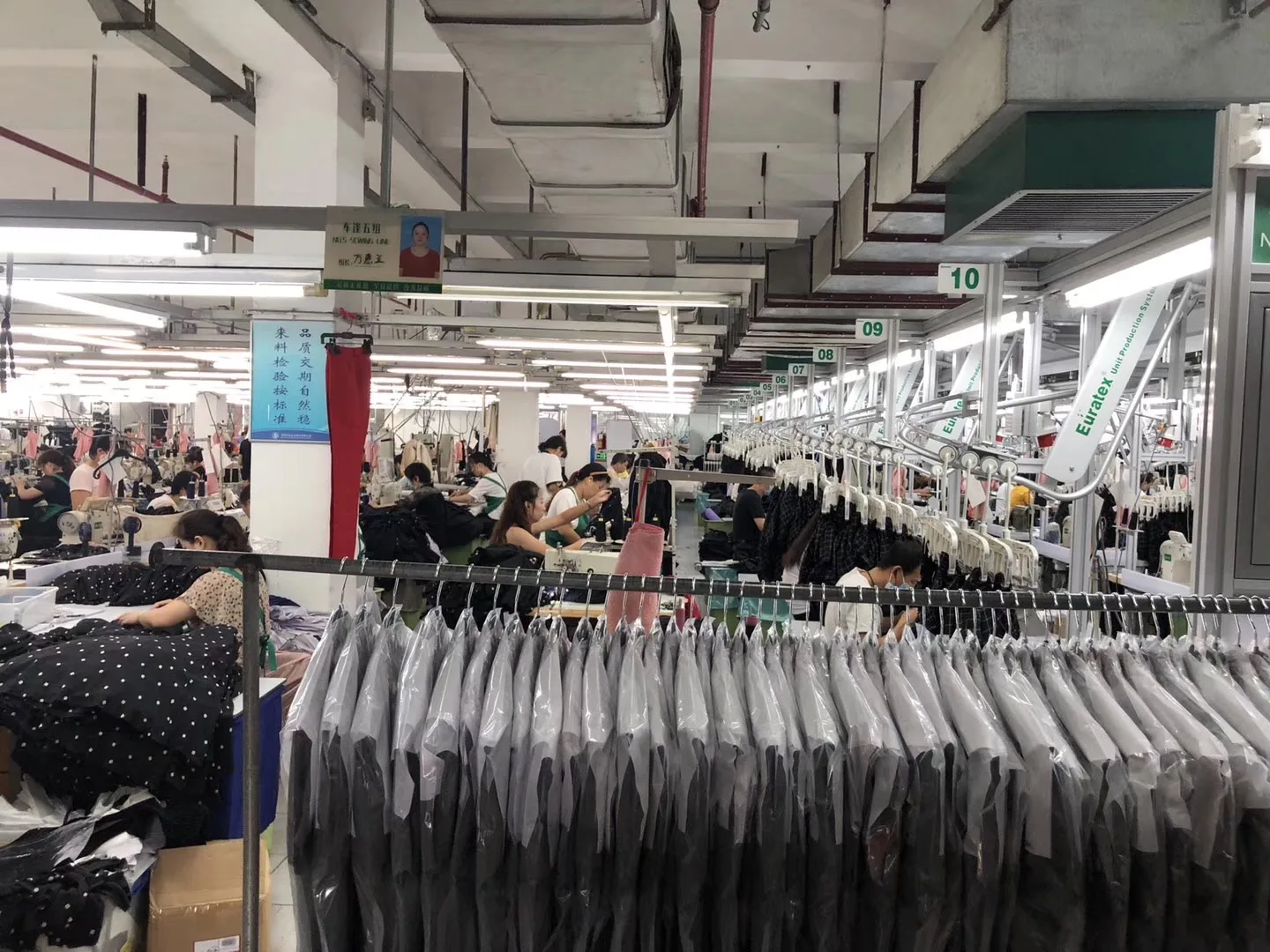
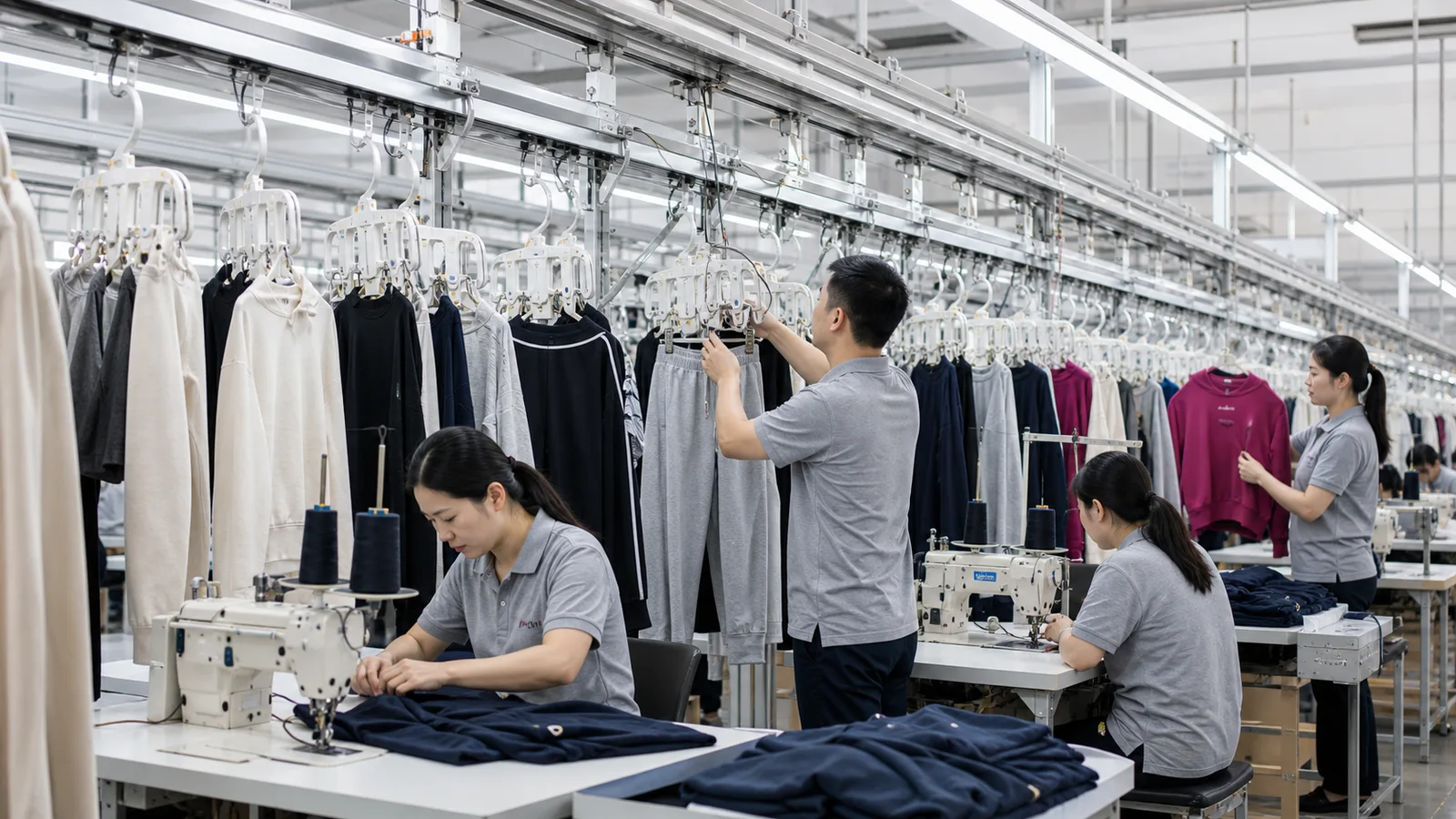
A hanging line is an overhead garment-handling route. Instead of moving every unit in a loose pile, trolley, or bundle from one sewing operation to the next, units are placed on hangers or carriers and travel along a set route to the next workstation. The exact equipment, layout, routing rules, and data available vary by factory and by style. Some operations may still use bundles or a separate handling method where that makes sense for the construction.
For buyers, it helps to separate three ideas that are often mixed together.
First, there is the physical movement of the garment. A cut or partly sewn unit moves from one operation to another in an ordered way. That can reduce ambiguity about where work is waiting and can keep units off the floor or out of unlabelled piles. Second, there is the production plan: which operations need to happen, in what sequence, and with which current product reference. Third, there is the control record: the approved sample, material references, component list, measurement priorities, quality points, label and packing files, and authorised changes that guide the work. The line can support the first two; the third still needs deliberate management.
A buyer should not equate a modern-looking system with a complete manufacturing programme. A factory can have overhead rails and still be unclear about a changed neckline, an alternative fabric, a missing label file, a revised size chart, or the packing method. In the same way, a well-run sewing team can use another handling route for a particular product. The sourcing question is not “Does the factory have a hanging line?” in isolation. It is “How does the factory connect the chosen production flow to the approved garment and its current records?”
The Yinshan Fashion manufacturing overview gives the wider handover context: approved product information needs to stay connected to materials, cutting, sewing, quality checks, finishing, packing, and delivery preparation. The hanging line becomes more meaningful when the buyer can see how it fits into that wider route.
Why buyers care about production visibility?
Fashion orders become harder to control as variables multiply. A single silhouette may have several colours, a size range, a lining, a print or embroidery option, a closure, a branded label set, and different packing instructions. A collection can add multiple styles, shared fabrics, different fabrics with similar colours, and a range of comments from design, merchandising, quality, and retail teams. If information is not kept together, the factory may be able to move garments quickly while still moving the wrong version.
Production visibility is the ability to ask a practical question and get an answer tied to the present product scope. Which style is at this operation? Which colour and size route is being worked? What material and component references apply? Which approved sample controls the construction? Is there an in-line finding? Who owns the decision if a finding changes the next step? Where is the most current label or packing instruction? A line system can make the physical state easier to observe, but it cannot supply missing inputs.
For a buyer, visibility should make earlier decisions more useful later. A fabric choice made during development should be traceable to the garment sample and, after approval, to the production record. A fit comment should be assigned to a version, not held only in a conversation thread. A label update should name its file and product scope. A packing request should tell the team whether the garment is folded, hung, protected, tagged, or assigned to a particular carton route. These are ordinary project controls, yet they are what turn a production floor from an impressive image into a manageable supplier relationship.
This matters especially for small or growing fashion brands. A smaller order does not remove the need for a clear product record; it can make each decision more commercially important because there is less room to absorb a late change. Yinshan Fashion can help buyers frame those questions before sampling and bulk release, including fabric behaviour, fit priorities, component options, private-label details, and the specific evidence the next sample should provide. The fashion product brief guide is a practical starting point when the reference material is still scattered across images, notes, and samples.
What should be settled before a style enters the production flow?
No two garments require exactly the same route, but a production line needs a sufficiently stable version to begin. That does not mean every commercial or product question must be fully closed at the first enquiry. It means the team must know what the next operation is allowed to use and who can resolve a remaining decision before it becomes a production change.
Start with the product identity. Give the style a working name or code and record the category, intended wearer, target channel, and product role. A relaxed printed blouse, a fitted party dress, a ribbed top, and a brushed sleepwear set may all travel through a factory, but their material behaviour, operations, components, and quality priorities are different. State which reference image or retained garment informs the silhouette and which visible details are only inspiration. A photo of a dress can show a desired proportion without proving the fabric weight, lining, pattern, closure construction, or grade rule.
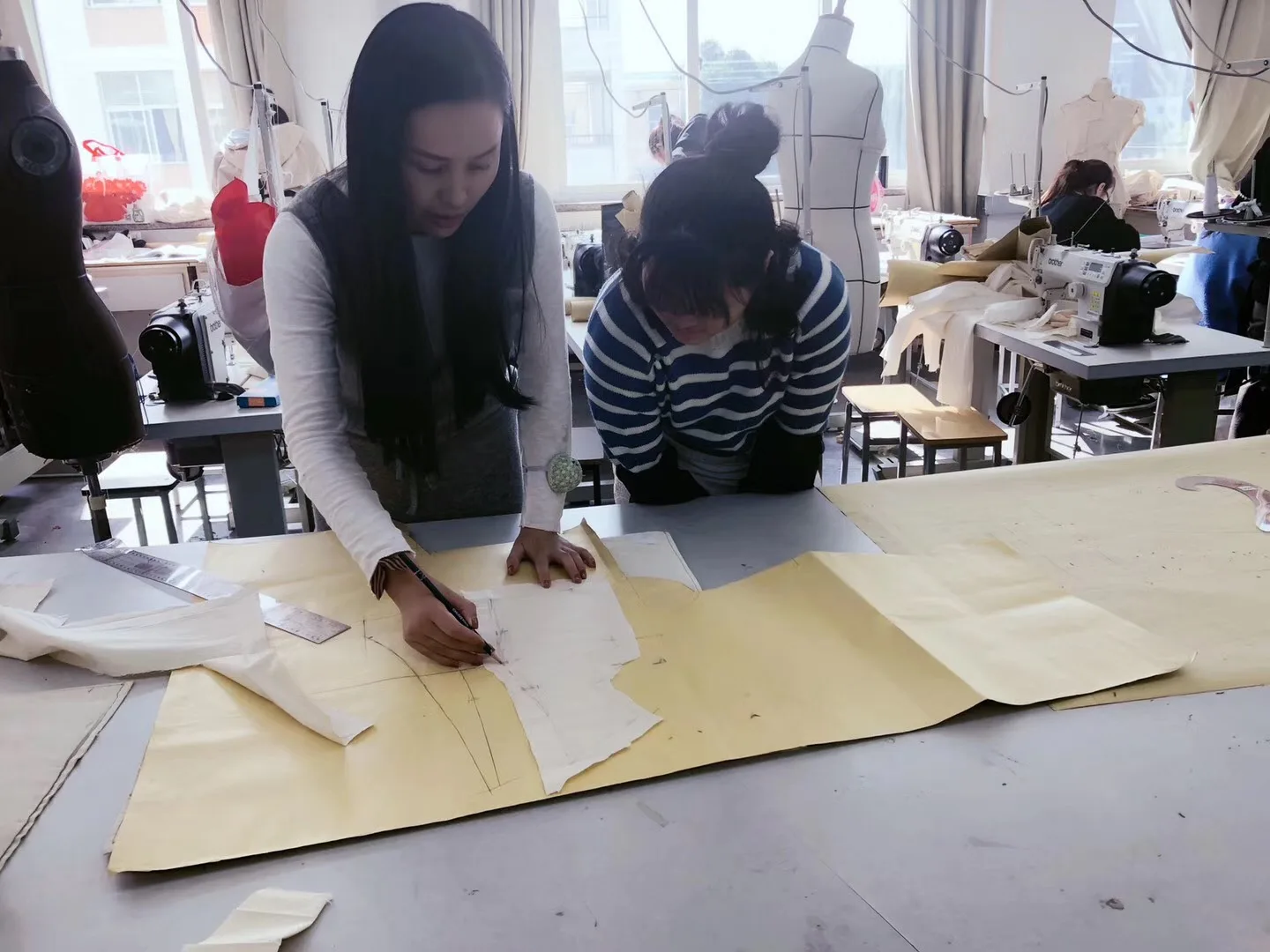
Next, make the fit direction usable. Identify the sample size, size range, key measurements, ease or movement priorities, neckline or armhole concerns, waist position, length, coverage, and the features that must retain their shape. A line worker cannot infer a fit comment that was sent in a message several weeks earlier. The buyer and manufacturer need a controlling pattern or sample version, the relevant comments, and a clear record of approved exceptions.
Material and component decisions should have the same discipline. Describe the intended fabric construction or supplied reference, handfeel, drape, opacity, stretch, surface, colour or print direction, lining relationship, and any open question. Then list the elements that can change the garment: elastics, zips, buttons, drawcords, tapes, interfacing, embroidery, prints, neck labels, care labels, hangtags, barcode stickers, protective bags, and cartons. A factory can advise on a feasible route, but a generic material name is not enough to release a product. The fabrics and trims page can help buyers put these inputs into one structured discussion before a sample or bulk handover.
Finally, agree the sample and approval state. Is the reference a first development sample, a fit sample, a material proof, a revised pre-production reference, or an approved bulk control? What did it confirm? What still needs review? Who has authority to approve a change? A hanging line should never be asked to compensate for a sample record that leaves those questions unresolved.
How the flow connects cutting, sewing, checking, and finishing?
A factory's detailed sequence will differ by garment construction, equipment, workload, and current programme. Yet most fashion products need a logical handover from prepared materials to sewn garment, then to finishing and presentation. A useful buyer discussion follows the garment rather than looking at each department as an unrelated stop.
Cutting preparation begins with the controlled product version and approved material route. The team needs to understand the style, colour, size, pattern, markers, components, and any fabric-specific handling point. A hanging-line workflow may receive cut components after they are prepared and bundled or otherwise identified. The buyer does not need to dictate a factory's internal layout, but should understand what record associates the pieces with the current style and why a part must not be confused with a similar style, colourway, or fabric.
During sewing, the garment is built through an operation sequence. A simple jersey top, a woven shirt, a lined dress, and a multi-panel active-fashion style may require different checkpoints and specialist operations. The overhead route can move a unit from an operation to its next planned step, while supervisors and operators work from the relevant construction and quality requirements. The physical route is valuable when it makes the work-in-progress visible and orderly; it is not a reason to skip checking whether the operation is being completed against the approved sample.
In-line checking is where a buyer's stated priorities become practical. A requirement may concern measurement, stitch appearance, seam condition, placement, symmetry, print or embroidery position, component attachment, colourway separation, label application, or a product-specific construction point. The appropriate checks and acceptance criteria depend on the garment and market. Yinshan Fashion does not treat a generic checklist as a guarantee for every programme. Instead, the buyer should name the points that matter to the current product, and the factory should explain when and where they can be reviewed.
After sewing, the garment may require trimming, pressing or other finishing, measurement or appearance review, labelling, packing preparation, and final release steps. The original sample reference and current packing files still matter here. A correct sewn garment can be undermined by an unapproved label, an incomplete care instruction, the wrong hangtag, or a packing method that does not match the buyer's channel. Use the private-label manufacturing discussion to bring labels, branding, and packing into the product record rather than leaving them until the last day of the order.
When is a hanging-line workflow especially useful?
An overhead handling route can be helpful where the garment programme benefits from an orderly unit-by-unit flow. That can include styles with several sewing operations, multiple colours and sizes, or a need to keep work-in-progress separated as it moves through the factory. It can also be useful when a buyer needs a more intelligible walk-through of how a fashion style moves from operation to operation.
For dresses, the value often lies in keeping a garment route coherent while the team manages pieces, lining, closures, shaping, gathered or panelled construction, and finishing. The buyer still needs to confirm the actual dress-specific questions: fabric drape, coverage, fit, waist and hem balance, neckline security, closure behaviour, and the approved sample version. If you are developing a dress from a reference, the custom dress manufacturer guide explains how those decisions can be recorded before bulk production.
For tops, shirts, and blouses, a clear flow can help the factory organise differences across fabrics, collars, plackets, sleeves, cuff details, pockets, prints, labels, and size grading. A buyer should name which parts are fixed and which are still subject to development advice. Do not assume that a visual match in a reference photograph proves the correct fabric, fusing, stitching, or construction route. Those points belong in the sample and material review.
For party and clubwear, the line does not remove the need for product-specific proof. A fitted silhouette, stretch fabric, mesh, sequin surface, lining, boning, exposed hardware, or a placement-sensitive decoration can each change construction and inspection needs. The production route should be chosen around the actual garment, not around the most photogenic style image. For sleepwear and homewear, handfeel, comfort, seam treatment, elastic tension, print direction, and packing may be more relevant than a complex operation count. For active fashion, recovery, seams, panel alignment, elastic, binding, and component placement may shape the questions. Browse the active-fashion product programmes to anchor that discussion in a real product category.
A hanging line is not automatically the best route for every garment. A responsible manufacturer assesses the style, construction, material, operations, handling, and current line conditions. Buyers should value a factory that explains the practical route over one that claims the same system is ideal for every product.
What should buyers check about a buyer checklist for a hanging-line production discussion?
Before you visit a factory, join a video call, review a production plan, or ask for a sample-to-bulk route, bring a short, dated checklist. The aim is not to control every workstation. It is to ensure that the team can connect the buyer's decisions to the unit moving through the operation.
Style, fit, and material identity
Record the style code, category, product role, reference images or sample, target market, and decisions already fixed. Add the sample size, size range, key measures, ease, movement concerns, construction priorities, material reference, colour or print direction, lining, surface, stretch, drape, and relevant alternatives. Ask the factory which current sample or specification controls the route, how approved fit information reaches the responsible team, and which material question still needs a swatch, proof, or garment sample.
Components, in-line checks, packing, and repeat records
List the trims, closures, elastics, labels, prints, embroidery, logo treatment, care information, and packing details. Identify the product-specific points that matter: measurements, appearance, construction, placement, colourway separation, component attachment, labels, and presentation. The factory should explain where each point is checked, how a finding is recorded, who can decide a correction, which file controls packing, and what must be reconfirmed before a future repeat.
This table is deliberately a control conversation, not a promise that every item will be resolved in the same way for every style. It gives both sides a shared language. A buyer who sends only a request for “hanging-line factory capacity” is likely to receive a generic answer. A buyer who sends the product scope and the questions above is far more likely to learn whether the factory can organise the relevant work.
What to look for during a factory walk-through?
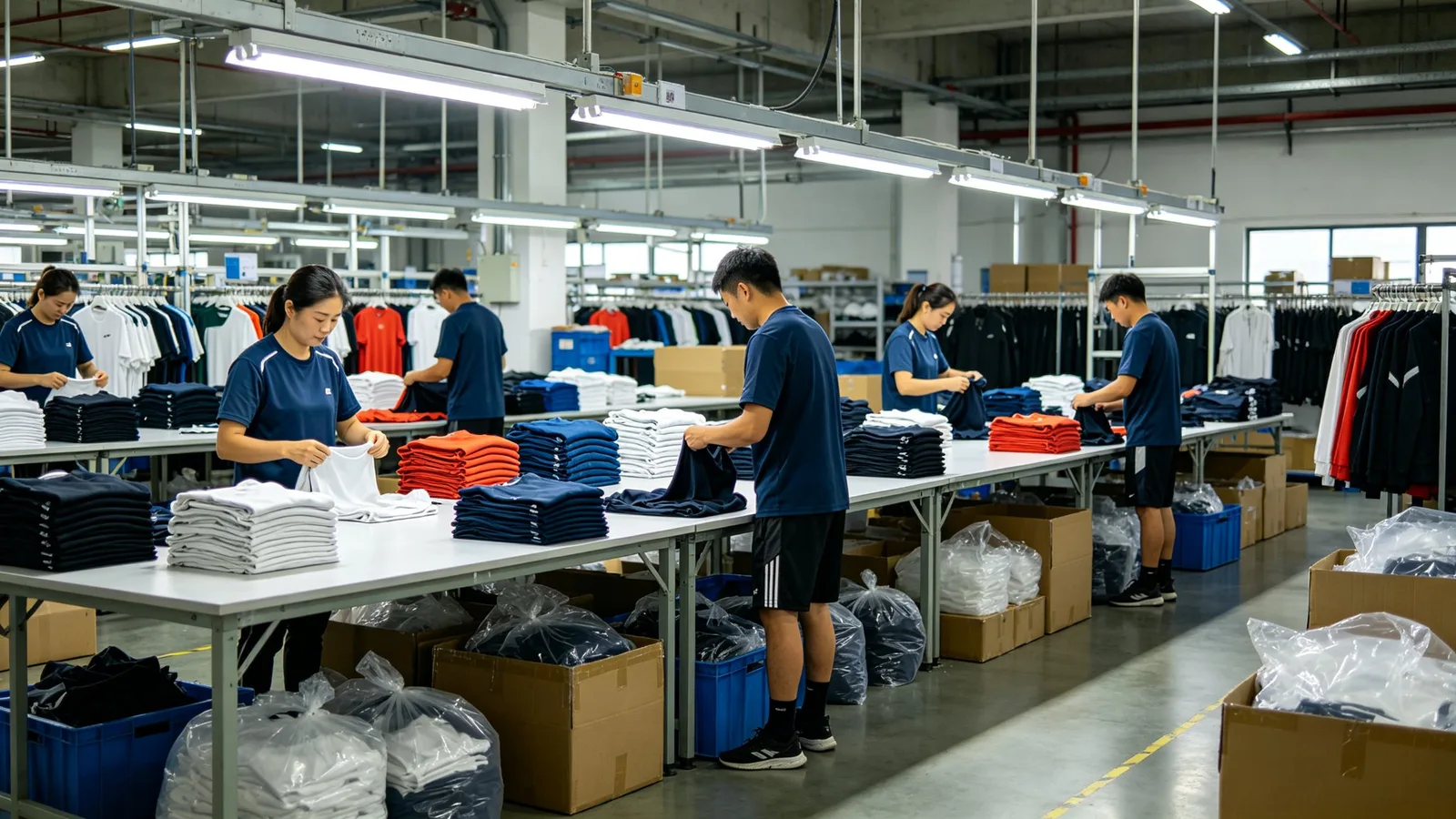
A walk-through can be useful evidence, but it should be treated as a source of questions, not as a substitute for a product-specific sample and production record. The first thing to look for is a coherent flow. Can the factory explain where materials enter the current style route, how work is identified, what happens between operations, where a quality issue is found, and how a garment proceeds to finishing and packing?
Observe whether the factory can distinguish a general process from the current order. “This is our hanging line” is an introduction. A more useful answer is: “For this style, these are the key operations; this approved sample and these material references control them; this is where we inspect the product-specific points; this is where we retain the relevant records.” You may not need access to every internal document, but the people showing the production floor should be able to explain the logic.
Ask how changes are handled. A revised fabric, trim, print position, measurement, colourway, label, or packing instruction can alter the unit being produced. The buyer should not assume that an email automatically reaches every affected point. Ask which change record is controlling, who confirms its scope, whether a new physical proof is needed, and what work must pause or be reviewed if the change arrives after a relevant operation has begun.
Ask how the factory keeps similar garments distinct. A collection may include navy and black, two nearly identical prints, parallel versions of a top, or different label programmes for different channels. A hanging line can help with physical organisation, but the project needs style, colour, size, and component information that workers and quality staff can actually use. The answer will be factory-specific; the buyer's task is to test clarity, not demand a prewritten slogan.
A final question is how information is retained for a repeat. An overhead line is a current-production tool. A repeat order needs the historical basis: approved pattern or sample, fabric and component references, comments, label and packing files, quantity context, quality priorities, exceptions, and differences in the new request. Yinshan Fashion uses that kind of project record to make a later discussion more accurate, while still confirming current material availability, commercial terms, quantities, and requirements rather than assuming the old order can simply be copied.
How Yinshan Fashion uses the workflow in a custom programme?
Yinshan Fashion's role is to connect a buyer's fashion brief to a workable manufacturer and supplier discussion. For a custom or private-label programme, that may include reviewing reference images and samples, making fit and fabric questions visible, considering construction and component choices, planning the sample purpose, aligning label and packing inputs, and preparing the controlled information needed before bulk handover.
Where a hanging-line workflow suits the garment and production plan, it can help organise work as it moves between operations. Our emphasis is on the record around the line: the approved product version, material and trim route, sample comments, quality priorities, production instructions, and named owners for changes. This approach is relevant whether a buyer is developing a focused first range or refining a longer-running programme. Exact capacity, routing, materials, commercial terms, timing, testing, and factory assignment always remain subject to the current product and project review.
The process starts with the product decision, not with a generic equipment claim. A buyer can share the category, customer, references, size and fit direction, fabric behaviour, colours, components, branding, packing, target market, quantities by style-colour-size where available, sample objective, and questions that still need advice. Yinshan Fashion can then identify what needs a physical swatch, an applied proof, a sample, a revised pattern, a clearer production record, or a project-specific manufacturer conversation.
That same discipline supports relationships with more than one specialist production resource. A style should be routed according to its category, fabric, construction, finishing, available production conditions, and current requirements. The buyer benefits when one coordinated team makes those boundaries visible rather than treating all factories, styles, and production methods as interchangeable.
What should buyers check about frequently asked questions about hanging-line workflow for fashion garments?
What is a hanging-line workflow in garment manufacturing?
A hanging-line workflow is an overhead handling route that moves garment units or pieces between production operations. It can help organise work-in-progress and make a production flow easier to observe, but it does not replace the approved sample, material records, quality checks, or buyer approvals required for the specific garment.
Does a hanging line guarantee faster fashion production?
No. Timing depends on the actual style, materials, construction, operations, quantities, approvals, production conditions, and changes during the programme. A hanging line can support an organised workflow, but it should not be treated as a fixed speed or delivery promise.
What should buyers approve before garments enter a hanging-line production route?
Buyers should make the current product version clear: reference or approved sample, fit and pattern direction, material and component route, colours, labels, packing, quality priorities, quantities, named approval owner, and any open decision. The exact release requirements depend on the garment and programme.
Can hanging lines be used for dresses, tops, sleepwear, and active fashion?
They can be used where the garment construction and factory plan suit an overhead handling route. The appropriate workflow varies by style. A dress, blouse, sleepwear set, partywear style, or active-fashion garment may have different fabric, operation, component, handling, and inspection needs.
How should a buyer evaluate a factory's hanging-line system?
Ask the factory to explain the current product flow, the controlling sample and records, how material and component changes are managed, where quality findings are checked, how similar styles or colourways are separated, and what record is retained for a possible repeat. Evaluate the clarity of the answer, not the equipment alone.
Can Yinshan Fashion help prepare a hanging-line production brief?
Yes. Yinshan Fashion can help frame a custom fashion brief around product references, fit, fabric behaviour, components, labels, packing, sample purpose, quality priorities, quantities, and open decisions. The final route and production controls remain specific to the current garment and factory review.
What should buyers check about turn a factory system into a usable buying decision?
A hanging-line workflow for fashion garments is most valuable when it is connected to a disciplined product record. The rails show how units can move; the buyer and manufacturer still need to agree what those units are, which version controls them, what material and components apply, which quality points matter, and who can authorise a change.
Before asking Yinshan Fashion about a custom or private-label programme, prepare the current references, product category, intended customer, fit priorities, fabric and trim direction, colours, labels, packing route, quantity structure, target market, sample goal, and unresolved choices. We can use that information to discuss a practical development and manufacturing route, including how an organised production flow can support the garment after its product decisions are ready for handover. Contact Yinshan Fashion to start with the current product brief rather than an assumed factory template.
Factory-production visibility kit
Three controls that make an overhead garment workflow useful to a buyer
A hanging line becomes meaningful when the product version, material route, in-line quality priorities, and packing records remain connected to the garment moving through the operation.
Name the controlling product version
Connect every production discussion to the approved or current sample, pattern and fit direction, material and trim route, colours, labels, packing, and authorised changes.
Track the open production questions
Make the style, colour, size, operations, quality priorities, findings, decision owner, and next evidence gate visible instead of relying on an equipment claim.
Retain one repeat-ready record
Keep approved references, material and component decisions, sample comments, packing details, quality observations, exceptions, and current differences together for the next order discussion.
Buyer actions and factory questions before a fashion garment enters a hanging-line workflow
Use this dated record to connect the current product, sample evidence, materials, components, quality priorities, packing, quantities, and ownership of changes. Factory routing, capacity, timing, commercial terms, testing, and release conditions remain specific to the programme.
| Decision area | What the buyer should prepare | What to ask the factory |
|---|---|---|
| Style and sample control | Provide the style code, reference or approved sample, product role, target market, sample purpose, current version, reviewer, approval owner, and unresolved decisions. | Which sample or specification controls the proposed operations, and what decision must be closed before work can move to the next gate? |
| Fit, pattern, and construction | State sample size, size range, key measurements, ease and movement priorities, construction details, marked comments, and the features that cannot change. | Which pattern, construction, measurement, or applied sample question needs evidence before the route is released? |
| Materials, colours, and components | Share material references or intended behaviour, colour or print scope, lining, trims, decoration, closures, labels, care information, and applicable packing components. | Which input controls the discussed style-colour scope, and which alternative or uncertainty needs a swatch, proof, sample, or written buyer decision? |
| Operation and quality route | Identify product-specific priorities for measurements, appearance, construction, placement, colourway separation, component attachment, labels, and presentation. | At which point is each priority reviewed, how is a finding recorded, and who owns the correction or escalation? |
| Branding and packing | Provide latest label artwork, barcode source, hangtag, individual protection, fold or hang route, carton needs, destination context, and approval status. | Which file controls the presentation route, and what must be physically checked or confirmed before packing begins? |
| Bulk release and repeat | Record quantities by style-colour-size, quality priorities, approved exceptions, retained product references, authorised changes, and expected differences on a later order. | Where is the controlling production pack retained, and which new material, component, quantity, label, packing, or product change reopens the review? |
Continue the production conversation
Buyer FAQs
What is a hanging-line workflow in garment manufacturing?
A hanging-line workflow is an overhead handling route that moves garment units or pieces between production operations. It can help organise work-in-progress and make a production flow easier to observe, but it does not replace the approved sample, material records, quality checks, or buyer approvals required for the specific garment.
Does a hanging line guarantee faster fashion production?
No. Timing depends on the actual style, materials, construction, operations, quantities, approvals, production conditions, and changes during the programme. A hanging line can support an organised workflow, but it should not be treated as a fixed speed or delivery promise.
What should buyers approve before garments enter a hanging-line production route?
Buyers should make the current product version clear: reference or approved sample, fit and pattern direction, material and component route, colours, labels, packing, quality priorities, quantities, named approval owner, and any open decision. The exact release requirements depend on the garment and programme.
Can hanging lines be used for dresses, tops, sleepwear, and active fashion?
They can be used where the garment construction and factory plan suit an overhead handling route. The appropriate workflow varies by style. A dress, blouse, sleepwear set, partywear style, or active-fashion garment may have different fabric, operation, component, handling, and inspection needs.
How should a buyer evaluate a factory’s hanging-line system?
Ask the factory to explain the current product flow, the controlling sample and records, how material and component changes are managed, where quality findings are checked, how similar styles or colourways are separated, and what record is retained for a possible repeat. Evaluate the clarity of the answer, not the equipment alone.
Can Yinshan Fashion help prepare a hanging-line production brief?
Yes. Yinshan Fashion can help frame a custom fashion brief around product references, fit, fabric behaviour, components, labels, packing, sample purpose, quality priorities, quantities, and open decisions. The final route and production controls remain specific to the current garment and factory review.