Article
What should buyers know first?
Short answer: Plan going-out co-ord set production with separate garment records, coordinated colour reviews, size allocation and clear selling-unit instructions.
Going-out co-ord set production starts with a commercial decision: will the top and skirt be sold as one fixed set, as a set with selectable sizes, or as two independent products? That choice affects style records, quantity allocation, fitting, identification and packing. Coordinating the garments' appearance is important, but it does not replace a clear definition of what the customer buys and what the receiving team should find inside each unit.
Yinshan Fashion supports custom and private-label bulk programmes, including enquiries for camisole tops, skirts and small-batch womenswear collections. Material availability, colour relationships, sizes, quantities, packing and commercial terms need confirmation for the actual programme; this is not unrestricted ready-stock wholesale. The guide below connects the design of an evening outfit to the records needed for a coordinated production discussion.
Define the Selling Unit for Going-Out Co-ord Set Production
Choose the sales model before building the order sheet. A fixed set supplies a predetermined top and skirt combination. A selectable-size set may allow the customer to choose different sizes for the two pieces. Separately sold garments have independent product identities even when photographed together. These models can coexist, but the brand must explain how each is identified and fulfilled. A styling image showing two pieces together cannot tell the factory or warehouse which model applies.
Write a one-sentence definition of the customer unit for each model. For example, an illustrative fixed set might contain one identified top and one identified skirt in a stated size pairing. This is a definition of contents, not a recommendation about how the brand should sell. Add whether removable accessories or other items are included. Keep styling props outside that definition unless they are actually supplied. Product pages, order records and packing instructions should all describe the same contents.
Assign ownership for the decision. Merchandising may define the product offer, operations may define the receiving requirements and the technical team may manage garment specifications. In a small business, one person can own several roles, but the questions remain distinct. If the sales model changes after samples are approved, revisit identification, quantity and packing records. The physical garments may remain similar while the order becomes operationally different, so a commercial change should not disappear into an informal marketing discussion.
Use the Dress Collection as a relevant occasionwear reference when considering how a two-piece outfit fits alongside one-piece alternatives. The point is to clarify the range role, not to imply that a dress reference establishes the specifications of a top and skirt. Describe why the coordinated option belongs in the collection and what flexibility the customer should have. Those choices provide the context for the separate garment records and the combined outfit review that follow.
Give the Top and Skirt Separate Style Records
Create one style identifier for the top and another for the skirt, then connect them through an outfit or set identifier. Each piece needs its own design revision, measurements, materials, components and approval status. This does not mean the pieces must be sold separately. It means the production record can identify what was made and what changed. If the skirt is revised while the top remains accepted, the system should show that difference without forcing both garments into an ambiguous single version.
Keep the combined record short and explicit. It should state which top version and skirt version form the proposed outfit, the intended colour relationship and the sales model. Link to the detailed records rather than copying them into several places where they may drift apart. If the brand uses spreadsheets, a small cross-reference table can do this clearly. The essential requirement is that someone receiving the file can identify the current pair without deciding which of several attachments looks most recent.
The Blouse Collection provides a starting point for the top discussion. Identify the intended camisole neckline, straps, back and hem instead of assuming that the word “cami” specifies them. For the lower garment, the Pant & Dress Collection can support a related silhouette conversation. Use those references to develop the actual pair, with separate measurements and construction questions for each piece.
Record shared components without merging the garment identities. The top and skirt may explore a common outer material or colour direction, while retaining different lining or closure requirements. Mark what is proposed to be shared and what remains independent. Approval for a component in one use does not automatically settle its suitability in the other. The factory should review each application, while the brand can still assess whether a coherent material strategy supports the intended look and commercial scope of the set.
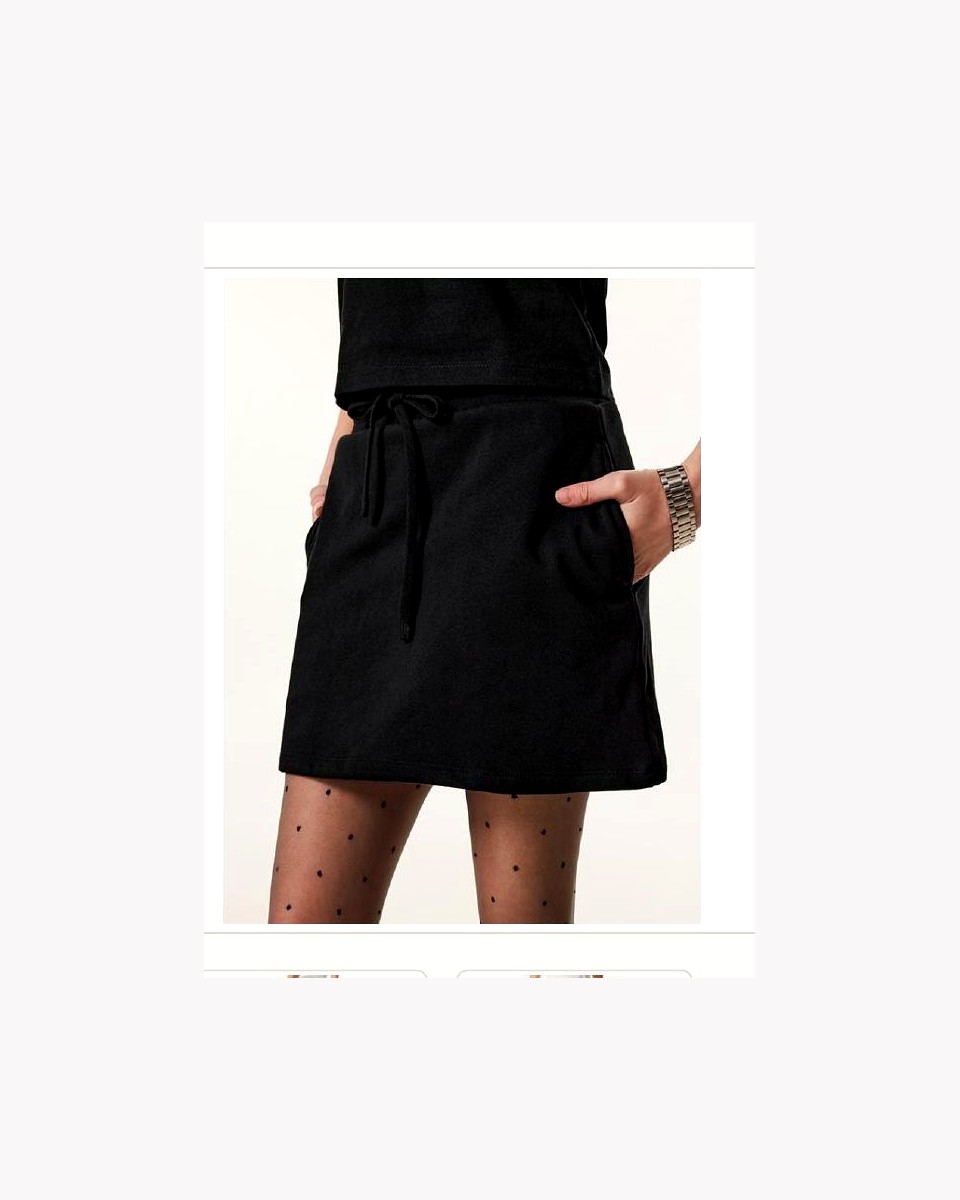
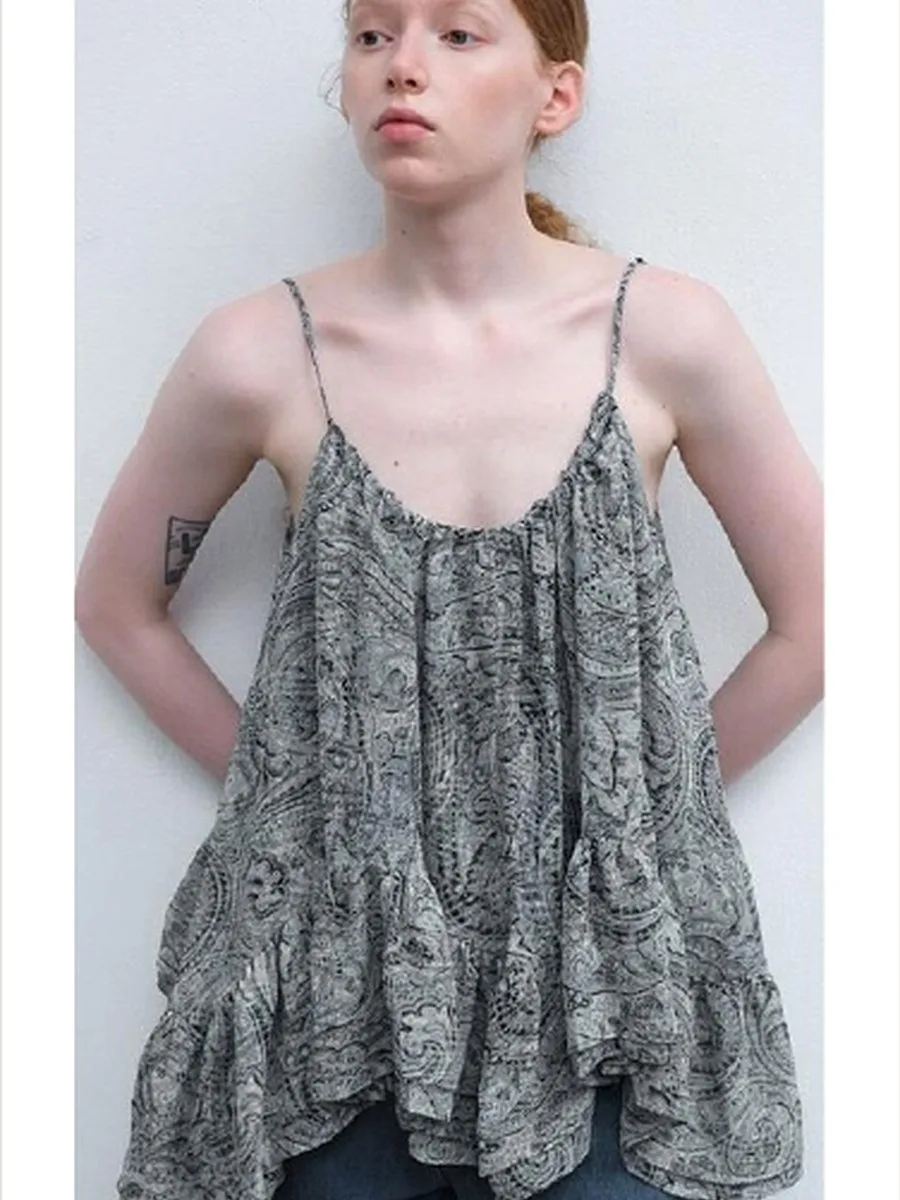
Separate garment reference: this skirt is not a matching set with the printed camisole pictured above. A co-ord brief must define the actual top, skirt, materials, colour match and selling unit together.
Coordinate Colour and Surface Appearance
Decide whether the pieces should look closely matched or deliberately coordinated in different tones or textures. Those are different design targets. Record the intended relationship in words and through identified material references. A shared colour name does not establish the visual result of the complete outfit. If the fabrics differ, the buyer should compare the actual pair under agreed conditions and decide what relationship is acceptable, rather than assuming that two items called black or champagne will appear identical together.
Identify material candidates and keep their stated composition separate from surface descriptions. A satin appearance does not prove silk content, and similar shine does not confirm that two components are interchangeable. Record which candidate is used in each sample. If one piece changes material, reopen the combined appearance review. The previous outfit approval described the earlier pair; it should not automatically extend to a new combination simply because the top or skirt retains the same style code.
Review the pieces together in the intended orientation and use. Observe colour and surface appearance in standing and other relevant views, noting the conditions. A swatch comparison can support initial selection but should not replace a garment-level review where the design depends on how the pair looks when worn. If the team uses photographs for discussion, identify their limitations and retain the actual references. Screen images can communicate a concern, but the approval record should state the evidence on which the decision rests.
The custom womenswear development route can be used to discuss material coordination with Yinshan Fashion. Send both garment briefs and the combined appearance target. Ask the factory to identify the material and colour assumptions in its response, including any proposed alternatives. Keep those assumptions connected to the quantity matrix. A material arrangement that suits the sample discussion still needs confirmation for the proposed order, and any later replacement should be checked against the accepted outfit relationship.
Review Waistline, Hem and Layering Relationships
The waist area is a shared design question even though the pieces have separate records. Show where the top hem is intended to sit relative to the skirt waistband and whether the top is tucked, loose or intended for both uses. Record the front, side and back relationship. A gap or overlap can be deliberate, but it should be defined rather than discovered accidentally after the garments are separately approved. The combined sample review gives the brand evidence about the actual outfit.
Agree the fitting setup, including the top's strap settings, skirt wearing position and relevant underlayers. Review the garments individually where appropriate, then together. A top that appears correct alone may interact differently with the waistband, while a skirt may sit differently from the reference used when the top length was chosen. Record these observations without assuming that either garment is necessarily defective. The issue may be a coordination decision that the original brief did not fully specify.
Observe the intended movements, such as sitting, returning to standing and moving the arms comfortably. Note what happens at the waist and whether either piece needs adjustment. Keep the review consensual and stop if it creates discomfort or unwanted exposure. These are practical sample observations, not a guarantee about every wearer or activity. If the brand wants a specific performance statement, it needs appropriate evidence beyond an informal fitting and should keep that requirement separate from the basic appearance review.
Use the custom skirt production guide for related lower-garment questions, while preserving the connection to the top. If the skirt waistband or the top length changes, identify which combined observations need to be repeated. Keep accepted individual details visible so the revision does not unnecessarily reopen every aspect of both garments. A useful comment states the observed relationship, the desired outcome and the pieces affected, giving the technical team a focused coordination problem to solve.
Build Size Allocations for the Real Sales Model
For fixed sets, show the number of customer units and the corresponding quantities of each component. If every unit contains one top and one skirt, the component totals should reconcile with the set total, subject to any separately stated samples or other agreed units. Do not mix those additional units into the customer allocation without explanation. The order sheet should make it possible to understand what is being purchased and packed, rather than relying on a single total that obscures the contents.
For selectable-size sets, record top and skirt sizes independently and define how the pair is assembled. The brand may fulfil the pairing later rather than asking the factory to prepack every combination. That operational choice needs to be stated. Do not assume that a top size distribution predicts the skirt distribution. Use the brand's own evidence or clearly labelled planning assumptions. If demand information is limited, show the uncertainty instead of presenting an invented ratio as a standard for women's coordinated outfits.
For separate sales, each garment has its own order allocation and inventory identity. The styling relationship can remain important without forcing equal quantities. A buyer may propose different numbers of tops and skirts based on its commercial plan, but should explain that plan when requesting a coordinated production response. Proposed quantities do not establish a supplier minimum or a production commitment. The factory should assess the actual breakdown by garment, colour and size, including shared-material assumptions and any acceptable alternatives.
Check the arithmetic whenever the sales model changes. A move from fixed sets to separate products can leave old packing quantities or identifiers behind if only the product-page copy is updated. Use a versioned allocation sheet and name the current one in the enquiry. The fashion product brief guide provides a wider handover framework; for co-ords, the critical addition is a visible reconciliation between customer units, garment units and the way those garments will be identified and received.
Approve the Pair without Hiding Individual Problems
Give each garment an individual review status and the outfit a combined status. A top may be accepted for fit while the skirt remains under revision; the pair may still need a colour or waistline review. One “approved set” field can conceal those differences. Record what each approval covers and what remains open. This allows the team to progress confirmed work while preventing a positive reaction to the overall appearance from being interpreted as acceptance of every detail in both garments.
Review each piece against its own measurements, construction and intended use. Then assess the combined relationship using the current versions. If the pieces are sold separately as well as together, define which independent uses the brand wants reviewed. The garment should not be described as suitable for every possible pairing based on one outfit test. The buyer's task is to identify the important uses and evidence required, while the technical team assesses the actual samples against those defined targets.
Keep comments attached to the correct record. A strap concern belongs to the top, a skirt closure concern belongs to the skirt, and an unwanted waist gap may belong to the combined outfit review. Cross-reference related issues rather than duplicating inconsistent instructions. If one revision affects the other garment, identify the dependency. This is especially useful when samples arrive at different times, because the team can see whether a photograph shows the current pair or an accepted piece combined with an earlier version.
Before approving the outfit, confirm that the photographs and comments refer to the same combination intended for release. A top from one colour sample and a skirt from another may be useful for a limited fit discussion, but should not be presented as the final colour approval. State such limitations explicitly. The accepted set record should name the two component versions, the review conditions and any remaining actions, creating a clear reference for production discussions, product imagery and future repeats.
Define Identification, Packing and Receiving Checks
Decide where identification belongs at garment and customer-unit level. The exact label, barcode and packing requirements depend on the brand's systems and destination instructions. The factory needs the buyer's approved information rather than an assumption based on another retailer's practices. For a fixed set, the outer unit should correspond to its defined contents. For separate products, each piece needs the appropriate independent identity. Where both models exist, explain how the receiving team distinguishes them without opening every unit and guessing.
Prepare a packing reference that names the top, skirt, colour and size pairing. Include any internal arrangement or protection requirements that the brand wants reviewed. Do not assume that one attractive package proves the system works for every size or combination. Check a representative packed unit against the current allocation and product record, and identify any additional variants requiring review. Packing approval should confirm both presentation and traceability, with commercial or technical questions returned to the responsible owner before release.
Reconcile packing quantities with garment quantities. If the order includes separately packed replacement pieces or samples, identify them outside the customer-unit totals. This is not a reason to invent extra allowances; it is a requirement to describe whatever has actually been agreed. The receiving team should be able to compare the documents with the shipment's intended structure. A set total alone does not explain how many tops and skirts are in mixed cartons or how independent items relate to prepacked sets.
Keep the product description consistent with the packing unit. A customer seeing a coordinated outfit should understand whether both pieces are included and whether size selection applies to one garment or both. Any styling item not supplied should remain outside the stated contents. Review the final images against the accepted component versions. The order may be technically well documented while the customer page still creates confusion if it shows one sales model and describes another.
Work Through a Simple Allocation Example
Consider a purely illustrative order plan for 120 fixed sets, each containing one top and one skirt in predetermined size pairings. The basic customer-unit requirement is therefore 120 tops and 120 skirts. These figures are arithmetic examples, not Yinshan Fashion minimum quantities, available inventory or a recommended order size. The point is to make the relationship between units explicit before considering colours, sizes, sample pieces or any separately agreed additional garments.
Suppose the brand changes the plan to sell the pieces independently and proposes 150 tops and 90 skirts. The garment total is still 240 pieces, but it is no longer 120 complete customer sets. The product records, packing instructions and receiving checks must reflect that change. If an old document continues to say “120 sets,” it describes contents that the revised allocation cannot supply. This is why a total piece count alone cannot validate a co-ord order, even when the arithmetic appears unchanged.
Now consider a selectable-size set assembled by the brand's fulfilment operation. The factory may be asked to pack tops and skirts independently, while the customer later buys one of each. That is a different receiving and inventory arrangement from prepacked fixed sets. The buyer should explain where pairing occurs and provide the relevant component allocations. The factory should not be asked to infer the process from the fact that the website will call the product a set.
At each change, issue a revised allocation sheet with a clear sales-model field, component totals and packing instructions. Ask the relevant teams to confirm the same version. Retain the old sheet as history but remove it from the active handover. This simple reconciliation catches an operational mismatch before it becomes a packing problem. It also gives a later reorder a dependable starting point, because the records show what was actually purchased and supplied rather than only the outfit name used in marketing.
Plan Reorders and Replacement Pieces Separately
An initial coordinated order does not establish that every later top or skirt can be supplied under identical conditions. Confirm current materials, colours, components and proposed quantities when discussing a repeat. If the brand requests only one piece, explain whether it must coordinate with existing stock of the other garment. That requirement is materially different from developing a new pair together. The factory needs the accepted references and the actual matching expectation before reviewing the enquiry.
Keep retained references and version records accessible. Identify the original material and colour references, accepted garment samples where available, key photographs and component details. A digital colour name alone may not be enough to discuss the desired relationship to existing stock. If a replacement material is proposed, state the difference and agree what evidence will support acceptance. Do not claim that a later batch is identical or guaranteed to match without the appropriate comparison and confirmation for the specific programme.
Distinguish a commercial reorder from a design revision. A new waistband, top length or strap arrangement creates a changed garment even if the outfit keeps the same marketing name. Identify which individual and combined approvals need review. If the brand wants to preserve compatibility with earlier stock, make that an explicit question rather than an assumption. The technical and commercial teams can then assess the requested scope and explain any conditions instead of treating the repeat as a routine copy of the first order.
Retain the reason for quantity changes as well. Independent sales may reveal different demand for the top and skirt, while fixed sets may produce a different allocation pattern. Use actual business evidence where available and label new assumptions honestly. The order plan should respond to that evidence without inventing a universal size or category ratio. A clear distinction between what the brand has observed and what it proposes helps the next production discussion focus on a realistic programme.
Send One Coordinated Production Handover
The final handover should contain the current top and skirt specifications, their linked outfit record, material and colour references, sample approvals, proposed quantities and packing model. Add the label and product-information requirements approved by the buyer's responsible team. List unresolved items with owners and the evidence needed to close them. The recipient should be able to identify the current pair and sales model without reconstructing the project from a long sequence of messages and attachments.
State what the next response should cover. It may be feasibility, material options, sample requirements, commercial assumptions or a release discussion after the details are settled. Do not treat a target arrival window as an already confirmed delivery commitment. Ask for programme-specific confirmation once the relevant inputs are available. If a decision changes, revise the affected component and combined records together. This prevents the appearance of a coordinated range from hiding an uncoordinated document set.
Before the brand releases the programme, check that the sample, specifications, product description and packing reference agree. Separate design approval from production authorization and identify who can issue each decision. For the garments, the key question is precise: what exactly has been accepted, for which pieces and under which conditions? A clear answer lets each team act on the same product decision while preserving the remaining technical and commercial boundaries.
To discuss going-out co-ord set production with Yinshan Fashion, send both garment briefs and the selling-unit plan. Include top and skirt references, intended colour relationship, size allocations, proposed quantities, packing requirements and the target arrival window. Identify whether customers buy fixed sets, select separate sizes or purchase independent pieces. That information turns a coordinated look into a reviewable programme, giving the sample and production discussion a clear pair of garments and an equally clear definition of what will be supplied.
Review sequence before the next sample
- Define the selling unit and pairing process.
- Create separate garment records and a linked outfit version.
- Review colour, waist relationship and independent fit.
- Reconcile quantities, packing and the current handover.
Occasionwear development checklist
Actions before the next sample
Use the current brief and the identified garment to close the next development decision.
Define one customer unit
Write exactly what is supplied and where size pairing occurs. Align the product page and packing instruction.
Track two garment versions
Give the top and skirt separate records, then identify the exact pair used for outfit approval.
Reconcile component totals
Check set units against top and skirt quantities after every allocation or sales-model change.
Buyer action and factory confirmation
Use these questions with the identified garment and current programme brief.
| Decision area | What the buyer should prepare | What to ask the factory |
|---|---|---|
| Sales model | Confirm fixed, selectable-size or separate-product selling. | What information is needed for the proposed packing model? |
| Garment identities | Supply separate top/skirt records and the combined reference. | Do all sample and component versions align? |
| Colour and outfit | Define the intended appearance and waist relationship. | Which complete sample comparison can support acceptance? |
| Allocation | Reconcile customer units with garment units by colour and size. | Which assumptions apply to the actual component quantities? |
| Packing and repeats | Provide identifiers, contents and future compatibility needs. | What must be reviewed for a changed or component-only repeat? |
Continue the production conversation
Compare three co-ord selling models
| Decision | Buyer direction | Record to retain |
|---|---|---|
| Fixed set | Customer receives a predetermined top and skirt pairing. | Set identity, component versions and fixed size/colour contents. |
| Selectable-size set | Customer chooses the top and skirt sizes under a defined pairing process. | Separate size allocations and a named point where pairing occurs. |
| Separate products | Top and skirt are bought and tracked independently. | Independent garment quantities, identifiers and product descriptions. |
| Combined appearance | Pieces may match closely or intentionally coordinate differently. | Accepted pair with identified materials and colour references. |
| Repeat component | A later order may request only one piece for existing stock. | Current availability and a specific review of the requested relationship. |
Buyer FAQs
What should going-out co-ord set production start with?
Going-out co-ord set production needs a clear selling unit before quantity and packing decisions are finalized. State whether the customer buys a fixed pair, selects sizes independently or buys separate products. Then connect that model to the top and skirt records, allocations and receiving instructions.
Must the top and skirt use the same size allocation?
No. Different top and skirt allocations can be proposed when the sales and fulfilment model supports them. The buyer must explain where pairing occurs and provide separate size allocations. Do not assume a fixed-set packing instruction supports every mixed-size customer choice.
Does using one fabric name guarantee a visual match?
Not necessarily. The brand can request closely matching or deliberately coordinated materials. Review the actual pair under agreed conditions and record the accepted relationship. Similar material names or colour labels do not establish that the finished pieces look the same together.
Should each garment have its own sample record?
Yes. Keep individual records and approvals for the top and skirt plus a combined outfit approval. This shows which piece or relationship remains open. A single set-level approval can conceal an unreviewed component, colour or waistline issue.
What needs checking before a repeat order?
A component-only repeat can be discussed, but current material, colour, quantities and construction need confirmation. If the new piece must coordinate with existing stock, provide the accepted references and state that requirement explicitly. Earlier production does not guarantee unchanged availability or automatic matching.