Article
What should buyers know first?
Short answer: A practical comparison for fashion brands, boutiques, and retail buyers choosing between a fashion manufacturer and a wholesale supplier, covering ready stock, private label, custom development, samples, quantities, packing, quality control, and repeat orders.
A fashion manufacturer and a wholesale supplier can both help a buyer obtain clothing. They do not usually solve the same problem. A wholesale supplier commonly offers ready-made styles from an existing range. A fashion manufacturer commonly develops or produces garments around the buyer's product brief, material direction, quantities, labels, packing, and approved sample.
The right route depends on what the brand needs to control. If you need goods quickly from an existing assortment, a wholesale supplier may be the practical choice. If you need your own fit, fabric, colour, branding, product details, and repeatable production record, a manufacturer is usually the better starting point. Many buyers need some mix of both at different stages of their business.
This guide is for fashion brands, boutiques, retailers, buying teams, and private-label businesses comparing a fashion manufacturer vs wholesale supplier. It explains the decision in B2B terms: product ownership, customisation, sample work, quantity planning, packing, quality control, and the information needed before a useful quote. It is not a claim that every supplier works in the same way. Always confirm the actual product scope, material route, timing, terms, and market requirements for your order.
What should buyers check about the short answer: choose the model that matches your product decision?
Choose a wholesale supplier when your main need is to buy an existing product assortment. The product, fabric route, construction, and often the size or colour options are already set. Your work is usually selection, quantity planning, pricing, sales channel, and delivery coordination. There may be limited branding or packaging options, but the starting point is a finished or repeatable supplier style.
Choose a fashion manufacturer when the garment itself is part of your brand decision. You may start with a sketch, reference garment, tech pack, mood board, or a specific commercial problem: a shirt with a particular drape, a dress with a changed fit block, a heavyweight streetwear tee, a soft lounge set, or a private-label capsule with your own labels and packing. The manufacturer then needs to turn that direction into material, pattern, sample, bulk, inspection, and delivery decisions.
The two paths are not better or worse. They have different risks. Wholesale can reduce product-development work, but may offer less control over distinction and repeatability. Manufacturing gives more control, but requires clearer buyer input and a more disciplined approval route before bulk production begins.
What should buyers check about ready stock starts with selection; manufacturing starts with a brief?
The first question to ask is simple: are you buying an existing garment, or are you building one? A wholesale supplier normally asks which styles, colours, sizes, packs, and quantities you want from its available range. A manufacturer asks what the product should become and which parts are fixed or open for advice.
For a manufacturing project, the buyer should provide a real product picture. This can be a tech pack, a reference sample, front and back images, measurements, a target fabric direction, colourways, logo position, label plan, packing expectation, target market, quantities, and timing. Some items can remain open. The important thing is to identify them. A buyer may be fixed on a soft handfeel but open to fabric composition. Another may be fixed on a dress silhouette but open to the button route. Those are useful production conversations.
For wholesale, the buyer still needs to be clear about the sales channel. A boutique order, e-commerce order, marketplace programme, and retailer delivery can have different expectations for size assortments, barcodes, individual bags, outer cartons, product information, and receiving rules. Ready-made goods do not remove those operational decisions.
When a wholesale supplier can be the better fit?
Wholesale is usually worth considering when speed of assortment selection matters more than product originality. A buyer may need a small shop edit, a test assortment, a seasonal gap-fill, or products for which the existing fit and construction are acceptable. The buyer is often choosing from available styles rather than funding a new development route.
This can reduce the number of approvals. There may be no need to build a first pattern or refine a fit sample if the supplier's product is already accepted. The commercial work shifts toward available stock, colour availability, size packs, purchase quantity, pricing, retailer requirements, packaging, and delivery terms.
There are still checks to make. Ask what can and cannot be changed. Can the product carry your label? Can it be packed for your channel? Is colour availability confirmed for the order? Is the supplier quoting current stock, a repeat production run, or a conditional future delivery? Does the product information suit the market where you will sell it? A wholesale price is only comparable when the product and delivery assumptions are clear.
When a fashion manufacturer is the better fit?
A fashion manufacturer is more useful when your collection needs a recognisable product point of view. That may be a particular fit, proportion, fabric, wash, colour, print, embroidery, trim package, label system, or retail presentation. It may also be a product you plan to reorder and improve rather than buy once from an open catalogue.
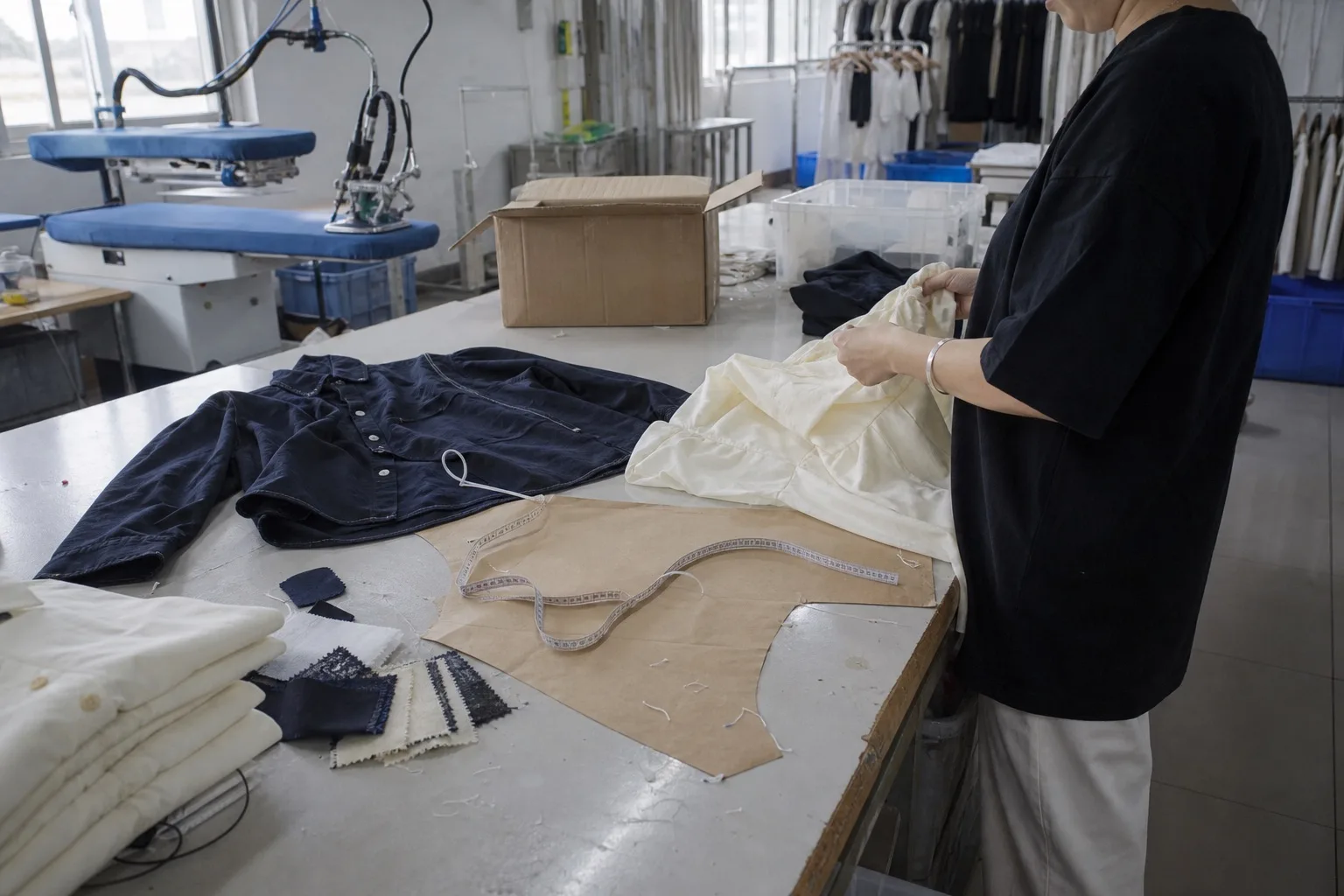
The buyer should expect more development questions. The factory may need to review construction, fabric behaviour, measurements, grading, colour, decoration, trims, care direction, labels, folding, cartons, sample objective, and bulk quantity. These questions are not unnecessary delay. They help turn a design intention into a standard that can be sampled, quoted, checked, packed, and repeated.
Yinshan Fashion's practical focus is custom and private-label fashion manufacturing. Buyers can use fashion product programs to define a category direction before development: casual fashion, active fashion, streetwear, or loungewear. The product page is a starting reference, not a ready-stock promise. The useful next step is to connect a product direction to the buyer's own fabric, fit, branding, quantity, and market plan.
How should buyers compare the quote scope, not only the number?
Two quotations can look similar while covering different products. One may assume a lighter fabric, simple construction, buyer-supplied labels, and standard folding. Another may include a different material route, sample work, custom labels, print, individual packing, carton marks, or a more detailed quality path. Neither number can be judged fairly until the scope is visible.
Ask a wholesale supplier to state the exact style, colour, size pack, stock or production assumption, packaging, product information, delivery terms, and any branding limitation. Ask a manufacturer to show the expected material and trim assumptions, sample scope, quantity scenario, private-label components, decoration, packing, shipping responsibility where relevant, and the questions that still prevent a confirmed bulk price.
This is especially important for a buyer moving from an existing product to a custom version. A blouse bought from a wholesale range may be a useful visual reference. A custom blouse can have different fabric opacity, collar shape, sleeve volume, buttons, seam finish, size block, label location, packaging, and unit cost. The product may look related, but it is not automatically the same production route.
How should buyers use product categories to make the decision concrete?
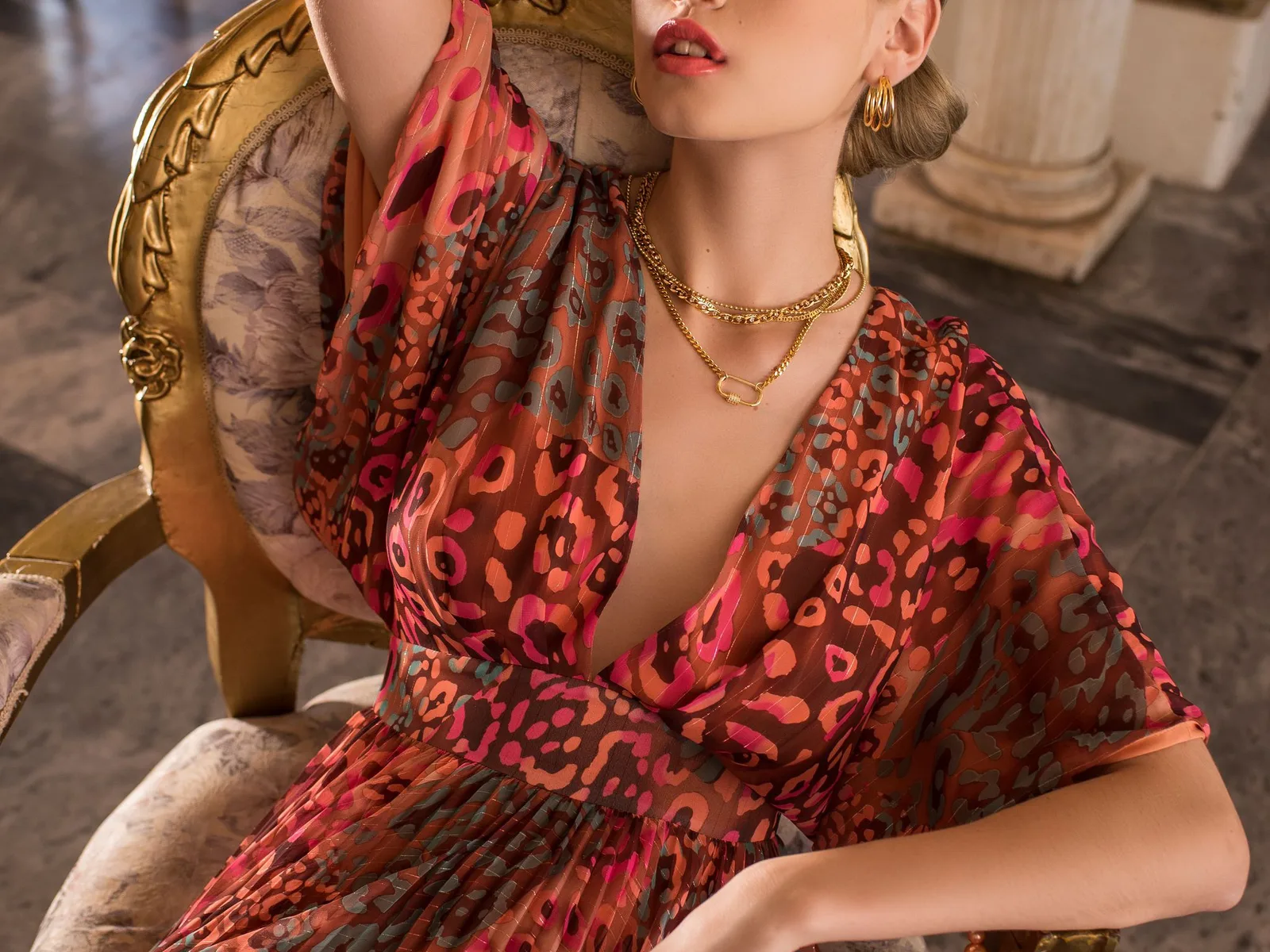
Do not compare suppliers using the word “fashion” alone. Compare them against the product you actually plan to sell. A boutique developing a women’s daywear edit may begin with Casual Fashion and use the Shirt Series Collection 2026 or Fashion Dress Collection 2026 to discuss silhouette, drape, closures, print direction, labels, and packing. The collection references make the buyer's brief more specific; they do not require copying a listed style.
The same logic applies to other categories. A brand planning washed graphic tops or heavyweight layers should discuss the actual fabric, wash, print, and finishing direction against the Streetwear Fashion programme. A sleepwear, robe, or comfort collection should account for handfeel, shrinkage, skin comfort, folding, and presentation through the Loungewear programme. Category context helps the factory ask better questions before it tries to price a generic garment.
Product links should therefore serve the reader. They are useful where the article explains a product example or a buying decision. They are not useful when placed repeatedly with no connection to the paragraph.
What should buyers check about private label changes the decision beyond the garment?
Private label sits between a basic product purchase and a fully custom collection. The buyer may use an existing garment platform, a supplier style, or a straightforward construction, but still needs their own neck labels, size labels, care information, hangtags, barcode, logo application, folding, bags, boxes, carton marks, or retailer-specific packing. Those details affect materials, approvals, cost, final inspection, and the way the product reaches a customer.
If private label is central to your offer, start with the private-label clothing programme rather than assuming a stock garment can simply receive a logo at the end. Decide early which elements are fixed, who supplies artwork, where labels sit, what the customer will see first, and what must be checked before cartons are released. A clear private-label file also makes future reorders more reliable.
How should buyers ask seven questions before choosing your route?
The choice becomes clearer when the questions are commercial rather than theoretical. Do you need existing stock, or a product made to your brief? Is a supplier’s fit and fabric acceptable, or do you need control over both? Is private label limited to a hangtag, or does it include product labels, decoration, barcodes, and packing? Which quantity is realistic by style, colour, and size? What will the retailer, warehouse, or online customer require? Who approves the sample and product information? What needs to stay consistent on a reorder?
If the answers are mostly about selecting available styles, wholesale may fit. If they are about creating, approving, and controlling your own product standard, a manufacturer is likely the more relevant partner. Some buyers use wholesale for short-term assortment needs and manufacturing for their own core line. The important part is not the label on the supplier. It is whether the product and process support the brand plan.
How should buyers build one comparison file before you compare offers?
The easiest way to create confusion is to send a different question to every supplier. One factory receives a tech pack, another sees a mood board, and a wholesale contact receives only a product name and a target price. The replies may all look like quotes, but they do not describe the same purchase. Build one short comparison file and send the relevant version to each potential partner.
For an existing wholesale route, list the exact supplier style, available colour, size pack, units, label option, packing requirement, destination, and requested delivery term. For a custom manufacturing route, include the reference images or technical file, must-have construction, fabric direction, colours, size plan, sample need, private-label details, packing, market, and decision timeline. If a point is not fixed, mark it as open and ask the supplier for a practical option rather than letting each party assume something different.
Keep the answers beside the original question. Did the supplier confirm the material? Is the price based on an available item, a sample, or bulk? Are labels and barcode included? Which packaging route is assumed? Does the response identify an issue with colour, size ratio, trim, or delivery? This record makes an honest comparison possible. It also shows whether a supplier is responding to the product you need or simply offering the fastest number it can provide.
For a fuller buyer template, use the fashion apparel RFQ guide. It helps connect product, material, quantity, labels, packing, market, and timing before a custom quote is requested.
How should buyers decide who owns each product decision?
The supplier model also changes who makes each decision. With an existing wholesale assortment, the supplier has usually already decided the basic fit block, fabric source, construction route, grading logic, and initial colour range. The buyer's work is to confirm whether those decisions suit the customer, the retail position, and the channel. It is still sensible to ask which decisions are fixed and which are optional, but the commercial advantage of wholesale comes from accepting more of the existing product standard.
With a manufacturer, the buyer does not need to arrive with every technical answer. The buyer does need to identify the priorities. A fashion founder may own the silhouette, target customer, visual reference, retail level, and must-have details. The factory may advise on fabric availability, pattern feasibility, seam route, trim options, sampling stages, practical quantity scenarios, and production controls. A clear division of responsibility prevents two common failures: a buyer assumes the factory has understood an unspoken design choice, or a factory assumes a buyer will accept a convenience-led substitute that changes the product.
Write down ownership for the decisions that matter most. For example, the buyer may approve the reference sample, fit, colour direction, artwork, labels, packing, and commercial launch decision. The factory may confirm fabric and trim availability, sample feasibility, production route, quality checkpoints, and any risk that needs an approval before bulk. If a buying office, retailer, freight partner, or compliance team is involved, identify what information they must approve too. This does not create bureaucracy. It creates one readable path from product idea to finished cartons.
The decision record should also identify what is deliberately open. A buyer may be open to two suitable fabric options, but fixed on opacity and drape. A retailer may accept two carton configurations, but fixed on barcode data and assortment labelling. Marking those boundaries gives the factory room to offer a practical alternative without changing the product by accident.
How should buyers plan time by approvals, not only by delivery date?
Wholesale and manufacturing are often compared as if one is fast and the other is slow. In practice, timing depends on what has already been decided. An available wholesale style can remove development work, but the buyer may still need confirmation of available colours, size packs, permitted branding, product information, packaging, delivery terms, and channel requirements. A custom route adds development and sample approvals, but it can reduce later rework when the brand needs a product that fits its own range and can be repeated consistently.
Build the calendar backward from the date when goods are needed, then identify the decisions that must happen before each stage. For a custom product, those usually include the brief, material direction, sample purpose, fit comments, any revision, final approval, bulk materials, labels, packing, in-line checks, final inspection, and shipment preparation. For an available wholesale route, the checkpoints may instead focus on style selection, stock or repeat-production assumption, colour and size allocation, branding permission, product information, packing, and delivery coordination.
Do not use a generic lead-time promise as a substitute for this plan. A small change can create its own approval path: a custom colour, embroidery, revised label, retailer barcode, different carton rule, new market language, or changed size ratio may require review even when the garment itself is familiar. The useful supplier response is not simply a date. It explains which assumptions make the date possible and which unanswered item could move it.
How should buyers use a two-route comparison before you commit?
When both routes are possible, compare them against the same product decision rather than asking one supplier for an available garment and another for a vague custom quote. Create two short columns. The wholesale column should record the exact available style, colour, size pack, stock or production assumption, permitted changes, product information, packing, and delivery terms. The manufacturing column should record the product brief, material route, sample scope, quantity split, private-label elements, packing, quality path, and open assumptions.
Then ask what the brand gains and gives up in each route. Wholesale may reduce development work and help fill a short-term assortment gap. Manufacturing may give the brand more control over fit, materials, construction, brand presentation, and repeat-order records. Neither answer is automatically more commercial. A short-run boutique edit may work well from an existing range, while a core blouse, dress, jersey top, or branded capsule may deserve its own approved production standard.
The comparison should end with an operational decision, not an abstract preference. Choose the route that gives the buying team a product standard it can sell, receive, explain, and repeat. Keep the comparison file with the selected quotation. It becomes useful evidence if a product detail, packing assumption, or replenishment request is questioned later.
What should buyers check about match the supplier conversation to the decision you need?
The quality of the first enquiry often determines whether the replies can be compared. A supplier cannot give a meaningful answer to “What is your best price for a blouse?” when one buyer means an existing style in an available colour and another means a new blouse with a changed collar, fabric, label set, and retail pack. Use the enquiry to name the decision you need to make: choose an available assortment, test a private-label adaptation, develop a recognisable core product, or plan a repeatable seasonal programme.
For wholesale, ask for the exact supplier style reference, colour availability, size pack, units, branding limitations, product information, packing assumption, and delivery basis. For manufacturing, give a product brief and ask the factory to identify what needs review before a confirmed bulk route is possible. Useful questions include which material or trim assumption is provisional, whether a sample is needed to settle fit or construction, what the quantity split changes, and which label or packing component still needs approved artwork.
This approach lets a buyer compare communication as well as price. A practical supplier response identifies the product it is discussing, the evidence behind the commercial answer, and the remaining decision points. A reply that avoids product questions may be fast, but it does not necessarily describe the garment or delivery route the buyer needs. Keep the enquiry and response together with the quotation so the sourcing team can trace what was actually offered.
How should buyers keep the record if you want to reorder?
A custom bulk programme gains value after the first order. Keep the approved sample, fabric reference, colour direction, measurements, trim codes, label artwork, packing file, quality comments, and changes from the first run. These records help the next order start with evidence instead of memory.
Yinshan Fashion can review a fashion product brief for custom or private-label development, including category direction, fabric and trims, sample work, bulk planning, QC, labels, packing, and export preparation. Send your reference images, product category, target market, quantity plan, size range, colour plan, branding, packing needs, and target delivery window for a practical discussion.
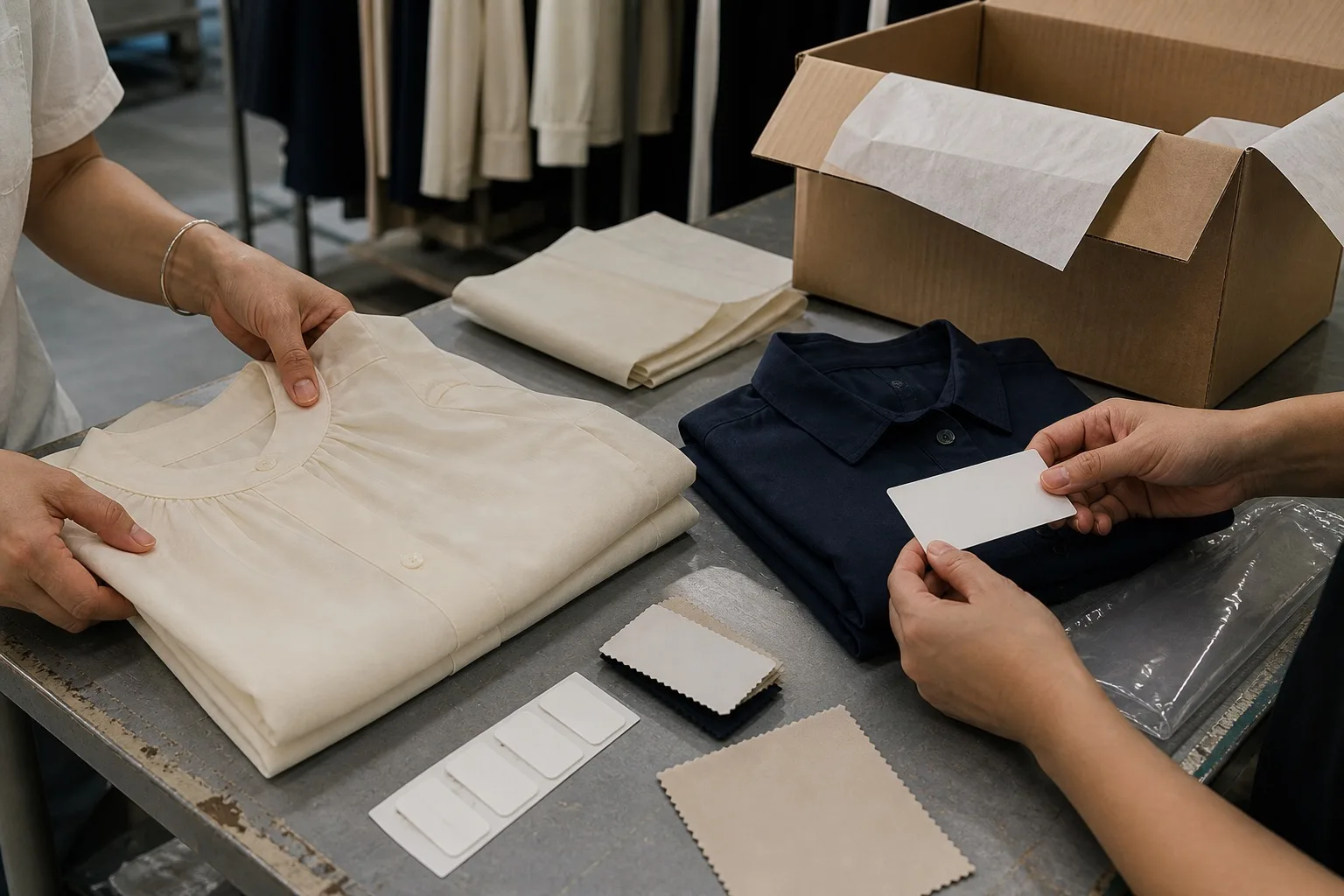
Choose the sourcing model
Five checks before you treat manufacturing and wholesale as the same purchase route
The useful choice is not about a supplier label. It is about whether the buyer accepts an existing product, or needs to define and control the garment, materials, branding, packing, quality path, and repeat-order record.
Name the product route
State whether you are selecting an available item or building a garment to your own brief. This tells the supplier whether to discuss assortment choice or development, samples, and bulk controls.
Compare the complete scope
Check fabric, construction, colours, size packs, sample work, labels, barcode, packing, quality, delivery responsibility, and the open assumptions behind a quoted number.
Use a product reference
A relevant product collection helps a buyer explain silhouette, material, finish, and presentation. It should support a brief, not replace the buyer’s own approval standard.
Fashion manufacturer or wholesale supplier decision checklist
Use this before requesting prices. It makes the buying model, product standard, retail presentation, and remaining decisions visible; it does not replace a final purchase agreement or market-compliance review.
| Decision area | What the buyer should prepare | What to ask the factory |
|---|---|---|
| Existing style or custom product | Confirm whether an available supplier style is acceptable, or provide the reference images, technical details, fit, fabric, construction, colour, and product changes that make the programme your own. | Is this a selection from an existing assortment, a modification of an existing platform, or a development and production route that needs sample approval before bulk? |
| Quantity and assortment | Share expected units by style and colour, size range or ratio, product mix, sales channel, sample need, replenishment plan, and any quantity scenarios still under review. | Which stock, material, trim, colour, size-pack, production, packing, and price assumptions apply to each proposed order scenario? |
| Fabric and construction | State the desired handfeel, weight, drape, stretch, opacity, wash, print, embroidery, trims, inside finish, and the points that cannot drift from the approved product direction. | Which material, construction, finishing, sample, and quality points must be confirmed before the factory can quote or release bulk production? |
| Private label and retail packing | List labels, care information, hangtags, logo application, barcode, size sticker, fold, bag or box, tissue, carton marks, retailer instructions, and target market requirements. | Which artwork, component, packing file, approval, and final-inspection check is needed before branded goods can be packed and shipped? |
| Repeat-order record | Keep the approved sample, material and colour reference, measurements, trim codes, labels, packing instructions, QC notes, and confirmed changes from the first order. | What record will identify the approved product and distinguish a routine reorder from a new colour, product, packing, or quality route? |
Continue the production conversation
Fashion manufacturer vs wholesale supplier: buyer comparison
| Decision point | Wholesale supplier | Fashion manufacturer |
|---|---|---|
| Starting point | An existing assortment, available style, or supplier product range. | A buyer brief, reference sample, sketch, tech pack, or defined product problem. |
| Product control | The core fit, construction, and material route are typically set before the buyer selects the item. | The buyer and factory define the fit, construction, material, colour, trim, decoration, and approved production standard. |
| Branding and packing | Options may be limited to the supplier’s permitted labels, tags, packs, and available order route. | Labels, hangtags, care information, barcode, folding, bags, boxes, cartons, and retailer instructions can be planned with the product. |
| Buyer preparation | Style choice, quantities, colours, sizes, sales channel, product information, packing, and delivery requirements. | Product references, specifications, fabric and colour direction, quantities, labels, packing, target market, sample plan, and approval path. |
| Quotation check | Confirm exact style, stock or production assumption, colour, size pack, packing, delivery terms, and any branding limit. | Confirm material, trim, sample, quantity, decoration, private-label, packing, quality, shipping, and open assumptions. |
| Best fit | A buyer who accepts an existing product and needs an assortment or a fast commercial option. | A buyer who needs a distinct product, private label, controlled sample route, and repeatable production record. |
Buyer FAQs
What is the difference between a fashion manufacturer and a wholesale supplier?
A wholesale supplier commonly sells existing styles from an available assortment, while a fashion manufacturer commonly develops or produces garments around a buyer’s brief, sample, fabric direction, quantities, private-label details, packing, and production approvals. Actual supplier scope varies, so confirm the product and quote assumptions before ordering.
Is Yinshan Fashion an in-stock fashion apparel wholesaler?
Yinshan Fashion focuses on custom and private-label fashion manufacturing. Product collections can help a buyer discuss category direction, but a production programme still needs the buyer’s product, material, quantity, branding, packing, market, and timing requirements before the route can be confirmed.
What information is needed for a custom wholesale apparel quote?
Send product images or a tech pack, the category and construction direction, fabric and colour preference, quantity by style and colour, size range or ratio, labels and decoration, packing, target market, requested sample route, delivery window, and the commercial decision you need the quote to support.
Can a boutique work with a fashion manufacturer?
Yes, when the boutique needs its own product direction or private-label presentation and can provide a realistic order plan. The factory will need to review style complexity, material and trim availability, colour count, size range, quantities, labels, packing, approvals, and timing before recommending a route.