Article
What should buyers know first?
Short answer: A buyer-led ecommerce dress supplier guide for turning fit, size depth, photography, product data, packing and return signals into a controlled custom-production brief.
An ecommerce dress supplier should help a brand turn a visual dress idea into a sellable product record, not merely make a sample that photographs well. A dress sold online carries linked decisions about fit, size depth, fabric behavior, product photography, listing information, individual packing, warehouse handover and the signals that may appear after customers receive it. Yinshan Fashion supports custom and private-label bulk programmes rather than unrestricted ready-stock wholesale, so every recommendation needs to be tied to the actual style, channel and order scope.
Direct answer: choose a clear customer and wear occasion, define the silhouette and measurement priorities, build a deliberate size and colour plan, use samples to answer specific fit and photography questions, and keep the approved product record connected to listing, packing and return-review work. A factory can help assess a defined dress, material, sample and production question. The brand remains responsible for pricing, promotions, channel rules, customer communication and the final commercial decision.
What should an ecommerce dress supplier help a brand decide?
An ecommerce dress supplier conversation should begin with the buying decision, not with a broad request for a fashionable dress. Is the brand testing a relaxed shirt dress for its own site, a fitted occasion style for a marketplace, a private-label summer capsule, or an extension of an established size block? The answers affect fabric, construction, fit checks, photography, colour depth, labels, packing and the evidence needed before a first bulk order.
The supplier can help translate a defined product brief into sample and manufacturing questions. It cannot decide whether the brand’s list price will be accepted, whether a promotion will work, whether a marketplace will approve a listing, or what future return rate a style will have. Keep those commercial decisions with the named brand owner. This separation matters because an online dress can be technically well made and still be unsuitable for a particular price, customer expectation or channel presentation.
Start with one product record for each style-colour route. It should identify the style name, target wearer, use occasion, silhouette, intended sample size, fabric direction, construction points, size range, colour plan, visual references, label and packing direction, intended channel and open decisions. A dress collection can help a buyer frame category-specific questions, but it does not prove that a particular fabric, fit, price or production route is suitable for every ecommerce programme.
How should a brand define the customer and occasion before buying dresses?
“Women aged 25 to 40” is too broad to guide a garment. A useful brief describes how the customer is expected to wear the dress: workday layering, holiday travel, a casual event, an evening occasion, maternity-friendly styling, warm-weather use or a particular brand wardrobe story. It also identifies the presentation conditions that affect the sale, such as expected coverage, length impression, sleeve behavior, footwear styling, climate or the need to explain lining and transparency on the product page.
The buyer should separate a merchandising objective from a measurable product instruction. “Premium and flattering” does not tell a pattern team where the waist should sit, how a neckline should behave during movement or whether a skirt needs ease. Convert the intent into observable questions: Does the waist seam align with the intended body point? Is the back neckline stable during reach? Does the skirt clear the hip when walking? Is a pale colour transparent under ordinary styling? Can the customer understand the intended ease from the size and photography information?
This customer definition also guides the size plan. A brand may have its own customer measurements, historical orders or fit feedback. Those inputs are valuable, but they should not be treated as a universal sizing rule. Name the base size, intended size range, measurement points that control the style and any known fit issue to test. The dress sample fit checklist explains the garment-level review; this guide uses that evidence to plan an ecommerce buying and launch decision.
Which dress silhouette decisions create ecommerce risk?
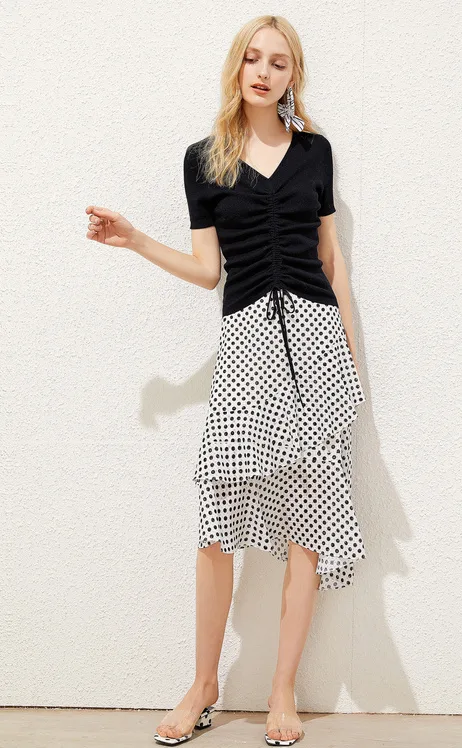
Different silhouettes create different online buying questions. A close-fitting woven bodice may require attention to bust, waist, closure and movement. A shirt dress may need a decision on shoulder placement, placket behavior, belt position and coverage. A slip dress may depend on opacity, bias movement and underlayer guidance. A voluminous sleeve or gathered skirt can change the apparent proportion between flat measurements and worn photographs. A knit dress may depend on recovery and the relationship between body fit and size communication.
Do not solve every dress with the same size-chart language. Identify the points that could change a customer’s experience: bust, waist, hip, body length, sleeve opening, armhole, neckline, skirt sweep, lining, closure and intended ease. Decide which of those are fixed design requirements, which are sample questions and which must be explained on the product page. The best evidence may be an approved sample, measured garment, fit session, material comparison or a defined photography view, not an assumption based on a reference image.
For a broader womenswear route, the custom womenswear manufacturer solution is relevant when a brand needs to connect a dress programme with fabric, pattern, sampling, labels and production coordination. It should be used as a starting framework, not as a guarantee of a particular result, material availability or timing.
How should buyers plan a size depth for an online dress launch?
Size depth is a commercial and product decision. First decide which sizes the brand intends to offer, why those sizes are relevant to its customer and what evidence supports the starting range. Then identify whether the dress requires extra attention at particular points. A defined waist, non-stretch woven, close-fitting armhole, long sleeve, unusual hem length, bodycon knit or narrow closure can behave differently across sizes even when a base sample looks convincing.
Ask whether a size set is needed to answer a named risk rather than treating it as a routine badge. The question might be whether a waist placement remains intentional, whether a neckline is stable, whether a lining follows the shell without pulling, whether the skirt retains the desired volume or whether the grade keeps a proportion coherent. A sample size and its measurement chart do not automatically prove every size. Conversely, a brand should not promise customers a particular fit outcome merely because a chart exists.
Keep size names, garment measurements, fit notes and any shopper-facing guidance consistent. If the brand says a dress is intended to fit relaxed, the image, size chart and product copy should not imply a close body fit. If the fabric has stretch or recovery characteristics that affect the shopper’s choice, describe the tested product evidence carefully and avoid turning a generic fibre claim into a universal comfort promise. The ecommerce team owns the final wording, while the factory can review the identified garment and sample record.
What should a first-order dress assortment include?
An assortment is not simply the maximum number of styles, colours and sizes a brand can imagine. It is a set of choices that the brand can photograph, list, receive, support and learn from. Begin with the customer occasion and decide which silhouette roles matter: perhaps a proven core shape, one trend-led shape, a more relaxed option and a dress with a different fabric or styling purpose. Make the distinction visible so a later reorder discussion can identify what was actually tested.
For each style, set a colour and size matrix that reflects the intended product story. A dramatic print, pale colour, dark solid and seasonal accent can have different photography, opacity, component, packing or content needs. Avoid carrying a colour or size into the first order merely because it appeared in a mood board. A colourway may need a swatch, strike-off, sample image, lining review or clearer product-page explanation before it becomes a sellable option.
Record the commercial hypotheses separately from factory facts. The brand may test an expected price position or campaign idea, but a planned list price is not collected revenue and a projected sales split is not proof of demand. Likewise, a factory discussion about a style does not confirm final capacity, cost, material route, delivery window or repeat availability. The small-batch clothing manufacturer solution can frame a flexible development discussion, while each actual programme still needs its own quote, sample evidence and agreed production scope.
How should fabric and lining choices be assessed for online dress sales?
Fabric is visible in a product image, but it also affects drape, fit, opacity, stretch, care, wrinkle behavior, seam appearance, lining relationship and how a customer interprets the dress after delivery. Start by naming what the fabric needs to do for the silhouette. Does a skirt need fluid movement, controlled volume or body-skimming drape? Does a bodice need shape retention? Does a sleeve need crispness? Is a light colour expected to need a lining or a specific construction approach? These are questions for the actual material and sample, not assumptions based on a fibre name.
Review material on the constructed garment wherever possible. A swatch can be useful for colour, handfeel or surface direction, but it does not establish the full dress behavior at neckline, armhole, waist, seams, closure or hem. Include the relevant fabric, lining, trim and sample version in the record so photography, fit comments and product copy are referring to the same product. If a material changes, reopen the limited questions it can affect rather than silently carrying forward earlier approval.
The dress fabric sourcing and fit guide offers a deeper material-and-fit framework. For ecommerce buying, add the questions a shopper cannot answer from a fabric name alone: how the garment reads in motion, what a close image should show, whether lining is relevant to the buying decision and which care or coverage details need clear, reviewed product information.
What should a photography sample prove before a dress goes live?
A photography sample is not automatically a bulk approval sample. State what the sample is intended to prove: colour presentation, silhouette, styling, garment details, size communication, close-up fabric view, lining, closure, fit on the selected model or product-page assets. If a sample is being used for more than one purpose, record which purpose is supported and which still requires separate review.
Plan the views that remove a buying ambiguity. A front-only image may not explain back closure, sleeve volume, side fit, hem movement, lining, neck depth or print placement. A close-up may help the customer see surface and construction, but it should not make an unverified material-performance claim. The brand should decide its visual language, model selection and channel content. The factory can assist with the defined sample and production evidence that supports the garment discussion.
Keep styling details traceable. If a belt, underlayer, pinning or styling adjustment changes the apparent fit, ensure the ecommerce team knows whether it belongs to the garment, the model styling or the image. This prevents a customer from interpreting a styled photograph as an inherent product feature. Before a listing is published, compare the photography sample, current product record, size chart and product description for contradictions.
How should a product page explain fit without making unsupported promises?
Useful dress copy names the product facts a shopper needs to make a considered choice. Depending on the evidence available, that may include the silhouette, intended fit, garment length, closure, lining, fabric construction, stretch direction, key measurements, size range, care direction and a note that the model styling is illustrative. Do not write “fits every body perfectly,” “no returns,” “non-see-through” or other broad claims unless the brand has appropriate, current evidence and accepts responsibility for the statement.
Align the listing with the approved version. If the garment’s fabric, lining, length or closure changes after photography, identify whether images, size guidance, care details or fit descriptions need review. A product page is a customer-facing record, not a place to hide an open development question. The ecommerce apparel product data pack is useful for assigning image, measurement, material, label and packing data to the owner who must keep the listing current.
The buyer should also determine the channel rules that apply to the route. Direct stores, marketplaces, retailers and social commerce can require different variant data, care information, barcode, packaging, return handling or image fields. Do not assume a marketplace field or fulfilment charge carries over to another channel. Those are operational and commercial inputs owned by the brand and the named service providers.
How should packing and warehouse inputs connect to a dress programme?
Packing is part of the product handover. A lightweight slip dress, lined occasion dress and structured shirt dress may need different attention to folding, hanger route, protective materials, size identification, barcode, polybag, tissue, carton marks or warehouse instructions. The buyer should provide the approved packing direction, receiving requirements and product identifiers that apply to the route. A factory can review how those supplied requirements relate to the garment and packing record for the programme.
Keep the garment, listing and warehouse identities consistent. The same style-colour-size combination should not have one name in product photography, another on a label and a third in the warehouse file. Where a correction is needed, record the version, owner and effective scope. A generic packing instruction from a prior order is not proof that it covers the current dress, channel or receiving destination.
The fashion product launch readiness checklist connects product data, sample, labels, packing, receiving and release controls. Use it after the dress buying plan is set to identify whether a physical or digital dependency would block a particular channel launch.
How should brands interpret early return or customer-service signals?
Return counts, reviews and customer-service messages can point to an issue worth reviewing, but they do not prove a factory cause or establish a fixed future rate. Read the signal with the context that matters: the style, colour, size, channel, product-page wording, photography, fulfilment history, customer reason, observed garment evidence and time period. A return tagged “too small” may relate to measurement, intended fit, a customer expectation, size guidance, styling, channel choice or an isolated case. It needs more than one dashboard total before it becomes a production conclusion.
Create a small review record. Separate what customers reported, what the team observed, what product version was sold, which units or evidence were checked and what decision is required. Possible actions might include reviewing product copy, checking size-chart clarity, comparing the returned item with the current sample record, checking packing or fulfilment evidence, requesting a defined factory review or deciding that no product change is supported yet. This protects both the buyer and supplier from treating a commercial outcome as an automatic technical finding.
Use the apparel return reason analysis guide for the discipline of turning signals into a controlled action. The goal is not to eliminate every return through a supplier claim. It is to understand which questions belong to product, listing, fulfilment, customer service or future development.
What should a reorder decision review for an ecommerce dress?
A reorder should begin with the exact product record that was sold. Confirm style, colour, size range, material and trim direction, sample or bulk version, labels, packing, listing evidence and any approved exceptions. Then review what changed: customer feedback, inventory state, channel performance, new material direction, design revision, price plan or handling requirement. Do not assume that a repeat order is identical because the title or product photo is similar.
Separate a repeat of the approved scope from a revised programme. A new colour, changed fabric, added size, different closure, updated label, revised packing or different selling channel can reopen specific decisions. The brand decides whether the commercial case supports a reorder. Yinshan Fashion can discuss the garment, sample, material, pattern, label, packing and production-record questions that the defined repeat raises.
Keep timing as a planning input rather than a promise. Material availability, approvals, capacity, logistics, channel preparation and other third-party events can vary. A useful reorder record identifies the desired window, known dependencies, current evidence and the person who can decide whether the route is ready, conditional or on hold.
What should a buyer send an ecommerce dress supplier before sampling or quoting?
Send the strongest available product context: reference images or a retained garment, target customer and occasion, silhouette, intended fit, base size and proposed size range, fabric behavior, colours or prints, construction priorities, labels, packing, intended sales channel, quantity context, target market, sample purpose and the questions that are still open. Include what must not change and what the buyer is prepared to evaluate with factory input.
For a first conversation, the package does not need to be perfect. It needs to be honest about evidence and uncertainty. A clear product brief lets a supplier identify whether the next useful step is a material comparison, pattern discussion, sample, measurement review, packing clarification or another controlled proof. It also keeps the brand from treating a reference image or proposed price as a complete production instruction.
How should a brand make the ready, conditional or hold decision?
Use a named decision owner and a written scope. “Ready” means the stated style, colour, sizes, product information, packing direction and channel scope have the evidence needed for the brand’s current decision. “Conditional” means a defined proof or control remains open. “Hold” means the available record does not support the planned launch or production action. A spreadsheet total, supplier message or attractive photography sample cannot make that decision alone.
Before deciding, compare the current sample, product-page draft, size guidance, images, label and packing instruction against the same style-colour-size scope. Name anything that is proposed, unreviewed or dependent on another owner. This short comparison can prevent a product team from publishing an image from one version, a measurement from another and a warehouse instruction from a third. It also gives a small brand a practical moment to narrow a launch or request a further proof rather than treating a partial record as an all-channel approval.
The record should name the product version, evidence reviewed, open conditions, decision owner and next review trigger. That makes the guide useful to a small brand without pretending that one factory process or one chart can remove all commercial risk. It also gives Yinshan Fashion a clear custom-production question to review when the buyer is ready to discuss a dress programme.
Ecommerce dress buying kit
Three controls before a dress becomes an online product listing
Keep the customer promise, approved garment evidence and channel record connected before a dress is sold online.
Define the buyer promise
Set the customer, occasion, silhouette, fit language and channel context before a sample is treated as a sales product.
Test the size evidence
Name the base size, critical measurements, intended ease and the question each sample or size-set check must answer.
Release the current record
Keep photography, product data, labels, packing and warehouse instructions tied to the approved version.
Buyer inputs and factory questions for an ecommerce dress programme
Pricing, promotions, channel policies, customer communication and final commercial approval remain with the brand.
| Decision area | What the buyer should prepare | What to ask the factory |
|---|---|---|
| Customer and style | Provide the intended wearer, occasion, silhouette, channel and reference images. | Which product record and sample purpose define the current dress? |
| Fit and sizes | Name base size, size range, measurement priorities, intended ease and open fit questions. | Which fit or grading point needs an applied sample or size-set review? |
| Material and presentation | Share fabric direction, lining, colours, photography requirements and listing facts to be reviewed. | Which dress detail can the current sample and material evidence support? |
| Handover and learning | Set labels, packing, receiving, channel owners and the scope of any customer-feedback review. | Which current garment or packing record should be compared if a question appears? |
Continue the production conversation
Ecommerce dress buying control: evidence before a sales-channel decision
| Decision area | Buyer evidence | Factory input | Brand decision |
|---|---|---|---|
| Customer and occasion | Target wearer, use occasion, channel and visual references | Which product record and sample question define the dress? | Set the intended product role and scope |
| Fit and size depth | Base size, measurement points, intended ease and size range | Which sample or size-set question needs review? | Approve, condition or hold the size plan |
| Photography and product data | Required views, garment facts, styling notes and current sample version | Which garment details can the current sample evidence support? | Publish only reviewed product information |
| Packing and handover | Labels, identifiers, packing and receiving requirements | Which supplied packing instruction applies to this dress route? | Assign ecommerce, warehouse and commercial owners |
| Return-review signal | Customer messages, listing context, observed product evidence and scope | What defined product comparison can the evidence support? | Choose a listing, product or investigation action |
Buyer FAQs
What should an ecommerce dress supplier review before sampling?
Review the intended customer and occasion, silhouette, fit priorities, base size, size range, fabric direction, colour plan, private-label needs, packing, channel and the specific product questions the sample must answer.
How many sizes should an online dress brand launch?
The range should follow the brand’s customer evidence, product risk and commercial plan. A base sample does not automatically prove every size, especially for fitted, non-stretch or proportion-sensitive dresses.
Can dress photography replace a fit sample review?
No. Photography can explain visual details and styling, but it does not by itself prove fit, movement, measurements, material behavior, lining, closure or bulk-readiness.
Do ecommerce returns prove a dress factory problem?
No. A return signal should be reviewed with the sold product version, listing, customer reason, fulfilment context and observed evidence before attributing a cause or changing future production.
What should an ecommerce dress supplier receive for a reorder?
Provide the current style-colour-size record, material and trim direction, approved sample or bulk version, labels, packing, listing information, changes requested and the commercial decision the brand needs to make.