Article
What should buyers know first?
Short answer: A practical guide for boutiques, retailers, and private-label teams planning a custom fashion apparel wholesale programme, from product brief and quantity planning to samples, branded packing, quality control, and repeat-order records.
Custom fashion apparel wholesale is a bulk buying route for boutiques, retailers, and brands that need more control than an off-the-shelf assortment provides. Instead of selecting finished stock alone, the buyer and factory align the product direction, fabric, colour, quantities, labels, packing, sample approvals, and bulk-production records. It is not a promise of in-stock clothing, a fixed MOQ, or a fixed delivery date. Those terms depend on the product and order plan.
For a boutique or retail team, the useful question is not simply whether a supplier uses the word wholesale. It is whether the supplier can turn your buying plan into a clear, repeatable product programme. A strong start makes the buyer's sales channel, product standard, retail presentation, and replenishment needs visible before sampling or bulk production starts.
How should buyers start by defining the wholesale route?
Custom fashion apparel wholesale can mean different things to different buyers. Some teams begin with an existing garment platform and adapt the colour, labels, hangtags, or packing. Others need a new blouse, dress, shirt, trouser, T-shirt, lounge set, or small capsule developed around their own brief. The amount of custom work changes the fabric route, sample plan, price assumptions, minimums, timing, and approval points.
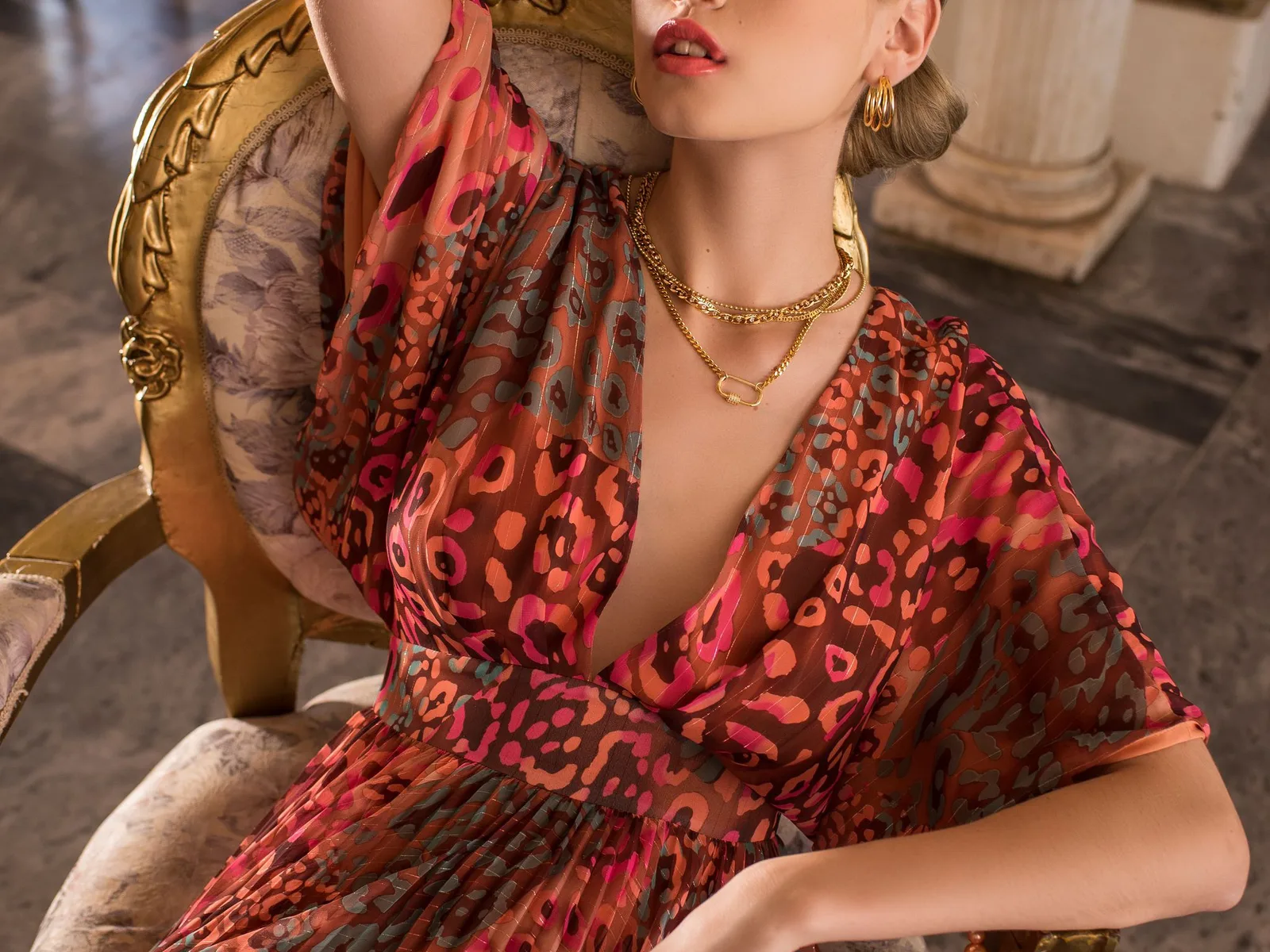
Yinshan Fashion focuses on custom and private-label manufacturing programmes. Our product collections are useful references for a buyer who is choosing a category direction, but they are not a ready-stock promise. A boutique building women's daywear, for example, can use the casual fashion collections to discuss silhouette, drape, closures, labels, and presentation before the project moves into its own brief and approvals.
Before asking for a quote, state which route you need: an existing platform with selected changes, a private-label adaptation, or a fully custom product development route. That single distinction helps the factory ask the right questions and prevents a stock-style price from being confused with a custom-production quotation.
How should buyers decide whether the product will work for your retail channel?
The same garment can require a different wholesale plan when it is sold through a boutique, a multi-brand retailer, an online store, a marketplace, or a distributor. A boutique may prioritize a distinctive silhouette, premium handfeel, small seasonal assortment, and individual presentation. A retailer may need exact SKU information, size ratios, barcode placement, carton assortment, and receiving rules. An e-commerce business may need product consistency, clear labels, protective packing, and reliable records for repeat orders.
Describe the job each style has in the assortment. Is it a hero dress, an easy blouse that will repeat in colours, a core T-shirt, a seasonal overshirt, or a coordinated lounge set? Then explain the customer, expected retail level, target market, and whether the order is a first test or a replenishment programme. Those details guide material and construction decisions more effectively than a generic request for wholesale clothing.
How should buyers prepare a brief the factory can price honestly?
A useful custom wholesale brief does not need to be a perfect technical package on day one. Reference images, a physical sample, a mood board, a basic measurement sheet, or a clear product list can all be a valid starting point. The important part is making decisions and open questions visible.
For every style, share front and back references, desired fit, key measurements or size range, fabric direction, colour plan, must-have construction details, logo or decoration needs, labels, packing, quantity by style and colour, target market, requested sample route, and commercial timeline. If a point is not final, mark it as open and ask the factory to recommend an option. That is more useful than allowing each supplier to make a different silent assumption.
The fashion apparel RFQ guide can help turn this information into a comparable quotation request. It is especially useful when several suppliers are reviewing the same product direction.
How should buyers build the assortment around practical fabric and colour choices?
In a custom wholesale programme, fabric is part of the sales decision as well as the production decision. The material affects drape, opacity, handfeel, care, colour, construction, cost, packing, and future replenishment. A cream blouse, printed dress, heavyweight T-shirt, or soft lounge set should be reviewed in its actual garment form, not only as a fabric swatch.
Start by describing what the customer should experience: crisp and polished, fluid and soft, textured and substantial, light and breathable, compact and durable, or easy to care for. Then identify the practical limits: expected retail level, colour range, seasonal use, washing expectation, and order quantity. The factory can compare relevant material routes and explain which choices need fabric headers, lab dips, a first sample, or a different production plan.
For a first order, shared fabric families and focused colourways can make a collection easier to manage. One woven base may support a blouse and dress; one jersey can support several tops; one trim package can connect a small capsule. This approach does not make the collection generic. It gives the buyer a clearer route for colour continuity, minimum discussions, packing, and repeat orders.
How should buyers plan quantity by style, colour, and size—not only the total?
The total order quantity alone does not describe a wholesale programme. A factory needs to understand how units are split across styles, colours, and sizes. Ten styles in many colours with separate labels and packing routes create a different material, cutting, trimming, and production plan from a focused group of repeatable styles.
Share the best available quantity scenario, even if it is preliminary. Include units by style and colour, size range or size ratio, possible reorder volume, sales channel, and whether colours or fabrics can be shared. The factory can then explain which elements affect the workable order route: fabric availability, dyeing or print requirements, trims, labels, individual packing, cutting efficiency, and line planning.
Responsible MOQ discussion is therefore a planning conversation, not a number copied from another product. Reducing unnecessary colourways, using available materials where suitable, sharing trims, and concentrating the first assortment can sometimes create a more practical start. The final route must still be confirmed against the actual product, materials, branding, and quantity plan.
What should buyers check about treat private label and packing as part of the product?
Wholesale buyers often leave labels and packing until the end because the garment is already developed. That approach can create late questions about artwork, label placement, care information, hangtags, barcodes, size stickers, folding, individual bags, tissue, boxes, cartons, and retailer routing requirements. These are product decisions because they affect samples, components, final inspection, cost, and the way the garment reaches the customer.
Use the private-label clothing programme to set the branding scope early. Confirm which labels will be sewn into the garment, which information belongs on a hangtag or sticker, who provides the artwork, what should be visible when the item is opened, and how each style will be identified in a carton. Buyers should review destination-market product and packing requirements with their own importer or compliance team before bulk production; factory support does not replace that market review.
If the order will enter a retailer or warehouse, request the packing and routing requirements before the final sample is approved. If the order is for direct online sales, agree how folding, protective packing, product information, and barcode position should work after normal courier handling. A finished garment is only retail-ready when its label and packing route are clear too.
How should buyers use samples to test the complete programme?
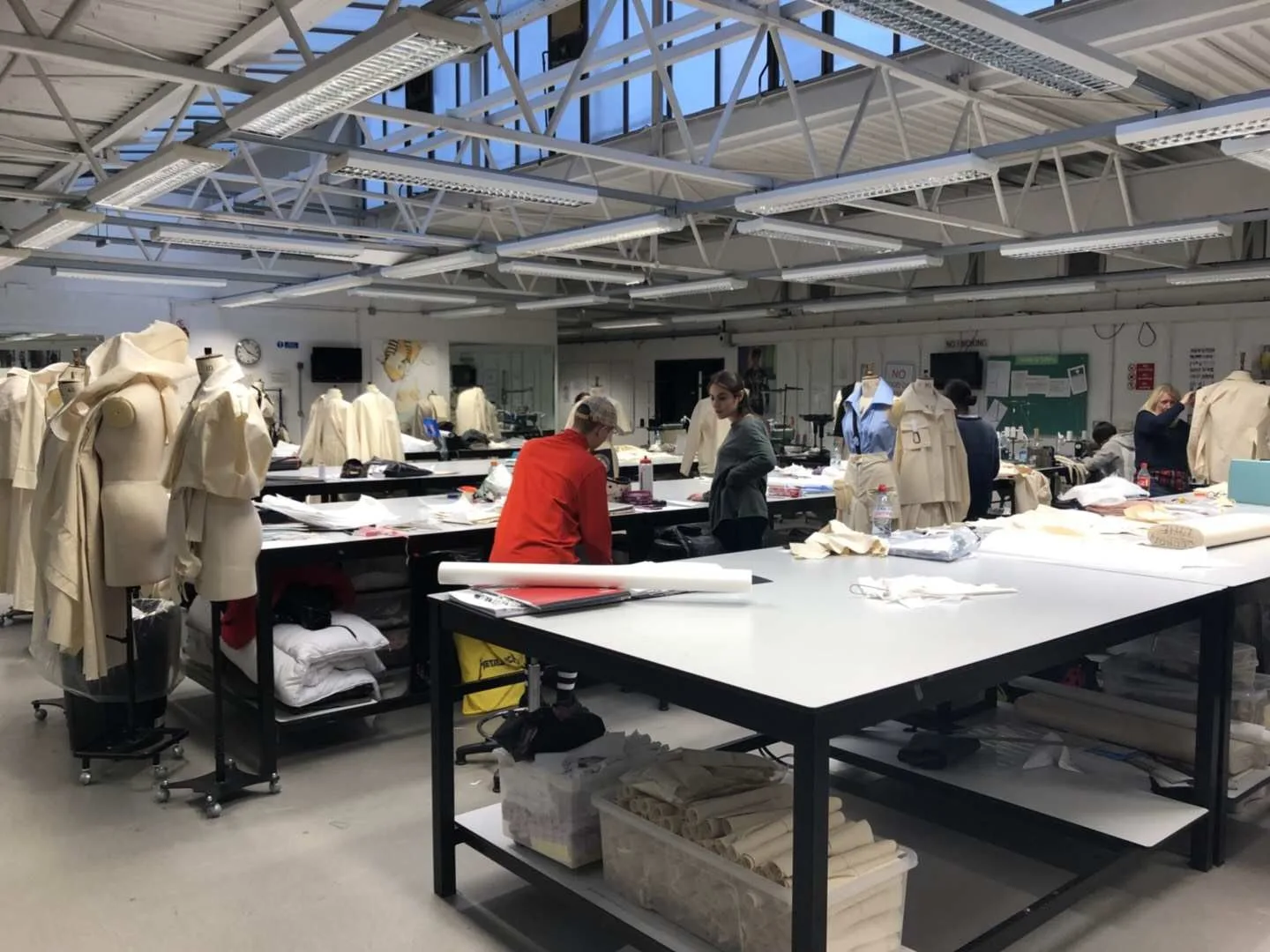
A sample is not only for checking whether a style looks good in a photo. It tests fit, fabric behaviour, construction, colour, decoration, label placement, and the decisions that must be stable in bulk. The exact sample path depends on the product. A simple adaptation may need fewer steps than a new silhouette with special fabric, print, embroidery, wash, or complex fit.
Give comments by location and keep them in one document. Mark the collar, shoulder, body length, sleeve, hem, pocket, print, label, or packing point and explain the expected change. When the style is approved, retain the fabric reference, measurements, trim information, label artwork, folding instruction, and photos of the standard. These records help the factory build a clearer pre-production reference and help the buyer compare the first bulk order with the product that was approved.
A useful sample approval answers two questions: does this product meet the intended retail standard, and is every agreed detail clear enough to reproduce in bulk?
How should buyers compare quotations by scope, not by the first number?
Two suppliers may appear to quote the same blouse or dress while using different assumptions. One quotation may use available fabric, simple labels, standard folding, and no sample revisions. Another may assume a different material, a custom colour route, branded labels, barcode stickers, individual packing, carton marks, or a more detailed quality path. The numbers cannot be compared until the scope is visible.
Ask the factory to identify the product reference, material and trim assumptions, sample scope, quantity scenario, branding, packing, inspection route, delivery responsibility where relevant, and any decisions that remain open. Keep those details beside each quotation. This makes it easier to decide which supplier understands the project, rather than which reply uses the smallest initial number.
For a custom bulk programme, production and quality controls should also remain connected to the approval record. The manufacturing process is the relevant next step for buyers who need to understand how materials, cutting, sewing, in-line checks, finishing, packing, and export preparation connect after a product is approved.
How should buyers keep the first-order record ready for replenishment?
The value of custom fashion wholesale grows when the product can be repeated with fewer assumptions. Keep the approved sample, material details, colour reference, measurements, pattern or construction notes where applicable, trim codes, label artwork, barcode file, folding and carton instructions, quality comments, and any agreed change from the first run.
When a style returns in a new colour or quantity, compare the new request against that record. A reorder may still need a new material, packing, or quality discussion, but a reliable baseline prevents the team from relying on memory. It also lets a boutique distinguish a true restock from a new development project.
How should buyers confirm the retail information before final approval?
Retail information should be reviewed with the same care as a collar, seam, or fabric choice. A garment can be approved visually and still create an avoidable receiving problem if its size label, care information, hangtag, barcode, SKU reference, individual pack, folding method, or carton mark is incomplete. These items matter differently by channel, so a buyer should not assume that one pack works for every boutique, warehouse, marketplace, or direct-to-consumer order.
Start with the unit the customer or receiving team will handle. What must identify the garment? Which size expression, style code, colour name, barcode, care information, country-of-origin wording, or brand element is required? Where should that information sit? Does the customer see it on a sewn label, a hangtag, a sticker, a poly bag, a box, or a digital product record? The buyer owns the accuracy of brand and market information, while the factory needs the approved files, placement instructions, and packing reference early enough to incorporate them into the route.
Then move outward to the carton. A warehouse may need a style and size assortment, carton count, shipping mark, purchase-order reference, or routing instruction. A boutique may value a cleaner individual presentation. An online programme may need a protective pack that still looks appropriate after ordinary handling. The correct answer is not a universal package. It is a written packing standard that matches the actual channel and is checked against the approved product before finished goods are released.
This is why private-label work should not be treated as a last-minute logo task. Branding is a set of physical components and approvals that travels with the garment from sample review through final packing. Buyers can use the private-label clothing programme to structure those decisions before the bulk order is locked.
What should buyers check about make the first order commercially testable?
A first custom wholesale order should help the buyer learn something useful, not only create a large assortment. Before finalising the range, identify the decision the first run is intended to test. It may be a silhouette, fabric handfeel, colour group, price position, retail channel, size mix, packaging experience, or replenishment model. That purpose helps decide how many styles, materials, colours, and custom components the team can realistically manage.
For example, a small boutique collection may be stronger when a few styles share a coherent fabric family, colour direction, trim package, and label system. The buyer can still create visual distinction through proportion, print, detail, or styling, while reducing unnecessary variables in material, colour, and packaging discussions. A more established retailer may instead need a broader size allocation and clearer SKU or carton plan. In both cases, the factory needs the commercial context so the sample and bulk plan reflect the actual use of the product.
Ask which parts of the first order should become stable records for a repeat. A proven fabric, approved colour, measurement set, neck label, care label, hangtag, folding method, carton mark, and QC note can make the next conversation clearer. A new colour, changed material, new label format, revised size range, or different destination market may require a fresh confirmation. Treating these as deliberate changes is more reliable than describing every future order as simply the same.
How should buyers review quality as a retail handover, not only a factory check?
Quality control should reflect what the buyer will receive and sell. The approval record should identify the parts that cannot drift from the intended product: fit and measurements, fabric appearance, colour, construction, decoration, trim function, label placement, finishing, folding, individual pack, and carton identification. A factory can organise checks around the agreed product standard, but the buyer needs to make the standard clear and identify any retailer or third-party inspection requirement.
For a custom wholesale programme, final inspection is not the first quality conversation. It is the last confirmation that the approved product, files, and packing route have been followed. If a requirement changes after sample approval, record what changed, who approved it, and whether it affects product, packing, or delivery. This gives both teams a defensible reference if the same style is repeated or a question arises after receipt.
The practical goal is simple: the buyer should be able to compare the goods in the warehouse with the product and presentation that were approved. A complete record makes that comparison possible without relying on a long email thread or individual memory.
How should buyers keep cost questions tied to a visible scope?
Cost is an important wholesale decision, but it only becomes useful when it describes the same product and delivery scope from one supplier to another. A number can change when fabric, colour route, construction, decoration, labels, packing, size allocation, quantity split, inspection approach, or shipment responsibility changes. That does not make the earlier number misleading by itself; it means the buyer should understand which assumptions it used.
Ask for the quotation to separate or identify the meaningful components where appropriate: product and material basis, sample work, decoration, private-label components, individual packing, cartons, inspection assumptions, and items that are still open. The buyer does not need to force every supplier into the same document format. The important point is that the scope can be compared and that changes are recorded before a production decision is made.
If the initial plan does not fit the commercial target, simplify deliberately. A buyer may reduce the number of colours, share a fabric family, consolidate trim components, use an available material where suitable, or stage a more complex detail for a later run. The right simplification protects the product's core purpose while making the first order more manageable. It should be an explicit product decision, not an undocumented substitution after the quote is accepted.
How should buyers set an approval path that the whole team can follow?
Wholesale projects often involve more than one decision maker. A founder may approve the product direction, a designer may comment on fit and colour, a buyer may own quantities, an operations colleague may own barcode and carton data, and an external retailer may impose receiving rules. If their approvals remain in separate messages, a correct sample or packing file can be overlooked when the programme moves into bulk.
Create one current project file with the style references, material direction, quantity split, size plan, label and packaging files, sample comments, current open points, owner, and approval date for each decision. A simple version-controlled file is enough when it is kept current. The purpose is not to add administrative work; it is to make it clear which information the factory should use and which point still needs a buyer answer.
Before bulk release, compare the file with the approved sample and packing reference. Check that the final product, labelling, barcode data, fold, individual pack, carton marking, and quality priorities all describe the same order. If something has changed, state whether it affects material, trim, cost, sample approval, packing, or timing. That final handover reduces the chance that a correct garment reaches the warehouse with the wrong presentation or product information.
The same file also makes internal handover easier when the buyer's merchandising, design, and operations teams change during the season. It preserves the reason behind an approved choice instead of only the final instruction. For a growing boutique or retail programme, that clarity is often as valuable as the quotation itself.
What to send before requesting a custom wholesale quote?
- Product references, sketches, tech pack, or physical-sample photos for each style.
- The product category, target customer, sales channel, destination market, and intended retail level.
- Fabric, colour, fit, construction, and decoration direction, with clear notes on what is fixed and what is open.
- Quantities by style and colour, plus size range or size ratio and possible repeat-order plan.
- Logo files, labels, hangtags, care information, barcode, folding, individual packing, carton marks, and retailer requirements where known.
- The requested sample route, target decision date, delivery window, and the quotation questions the project needs answered.
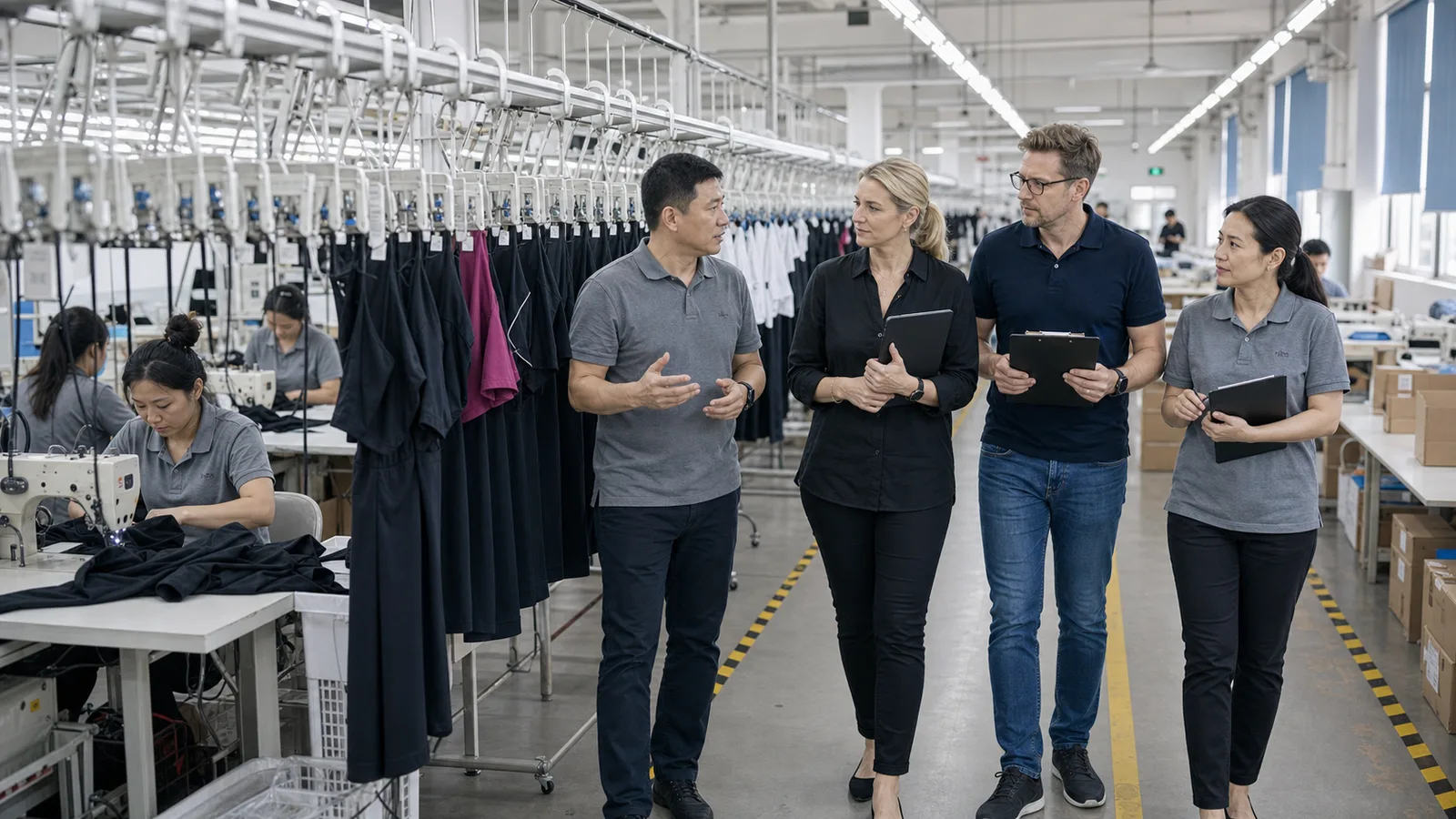
Yinshan Fashion can review these inputs for a custom or private-label fashion programme. Send the product direction, quantities, material and branding requirements, packing needs, market, and timeline through the contact page. The team can identify the next practical decision for sample development and bulk planning.
A project-ready wholesale brief
Five decisions that turn a boutique buying plan into a custom bulk programme
A custom wholesale project becomes easier to quote, sample, pack, inspect, and repeat when the buyer makes the product route, commercial plan, retail presentation, and remaining approvals visible before bulk production begins.
Product route
Make clear whether the team is selecting an existing platform with changes, adapting a private-label style, or developing a product that needs its own sample and production standard.
Commercial plan
Show the order split by style, colour, and size, then connect it to fabric, trims, sample needs, target retail level, sales channel, and repeat-order potential.
Retail delivery
Treat labels, hangtags, barcodes, folding, individual packing, carton marks, and channel instructions as product decisions that need approval before finished goods are released.
Custom fashion apparel wholesale project checklist
Use this shared working list before a factory quotation or sample release. It makes the product, commercial, and retail-delivery assumptions visible; it does not replace a purchase agreement or the buyer's own market-compliance review.
| Decision area | What the buyer should prepare | What to ask the factory |
|---|---|---|
| Product and fit direction | State whether the brief uses an existing platform, private-label adaptation, or custom product; provide references, desired fit, key measurements, product role, and the construction points that cannot change. | Which requested changes require pattern work, material review, a first sample, revised approval, or a different product route before bulk is discussed? |
| Fabric, colour, and finish | Describe handfeel, weight, drape, opacity, stretch where relevant, colourways, print, wash, decoration, lining, and the intended customer experience. | Which material and colour route is practical for the brief, and which fabric headers, lab dips, sample checks, or finishing approvals are needed? |
| Order mix and sample plan | Share units by style and colour, size range or ratio, alternate quantity scenarios, sales channel, requested sample route, and possible replenishment plan. | How do the order split, materials, trims, colours, sizes, and packing requirements affect the practical MOQ, production plan, and quotation assumptions? |
| Private label and packing | Supply logo and label artwork, care and size information, hangtags, barcode data, folding reference, individual packing, carton marks, and retailer or warehouse instructions. | Which files, components, placement approvals, packing samples, and final-inspection checks are needed before branded goods are ready for release? |
| Market, timing, and repeat records | Confirm destination market, decision dates, requested delivery window, contact owner, and the material, trim, label, packing, and quality records to retain after the first run. | Which market, approval, timing, and record-keeping decisions must be settled before the project can move from sample to a repeatable bulk programme? |
Continue the production conversation
Custom fashion apparel wholesale: buyer and factory handover
| Decision area | Buyer should prepare | Factory should confirm |
|---|---|---|
| Product route | State whether the project uses an existing platform with changes, a private-label adaptation, or a fully custom style; share the relevant product references. | Whether the requested route needs product development, pattern work, samples, material review, or an available-product discussion. |
| Assortment and quantities | Give units by style and colour, size range or ratio, sales channel, first-order objective, and possible replenishment plan. | How fabric, trims, colours, size splits, packing, cutting efficiency, and production planning affect the proposed order route. |
| Material and construction | Describe handfeel, weight, drape, opacity, stretch where relevant, colour, print, wash, fit, and construction points that cannot change. | Which materials, fabric approvals, colours, sample checks, trims, and construction details must be settled before bulk pricing or release. |
| Private label and packing | Supply label and logo files, care and size information, hangtags, barcode, folding, individual pack, carton marks, and channel instructions. | Which artwork, components, sample approvals, packing files, and final-inspection checks are needed for retail-ready delivery. |
| Records and reorders | Keep the approved sample, measurements, material and colour references, trim codes, label and packing files, and QC comments. | Which items create a stable repeat-order baseline and which requested change needs a new review before production. |
Buyer FAQs
Is Yinshan Fashion an in-stock fashion apparel wholesaler?
Yinshan Fashion focuses on custom and private-label fashion manufacturing. Product collections can help a buyer discuss category direction, but a programme needs the product, material, quantity, branding, packing, market, and timing requirements before the route can be confirmed.
What should a boutique send before requesting a custom fashion apparel wholesale quote?
Send product references or a tech pack, category and fit direction, fabric and colour preferences, quantities by style and colour, size range or ratio, labels and decoration, packing requirements, target market, sample needs, delivery window, and the commercial decision the quote should support.
How do colours, size ratios, labels, and packing affect a wholesale apparel order?
They can change material availability, dyeing or print planning, trim requirements, cutting efficiency, component minimums, inspection points, packing work, carton assortment, and the production schedule. Confirm the full order mix rather than asking for a price from the total quantity alone.
Can a buyer begin a custom wholesale programme with reference images instead of a full tech pack?
Yes. Clear front, back, and detail images, a physical sample, measurements, a mood board, or a focused product list can start the discussion. The buyer and factory should then identify the missing fit, material, construction, branding, quantity, and packing decisions before sampling or bulk production is approved.