Article
What should buyers know first?
Short answer: A buyer guide to comparing CMT and full-package clothing manufacturing by product ownership, material control, sampling, labels, packing, quotation assumptions and bulk-release records.
CMT vs full-package clothing manufacturing is not a choice between a simple and a complicated factory relationship. It is a choice about who owns each product decision, who supplies or coordinates each input, what evidence is needed before a garment can move forward, and which record controls the next step. CMT is commonly used to mean cut, make and trim. Full package commonly describes a broader route in which the manufacturer helps coordinate more development and sourcing work. In both cases, the actual scope must be written down. The labels alone do not describe the responsibilities for one dress, blouse, active set, sleepwear style or collection.
Yinshan Fashion supports custom and private-label bulk programmes rather than unrestricted ready-stock wholesale. A growing brand can use either manufacturing model when the buyer, factory and suppliers agree on the product basis. The decision should begin with the garment itself: the intended wearer and channel, reference, fit, fabric direction, colour or print, components, label package, packing route, quantity structure, target market, sample purpose, approval owner and unresolved questions. Availability, commercial terms, testing, certification, product claims and delivery outcomes remain specific to the confirmed programme.
This guide helps a buyer compare CMT and full-package clothing manufacturing without treating either route as a universal promise. It shows how to turn the broad model into a clear ownership map, a useful sample plan and a bulk-ready record.
What is the practical difference between CMT and full-package clothing manufacturing?
The practical difference is decision ownership. In a CMT route, the buyer may provide, nominate or directly control more of the pattern, fabrics, components and product instructions. The factory's work is then tied to the agreed cut, sewing and related production scope. In a full-package route, the buyer may ask the manufacturer to coordinate a broader set of activities such as material options, sample development, components, production records and private-label details. That does not remove the buyer's responsibility for commercial choices, brand direction, product claims, market requirements and final approvals.
Neither label tells a buyer enough on its own. One supplier may use CMT to mean the buyer supplies fabric but the factory proposes trims. Another may expect the buyer to provide every pattern and component. One full-package programme may begin with a detailed technical pack; another may begin with a reference garment and an agreed sampling route. A good comparison therefore asks a more useful question: what is the factory being asked to do, what inputs are held today, and what proof is needed before an instruction becomes a release?
Start with a responsibility list rather than an assumption. For every style, identify the owner for design references, pattern or measurement basis, fabric and lining, trims, decoration, labels, care or product information, packing, quantity matrix, sample comments, production approvals and changes. Mark each item as supplied, nominated, proposed, pending, rejected or released. This makes it possible to compare two quotes or production routes against the same garment.
For a category starting point, the casual-fashion range helps illustrate the variety inside an apparently simple brief. A woven shirt, printed dress and structured skirt can share a collection story while needing different materials, construction questions and sample proofs. The sourcing model should follow the product record, not a generic category label.
How should a buyer compare CMT vs full-package clothing manufacturing?
Use one dated comparison brief for both routes. Do not give one factory a mood board and another an almost-complete technical pack, then treat their answers as comparable. The brief should name the same style references, intended customer, fit priority, fabric behaviour, colour or print direction, component ideas, label and packing expectations, quantity by style-colour-size where known, destination context, sample purpose, decision owner and open questions.
Then ask each factory to separate five things: what it will handle, what the buyer must supply or approve, what is assumed, what is excluded, and what needs evidence before the next step. This is more useful than asking which model is "better." A developing brand may need help translating a product idea into a controlled sample route. An experienced buying team may already have nominated materials, approved patterns and a material supplier relationship. The right model is the one whose responsibilities match that current capability.
Do not compare only a price heading or a short scope label. A commercial indication can change when the product, material, component, quantity split, print, label, packing or destination information changes. Ask the factory to keep the quotation basis connected to the current version and to name which unknowns could reopen it. The buyer can then decide whether it needs an early comparison, a sample, a material review or more product information before seeking a firmer commercial conversation.
The fashion product brief before sampling provides a useful handover structure. It should be adapted to the actual programme, not copied as a fixed form. The goal is one shared understanding of what is known, what is being proposed and what must be proven.
When can CMT be a useful route for a fashion brand?
CMT can be useful when the buyer already controls the inputs that define the garment. That may include a usable pattern or measurement basis, fabric and lining route, components, artwork, labels, packing information and a sample or approved reference that has a clearly defined role. It can also suit a buyer that has established supplier relationships for materials or components and wants the manufacturing scope to remain connected to those arrangements.
The key word is "controls," not merely "has." Possessing a fabric roll, a reference photo or an old sample does not automatically create a production-ready CMT package. The buyer should be able to identify the material source and version, construction details, colour or print scope, pattern basis, component list, sample purpose, size route, label files, packing instruction, approval owner and version history. If those elements are missing, the buyer may still use CMT, but it should expect to resolve the missing product decisions before a bulk release.
A CMT route can give a capable team direct involvement in the product inputs. It can also create more coordination work. Material arrival, shade or lot discussion, component compatibility, trim replacement, print or embroidery proof, label placement, packing files and changes need one source of truth. The factory should not have to infer whether a buyer-supplied fabric is a final instruction, an inspiration reference or a candidate for sampling.
For a buyer-supplied material, record the exact source, style scope, colour reference, material identifier, received status, intended use and limitations of the evidence held. If a development sample uses a substitute or a different material route, say so. The fabrics and trims resource can help structure the conversation around base cloth, lining, elastic, hardware, decoration, labels and packing. It does not establish that a particular input is suitable, available or approved for every garment.
When can a full-package route be useful?
A full-package route can be useful when a buyer has a product direction but needs a manufacturer to coordinate the questions that turn it into a sample and production record. The buyer may begin with a sketch, product references, a retained garment, a clear category plan, a target wearer, a desired silhouette, materials it likes, brand assets and a commercial context. The factory can help organise those inputs into a sequence of material, fit, construction, component, private-label and packing decisions.
This does not mean the factory should make unapproved brand decisions. The buyer still needs to name what is fixed, what is open to factory advice and who can accept a proposed route. A useful manufacturer response makes alternatives and dependencies visible. It might identify that a particular silhouette needs a fit sample, that a material needs a swatch or constructed proof, that an artwork needs placement evidence, or that labels and packing still need product-specific information. It should not turn an incomplete brief into an implied guarantee about cost, delivery, compliance or product performance.
Full package is especially helpful when the brand wants the factory to coordinate the links between a material option, pattern development, sample objective, components, labels and bulk handover. The benefit is not that the buyer gives up control. It is that the buyer has one operating record in which each decision can be traced to the garment version it affects.
For a custom route, Yinshan Fashion's manufacturing support can frame the handover from materials through cutting, sewing, quality observations, finishing and packing. It is a working framework, not a fixed production promise. The exact scope, people, commercial terms and release conditions depend on the product and agreement.

How do fabric and trim responsibilities change between the two models?
Fabric is where a route can look simple on paper and become complex in practice. In CMT, a buyer may supply the material or nominate a source. In full package, the buyer may ask the manufacturer to present material directions for review. Both routes need the same control: each material reference must be tied to a specific garment, colourway, construction question and approval status.
For example, a buyer may want a fluid printed dress, a crisp blouse, a ribbed top and a structured active layer in one collection. Those product roles call for different questions about drape, coverage, stretch, lining, seam behaviour, print interaction, trim attachment and finishing. A material specification from one product should not silently become the basis for another. Ask which details can be reviewed from a swatch and which require an applied proof or constructed sample.
Create a material-and-component map that names the style, colour, fabric or lining reference, source, trim, decoration, current sample version, decision owner, evidence held and next action. In a CMT programme, that map clarifies what the buyer needs to deliver or approve. In a full-package programme, it clarifies what the factory is being asked to source or propose and what the buyer must decide. In both cases, it prevents a material alternative from being treated as an authorised substitution.
The same logic applies to zips, buttons, elastic, tapes, drawcords, labels, hangtags, transfer bases, embroidery backings and packing materials. A component may be compatible with one fabric and not another. A buyer should record whether an item is a visual reference, a required source, a factory proposal, a sample-only choice or a released bulk decision. Do not use a generic product image as evidence that an item is available, approved or suitable for the current programme.
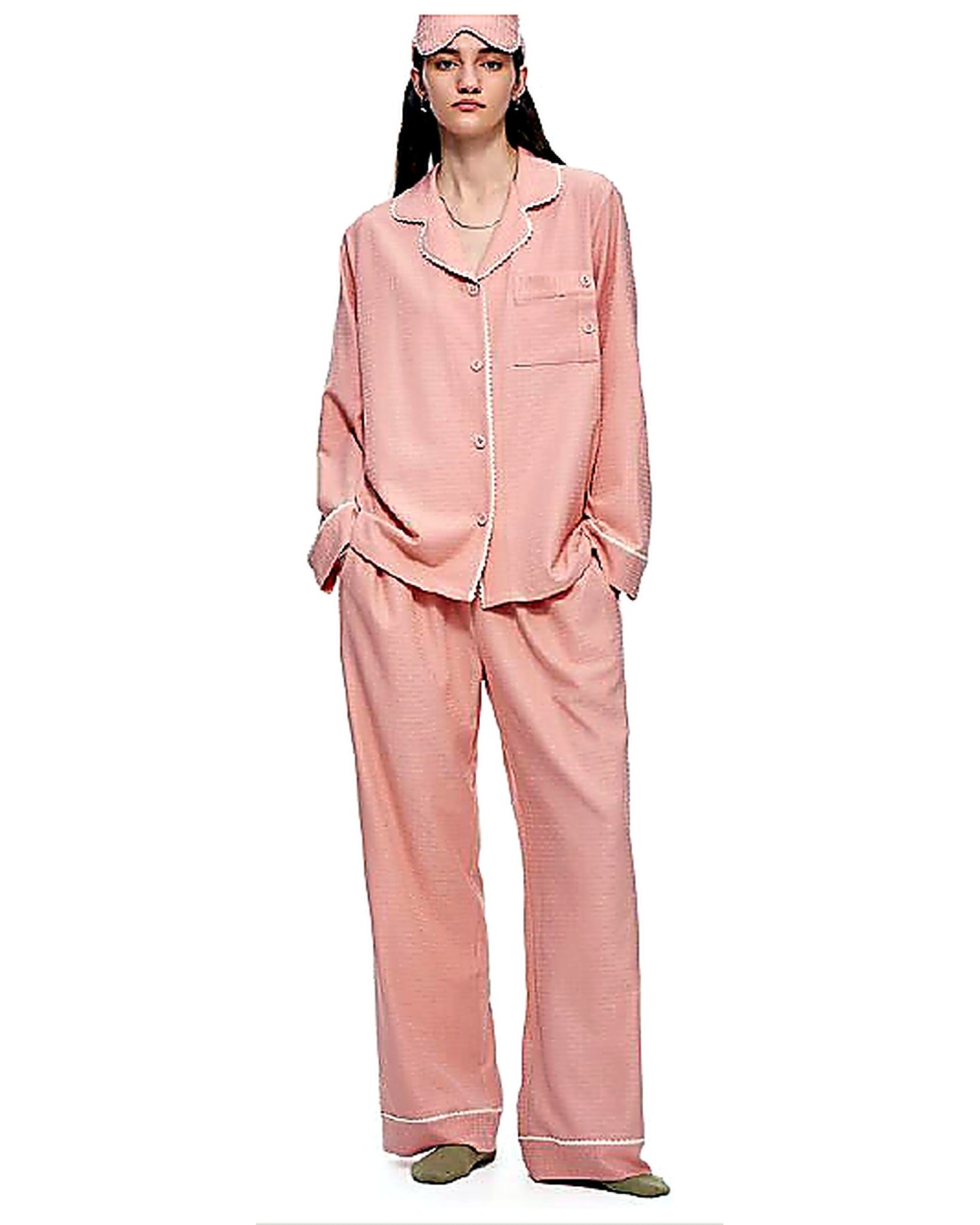
For loungewear programmes, identify who controls the coordinated top-and-bottom material, elastic, labels and packing inputs. Shared category language does not establish which party purchases or approves each component.
How should sampling work before a CMT or full-package bulk release?
Give every sample one job. A first sample may be about silhouette and pattern. A later version may review a nominated fabric, lining, construction detail, print placement, label, component or packing presentation. A fit sample can show the current garment relationship between material, pattern and construction; it does not automatically approve every material, label or market requirement that may appear later.
The sample record should include the style, colourway, sample size, pattern or measurement basis, fabric and component references, artwork version, purpose, reviewer, comment date, decision owner, accepted points, open conditions and next action. This matters in both models. A CMT buyer needs to show which supplied inputs controlled the sample. A full-package buyer needs to show which factory-proposed route was reviewed. If a material, component or pattern changes, the record should say which earlier conclusions remain relevant and which question must reopen.
Consolidate brand comments before they return to the factory. Design, merchandising, sourcing, quality, retail and e-commerce teams may all see useful issues. Their feedback should become one versioned change list against the same garment. A message saying a dress should be "better" or a top should be "more premium" is not a sample instruction. A useful comment identifies the garment area, the observation, the required decision or question, the source or reference, the owner and the next evidence needed.
For private-label details, use a separate proof where necessary. The private-label service can frame labels, product information, hangtags, barcode direction, placement and packing inputs as connected decisions. The responsible buyer must provide and approve the relevant brand, legal, retailer and market information. A factory can coordinate an applied proof, but it should not invent customer-facing claims or destination requirements.
What should a quotation comparison include beyond the manufacturing model?
The most useful quotation comparison is a versioned product comparison. Ask each supplier to identify the style or sample version, material basis, components, decoration, labels, packing route, quantity structure, destination or channel context, assumptions, exclusions and items still open. A difference in commercial indication may come from a different garment basis, not from a better or worse factory.
For CMT, the buyer should make clear what it supplies, what it expects the factory to source or coordinate, and which inputs are still pending. For full package, the buyer should make clear which development or sourcing support is requested and which product decisions remain buyer-owned. If the brief contains estimates, label them as estimates. A quantity total alone does not reveal the number of styles, colours, sizes, fabric routes, components, decoration treatments or packing variations that need to be managed.
Ask for clarity rather than premature certainty. A factory can describe the current basis and the questions that may change it. It should not be asked to guarantee a price, MOQ, delivery date, test result, certification or claim before the relevant product facts and approvals exist. The buyer can use a transparent response to decide what evidence or input will make the next commercial discussion more useful.
How do labels, packing and product information fit into the model choice?
Labels and packing are product decisions, not administrative extras. A brand may need a neck label, size identifier, care or fibre information, hangtag, barcode direction, protective bag, fold or hanger route, carton instruction and channel-specific presentation. Each item needs a current file, product scope, placement or packing location, owner, approval status and next proof.
In CMT, the buyer may provide more of these files and materials. In full package, the manufacturer may coordinate more applied samples or packing prototypes. The product-control question is the same: which exact style-colour-size and which version do the files cover? A label proof on one fabric or sample does not automatically approve it for a changed construction, size range or market.
Keep market and customer claims controlled. The buyer, importer, retailer and relevant advisers must identify and approve any destination-specific, legal, care, fibre, origin, environmental or marketing wording. The factory can connect files to the product record and request missing inputs. It should not infer requirements from a generic category description or a previous order.
An active-fashion programme may add buyer-defined movement, coverage, seam or material questions. Allocate the relevant sample and evidence responsibilities explicitly when comparing the two manufacturing models.
Can a growing brand use a hybrid CMT and full-package approach?
Yes, but only when the ownership boundary is visible. A brand might nominate its own core fabric for one product while asking the factory to coordinate lining and components. It might provide a technical pack for a key blouse but request development support for a new dress. It might manage its own labels while asking the factory to prepare an applied proof. This can be a practical way to preserve control over high-priority brand elements without pretending the team has all production inputs solved.
The risk is ambiguity. A hybrid route fails when the buyer assumes the factory owns a decision that the factory believes is buyer-supplied, or when an old reference is treated as a final instruction. Build a scope matrix for each style and give it a date, revision owner and change rule. If the programme moves from buyer-supplied fabric to factory-proposed fabric, from one label source to another, or from a sample component to a bulk component, log the change and identify the proof that must be repeated.
What should a bulk-ready CMT or full-package record contain?
Consider a planning example in which a brand supplies the shell fabric for a blouse while the factory coordinates buttons and sewing. The material arrives with one roll reference that differs from the delivery list. A label saying “CMT” does not decide who investigates the discrepancy, whether the roll may be cut or how a delayed material decision affects the production sequence. Those questions need an agreed handover process.
At receipt, identify the affected roll and compare the delivery record with the buyer's instruction. Ask the material owner to confirm what was sent and what evidence connects it to the approved sample. Keep the disputed material identifiable while the answer is pending. The factory can report what it received; that report is different from the buyer's decision to accept a changed input. Neither party should silently convert uncertainty into a substitution.
If the buyer accepts a replacement, update the material reference and review which sample observations remain applicable. If it requests different goods, record who arranges the replacement and when the next availability check is due. Any effect on cost or the production sequence should be discussed on the actual facts and agreement, rather than assigned automatically to one party by the manufacturing label.
In a full-package arrangement, the coordinating party may handle more of that supplier follow-up, but the same distinction remains: receiving evidence, investigating a difference and approving a product change are separate actions. This hypothetical example is not a reported Yinshan order. It demonstrates why the responsibility matrix needs an exception owner as well as a normal-task owner.
A bulk-ready record does not mean every fashion programme uses the same document stack. It means the manufacturing team can find the current answer to the questions that control the product. Connect the style identity, colourway, fit or pattern basis, material and component references, construction notes, sample history, artwork, labels, packing, quantity context, buyer-defined quality priorities, released conditions, approval owner and open exceptions.
Use a difference list for a repeat. State what changed in material, colour, size route, construction, trim, print, label, packing, quantity, target market or quality priority. A repeat order is not automatically the same product. This record lets a buyer decide whether the existing approval is still applicable or whether another material, component or garment proof is needed.
Yinshan Fashion can help a buyer organise the product-specific questions for a CMT, full-package or hybrid custom programme. A productive first discussion includes the product references, category, intended customer, fit and fabric priorities, brand and private-label needs, quantity context, target market, current files and the decision the buyer needs to make next. That is more actionable than asking a factory to choose a model without the product context.
Send that brief through the Yinshan Fashion contact page, identifying which inputs the brand already controls and which tasks it wants the factory to discuss. Ask for the proposed scope and unresolved handovers before choosing the manufacturing route.
Frequently asked questions about CMT vs full-package clothing manufacturing
What is CMT vs full-package clothing manufacturing?
CMT commonly refers to cut, make and trim work, while full package commonly describes a broader manufacturer-coordinated product route. The actual responsibilities for patterns, materials, components, sampling, labels, packing and approvals must be defined for the specific programme.
Is CMT always cheaper than full package?
Not necessarily. A meaningful commercial comparison depends on the same product basis, including materials, components, development work, labels, packing, quantity structure, assumptions and open decisions. Ask suppliers to show what their current indication includes, excludes or treats as conditional.
Can a brand start with a reference garment in a full-package route?
Yes, if the reference is labelled as a reference and the buyer explains the intended product direction, fit priorities, material questions, brand elements, sample purpose and approval owner. A reference garment does not by itself authorise duplication or a bulk release.
What must a buyer supply for a CMT programme?
That depends on the agreed scope. The buyer should identify the pattern or measurement basis, materials, components, artwork, labels, packing information, sample objective, quantities and approvals it owns, while asking the factory to identify anything missing or incompatible with the proposed route.
Can Yinshan Fashion support a hybrid manufacturing model?
Yinshan Fashion can help structure a custom programme in which the buyer controls selected inputs and the factory coordinates agreed development or sourcing tasks. The scope, evidence, commercial terms, availability and release conditions must be confirmed for the specific product.
Manufacturing-model decision kit
Three controls that make CMT or full package workable in practice
A useful manufacturing model assigns each product decision to an owner, gives every sample a named question, and keeps one current record for the next release.
Map ownership before sourcing
For every style, name who controls the reference, fit basis, materials, trims, artwork, labels, packing, quantity matrix and final approval.
Compare like with like
Send both routes the same dated product brief, then separate confirmed scope from assumptions, exclusions, dependencies and questions.
Release one current version
Tie the selected material and component route, sample evidence, comments, label files, packing and authorised changes to the garment version entering the next gate.
Buyer actions and factory questions before choosing CMT or a full-package route
Use a single product record to compare responsibility, evidence and release conditions. Materials, availability, commercial terms, testing, market requirements and timing stay programme-specific until the confirmed product is in view.
| Decision area | What the buyer should prepare | What to ask the factory |
|---|---|---|
| Product direction | State the category, intended wearer and channel, style references, fit priorities, quantity context, market, decision owner and the next decision required. | Which inputs are fixed, which are references only, and what must be clarified before the route or sample objective is reliable? |
| Pattern and fit basis | Identify the technical pack, retained sample, measurements, sample size, ease, construction and fit points the brand controls or wants to review. | What can be made from the present record, and which pattern, construction or garment proof is needed before bulk discussion? |
| Materials and components | List buyer-supplied, nominated, proposed and open fabric, lining, trim, decoration and component decisions by style and colourway. | Which material or component reference applies to the current version, and which item needs a swatch, applied proof or constructed sample? |
| Sample and change control | Record the version, inputs used, sample purpose, observations, consolidated changes, approval owner, accepted points and remaining conditions. | What does this sample demonstrate, what is still conditional, and which change requires another buyer decision? |
| Private label and packing | Provide current artwork, size and product information, labels, hangtags, barcode direction, protective packing, carton needs and market inputs. | Which files need an applied garment or packing proof, and which style-colour-size record controls their placement or presentation? |
| Commercial and bulk release | Share the quantity split, product version, material and component basis, open conditions, quality priorities and authorised release owner. | What is included, excluded or conditional in the current basis, and which unresolved input prevents the next production action? |
Continue the production conversation
CMT and full-package clothing manufacturing: decision ownership by workstream
| Workstream | CMT discussion | Full-package discussion | Control question before the next gate |
|---|---|---|---|
| Product basis | Buyer commonly supplies a clearer pattern, sample or product specification | Buyer and manufacturer may turn references into a controlled development brief | Which version, fit basis and product questions currently control the work? |
| Fabric and trims | Buyer may supply or nominate more inputs | Manufacturer may coordinate proposed routes for buyer review | Which source, reference and proof applies to this exact style-colourway? |
| Sample route | Sample verifies the buyer-controlled inputs used | Sample helps resolve agreed development and sourcing questions | What does this version prove, and what remains open? |
| Private label and packing | Buyer may provide more files and materials | Manufacturer may coordinate applied proofs or packing samples | Which product version and placement or packing route do the files cover? |
| Commercial basis | Scope must identify buyer-supplied and factory-handled inputs | Scope must identify coordinated services and buyer decisions | What is included, conditional, excluded or still awaiting evidence? |
| Bulk release and repeats | Factory needs the current buyer-approved input record | Factory needs the current buyer-approved development and sourcing record | Who approves changes, and which earlier proof must reopen? |
Buyer FAQs
What is CMT vs full-package clothing manufacturing?
CMT commonly refers to cut, make and trim work, while full package commonly describes a broader manufacturer-coordinated product route. The actual scope must be confirmed for the specific garment programme.
Is CMT always cheaper than full package?
No. Compare current product assumptions, materials, components, development work, labels, packing and quantity structure before drawing a commercial conclusion.
Can a reference garment start a full-package programme?
Yes, when it is labelled as a reference and the buyer defines the intended product direction, open questions, sample objective and approval owner.
What must a buyer provide for CMT?
The agreed scope decides this. The buyer should identify the product basis, materials, components, artwork, labels, packing, sample objective, quantities and approvals it owns.
Can Yinshan Fashion support a hybrid model?
Yinshan Fashion can help structure a custom programme where the buyer controls selected inputs and the factory coordinates agreed development or sourcing tasks, subject to confirmed scope and approvals.