Article
What should buyers know first?
Short answer: Compare transfer-paper routes through artwork, fabric, sample approval, order splits and production handovers.
Digital vs offset sublimation printing is a comparison of how a design is prepared on transfer paper before heat transfers suitable dyes to a compatible material. It is not a choice between two universally interchangeable garment finishes. Yinshan Fashion supports custom and private-label bulk programmes rather than unrestricted ready-stock wholesale. The fabric, paper production method, transfer conditions, sample and supplier arrangements must all be confirmed for the actual order.
Direct answer: ask each supplier to describe its complete route, then compare representative samples and quotations for the same artwork, fabric, finished product and quantity split. Digital sublimation commonly uses an inkjet system to produce a paper transfer. An offset sublimation proposal may mean lithographic printing of transfer paper using compatible sublimation inks, but commercial labels vary. Confirm the actual process instead of assuming that every “offset transfer” is dye sublimation, or that a particular route is offered by Yinshan Fashion.
What is digital vs offset sublimation printing?
In the digital transfer route discussed here, a provider prints a design on suitable paper with a digital sublimation ink system and then brings the paper and textile together under controlled heat and pressure. The dye transfers from the paper to a receptive material. Epson's textile-printing overview describes this paper-transfer route alongside other digital textile methods. Its examples explain the process; they do not establish which equipment or materials a particular garment supplier uses.
An offset sublimation route can use a lithographic press to print a compatible design on transfer paper before a later heat-transfer step. A manufacturer of offset sublimation ink describes such an ink and paper workflow. That evidence shows a possible technical route, not a claim about Yinshan Fashion's own machines, prices or production capacity. The provider needs to explain how the paper is produced and how the final textile is processed.
Both routes involve more than an image file. The buyer must understand who provides the fabric, who produces the paper, where the transfer occurs, how the sample is finished and which party owns the production record. A name on a quote alone does not answer those questions. Ask for the route and the representative fabric sample in writing before comparing offers.
Why does the word “offset” need clarification?
Suppliers may use “offset” to refer to an offset lithographic press, to a type of printed transfer, or informally to a mark caused by paper contact. Other transfer products can use a printed layer, film or adhesive. These uses are not automatically the same as dye sublimation. A quotation that merely says “offset heat transfer” does not identify the ink chemistry, the paper production method or what remains on the textile.
Ask four questions: what prints the paper; which ink or dye system is used; what happens when heat is applied; and whether a separate film, coating or adhesive remains on the surface. Request the technical description from the actual print provider. If the answer is a film transfer rather than sublimation, compare it on its own terms instead of forcing it into this article's categories.
The distinction matters for the order record. A repeat buyer who writes “same offset logo” may receive a different production proposal when the original supplier changes. Store the approved process description, paper or transfer reference where available, fabric and sample together. If a supplier cannot clarify the route, do not infer chemistry from the feel of a photograph or a marketing label.
Which garment should the buyer define first?
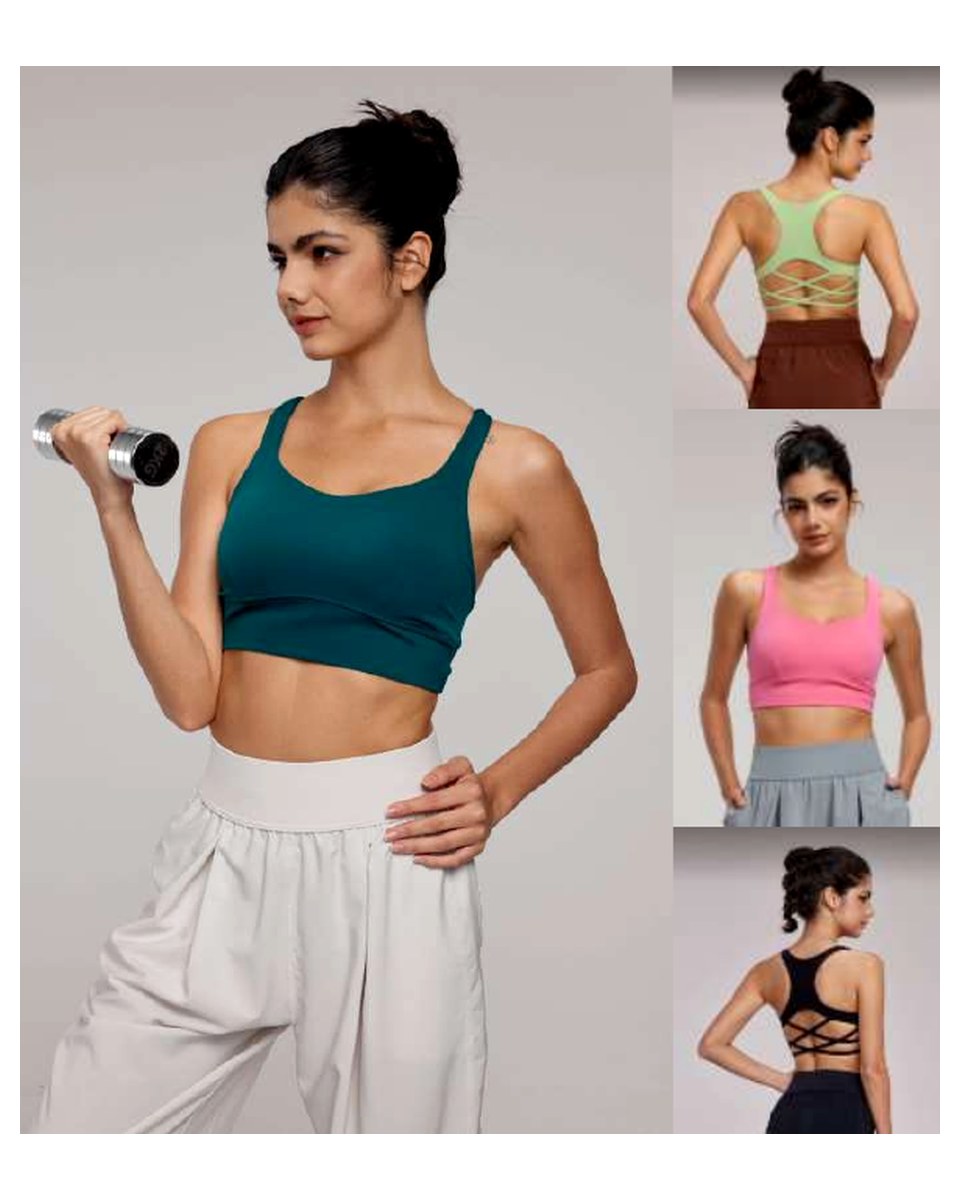
Start with the finished product and how the graphic should work on it. For an active top, identify whether the image covers a panel or sits as a small motif, where seams and stretch will occur, and whether the design must match a coordinating piece. Use the active fashion collection to discuss silhouettes and construction questions. Those product images are garment references, not proof that a style has been sublimation printed.
A dress creates different questions. A placement design might need to remain centred on a bodice, while an all-over repeat may need a priority for matching the skirt to the upper section. The dress collection gives a starting point for discussing drape, panel shapes and lining. The buyer should send the actual fabric and pattern information rather than assume that the process suitable for a sports top also suits a flowing dress.
If a brand is considering a T-shirt, specify whether the print is intended on a cut panel, a finished garment or fabric length. The T-shirt collection is useful for discussing neckline, seams and graphic area. A chosen style may use a material for which another decoration route is more suitable; confirm the fabric and sample rather than promising an identical sublimation result on every product.
How do fabric composition and ground colour affect the choice?
Identify the actual fibre composition, knit or woven construction, fabric weight if known, stretch direction, finish and base shade. Dye-sublimation systems are commonly used with polyester or appropriately receptive surfaces, but compatibility and appearance depend on the specific system and material. A fabric labelled simply “stretch” is not enough information. Ask for the supplier's proposed base and transfer recipe, then review a sample on that exact construction.
A white or light ground is commonly used when the design needs clear colour. The underlying shade affects the visible result. A dark base or mixed-fibre construction may change the appearance substantially, and the effect cannot be predicted from a paper proof alone. Do not promise bright white artwork on a dark garment through standard dye sublimation. If a supplier proposes a coating or layer, document it as part of that different construction and ask to assess its hand and care requirements.
The fabric development and sourcing solution connects the desired garment to material selection and sampling. Bring a swatch or a precise reference if possible, and tell the team which characteristics cannot change. If the actual production fabric later differs from the sample, record the change and decide whether another proof is needed. A supplier's general fabric list does not replace project-specific confirmation.
How should artwork be prepared for the two paper routes?
Share the source file, version, intended dimensions, colour references and placement or repeat layout. Indicate whether text, logos or other directional details must be mirrored for the paper stage; the production provider should confirm its own file preparation. Keep the original and production-ready files linked. A screen capture can communicate the concept but may not contain the resolution, colour or scale information needed to prepare the transfer.
For an inkjet route, ask the provider how the file is interpreted by its print and colour-management workflow, what output width is available, and how variations or names will be handled. Digital file flexibility does not mean that a supplier can change specifications without a new sample or cost review. For a press-based route, ask how the artwork will be separated or prepared, what setup is involved, and which later changes would require new preparation.
The apparel artwork approval guide helps connect design versions to decision owners. Confirm artwork ownership and permission before sending files outside the brand team. Approval of a file is not approval of the printed material: the finished fabric still needs to be reviewed against the agreed reference and sample scope.
What role do paper and transfer conditions play?
The paper carries the printed image to the transfer stage. It must be suitable for the ink system and the intended textile, and its handling can affect the result. Some papers are designed with a tacky surface for particular stretch-fabric applications. The paper manufacturer's description gives one example; it does not establish that the same paper is used for every product or that it will solve every movement issue.
Ask the supplier to identify the paper, ink and heat-transfer equipment as a system, along with who is responsible for controlling the relevant settings. Temperature, pressure and dwell time must be established for the actual material and provider's equipment; a generic setting from a website is not a production instruction. Check whether panels are transferred before cutting, after cutting or on a completed garment. Each arrangement creates different registration and handling questions.
If the paper or fabric moves during transfer, a blurred or doubled image may need investigation. Moisture, paper handling, contact and equipment setup can also be relevant questions, but an observed mark does not prove its cause. Record where the issue appeared, preserve the sample and ask the responsible provider to investigate before applying a correction across the order.
How should buyers compare colour and fine detail?
Define the colour target and viewing conditions before requesting samples. A monitor, a sheet of transfer paper and the transferred textile do not necessarily look the same. A physical reference, named colour target or accepted textile sample helps the parties discuss the finished result. Specify the fabric ground, lighting or comparison method if those details are important to the brand's approval process.
Check the details most likely to affect the design: fine lettering, a small logo, a smooth gradient, overlapping shapes and large areas of colour. Review those features at the finished size rather than judging only an enlarged screen image. If one route changes a gradient or a small line, decide whether the difference is acceptable in the intended garment position. A detailed image does not guarantee that a particular brand colour will match without a representative proof.
Make a separate decision for each meaningful colourway and material combination. An approved pale base does not automatically approve a different ground or a different fabric finish. Record the approved file revision, physical sample identifier, date and decision owner. If the design changes after approval, reopen only the affected questions but make the change visible to everyone producing the garment.
What should the sample approval actually cover?
Name the stage: an early colour proof, a production-intent printed panel or a completed garment sample. A small proof can help identify a colour or artwork problem, but it may not show the effect of a large repeat, panel alignment, seam construction or fabric stretch. Ask whether the proof uses the intended fabric, paper route and finishing, and document any differences from the proposed bulk setup.
Review a garment sample in the intended size and position where possible. Check whether the motif is correctly oriented, how it meets important seams, and whether folding, gathering or stretch changes its appearance. A print that looks balanced on a flat panel may appear differently on the body. Decide in advance which visual points are critical and which variations can be accepted after discussion.
Separate visual approval from testing. If the brand wants colourfastness, care or other performance information, agree the test method, sample, laboratory where applicable and acceptance criteria with the responsible parties. A pleasing strike-off is not a certificate and a supplier's general marketing claim is not a test report for this fabric. The sample record should show what was reviewed and what remains open.
How do quantity and design changes affect the quotation?
Ask for a quotation against the same brief: garment style, fabric, transfer area, number of colourways, artwork versions, sample stages, quantity split, finishing, packing and delivery scope. A paper-only quote cannot be compared directly with a finished-garment quote. If one proposal excludes sample revisions or fabric procurement, note those exclusions before comparing headline figures.
A digital route can be worth investigating when a brand needs several versions or an uncertain first quantity. A press-based route can be worth comparing when a design is stable and the supplier's setup can be spread over a suitable production volume. Neither statement establishes a universal break-even point. Equipment, local supply chains, width, colour changes, transfer labour, waste and the garment order can alter the result.
Ask separately about artwork preparation, paper setup, sampling, transfer, garment production and repeat orders. The small-batch clothing manufacturing solution provides a way to discuss a smaller garment programme, not a guarantee that a specific paper or printing process has no minimum. Obtain the provider's actual terms before a brand commits to retail pricing or a delivery date.
How do placement, panel shape and stretch change the result?
A design file may be correct while the garment result is not. Locate the graphic relative to the neckline, centre front, waist, hem or another stable construction point. Give a measurement method and reference size, then agree how placement changes across the size range. If the transfer takes place on a cut panel, show the panel orientation and seam allowance. If it takes place after sewing, review how seams, pockets and uneven layers may affect contact.
For active garments, examine the pattern while the fabric is relaxed and in the intended use position. Stretch can change the apparent spacing or colour intensity of a design. Ask the supplier for a sample appropriate to the intended construction, and avoid promising a performance outcome from a flat photo. A matching legging and top may need different artwork scales to look proportionate even when the motif is the same.
For a dress or blouse, consider whether the design is directional and where interruptions are acceptable. A brand may prioritise a centre-front motif over matching every side seam. Make that priority explicit so the supplier can quote and plan against the actual requirement. It is a design decision, not an automatic quality rule that applies to every style.
How can teams plan samples without confusing process routes?
Use a sample matrix with one row per fabric, paper-production route, colourway and artwork revision. Include the purpose of each sample, for example a preliminary colour comparison or a production-intent garment review. Label a tentative route clearly if the supplier still needs to confirm the proposed paper or transfer provider. Otherwise, a first attractive proof can be misfiled as final approval for a different method.
The direct-to-fabric versus rotary screen guide covers another fabric-print comparison. Direct printing onto fabric is not the same workflow as producing paper for a subsequent transfer. The DTF versus screen-printing guide addresses a separate garment-decoration decision; DTF film transfers should not be relabelled as dye sublimation merely because both use heat.
If a supplier changes the ink, paper, fabric or place of transfer, identify the impact before bulk begins. Ask whether the previous approval remains relevant and which new evidence would close the gap. A controlled change may be perfectly practical, but it should not happen silently after a brand has signed off a specific sample.
What should move with the order from supplier to factory?
Create one handover package with the order and style identifiers, current artwork and revision, approved sample, material reference, dimensions, orientation, colourway and quantity breakdown. Name the party producing the transfer paper and the party applying it if they are different. Include the location of the retained reference and the person empowered to approve a change. Each participant should be able to identify the document that governs their part of the work.
If paper rolls or batches are supplied to another facility, agree how they will be labelled and reconciled with the garment or panel list. Where the provider reports a defect or an uncertain section, link the note to the batch and position rather than leaving it in an unrelated chat. On receipt, verify that the quantity, design version and identifiers match the order. Put an unexplained mismatch aside for review rather than guessing which revision was intended.
For a repeat order, record whether the original fabric, artwork, paper route and transfer provider remain unchanged. A new base fabric or a change from digital to press-produced paper may require a fresh proof. A filename such as “final-new” is a poor substitute for an approval date and a version number. The record should let a new team member reconstruct what was approved without relying on the memory of the original buyer.
How should a buyer investigate a print concern?
Describe the visible issue and its location before suggesting a cause. A report might include a photograph in consistent light, the garment or panel identifier, the artwork version, when the issue was first noticed and a retained physical example. Compare it with the agreed reference and note whether the same observation appears in one piece, a group or multiple batches. That scope helps the provider decide what to inspect.
Possible questions include whether the paper moved, the design was positioned correctly, the intended fabric was supplied, or the reference sample represents the same route. None of these possibilities proves a cause. Agree who investigates and how affected material is identified while the review is open. If the brand has formal quality limits, provide those agreed limits rather than inventing a universal acceptance threshold.
When the parties agree a correction, document the decision and the evidence used to approve it. A reprinted paper sample, a transferred panel or a finished garment may be appropriate depending on the problem. Keep the original record alongside the revised one. This makes it easier to distinguish a genuine corrective change from an unapproved redesign during a repeat order.
What might a small launch comparison look like?
Consider a hypothetical label planning a printed active top and a coordinated light dress. This is an illustration, not a Yinshan Fashion customer case. The brand supplies one floral design in two colourways and expects quantities to vary by style. It has not yet selected the base fabric. The garment team asks for fabric candidates and the colour target before requesting comparable transfer proposals.
One provider offers digitally printed paper and another describes an offset sublimation ink printed on paper. The buyer asks both to document the fabric, paper route, transfer scope and sample charges. The first proof is made on a temporary fabric, so it is useful for discussing the motif but not for approving the final base. The second provider identifies a preparation step for each design version. Neither quote is treated as a winner until the same garment and finishing assumptions are used.
On the final fabric, the active top sample shows the motif stretching at a curved panel. The dress sample shows that the repeat appears larger across the skirt than the designer expected. The team adjusts placement and scale, then requests revised evidence for the affected decisions. A change to the garment layout is not automatically a reason to change print technology; it is a separate question to resolve with the sample.
The final brief records the approved artwork revision, the chosen material, each colourway and the supplier's production route. If the brand later changes the quantity split, the parties revisit the quotation rather than assuming an old unit price still applies. If it changes the print provider, they decide whether another representative proof is needed before the repeat is released.
What should brands send Yinshan Fashion?
Send the product category, sketches or tech pack, intended size range and market, target fabric or swatch, and estimated quantities by style and colourway. Include the artwork file and permission to use it, the desired finished dimensions, a placement or repeat diagram, colour references and a clear description of the sample's purpose. Identify the decision owner and any required review or test that must be agreed before bulk.
Explain whether the supplier is being asked to source fabric, coordinate an external print route, make a garment or compare alternative proposals. The custom womenswear manufacturing solution connects fabric, fit, sampling and garment planning; specific print providers and techniques remain subject to project confirmation. Send the brief with the current files and the next decision to be made, such as whether a particular fabric can be sampled with a proposed transfer route.
Transfer route planning
Three checks before comparing sublimation proposals
Confirm the paper-production method, material and approval scope for the specific garment.
Name the route
Ask how the paper is printed, which ink is used and who applies the transfer.
Name the material
Identify the fabric construction, ground colour and intended garment.
Name the approval
Separate artwork, transferred fabric and finished garment decisions.
Buyer inputs and supplier confirmations
Use one row for each material, colourway and artwork version.
| Decision area | What the buyer should prepare | What to ask the factory |
|---|---|---|
| Process | Ask for a written route rather than a trade label. | Who prints the paper and transfers it to the material? |
| Fabric | Share the base swatch, construction and colour. | Is this system compatible with the proposed material? |
| Artwork | Provide the current file, size, orientation and rights. | What preparation or change control is required? |
| Samples | Define sample purpose and approval owner. | Does this proof represent the proposed bulk route? |
| Order | Break quantities down by style and colourway. | What setup, sample and transfer costs are included? |
| Repeat | Retain the approved file, proof and fabric reference. | Which changes require a new proof? |
Continue the production conversation
Compare transfer routes using the same garment brief
| Decision | Digital paper route | Offset sublimation proposal | Evidence to request |
|---|---|---|---|
| Paper production | Digital sublimation ink system | Confirm lithographic process and compatible ink | Written route and provider |
| Artwork | File preparation and colour management | Ask about preparation, plates and version changes | Approved file and sample |
| Material | Compatible fabric and ground | Compatible fabric and ground | Actual base and transferred proof |
| Order | Versions, quantities, setup and sample scope | Preparation, quantities, setup and sample scope | Comparable complete quotations |
| Handover | Paper and transfer responsibilities | Paper and transfer responsibilities | Batch and approval record |
Buyer FAQs
What does digital vs offset sublimation printing compare?
It compares how suitable dye-sublimation transfer paper is produced before the design is transferred to a compatible material. Confirm whether an offset proposal actually uses lithography and sublimation ink.
Is every offset heat transfer dye sublimation?
No. Suppliers use the term for different products and methods. Ask how the paper is printed, what ink is used and whether a film or adhesive remains on the textile.
Can sublimation be used on any fabric colour or fibre?
No universal claim is appropriate. Confirm compatibility of the actual fabric and system, and sample the intended base. The ground colour also influences the visible result.
Which route is cheaper for a small order?
There is no fixed answer. Compare the same fabric, artwork, quantity split, preparation, sample and transfer scope in quotations from actual providers.
Does an approved artwork file approve bulk production?
No. It identifies the file, but the textile proof, garment placement and any agreed performance review may need separate approvals.