Article
Fashion clothing design and manufacturing is a complete workflow, not a single sewing step. A strong apparel program moves from market idea to product design, fabric decision, pattern, sample, costing, production, quality control, packing, shipment, and repeat-order records. When each step is clear, the buyer can reduce delays, avoid expensive mistakes, and launch a more consistent product line.
Many new brands underestimate how many decisions happen before bulk production. Research from activewear and brand-startup content often points to the same problem: fabric selection, sourcing materials, design, pattern making, sample development, production, and quality control can take time and money, especially when the buyer is not prepared. The solution is not to rush every step. The solution is to make the process visible and coordinated.
Step 1: prepare the brand and product brief. Before a factory can help, the buyer should define the target customer, product category, price level, sales channel, size range, order quantity, destination market, and launch date. A casual fashion T-shirt, a woven blouse, a yoga top, a loungewear set, a streetwear hoodie, and a fashion dress all need different fabric, construction, fit, and production planning. A clear brief helps the factory choose the right development path instead of guessing.
Step 2: create the design direction. This stage turns the market idea into a product concept. The design direction may include silhouettes, fit, color palette, artwork, trims, logo positions, stitch details, pocket ideas, garment length, neckline, sleeve shape, waistband, and styling references. For an ODM project, the factory design team may help build the concept from trend direction and buyer references. For an OEM project, the buyer may provide a full tech pack and ask the factory to execute.
Step 3: select or develop fabric. Fabric manufacture and sourcing should happen early because fabric affects almost every later decision. Buyers and factories should review composition, weight, construction, handfeel, stretch, recovery, opacity, drape, shrinkage, pilling, color fastness, lead time, MOQ, and cost. For fashion clothing, a fabric that looks good in a photo may still be wrong if it shrinks, twists, pills, feels too heavy, or does not match the target retail price.
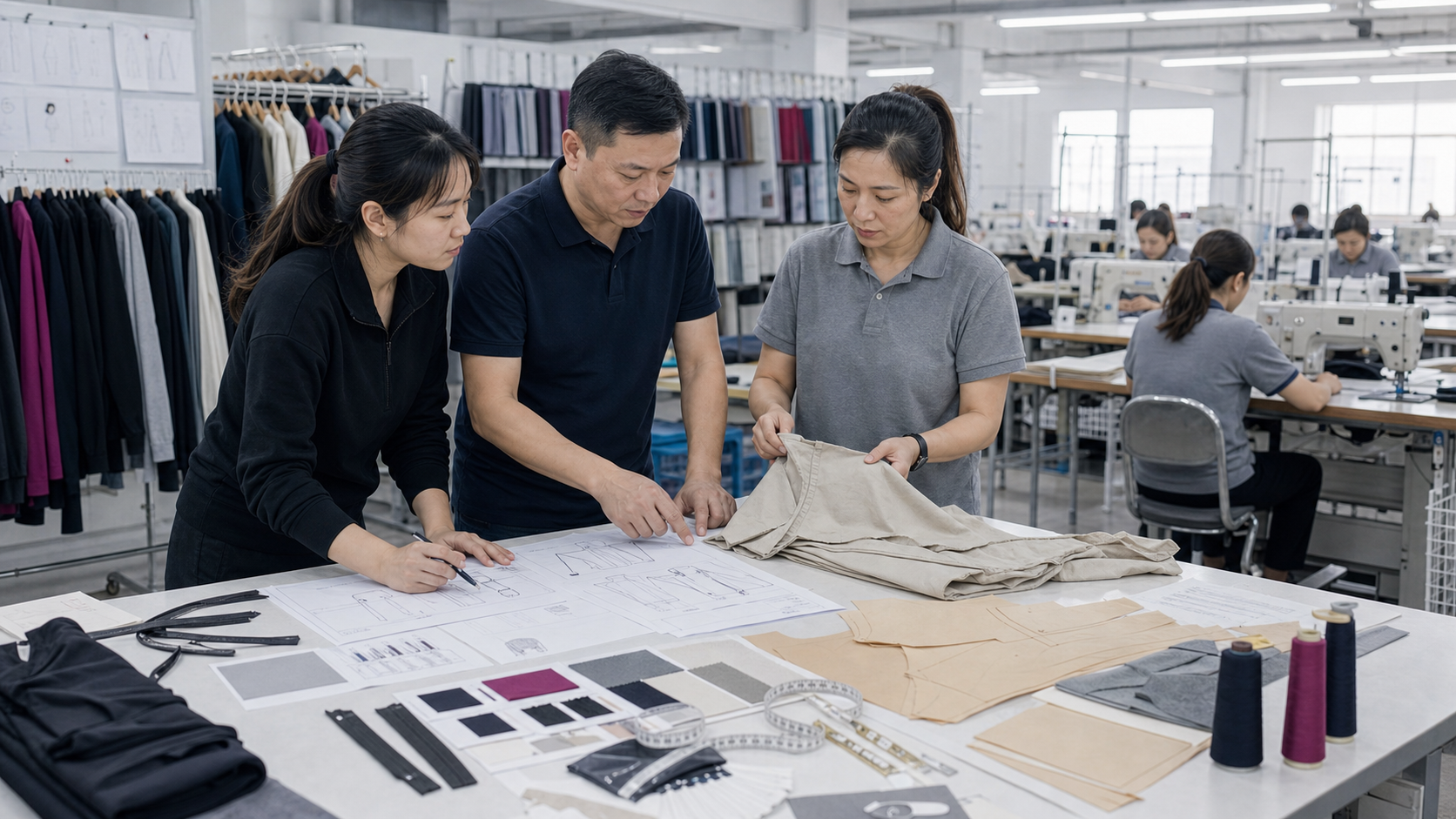
Step 4: build the tech pack and pattern. The tech pack is the technical instruction set for the garment. It may include flat sketches, measurements, grading, construction notes, seam type, stitch details, trims, artwork placement, label position, care label information, packaging, and colorways. The pattern turns the design into actual cutting pieces. A good pattern is important because it controls fit, proportion, fabric consumption, sewing difficulty, and production consistency.
Step 5: make the first sample. Sample making tests whether the idea can become a real garment. The first sample checks fit, proportion, fabric behavior, stitching, trims, decoration, and overall product direction. This is where the buyer and factory should identify problems early. If the fabric is wrong, the measurement is off, the construction is difficult, or the design detail is too expensive for the target price, it is better to discover that before bulk materials are ordered.
Step 6: review fit and revise the sample. Most fashion clothing needs at least one round of comments. The buyer should review measurements, garment balance, length, width, drape, sleeve shape, neckline, waistband, pocket placement, trim quality, print or embroidery position, and washing behavior where needed. The factory should record comments clearly and update the pattern, sample, fabric notes, or construction method. This step protects bulk production from repeated mistakes.
Step 7: calculate cost, MOQ, and production timeline. Costing should include fabric, trims, sewing labor, printing, embroidery, washing, labels, hangtags, poly bags, cartons, inspection, packing, and export handling. MOQ depends on fabric availability, color dyeing, trim minimums, size range, cutting efficiency, and production planning. A practical factory will help the buyer understand tradeoffs: fewer colors may reduce risk, shared fabrics may support smaller runs, and repeat-order planning may improve cost later.
Step 8: approve the pre-production sample. The pre-production sample, often called the PP sample, should represent the final standard before bulk production. It should use approved fabric, trims, labels, construction, measurements, color, artwork, and packing details. Buyers should not treat this step casually. Once the PP sample is approved, the factory uses it as the main reference for cutting, sewing, QC, and final inspection.
Step 9: prepare bulk materials. After approval, the factory arranges bulk fabric, trims, labels, packaging materials, and production scheduling. Fabric should be checked before cutting, especially for color, shade, width, defects, shrinkage, and handfeel. Trims should match the approved standard. If labels, hangtags, care labels, or packaging are custom, files and physical samples should be confirmed before production pressure begins.
Step 10: cut and sew the bulk order. Cutting converts the approved pattern into production pieces. Sewing turns those pieces into garments. In a factory with a hanging-line workflow, garments move through operations in a more organized way, helping the team manage work-in-progress, operators, and quality checkpoints. For fashion orders with multiple sizes, trims, labels, and details, production flow should be controlled so that small errors do not repeat across the whole order.
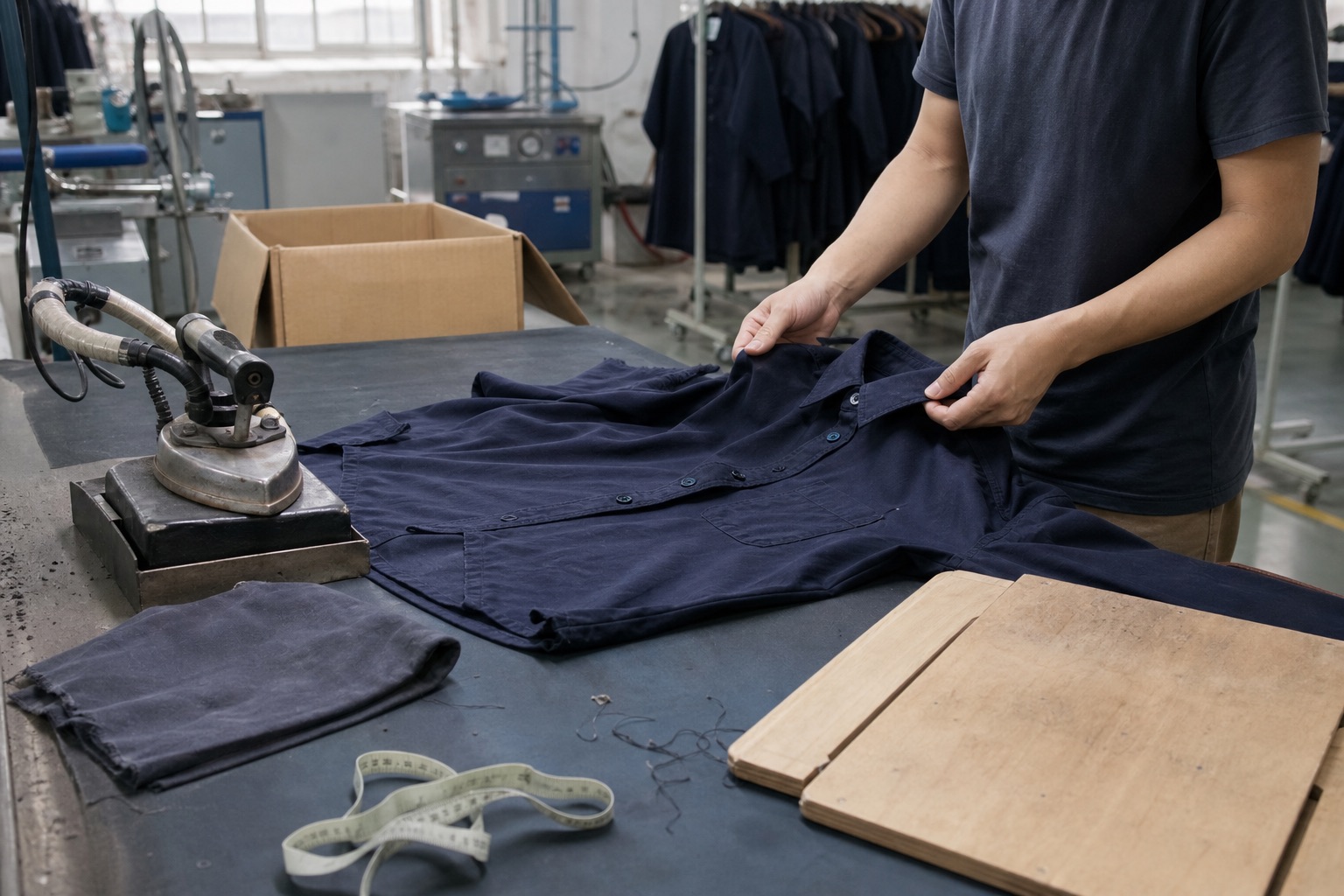
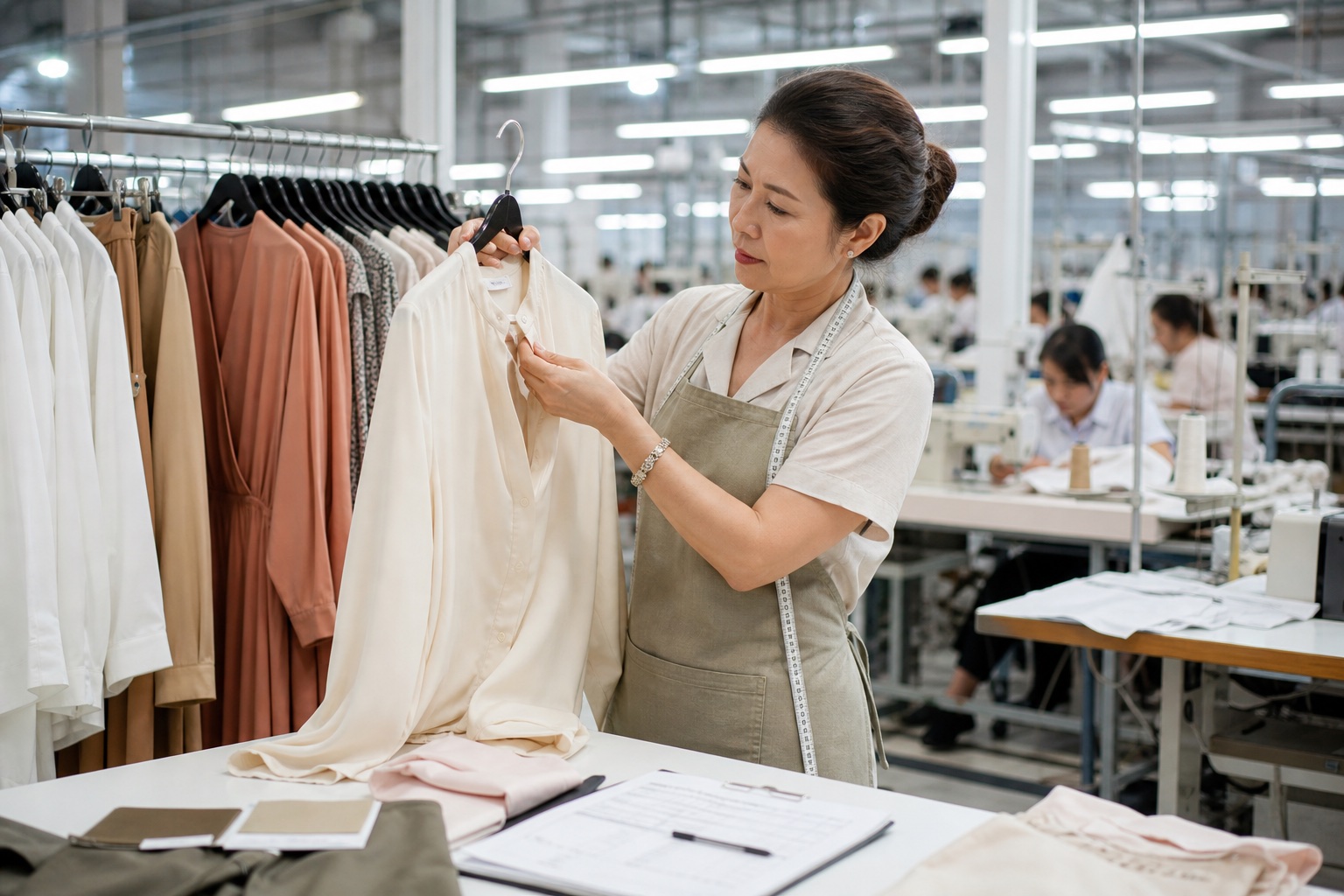
Step 11: manage decoration, finishing, and quality control. Printing, embroidery, heat transfer, washing, ironing, thread trimming, measurement checking, and appearance review all need control. Quality control should not happen only at the end. A better factory checks materials before production, reviews sewing during production, and inspects finished goods before packing. The QC standard should cover measurements, workmanship, shade, stains, holes, loose threads, label position, trim quality, and packing appearance.
Step 12: pack and ship the order. Packing is part of the product experience, especially for private label and retail brands. Buyers should confirm folding method, poly bag, sticker, hangtag, size ratio, carton quantity, carton marks, and packing photos. Export documents, delivery method, and shipment timing should be planned before goods are finished. Clear packing standards reduce warehouse confusion and help the buyer receive stock more smoothly.
Step 13: keep repeat-order records. The best manufacturing process does not end with shipment. A strong factory keeps records for fabric, color, shrinkage, pattern, measurement, sample comments, trims, labels, packing, QC notes, and shipping. These records make repeat orders faster and more stable. They also help brands improve fit, cost, packaging, and delivery for the next season.
What buyers should prepare before starting: reference photos, product category, target market, size range, desired fabric, colorways, logo or artwork, label package, packaging method, quantity by style and color, target price, destination market, and launch timeline. If a buyer does not have a complete tech pack, they can still start by sending a clear product goal and asking the factory to suggest a development route.
Common mistakes include starting with too many styles, changing fabric after fit approval, approving samples without checking measurements, ignoring trim MOQ, using vague artwork files, confirming price before all details are known, and pushing bulk production before the PP sample is clear. These mistakes create delays because design, material, cost, and production problems arrive at the same time.
How Yinshan Fashion supports the process: our team can help buyers move from concept to production through design service, fabric manufacture and sourcing, pattern and sample development, printing, embroidery, flexible small-batch production, hanging-line factory workflow, quality control, packing, export delivery, and repeat-order records. For fashion brands, the goal is not only to make one garment. The goal is to build a repeatable development and production system.
Final takeaway: the steps for fashion clothing design and manufacturing should be visible, practical, and recorded. When the buyer and factory work through brief, design, fabric, pattern, sample, costing, production, QC, packing, and repeat orders in the right order, the final product is easier to control and the business can grow with fewer surprises.
Reference points used in this guide
Fashion design and manufacturing process map
| Step | Main work | Buyer output |
|---|---|---|
| Brand and product brief | Define customer, product category, style direction, price level, quantity, destination market, and launch date. | Reference images, target retail level, size range, first quantity, and timeline. |
| Design direction | Translate market idea into sketches, silhouettes, color direction, trims, logo positions, and collection structure. | Design concept, mood references, colorways, and priority styles. |
| Fabric manufacture and sourcing | Compare available fabrics, develop custom fabric if needed, review handfeel, GSM, stretch, shrinkage, color, and cost. | Fabric preference, performance needs, sustainability goals, and budget range. |
| Tech pack and pattern | Prepare construction details, measurements, grading logic, pattern pieces, seam details, trims, labels, and packing notes. | Tech pack, sample garment, or clear reference if a full tech pack is not ready. |
| Sample making | Make first samples to test design, fit, sewing method, fabric behavior, decoration, and trim compatibility. | Sample comments, fit notes, photos, and approval or revision direction. |
| Costing and order planning | Calculate fabric, trims, labor, printing, embroidery, labels, packing, MOQ, lead time, and shipping assumptions. | Quantity by style/color/size, target price, label package, and delivery needs. |
| Pre-production approval | Confirm final sample, fabric color, trims, measurements, care label logic, packaging, and production standard. | Written approval of PP sample, bulk materials, labels, and packing standard. |
| Bulk production | Order materials, cut fabric, arrange sewing, manage hanging-line or batch workflow, and keep production records. | Final PO, payment schedule, approved files, and shipping destination. |
| Quality control | Check fabric, cutting, sewing, measurements, appearance, trims, labels, needle control, and final packed goods. | Inspection standard, tolerance, defect priorities, and any third-party inspection request. |
| Packing and delivery | Pack garments by buyer requirement, prepare cartons, marks, packing photos, export documents, and delivery schedule. | Packing method, carton marks, consignee details, and logistics plan. |
| Repeat order records | Keep fabric, fit, trims, labels, QC, packing, and shipment records for faster repeat orders and improvements. | Sales feedback, reorder quantity, improvement notes, and next season direction. |