Article
What should buyers know first?
Short answer: A B2B brief for nightwear brands that need fabric, comfort, care, packaging and review decisions aligned before a UK production run.
UK private label nightwear production starts with a clearer question than “can you make this pyjama?” A buyer needs to define what the garment is intended to be, how it should feel and fit, which materials and components support that use, and who is responsible for approving the market-facing information before a sample becomes a bulk instruction. A soft robe, a button-through pyjama set, a nightdress and a lounge co-ord can look related in a collection while needing different decisions about ease, closures, fabric behaviour, labels and packaging.
Yinshan Fashion supports custom and private-label bulk programmes for brands rather than unrestricted ready-stock wholesale. That means the brand owns the product proposition and the final UK market decisions. Yinshan Fashion can turn a reference, tech pack or range idea into fabric, pattern, sample, trim and packing inputs a factory can execute. The useful output is a controlled production brief. It should not be a generic claim that every nightwear product is automatically suitable for every UK sales route.
This guide is for production planning, not legal advice. The UK has textile-labelling and product-safety guidance, and nightwear can require product-specific review. The exact requirements depend on the garment, intended user, materials, selling route and applicable rules. A brand, importer and suitable UK adviser should confirm scope and final obligations. The factory's role is to work from approved inputs and keep the relevant product version clear.
How should buyers start by naming the garment category and use case?
The word “nightwear” is often used loosely in a mood board. A manufacturing brief needs more precision. Is the style a short robe, a long robe, a two-piece pyjama, a nightdress, a lounge top, a trouser set or an item intended to cross between homewear and daywear? Does the buyer want a light drape for a warm season, a brushed hand feel for a cooler range, or a satin-like surface for a giftable capsule? Is the expected fit relaxed, oversized, shaped through the waist, cropped, full-length or intended to layer?
These are production decisions. They affect pattern ease, sleeve opening, hem width, pocket placement, belt length, button choice, elastic construction, fabric weight and packing volume. They also affect what a sample needs to prove. A reference image can communicate a visual direction, but it rarely communicates the wearer movement, opacity, recovery, closure comfort or label placement that a manufacturer needs.
Use one style identity for each sellable version. The identity should connect the garment type, colourway, size range, fabric route, sample revision and current decision owner. If a robe changes from woven viscose blend to a printed satin-like fabric, the team should create a visible material revision rather than silently replacing it in a supplier message. This makes the project easier for a buyer and for the production team.
What should buyers check about the short answer: a nightwear brief needs six connected records?
Before a UK private-label nightwear sample is treated as ready for bulk planning, connect the product identity, material route, fit route, care-information source, market-review status and packing version. A small brand can manage those in a controlled shared sheet or a brief with linked files. The system does not have to be complex. It needs an owner, a version date and a place where earlier decisions can be found.
| Record | Buyer decision | Factory execution input | Review question | | --- | --- | --- | --- | | Style identity | Garment type, colourway, size range and revision | Reference on sample, labels and order files | Which version is being approved? | | Fabric and trims | Hand feel, drape, opacity, closures and components | Supplier codes, swatches and trim callouts | Does the sample use the intended route? | | Fit and comfort | Ease, length, coverage and movement priorities | Measurement points and construction notes | What must be tried on or measured? | | Care information | Source, language scope and approval owner | Approved label artwork and placement | Is the information tied to the selected material? | | UK review status | Named brand/importer reviewer and open items | No invented claims or unapproved labels | What still requires market confirmation? | | Packing release | Fold, bag, barcode, insert and carton instructions | Current packing specification | Which file may move to bulk? |
The value of the table is not paperwork. It stops a draft from being treated as final. A product page may say “smooth and lightweight,” while the factory needs a material reference, a lining decision and a sample approval. An approved sample may show a temporary care label. A retailer's packaging request may differ from the direct-to-consumer pack. The record shows which decision belongs to which version.
What should buyers check about fabric is a comfort decision before it is a colour decision?
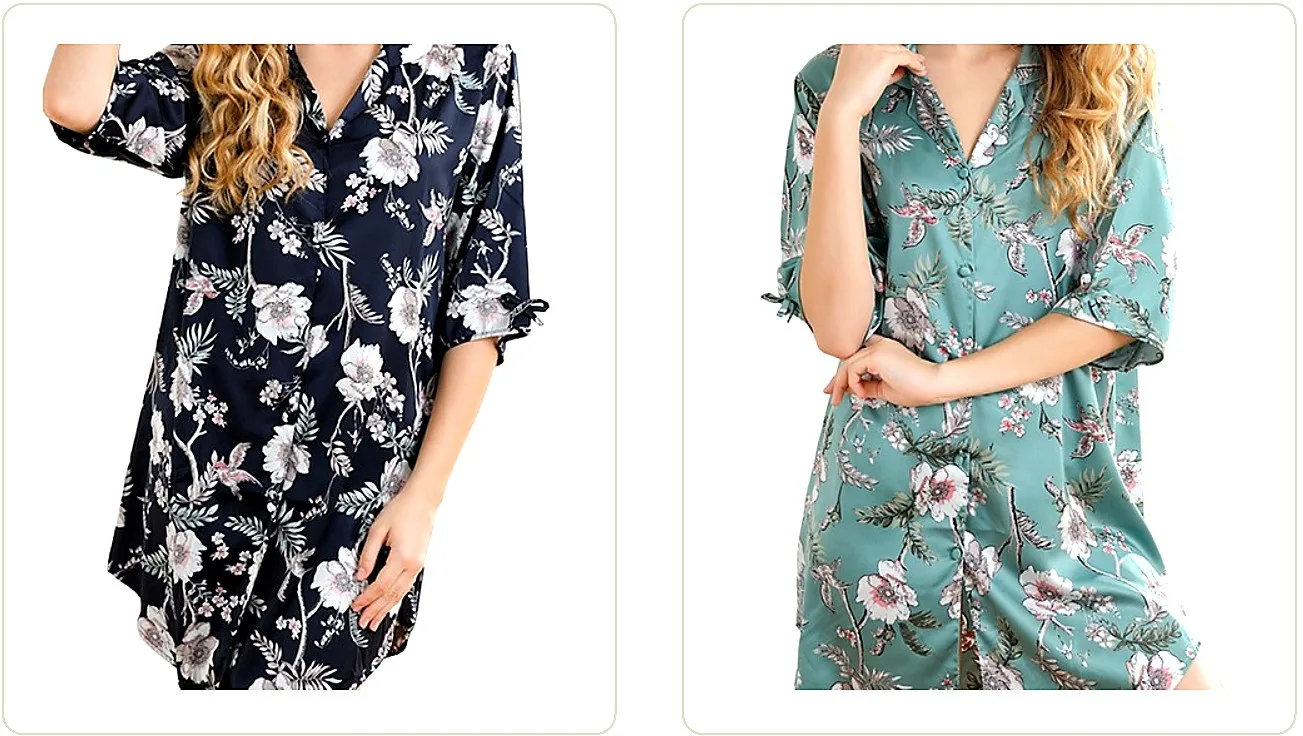
Nightwear buyers often begin with appearance: floral print, satin sheen, contrast piping or a tonal lounge set. The more lasting choice is fabric behaviour. Does the fabric cling or skim? Does it retain warmth, feel cool against the skin, show through under light, crease readily or stretch across a seated position? How does the chosen trim behave next to it? A fabric that looks right in a swatch may need a sample to test sleeve volume, button placket stability, seam finish or the way a belt carries the garment.
For a robe or shirt-style pyjama, specify the desired drape, body, surface, opacity, print direction, closure, pocket use and wash-care information source. For a knit lounge set, specify stretch direction, recovery expectation as a project target, rib or cuff construction and how the neckline should sit. Do not turn these wishes into unsupported performance claims. Put them in a sample brief and decide what needs review.
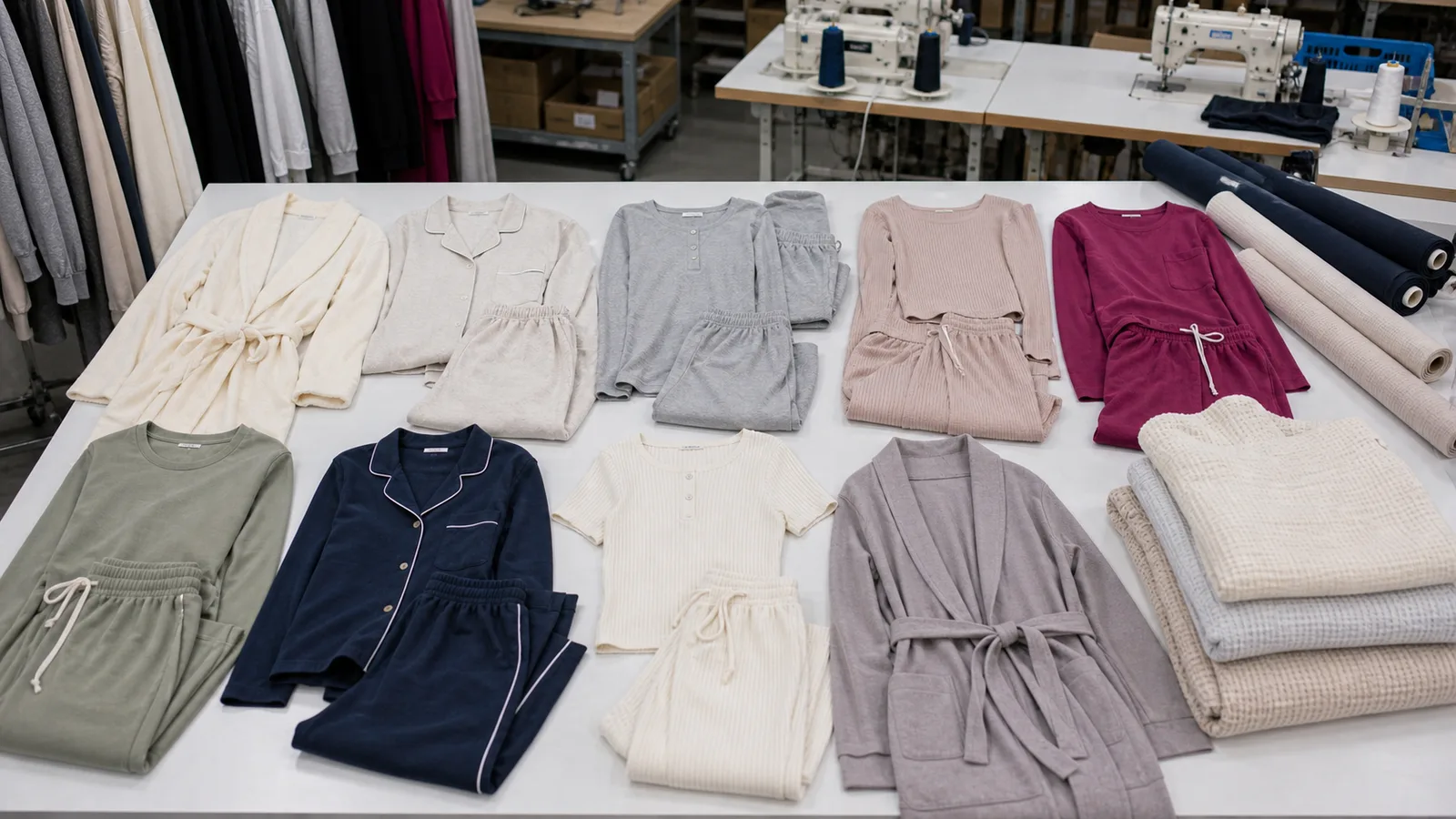
The loungewear product range is a useful starting point for discussing silhouettes, while fabric and trims planning helps a buyer organise swatches, components and alternates. Yinshan Fashion can advise on fabric and fit choices during custom development, but the selected material and consumer-facing statements should be approved through the brand's own process.
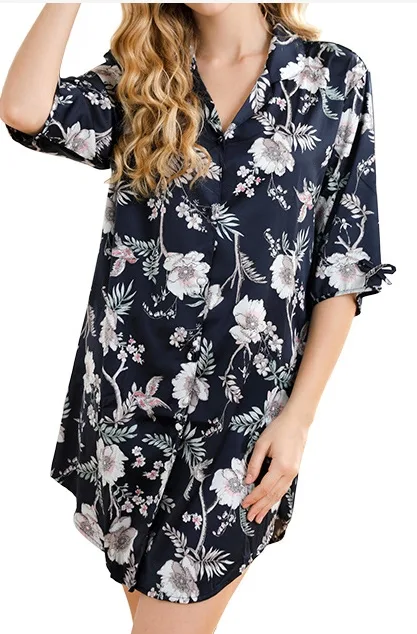
*A print, sleeve opening and button route should be connected to the style version, not treated as separate inspiration images.*
What should buyers check about fit must include sleeping, sitting and dressing movement?
A nightwear fit review is not the same as a fitted dress review. The buyer should consider the movements and moments that matter to the intended garment: raising arms to change clothes, sitting on a bed, lying down, tying a belt, moving through a morning routine, layering over a slip or wearing a two-piece set together. The point is not to prescribe one universal fit. It is to make the expected experience explicit before grading and bulk cutting begin.
State which measurements are critical. For a button-front top that may be chest width, front length, sleeve opening, placket stability and button spacing. For trousers it may be rise, waist relaxation, hip ease, inseam, hem opening and elastic or drawcord construction. For a robe it may include overlap, belt-loop position, sleeve length, pocket height and coverage at the front opening. A good sample review attaches comments to the exact style-colour-size version and explains whether the issue is aesthetic, comfort-related, material-related or packing-related.
Yinshan Fashion can connect pattern, fabric and sample comments during development. The brand should provide the intended customer, sizing approach and approval owner. A factory cannot infer whether “oversized” means a fashion silhouette, additional sleep comfort or a size substitution policy. Those distinctions affect the block, grade and sample route.
What should buyers check about turn the fabric option into a sample test plan?
A swatch approval is a starting point, not a complete garment decision. The buyer can ask the factory to turn each shortlisted material route into a small, visible sample test plan. The plan should name the style version, fabric reference, colour or print route, components that touch the wearer, the questions to review, and the person who will make the decision. It keeps a pleasing fabric name from becoming a vague instruction once development moves between the brand, a fabric supplier and the sewing team.
For example, a light printed woven may need the buyer to review the degree of coverage in the selected colourway, the feel of seams on the inside, the behaviour of a button placket, and the way the garment sits after it has been tied or folded. A knit alternative may require a different discussion about neckline recovery, waistband construction, cuff proportion and the relationship between the body fabric and elastic. Those are sample observations, not blanket performance promises. The useful record says which characteristic the sample will help the team judge and what decision follows from that review.
Yinshan Fashion can organise fabric, trim and pattern comments so the supplier and manufacturing partner work from the same current route. The buyer should still decide which changes are acceptable to the brand. If the intended material is unavailable, a substitute should be presented with its own reference, the styles affected, any information that must be reconsidered, and a clear approval path. This protects the comfort and visual intent of a sleepwear range while giving the factory an executable instruction instead of a verbal approximation.
What should buyers check about care information should come from a source, not a memory?
Care information is often treated as an artwork task near the end of the project. It should begin when the material route is chosen. The buyer should identify what source supports the care direction, who will approve consumer-facing wording and which label version belongs to the final fabric, lining, print and trim selection. If the material changes, the care-information review should reopen.
GOV.UK textile-labelling guidance is useful background: manufacturers and retailers have responsibility for textile labelling, and fibre-content information needs to be accurate. It does not mean every care phrase or garment label can be guessed from a fabric name. A fabric trade name, a fibre composition, a consumer-care instruction and a marketing claim are different fields. Keep their sources and approval status separate.
The factory needs the approved label artwork, placement and version. The brand or relevant reviewer owns final wording and market applicability. This separation keeps the factory from adding unsupported information and keeps the brand from assuming an early sample label is production-ready. It also makes repeat orders safer, because the team can retrieve the last approved version rather than rebuilding a label from an old photo.
What should buyers check about treat UK safety review as an input to the brief, not a marketing line?
UK product-safety guidance identifies nightwear as a category with specific regulatory context. That should lead a buyer to ask the correct planning questions early: what exactly is the garment category, who is the intended user, what materials and trims are proposed, which sales route is planned, and which brand or importer will confirm the applicable review? It should not lead a manufacturer to claim that an unreviewed style “meets UK safety standards.”
Keep the safety-review field factual. It can say “brand review open,” “market adviser review requested,” “approved label artwork received” or “sample material route changed, review reopened.” It should not say “compliant” unless the owner has evidence and authority to make that statement. This preserves a clean handoff between the commercial, technical and market-review teams.
For children's or age-specific ranges, treat the review as a higher-risk decision and do not apply adult nightwear assumptions. For adult robes, pyjamas or homewear, do not assume scope simply because a silhouette is relaxed or decorative. The brand should confirm the intended use and applicable requirements. Yinshan Fashion's contribution is disciplined production communication: sample and material references, component callouts, approved artwork handling and clear version control.
What should buyers check about packaging is part of the product experience and the order record?
Nightwear often sells as a gift, a set or an everyday replenishment item. Packaging may therefore include a fold standard, belly band, tissue, polybag, hangtag, barcode label, size sticker, gift box or retailer carton requirement. Each one needs a version and an owner. A lovely pack design is not enough if the factory does not know which style, size and colourway it supports.
Start with the channel. A department-store order may need different information and carton routing from a direct-to-consumer capsule. A multi-piece pyjama set needs a clear definition of what belongs together. A robe may have a separate belt that needs a controlled packing method. A fragile trim or printed surface may influence folding and protection. Make the buyer's intention explicit, but do not invent packing tests, fixed costs or lead times. Those remain project-specific.
The private-label workflow can bring brand identity and approved pack assets into the production brief. Yinshan Fashion can coordinate the packing instruction with the garment version, while the brand confirms its final retailer, customer and market-facing requirements. That prevents the common problem of a correct garment being packed with an outdated label or the wrong size sticker.
How a sample becomes a UK-ready production discussion?
The sample is a decision tool. It is not automatically proof for every feature of the final garment. Before approving it, ask what it actually proves. Is it checking the pattern block? The print scale? The pocket position? The drape of the selected fabric? The button route? The care-label placement? The packing fold? A buyer can approve some of those while keeping others open. That is normal and should be recorded.
Use a simple decision log: sample version, date, material and trim route, observations, changes, owner, decision and next action. If the fabric changes after a fit sample, decide whether the fit must be reviewed again. If a label language changes, decide whether the artwork release needs new approval. If an ecommerce image is shot from an earlier sample, record that fact before it is used as a product-page representation. The log helps a small brand avoid treating a patchwork of messages as the production specification.
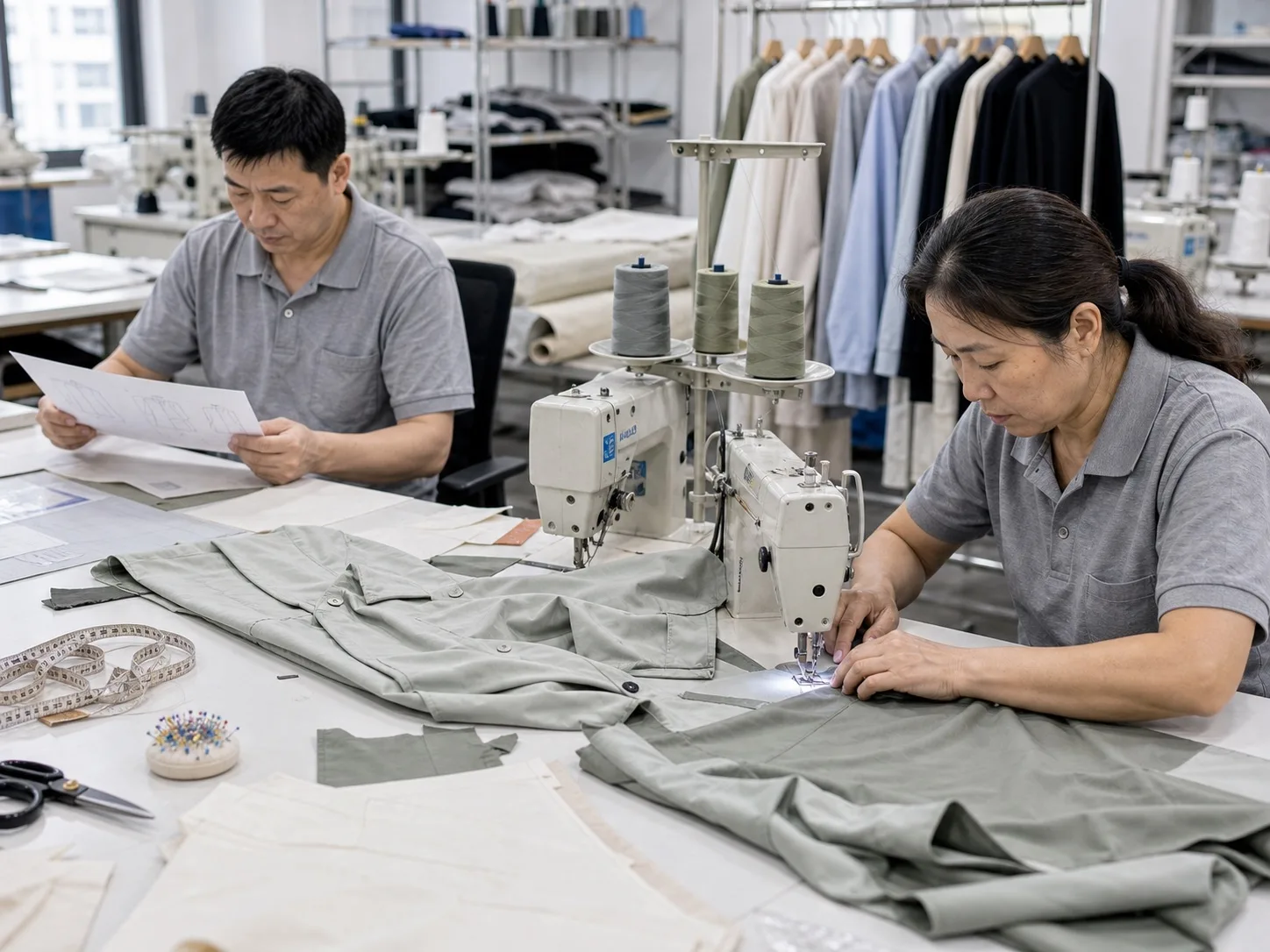
Yinshan Fashion works with multiple manufacturing partners and coordinates product development according to category, fabric and construction needs. The buyer still needs one current brief. That is especially useful for a nightwear range with mixed woven, knit, printed or trim-heavy styles, where each factory and supplier needs the correct, approved version rather than a broad collection concept.
What should buyers check about a practical buyer checklist before requesting a bulk quote?
One useful control is a “no silent substitutions” line in the brief. If a proposed fabric, print base, elastic, button, piping, label or pack component is unavailable or changed, record the proposed replacement, the reason, the style versions affected and the buyer who may approve it. This avoids a common nightwear problem: the visual appearance looks close enough in a message, but the new component changes touch, drape, closure comfort, opacity, care information or packing behaviour. The buyer can then decide whether the change is acceptable, requires a new sample, or should remain open. The factory gains a clear instruction instead of an assumption, and the brand retains the decision history for its online assets and repeat orders.
It also gives commercial, design and production teams a shared way to discuss risk without turning an unapproved technical detail into a public claim.
- Name the product type and intended wearer context for every style.
- Provide style, colourway, size range and current sample revision.
- Describe the fabric hand feel, drape, opacity, components and expected use in clear, non-claim language.
- Separate inspiration images from approved pattern, material and artwork files.
- Identify the source and owner for fibre, care and consumer-facing product information.
- Name the person or team responsible for confirming applicable UK market requirements.
- Confirm whether photos represent the current approved version or an earlier sample.
- Release packing, labels and barcode files only with a version date and style reference.
What should buyers check about a practical factory checklist before production moves forward?
- Confirm which style-colour-size revision controls the sample and order.
- Check fabric, lining, buttons, elastic, piping and trim references against the approved route.
- Ask the buyer to clarify conflicting use descriptions such as nightwear, homewear and daywear.
- Keep unapproved care, safety or marketing wording out of production artwork.
- Record sample comments and identify whether a fabric change reopens fit or label review.
- Match folding, set composition, size stickers and carton instructions to the issued packing file.
- Protect client identity and confidential documents when using images or shared references.
- Escalate open market-review items to the buyer rather than assuming an answer.
What Yinshan Fashion adds to private-label nightwear development?
Yinshan Fashion helps turn a nightwear idea into a production-ready conversation: fabric and trim suggestions, fit and pattern discussion, sample development, label and packing inputs, and coordination with appropriate production partners. The experience is most useful when the buyer provides a defined product identity and decision route. It allows the factory team to ask targeted questions about fabric, closures, sizing, care artwork and packaging rather than reverse-engineering them from creative references.
For brands developing robes, pyjama sets, sleep shirts, lounge co-ords or homewear capsules, begin with the intended experience and the exact style category. Then build the material, fit, care-information and packing record around the sample. This gives the brand a better basis for a quote, a sample review and a repeat order. It also keeps market review where it belongs: with the brand and its appropriate UK advisers.
What questions do buyers ask most often?
What should a UK private label nightwear production brief include?
It should include the style identity, garment category, intended use, colourway, size range, fabric and trim route, fit priorities, sample version, care-information source, packing instruction, decision owner and open market-review items. It should distinguish approved production inputs from creative references or working drafts.
Does a robe use the same brief as a pyjama set?
Both need a controlled product identity, but their fit, closure, material and packing decisions can differ. A robe may require overlap and belt details, while a pyjama set may need set composition, waistband and cuff decisions. The buyer should state the exact garment use rather than relying on a broad nightwear label.
Who approves UK safety and label requirements for nightwear?
The brand, importer or other appropriate market operator should identify and approve the relevant review route. Yinshan Fashion can organise approved production data and apply approved artwork, but it does not replace the buyer's market or legal review.
When should care information be finalised?
Start the source record during material selection and finalise consumer-facing artwork only when the relevant fabric, components and brand review are current. A material or component change can require that review to reopen.
Can Yinshan Fashion help with small-batch private-label sleepwear?
Yes. Yinshan Fashion can discuss custom and private-label production programmes, fabric and fit development, sampling, labels and packing. Quantity, cost, timing and exact production terms depend on the confirmed brief and should be discussed for the project.
What should buyers check about send a brief that a nightwear factory can use?
To begin, send Yinshan Fashion the target UK channel, garment category, style and colourway references, intended fit and use, material and trim direction, sample status, care-information source, packing idea, quantities and decision owners. Yinshan Fashion can help convert those inputs into a more useful sampling and manufacturing handoff for a private-label programme.
For related buying guidance, see our custom pajama supplier planning guide and nightwear manufacturer brief. When you are ready to align the next sample, contact Yinshan Fashion with the current brief.
Nightwear brief-control kit
Three controls that make a sleepwear sample useful for a production decision
A nightwear brief should connect the intended wearer experience with the material route, fit decisions, care-information inputs and packing version. Market review remains the brand's responsibility.
Define the use case
Specify whether the style is a robe, pyjama set, nightdress or loungewear piece, plus the intended comfort, coverage and season context.
Prove the material route
Tie fabric, lining, trim and care-information inputs to the sample version instead of relying on a broad fabric name.
Release one packing version
Keep size, label, care, fold, bag and carton decisions connected to the exact style-colour-size version.
Buyer actions and factory questions before UK nightwear sampling moves toward bulk
Use this as a development control. Product scope, safety, label and market requirements remain for the brand, importer and appropriate UK reviewers to confirm.
| Decision area | What the buyer should prepare | What to ask the factory |
|---|---|---|
| Style scope | State the garment type, intended wearer, market, channel and reference image | Does the brief clearly distinguish nightwear, robe and loungewear use? |
| Fabric route | Provide fabric, lining, trim, weight, feel and colour direction | Which selections need swatches or sample confirmation? |
| Fit and comfort | Set ease, length, closures and size-range priorities | Which movement or comfort points should the sample prove? |
| Care inputs | Share the source and owner for consumer-facing care information | Which approved label version applies to the selected material? |
| Safety review | Name the brand or market reviewer for applicable UK requirements | Which product details must stay open pending that review? |
| Packing | Approve fold, label, bag, barcode and channel instructions | Which current version may be issued to bulk packing? |
Continue the production conversation
Buyer FAQs
What should a UK private label nightwear production brief include?
A controlled style identity, garment category, intended use, fabric and trim route, fit priorities, sample version, care-information source, packing instruction, owner and open review items.
Does a robe use the same brief as a pyjama set?
Both need a controlled identity, but their fit, closure, material and packing decisions can differ. State the exact garment use rather than relying on a broad nightwear label.
Who approves UK safety and label requirements for nightwear?
The brand, importer or appropriate market operator should identify the applicable review route. Yinshan Fashion can organise approved production data but does not replace market or legal review.
When should care information be finalised?
Start its source record during material selection and finalise consumer-facing artwork only when the relevant material and review are current.
Can Yinshan Fashion help with small-batch private-label sleepwear?
Yinshan Fashion can discuss custom private-label production, fabric and fit development, sampling, labels and packing. Exact commercial terms depend on the confirmed brief.