Article
What should buyers know first?
Short answer: A B2B buyer guide to comparing polyester, nylon, elastane and other synthetic-fibre routes through construction, finish, garment risk, samples and controlled bulk handover.
Types of synthetic fabrics for clothing are best chosen through a specific garment brief, not a fibre name alone. Polyester, nylon and elastane can appear in women’s dresses, blouses, skirts, active pieces, sleepwear and partywear, but the finished result also depends on yarn, knit or weave construction, weight, finish, colour, pattern, lining, sewing method and the way the style is intended to be worn. A buyer who starts with those decisions can ask better questions of a supplier and avoid treating one generic material label as a complete specification.
Yinshan Fashion supports custom and private-label bulk programmes rather than an unrestricted ready-stock wholesale catalogue. For a new development, send the reference style or tech pack, target customer, garment category, visual direction, target handfeel, stretch question, colour range, components, size range, sample goal, quantity context and target market. That gives the factory a way to compare fabric proposals for the actual product while keeping price, minimums, timing, testing, availability and final claims conditional on the confirmed programme.
Types of synthetic fabrics for clothing: start with the garment decision
The phrase “synthetic fabric” is useful for search and a first supplier conversation, but it does not identify a fabric well enough to release a women’s garment. A fibre name answers only one part of the question. A buyer still needs to know whether the candidate is woven or knitted, how it is constructed, what weight or surface is relevant, whether it contains another fibre, what finish is present, which colour is being considered, and which part of the garment it will serve.
Begin with the garment’s job. A fluid dress skirt, a structured blouse sleeve, a close-fitting active legging, a pyjama top, a partywear lining and a waistband panel may all create different questions. The brief should distinguish what is fixed from what is open for proposal. For example, the silhouette and target colour may be fixed while the buyer is open to two candidate constructions; or the fibre direction may be preferred while the final surface must be selected only after a sample review.
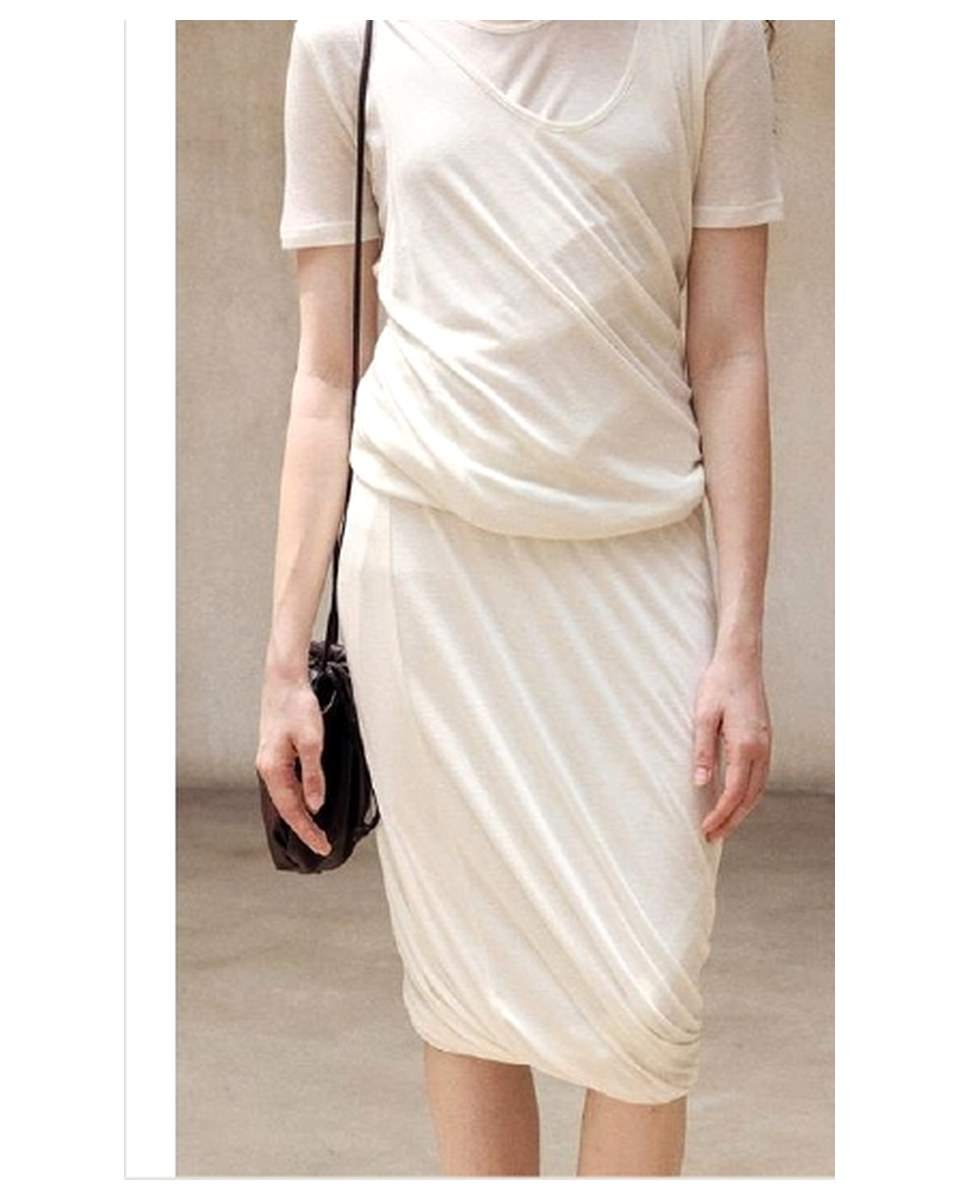
The dress collection can help a team describe silhouette, neckline, skirt volume and garment context. It is not evidence that a displayed style uses a particular fibre content, construction, finish, certification or performance route. The material actually proposed for the current programme, together with the current sample, is the controlling reference.
Separate fibre, yarn, construction and finish before comparing candidates
Buyers often receive a mill description that puts several layers of information into one short line. Unpack it. Fibre is the material category named on the composition. Yarn describes how the input has been prepared. Construction may be woven, knitted, brushed, mesh-like, ribbed, interlock, satin-like or another specified structure. Finish can describe a surface treatment, coating, brushing, print, wash, texture or other process. Each layer can change what should be sampled and what can be said about the finished garment.
Create one comparison row per candidate rather than relying on a mood board label. Record the supplier’s reference, provisional composition, construction, surface or finish, colour condition, proposed garment areas, physical sample available, intended customer wording, documents offered and questions still open. If an input is unknown, mark it unknown. A visible gap is safer than a guessed specification that follows the style through sampling and into product copy.
Two fabrics with the same named fibre can look and behave differently once they are cut and sewn. Likewise, two different blends may give a similar visual direction in a particular sample. The purpose of the comparison is not to declare one fibre universally superior. It is to help the buyer select a candidate that is appropriate for the named style, then identify the evidence and physical checks needed before bulk instructions are issued.
Use the fabrics and trims process to bring fabric, lining, colour, labels, elastics, zippers and other components into the same development conversation. A shell-fabric decision should not quietly become a decision about every hidden or visible component. Keeping the component list visible also makes later copy review more accurate.
Polyester: specify the construction rather than assuming the outcome
Polyester is a common starting point in women’s clothing discussions, but “polyester” is not a finished fabric specification. A buyer may be seeking a matte or lustrous surface, a certain drape direction, a printed ground, a stable-looking woven, a knitted base, or a blend with another fibre. Those are separate choices. Ask the supplier to identify the candidate construction and finish, then review a swatch or sample in the colour and garment configuration that matters to the collection.
For dresses and blouses, name the risk area. Is the concern the way a gathered skirt falls, the appearance of a seam near the bust, the surface under flash photography, the interaction with a lining, a pale colour’s coverage, or the edge at a cuff? A flat swatch may begin the discussion, yet a sewn panel or garment sample is normally more useful when the decision involves shaping, movement, transparency, seams or a closure.
For printed styles, record whether the sample carries the intended print or only a base material. A base swatch can help a team reject an unsuitable handfeel or surface, but it does not establish the final visual result of the approved artwork, scale, colour or finish. Put that limitation in the sample comment so a later review does not confuse an early material direction with a final approval.
Nylon: define the specific use case before making a material choice
Nylon may be proposed for active fashion, fitted partywear, lightweight layers or specific components, but a buyer should not convert the word “nylon” into a blanket garment promise. The relevant question is what the chosen construction needs to do in the particular style. Does the buyer need a certain surface, stretch direction, recovery observation, abrasion question, appearance under tension, lining relationship or colour direction? Put that question in the brief and decide whether a swatch, a sewn panel or a full prototype is needed to answer it.
The active fashion range is a useful context for naming areas such as a waistband, leg panel, sports bra, cover-up or fitted top. It is not a universal material specification or a promise that every active item has the same composition or performance. The current product record should name the exact candidate fabric, garment section and sample purpose.
If a nylon-containing candidate is under consideration for a close-fitting garment, review it at the intended pattern area rather than only as an isolated cutting. A fabric can look different after seam allowance, elastic attachment, lining, binding or a change of direction on the pattern. Record the sample version and what it answered: for example, “compare the selected waist construction in the intended colour” rather than “nylon approved.” That wording makes the approval usable when a factory, designer and buyer revisit it later.
Elastane and stretch fibres: make recovery a sample question
Elastane is usually discussed as a stretch component, but its presence does not tell a buyer how a particular garment will fit, retain its intended shape, feel at a seam or react to a changed pattern. The percentage, companion fibres, construction, garment dimensions, ease, elastic components and sewing choices can all matter. Describe the required result as a garment question instead of treating a general stretch label as the answer.
Ask where stretch is needed and in which direction. A bodycon party dress, fitted blouse cuff, active legging, sleep short and waistband may need different reviews. Specify whether the sample must answer fit across a named measurement, movement at a seam, neckline stability, waistband appearance or comfort perception in a particular prototype. Avoid framing an early swatch as a guarantee for every body, use condition or market.
The most useful comment names the condition and next decision. “Review the revised legging sample with the selected waistband construction” is actionable. “Good stretch” does not tell a production team which construction, pattern, colour, sample or component was reviewed. When the fabric candidate changes, reopen the relevant stretch observation rather than transferring a previous result automatically.
Other synthetic fibres and blend components need their own records
Acrylic, acetate, polypropylene and other manufactured fibre components may appear in a sourcing conversation, particularly where surface, warmth perception, lightness, lining, trim or price direction is being explored. They should be described from the material record supplied for the actual candidate, not from a generic internet definition. The buyer needs the current composition, construction, colour, finish, intended garment area, sample purpose and the proposed wording that will be used in a product description.
Blends create a second reason to keep records precise. A blend can change the handfeel, surface, movement and construction options being considered, but it does not justify a vague claim that a garment combines every benefit attributed to each named fibre. Keep the requested language narrow: identify what the record establishes, which component it applies to and which points are still subject to sample or evidence review.
When a lining, elastic, thread, tape or trim has another material route, list it separately. A shell description should not be broadened into a whole-garment claim. This matters for customer copy, commercial discussions and repeat orders: everyone can see which item was approved and which item still needs a decision.
Choose fabric by garment area, not a fibre ranking
One garment can contain several material decisions. A dress may have a shell, lining, interfacing, zipper tape, elastic detail and label. An active set may have a main body, mesh insert, waistband, binding and heat-applied branding. A shirt can combine a body fabric with collar support, placket components and labels. A useful sourcing brief maps the garment first and then links each high-risk area to a candidate material question.
For a blouse programme, a buyer may focus on collar shape, sleeve volume, cuff edge, coverage and how the garment reads when tucked or layered. For an evening style, the open question may be the skirt’s movement, a lining edge, a strap attachment or a zipper zone. For an active style, it may be a fitted seam, panel direction or waistband assembly. The fibre name should support that discussion, not replace it.
Prioritise the areas that could change the buyer’s decision. A full garment sample is not always the first step. A sleeve panel, waistband mock-up, seam trial or lined skirt section may answer a practical question earlier and with less waste. When a full prototype is needed, give it a single decision purpose so the review produces a clear next action.
Build a sample plan around what a swatch cannot show
A fabric swatch can be useful for a first review of surface, thickness, visual direction or handfeel. It cannot by itself settle every garment issue. Pattern shape, seam construction, lining, finishing, colour, stretch direction, trim interaction and the wearer’s movement may change the visible result. The right sample format is the smallest physical review that answers the next unresolved product decision.
Before sampling, write an exit criterion. It could be “choose between two shell-and-lining combinations,” “confirm the selected sleeve construction in the intended colour,” or “decide whether the waistband needs a different construction.” It should not just say “approve fabric.” That phrase loses the condition behind the decision and makes it hard to assess a later substitution.
Photographs support communication, but they do not replace the physical record. Keep the fabric code, sample identifier, colour condition, pattern revision, components, question, observation, decision owner and next action together. If a later sample differs, the team can tell whether it is a new candidate, a controlled correction or an unrelated version.
Keep product copy narrower than the material conversation
Marketing copy should follow the approved product record rather than lead it. A broad phrase such as “high performance,” “eco-friendly,” “more durable,” “breathable,” “recyclable” or “best for all-day comfort” should not be inferred from a fibre name. Those claims have different boundaries and may require their own scope, evidence and market review. The brand remains responsible for final legal, commercial and customer-facing language.
Start with the narrowest accurate description. Identify the component being discussed, the composition or construction currently documented, and any limitation of the evidence. If the fabric, finish, colour, lining or component changes, ask whether the product page, care copy, hangtag, marketplace listing or sales presentation needs to be reviewed again. The value of this gate is not bureaucracy; it is preventing an earlier development shorthand from becoming a statement about a different final garment.
This control is especially useful for small brands that use the same silhouette with different colours or materials. Keep each fabric route and its copy tied to the actual style version, rather than assuming that a name used for one sample applies to a wider collection.
Quote and release bulk on the same product basis
Commercial assumptions must sit beside the sample and material record. Price, MOQ, lead time, testing, certification scope, capacity and availability vary with the selected fabric, colour, quantity, order window, components and confirmed production route. An evergreen article should not publish a fixed number for those inputs. In a live programme, retain the quotation and its assumptions with the style file.
Before bulk handover, read the current materials and garment record together. Confirm the style and colourway, pattern or sample revision, fabric and lining references, visible components, approved wording, packing inputs, outstanding conditions and owner of each open point. A changed fabric code, composition, construction, finish, colour, lining or trim should trigger a documented review rather than an invisible transfer of approval.
The custom womenswear manufacturing route provides a practical framework for connecting design, fabric direction, patterns, fit samples, private labels and production handover. Yinshan Fashion can coordinate the development conversation, but certification status, customer claims, test scope, commercial terms and final release decisions remain specific to the confirmed product and order.
Use a controlled handover for repeatable material decisions
A small brand does not need a complex system to keep material choices clear. It needs one current record that connects the garment, candidate fabric, physical sample, customer wording and next decision. At handover, identify which inputs are final and which remain conditional. If a buyer approves the silhouette but needs a final colour review, state that condition. If a lining route is still open, do not let a shell approval imply that the whole garment is released.
Assign an owner to each unresolved item. The factory can identify a candidate change; the buyer or brand can decide whether it changes the sample, customer copy, commercial assumptions or production release. A dated decision record is more valuable than an unsupported general assurance because it helps the team compare the next version to the actual approved reference.
For synthetic-fabric sourcing, control means clarity rather than a claim that every outcome is predictable. The final garment still needs the agreed development, quality and market review. The record simply makes the decision path visible enough to manage a change.
Make colour, care and packaging part of the same version review
Material choices do not end when a buyer selects a base fabric. The intended colour, care information, labels, folding method and packaging can affect what is shown to a buyer or customer and what needs to be confirmed before production. A sample may use a development colour, temporary care wording or substitute label components. Treat those as stated conditions, not silent approvals for the final order.
At the final review, compare the current garment against the release record: fabric reference, colourway, lining, visible components, label copy, care wording, packaging inputs and product description. If the brand changes the material or the factory proposes an alternate component, decide whether the new version requires another visual sample, another record check or a copy update. This keeps a small change from drifting across production, ecommerce content and customer communication without a clear owner.
How Yinshan Fashion can support a synthetic-fabric brief
Yinshan Fashion can help translate a broad fabric direction into a practical women’s garment development plan: style and target customer, candidate material route, construction questions, fit and pattern priorities, sample objective, components, private-label inputs, packing and bulk handover. The goal is not to rank polyester, nylon or stretch fibres in the abstract. It is to identify the candidate that should be sampled for the exact garment and to keep the resulting decision connected to the current product version.
Send the tech pack or reference, garment category, target silhouette, expected wearer and use context, desired surface or handfeel, colour range, stretch or lining question, components, sample goal, quantity context, market and any material documents or customer copy already drafted. Yinshan Fashion can then discuss fabric proposals and a sample route suited to the specific programme. Start a fabric and sample discussion.
Frequently asked questions about types of synthetic fabrics for clothing
What are the main types of synthetic fabrics for clothing?
Buyers commonly discuss polyester, nylon and elastane, alongside other manufactured fibres and blend components. For a sourcing decision, the actual construction, finish, companion fibres, colour, garment area and sample result are as important as the fibre name.
Is polyester or nylon better for women’s clothing?
Neither is universally better. The relevant choice depends on the named garment, construction, desired surface, stretch question, lining, colour and physical sample. Compare candidate fabrics against the same product brief instead of choosing from a generic ranking.
Does elastane guarantee recovery in a garment?
No. Elastane is a stretch component, but the finished result depends on the particular construction, companion fibres, pattern, seam and component choices. Review the current garment sample for the stated fit or movement question.
Should a buyer approve a fabric from a swatch alone?
A swatch can begin a material comparison, but it may not show the result of shaping, seams, lining, colour, closure or movement. Use a sewn panel or representative garment sample when the open decision concerns those conditions.
Can a product page make performance claims from a fibre name?
Not automatically. Customer-facing wording should follow the evidence and approved scope for the current material and garment version. Broader performance, environmental or whole-garment claims need their own review.
What to send for a synthetic-fabric clothing enquiry
Send Yinshan Fashion the style reference or tech pack, garment category, target customer, intended use context, silhouette, desired surface and handfeel, colour range, stretch or lining question, component list, sample objective, quantity context, target market and any material documents or draft customer wording. That lets the discussion move from a broad fibre label to a controlled fabric, sample and production decision.
Synthetic-fabric decision kit
Three actions that turn a fibre label into a usable garment brief
Map the garment risk, test the proposed construction, and release only the material version that the current record and sample actually support.
Map the decision by garment area
Name the style section, visual or fit question, component and condition that the candidate fabric needs to answer.
Test construction, not only a fibre label
Use the smallest swatch, panel or garment sample that can reveal the open seam, lining, colour, movement or stretch question.
Release one current material version
Connect fabric reference, colour, components, sample result, wording and change triggers before bulk handover.
Buyer actions and factory questions for a synthetic-fabric brief
Availability, performance, certification, tests, commercial terms and final customer wording remain specific to the confirmed product and order.
| Decision area | What the buyer should prepare | What to ask the factory |
|---|---|---|
| Garment purpose | State the style, target customer, garment area and visible or fit question to resolve. | Which candidate construction should be compared for that exact product question? |
| Material record | Request the current composition, construction, finish, colour condition and intended component scope. | Which details are confirmed and which require a supplier proposal or document review? |
| Sample plan | Give every swatch, panel or prototype one exit criterion and one named reviewer. | What did the current sample answer, and what condition is still open? |
| Copy scope | Keep product wording attached to the documented material and current garment version. | Does any fabric, lining or trim change require a fresh copy review? |
| Bulk handover | Record approved references, open conditions, quantity context and change triggers together. | Which proposed substitution could affect the approved sample, claim scope or commercial assumption? |
Continue the production conversation
Synthetic-fabric review: give each candidate a garment-specific decision
| Material discussion | Buyer input to record | Sample or document needed next |
|---|---|---|
| Polyester candidate | Construction, finish, colour condition, garment area and desired surface | Swatch, sewn panel or garment review matched to the visual risk |
| Nylon candidate | Specific garment use, pattern area, companion fibres and open fit or surface question | Named construction sample rather than a general fibre approval |
| Elastane component | Stretch direction, garment measurement, seam or waistband condition and sample purpose | Current sample observation for the stated fit or movement question |
| Blend or other fibre | Exact composition, construction, component scope and proposed customer wording | Supplier material record and copy review for the current version |
| Lining and trims | Separate references for lining, elastic, zipper, tape, labels and visible components | Component-level check where a change affects the garment or claim scope |
| Bulk release | Approved sample, fabric references, colour, open conditions and change triggers | Dated handover record; no fixed commercial assumption carried from a generic guide |
Buyer FAQs
What are the main types of synthetic fabrics for clothing?
Buyers commonly discuss polyester, nylon and elastane alongside other manufactured fibres and blends. The actual construction, finish, garment area and sample result are also necessary for a sourcing decision.
Is polyester or nylon better for women’s clothing?
Neither is universally better. Compare current candidates against the same garment brief, including construction, surface, stretch, lining, colour and sample observation.
Does elastane guarantee recovery in a garment?
No. The finished result depends on the particular construction, companion fibres, pattern, seams and components, so the stated fit or movement question should be reviewed in a sample.
Should a buyer approve a fabric from a swatch alone?
A swatch can start a comparison, but a sewn panel or representative garment is useful when shaping, seams, lining, colour, closure or movement is the open question.
Can a product page make performance claims from a fibre name?
Not automatically. Customer wording should match evidence and approved scope for the current material and garment version; broader claims need their own review.