Article
What should buyers know first?
Short answer: A B2B guide to choosing preorder, small-batch inventory or a hybrid route by linking customer commitments to approved samples, product records, materials, order structure and production handover.
Preorder vs small-batch inventory is not a choice between a “safe” model and a “risky” model. It is a choice about what a fashion brand has genuinely confirmed before it takes a customer payment, starts production, allocates cash to stock, or makes a delivery statement. Preorder can suit a product whose sample, content and customer communication are ready but whose demand needs testing. Small-batch inventory can suit a product whose approved version, range structure and receiving route need stock available before the first sale. A hybrid route can suit a brand that has one proven core item but wants to test a less-certain colour, fabric or shape.
Direct answer: use preorder when the brand can show and describe a current product version, explain its purchase and cancellation terms through the responsible commercial and legal owners, and keep the production conversation tied to an approved product, material direction and order window. Use small-batch inventory when the brand can support a defined style-colour-size matrix, product data, packing, receiving and stock-management route. Use a hybrid model only when each product has its own evidence and owner. Yinshan Fashion can discuss custom design, samples, fabric direction, private-label details, small-batch manufacturing and production handover for a defined programme. It does not set a brand’s preorder promises, retail price, refund policy, consumer obligations, sales result, inventory outcome or final launch decision.
Start by comparing the commitment, not the label
“Preorder,” “made to order,” “in stock” and “small batch” are often used as if they describe the same commercial and production decision. They do not. A brand may call an item preorder because it expects to collect demand before it places a production order. Another brand may call an item made to order even when it relies on a standard material and repeats an already approved construction. A small-batch inventory launch may be carefully measured, or it may be an oversized order divided across too many colours and sizes. The words matter less than the commitment each party is being asked to make.
For the brand, the key question is: what does the customer understand they are buying today? For the factory, the key question is: which exact garment, material, trim, label, packing route and unit matrix are under review? For the channel owner, the question is: what product information, image, fulfillment, payment, return and customer-service conditions apply? These answers can differ by style, so a collection should not be placed under one blanket label.
Begin with three columns in the range plan. In the first, list the products a customer can buy immediately from stock. In the second, list products the brand proposes to sell before the final production quantity is decided. In the third, list products that are still samples, concepts or internal tests and should not yet be represented as purchasable. Give every line a current version, a sample state, a material state, an owner and a date. This simple separation prevents marketing language from becoming an unintended factory instruction.
The first-collection manufacturer guide can help a new brand turn an initial range into a useful factory conversation. It does not decide whether a brand should take money in advance or hold inventory. That decision belongs to the brand’s commercial owner, customer-service owner and, where relevant, its advisers. A factory can explain what production information is missing; it should not be expected to decide whether a customer-facing promise is appropriate.
When preorder is a responsible production route
Preorder is most useful when the brand has a credible product presentation but still needs evidence about demand before it commits to a complete stock position. It can let a team focus attention on a narrow capsule, learn which colour or size requests recur, and connect a prospective order window to a specific production brief. It does not remove the need for a sample, a current product record, material review, a clear customer message or responsible commercial governance.
Before opening a preorder, the brand should be able to identify what it is selling. That includes the current garment version, available size information, colour representation, material and component description, care or label information under the brand’s control, sample or product-image source, packing concept, and the route by which it will hand the item to the customer. If any of those inputs remains open, label it as open internally and decide whether the customer-facing page needs revision, another proof or a pause. A mood image, a flat sketch or a different season’s sample is not enough evidence to make a current garment appear fixed.
Preorder also needs a named customer-communication owner. The brand—not its factory—owns the selling-page language, payment capture, discount or promotion rules, consumer communications, cancellation and refund policies, tax treatment, marketplace conditions and local legal obligations. Those rules can vary by market and channel. A factory may receive a defined product and production brief, but it cannot certify what a brand is allowed to promise or what a particular consumer outcome will be.
The brand should separately record the decision that turns preorder interest into a production review. It may be a defined closing date, a reviewed order matrix, a confirmed product version, a current material discussion, an approved sample or another internal condition. Do not call this a guaranteed threshold, fixed delivery outcome or permanent material reservation unless the responsible parties have confirmed the actual terms for the defined project. Preorder evidence informs a decision; it does not make uncertain inputs disappear.
What an approved sample must prove before a preorder page goes live
An approved sample is not just a photograph. It is a reference point for the garment a brand intends to show, describe and discuss with a factory. It may help demonstrate silhouette, proportion, coverage, material behaviour, construction, placement, components, label application and packing direction. It cannot prove that every later order, material lot, colour representation, delivery event or customer experience will be identical. Its purpose is to make the next decision more specific.
For a preorder launch, the team should name the question the sample has answered and the questions it has not. A fit sample may help with measurements and proportion but leave material availability open. A fabric sample may inform handfeel, opacity or drape but leave bulk colour approval open. A label-and-pack proof may show placement and presentation but not decide channel policy. A sample that has only been approved verbally by one person may need a dated product record before it is treated as the commercial reference.
Build a sample-to-content handover. It can include the sample identifier, current technical or reference file, photography source, product-page description owner, measurement and size-data owner, fabric and component notes, care and label decision owner, packaging direction, known open points, and the approver who may authorize a change. The purpose is not to create paperwork for its own sake. It is to stop product, ecommerce and factory teams from operating from different versions of the garment.
The fashion product launch readiness checklist is a useful companion for distinguishing product evidence from channel readiness. It should not be read as permission to publish or take orders automatically. A brand may have a technically coherent garment but still lack the right customer content, channel setup, commercial approval or market review. Conversely, a well-designed campaign does not turn an unapproved sample into a production-ready garment.
How small-batch inventory changes the first production brief
Small-batch inventory puts a different question in front of a new brand: what stock does the business intend to receive, store and sell before individual customer orders arrive? The factory brief must become more specific because the brand is asking for a current product and quantity structure rather than using a selling window to gather interest. It should identify units by style, colour, size, material or trim route, private-label version, packing requirement and any other variation that changes what is made or handed over.
Do not build the batch from a round total alone. The same total unit count can mean one proven style in a focused size curve or several styles with shallow colour and size splits. Those two plans present different sampling, material, cutting, packing and inventory questions. The buyer should show the actual style-colour-size matrix and explain which lines are core, which are tests and which would be deferred if a product review changes. This lets a factory respond to a defined scope instead of guessing how a total should be distributed.
The fashion apparel wholesale MOQ guide can help a buyer prepare quantity questions for a custom garment programme. It does not create a universal minimum, approve a stock level or promise that a certain unit total will have the same effect across different products. Materials, components, construction, colours, labels, packing, order structure and current factory conditions all require a project-specific conversation.
Receiving is part of the inventory decision. Before the brand treats a small production batch as launch-ready, it should know who will receive the goods, how units will be counted, what product data or labels are needed for the channel, where packing requirements come from, how exceptions will be logged, and who can decide whether stock is sellable. The factory can discuss the defined product and packing handover. Warehouse rules, marketplace acceptance, fulfilment configuration and consumer handling are owned by the brand and its named providers.
Keep fabric and production windows conditional and current
Neither preorder nor small-batch inventory makes material and production inputs permanent. A preorder page can create customer interest, but it does not by itself hold a fabric, colour, trim, capacity position, freight rate or production date. A stock plan may make a product direction clearer, but it does not prove material availability or repeat continuity for later orders. Treat every one of these as a current project input with a source, date, owner and open question.
For a defined route, give the factory the garment reference, desired handfeel or performance direction, material and lining preferences, colour direction, components, decoration, labels, packing, current order matrix, sample status and the decision the discussion needs to support. Ask which points need confirmation before a quote, sample review or production handover can be compared. That is a more useful request than asking whether a broadly described preorder can be “done quickly.”
The buyer should distinguish an internal commercial window from a manufacturing commitment. A selling campaign may have a launch date or a time-limited promotion, but the brand should not turn that date into a production assertion without current project evidence. When customer communications depend on timing, the responsible brand owner should review what can be stated, how it is qualified, who will update customers if inputs change, and what channel or legal rules apply. Yinshan Fashion can discuss the factory-side inputs for the current product; it cannot make a universal delivery promise for a brand’s selling model.
Use a current materials register for every sellable line. Record the proposed fabric or yarn, colour direction, lining, relevant trims, reference held, material source or question, alternative route, approval state and last review date. For reorder planning, retain the records that would make a later review possible, but do not call a previous sample or quote an automatic future commitment. A controlled record gives the brand better options when a material, colour or component needs to be reconsidered.
Match the model to the product, not a generic apparel category
Different product families create different evidence needs. A dress collection may require a brand to decide how it will show drape, lining, coverage, length, closures, colour and fit before a preorder image becomes a useful product representation. A small inventory run may require the same product points plus a clearer size and colour allocation for receiving and fulfilment. A brand should not assume that an image with an attractive silhouette answers all of those questions.
A blouse collection can concentrate the conversation on opacity, collar and placket construction, sleeve, button or trim choice, fabric behaviour, finish and size presentation. A preorder path may make sense when a sample and product content have resolved the main customer-facing questions but the range still needs a controlled demand test. An inventory path may suit a more stable brief with a defined sell-through and receiving plan. Neither route removes the need for a current brief.
For women’s knitwear, handfeel, gauge, rib, recovery, neckline, colour and care direction may need product-specific evidence. The brand should avoid presenting an early prototype as proof of every bulk or repeat outcome. A preorder may be conditional on the exact sample and content route; a small batch may require a more explicit style-colour-size plan. The right decision comes from the current garment and business model, not the category name.
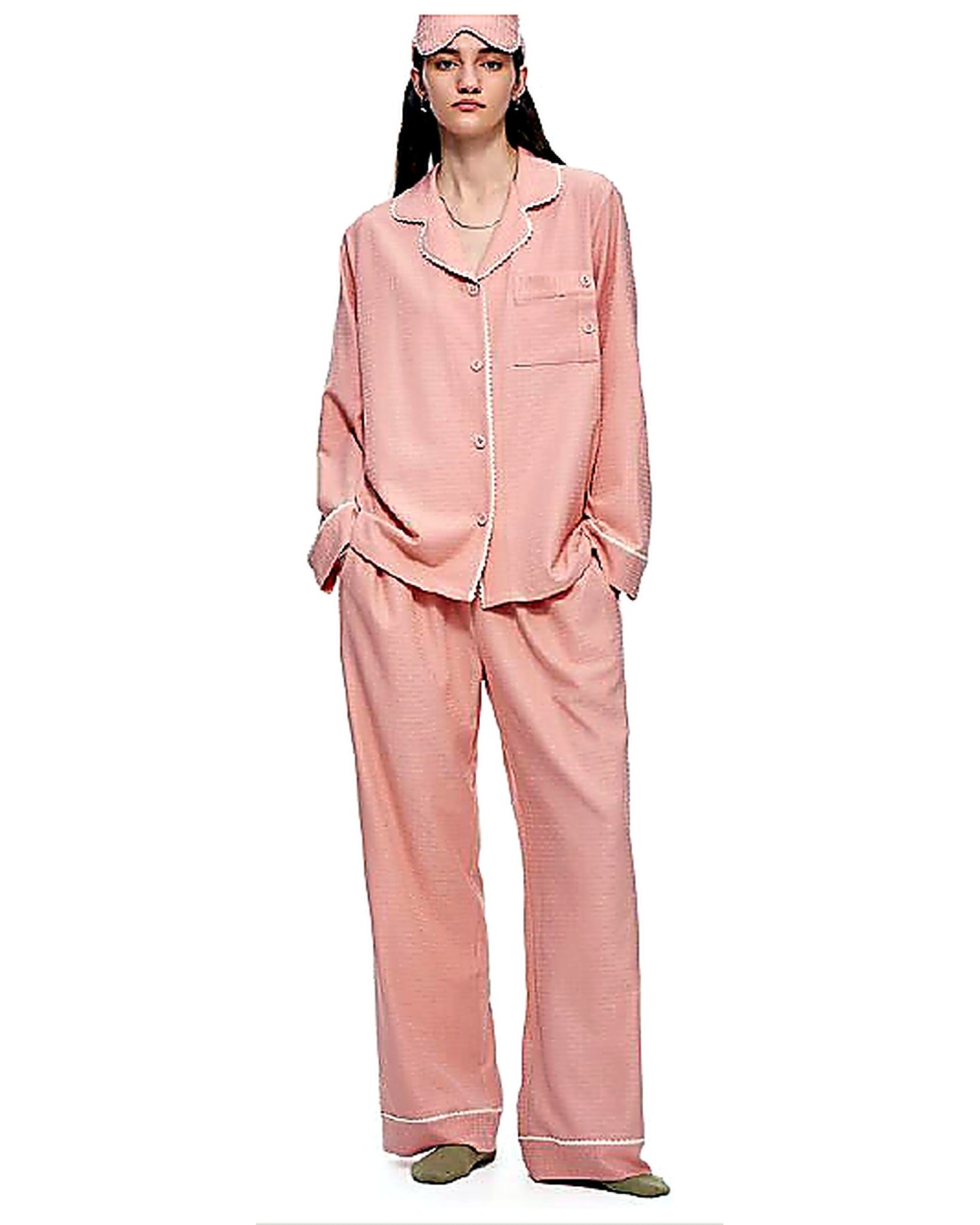
For pajamas and loungewear, the team may need to review comfort, set composition, elastic or piping interaction, print, transparency, size communication and packed presentation. If the customer will buy a set, make the set definition explicit in both product content and factory handover. If a component changes the garment or its packing, bring it into the sample and approval record. These examples are not universal technical checklists. They show why the selling model should be decided only after the product has a named version and evidence.
When a hybrid model is more honest than a single launch label
A hybrid model can be sensible when a new brand has different levels of confidence across its range. For example, a team may hold a narrow inventory position in a core style whose sample, product data, packing and receiving route are controlled, while presenting an experimental colourway as preorder only after the customer-facing product is supported by an appropriate current sample. Or the brand may launch one dependable product from stock and use a later preorder window to test a new silhouette, material direction or private-label execution.
The danger is using “hybrid” to hide unresolved decisions. Every line still needs its own label: stock, preorder candidate, development-only or paused. Each needs a current sample state, material state, customer-content source, quantity or sales-window assumption, fulfilment route and named approver. Do not let a customer assume that a preorder variation has the same availability, product evidence or handover condition as a stocked core product merely because they appear in the same collection.
Use the small-batch clothing manufacturer discussion to frame the factory portion of a hybrid route. Supply the garment references, current samples, materials, colours, components, private-label files, packing concept, quantity structure and decision date. The discussion can clarify what product inputs are needed for each defined option. It cannot decide the brand’s customer payment process, refund terms, legal compliance or marketing claim.
Make the handoff explicit at the moment a model changes. If a preorder test becomes a production review, record the current order matrix, product version, sample evidence, material and component direction, label and pack state, customer-communication owner and commercial approver. If stock is later offered through a preorder channel, ensure the product data and availability signal still reflect the actual route. A well-kept change record is more useful than a generic statement that the collection is “made to order.”
Build a launch timeline from evidence gates, not guessed dates
A useful timeline follows decisions rather than an assumed calendar. It starts with the product brief and range roles, moves through sample or material questions, consolidates the current product record, prepares images and product data from the correct reference, confirms the channel and customer-communication route, reviews the current quantity matrix or selling window, and then asks whether the defined production handover is ready. Each step has a named owner and an evidence requirement.
For a preorder, the pre-launch gate may include the approved sample state, product content source, price and policy owner, sales-window decision, customer-service owner, material question and product-version record. The post-window gate may include a reviewed order matrix, current factory questions, material and component status, a decision owner and an agreed next action. Do not infer that an order count, one social post or a spreadsheet total decides all of these questions.
For small-batch inventory, the pre-production gate may include an approved product route, current quote basis, style-colour-size matrix, labels, packing, receiving owner, quality priorities, inventory destination and named approver. The post-receipt gate may include stock count, sellable-status owner, product-data confirmation, fulfilment route and a customer-service process. The factory can contribute to the product and production handover; it does not own downstream retail operations.
The ecommerce fashion reorder-planning guide is useful after a launch because it separates customer signals from a factory commitment. A review of stock movement, size requests, customer-service notes or returns can help a brand decide which question to ask next. It does not prove a factory cause, a fixed future demand rate, a future material position or a repeat production condition. Reopen the current product, material and order scope before treating a later order as comparable.
Keep customer promises, refunds and legal requirements with their owners
Preorder introduces a customer relationship before a factory production handover is complete. This makes ownership especially important. The brand’s commercial, ecommerce, customer-service and legal owners should decide what is displayed, how availability is described, how payment is processed, what happens if the product or schedule changes, which market rules apply and how customers are contacted. A factory can explain the defined custom product and request missing production inputs; it should not write or approve customer terms.
Avoid broad wording such as “risk-free,” “guaranteed,” “always available,” “fixed delivery,” “no refunds” or “the factory will cover every issue” unless a responsible owner has established the actual terms for the relevant market and channel. These statements can be commercially and legally significant. A more robust product record names what is known, identifies what is still conditional and gives the brand a procedure for making customer-facing updates if its own approved conditions change.
Returns and quality are related but not identical. A customer return may relate to expectation, fit, content, channel handling, delivery, product condition or another cause. It should not automatically be treated as factory evidence. When a brand receives a claim, it should preserve the relevant product version, images, order and channel context, return reason, physical evidence where appropriate and named reviewer. If a defined production question needs review, Yinshan Fashion can discuss the current facts for that product. The brand remains responsible for its customer remedy, legal obligations and commercial decision.
Decide how a reorder will be reviewed before the first sale
Neither model removes the need for a controlled repeat decision. Preorder may lead a brand to explore a current production route after it has assessed the relevant commercial and product inputs. Small-batch inventory may reveal that a core style deserves another review, or it may show that a product, colour or size structure needs revision. A reorder should never be assumed because the first order exists. Future material availability, capacity, cost, currency, freight, order matrix, product version and customer conditions may differ.
Create a reorder record before launch. For each style, retain the dated sample or approved reference, material and component notes, fit or construction decisions, label and packing files, current quantity structure, production or receiving observations, customer and channel signals, and the next review owner. Then decide which evidence would justify a new discussion: a maintained core product, a revised size split, an updated material question, a quality investigation, a new quote request or a decision not to repeat.
This approach also protects a brand from treating a preorder window as proof that every variant should be repeated. Demand may be concentrated in one size, colour or style. A product might need different content rather than a new production order. A customer-service pattern might require investigation rather than a blanket factory claim. The point of a first route is to create evidence for the next decision, not to convert every initial assumption into an automatic commitment.
What to send Yinshan Fashion for a preorder, inventory or hybrid review
Send the chosen model for each style: stock, preorder candidate, hybrid line or development-only. Include the current product brief or reference, sample and approval state, intended customer and channel, product-content source, material and component direction, colours, labels, packing, style-colour-size matrix or expected sales window, delivery or receiving route, known open questions, decision date and named approver. State what is fixed, preferred or open.
For a preorder route, also identify who owns the customer terms, payment flow, customer communications, policy review and sales-window decision. For inventory, name the receiving location or owner, stock-control route, fulfilment handover and product-data owner. For a hybrid collection, separate these inputs by style rather than giving one combined description. This lets Yinshan Fashion discuss custom design, samples, fabric direction, construction, private-label details and small-batch production in a way that matches the actual product scope.
Actual material availability, production capacity, quotations, quantities, sample routes, tests, lead times, freight, channel charges, taxes, consumer terms and launch outcomes remain project-specific and require current confirmation by the responsible parties. The useful final decision is not “preorder or inventory forever.” It is whether the current product, customer promise, order structure and owner evidence make this defined style ready, conditional or unsuitable for the next step.

Launch-model decision kit
Match each fashion product to a real commitment and evidence route
Keep the current garment, sample, customer promise, material question and order structure visible before deciding whether a style is preorder, inventory, hybrid or still in development.
Separate product states
Mark every style as stocked, preorder candidate, development-only or paused so customer language does not overtake product evidence.
Give samples a named job
Record the dated sample, what it proves and the material, construction, label, packing or customer-content questions still open.
Release through a decision gate
Move from demand evidence or stock planning to a production review only with a current product record, order structure and named approver.
Buyer inputs and factory questions for a fashion launch model
Customer terms, legal requirements, channel operations and commercial approval remain brand-owned. Actual factory inputs need confirmation for the defined product and current project.
| Decision area | What the buyer should prepare | What to ask the factory |
|---|---|---|
| Product status | List each style as stock, preorder candidate, hybrid line, development-only or paused, with a dated version and owner. | Which current garment, sample and product reference define the route being discussed? |
| Customer-facing evidence | Identify the approved sample or content source, product-data owner, customer communications owner and open representation questions. | Which fit, material, component, label or packing point needs evidence before the product can be compared for production? |
| Order or sales-window structure | Provide the style-colour-size matrix for stock or the proposed selling window and internal decision condition for preorder. | Which current quantity, variation and material assumptions would a quote or production review use? |
| Handover and receipt | Name the packing, receiving, inventory, fulfilment and product-data owners for the relevant channel. | Which product and packing details must be included in the factory handover, and which belong to another provider? |
| Repeat decision | Define the evidence and owner needed to request a current repeat quote, product revision, quality review or pause. | What must be reconfirmed before a future order can be treated as comparable to the current product? |
Continue the production conversation
Preorder, small-batch inventory and hybrid launch: the evidence comparison
| Model | Question to answer | Evidence owner | Do not assume |
|---|---|---|---|
| Preorder | What current product version, sample evidence and customer communication support collecting interest or payment before the production decision? | Brand commercial, product, ecommerce and customer-service owners; factory for defined product inputs | That a sales page reserves materials, capacity, price or delivery conditions by itself |
| Small-batch inventory | Which style-colour-size matrix, labels, packing and receiving route define the stock to be produced and held? | Buyer, inventory and fulfilment owners; factory quote owner | That a total unit count describes the product, inventory or production scope |
| Hybrid | Which individual lines are in stock, preorder candidates, development-only or paused, and why? | Named brand owner for each product line | That every item in one collection has the same product evidence or availability state |
| Sample and content | What does the dated sample prove, and which material, fit, label, packing or channel questions remain open? | Brand product owner with factory review | That an early prototype or inspiration image is a bulk-ready commercial reference |
| Customer commitment | Which channel terms, payment flow, communications and legal review apply to the proposed selling route? | Brand and named commercial, customer-service and legal owners | That a factory may approve or own customer promises, refunds or market obligations |
| Repeat review | What current evidence would justify another quote, revised product route, reorder or pause? | Named commercial approver with relevant product and channel owners | That a first order or preorder window makes a future order automatic |
Buyer FAQs
Is preorder better than small-batch inventory for a new clothing brand?
Neither model is automatically better. Preorder can suit a current, well-supported product that still needs a controlled demand test. Small-batch inventory can suit a defined product with a practical style-colour-size, receiving and fulfilment route. Decide style by style from the product evidence, commercial model and named owners.
Can a clothing brand open preorders from a sample?
A sample can support a preorder discussion when the brand understands what the dated sample proves and what remains conditional. The brand must still own customer content, terms, communications and market requirements. An early sample does not automatically prove bulk material, timing, availability or customer outcome.
What should a small-batch inventory brief include?
Include the current garment and sample state, material and component direction, style-colour-size matrix, labels, packing, quality priorities, receiving route, product-data owner and named approver. A total unit number alone is not enough to describe a custom production scope.
Can a brand combine stocked and preorder fashion products?
Yes, where every style is clearly marked and supported by its own product, availability, sample, material and channel record. Do not present an experimental preorder variation as having the same evidence or stock condition as an established inventory line.
Can Yinshan Fashion help choose a preorder production route?
Yinshan Fashion can discuss the defined garment, samples, fabric direction, components, labels, packing, quantity structure and small-batch production questions. The brand and its responsible advisers decide the customer terms, payment flow, retail price, policies, legal requirements and final commercial launch model.