Article
What should buyers know first?
Short answer: Plan placement print dress production with current artwork, pattern landmarks, size rules and assembled proofs before releasing printing or cutting.
Placement print dress production connects a graphic to a defined position on a garment. The task is more specific than selecting an attractive printed fabric. A buyer needs to explain how the artwork relates to the pattern pieces, seams, openings and finished silhouette, then agree which physical proof demonstrates that relationship. An artwork file can be technically usable while still producing a result that misses the intended position on the dress.
For a custom or private-label enquiry with Yinshan Fashion, provide the garment reference, current artwork status, size range, proposed material and the placement decisions that matter. The specific print route and production feasibility must be confirmed for the project. This article does not present a customer-owned artwork file or claim a verified Yinshan placement-print production result. It is a buyer framework for preparing a reviewable development request.
The most useful starting question is simple: what should a viewer see on the finished garment, and what evidence will establish that before bulk cutting or printing is authorised? The answer should connect creative intent with measurable references, approved files and a sample that represents the proposed production route.
Placement print dress production differs from an all-over print brief
An all-over design repeats across a fabric area. Its appearance on each garment may depend on where the pattern pieces fall within that repeat, unless additional matching or positioning is specified. A placement design assigns a motif or artwork area to an intended location on the garment. The buyer should state which arrangement is required rather than assuming a reference photograph makes it obvious.
A dress can combine both approaches. A repeated background may sit behind a positioned border or central motif. Identify each element and the relationship between them. The print supplier and garment team need to know whether the buyer is approving the overall surface, the position of a specific image or both. A single instruction to match the picture may leave those decisions unresolved.
Use a front and back drawing to mark the visual priority. Explain whether the design must align with a centre line, neckline, waist seam, side seam or hem. Name areas where variation is acceptable and areas where it would change the intended design. Do not demand identical placement everywhere without discussing what that means for the actual pattern and size range.
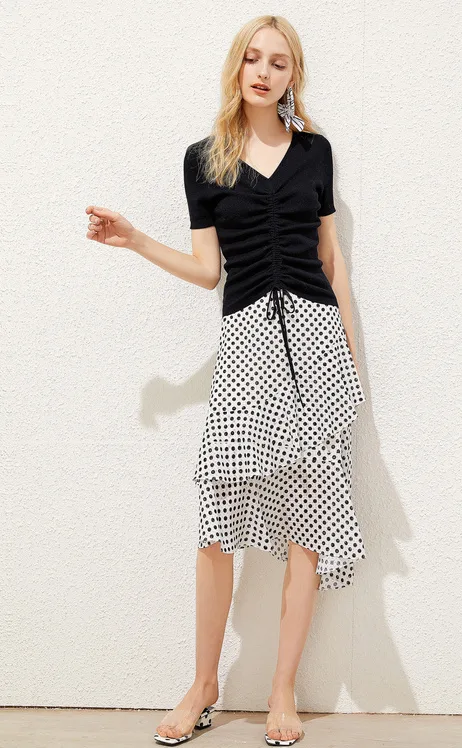
The dress collection can help frame the garment discussion. Its product references provide silhouette context, not permission to reproduce an existing print or confirmation that the pictured style follows a particular print route. The buyer's current artwork and specification should control the proposed programme.
Start with artwork ownership and a usable file inventory
List the files the buyer can provide and what each represents. An editable source file, a flattened preview and a photograph of an inspiration garment serve different purposes. Identify the current version, intended scale and any linked elements or fonts. Ask the receiving team which formats and preparation are suitable for its proposed process before treating file delivery as technical approval.
The brand should establish that it has permission to use the artwork for the intended product and market. A supplier should not be asked to infer reproduction rights from an image sent in a chat. Keep that commercial permission separate from the technical file review. A technically printable image is not automatically cleared for use, and a cleared design may still need production preparation.
Remove unnecessary customer or personal information from shared previews. If the project requires restricted access to source files, state the proposed arrangement and confirm it with the relevant parties. This guide does not establish Yinshan's internal access policy or offer a legal conclusion about artwork ownership. It identifies questions the buyer should resolve before distributing design assets.
Maintain one file list with status labels such as reference only, submitted for proof and approved for the stated sample. Avoid ambiguous names that leave several versions looking final. The important control is that a printer, pattern maker and buyer can identify the same artwork revision when discussing a physical result.
Define scale with the garment reference, not only the canvas
State the intended artwork dimensions and the garment or panel to which they apply. A design shown on a digital canvas can be resized unintentionally when placed into another file. Include a scale reference and ask the receiving team to confirm its interpretation. The buyer should be able to distinguish a change in motif scale from a change in motif position.
Mark the main visual anchors. For example, a border may be positioned relative to the finished hem, while a central image may be positioned relative to the garment centre line. Explain whether the measurement is taken from a cut edge, stitch line or finished edge. Those references are different, and a small ambiguity can become visible after construction.
Do not assume the same image size is correct for every garment size. The brand may prefer a constant motif, a graded motif or a deliberate change at selected sizes. Each is a design decision with technical implications. Ask the pattern and print teams to explain the proposed mapping and identify which size samples or proofs are needed to review it.
Keep the scale decision visible in the artwork approval. A colour-approved proof does not automatically approve dimensions, and a correctly scaled digital layout does not prove the final garment position. Record what the reviewer accepted so that later teams do not expand a narrow approval beyond the evidence provided.
Connect the artwork to the current pattern pieces
The placement map should use the pattern version intended for the sample. Identify the relevant pieces, their orientation and the landmarks that control the design. Include the seam and finished-edge references needed to understand how the artwork will appear after assembly. A layout based on an older pattern may look convincing on screen while no longer matching the garment being developed.
Ask which information the print team needs from the pattern team and which party will prepare the production layout. Confirm the handover rather than assuming one team will reconstruct the other's work. Where the buyer supplies a pattern, clarify whether it is approved or provisional. Where the factory develops the pattern, ask when it is stable enough for the proposed print proof.
A change to the neckline, waist position or panel shape may change the visible print area. Treat that as a linked decision. The buyer should review whether the artwork placement needs revision when the pattern changes, instead of allowing a technical adjustment to crop an important element without discussion. Keep the affected file versions together.
The womenswear tech pack guide can help organise these relationships. For placement work, the key is a clear connection between the drawing, artwork, pattern and sample reference. A large folder of files is less useful than a short index that shows which version of each input belongs to the current garment.
Decide where matching matters and where variation is acceptable
Not every seam needs a continuous image, but every important matching requirement should be explicit. Mark the locations where the buyer expects continuity and describe the visual outcome. A side seam, waist seam or centre opening may interrupt the print in different ways. The technical team should assess the requested relationship against the actual pattern and construction.
Ask for a feasibility response before treating perfect matching as a general promise. The response should identify the proposed method, limitations and sample evidence needed. If a requested relationship conflicts with the silhouette or available material route, review the alternatives. The buyer may choose a different motif position, panel arrangement or design treatment after seeing the implications.
Distinguish intentional asymmetry from an error. If the design uses an off-centre motif or unequal panel treatment, identify it clearly on the drawing. A well-meaning operator or reviewer might otherwise try to correct the intended effect. The approval reference should show the desired garment appearance, including the asymmetry that must be retained.
For coordinated tops, the blouse collection offers context for a different panel and opening structure. Do not copy a dress placement instruction into a blouse brief without reviewing the collar, placket, sleeve and length. Shared artwork can support a collection while requiring separate placement maps for each style.
Confirm the print route before requesting the wrong proof
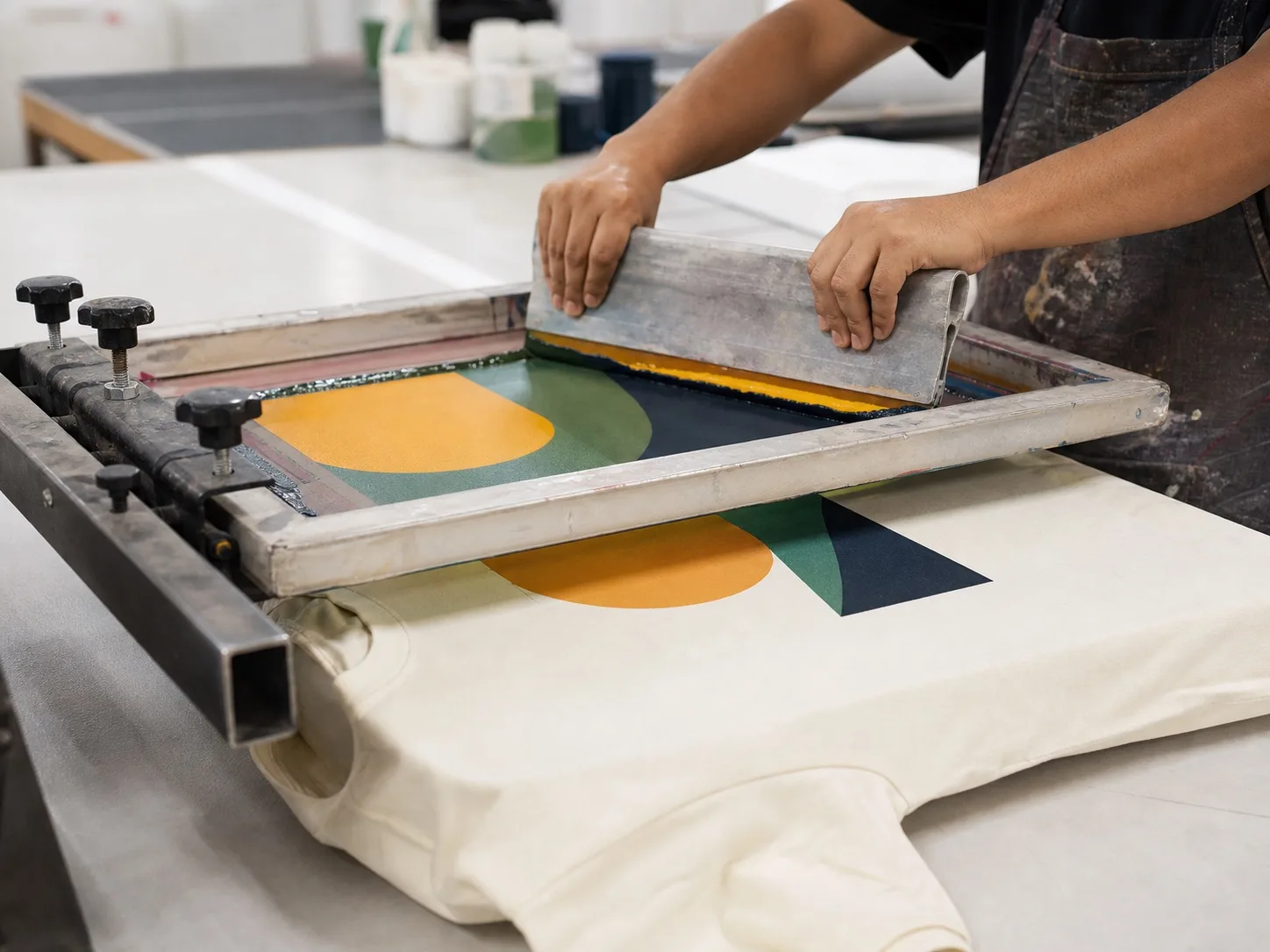
Ask the supplier to explain the proposed process and its relationship to garment construction. The programme may involve printing fabric before cutting, printing defined panels or applying artwork after a particular assembly stage. These are questions to confirm for the actual material and design, not interchangeable descriptions of one standard service.
Cotton Incorporated's technical overview of digital printing explains inkjet printing from digital information. That process background does not establish garment placement by itself. The artwork still needs to be connected to the pattern and the agreed production layout. A digital process is not a substitute for the buyer's positioning instructions.
Request the proof that answers the current decision. A colour or surface trial may help choose an appearance, while a panel proof may show placement against cut and seam references. A constructed sample may be needed to assess the design on the body. Identify the purpose of each submission so that one kind of approval is not mistaken for another.
Confirm which substrate and processing state the proof represents. A result on a substitute cloth may be useful for a limited question but should not silently approve the proposed bulk material. If the print route or substrate changes, ask which earlier decisions need renewed review before the garment programme progresses.
Review colour and surface on the identified material
The buyer should provide the intended colour references and explain which relationships are important. A brand colour, coordinated trim or neighbouring panel may require a specific comparison. Agree how the physical result will be reviewed and who will make the decision. A screen preview can communicate intent, but its appearance should not be treated as the sole physical colour standard.
Record the artwork revision, substrate and process associated with each proof. If the team compares submissions prepared on different bases, make that difference visible. A colour decision applies to the evidence reviewed. It should not become an unrestricted approval for another material or route simply because the same digital file was used.
Assess the surface in the product context. Ask whether the buyer needs to review handle, coverage, edge definition or another appearance characteristic in the finished garment. Where a performance requirement is relevant, specify the evidence and acceptance method with the responsible parties. Do not convert an attractive initial print into an unsupported claim about washing, rubbing or long-term appearance.
Keep colour comments separate from placement comments while linking both to the same sample. A proof may be accepted for scale but require a colour revision, or accepted for colour while needing a different crop. Those are useful partial decisions when their scope is clear. A single unchecked approval box can conceal the work that remains.
Plan cutting references and material use together
The cutting team needs an agreed way to locate the pattern against the printed material or panel. Ask which registration references and layout records the proposed route requires. The buyer does not need to invent the factory's technical method, but should understand how the intended placement will be translated into a repeatable instruction and how the result will be checked.
Discuss consumption using the actual pattern, size mix, width and placement requirement. Positioning a motif or preserving a border can affect the layout options. A generic fabric allowance is not a reliable basis for a final commitment. Ask the supplier to distinguish an early estimate from a reviewed consumption basis and identify the assumptions that could change it.
Record how the sample material relates to the proposed bulk route. A hand-positioned development piece may demonstrate the design without establishing the production method. That can be a valid stage if the limitation is explicit. The next proof should address the unresolved route rather than allowing the development sample to imply that every bulk question is settled.
Before authorising cutting, confirm that the artwork, pattern, material and placement map are the current approved versions. A file mismatch can produce a technically neat garment with the wrong design relationship. The release record should identify the exact inputs and any conditions still attached to the decision.
Evaluate the assembled dress on the intended fit reference
The finished garment reveals relationships that a flat panel may not show. Review the print from the front, back and relevant side views, with the dress worn or supported under the agreed conditions. Observe how the motif relates to the neckline, waist, seams and hem. The intended visual effect should remain the reference for the decision.
Where the design includes movement or folds, review those conditions rather than relying only on a carefully arranged photograph. A motif may be partly concealed by the intended drape, or its placement may create an unwanted focal point in use. These are design decisions for the buyer to assess with a representative sample, not facts a print file can establish alone.
Record any temporary adjustment made for the review. If a sample is pinned, clipped or otherwise styled to show the intended fit, distinguish that demonstration from approval of the unaltered garment. The print decision may need to be revisited after the pattern is corrected. Keep the fitting and artwork records connected so that the next sample answers both questions.
Use the casual-fashion category to place the dress within the wider collection discussion. A coordinated range may share colours or motifs, but each garment needs a review of its own visible placement. The buyer should not assume that acceptance of one dress establishes the same result on every related style.
Validate the proposed size range without inventing tolerances
Agree which sizes need a placement review and what each review is intended to establish. The brand may need to compare motif scale, border position or the relationship between a print and a shaped seam. The appropriate sample plan depends on the design and range. This article does not prescribe a universal number of sizes or a fixed placement tolerance.
Define the measurement points before assigning any acceptance limit. State whether the reference is a finished edge, centre line, seam or another agreed landmark, and how the garment is prepared for measurement. A numerical tolerance is only useful if both parties understand what is being measured and under which conditions.
Consider the visual result as well as the measured position. A placement can fall within an agreed measurement range while still presenting an issue that the specification did not capture. If that occurs, revise the acceptance description with the technical team rather than silently applying a new standard after production. The factory needs a clear, current basis for checking the garment.
Keep any accepted exception tied to the style, size, colourway and order reviewed. A concession on one sample should not become a general rule for later programmes. The record should explain the decision, its owner and whether the underlying specification will change for the next release.
Make bulk consistency a checkable instruction
A bulk handover should identify the approved appearance reference, artwork and pattern versions, material, placement map and agreed checking method. Ask where those references will be used in the proposed process and who will evaluate findings. The buyer is seeking a clear control route, not a blanket guarantee that variation cannot occur.
Define what happens when a garment does not meet the agreed requirement. The relevant parties should know how the finding is recorded, which reference is used, who decides the disposition and whether related goods need review. Avoid resolving a visible difference through an informal message that never reaches the final order record.
Where the programme uses several colourways or materials, confirm which approvals apply to each. A successful sample on one combination does not necessarily cover another. Keep the matrix manageable by identifying shared decisions and separate ones. The point is to make the scope visible, not to create paperwork that no one can use on the production floor.
At order close, retain the accepted references and any authorised changes. A later repeat should begin by comparing the new request with that record. If the artwork, pattern, substrate or print route changes, identify the approvals that need to reopen before treating the repeat as technically identical.
Use a placement disagreement to improve the brief
Consider an illustrative dress with a border intended to sit a defined distance above the finished hem. The first proof is measured from the cut edge instead, and the assembled sample shows a different relationship. Before changing the artwork, check which reference the instruction actually named. The problem may be an ambiguous handover rather than an unsuitable graphic.
The correction should update the placement map, measurement description and affected proof. If the hem construction also changes, the team should assess the combined effect. A revised digital image alone may not answer the garment question. Ask for the next evidence that demonstrates the finished relationship under the agreed conditions.
A second example is a central motif approved on the base size that appears differently in another reviewed size. Establish whether the intended rule was constant scale, graded scale or a size-specific placement. If the brief never decided that point, the buyer needs to make a design decision before the factory can evaluate compliance with it.
These examples show why useful approvals are specific. Accepted colour, accepted motif scale and accepted assembled placement are separate findings. Keeping them visible helps the buyer progress the programme without pretending that one proof has answered every creative and technical question.
Connect placement review with artwork approval instead of treating them as one sign-off
A placement file can be technically ready to print while the finished dress is still not ready to approve. Artwork approval asks whether the current source file, colourway, permissions, dimensions and intended output are identified. Placement approval asks whether that artwork appears in the right visual relationship to a neckline, waist seam, dart, pocket, sleeve opening, hem or another named garment landmark. The two reviews should meet in one product record, but they do not answer the same question.
Use the apparel artwork approval guide to establish the first part of that record: current files, intended dimensions, colour references, ownership status, review purpose and named release owner. Then add the placement map rather than assuming a flat preview is enough. The map should identify the dress style, pattern revision, review size, finished or cut-edge reference, target position, intended scale, orientation, crop rule and the visual issue the physical proof must settle. This gives a buyer, creative reviewer, pattern team and factory the same reference point without pretending that a PDF alone is a garment approval.
For example, a placement measured from the centre front might need a separate instruction once a wrap edge, asymmetric neckline or gathered skirt changes that centre relationship. A design that intentionally ends above a waist seam needs a different crop rule from an artwork that must continue into a lower panel. Those are product decisions, not merely artworking details. State whether the placement is expected to be optically centred, geometrically centred, aligned to a construction point, deliberately offset or reviewed as a controlled range. If a visual judgement will be made on the body, name the fit reference and the reviewer who can close it.
| Approval layer | What the buyer should keep current | What the factory team needs to interpret | What the physical proof should settle |
|---|---|---|---|
| Artwork source | File revision, permission status, colourway, dimensions and intended output | Which current file applies and which versions are superseded | Whether the proposed artwork is legible and suitable for the agreed material and application route |
| Placement map | Garment style, size, named landmarks, scale, orientation, crop and allowed variation | How the artwork relates to the current pattern pieces and finished construction | Whether the visual position remains balanced after construction and on the intended fit reference |
| Sample scope | Whether the proof is for colour, position, fit, construction or a named combination | Which decisions are in scope and which remain open | Whether the sample answers its stated question without being mistaken for an unrestricted bulk release |
| Release record | Approver, date, comments, authorised changes and next decision | Which version controls the next sample, cutting discussion or product handover | Whether a later change requires a renewed artwork, placement or garment review |
Yinshan Fashion can help turn that buyer-owned record into a practical conversation across artwork preparation, pattern review, sampling and manufacturing coordination for a custom or private-label programme. The record does not establish material availability, production timing, testing, commercial terms or an accepted bulk standard by itself; those remain specific to the actual product and its approved evidence.
Use the printed-fabric route to judge what a flat placement file cannot show
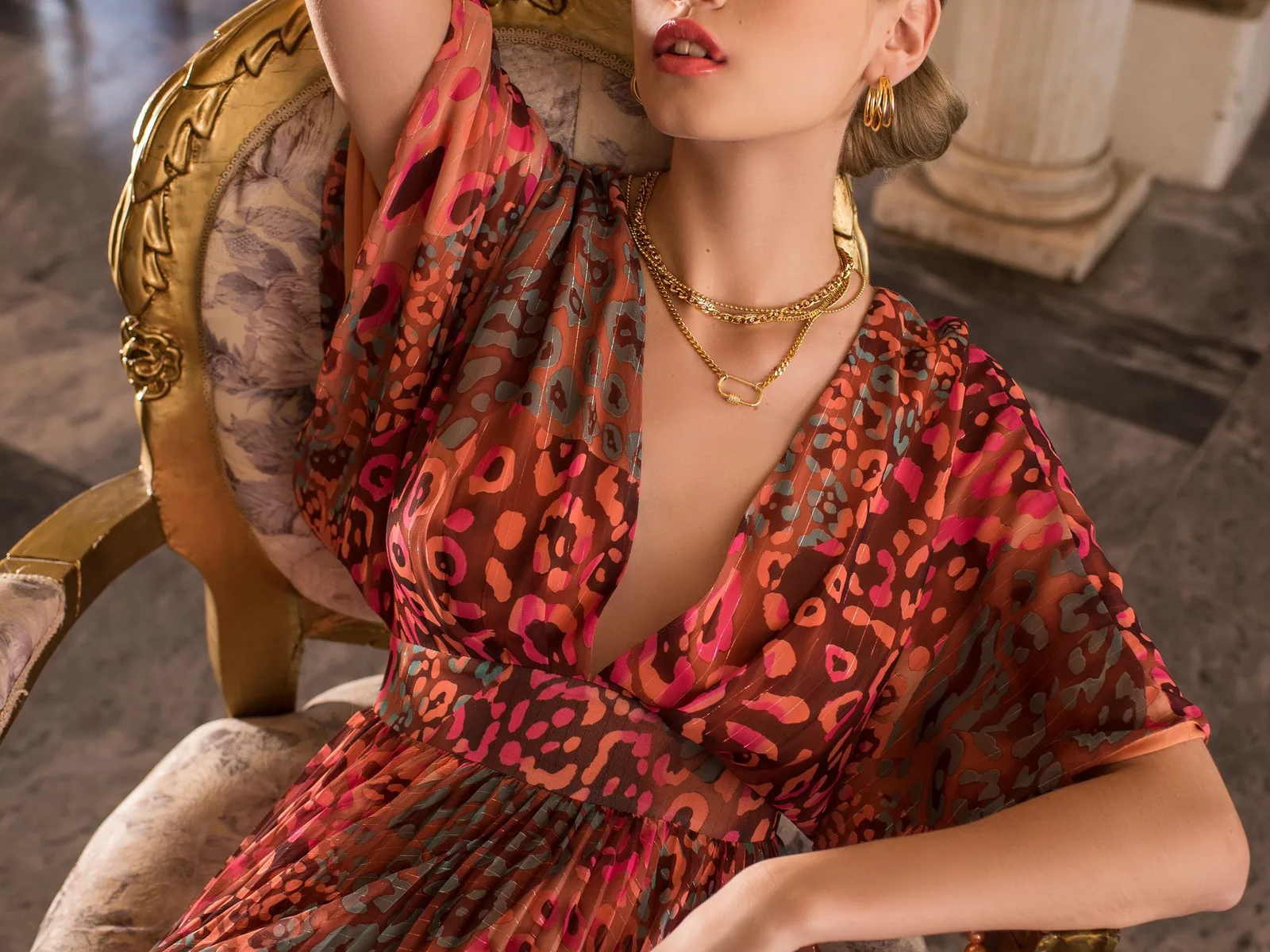
Placement is often discussed as if it lives only on the front of the dress. In practice, the visible result also depends on the base fabric, print route, garment shape, seam sequence and the way the dress moves. A large central motif can look proportionate on a board yet sit differently when a draping fabric falls from the bust, when a waist seam divides the image, or when a fitted panel expands across the body. A narrow border may read as an intentional hem treatment on one silhouette and as an accidental crop on another.
The printed-fabric production guide is useful before the team approves a placement from a digital preview. It separates an all-over repeat from a discrete garment decoration and connects the visual decision to the actual base cloth, artwork scale, proof and cutting context. For a placement print dress, use that distinction to say whether the print is applied to a cut panel, produced on fabric before cutting, combined with a repeat, or accompanied by another decorative route. Do not let the word “print” conceal which part of the garment must be controlled.
The fabrics and trims development route can support the material side of the brief. Record the proposed surface, drape, opacity, stretch question, colour ground, lining or facing relationship and the physical proof that represents the intended cloth. A placement proof on a substitute material may be useful for approximate location, yet it may not answer how scale, contrast, seam interruption or handfeel read on the intended dress fabric. Label that limit clearly rather than presenting one sample as evidence for every material and construction decision.
Dress shape gives the placement meaning. Use the dress collection reference to identify the silhouette the buyer intends to develop—such as a shirt dress, wrap shape, tiered dress, slip-inspired dress or another named construction—before asking the team to review a placement. It is a product-context reference, not a fixed specification. A brief still needs its own pattern revision, material direction and visual priorities. Naming the silhouette makes it possible to ask useful questions: should the artwork respect a placket, avoid a dart, cross a waist seam, sit above a hem band, or continue through a panel join?
Handover the approved placement as a custom womenswear record
Once a sample establishes the intended appearance, place the approval in the same controlled record as the dress, material direction, pattern revision, components, labels and sample comments. A screenshot of the approved view is helpful, but it should not become the only handover instruction. Save the current artwork preview and source identifier alongside the measured placement map, sample size, proof purpose, approved crop or orientation, construction references, authorised comments and contact who can approve later changes. This lets the next team understand why the artwork belongs where it does.
For a product that needs coordinated fit, construction, fabric and branding decisions, the custom womenswear manufacturing route provides the broader development context. It helps a buyer frame placement as one part of a real dress programme rather than as a standalone graphic request. A revised neckline, added lining, moved zipper, changed waist treatment or new size rule can affect a previously accepted placement; the record should identify when that change requires the artwork or assembled garment to be reviewed again.
If the programme will carry its own labels, hangtags and packing presentation, connect those files through the private-label development route. The brand controls the consumer-facing identity and the final decisions around its artwork and product information. Yinshan Fashion can coordinate the development conversation, but the buyer should distinguish a current sample reference from a completed bulk release. Keep the approved version, unresolved points and next proof visible enough that a later colourway or reorder starts from evidence rather than memory.
Before the next handover, ask four compact questions: which artwork file and garment revision form the current pair; which location and crop rules are essential; what did the sample actually prove; and which future change would reopen review? The answers make the placement decision traceable across artwork, fabric, pattern and production without promising a result that has not yet been tested on the actual programme.
Retain a compact artwork release index
The final index can be short: style identifier, artwork revision, pattern revision, material reference, colourway, size rule, approved proof and release owner. Add links to the controlling files rather than attaching several unlabelled copies. A person joining the project should be able to identify the exact combination without reconstructing a message history.
Archive superseded versions with a clear status so they remain available for explanation but cannot be mistaken for the current instruction. If a buyer changes only one colourway, record the limited scope instead of replacing the whole range's approval. This discipline helps a later reorder start from a known design relationship and makes any proposed change easier to assess before material or garment work is committed.
Send a placement-print brief that identifies the next proof
Prepare the dress drawing, current artwork inventory, pattern status, material direction, size range and quantity context. Mark the visual anchors, matching priorities and flexible areas. Include the source and permission status of the artwork, and identify the person who will consolidate colour, fit and placement comments.
Use the contact page to ask Yinshan Fashion to confirm the feasible scope and proposed review route. The next step should name the file versions, substrate, sample or proof type and decision it will support. That gives both teams a practical basis for development while leaving capability, commercial terms and production release tied to the actual programme.
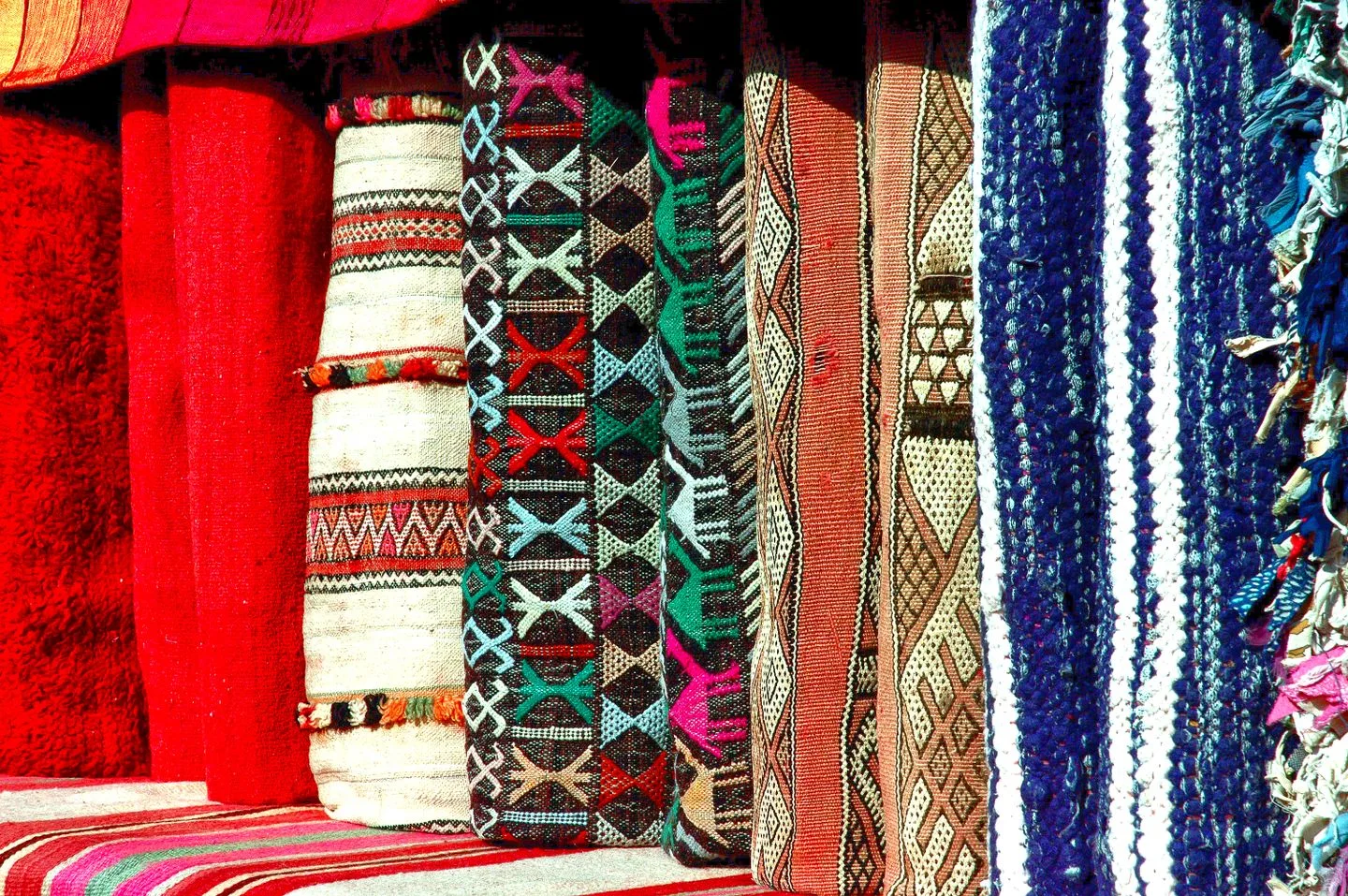
Placement Print Dress Production worksheet
Three actions before the next sample
Plan placement print dress production with current artwork, pattern landmarks, size rules and assembled proofs before releasing printing or cutting.
Map the motif
Name the finished garment landmarks and distinguish scale from position.
Match proof to question
Use colour, panel and assembled proofs for the decisions each can demonstrate.
Release one file set
Connect artwork, pattern, substrate, colourway and size rule in a compact index.
Buyer inputs and factory questions
Use the current garment and material references. Confirm the actual development scope and evidence required for this programme.
| Decision area | What the buyer should prepare | What to ask the factory |
|---|---|---|
| Rights and files | Provide current artwork and confirm intended-use permission. | Which file preparation is suitable for the proposed process? |
| Placement | Mark centre lines, seams, finished edges and matching priorities. | Which references will control the assembled position? |
| Sizes | State how motif scale and position should change across the range. | Which physical size proofs are needed? |
| Colour | Identify substrate and colour comparison references. | What does each proof represent? |
| Release | Consolidate approved files, sample and checking method. | How will differences be recorded and reviewed? |
Continue the production conversation
Placement Print Dress Production: decision worksheet
| Review point | Buyer input | Evidence to review | Decision before progression |
|---|---|---|---|
| Artwork | Current file, scale and permission status | Approved preview and file index | Is the right design ready for the proposed proof? |
| Pattern map | Current pieces and finished-edge landmarks | Artwork mapped to pattern revision | Where must the motif appear after assembly? |
| Colour and substrate | Material and physical colour references | Identified print proof | Which colour and surface decisions are accepted? |
| Size rule | Constant, graded or size-specific intent | Selected size proofs and garments | Does the range preserve the intended design? |
| Bulk release | Current files and acceptance method | Assembled reference and release index | Can the next team identify the controlling combination? |
Buyer FAQs
How does placement print dress production differ from all-over printing?
Placement work assigns artwork to defined garment locations. An all-over repeat does not establish that relationship unless positioning or matching is specifically instructed.
Does a digital artwork file approve garment placement?
No. It needs a current pattern map, scale, landmarks and an appropriate physical proof. A file can be usable while the assembled position remains unresolved.
Should every size use the same motif scale?
That is a design decision. State whether scale is constant, graded or size-specific, then review the selected size proofs against that rule.
Can a colour proof also approve seams and matching?
Only if it actually demonstrates those questions. Colour, panel position and assembled appearance can require separate evidence and approval scopes.
What should a buyer send Yinshan Fashion?
Provide the dress drawing, artwork inventory and permission status, pattern status, material direction, size rule and placement priorities. Ask for project-specific feasibility and the next proof route.