
Article
When a brand compares a clothing manufacturer in China, the decision is rarely about one question such as price or factory size. The buyers who reduce avoidable risk usually examine five connected areas: whether the product can be developed as intended, whether the quotation is based on the same assumptions, whether an approved sample can be repeated in bulk, whether the project can be managed clearly, and whether the final goods can meet the brand’s packing and delivery requirements. The evidence matters more than a general promise. A useful factory conversation turns a reference image or tech pack into specific questions about fabric, fit, trims, approvals, QC, packing, and the records needed for a repeat order.
🧵 Product feasibility · 🧭 Comparable quotation · ✅ Sample-to-bulk control · 🤝 Communication control · 🏭 Packing and repeat-order records
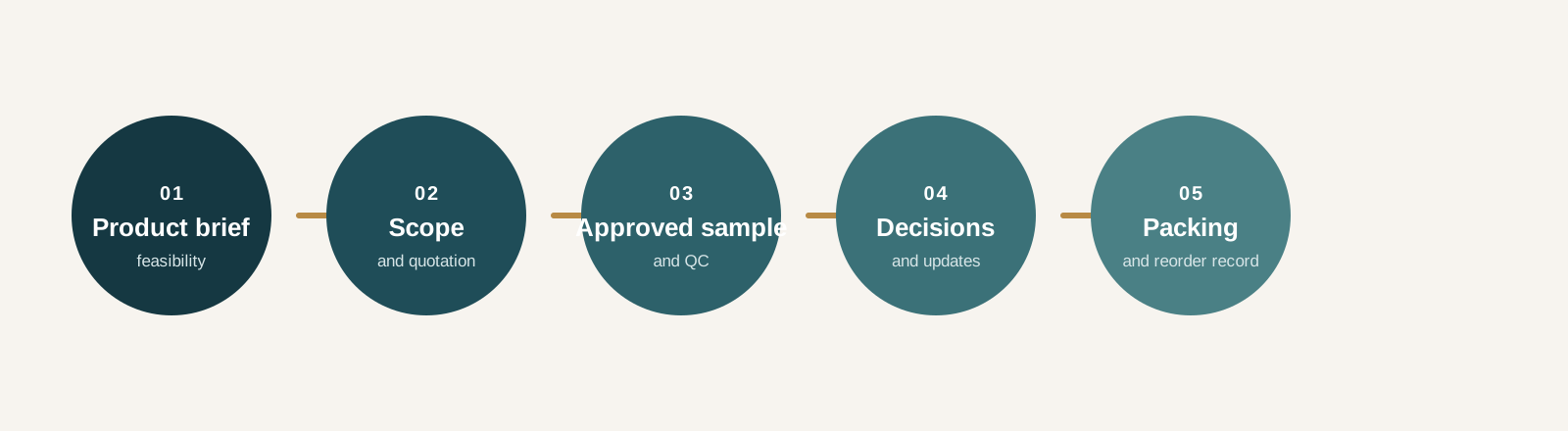
Figure 2. The five priorities are connected: an unresolved decision at an earlier stage can create a later production, packing, or repeat-order risk.
Why these five priorities matter before an order is placed
An apparel order moves through several handoffs: product development, material sourcing, sample making, approval, bulk production, quality control, packing, and shipment coordination. A weak decision in one stage often appears later as a different problem. An unclear fabric direction can change drape and fit. An unapproved measurement point can become a grading disagreement. A packing detail left until the end can delay the final handover.
That is why a factory comparison should not be a questionnaire designed only to collect supplier claims. It should be a working discussion around the buyer’s actual product. The buyer needs to know how the team will identify open decisions, who will confirm them, and what evidence will be available before bulk cutting or packing begins.
For a new program, fabric availability, trims, order quantity, construction complexity, requested testing, target-market requirements, and delivery window remain project-specific. A credible conversation makes those dependencies visible early instead of hiding them behind a quick estimate.
🧵 1. Can the factory turn the product idea into a manufacturable garment?
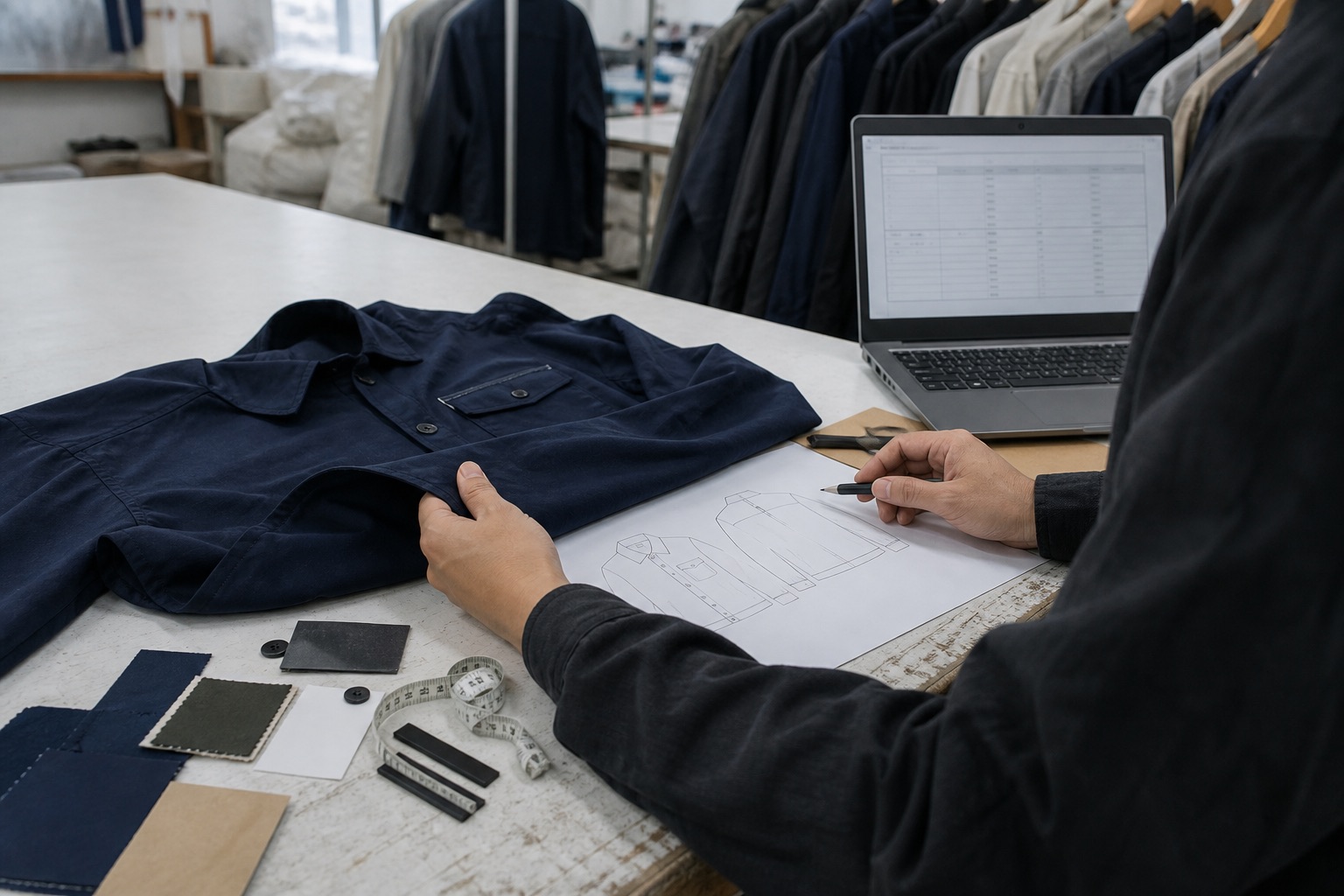
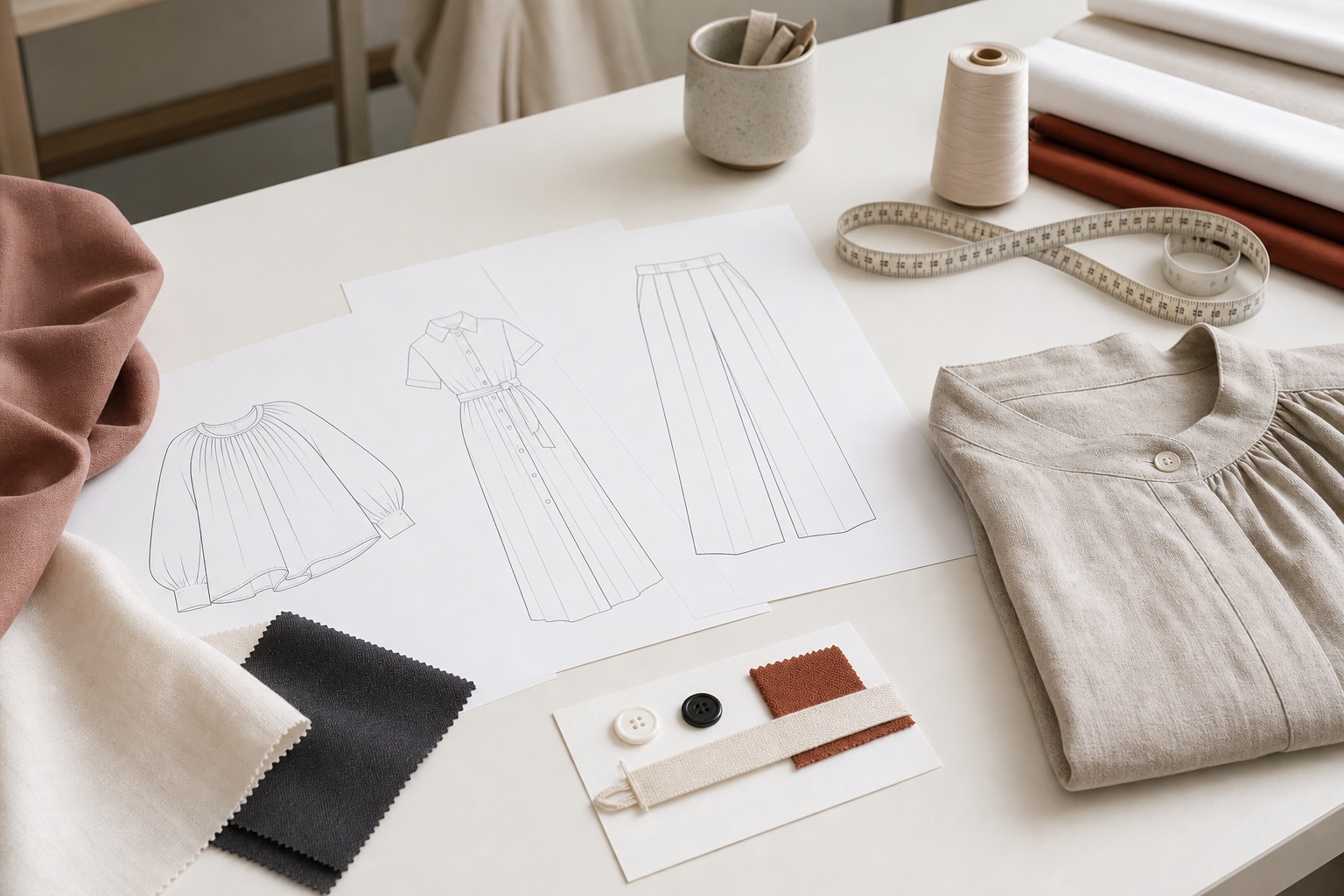
The first concern is product feasibility. Brand buyers want to know whether a factory can understand the intended silhouette and translate it into materials, pattern work, construction, and sample decisions. A strong reference image may communicate a mood or styling direction, but it does not necessarily show seam construction, inside finishing, fabric weight, stretch recovery, or how a garment should fit across a size range.
A productive early review separates what is already decided from what needs development. For example, a buyer may know they want an oversized women’s jersey top with a soft hand feel and a raised graphic, but still need to confirm the jersey construction, neck-rib recovery, print method, wash effect, and final measurements. Those choices influence each other.
Ask the factory which information it needs before sampling and which choices need approval on a physical sample. A tech pack is the specification set that usually includes flats, measurements, construction notes, bill of materials, artwork, labels, and packing instructions.
Buyers sourcing materials should also ask how fabric direction will be documented. This is where fabric manufacture and sourcing support is more useful than a generic statement that materials are available. The relevant discussion is about composition, hand feel, weight, stretch, color direction, shrinkage risk, surface treatment, and whether the material is suitable for the garment and intended care method.
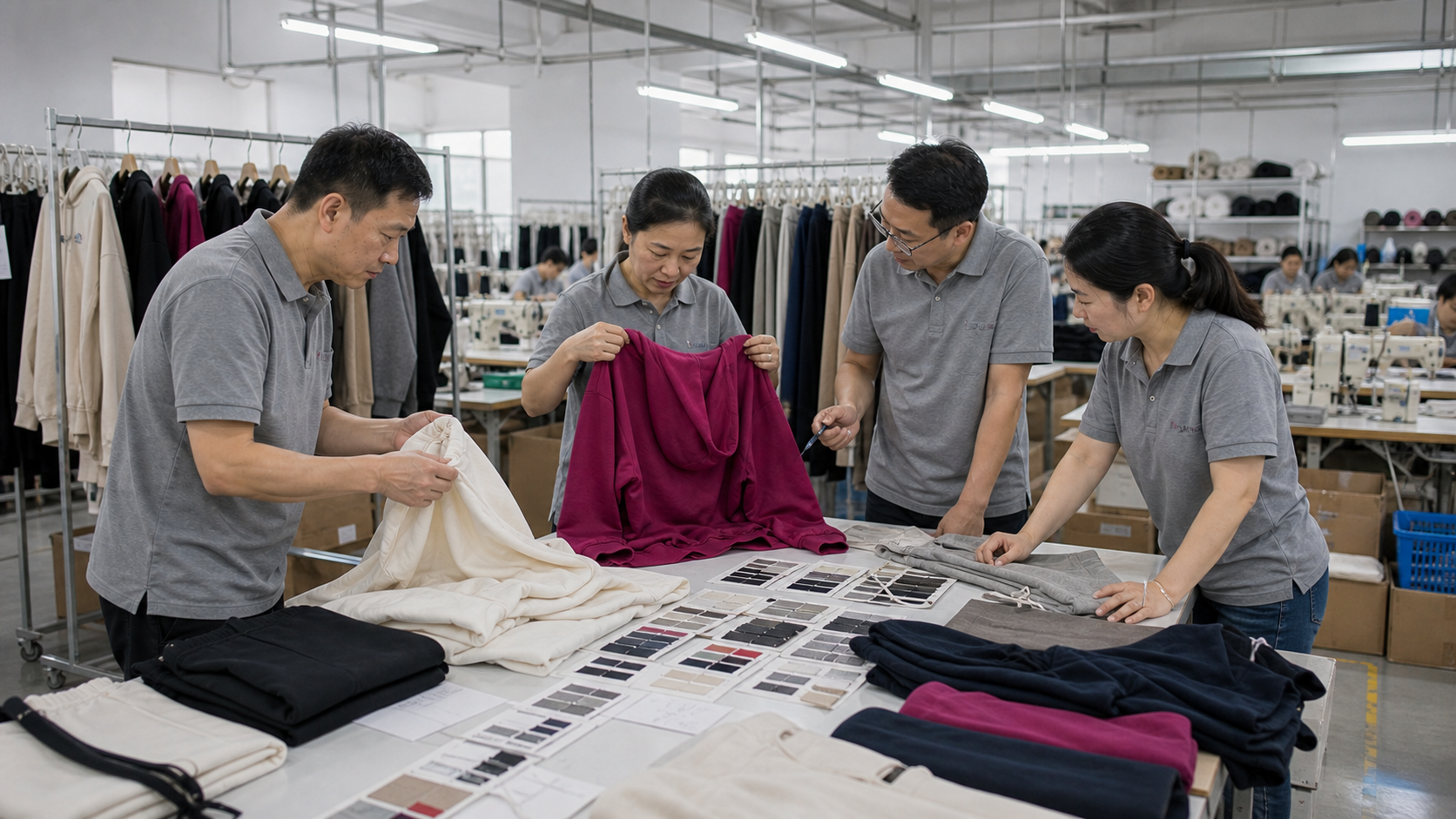
Figure 3. A sample review should make open choices—such as fabric, fit, trims, and construction—visible before the buyer approves the reference for bulk production.
🧭 2. Is the commercial discussion based on the same product assumptions?
Buyers understandably compare quotations, but a quoted price is meaningful only when the underlying assumptions are comparable. Two suppliers may both quote a “hoodie” while picturing different fabric weights, rib qualities, print coverage, labels, size ranges, packing methods, or order splits by color. The numbers may look comparable while the scope is not.
Before treating an offer as a decision, ask for the quotation basis in plain language. It should identify the product version being discussed and flag the items that have not been confirmed. This does not require fixed MOQ, lead-time, or cost promises. It requires enough transparency for the buyer to understand what could change after development.
The buyer should clarify at least these points:
- The style, construction, fabric, trims, decoration, colors, size range, and packing configuration under discussion.
- Which materials or details are provisional and may change after swatches, lab dips, or samples are reviewed.
- How quantity is distributed across styles, colors, and sizes, since the mix can affect production planning.
- Which buyer-supplied items—such as artwork, labels, barcodes, packaging, or test requirements—need to arrive before production can proceed.
- What needs a project-specific confirmation before the brand commits to a production calendar.
For a first collection, a buyer may choose to simplify colors, trims, or decoration in order to validate the product before expanding it. That is a commercial choice, not a universal rule. The right route depends on the brand’s product positioning, planned quantity, development budget, and potential for repeat orders. When private-label elements are central to the program, the discussion should include private-label clothing development early enough to align labels, hangtags, packaging, and artwork with the sample timeline.
✅ 3. Can the approved sample be carried into bulk production without losing the intended result?
An approved sample is not merely a presentation piece. It should become a reference point for the details the factory and buyer have agreed to control: fabric and color direction, measurements, construction, trims, artwork placement, finishing, labels, and packing. Buyers care about this because the transition from sample room to bulk production is where small assumptions can become visible inconsistencies.
The key is not to ask a factory to “guarantee quality” in general terms. Instead, ask how it makes the approved standard usable across production. A buyer should understand which sample is being approved, how comments are recorded, whether revisions are closed before bulk work starts, and how the final reference is connected to inspection and packing checks.
Useful questions include:
- Which sample version is the approval reference, and which changes are still open?
- How will fabric color, hand feel, print or embroidery placement, measurements, and trims be checked against the approved standard?
- What happens if a bulk-production issue appears after an earlier approval?
- Which checkpoints should the buyer review before bulk cutting, during production, and before final packing?
- How will the factory document agreed QC comments and packing requirements for a future repeat order?
Quality control (QC) is the set of planned checks used to compare work against an agreed standard. It is stronger when the standard is specific. “Good stitching” is difficult to inspect consistently; a construction detail, measurement tolerance, trim reference, and appearance expectation give the team something concrete to verify. Buyers can review Yinshan Fashion’s fashion manufacturing capability as part of this discussion, but should still confirm the appropriate checkpoints for their own style, materials, destination, and brand requirements.
🤝 4. Will communication make decisions visible before they become production problems?
Communication is often described as a soft factor, but in apparel sourcing it is an operating control. A buyer needs a clear path for decisions, comments, revisions, approvals, and exceptions. Without it, a project can have technically capable people but still lose detail between a designer, merchandiser, sourcing contact, sample room, production floor, and packing team.
The practical test is simple: give the prospective factory a concise product brief and notice the response. Does the team ask decision-relevant questions about fabric, fit, artwork, trims, labels, packing, quantity, and launch timing? Does it identify missing information without making unsupported assumptions? Does it distinguish an estimate from an approved specification?
The buyer should agree a manageable review rhythm: a written sample comment round, a consolidated approval record, and a named contact for feasibility issues. The format can vary, but comments should be traceable rather than split across screenshots, separate messages, and undocumented calls.
Factory workflow matters here because it shapes how information travels from development to production. Yinshan Fashion’s fashion production process describes the connected stages a buyer should expect to discuss: product development, sampling, production, QC, packing, and export coordination. Yinshan Fashion is based in Ningbo, China and supports fashion apparel manufacturing with in-house design, sourcing, factory production, QC, packing, and export coordination; the right communication plan, however, is still built around the individual project.
🏭 5. Are packing, delivery coordination, and repeat-order records part of the plan?
The final concern is whether the factory discussion reaches beyond the garment itself. The product may be approved, but the brand still needs the right labels, hangtags, folding method, polybag or other packing direction, carton marks, assortments, and shipping handover details. These elements affect how goods arrive and are received.
Buyers should introduce packing requirements early, especially when an order has multiple colors, sizes, retail labels, or destination-specific instructions. The buyer should share the required standard and confirm which elements remain to be supplied or approved. If barcodes, branded packaging, retailer instructions, or shipping documents are involved, each should have an owner and an approval point.
Repeat orders deserve the same attention. A repeat can be less risky when approved product information is kept in a usable record: fabric direction, color references, trims, artwork, measurements, labels, packing standard, QC comments, and prior changes. Material availability, color, quantity, requested changes, and shipping needs should still be reconfirmed.
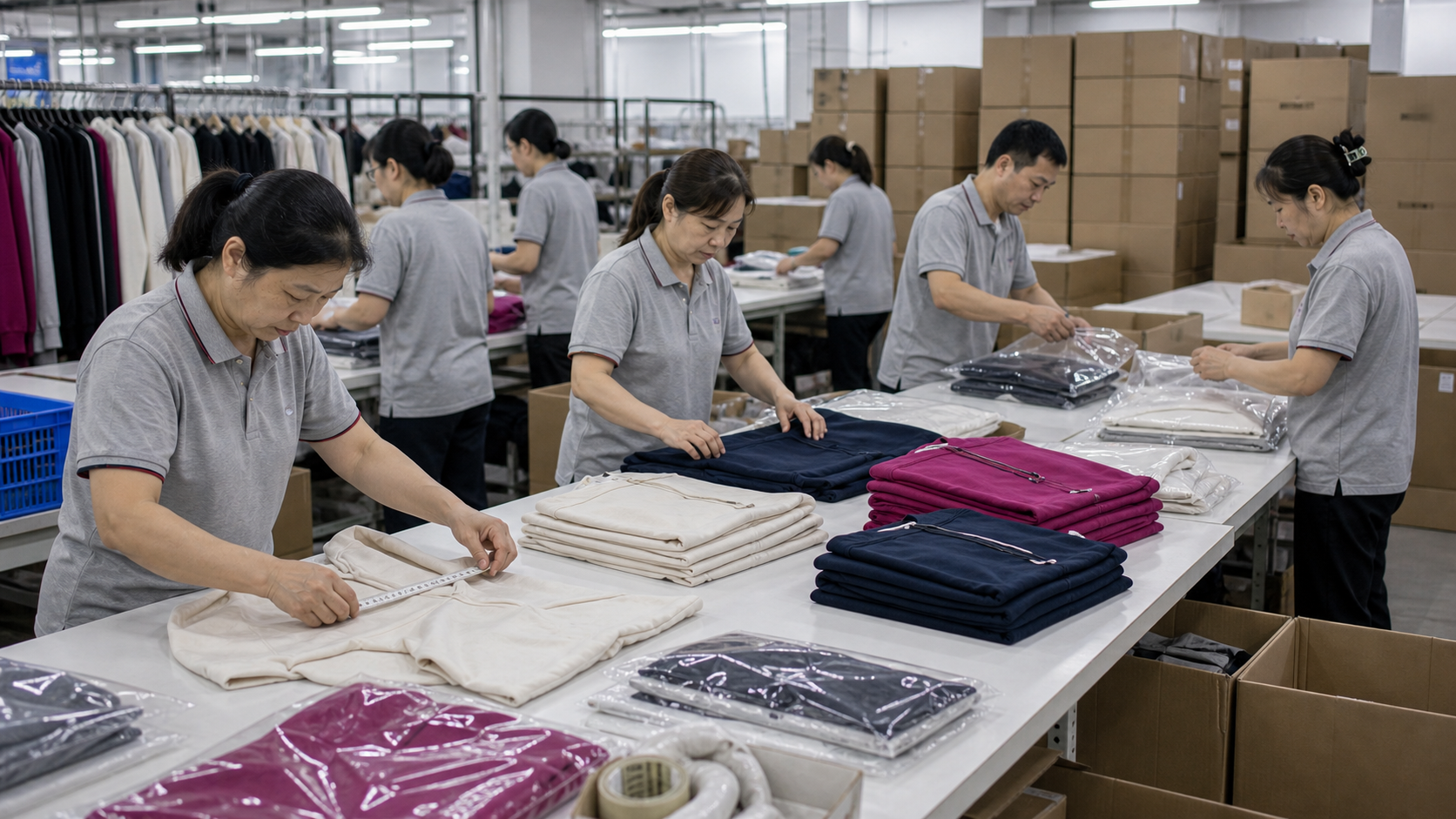
Figure 4. Packing and inspection requirements should be confirmed as part of the product standard, rather than left to the final handover.
🔎 Additional checks: material claims and sourcing-route decisions
Material claims should be reviewed with the same discipline as product specifications. If a brand wants recycled fibres, preferred cotton, lower-impact trims, or reduced packaging, ask what is currently available for the required fabric and product, which documents may support the claim, and what must be confirmed before it is presented to the market. A material choice must still work for the intended hand feel, appearance, care, cost, quantity, and production plan. It is better to define a claim that can be evidenced than to make a broad sustainability statement that the project cannot substantiate.
Some brands also compare China with manufacturing routes in Southeast Asia. The useful comparison is not a country-level promise; it is a project discussion about product complexity, fabric access, order quantity, development needs, timing, cost assumptions, destination requirements, and repeat-order plans. A buyer should ask which route fits the specific collection and which variables would change the decision. This preserves the practical sourcing perspective of the earlier article while keeping the current guide focused on evidence a buyer can use.
Common mistakes when comparing a clothing manufacturer in China
Treating price as the final answer
Price matters, but it cannot answer whether a factory is quoting the same materials, workmanship, decoration, packing, and delivery scope as another supplier. Ask what the offer assumes before deciding which number is lower.
Approving a sample without a clear approval record
Sample approval should state what has been accepted and what remains open. A buyer who says “looks good” without consolidating fit comments, measurement adjustments, trim changes, and packing notes can make the bulk handover harder than it needs to be.
Leaving material and trim decisions until bulk planning
Fabric, color, labels, hardware, print, embroidery, and packaging often affect both the look and the production route. Bring the highest-risk choices into development, then confirm them through the appropriate swatch, sample, or approval stage.
Assuming a communication channel is a process
Email, chat, and video calls are useful tools; they are not a decision system by themselves. The important question is whether the factory and brand can consolidate comments, identify an owner, and record the approved version before work moves forward.
Treating shipping coordination as an afterthought
Packing and export handover depend on project-specific destination, documents, labels, carton marks, and delivery arrangements. Discuss the inputs early, then confirm final responsibilities with the relevant people before goods are ready to leave.
How Yinshan Fashion can support a buyer’s evaluation
Yinshan Fashion is a fashion apparel manufacturing partner in Ningbo, China, established in 1986. Its support can include OEM production, ODM design and development, fabric manufacture and sourcing, sampling, hanging-line production, QC, private-label details, packing, and export coordination.
For a buyer, the practical value of that scope is a more connected project conversation. Rather than discussing the garment only after all decisions are fixed, the team can review the product brief, fabric direction, sample requirements, customization, packing needs, and intended production route together. The details that are not yet confirmed should be treated as open project variables, not as promises.
This approach can suit Casual Fashion, Active Fashion, women-led Streetwear, and Loungewear programs when the buyer needs to move from an idea or existing specification toward a workable sample and production plan. Availability, cost, minimums, timing, testing, and destination requirements should always be confirmed for the specific project.
Next step
If you are comparing factory partners for a new collection, share your fashion product brief with your reference images or tech pack, fabric direction, colorways, expected quantity, packing requirements, and target launch date. Yinshan Fashion can then discuss which development, sampling, production, QC, and packing details need project-specific confirmation.
---
A buyer’s comparison table: what to ask for and why
| Priority | What the buyer should ask | Risk if it stays unclear | Useful factory evidence |
|---|---|---|---|
| Product feasibility | What details require development or sample confirmation? | A reference image is treated as a complete specification. | Questions on fabric, construction, fit, trims, and artwork; a sample plan. |
| Comparable quotation | What exact style, materials, quantities, and packing assumptions are included? | Quotes are compared even though their scope differs. | A written quotation basis and list of open variables. |
| Sample-to-bulk control | Which approved sample and comments become the production reference? | Bulk work follows an outdated or incomplete version. | Approved-sample record, comment closure, and project QC checkpoints. |
| Communication control | Who owns questions, comments, approvals, and exceptions? | Decisions are lost across disconnected messages. | A named project contact and a traceable review record. |
| Packing and reorders | What packing standard and records must be confirmed and retained? | Goods arrive in the wrong presentation or repeats restart from zero. | Packing reference, label or artwork approval, and retained production notes. |
Buyer FAQs
Should we ask for a quote before we have a finished tech pack?
Yes. An early discussion can identify missing product information and likely development steps. Label assumptions clearly and share reference images, category, fabric direction, colors, expected quantity, decoration, packing needs, and timing. Confirm the final production basis only after material, sample, and specification decisions are approved.
What is the most useful evidence of a factory’s quality-control approach?
Look for a discussion of the standards and checkpoints relevant to your style, not a broad quality claim. Ask how approved samples, measurements, trims, appearance, and packing requirements are recorded and checked. The right evidence varies with the product, materials, requested testing, and destination requirements.
How can we compare two factory quotations fairly?
Use one comparison sheet for style, fabric, trims, decoration, colors, size range, quantity split, labels, packing, delivery assumptions, and open items. Ask each factory to state what is included and what needs confirmation. This exposes scope differences before price becomes the deciding factor.
What should be settled before bulk production begins?
The buyer and factory should have a clear production reference, with open items either closed or explicitly managed. In practice, that may include fabric and color direction, measurements, construction, trims, artwork, labels, packing, QC checkpoints, and the contacts responsible for decisions.
Can a factory help with a repeat order if our original records are incomplete?
It may be possible to rebuild a workable record, but the factory will need to review available samples, material and trim information, artwork, labels, measurements, packing details, prior QC comments, and requested changes. Treat the repeat as a confirmation exercise rather than assume it will reproduce automatically.
Related next steps
Reference points used in this guide
China fashion supplier search checklist
| Factor | What to verify | Why it matters |
|---|---|---|
| Product category fit | Ask whether the supplier has made similar casual fashion, active fashion, streetwear, loungewear, or private-label fashion programs. | A factory that understands your category can give better fabric, fit, cost, and production advice. |
| Real factory capability | Check sample room, production floor, QC area, packing area, hanging-line or batch workflow, and production records. | Visible factory control reduces risk between approved sample and bulk shipment. |
| Fabric manufacture and sourcing | Review fabric options, custom development, handfeel, GSM, stretch, shrinkage, color, MOQ, and lead time. | Fabric decisions control quality, cost, delivery timing, and repeat-order stability. |
| Design and sampling support | Ask how the team handles design interpretation, pattern making, first samples, fit comments, size sets, and PP samples. | Good development support turns references and ideas into manufacturable products. |
| MOQ and flexibility | Compare MOQ by style, color, fabric, trim, label package, and packing method, then ask about small-batch tests and repeat orders. | A practical supplier protects cash flow while still giving the brand room to scale. |
| Quality and documentation | Review fabric inspection, in-line QC, final inspection, measurement tolerance, label logic, packing photos, and shipment records. | Documentation protects product consistency, customer trust, and import-market readiness. |
| Communication quality | Look for clear questions, written quotation notes, sample comments, realistic timelines, and fast issue escalation. | Clear communication prevents small sourcing problems from becoming expensive delays. |
| Long-term partnership value | Ask how the supplier keeps fabric, trim, pattern, QC, packing, and repeat-order records for future seasons. | The best supplier helps improve cost, speed, quality, and product consistency after the first order. |