Article
Evaluating an excellent supplier is not only about finding the lowest price. For a fashion, activewear, private-label, or lifestyle brand, the right supplier affects product quality, launch timing, cash flow, customer reviews, repeat orders, and the long-term strength of the business. A poor supplier may look cheap at the quotation stage, but become expensive through late samples, unstable fabric, unclear communication, quality claims, and missed selling seasons.
An excellent supplier should act like a production partner. That means the supplier can understand your product idea, ask practical questions, suggest workable materials, manage sampling, control production details, keep records, and help you improve after the first order. The best supplier is not the one that says yes to everything. The best supplier is the one that can explain what is possible, what is risky, what will affect cost, and what should be simplified before bulk production begins.
Start with business fit. Before judging machinery or price, ask whether the supplier understands your target customer, product level, order model, launch calendar, and repeat-order plan. A new brand testing the market may need flexible small-batch production, shared fabrics, fast sampling, and clear cost control. A mature retail buyer may need stable quality, strict documentation, and repeatable delivery. A supplier can be excellent for one business and wrong for another if the order model does not match.
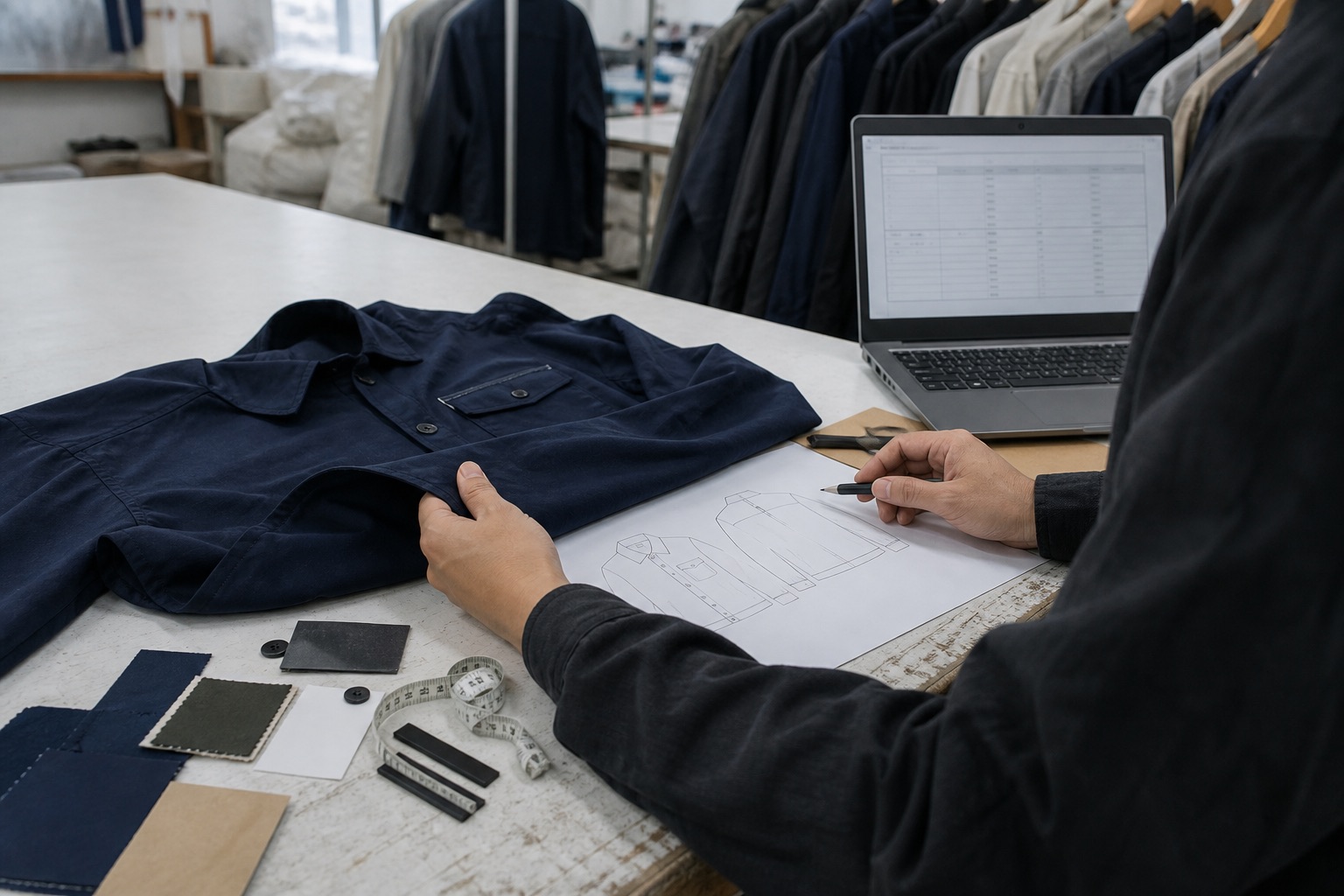
Evaluate product development capability. Strong suppliers can support design interpretation, fabric manufacture and sourcing, pattern adjustment, sample making, trim selection, print or embroidery planning, labels, packaging, and export packing. This matters because many brands do not only need sewing; they need a practical route from concept to production. If the supplier cannot help translate reference photos, sketches, or market direction into a sample plan, the buyer must manage too many disconnected suppliers.
Review fabric and material knowledge. Fabric decisions affect handfeel, fit, shrinkage, color, opacity, stretch, pilling, decoration result, care labeling, and cost. A good supplier should be able to compare available fabric options, explain MOQ differences, suggest alternatives, and warn when a fabric choice may create production or quality problems. For sustainable materials, recycled options, preferred fibers, or lower-impact packaging, the supplier should discuss documentation, availability, MOQ, price, and performance instead of making vague claims.
Look closely at sampling discipline. A sample is not only a nice-looking prototype. It is a test of how the supplier thinks. Ask how the supplier handles first samples, revised samples, fit comments, size sets, pre-production samples, measurement tolerance, color approval, trim approval, and final bulk standards. A supplier that keeps clear sample records can usually move into production more safely. A supplier that treats each sample as a separate conversation may repeat the same mistakes in bulk.
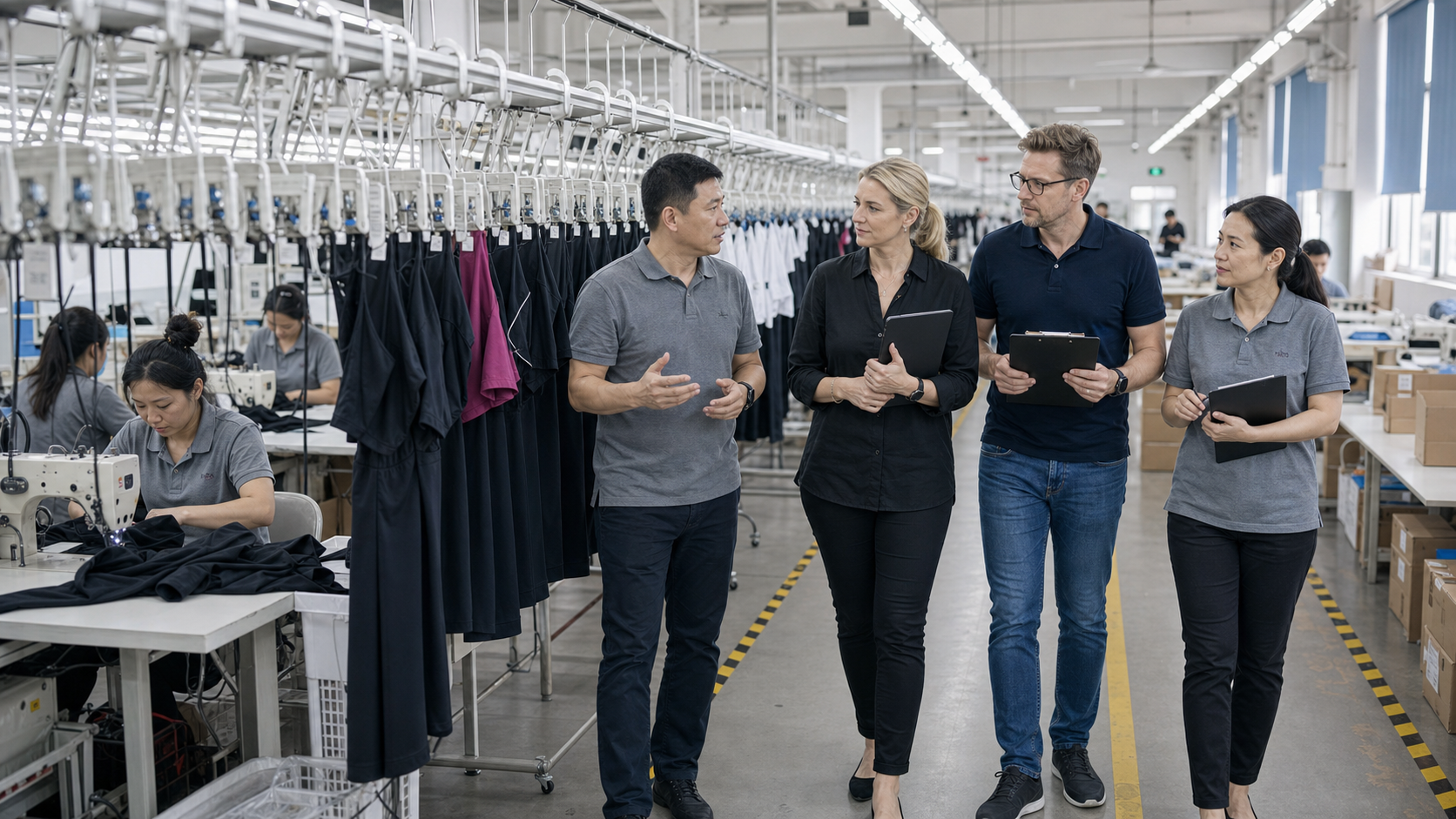
Factory execution should be visible. During a factory visit or video audit, look for organized work areas, trained workers, clear production flow, in-line checking, hanging-line or batch movement control, QC points, needle control, packing area discipline, and finished-goods handling. A modern factory does not need to look like a showroom, but it should look controlled. Workers should know the operation. Materials should be organized. Approved samples and production documents should be easy to find.
Communication quality is one of the strongest signs of supplier quality. An excellent supplier asks specific questions before quoting: product category, fabric target, size range, quantity by color, logo method, label package, packing method, destination market, inspection requirements, and timeline. They also confirm details in writing. Vague replies, unclear quotations, missing sample notes, changing answers, and slow issue escalation are warning signs. Good communication prevents small problems from becoming expensive delays.
Compare price with context. Unit price is important, but it should be evaluated together with fabric, trims, logo method, packaging, inspection, MOQ, lead time, payment terms, and what is included in the quotation. A cheaper price may exclude important items or assume a lower fabric standard. A more expensive supplier may be better value if they reduce rework, improve quality, protect timing, and support repeat orders. The real question is not which supplier is cheapest, but which supplier gives the most reliable total production value.
Quality control should be built into the workflow. Ask how the supplier inspects fabric, controls cutting, checks measurements, manages sewing quality, reviews color, handles defects, performs final inspection, and prepares packing photos or reports. For apparel, quality is not only final appearance. It includes fit, seam strength, wash behavior, shade consistency, labeling, packing, and carton markings. A supplier that only checks goods at the end may discover problems too late.
Compliance and market readiness also matter. Buyers selling in the United States, Europe, the United Kingdom, Australia, or other markets may need correct fiber content, care instructions, country-of-origin information, safety considerations, packaging details, and documentation. The supplier does not replace the buyer's legal responsibility, but a professional supplier should understand that labels, care instructions, and product records must be handled carefully before shipment.
Sustainability should be evaluated with evidence. Many suppliers can say they support recycled fabric, responsible materials, or eco packaging. Fewer can explain what options are available, what certificates or material records may apply, what MOQ is needed, and how the material performs in real products. A good supplier will help you choose sustainable options that still meet durability, handfeel, color, shrinkage, and cost requirements.
Long-term value is the final test. An excellent supplier helps your business improve after the first order. They keep fabric records, sample comments, fit standards, label files, QC notes, packing standards, and shipping records. They help repeat orders move faster. They suggest cost improvements when volume grows. They can support small-batch testing, quick repeat orders, and larger production when the product proves successful.
Red flags include quotations with very few questions, promises that sound too easy, refusal to discuss fabric details, unclear MOQ terms, no sample revision process, no written records, poor factory organization, weak QC answers, inconsistent pricing, and a supplier that pushes bulk production before the sample standard is clear. Another red flag is a supplier that cannot explain what may go wrong. Experienced factories know where risks usually appear.
A practical way to evaluate suppliers is to score them across business fit, development capability, factory execution, communication quality, quality and compliance, and long-term value. Use the same questions for each candidate. Ask for examples, records, photos, sample comments, production process details, and realistic timelines. The strongest supplier is usually the one that gives clear evidence, not the one that gives the fastest yes.
How Yinshan Fashion supports buyers: our value is coordination across design service, fabric manufacture and sourcing, sampling, flexible production, hanging-line factory workflow, QC, packing, export support, small-batch programs, quick repeat orders, and long-term production records. For buyers building a fashion or activewear program, this gives a clearer route from idea to sample, from sample to bulk, and from first order to repeat business.
Final takeaway: an excellent supplier should reduce uncertainty. The right partner helps you make better product decisions, avoid avoidable delays, protect quality, control cost, and build a repeatable sourcing system. Choose the supplier that can prove capability through process, records, communication, and factory execution, not only through a low first quote.
Reference points used in this guide
Excellent supplier evaluation scorecard
| Factor | What to check | Why it matters |
|---|---|---|
| Business fit | Ask whether the supplier understands your product category, target customer, launch quantity, retail price level, and repeat-order plan. | A strong supplier should match your business model, not only accept an order. |
| Development capability | Review design support, fabric sourcing, sample making, pattern correction, trim development, labeling, and packaging support. | Development strength reduces the gap between an idea, a sample, and a sellable product. |
| Factory execution | Check production line organization, worker skill, hanging-line workflow, capacity planning, in-line checks, and packing flow. | Good execution keeps quality stable when the project moves from sample to bulk. |
| Communication quality | Look for clear questions, written records, realistic timing, quotation details, sample comments, and fast issue escalation. | Most sourcing problems become expensive when communication is vague or late. |
| Quality and compliance | Ask for fabric inspection, measurement tolerance, final inspection, needle control, care label logic, and market documentation needs. | A supplier should help protect product quality, customer trust, and import-market readiness. |
| Long-term value | Evaluate repeat-order records, material continuity, small-batch flexibility, sustainability options, and cost-improvement ideas. | An excellent supplier helps the business improve after the first shipment. |