Article
Choosing the right activewear supplier is one of the most important decisions for a sportswear, yoga, gymwear, athleisure, or private-label fitness brand. The supplier you choose will affect fabric performance, sample fit, product quality, launch timing, packaging, repeat orders, and how confidently your brand can grow. A good activewear supplier is not only a sewing factory. It should be a product development partner that understands stretch fabrics, body movement, support, recovery, color, trims, labels, and bulk production control.
The biggest mistake is choosing a supplier only by the lowest first quote. Activewear looks simple from the outside, but many problems appear after stretching, washing, sweating, or repeated wear. A sports bra that looks good in a photo may fail because the elastic is wrong. Leggings may become transparent if the fabric does not have enough opacity. A yoga top may twist after washing if shrinkage and fabric recovery are not reviewed. A supplier must be judged by product knowledge, sampling discipline, quality control, and communication, not price alone.
Step 1: define your activewear product category before contacting suppliers. Activewear is a broad word. Your supplier needs to know whether you are developing yoga leggings, sports bras, running tops, gym shorts, tennis skirts, track sets, cycling pieces, athleisure sets, compression products, or soft active-inspired lifestyle clothing. Each category has different fabric, fit, seam, trim, and testing requirements. A factory that is strong in basic T-shirts may not be the right partner for supportive sports bras or squat-proof leggings.
Step 2: check whether the supplier understands performance fabrics. Activewear commonly uses nylon-spandex, polyester-spandex, brushed performance knits, interlock, rib, mesh, power mesh, lining fabrics, elastic trims, and sometimes recycled polyester or recycled nylon blends. Ask the supplier how they compare stretch, recovery, opacity, handfeel, compression, pilling, color fastness, and shrinkage. If the supplier can only say yes to every fabric request without explaining tradeoffs, that is a warning sign.
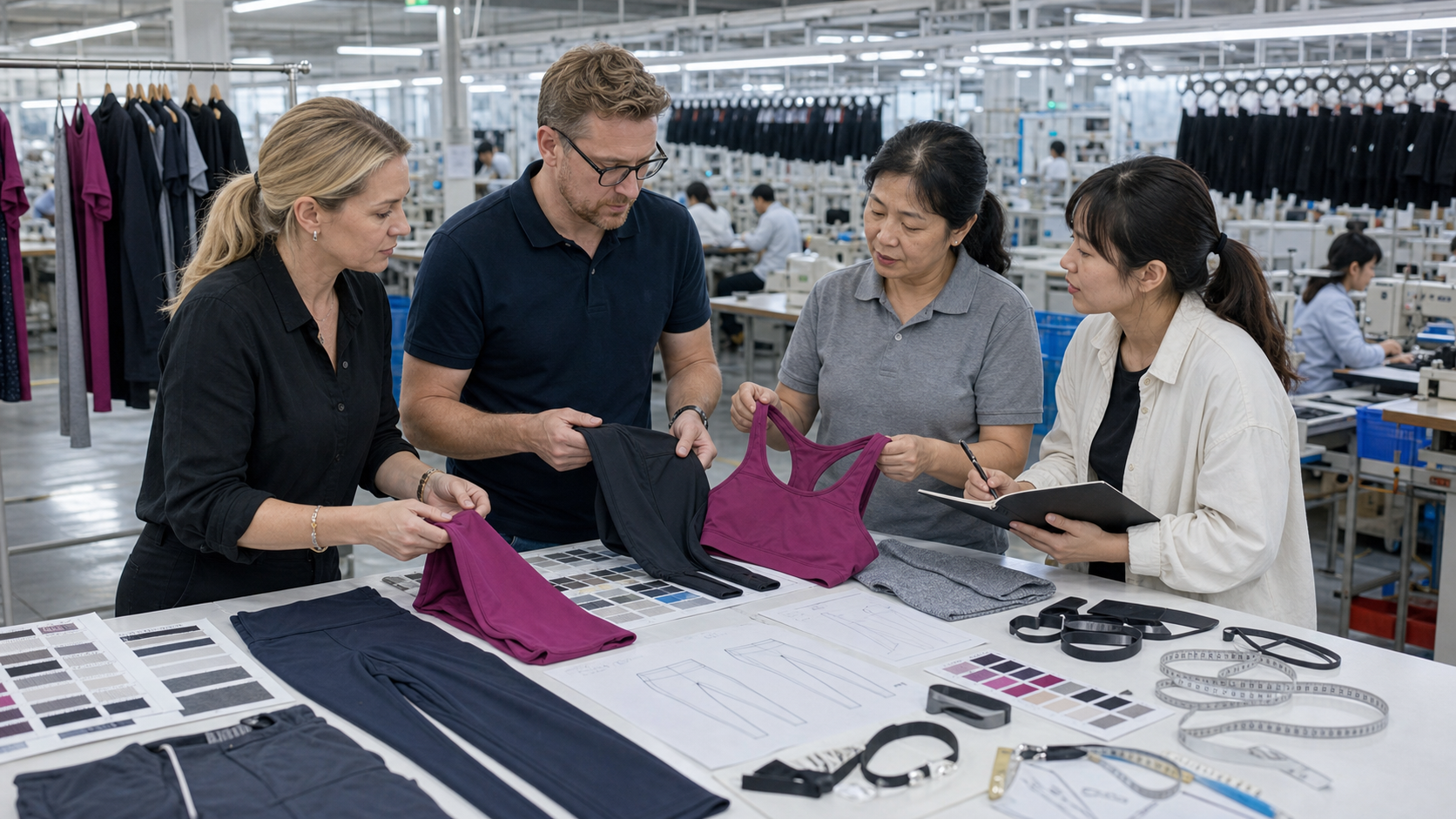
Step 3: ask about sampling, fit, and size-set control. Activewear sampling is not only about making one attractive prototype. The supplier should explain the path from first sample to revised sample, fit sample, size set, pre-production sample, and bulk approval. Ask how they handle measurement tolerance, pattern adjustment, strap length, waistband pressure, bra support, gusset construction, inseam length, pocket position, and movement comfort. The best supplier will help you catch fit problems before bulk production.
Step 4: review MOQ in a realistic way. Many new brands want low MOQ, many colors, custom fabric, custom labels, special packaging, and fast delivery at the same time. In reality, MOQ depends on fabric availability, color dyeing, trim minimums, logo method, size range, cutting efficiency, and production line planning. A practical supplier should help you simplify the first launch: fewer colors, shared fabric, fewer trims, and a clear repeat-order plan. This protects cash flow while still building a professional product range.
Step 5: compare quotation details, not only unit price. Ask what is included in the price: fabric, trims, pads, elastic, logo application, labels, hangtags, poly bags, cartons, inspection, and export packing. A low unit price can become expensive if key items are not included. For activewear, also ask whether the price assumes available fabric or custom-developed fabric, and whether bulk color approval, lab dips, or testing will change cost or timing.
Step 6: evaluate quality control before the order starts. Activewear QC should include fabric inspection, shrinkage review, stretch and recovery checks, color review, cutting control, in-line sewing checks, measurement inspection, needle control, final appearance review, packing inspection, and carton marking. If your products need specific market claims such as recycled material, UV protection, cooling, antibacterial lining, or compression support, ask what documents or tests are needed before using those claims.
Step 7: check communication speed and technical clarity. A good supplier should answer with specific questions, not only a price. They may ask for reference photos, tech pack, size range, target fabric, GSM, compression level, logo method, quantity by color, destination market, label requirements, packing method, and launch date. This kind of questioning is a positive sign. It means the factory is thinking about production feasibility, not just trying to win the order.
Step 8: ask for production visibility. For brand buyers, production is less risky when the supplier can show sample comments, fabric records, trim approvals, cutting status, sewing progress, in-line QC points, final inspection, packing photos, and shipment records. Activewear brands often reorder successful styles, so production records are valuable. They help the second order move faster and keep color, fit, fabric, label, and packing standards consistent.
Step 9: review sustainability carefully. Recycled polyester, recycled nylon, preferred cotton, lower-impact trims, and reduced packaging can all be good directions, but sustainability should be practical and documented. Ask what recycled or certified material options are available, what MOQ applies, and whether the fabric still meets stretch, opacity, durability, and handfeel requirements. A responsible supplier will not push sustainability claims without discussing proof, cost, and performance.
Step 10: look for red flags. Be careful if a supplier refuses to discuss fabric details, cannot explain sample stages, quotes without asking for product information, promises extremely fast delivery for complex custom products, avoids QC questions, gives unclear MOQ terms, or changes pricing after sampling without explanation. Another warning sign is a supplier that accepts every request without helping you prioritize. A real manufacturing partner should tell you what is possible, what is risky, and what should be simplified.
A practical supplier comparison method is to score each candidate across six areas: product category fit, fabric and trim development, sampling and fit control, MOQ and launch flexibility, quality control system, and communication records. Do not give all weight to price. For a new activewear brand, the supplier who prevents fit problems, fabric mistakes, and late delivery may be more valuable than the supplier with the cheapest first quote.
What to send when asking for a quote: brand introduction, target product category, reference images, tech pack or measurement sample if available, desired fabric composition, GSM or handfeel, stretch and support requirements, colorways, size range, logo method, label package, packaging method, order quantity by style and color, target price, destination market, and launch timeline. If you do not have all details, send the product goal and let the factory suggest a development route.
How Yinshan Fashion can support activewear brands: we can help with fabric sourcing, fabric development, sports bra and yoga sample review, active tops, leggings, tennis skirts, track sets, logo application, labels, packing, small-batch testing, bulk production, QC, and repeat-order records. Our value is practical coordination between design, sourcing, sampling, factory production, and export packing. For a growing brand, this means fewer disconnected suppliers and a clearer route from idea to product launch.
Final takeaway: choose an activewear supplier that helps you build a product standard, not only a price list. The right supplier should understand your category, guide fabric choices, manage samples carefully, explain MOQ honestly, control quality, keep records, and support repeat orders. That is how a first activewear collection becomes a brand program that can launch, improve, and scale.
Reference points used in this guide
Activewear supplier scorecard
| Factor | What to check | Why it matters |
|---|---|---|
| Product category fit | Has the supplier made sports bras, leggings, yoga tops, active jackets, or athleisure sets similar to your target line? | Activewear fit, stretch, support, seams, and recovery are different from ordinary fashion basics. |
| Fabric and trim development | Can the supplier discuss nylon-spandex, polyester-spandex, brushed knit, mesh, elastic, pads, zippers, and heat-transfer logos? | The wrong fabric or trim can damage fit, support, comfort, print result, and repeat orders. |
| Sampling and fit control | Ask for the sample process, fit comments, size set plan, measurement tolerance, and revision timeline. | A low sample price is not useful if the factory cannot correct fit before bulk production. |
| MOQ and launch flexibility | Compare MOQ by style, color, fabric, logo method, label package, and packing requirement. | A first brand launch often needs focused quantities, not a factory that only accepts large bulk orders. |
| Quality control system | Review fabric inspection, stretch and recovery checks, in-line QC, final measurement, needle control, and packing inspection. | Activewear quality problems usually appear after wear, washing, stretching, or repeated movement. |
| Communication and records | Look for clear quotation notes, sample comments, fabric records, label files, QC photos, and repeat-order documentation. | Good records make reorder discussions faster and reduce misunderstandings between buyer and factory. |