Article
What should buyers know first?
Short answer: A practical supplier scorecard for ecommerce fashion buyers, with evidence prompts for samples, quality, communication, delivery, product data and repeat orders.
A fashion supplier scorecard gives an ecommerce brand a consistent way to compare what a garment supplier can demonstrate, what remains uncertain and what needs to happen before an order is released. It should cover samples, quality evidence, communication, delivery assumptions, product information and repeat-order readiness. A score is a decision aid, not proof that a supplier can meet every requirement.
Direct answer: give each supplier the same brief, record actual evidence for each criterion and assign an owner to unresolved questions. Keep mandatory safety or compliance requirements separate from optional numerical ratings. Yinshan Fashion works with brands on custom design and private-label garments; the details of each project, including quantities, timing, testing and responsibilities, require confirmation.
Why use a fashion supplier scorecard?
An attractive sample or competitive quote can start a promising conversation, but neither shows how an entire order will be handled. An ecommerce brand also needs usable product information, clear change control, dependable communication and an agreed plan for replenishment. A structured scorecard prevents those quieter requirements from disappearing behind a headline price.
The American Society for Quality's discussion of cross-functional supplier evaluation describes quality, delivery and supplier support among the areas organisations may evaluate. Your own criteria should reflect the product and operating model. A startup testing a few styles may need more development support; an established seller may put more weight on consistent records and repeat-order controls.
Use the scorecard as a working record shared by buying, product development, quality and operations. It makes the reasons for a decision visible when a colleague joins the project or a reorder is considered months later. It also identifies evidence that is still missing without turning an unanswered question into an assumed failure or pass.
Start with a comparable buying brief
Before scoring anyone, describe the same garment programme to each potential supplier. Include the style, intended fabric, target fit, size and colour split, labels, packaging, sales market and desired delivery window. Explain which details are fixed and which still require advice. If the brief changes, update the record and check whether earlier responses remain relevant.
A dress collection can help a buyer explain an intended silhouette, while a blouse collection offers a reference for details such as collars, closures or sleeves. These examples help frame questions; a product image does not establish that a supplier has accepted your specifications or passed your tests.
Ask suppliers to identify the work they would perform, the stages they would coordinate and any assumptions in their quotation. A proposal based on available fabric is not directly comparable with one based on a newly developed fabric. Record the different assumptions beside the scores, then request clarification instead of forcing apparently precise rankings from dissimilar offers.
How should the scorecard be filled in?
The comparison table below is a reusable starting point. For every row, enter the source, date and relevant project or sample version before assigning a rating. The final column is deliberately blank for the buyer's own assessment; it is not a rating of Yinshan Fashion or any other supplier.
An illustrative scale is 1 for evidence showing major unresolved gaps, 2 for significant gaps, 3 for a workable but incomplete response, 4 for good project-specific evidence and 5 for strong, verified evidence against the buyer's criteria. Define these anchors with your own team before use. Use “pending” when evidence has not been obtained and “not applicable” only when a criterion genuinely does not apply.
Do not average a pending critical item into a passing result. A missing safety report, for example, should remain an open release condition if the market or the buyer requires it. A numerical result cannot replace a review of material differences, written agreements or the applicable legal requirements.
What should count as evidence?
Useful evidence is identifiable, relevant to the proposed order and available for review. It might be a dated specification, a marked sample, an inspection plan, a completed report, a written quotation or a documented response to a specific scenario. Record who supplied it, the date, the style and revision, and any limitations. A generic presentation can inform a conversation but may not answer a project-specific question.
Separate a supplier's proposed process from proof of its performance. A written quality plan tells you what is intended; an actual inspection record tells you what was observed for the identified lot. A photograph of a garment is not a fabric test. A reference from another order may be informative, but it is not automatically evidence about your style, material or order volume.
Where the brand relies on an independent test or inspection, confirm the scope, specimen, method and whether the report applies to the material and market concerned. Do not infer certification, audit status or test results from a website. Ask for the appropriate current documents and assess them with the person responsible for compliance.
How can a buyer assess sample capability?
Name the purpose of each sample before judging it. A material swatch can help compare colour and hand; a fit sample addresses shape and measurements; a production-intent sample can help review the combined garment. No single sample answers every question, particularly when its fabric, trim or construction differs from the proposed bulk order.
Ask how the supplier receives comments, marks changes and identifies the next revision. Compare the sample with the agreed specification rather than a memory of a previous conversation. Record measurement points, fit comments, visible construction, label placement and any restrictions on the available sample material. Photograph the issues alongside written notes where that helps the maker interpret them.
For a custom womenswear project, review the supplier's proposed development sequence against the actual design. The service page is a useful discussion starting point, not a guarantee of a particular turnaround or number of revisions. Confirm the sample scope, charges and approval responsibility in writing for the project.
How should garment quality be reviewed?
Begin with the buyer's priorities: measurements, seams, workmanship, material appearance, colour, closures, labels and packing may all matter. Explain which points are critical and what reference will be used. A dark blouse and a lightweight sleep set will not necessarily have the same risk profile or inspection criteria.
Ask the supplier what checks are proposed at incoming material, sewing, finishing and final packing. Clarify the inspection method, sample size where applicable, defect classification, responsible parties and reporting format. If a third party will inspect, agree the scope and timing independently. Do not call an order inspected or approved until the actual report has been received and reviewed.
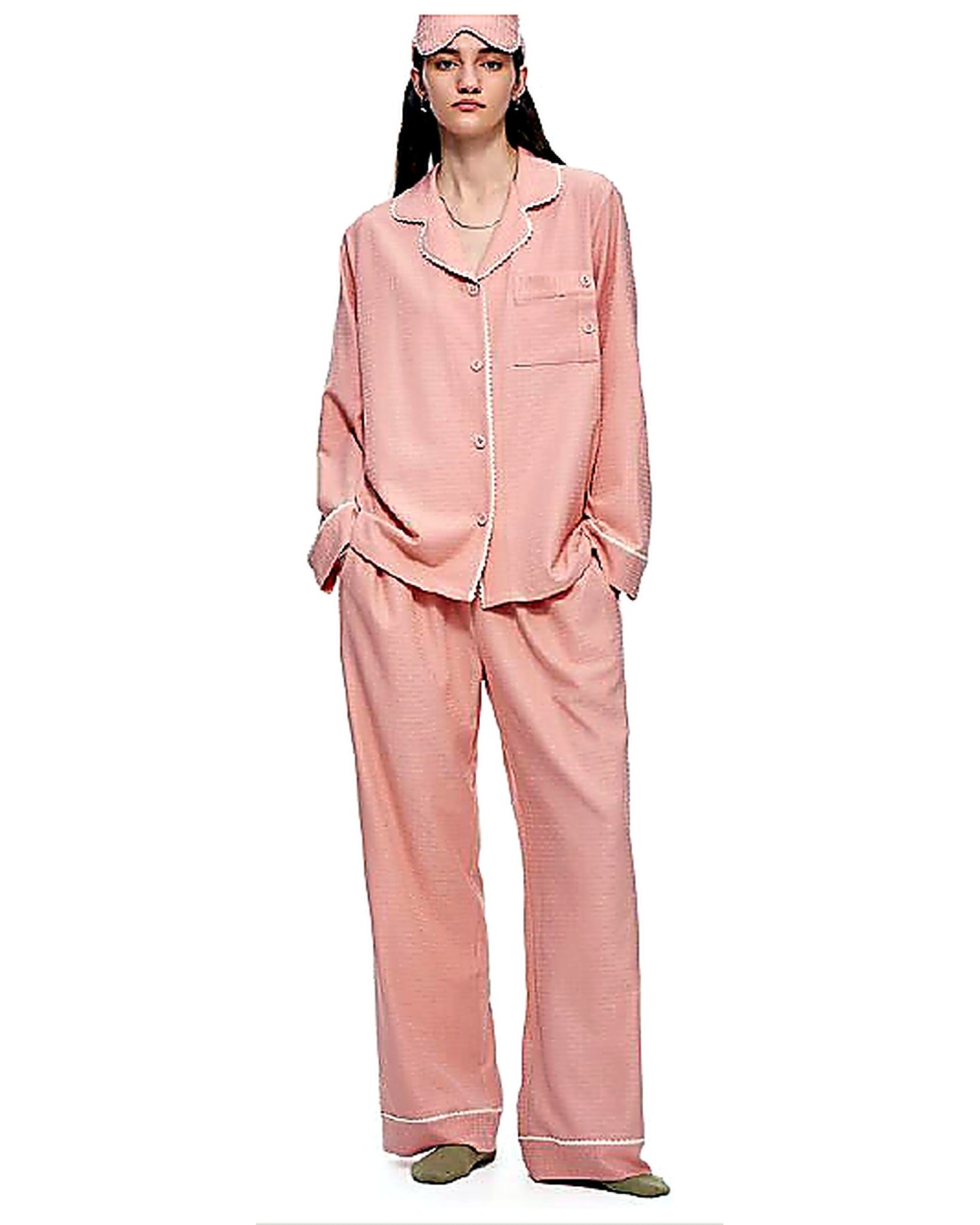
The pajamas collection illustrates why a set may need checks for matching components, comfort and consistent labels as well as individual seams. Discuss the intended construction and target customer, then record which observations are required for your product. A visual check does not replace required material or performance testing.
What should the delivery score measure?
First define the delivery event. A supplier's planned factory-ready date, handover to a carrier, port departure and arrival at a warehouse are different milestones. An on-time measure is meaningful only when both sides agree the milestone, baseline date, permitted changes, time zone and source of the actual event.
For an existing relationship, the buyer can calculate the proportion of agreed shipments meeting the agreed milestone by dividing the number on time by the number included in the review period. State the period, denominator, exceptions and how approved date changes were treated. A small history deserves a visible caveat; one shipment cannot establish a stable trend.
For a new supplier without relevant history, mark delivery performance as pending rather than inventing a percentage. Review the proposed schedule, material dependencies, approval dates and escalation route instead. Production timing and transport availability depend on the order and current conditions; a general estimate is not an unconditional delivery promise.
How should communication be evaluated?
Look beyond how quickly the first enquiry is answered. A useful response should identify the question, address the actual specification, distinguish confirmed facts from assumptions and name the person responsible for the next action. If the answer is not yet known, a clear date for checking it can be more valuable than a confident but unsupported claim.
Define the channel and escalation route for the project. Decide who can approve a fabric substitution, revise a size chart or accept a change in price. Routine commercial questions, urgent production exceptions and formal approvals may need different handling. Written summaries after calls help avoid relying on a single person's memory.
If response time is measured, define the start and end events, working hours, time zone and the kinds of enquiries included. Review the quality and completeness of the response alongside elapsed time. Do not penalise a supplier for waiting for information the buyer has not supplied, and do not treat a quick acknowledgement as the final answer.
What product data does an ecommerce team need?
Before a listing goes live, the brand needs an agreed description of what the customer will actually receive. Depending on the market and channel, that may include the final composition, garment measurements, care information, colour identification, origin and label text. The buyer should confirm the legal and marketplace requirements for its own products and sales destinations.
Ask which fields the supplier can provide, who verifies them against production material and when the final information will be available. A provisional fabric description used for costing should not silently become a final composition claim. Identify the document revision and the person who approved the listing information, especially if material or trim changes during development.
The US Federal Trade Commission provides an apparel labeling overview; it is a starting point, not a substitute for advice on a particular market or item. Do not make unsupported sustainability, certification or performance claims. Keep reports and approvals with the style record so the content team can trace each claim to its evidence.
What makes a supplier reorder-ready?
A reorder is easier to evaluate when the original order has a usable history. Ask whether the team can identify the approved fabric reference, colour standard, pattern revision, measurements, labels, packaging, order split and quality decisions. Record where the reference is held and who can retrieve it. The supplier may need the buyer to retain approved samples and files too.
An earlier approval does not mean the same material will always be available. Before reordering, ask about current availability, possible substitutions, minimums, price and schedule. If the material or factory process changes, agree what new sample, comparison or test is needed. Preserve the old and new revisions so an updated instruction does not erase the reason for the change.
For limited-volume launches, the small-batch clothing manufacturing solution offers a way to begin a project-specific discussion. A small-batch service is not a promise that every fabric or trim can be reordered at the same minimum or price. The commercial and material conditions must be confirmed for the actual repeat order.
How should weights and missing data be handled?
Weights can reflect the buyer's priorities, but they should not create a false sense of certainty. If a team chooses weights, write them down before comparing suppliers and apply the same criteria to equivalent scopes. A brand with a fixed retail launch may emphasise schedule evidence; one developing a complex fit may give sample review more attention.
For an illustrative calculation, multiply each rated criterion by its chosen weight and divide the sum by the sum of the rated weights. Also show evidence coverage: the rated weight divided by the total applicable weight. A high average based on only a small amount of evidence can be misleading, so report pending items and coverage beside any result.
More importantly, decide release gates separately. Required testing, an approved specification or a signed commercial agreement cannot be waived simply because other rows score well. If a critical item remains pending, the decision can be to hold, request evidence or continue a limited development stage rather than declare the supplier approved for bulk.
How should price and commercial terms be compared?
Compare the same scope, not just the per-piece figure. Ask what the quotation includes for development, fabric, trims, samples, testing, labels, packing, inspection and freight. Record currency, delivery terms, validity, payment terms, order split and the assumptions behind the price. Mark each unknown clearly and obtain the missing information before making a final comparison.
Minimum order conditions can apply to a style, colour, fabric, trim or production run. A lower garment minimum does not automatically remove a fabric supplier's condition. Ask how a proposed combination of sizes and colourways is treated and what happens if the final order changes. Avoid presenting any unconfirmed quantity as a standing promise.
A higher quotation may include work excluded elsewhere; a lower quotation may reflect a different material or sample scope. Record the reason for a price difference and its operational consequence. Procurement should also consider inventory exposure, financing and returns, but those costs depend on the brand's actual circumstances and should not be invented for the supplier.
How can a first order test the working relationship?
Choose a first programme that answers meaningful questions without pretending to eliminate risk. Agree the specification, sample stages, release gates and order split before committing. Identify the product and process assumptions that must stay consistent if the results will later be used to evaluate a reorder.
Use the first order to observe how questions are resolved, how revisions are recorded and whether the agreed quality and delivery evidence arrives. Track exceptions as well as successes. If a delay occurs, document the milestone, cause as established by the parties, decision and impact rather than automatically assigning blame from a single message.
The women's knitwear collection is one reference when discussing fabric hand, recovery and garment construction. The actual evaluation still needs the chosen material and style. Agree whether a limited first run is feasible, what minimums apply and how the team will review the results after delivery.
How do you compare suppliers without hiding trade-offs?
Place each supplier's evidence beside the same criterion. Note whether the proposal uses the same material, sample stage, delivery milestone and inspection scope. Then write the trade-off in plain language: one supplier may have more complete development evidence while another has an attractive offer with several material details still open. Neither observation alone determines the right decision.
Hold a short review with the people who own the consequences. The buyer may prioritise cost, the product developer fit, and operations the listing and delivery handover. Ask each reviewer to identify a decision, an unresolved risk and the evidence needed to close it. This is more useful than allowing a single average to conceal a failed release gate.
If no proposal is ready, the next action may be a revised brief or a targeted sample. Record the date for the next review and the person who will follow up. A scorecard should make uncertainty actionable, not pressure a team into selecting a supplier before the essential evidence exists.
How should changes and exceptions be controlled?
Write down the approved reference and the proposed change. A different fabric lot, revised size measurement, alternate label or new packing method can affect appearance, performance, listing information or price. Ask who proposed the change, why it is necessary, what has already been produced and whether a new sample or test is required.
The buyer should identify an authorised decision-maker and record the disposition: approve, reject, request further evidence or hold. Keep the approval with the relevant style and order. If the change alters the delivery plan or commercial terms, confirm the revised terms explicitly; an approved appearance change is not necessarily an agreement to every cost or date change.
After delivery, review returns and customer feedback with enough detail to distinguish a product issue from a listing, sizing or expectation issue. Protect customer data and avoid sharing personal information unnecessarily. Use verified findings to improve the next specification and scorecard, rather than treating an isolated complaint as a complete root-cause analysis.
How can the scorecard support a team handover?
An ecommerce launch often involves several people who never speak directly to the manufacturer. The person preparing the listing needs the approved product facts; the warehouse needs a reliable packing reference; the customer service team needs an accurate size and care guide. A supplier evaluation is more useful when it names the documents and owners that connect those functions.
Create a single index for the project rather than attaching an unexplained collection of photographs. Link the current specification, approved sample record, quotation, quality plan, delivery milestones and listing information. Note where a physical reference is stored and who may authorise a change. If a document contains sensitive commercial information, share it only with the people who need it and follow the brand's access policy.
Before a launch or reorder, ask each owner whether the version they are using matches the production release. If the listing team is still working from a provisional fabric description, the corrective action is to obtain and approve final information, not to give communication a high score because many emails were exchanged. Close the action with an identifiable record and date.
Who owns the final supplier decision?
The brand remains responsible for its buying decision and for checking the requirements that apply to its markets. The supplier can describe its proposed processes, provide relevant project records and explain practical constraints. A test laboratory or inspection partner may provide independent evidence within its agreed scope; none of these parties should be assumed to cover another's responsibility.
Assign an owner for every critical open point and a date for follow-up. Keep the scorecard, supporting records and commercial agreement accessible to the team handling the order. If a criterion is not applicable, record the reason. If it is pending, say what would change its status. This makes the record useful when staff or suppliers change.
The decision may be to approve a development sample, proceed with conditions, request another quote or hold the order. Specify exactly which decision was made. Approval of one stage should not be described as approval of all future products, factories or orders.
What should a brand send Yinshan Fashion?
Share a short brief with the garment type, reference images, target fabric and fit, size and colour split, private-label details, intended markets and desired timing. Include any required sample, inspection, test, listing-data and packing expectations. Tell the team which points are confirmed and which need recommendation.
Use your own scorecard to record the answers and request the evidence needed for your project. Discuss your garment brief with Yinshan Fashion to review custom design, material and sampling options. Prices, minimums, capacity, delivery dates and testing remain subject to the actual requirements and written agreement.
Supplier evaluation
Turn the scorecard into a buying decision
Use the same brief, request evidence and keep critical release gates visible.
Align the brief
Compare the same product scope and order assumptions.
Check evidence
Record the source, revision and missing information.
Assign decisions
Name an owner for every critical open point.
Buyer inputs and supplier confirmations
Use these questions to complete the scorecard for the actual order.
| Decision area | What the buyer should prepare | What to ask the factory |
|---|---|---|
| Brief | Provide garment, market and size split. | Which assumptions need clarification? |
| Sample | Identify the intended approval stage. | What material and revision does the sample use? |
| Quality | Specify critical checks and required evidence. | What inspection plan and reports are available? |
| Delivery | Define the required handover milestone. | Which dependencies could affect the schedule? |
| Listing | List required product data and claims. | Who verifies the final production information? |
| Reorder | Retain approved references and decisions. | What needs reconfirmation for a repeat? |
Continue the production conversation
Fill-in fashion supplier scorecard
| Criterion | Evidence to request | Buyer rating and follow-up |
|---|---|---|
| Sample capability | Dated sample, revision and marked comments | Rating: ___ / 5 or pending; action: ___ |
| Quality records | Project inspection plan and applicable actual reports | Rating: ___ / 5 or pending; action: ___ |
| Communication | Named contacts, response and escalation record | Rating: ___ / 5 or pending; action: ___ |
| Delivery | Agreed milestones and relevant shipment evidence | Rating: ___ / 5 or pending; action: ___ |
| Product data | Verified composition, measurements and label inputs | Rating: ___ / 5 or pending; action: ___ |
| Reorder readiness | Retained references and current material conditions | Rating: ___ / 5 or pending; action: ___ |
| Commercial scope | Comparable written quote and exclusions | Rating: ___ / 5 or pending; action: ___ |
Buyer FAQs
What is a fashion supplier scorecard?
It is a structured record for comparing supplier evidence, open questions and actions across criteria relevant to a garment programme.
Can a scorecard prove that a supplier is compliant?
No. Required compliance decisions need applicable current evidence and review against the relevant market and product requirements.
How should a new supplier be scored without delivery history?
Mark historical performance as pending and review the proposed milestones, dependencies and escalation plan without inventing a rate.
Should pending criteria count as zero?
Not automatically. Keep missing evidence visible, report coverage and hold any critical release gate until it is resolved.
Does an approved sample guarantee bulk quality?
No. It establishes a reference for the approved scope; production controls, inspection and applicable testing still need agreement and review.